



Quick Facts:
- Topic: Ham radio license for overlanding, from exam to first radio.
- Skill level: Beginner, with no radio background needed.
- Exam: 35 questions, with 26 correct answers to pass.
- Question pool: 409 questions, valid July 1, 2026 through June 30, 2030.
- Fees: $15 exam session plus $35 FCC application fee, so $50 in total.
- License term: 10 years.
- Study time: Test takers report about a week to three weeks.
- Best for: Overlanders who want amateur repeaters on the 2-meter and 70-centimeter bands.
8 min read
In This Guide
- Why Overlanders Should Get a Ham Radio License
- What the Technician License Covers
- The Technician Exam and the 2026 to 2030 Question Pool
- How to Study for the Ham Exam
- Steps to Your Ham Radio License, From Registration to Call Sign
- What a Ham Radio License Costs
- Handheld vs. Mobile: Choosing Your First Radio
- Antennas, Safety, and Staying Legal
- Final Thoughts
- Ham Radio License FAQ
Why Overlanders Should Get a Ham Radio License
A ham radio license takes a 35-question exam and $50 in fees, and test takers report passing after about a week to three weeks of study. It gives you legal access to the amateur bands above 30 MHz, including the 2-meter and 70-centimeter bands where repeaters and trail groups operate. The entry-level license, called Technician, is the one you need.
GMRS handles convoy chatter well and has repeaters of its own. However, a ham radio license adds amateur repeaters on the 2-meter and 70-centimeter bands. A repeater relays your signal from a high site and stretches a handheld’s reach across ridges and valleys. Our GMRS vs ham radio comparison covers the choice between the two, so this guide starts after you decide to get licensed.
Ham is not a rescue plan by itself. Repeater coverage varies by region, and a satellite messenger is the more dependable option once you drive out of range. The satellite messenger versus radio guide explains where each one earns a spot in your rig. If you want a no-license option instead, the best CB radios for overlanding make a simpler start.
In my view, the exam is the easy part. Still, the real learning starts when you program a radio and use it, so plan to practice on a nearby repeater before your first trip.
Study Books for the 2026 to 2030 Pool
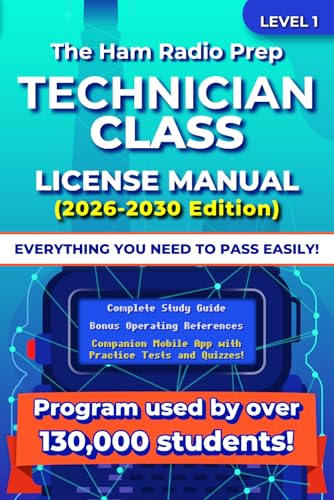
The exam draws on a public set of questions, so a current study book helps. If you prefer paper, pick one with 2026 to 2030 on the cover. Three current options are the ARRL Ham Radio License Manual 6th Edition, the Gordon West Technician Class FCC Element 2 Amateur Radio License Preparation 11th Edition, and The Ham Radio Prep Technician Class License Manual. Each one states it covers the 2026 to 2030 pool. Below, a widget lists three current study guides.
Technician study guides for the 2026 to 2030 pool


Gordon West Technician Class FCC Element 2 Amateur Radio License Pr…
What the Technician License Covers
The Technician license grants all VHF and UHF amateur privileges, which means every ham band above 30 MHz. For overlanding, two bands matter most. The 2-meter band runs from 144 to 148 MHz, and the 70-centimeter band runs from 420 to 450 MHz. Both suit handhelds and truck radios.
You have two main ways to use them. First, repeaters: a repeater sits on a mountain or tower and re-transmits what it hears, so two radios out of direct reach still talk. Second, simplex: radio to radio, with no repeater in between. The national simplex calling frequency is 146.520 MHz, and many groups agree on a separate simplex channel before the trip.
Program the repeaters along your route before you leave, since you will not have cell service to look them up. Next comes the exam, which opens both bands.

The Technician Exam and the 2026 to 2030 Question Pool
First, the Technician exam has 35 questions, and you need 26 correct answers to pass, which is 74 percent. Every question comes from a public question pool, so you study the real questions in advance.
The current pool took effect July 1, 2026, and stays valid through June 30, 2030. It holds 409 questions, with 27 new, 30 removed, and about 155 modified compared with the prior pool. Three diagrams appear in it. Because the pool changed recently, avoid any book or app dated 2022 to 2026.
The exam covers radio rules, operating practice, radio waves, basic electronics, antennas, and safety. All questions are multiple choice.
A volunteer examiner team runs each session. ARRL VEC, the American Radio Relay League’s exam coordinator, offers in-person sessions and remotely administered video sessions. Its exam fee is $15, which covers one attempt at each of the three license exams. Other coordinators set their own fees, usually $15 or less. For in-person sessions, bring your FCC Registration Number (the steps below show how to get one), a legal photo ID, two pencils, and a calculator with its memory cleared.
How to Study for the Ham Exam
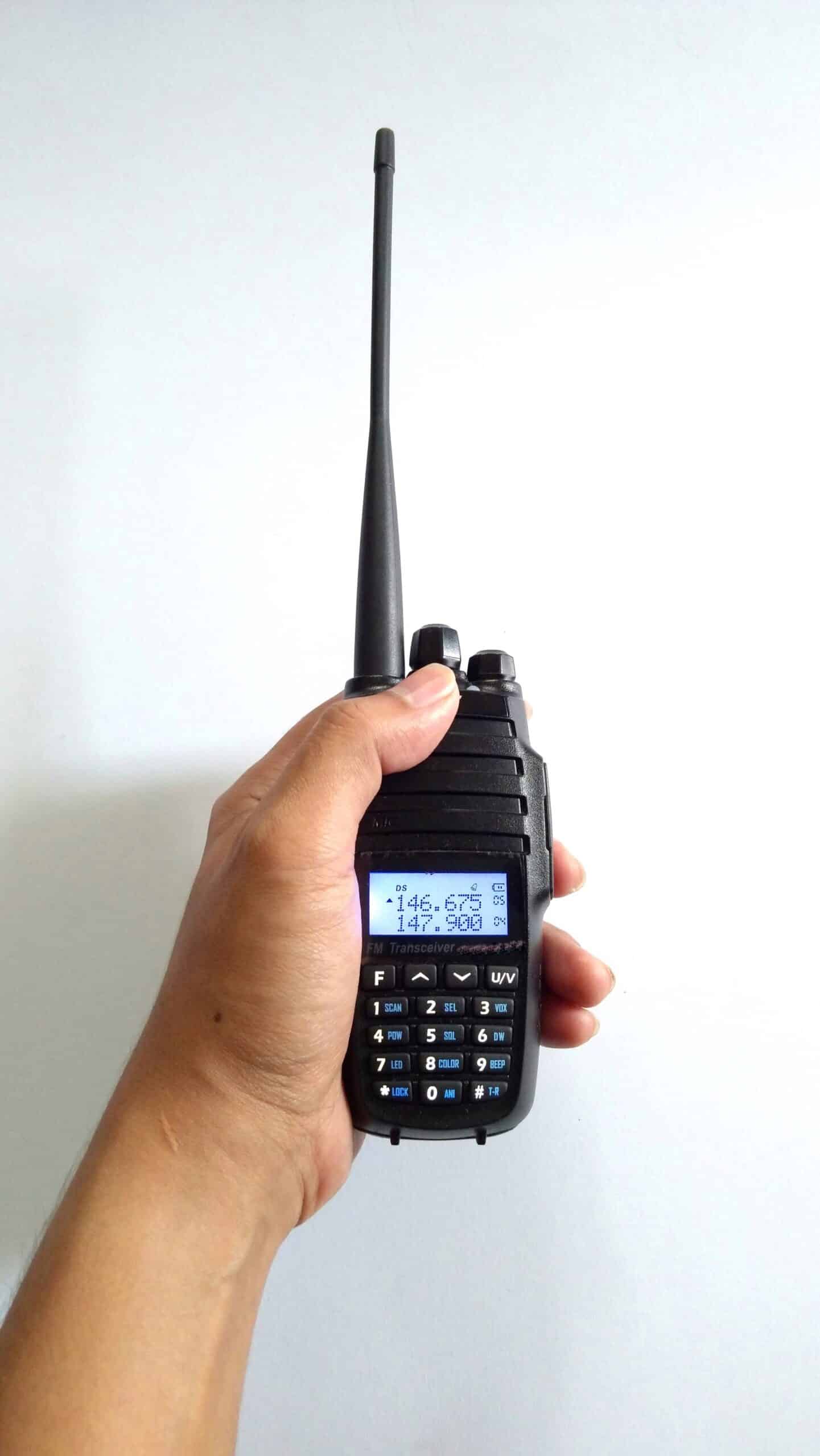
Study is most of the work, so start with free practice exams. Apps such as HamStudy.org let you drill the real pool questions, and they then show which topics you miss. Book your session once practice scores stay well above 74 percent.
Memorizing the pool works, but it does not teach you to operate a radio. Pair your study with a local club or licensing class, because ARRL lists both by location.
Steps to Your Ham Radio License, From Registration to Call Sign
The process has five steps, and you handle most of them online.
- Register for an FCC Registration Number (FRN) in the FCC CORES system before exam day.
- Find an exam session, either in person or by video, through ARRL or another volunteer examiner coordinator.
- Take the exam and answer at least 26 of the 35 questions correctly.
- Pay the $35 FCC application fee online through CORES within 10 calendar days of receiving your application file number.
- Open the link in the FCC email to view your official license and call sign.
Because the exam team does not collect the $35 fee, you pay the FCC directly. If you miss the 10-day window, the FCC dismisses the application, but you do not retest. Instead, the exam coordinator refiles it before your exam credit expires, which happens 365 days after the exam session. After you pay and the FCC processes the application, the emailed license link stays valid for 30 days, so save a copy right away.
What a Ham Radio License Costs
The license itself costs $50 for a new applicant. Radio gear is a separate spend, and the widget in the next section shows current prices.
| Cost Item | Amount | Paid To |
|---|---|---|
| Exam session, ARRL VEC | $15 | The volunteer examiner team |
| Exam session, other coordinators | Usually $15 or less | The coordinator’s team |
| FCC application fee, new license | $35 | The FCC, through CORES |
| Renewal after 10 years | $35 | The FCC, through CORES |
| Upgrade to General or Extra | No FCC fee | Exam session fees still apply |
Check the current numbers on the FCC fee page before you file, because fees change by rule. Next, the radio.
Handheld vs. Mobile: Choosing Your First Radio
Your first radio should match how you travel. A handheld goes anywhere, while a mobile radio lives in the truck with a roof antenna. Owners often start with a handheld and add a mobile later. This order makes sense, because a handheld teaches you the basics at low cost and a mobile adds range once you know how you use the hobby.
Handheld Radios for Beginners
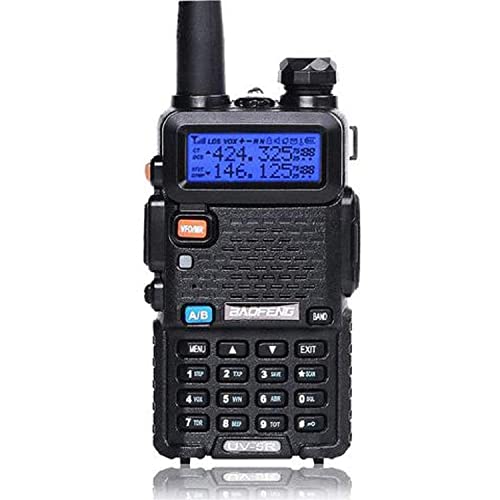
The Baofeng UV-5R is the low-cost entry point, and many call it a low-risk starter or spare. However, its keypad is painful to program. Many owners use a programming cable and the free CHIRP software, and many first-attempt failures come from counterfeit cables or the wrong driver. Budget handhelds also draw complaints about weaker receivers and less durability, though some owners say newer models have improved. Use it on the ham bands only.
The Yaesu FT-65R is the step up. It puts out 5 watts in a rugged, compact body. Owners often call Yaesu handhelds the buy-once choice. Opinions split on whether the price gap over a Baofeng is worth it. Choose the UV-5R to spend little, or the FT-65R for a rugged body.
Mobile Radios for the Truck
A mobile radio runs from your 12-volt system and delivers around 50 watts, roughly ten times the 5 watts of a handheld. Owners praise the Kenwood TM-V71A, the Yaesu FTM line, and Icom mobiles. Two current options are the Icom IC-2730A, a dual-band 50-watt radio, and the Yaesu FTM-150R, listed at 55 watts on VHF and 50 watts on UHF. Both need a wired power feed, a mounting spot, and an external antenna. Pick the handheld if you also hike or switch vehicles. Choose the mobile if one truck carries the radio on every trip.
Next, the widget below lists the four radios named above: the Baofeng UV-5R, the Yaesu FT-65R, the Icom IC-2730A, and the Yaesu FTM-150R.
First radios named in this guide
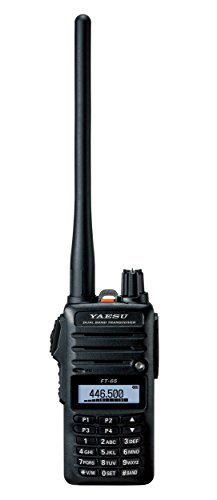
Yaesu Original FT-65 FT-65R 144/440 Dual-Band Rugged & Compact Hand…


Yaesu FTM-150R ASP Dual Band FM Tranceiver 55 watts VHF 50 watts UH…
Antennas, Safety, and Staying Legal
The antenna matters more than the radio. A handheld used inside a cab loses much of its signal, and owners call a roof-mounted magnet or NMO antenna the biggest upgrade. In my view, buy the radio first, then spend your next dollars on a proper antenna before you chase more watts.
Safety note: Keep a handheld’s antenna away from your face while you transmit. Mount a vehicle antenna outside the cab, and keep bystanders 1 to 2 feet or more away while you transmit.
Identify your station with your call sign every 10 minutes during a conversation and at the end of it. Keep ham radios on amateur frequencies. The UV-5R lacks the Part 95 certification which GMRS and FRS radios need. Transmitting on the ham bands requires your license, while listening does not.
Radio is one part of a trip plan. For check-ins and backup options, read our guide to staying connected without cell service.
Final Thoughts
A ham radio license suits overlanders who travel in groups or beyond cell coverage and want amateur repeaters. The exam is 35 questions from a public pool, the fees total $50, and most of the effort is study time. You do not need a technical background to pass.
Ham has trade-offs. The learning curve is steeper than CB or GMRS, repeater coverage varies by region, and no radio replaces a satellite messenger when you are far outside coverage. If you do not want to study, the CB route costs less effort, and the GMRS route sits in between.
My recommendation is simple. Study with a free app, pass the exam, and buy a handheld: the Baofeng UV-5R to spend little, or the Yaesu FT-65R for a rugged body. Then program your local repeaters and practice before the first trip. Add a mobile radio and a roof antenna once you want more range. Take your time with the study, and the license serves you on every trip for the next 10 years.
Ham Radio License FAQ
How much does a ham radio license cost?
A new license costs $50 in fees. The total splits into a $15 exam session with ARRL VEC and a $35 application fee paid to the FCC. Other coordinators often charge $15 or less, and your radio is a separate purchase.
How hard is the Technician exam?
The exam has 35 multiple-choice questions, and you need 26 correct to pass. Every question comes from a public pool of 409, so you know the material in advance. Test takers report about a week to three weeks of study.
How long is a ham radio license good for?
A license lasts 10 years. Renewal costs $35 through the FCC, and the same call sign stays with you.
How long does it take to get a ham radio license?
Study takes about a week to three weeks, and the exam itself happens in one session. After you pass, pay the $35 FCC fee within 10 days. Then the FCC emails your license once it processes the application.
Do I need a license to listen to ham radio?
No. You need a license only to transmit on the amateur bands. Listening to repeaters and simplex channels before you test is a good way to learn how operators talk.
Is it possible to take the ham radio exam online?
Yes. ARRL VEC offers remotely administered video exam sessions in addition to in-person sessions. Check the session listing for what equipment the volunteer examiner team requires.