



Quick Facts:
- Topic: DC to DC charger or isolator for a second battery.
- Fixed-voltage alternator, lead-acid batteries: a relay-style isolator works.
- Variable-voltage alternator or lithium house battery: use a charger.
- Charger sizes covered: 25 A, 30 A and 50 A.
- Fuse placement: within 7 inches of each battery terminal (ABYC marine rule).
- Cable range: 8 AWG to 4 AWG, set by amps and run length.
- Skill level: intermediate 12V wiring.
- Best for: overlanders adding a house battery to a truck or SUV.
9 min read
In This Guide
Overview
A DC to DC charger suits late-model trucks and SUVs, which often carry smart alternators. Many older rigs still work fine with a battery isolator. Pick the charger if your truck has a smart alternator or your second battery is lithium. Not sure which you have? Run the voltage test below. This guide explains how each device charges a second battery and where each one fails. Then it shows how to wire a dual battery setup so the second battery reaches full.
I bring a Starlink Mini along when I camp and overland. Its spec sheet lists 25 to 40 watts on average, about 2 to 3 amps at 12 volts. Overnight, the draw belongs on a second battery, also called the house battery, with a real charging plan. For the drain side, see how to keep your Jeep battery alive at camp.
What a Battery Isolator Does and Where It Falls Short
An isolator lets one alternator charge two batteries and blocks current from flowing between them. A diode version passes current one way only. Blue Sea Systems puts the drop across a silicon diode at about 0.7 volts. In contrast, Victron lists 0.3 to 0.45 volts for its Schottky Argodiode.
Relay versions skip the diode drop. A voltage-sensitive relay, also called an automatic charging relay, closes when it sees charging voltage. For example, the Blue Sea ML-ACR 7622 closes after 30 seconds at 13.5 volts or 90 seconds at 13.0 volts. It opens after 30 seconds at 12.75 volts. The REDARC SBI12 closes at 13.2 volts and opens at 12.6 volts.
Neither type changes voltage or reads battery chemistry. With a fixed 14.0 volt alternator behind a diode, the house battery sees 13.3 volts. Trojan specifies 14.4 volts for AGM absorption, and Battle Born asks for 14.2 to 14.6 volts on lithium. Therefore a diode leaves the second battery short of full. A relay passes full alternator voltage, so it works well only when the alternator holds a steady, high enough voltage.
If a charger fits your rig, three models cover 25 to 50 amps. The REDARC BCDC1225D delivers 25 amps and adds a solar input. Next, the isolated Victron Orion-Tr Smart 12/12-30A delivers 30 amps with no ignition wire. For 50 amps, the Victron Orion XS 12/12-50A comes in an IP65 waterproof case.
Chargers covered in this guide
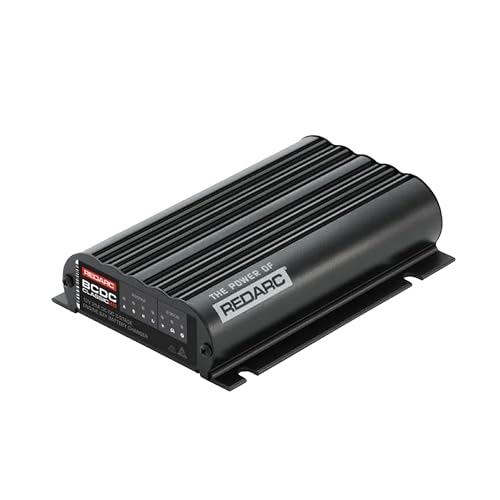
REDARC Dual Input 25A in-Vehicle DC to DC Battery Charger with MPPT…

Victron Energy Orion-Tr Smart DC-DC Charger 12/12V 30A 360W Isolate…

Why a Smart Alternator Starves the Second Battery
Smart alternators vary their output to save fuel, and the voltage often sits below an isolator’s close threshold. REDARC says these alternators drop as low as 12.3 volts once the starter battery is charged. Ford lists 12.2 to 14.9 volts for the Transit. A refresh mode after a month parked reaches 15.2. GM’s range runs from about 11.5 to 15.5 volts, according to alternator maker Remy.
Low voltage keeps relays open, because their thresholds sit near 13 volts. High voltage causes the opposite problem, since a relay passes all of it to the house battery. Remy’s guide describes a GM sulfation mode reaching 15.5 volts for three to four minutes. This tops the 14.4 volts Trojan specifies for AGM absorption. Victron adds the alternator sometimes shuts off for a while, and the starter battery then falls back to about 12.6 volts.
Test your truck with a multimeter. First, warm the engine with a drive, because variable alternators drop once the starter battery is charged. Next, read voltage at the starter battery at idle and again at 2,000 rpm. As a rule of thumb, treat the alternator as variable if the reading wanders or falls below 13.2 volts. REDARC also points to a battery sensor, usually on the negative terminal, as a sign. If you see either, REDARC advises a BCDC charger instead of the SBI12. Steady readings above 13.2 volts keep a relay in play.
How a DC to DC Charger Works

A DC to DC charger rebuilds alternator power into a proper charge profile for the second battery. Victron’s Orion XS accepts 9 to 17 volts in and outputs an adjustable 10 to 17 volts. Therefore it holds the correct charge voltage when the input sags or a long input cable drops voltage.
Chemistry matters. REDARC’s manual lists a 14.5 volt LiFePO4 (lithium iron phosphate) profile, and Battle Born asks for 14.2 to 14.6 volts bulk and absorb. Lithium also has low internal resistance and accepts heavy current. Victron’s lithium manual wants a current-limiting device, such as a DC to DC charger, between alternator and starter battery. Battle Born warns a bank wired straight to an alternator risks burning the alternator out.
Size the charger to the battery. Battle Born recommends no more than 50 amps per 100 Ah of lithium. Trojan caps its AGM line at 20 percent of capacity, so a 100 Ah AGM battery takes 20 amps. Therefore a 25 amp charger slightly overshoots a 100 Ah AGM battery.
DC to DC Charger vs. Isolator: Side by Side
| Factor | Charger | Isolator or relay |
|---|---|---|
| Variable-voltage alternator | Works with the right trigger | REDARC advises a charger instead |
| Charge profile | Set by battery type | Whatever the alternator sends |
| Voltage lost or gained | Boosts low input to hold set voltage | 0.3 to 0.7 V across a diode; none across a relay |
| Alternator load | Input current limited | No current limit |
| Current rating | 25 to 50 A in this guide | 100 A (SBI12) to 500 A (ML-ACR) |
| Mixed AGM and lithium | Each battery gets its own profile | Both get the same voltage |
A charger wins on control, while an isolator wins on raw current, because relays carry 100 to 500 amps. For me, the alternator decides it. If you are unsure your alternator holds a steady voltage, buy the charger.
Wire It So the Second Battery Reaches Full
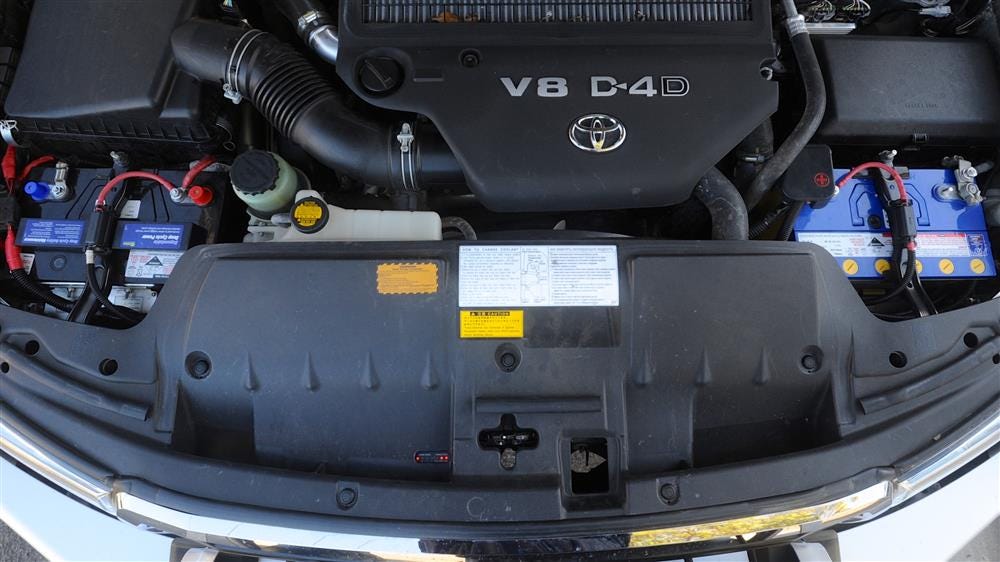
Safety note: Fit a fuse in every positive cable as close to the battery terminal as the layout allows. The ABYC marine standard sets 7 inches as the limit. A short in an unfused cable has the whole starter battery behind it. Disconnect the starter battery negative before you start, and stop if a cable lug gets warm.
Fuses, Cable and Charger Placement
Wire a dual battery setup in this order, keeping every fuse out until the end. Connect the ground first, because REDARC says converters need ground connected first. Next, run the positive cable from a fuse holder at the starter battery to the charger. Then run the charger output to the house battery through a second fuse holder. Last, insert both fuses and reconnect the starter battery negative. Mount the charger close to the house battery. REDARC wants it away from engine heat, and Victron says never to mount it directly above a battery. The charger regulates voltage at its own terminals, so resistance in the output cable lowers what the battery receives.
Size cable by amps and run length. Aim for under 2.5 percent voltage drop, the target in Victron’s Wiring Unlimited guide. The table lists each maker’s manual figures.
| Charger | Run length | Cable | Fuse |
|---|---|---|---|
| REDARC BCDC1225D (25 A) | 3 to 16 ft | 8 AWG | 40 A |
| REDARC BCDC1225D (25 A) | 16 to 30 ft | 6 AWG | 40 A |
| Victron Orion-Tr Smart 12/12-30A (30 A) | Up to 33 ft | 6 AWG | 60 A |
| Victron Orion XS 12/12-50A (50 A) | Under 16 ft | 6 AWG | 60 to 70 A |
| Victron Orion XS 12/12-50A (50 A) | 16 to 33 ft | 4 AWG | 60 to 70 A |
Trigger Wire, Ground and Final Checks
Next comes the trigger. REDARC’s BCDC chargers use a blue wire on a switched ignition fuse. Meter the tap first: it must show voltage with the key on and none with the key off. With a smart alternator, the blue wire overrides the low-voltage cutout, so the charger keeps running. Leave the wire unconnected on a fixed-voltage alternator. The Orion XS works differently. It detects a running engine from input voltage, and Victron advises against an ignition feed because it risks draining the starter battery with the engine off.
Ground the REDARC and Orion XS chargers to bare chassis metal. Victron says the lug must touch bare metal, free of paint, for a low-impedance connection. On trucks with a battery sensor, Ford’s Ranger body manual says to ground auxiliary loads to the vehicle, not the battery negative terminal. The isolated Orion-Tr Smart keeps input and output grounds separate, so wire each negative as its manual shows.
Set the charger’s battery profile to AGM or lithium before the first drive. Then finish with a drive test. Watch house battery voltage and charge current at idle and again at 2,000 rpm. Voltage stuck near resting level with no current means the charger is off. Check the trigger first. Victron notes engine detection sometimes needs its start and shutdown voltages tuned.
Parts for a DC to DC Charger Install
Three parts finish the install. The BOJACK 60 amp AMI/MIDI fuse holders and fuses suit the 30 and 50 amp rows. For the 25 amp REDARC, buy a 40 amp fuse instead. A FASTSTORM 6 AWG battery cable set, with 10 feet red and 10 feet black, covers runs up to 10 feet and includes lugs, but no crimper. Finally, the Victron BMV-712 Smart Battery Monitor shows whether the second battery reaches full.
Install parts covered in this guide

BOJACK 60 Amp AMI/Midi Fuse Holders and High Current Bolt-on Midi F…


Dual Battery Setup by Rig: Three Examples
Older truck, two AGM batteries under the hood. REDARC recommends its SBI isolators for older vehicles, generally built before 2015, with a fixed-voltage alternator. A relay such as the REDARC SBI12 or the Blue Sea ML-ACR keeps wiring short and simple. Fuse each relay lead close to its battery, then size cable from the relay manual.
Late-model SUV or truck, lithium battery in the cargo area. Buy a charger, since the alternator is likely variable and the cable run is long. A charger passes too little current to crank an engine, so our lithium jump starter for dual batteries guide covers a dead starter battery. Battle Born recommends up to 50 amps per 100 Ah, so the Orion XS 12/12-50A fits a 100 Ah lithium bank. Check your alternator rating first, because 50 amps out pulls more than 50 amps in.
Rooftop tent or trailer rig with a fridge and a Starlink Mini. A Dometic CFX3 45 uses 1.03 Ah per hour at 90°F, about 25 Ah a day. The Starlink adds 2 to 3 amps, so the pair draws roughly 3 to 4 amps. Run around the clock, the pair uses roughly 75 to 100 Ah a day. A 25 amp charger needs three to four hours at full output to refill it. The BCDC1225D also takes a solar input, and our guide to sizing solar for overlanding covers the panel side. For the overnight math, see Starlink Mini overnight on 12V.
Final Thoughts
If your truck has a variable-voltage alternator or your house battery is lithium, buy the charger. It handles variable voltage, low input voltage and lithium profiles. For a fridge-and-Starlink rig, the REDARC BCDC1225D fits. Bigger banks suit the Victron Orion XS 12/12-50A.
A battery isolator still earns its place on an older truck with a fixed-voltage alternator and AGM batteries. Keep it there rather than forcing a charger onto a rig with no need for one. A charger brings more parts, sometimes a trigger wire to route, and a ceiling of 25 to 50 amps.
My pick is the charger, because Victron notes charging strategies differ from vehicle to vehicle, even within the same brand and model. Whatever you choose, fuse first and measure voltage at the battery. Then confirm the second battery reaches full on a real drive.
FAQ
What does a DC to DC charger do?
It takes alternator voltage and rebuilds it into the charge profile your second battery needs, such as 14.5 volts for LiFePO4 on REDARC models. Low input voltage shuts it off, so the second battery does not drain the starter battery.
Do I need a battery isolator if I have a DC to DC charger?
No. The charger already keeps the batteries separate, and its low-voltage cutoff protects the starter battery. An isolator in front of it adds a part with no job to do.
What size DC to DC charger do I need?
Trojan caps its AGM line at about 20 percent of capacity, so a 100 Ah AGM bank tops out near 20 amps. Battle Born recommends up to 50 amps per 100 Ah of lithium, so 30 to 50 amps suits a 100 Ah lithium bank. Victron notes alternator output sometimes drops to about half at idle, so leave headroom.
Does a DC to DC charger work with a smart alternator?
Yes, with the right trigger. REDARC’s BCDC chargers need the blue wire on an ignition source. Victron’s Orion XS detects the running engine on its own, and tuning its voltage thresholds helps where detection misses on some vehicles.
Will an isolator work with a variable-voltage alternator?
Usually not. Variable-voltage alternators drop as low as 12.3 volts, below the 13.2 volts the SBI12 needs to close. REDARC advises a BCDC charger instead.
Related Reading