


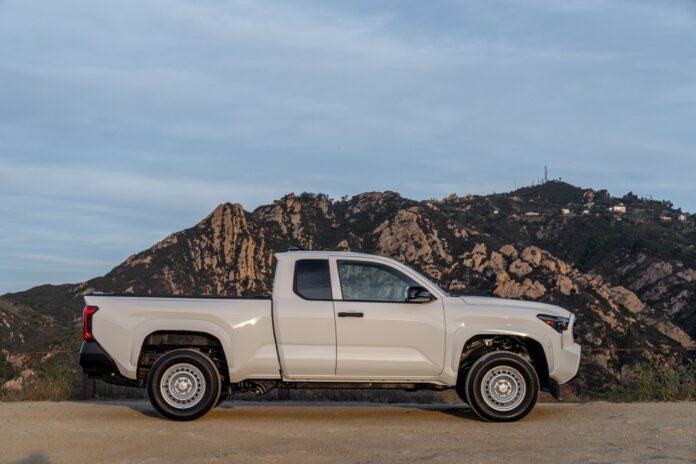
Quick Facts:
- Topic: Overlanding a regular cab Tacoma with a short bed.
- Model years covered: 2005 to 2014, the second generation.
- Engine: 2.7L four-cylinder with a 5-speed manual or 4-speed automatic.
- Bed: 73.5 inches long and 41.5 inches between the wheel wells.
- Payload: About 1,335 to 1,380 pounds on 4WD trucks.
- Sleeping length: Roughly 6 feet with the tailgate closed.
- Best for: Solo travelers and couples who want a light, short truck.
10 min read
In This Guide
- Why Build a Regular Cab Tacoma for Overlanding
- Regular Cab Tacoma Key Facts at a Glance
- Do the Payload Math Before You Buy Anything
- Sleeping in the Bed of a Regular Cab
- Smart Tacoma Bed Storage Without Overloading the Axle
- Suspension and Tires for a Regular Cab
- Power, Fridge, and Recovery on a Short Truck
- Regular Cab vs. Access Cab and the New XtraCab
- What to Buy First, in Order
- Final Thoughts
- FAQ
Why Build a Regular Cab Tacoma for Overlanding
Yes, a regular cab Tacoma works as an overland truck, as long as you respect one number: payload. It is a compact two-door pickup with front seating for two or three, a 73.5-inch bed, and a wheelbase of about 110 inches. Toyota dropped the cab after the 2014 model year, according to its 2015 Tacoma release. This guide covers the second-generation trucks, 2005 to 2014, and points you to the 2024 XtraCab near the end if you want a new one.
Short trucks reward planning. First, the cab has no rear seat, so most gear rides in the bed. Second, payload is modest, about 1,335 pounds on a 2014 4WD model. Therefore, build order matters: weigh the truck, plan the sleeping space, choose storage, and upgrade the springs last.
In my view, the short wheelbase is the best reason to choose this truck, and owners praise it too. Threads on Tacoma World and Expedition Portal show the same pattern. Owners like how nimble, simple, and light the truck feels. However, the tiny cab draws the most complaints.
Start light. A mattress, a sleeping pad, and a few soft bags weigh little. They also cost far less than a drawer system.
A closed-cell pad and a pillow cover the light start. The Therm-a-Rest Z Lite Original measures 72 by 20 inches and weighs 14 ounces, so it fits the 73.5-inch bed. For more cushion, the Therm-a-Rest Basecamp Self-Inflating Camping Sleeping Pad in the Regular size measures 72 by 20 by 2 inches and weighs 2 pounds 8 ounces. The Therm-a-Rest Compressible Camping and Backpacking Pillow, Stargazer, Regular, packs small beside either pad.
Light sleeping gear for a 6-foot bed

Therm-a-Rest Z Lite Original Camping and Backpacking Sleeping Pad |…

Therm-a-Rest Basecamp Self-Inflating Foam Camping Sleeping Pad

Regular Cab Tacoma Key Facts at a Glance
Light is relative, so start with the numbers the truck sets for you. The table below pulls figures from Edmunds, Car and Driver, and Cars.com. Payload and GVWR vary by year and drivetrain, so treat them as a starting point. Your door-jamb sticker holds the numbers for your truck.
| Specification | Details |
|---|---|
| US model years | 2005 to 2014 |
| Bed length | 73.5 inches |
| Bed width at floor | 56.7 inches |
| Width between wheel wells | 41.5 inches |
| Wheelbase | 109.4 to 110 inches |
| Engine | 2.7L four-cylinder only |
| 4WD payload | 1,335 to 1,380 pounds |
| 4WD GVWR | 5,100 pounds |
| Maximum towing | 3,500 pounds |
| Stock 4WD tires | P245/75R16 |
Look at the engine row. Toyota never offered a V6 in the second-generation Regular Cab, so the four-cylinder carries every pound you add. Edmunds lists the EPA rating of a 2014 4WD automatic at 19 miles per gallon combined.
Do the Payload Math Before You Buy Anything
Payload is the weight limit for everything you put in the truck, including people. A 2014 4WD Regular Cab lists 1,335 pounds of payload. This number comes from a 3,765-pound curb weight and a 5,100-pound GVWR. Therefore, every accessory draws from a small budget, and Tacoma payload is the first number to respect.
For example, say two adults weigh 400 pounds together and a bed drawer system weighs about 204 pounds. This leaves roughly 730 pounds for the shell, sleeping platform, fridge, water, fuel, and gear. Water adds up too, since a 5-gallon jug weighs about 42 pounds by itself. Write the budget down as payload minus people minus each item, and stop buying when the balance reaches zero.
Weigh your truck at a public scale before you buy anything, then weigh it again once it is loaded and before the first trip. Our guide to payload capacity and GVWR explains how to read the door-jamb sticker. Also, a heavy build often overloads the rear axle even when the total looks fine. Therefore, check each axle if the scale allows.
In my view, a scale ticket is the best first purchase for this build, because payload runs out before ambition does.
Sleeping in the Bed of a Regular Cab
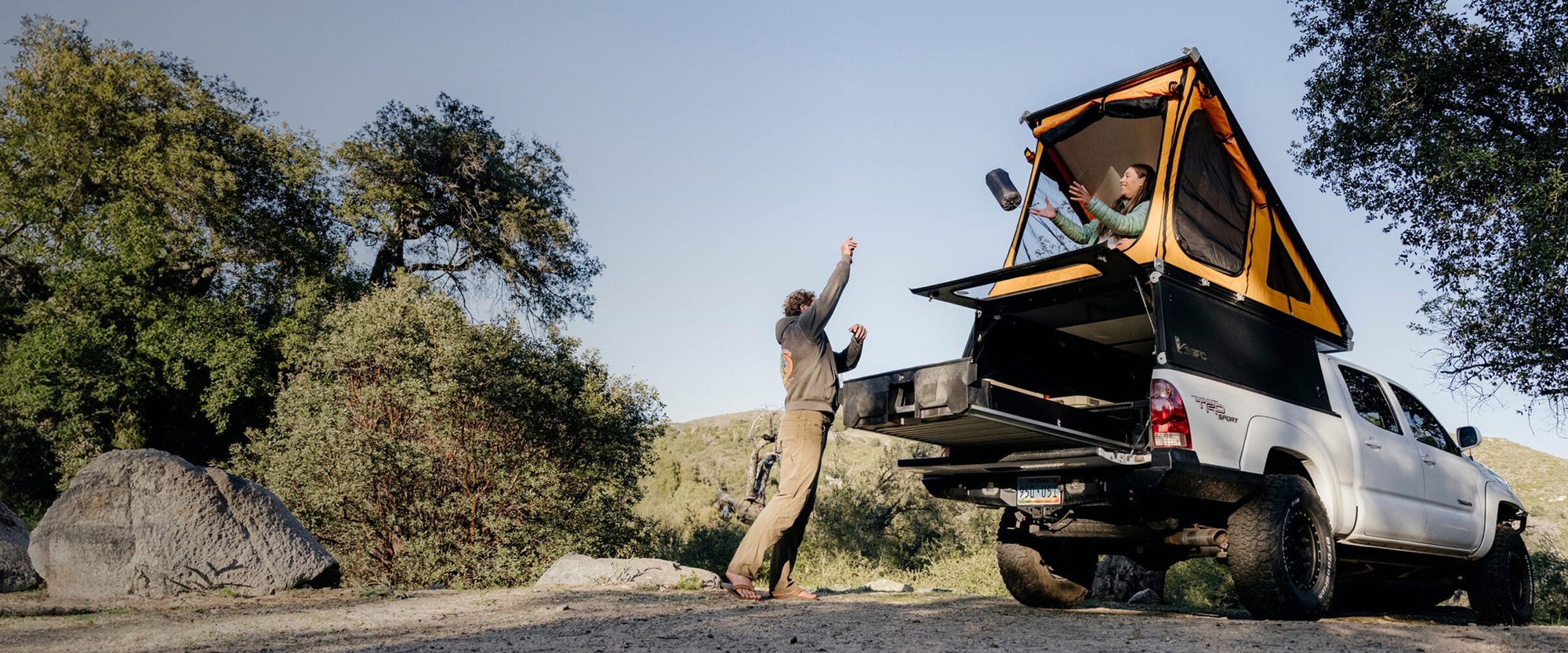
The bed is the bedroom. It measures 73.5 inches long and 56.7 inches wide at the floor. However, only 41.5 inches sits between the wheel wells. One owner measured the wheel wells at about 9 inches above the floor. Therefore, a platform built above them uses the full width.
A platform about 56 to 57 inches wide fits a full-size mattress, which measures 54 inches across. Its 75-inch length is longer than the 73.5-inch bed, so trim the foam to fit. As a result, one adult sleeps comfortably and two adults fit snugly. With the tailgate closed under a shell, plan on roughly 6 feet of sleeping length.
Three layouts cover most builds:
- Full-width platform: build it above the wheel wells so the whole 56.7-inch floor width becomes bed. This suits couples and leaves the space underneath for storage.
- Narrow bed between the wells: a twin mattress measures 38 inches across, so it fits the 41.5-inch gap. This suits one sleeper and keeps the sleeping surface low under the shell.
- Diagonal sleeping: a taller sleeper lies corner to corner on the wide platform, which measures about 93 inches across the diagonal.
Safety note: Never run a fuel-burning heater, stove, or engine inside a closed shell while you sleep. Carbon monoxide builds up in small spaces. Cook outside and keep fuel-burning gear out of the shell.
Space under the platform holds bins or drawers, while the cab stays clear for driving. However, a platform sits high, so check headroom under the shell before you build. Our truck bed camping setup guide compares mattresses, platforms, and costs. A shell with side hatches also keeps rain out. It lets you reach gear without crawling in from the tailgate.
Smart Tacoma Bed Storage Without Overloading the Axle
The platform leaves the space beneath it for gear, and where the gear sits matters as much as what it weighs. Heavy gear goes low and forward, close to the cab. Light gear goes high and toward the tailgate, because weight far behind the rear axle lightens the front tires and makes the rear springs sag. Because the regular cab has no rear seat, the bed carries almost everything. Therefore, this rule decides how the truck drives.
Drawer systems keep gear dry and organized. However, DECKED publishes weights of 171 to 204 pounds for its midsize drawer systems, so a unit for this bed weighs up to about 204 pounds. This uses roughly 15 percent of a 1,335-pound payload before you load a single item.
Modular bins weigh less and come out when you need the bed for hauling. For example, hard cases stacked against the bulkhead keep the load forward. Our guide on how to maximize truck bed storage covers the daily-driver trade-offs.
The cab holds the rest. Soft duffels fit behind the seats, and webbing straps keep them from sliding. A fridge at the platform edge stays within easy reach, so Tacoma bed storage doubles as a camp kitchen. Lowered, the tailgate serves as a counter for a stove or cooler. Check its weight rating in your owner’s manual before you load it.
Suspension and Tires for a Regular Cab
A loaded bed compresses the rear leaf springs, and your Tacoma payload decides how stiff they need to be. Owners fix the sag with add-a-leaf packs, air springs, or a full leaf pack from ICON, Deaver, or Dobinsons. Start with the mildest fix, such as an add-a-leaf pack, then add stiffness only after you weigh the loaded truck.
Shocks matter too. Our guide to shocks for a loaded rig explains when to move up from stock.
A common no-lift fit is 265/75R16 tires, about 31.6 inches tall, according to a second-generation fitment guide. Larger tires such as 285/75R16 rub, though Regular Cab owners run 255/85R16 tires with lift or level kits. For tread choice, see the all-terrain vs. mud-terrain tires comparison.
The 2.7L struggles with big tires, a shell, and a loaded bed. For example, several owners regeared to 4.88 with 33-inch tires. One reports mileage fell to about 18 miles per gallon after a lift and larger tires. Plan the gearing before you buy the tires, because the two choices affect each other.
Power, Fridge, and Recovery on a Short Truck
Power and cooling come next. Owner builds commonly pair a compressor fridge with a second battery and a DC-DC charger. The charger protects the truck battery. Our guide to sizing a 12V fridge shows how the amp-hours add up. Since weight matters here, choose the smallest fridge you will fill.
Recovery gear needs to stay compact as well. Traction boards weigh far less than a winch bumper, and they store flat beside the platform. Every Tacoma overland build needs a plan for getting unstuck. Also, pack a shovel, a tire gauge, and an air compressor before you add armor.
Storage for recovery gear matters as much as the gear. The Front Runner Wolf Pack Pro with Hi-Lid weighs 8.6 pounds empty, so count it in your payload. Its hard shell keeps a shovel and straps dry and stackable. The Front Runner Wolf Pack Pro Stackable Storage Boxes cover the same job without the extra lid height. For airing down, the ARB ARB505 Deflator Kit covers tire pressure from 10 to 60 PSI.
Recovery and storage gear for a short bed


Front Runner Wolf Pack Pro with Hi-Lid | Bulky expedition gear find…

ARB ARB505 Deflator Kit 10-60 PSI Tire Pressure Gauge Rapid Air Dow…
Regular Cab vs. Access Cab and the New XtraCab
Before you commit, compare the cab with its neighbors. The Regular Cab rides on a wheelbase of about 110 inches. However, the 2015 Access Cab measures 127.4 inches, about 17 to 18 inches longer. Overall length shows the same gap, at 190.4 inches against 208.1 inches.
The Access Cab adds small fold-up rear seats and under-seat storage. It also offers the 4.0L V6, which suits drivers who find the 2.7L slow. Edmunds lists its 2015 payload at 1,255 pounds on the 2WD four-cylinder, so you give up a little capacity for the room. If you often carry a passenger, the extra cab space matters more than the shorter wheelbase.
For a new truck, Toyota’s 2024 and newer Tacoma offers a two-door XtraCab with a 6-foot bed and no rear seat. It is the closest modern equivalent to the Regular Cab.
What to Buy First, in Order
Spend in the order below, and stop adding weight when the scale says you are out of room.
- A scale ticket: weigh the empty truck so you know your real payload.
- A sleeping pad and a trimmed mattress: this is the cheapest way to learn how you sleep in the bed.
- Soft bags and hard cases: light storage comes out when you need the bed.
- Recovery basics: traction boards, a shovel, a tire gauge, and an air compressor come before armor.
- A platform: build it once you know how you sleep and what you carry.
- A fridge and second battery: choose the smallest fridge you will fill.
- Tires and gearing: decide both together.
- Springs and shocks: weigh the loaded truck again, then add only the stiffness the scale asks for.
Final Thoughts
A regular cab Tacoma rewards the owner who plans before buying. The nimble feel, the light weight, and the simple design are what owners praise, and they suit a solo trip or a couple’s weekend well. Because the short bed asks you to choose what matters, making the choice is a large part of the appeal.
Trade-offs are real, and I would rather you hear them now. Specifically, the cab is tiny, the 2.7L works hard with a loaded bed, and payload runs out quickly. If you often carry passengers, the Access Cab compared above suits you better.
For the right driver, though, a simple sleeping platform turns the bed into a camp. Weighing the truck first keeps the build honest. It also shows how much room is left for the next upgrade.
If I had to give one rule for any Tacoma overland build, it would be to build light. Every pound you skip is a pound of payload for water, food, and the people you bring along. Weigh the truck, add one piece at a time, and let the scale tell you when the build is done.
FAQ
Does Toyota still make a regular cab Tacoma?
No. Toyota sold the Regular Cab through the 2014 model year, and this guide covers the 2005 to 2014 second generation. For 2015, Toyota dropped the cab. Today’s Tacoma offers a two-door XtraCab and a four-door Double Cab instead.
How much weight does a regular cab Tacoma carry in the bed?
Payload on a 4WD Regular Cab runs about 1,335 to 1,380 pounds, including people. Your door-jamb sticker lists the exact figure for your truck. Subtract passengers and every accessory from this number.
How long is the bed on a regular cab Tacoma?
The bed measures 73.5 inches long, which Edmunds lists as a 6.1-foot bed. It is 56.7 inches wide at the floor and 41.5 inches wide between the wheel wells.
Is there room to sleep in a regular cab Tacoma bed?
Yes, for one adult up to roughly 6 feet tall. A platform above the wheel wells is about 56 inches wide, so two adults fit snugly. Taller sleepers need a ground tent or a diagonal layout.
Do you need a camper shell for a bed sleeping platform?
No, but a shell adds weather protection and a lockable space. It also adds weight, so subtract it from your payload before you commit.