



Quick Facts:
- Topic: Best coolers for overlanding and truck camping
- Coolers compared: 8, across roto-molded, budget hard, wheeled, and soft
- Price range: $129 to $325
- Capacity range: 23 L soft to 70 quarts wheeled
- Ice retention: 24 hours (soft) to a claimed 10 days (premium roto)
- Top overall pick: YETI Tundra 45
- Best value pick: RTIC 45 QT Ultra-Tough
- Best budget pick: Lifetime 55 Quart High Performance
- Best for: Rig owners choosing a chest for a truck bed or rack
12 min read
In This Guide
- Best Coolers for Overlanding and Truck Camping
- Best Coolers at a Glance
- How We Chose These Coolers
- What to Look for in an Overlanding Cooler
- Best Roto-Molded Hard Coolers
- Best Value and Budget Hard Coolers
- Best Wheeled Cooler for Long Hauls
- Best Soft Coolers for the Cab and Short Runs
- Hard Cooler vs. Electric Fridge
- How to Secure and Pack a Cooler in Your Rig
- Final Verdict
- Frequently Asked Questions
Best Coolers for Overlanding and Truck Camping
The best coolers for overlanding hold ice for days, shrug off washboard roads, and lock down in a truck bed without rattling loose. A cooler is core overlanding gear because it feeds you when the next town sits 200 miles behind you. This guide compares eight of the best coolers across four buckets. Those buckets are premium roto-molded chests, budget hard coolers, a wheeled hauler, and packable soft coolers.
Most “best coolers” roundups target beach days and backyard parties. Overlanders and truck campers, however, face different problems. You need a chest sized for a bed or drawer system. It also needs latches built to stay shut on corrugations and a gasket sealing trail dust out. For those reasons, every pick here gets judged through a rig-owner lens. This holds whether you want the best cooler for camping or a hauler for month-long expeditions.
Prices span $129 for a value soft cooler to $325 for the benchmark YETI. For most weekend trips, one of the best coolers in the $180 to $325 range works well. As a result, it delivers 5-plus days of usable ice. However, for long expeditions with dual-battery power, a 12V fridge starts to make sense. Therefore, this guide covers the fridge decision too.
Best Coolers at a Glance
| Top Pick | Best USA-Made | Most Rugged | Best Value | Best Budget | |
|---|---|---|---|---|---|
| Product | TOP PICK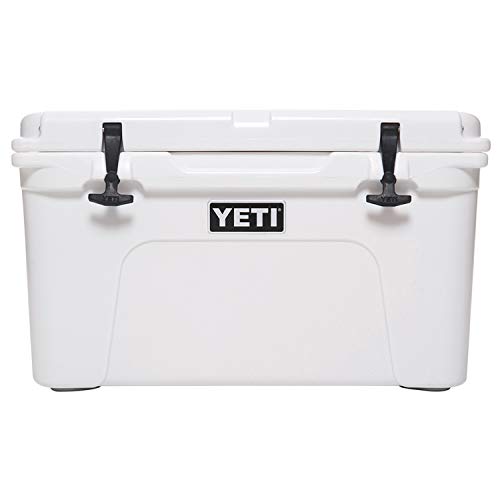 YETI Tundra 45 YETI Tundra 45 |  ORCA 40 Quart ORCA 40 Quart |  Pelican 50QT Elite Pelican 50QT Elite |  RTIC 45 Ultra-Tough RTIC 45 Ultra-Tough |  Lifetime 55 HP Lifetime 55 HP |
| Rating | ★★★★★ 4.8 900 ratings | ★★★★☆ 4.5 100 ratings | ★★★★☆ 4.5 800 ratings | ★★★★★ 4.7 2,100 ratings | ★★★★★ 4.7 2,600 ratings |
| Capacity | 54 cans | 48 cans | 50 qt | 60 cans | 60 cans |
| Ice Retention | Top-tier (lab) | Up to 10 days* | Up to 10 days* | Multi-day | Up to 7 days |
| Price | $239.00 as of Oct 27, 1:00 pm | $150.94 as of Oct 27, 1:00 pm | |||
| Check Price → | Check Price → | Check Price → | Check Price → | Check Price → |
The table below lists the best coolers with their type, capacity, empty weight, ice-retention figure, and current price. Ice-retention numbers come from the makers unless noted. Independent lab tests often land lower, so treat them as ceilings rather than guarantees.
| Cooler | Type | Capacity | Empty Weight | Ice Retention | Price |
|---|---|---|---|---|---|
| YETI Tundra 45 | Premium roto | 54 cans | 24.6 lbs | Top-tier (lab) | $325 |
| ORCA 40 | Premium roto | 40 qt / 48 cans | ~29 lbs | Up to 10 days* | ~$310 |
| Pelican 50QT Elite | Premium roto | 50 qt | 32.2 lbs | Up to 10 days* | $311 |
| RTIC 45 QT Ultra-Tough | Value roto | 45 qt / 60 cans | 29.5 lbs | Multi-day | ~$239 |
| Lifetime 55 Quart HP | Budget hard | 55 qt / 60 cans | 23.4 lbs | Up to 7 days | ~$178 |
| Igloo Trailmate Journey 70 | Wheeled | 70 qt | ~35 lbs | Multi-day | ~$230 |
| RTIC Ultra-Tough Soft | Soft | 30 cans | 4 lbs | Up to 2 days | ~$129 |
| ICEMULE Pro Large | Soft backpack | 23 L / 24 cans | 3.2 lbs | 24+ hours | ~$135 |
*Maker claim. Independent lab testing of the ORCA 40 kept internal temps under 50°F for 5.5 days. Real-world ice life depends heavily on ambient heat, pre-chilling, and how often you open the lid.
How We Chose These Coolers
Our best coolers picks come from three inputs: manufacturer specs, independent lab testing, and firsthand use of one cooler in this lineup. For lab data on ice retention and build quality, this guide leans on published results from OutdoorGearLab and CNET. Both sources run controlled hold-time tests. Moreover, where a maker claims a number independent testing has not confirmed, the text says so plainly.
The overlanding lens shaped every choice. First, the cooler had to fit a realistic truck-bed or drawer footprint. Second, latches and hinges had to survive corrugated washboard without popping open. Third, the gasket had to seal against dust. Finally, the price had to make sense for the performance. For example, a $325 chest and a $178 chest often serve different trips equally well.
One cooler here is a long-term personal reference. Specifically, the YETI 40L-class Tundra has earned its keep on real trips, which anchors the roto-molded section in firsthand use rather than spec sheets alone. The other seven span brands and budgets on purpose, so you see genuine alternatives instead of a single company’s catalog.
What to Look for in an Overlanding Cooler
The best cooler for overlanding balances ice life, weight, and footprint against your rig and trip length. Before you compare the best coolers below, understand the five factors separating a trail-ready chest from a backyard one.
Roto-molded vs. injection-molded vs. soft
Roto-molded coolers use a single seamless shell of thick plastic with 2 to 3 inches of foam, which is why they dominate multi-day ice tests. Injection-molded and foam-filled coolers like the Lifetime 55 cost far less and still hit 7-day claims, although the walls run thinner. Soft coolers, by contrast, trade ice life for weight, folding down to a few pounds for day pushes. Match the construction to the job instead of buying the priciest option by default.
Ice retention and what the day claims mean
A “10-day” rating assumes a pre-chilled cooler, block ice, a full load, shade, and a lid kept closed. Overlanding breaks most of those assumptions. For example, lab testing of the ORCA 40 held safe temps for 5.5 days, roughly half its marketing claim. Therefore, plan around real numbers. Premium roto chests give you 4 to 6 usable days in summer heat. Meanwhile, budget hard coolers give you 2 to 4.
Size and footprint for your truck bed or drawer system
Capacity in quarts matters less than external dimensions. For instance, a 70-quart wheeled cooler stands nearly 24 inches tall. As a result, it rises above many truck-bed side walls and blocks rearview sightlines. Measure your bed, rack, or drawer opening first. Then pick a chest leaving room for the lid to swing open without hitting a canopy or tonneau.
Tie-downs, latches, and dust sealing
Washboard roads test hardware harder than any parking lot. Look for molded tie-down slots, so a ratchet strap holds the cooler flat against the bed. Rubber T-latches and freezer-grade gaskets keep the lid sealed and dust out, while cheap push-button latches tend to rattle loose. Notably, bear-certified models such as the YETI Tundra, ORCA 40, and Pelican Elite add reinforced hardware as a bonus.
Weight, drainage, and daily ergonomics
An empty premium cooler already weighs 25 to 32 pounds, and 40 pounds of ice and food doubles the load. Consequently, wheels or a second set of handles earn their keep on longer carries. Similarly, a large drain plug you reach without lifting the chest saves your back at camp. These small details decide whether the cooler helps you or fights you every morning.
Best Roto-Molded Hard Coolers
Roto-molded chests anchor any best hard cooler list. They cost the most, weigh the most, and hold ice the longest. Given the build, these three earn their space on a rig.
YETI Tundra 45: Best Overall for Overlanding
The Tundra 45 is the benchmark every other hard cooler gets measured against. It holds 54 cans, weighs 24.6 pounds empty, and uses up to 3 inches of PermaFrost insulation with a freezer-quality gasket. As a result, YETI’s chest outlasted its rivals in CNET’s controlled testing, which explains the premium.
For overlanders, the value is durability and sealing. The Tundra line carries IGBC bear certification, and the T-Rex latches stay shut on rough trails. At $325, it costs more than the alternatives here. However, the build justifies the price for anyone who camps hard and often.
YETI Tundra 45 Cooler, White
The benchmark hard cooler every other overlanding chest gets measured against.
From experience: I own the YETI 40L, a hard cooler from the same premium roto-molded family as the Tundra 45. Every time I have used it, it has been a rock-solid cooler, and it pays for its weight. The walls are insulated extremely well, and it keeps things cold inside far longer than the cheaper coolers I have owned.
ORCA 40: Best USA-Made and Bear-Certified
Built in the USA, the ORCA 40 offers YETI-tier performance with a distinct build. It holds 48 cans, weighs about 29 pounds, and carries IGBC bear certification. ORCA markets up to 10 days of ice. However, OutdoorGearLab measured 5.5 days in the lab, which still ranks among the strongest results.
A stretchy cargo-net pocket on the back adds handy storage for wet gloves or a map. Because the interior runs shallow at roughly 11 inches, tall bottles lie down rather than stand. Priced near $310, the ORCA competes directly with YETI while giving you a different look and feel.
ORCA BW040ORCORCA Cooler, White, 40-Quart
A USA-made, bear-certified roto cooler that goes head-to-head with YETI.
Pelican 50QT Elite: Most Rugged
The Pelican 50QT Elite is the buy-it-for-life pick. It backs a true 50-quart interior with 2 inches of polyurethane insulation, a 360-degree freezer-grade gasket, and stainless hardware. Pelican also includes a genuine limited lifetime warranty, which few competitors match.
At 32.2 pounds empty, it is the heaviest chest here, so plan your lifts. The Press and Pull latches operate easily even with gloves, while IGBC bear certification covers backcountry trips. For overlanders who value hardware built to outlast the truck, the Elite is worth the $311 ask.
Pelican 50 Quart Elite Cooler
The buy-it-for-life pick, backed by a true lifetime warranty.
Best Value and Budget Hard Coolers
You do not need to spend $325 to keep food cold on the trail. Instead, these two coolers deliver most of the performance for far less money.
RTIC 45 QT Ultra-Tough: Best Value Hard Cooler
For value hunters, the RTIC 45 is the classic play against a YETI. It holds 60 cans and 41 pounds of ice, uses up to 2.8 inches of closed-cell foam, and weighs 29.5 pounds. RTIC prices it near $239, roughly $80 to $100 under a comparable YETI, while delivering similar multi-day ice life.
The tradeoff is small. Because RTIC does not publish IGBC bear certification, leave it out of grizzly country. For nearly every other overlanding trip, the 45 delivers rugged roto-molded build and honest ice retention. The friendlier price ranks it as the best cooler for the money here.
RTIC 45 QT Ultra-Tough Hard Cooler, Grey | Portable Hard Ice Chest Box for Beach, Drinks, Camping, Picnic, Fishing, Boat and Barbecue
Delivers roughly 90 percent of the YETI experience for meaningfully less.
Lifetime 55 Quart High Performance: Best Budget Pick
The Lifetime 55 proves budget hard coolers have closed the gap. It carries a 7-day ice-retention certification, holds 60 cans across 55 quarts, and weighs only 23.4 pounds. A foam-filled body rather than full roto-molding keeps it light. Notably, CNET found it outperforms some pricier roto-molded chests, and it is American-made.
Features punch above the roughly $178 price. You get a freezer-grade gasket, stainless hinges, and a 300-pound sit-and-stand rating, turning the lid into a camp seat. For budget overlanders who want big capacity and real 7-day performance, this is the best cooler for camping without draining the gear fund.
Lifetime 90820 55 Quart High Performance Cooler, Grey
Budget hard cooler performance that punches above its price.
Best Wheeled Cooler for Long Hauls
When you camp away from the rig or cross sand, wheels change the game. One cooler here is built specifically for rolling to a distant site.
Igloo Trailmate Journey 70: Best for Rolling to Camp
The Trailmate Journey 70 hauls 70 quarts on 10-inch never-flat all-terrain wheels with a telescoping handle. It adds a butler tray, bottle openers, dry-storage bins, and tie-down points, so it doubles as a mobile camp station. Igloo builds it with foam-insulated walls and an insulated lid for multi-day cooling.
Two cautions apply for rig owners. First, it stands about 24 inches tall, which exceeds many truck-bed walls, so measure before you buy. Second, it weighs around 35 pounds empty. For overlanders who base-camp and shuttle supplies over rough ground, the roughly $230 Trailmate earns its footprint.

Igloo Trailmate Journey 70 Qt Roller Cooler, Carbonite | Insulated Ice Chest, Holds 112 Cans, THERMECOOL Foam Insulation, 10-Inch All-Terrain Wheels, Steel Glide Handle
Rolls 70 quarts of gear to a distant campsite instead of making you carry it.
Best Soft Coolers for the Cab and Short Runs
Not every one of the best coolers is a hard chest. A soft cooler rides shotgun when a rigid box is overkill. Instead, these two handle day trips, cab overflow, and hikes away from the vehicle.
RTIC Ultra-Tough Soft Cooler: Best Soft Cooler
Weighing about 4 pounds, the RTIC Ultra-Tough soft cooler holds 30 cans behind a leak-proof zipper and closed-cell foam. It claims up to 2 days of cooling, which covers most weekend overflow duty. At around $129, it also makes an affordable companion to a big hard cooler up front in the cab.
Use it for lunch, drinks, and anything you reach for often, so you stop opening the main chest and bleeding cold air. The welded body resists leaks when ice melts on a hot dash. For a grab-and-go soft option, it hits the sweet spot on price and toughness.

RTIC 30 Can Ultra-Tough Soft Cooler Waterproof
A leak-resistant soft cooler that saves the hard chest from constant lid-opening.
ICEMULE Pro Large: Best Backpack Soft Cooler
At only 3.2 pounds, the ICEMULE Pro Large still carries 23 liters, or 24 cans with ice. Its MuleSkin shell, closed-cell foam, and PolarLayer insulation deliver 24-plus hours of cooling, while the waterproof roll-top lets it float fully loaded. Moreover, backpack straps free your hands for scrambling.
This is the pick for overlanders who paddle, hike, or fish away from the rig. Because it collapses flat when empty, it stows in a drawer or behind a seat. Around $135, the ICEMULE trades the ice life of a hard chest for portability a rigid cooler will never match.

ICEMULE Pro Large Collapsible Backpack Cooler Hands Free, Waterproof, All Day Cooling, Soft Sided Cooler for Hiking, Camping, Fishing & Picnics, Fits 24 Cans + Ice, Matte Black
Trades hard-chest ice life for portability a rigid cooler can't match.
Hard Cooler vs. Electric Fridge: Which Is Right for Your Rig?
Even the best coolers face a rival for rig space: the 12V fridge. Overlanders debate this constantly, and the honest answer depends on trip length and power. A hard cooler needs zero electricity, zero battery, and has no electronics to fail. A 12V fridge, in contrast, eliminates ice runs and holds precise temps for weeks, as long as you feed it power every day.
The numbers frame the choice. A 12V camping fridge draws roughly 40 to 100 watts while the compressor runs, cycling on and off rather than running constantly. In OutdoorGearLab testing, for example, a Dometic CFX5 45 averaged about 320 watt-hours over 48 hours. A budget compressor unit used around 400 watt-hours across a weekend. This energy has to come from a dual battery, a power station, or solar.
Runtime depends on the power source. Quality fridges run for several days off a vehicle or dual battery, depending on battery capacity. A low-voltage cutoff eventually shuts the fridge down to protect the battery. A hard cooler, meanwhile, asks nothing electrical but costs you a bag of ice every 2 to 5 days. For short trips or power-limited builds, a premium hard cooler with 5 to 10 day ice life is often the simpler, cheaper choice. For long expeditions with dual-battery or solar setups, a 12V fridge wins on convenience and dry food.
If you want the full breakdown, our portable fridge vs cooler comparison. The best overland fridge/freezers roundup goes deeper on the fridge side of the decision.
How to Secure and Pack a Cooler in Your Rig
Even the best coolers underperform if you pack them wrong or let them slide around the bed. Two habits protect your ice and your gear on rough trails.
Secure the chest first. Run a ratchet strap through the molded tie-down slots. Cinch the cooler flat against the bed or a cargo platform, so it cannot shift on corrugations. A sliding 40-pound cooler damages both itself and whatever it hits. Keep it out of direct sun by placing it under a canopy or against the cab wall. Roof or open-bed sun exposure slashes ice life.
Pack for cold next. Pre-chill the cooler overnight with a sacrificial bag of ice, then dump it before loading. Use block ice for the base and cubed ice to fill gaps, because blocks melt slower while cubes chill faster. Fill empty space with more ice rather than air, and keep frequently grabbed items in a separate soft cooler. For more tactics, see our guide on how to pack a cooler.
Final Verdict
Among the best coolers here, the YETI Tundra 45 is the best cooler for overlanding. It gives you the strongest sealing, bombproof latches, and class-leading ice life in independent testing. The tradeoff is the $325 price and 24.6-pound weight. It is the chest built for people who camp hard and want one cooler to trust for a decade.
If budget drives the decision, two picks change the math. The RTIC 45 delivers roughly 90 percent of the YETI experience for about $80 less, which makes it the smartest value here. Meanwhile, the Lifetime 55 goes further, offering certified 7-day ice and 55-quart capacity near $178. It stands out as the best cooler for camping on a budget. Neither carries bear certification, so choose a certified chest for grizzly country.
Value comes down to trip length. A $178 cooler and a $325 cooler both keep food cold for a weekend. Spend up only if you camp often or push into serious heat. Soft coolers like the RTIC Ultra-Tough and ICEMULE Pro fill a different role entirely, riding in the cab or on your back for day trips.
For the long game, weigh the best hard cooler against a 12V fridge. If your rig runs a dual battery or solar and you take week-long trips, a fridge such as the Dometic CFX3 45 pays off. If you camp for a few days at a time or want zero power dependency, the premium hard coolers here win. They remain the simpler, more reliable answer.
Gear Mentioned in This Guide
Frequently Asked Questions
How long does a hard cooler keep ice?
A premium roto-molded cooler keeps ice 4 to 6 usable days in summer heat, and up to a claimed 10 days under ideal conditions. Budget hard coolers hold ice 2 to 4 days. Real numbers depend on pre-chilling, block ice, shade, and how often you open the lid.
Is a cooler or a 12V fridge better for overlanding?
A hard cooler wins for short trips and power-limited rigs, since it needs no electricity and has nothing to fail. A 12V fridge wins for long expeditions with dual-battery or solar power, because it holds precise temps for weeks without ice runs. Trip length and available power decide it.
What size cooler do you need for truck camping?
A 40 to 55 quart chest suits two people on weekend trips, holding food and drinks for 3 to 4 days. Larger groups or week-long trips call for 65 quarts or more. Measure your truck bed or drawer opening first, since external dimensions matter more than quart rating.
Are expensive roto-molded coolers worth it?
Roto-molded coolers earn their price if you camp often, face real heat, or need bear certification. They hold ice longer and survive abuse capable of cracking cheaper chests. For occasional weekend use, a budget hard cooler like the Lifetime 55 delivers most of the performance for far less.
How do you keep a cooler cold for a week?
Pre-chill the cooler overnight, use block ice for the base and cubed ice for gaps, and fill all empty space. Keep the chest out of direct sun and in shade or against the cab. Open it as little as possible, and pack a separate soft cooler for frequently grabbed items.
Do you need a bear-resistant cooler for camping?
You need an IGBC bear-certified cooler in grizzly country and many national parks requiring certified food storage. The YETI Tundra, ORCA 40, and Pelican Elite qualify. In areas without bear regulations, a standard hard cooler with strong latches handles most wildlife.