



Quick Facts:
- Topic: Electric cooler vs compressor fridge for overlanding.
- Cooling limit: Thermoelectric units reach about 36 to 40°F below the surrounding air.
- Thermoelectric draw: About 3 to 5 amps at 12V, running nonstop.
- Compressor draw: About 25 amp-hours per day at 90°F on a Dometic CFX3 45.
- Price: About $80 to $190 for thermoelectric coolers and $150 to $330 for entry compressor fridges on Amazon.com in October 2026.
- Food safety line: 40°F or below, per the USDA.
- Best for: Campers choosing a first powered cooler for day trips or weekends.
8 min read
In This Guide
Electric Cooler vs. Compressor Fridge: The Short Answer
An electric cooler usually costs less than an entry compressor fridge, which makes the cheap one tempting. It works in a narrow window, and this guide shows where. However, it only cools a fixed number of degrees below the surrounding air, and it draws power nonstop. A compressor fridge instead holds the temperature you set, then cycles off to save power.
This guide covers the cheap thermoelectric type, such as the Igloo IE24, the Ivation Electric Cooler & Warmer 25 L and the Koolatron 18 qt. It compares them with entry compressor fridges, such as the Alpicool CF45. We also read owner threads from overland, Jeep, Bronco, Tacoma and RV forums to see where each type fails.
The short answer: a 12V cooler is good enough for day trips, a cool cabin and a running engine. Once you park overnight, camp in heat or carry meat and dairy, a compressor fridge is the safer buy. The sections below explain the cooling limit first, then the power numbers behind the rule.
If you want to see the cheap type first, three thermoelectric models match the units above: the Igloo IE24, the Ivation Electric Cooler & Warmer 25 L and the Koolatron 18 qt. Compare their listings for current price and size.
Electric coolers covered in this guide

Igloo IE24 Thermoelectric Cooler & Warmer | 12V Portable Cooler for…


Koolatron Electric Portable Cooler Plug in 12V Car Cooler/Warmer
How an Electric Cooler Works, and Where It Stops Cooling
An electric cooler uses the Peltier effect. Current moves heat across a semiconductor plate, so one side turns cold while the other side turns hot. A heat sink and fan then push the hot side into the air.
The limit is the catch. Koolatron says its P-series coolers reach about 40°F below ambient, and its P25 reaches about 36°F below. Wagan lists 36°F, while Igloo lists 36 to 38°F. OutdoorGearLab, which tests powered coolers, also puts the typical range at 35 to 40°F.
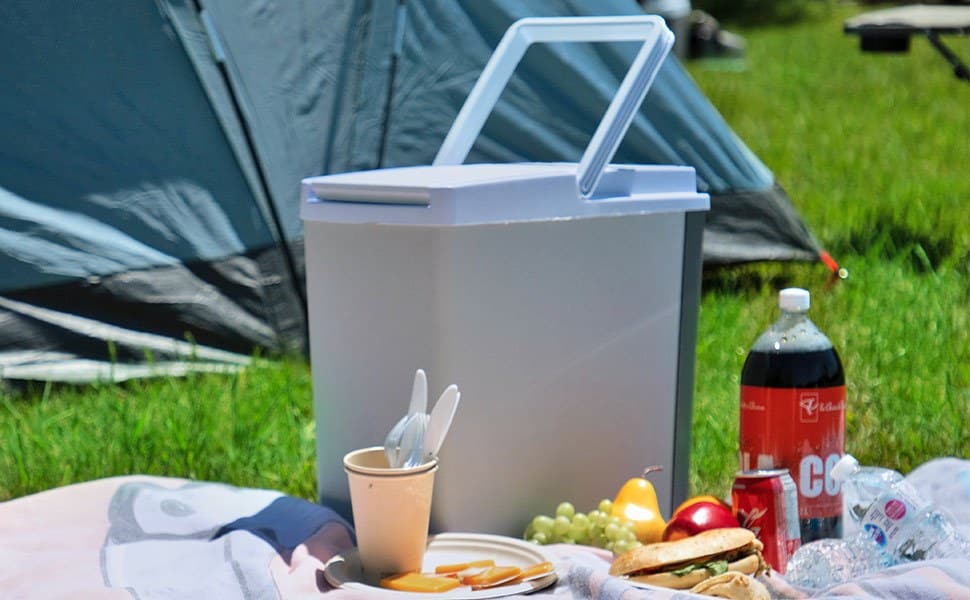
Therefore, the inside temperature follows the weather. On a 90°F day, a unit with a 40°F drop sits near 50°F inside. At 75°F ambient, the same unit reaches about 35°F, which is inside the safe zone.
Three more traits matter. First, most units have no thermostat, so they run at full cold. Second, Koolatron says they make no ice cubes, and OutdoorGearLab says to load them with pre-chilled items. Finally, many switch to warming mode and hold food near 130 to 140°F, a feature Dometic says its CFX compressor fridges lack.
Key Facts: Electric Cooler vs. Compressor Fridge
| Feature | Electric cooler (thermoelectric) | Compressor fridge |
|---|---|---|
| Cooling method | Peltier plate, heat sink and fan | Refrigerant circuit with a compressor |
| Temperature limit | About 36 to 40°F below ambient | Holds a set temperature; the Alpicool CF45 lists -4°F to 68°F |
| Draw at 12V | 3 to 5 amps, running nonstop | About 1 amp-hour per hour on a Dometic CFX3 45 at 90°F |
| Freezing | No thermostat; no ice cubes | Yes, with the thermostat set low |
| Warming mode | Many models warm to 130 to 140°F | Not on Dometic CFX models |
| Noise | Continuous fan | Occasional compressor hum |
| Rough US price | About $80 to $190 | About $150 to $330 entry; $900 to $1,160 premium |
| Best use | Day trips, drinks and snacks, air below about 75°F | Parked overnight, heat, meat and dairy, three-day weekends |
Prices are Amazon.com snapshots from October 19, 2026, plus OutdoorGearLab list prices for premium units. Check current listings before you buy. Dometic describes thermoelectric coolers as a fit for day tours and picnics, and the rest of this guide agrees.
Power Draw and Your Battery
Power is where the cheap option costs more than it looks. Koolatron lists most of its thermoelectric coolers at 4.5 amps, or 54 watts, at 12 volts. Because there is no thermostat, the draw never cycles off. Over 24 hours, 4.5 amps add up to 108 amp-hours.
A compressor fridge cycles. Dometic rates its CFX3 45 at about 1.03 amp-hours per hour at 90°F ambient and 39°F inside, or roughly 25 amp-hours per day. Its own comparison, however, puts a thermoelectric cooler near 94 amp-hours per day. Although Dometic sells compressors, Koolatron, a thermoelectric maker, publishes similar draw figures.
Consider a 100 amp-hour lithium battery with about 80 percent usable capacity, which gives you 80 amp-hours. A nonstop 12V cooler drains it in under a day, while a compressor fridge at 25 amp-hours per day lasts more than three days.
The starter battery faces the bigger risk. Ark Corporation, an overland power retailer, says a 50-watt thermoelectric cooler gives you three or four hours with the engine off. Then you risk a dead battery. Compressor fridges such as the Dometic CFX3 and Alpicool CF45 add a three-level low-voltage cutoff for this reason. For more on protecting the battery, read how to keep your Jeep battery from dying at camp.
Where a Cheap Electric Cooler Is Good Enough

Owners describe a narrow window. An electric cooler works in a cool or air-conditioned cabin, for drinks and snacks, on short trips in mild weather. The power should come from a running engine or shore power, not a parked battery.
Specifically, the math works when the air stays below roughly 75°F. A unit with a 36°F drop then reaches about 40°F inside. In addition, you should load it with food already cold, because OutdoorGearLab notes these units fail to cool room-temperature items. Keep loose ice out as well. Koolatron warns about melt water splashing into the fan, which damages the electronics.
A 12V car cooler suits lunch and drinks on a day trip, a commute and a motel night where you carry food in. However, anything required to stay below 40°F for hours belongs in a better unit. My advice: treat an electric cooler as a drink cooler, not a food-safety tool.
If you only want to skip the power question, an ice cooler still wins on simplicity. Our roundup of the best coolers for overlanding covers those, and how to pack a cooler covers pre-cooling and loading.
Where a Compressor Fridge Is the Safer Buy
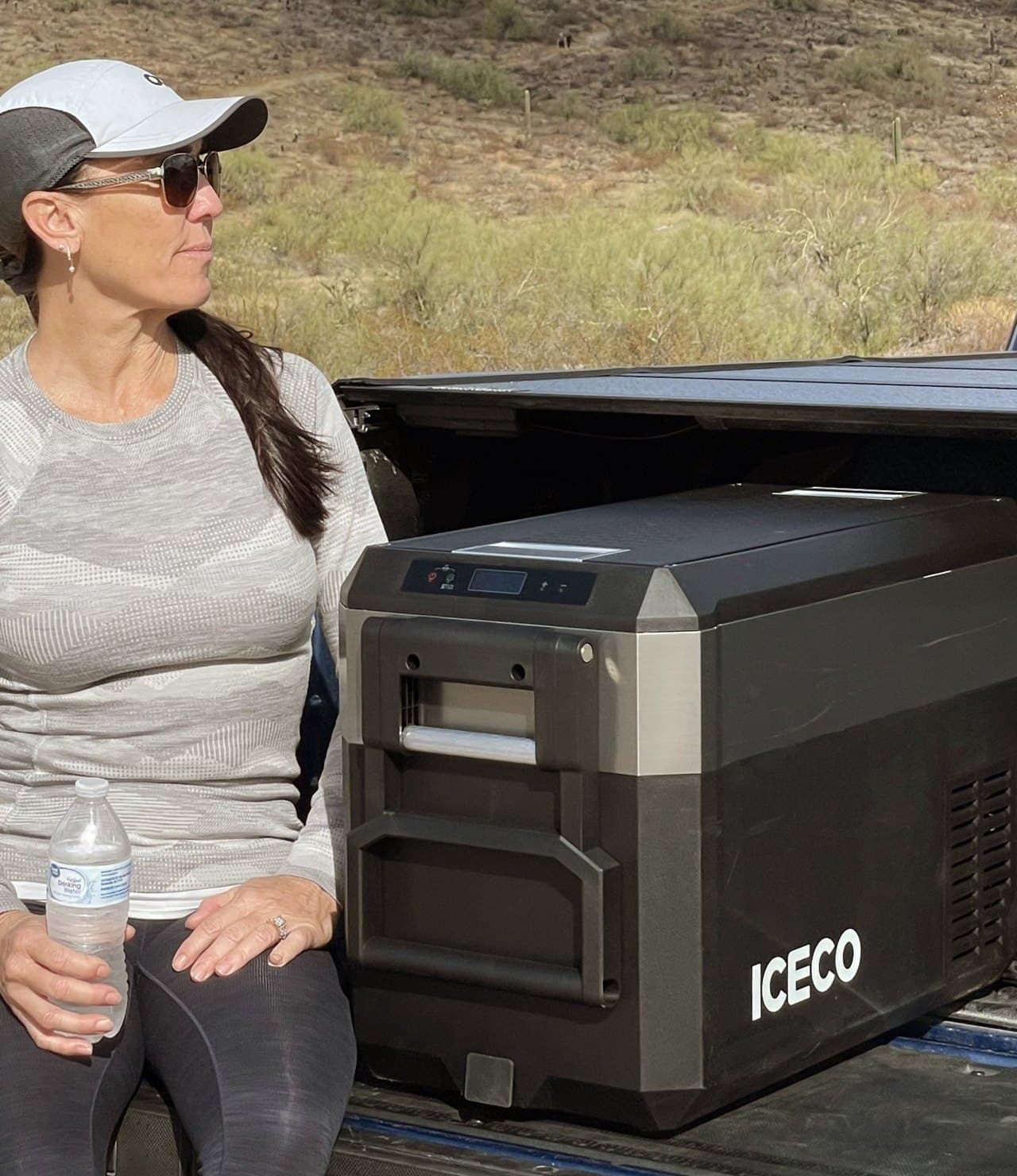
A compressor fridge holds its set temperature in heat, and it freezes food. OutdoorGearLab reports all of its top-performing powered coolers use compressors. Owner threads we read agree. People report numbers in the 30s in 90 to 100°F weather, and no more ice runs.
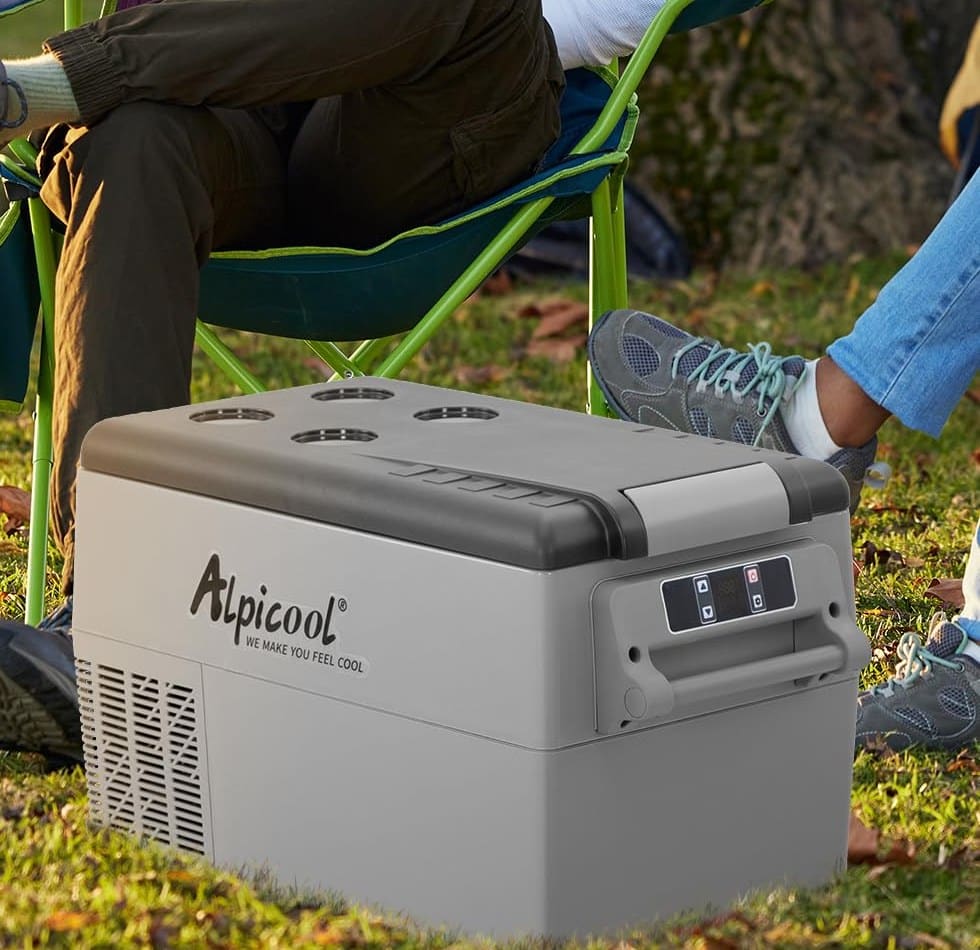
Premium units set the benchmark. Dometic rates the CFX3 45 for ambient temperatures of 61 to 110°F and for cooling from 50°F down to -8°F. Entry portable fridges list their own set-temperature ranges. The Alpicool CF45 lists -4°F to 68°F. In contrast, the VEVOR 42.3 QT lists 14 to 50°F, so treat it as a fridge first and a freezer second.
In the threads we read, owners say budget compressor fridges hold up for weekend trips. The ICECO JP40 Pro steps up with a SECOP compressor, a free insulated cover and five years of compressor support, per its listing. For hands-on power data, see our ICECO APL20 30-day test. The main caution is quality: owners report electronics failures on some cheap units. Premium brands such as ARB, Dometic and Engel earn praise for lasting a decade.
Habits and Wiring to Cut the Draw
Habits also cut the draw. Owners pre-cool the fridge at home and keep it full. Dometic advises a packed unit, a closed lid and clear ventilation holes, since each one shortens the compressor’s run time.
One wiring tip comes up in several owner threads. A vehicle 12V socket often cuts power with the ignition, so owners wire the fridge directly to a fused, always-on circuit. Dometic also warns against splitters, pigtails and extensions, because voltage drop trips the low-voltage cutoff. If you are choosing among models, our list of the best overland fridge freezers goes deeper.
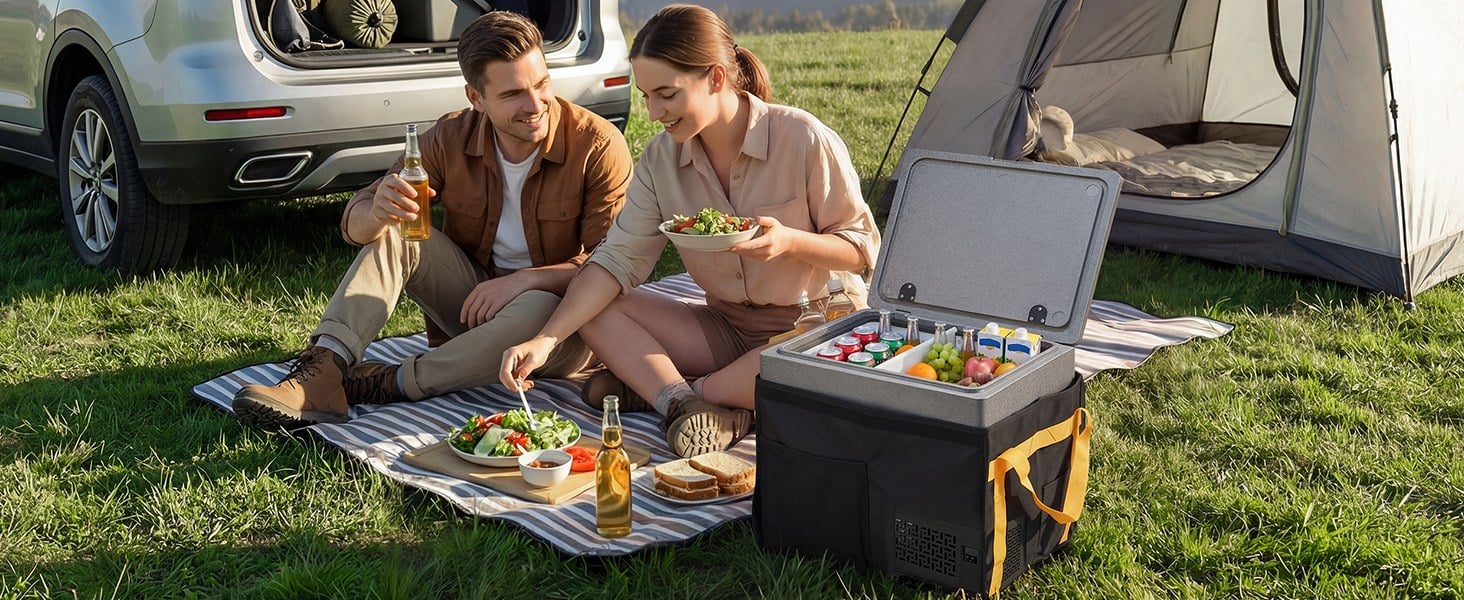
For the compressor side, the Alpicool CF45 and the VEVOR 42.3 QT sit at the entry level, while the ICECO JP40 Pro steps up with a SECOP compressor. Check each listing for current price and capacity before you choose.
Compressor fridges covered in this guide


How to Choose Between an Electric Cooler and a Compressor Fridge
Here is the break-even test in four questions. Start with where the rig sleeps. If the rig sits parked overnight, choose a compressor fridge. A thermoelectric unit risks draining your starting battery. Next, check the weather. Above roughly 76 to 80°F, a thermoelectric unit stays warmer than 40°F inside.
Then look at what you carry. The USDA says to keep cold food at 40°F or below, since bacteria multiply fastest between 40 and 140°F. Food should not sit out more than two hours, or one hour above 90°F. Meat and dairy therefore belong in a compressor fridge.
Finally, consider trip length. A day trip with sandwiches suits a 12V car cooler, while a three-day weekend suits a fridge. Entry prices overlap, so the gap is small next to a cooler of spoiled food. The test: stay under about 75°F, keep trips short, skip meat and dairy, and power it from a running engine. Fail any one, and buy the fridge.
Final Thoughts
For me, an entry compressor fridge is the best value in this category for weekend trips. It holds temperature in heat, it sips power, and it ends the ice routine. Many owners in the threads we read reach the same conclusion, and so do I.
The cheap option still has a place. If you drive with the air conditioning on and carry drinks for a day, a 12V cooler does the job for under $200. When the day turns hot, it stops keeping food below 40°F. Save the meat and dairy for a fridge.
I would rather see you spend a little more once than throw out a cooler of food. Pick the unit for the trip you take, check the temperature the first time you load it, and enjoy the cold drink at the end of the trail.
FAQ
Do electric coolers work?
Yes, within limits. A thermoelectric unit cools about 36 to 40°F below the surrounding air, so it works well in a cool cabin and poorly in summer heat.
How many watts does an electric cooler use?
Most Koolatron models draw 4.5 amps, or 54 watts, at 12 volts, and the smallest draws 3 amps, or 36 watts. The draw runs continuously because most units have no thermostat.
Is it okay to put ice in an electric cooler?
Only in a sealed, leakproof container. Koolatron says melt water splashing into the fan damages the electronics.
Is a compressor fridge the same as a portable fridge?
Usually yes. A portable fridge for camping uses a refrigerant circuit with a compressor, like a home fridge, and it holds a set temperature.
Is an electric cooler better than an ice cooler?
It depends on the trip. An ice cooler needs no power but requires fresh ice. In contrast, a thermoelectric unit removes the ice yet needs a steady 12V supply and works best in mild weather.
Related Reading