


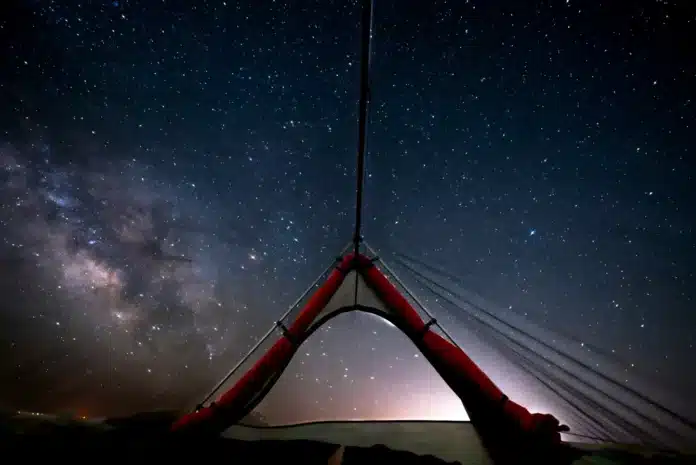

Meteor shower camping works best when you plan the dates, the moon, and the site before you leave the driveway. Up here in Wyoming, there’s an abundance of places to camp with really dark skies. For meteor shower camping, moon phase and sky darkness matter more than a shower’s name, so each plan below starts there. As a result, you’ll know which night to pick and what to pack.
The dates and rates come from the American Meteor Society (AMS), which publishes moon illumination and hourly counts. The 2026 Geminids peak on December 13 to 14, which leaves time to scout a site and test your gear. Meanwhile, the 2026 Orionids peaked on October 21 to 22, and the Perseids return in August 2027.
Quick Facts:
- Topic: Meteor shower camping around the Geminids, Perseids, and Orionids
- Next peak: Geminids, December 13 to 14, 2026
- Geminids moon: 15% waxing crescent
- Perseids: August 12 to 13, with a 79% waxing gibbous moon in 2027
- Orionids: October 21 to 22, with 10 to 20 meteors per hour at maximum
- Best Geminids viewing: From about 10 p.m. onward
- Skill level: Beginner
- Best for: Campers who want dark skies without a telescope
7 min read
In This Guide
- Meteor Shower Camping Calendar at a Glance
- How Meteor Shower Camping Works: Radiant, Rates, and Peaks
- Perseids: Warm Nights, Mixed Moon Luck
- Orionids: Halley’s Comet Debris in Autumn
- Geminids Meteor Shower Camping: Winter’s Strongest Show
- Pick a Dark Sky Campsite for Meteor Viewing
- Sky View vs. Standard Tents for Meteor Nights
- Final Verdict
- FAQ
Meteor Shower Camping Calendar at a Glance
| Shower | Peak | Moon at Peak | Hourly Rate | Parent Body |
|---|---|---|---|---|
| Perseids | Aug 12-13 | 79% waxing gibbous (2027) | 30-50 from rural sites | Comet 109P/Swift-Tuttle |
| Orionids | Oct 21-22 | 74% waxing gibbous (2026) | 10-20 at maximum | Halley’s Comet |
| Geminids | Dec 13-14 | 15% waxing crescent (2026) | Usually the year’s strongest | Asteroid 3200 Phaethon |
Built for Meteor Nights
Watch the Sky From Your Sleeping Bag
Sky View tents pair open stargazing mesh with an internal rainfly you close from inside.
How Meteor Shower Camping Works: Radiant, Rates, and Peaks
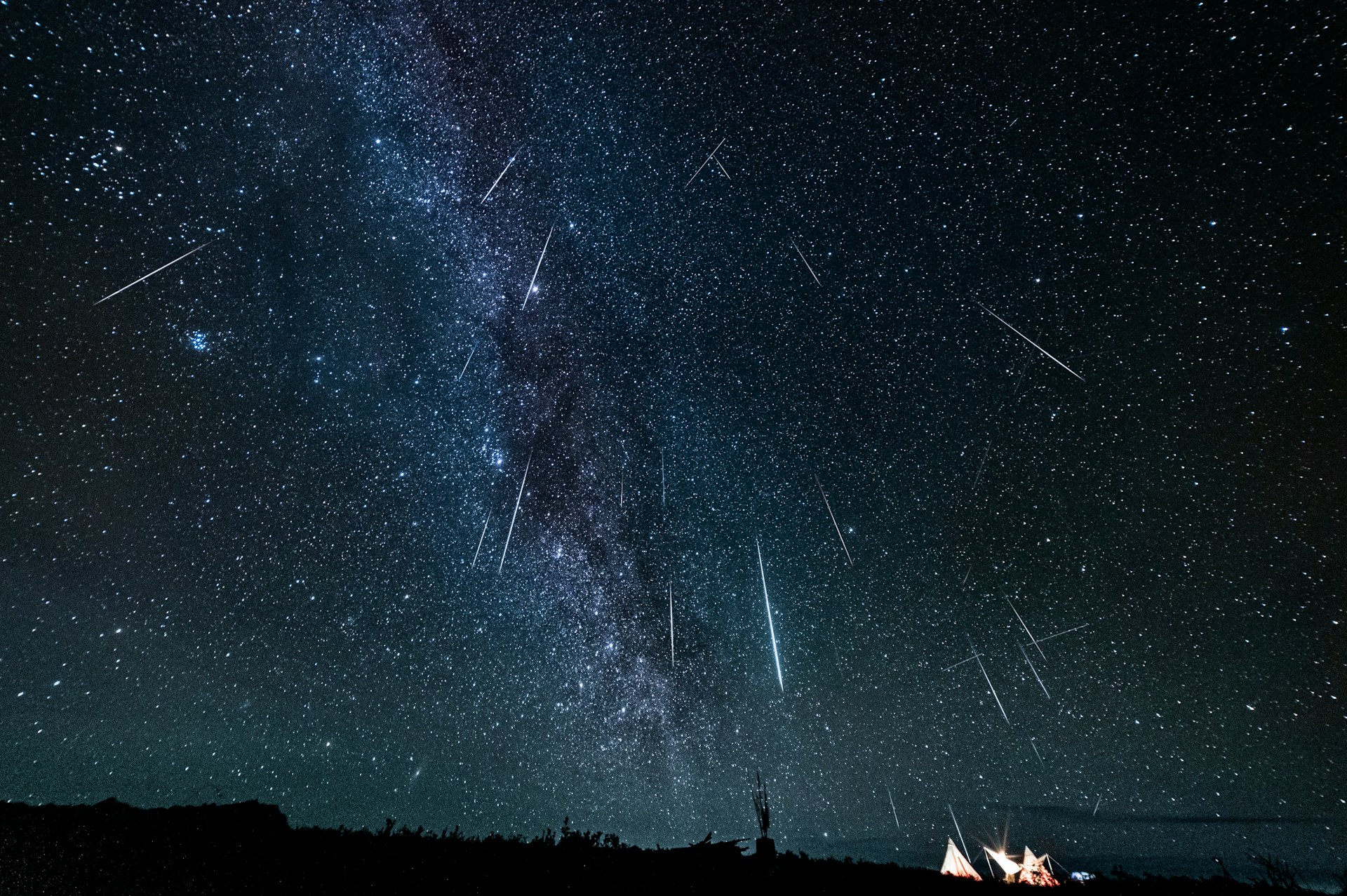
Photo by 邱 严 on Unsplash (license)
Every shower appears to spray from one point in the sky, called the radiant. Each shower takes its name from the constellation there. You don’t need to stare at it, however. Meteors streak across the whole sky, so a wide view works better than aiming at one spot.
Rates matter less than conditions. The AMS lists 30 to 50 Perseids per hour from rural sites. However, a bright moon or a nearby town cuts the count sharply. Therefore, check the moon and the light pollution before you check the shower’s name.
Timing also matters. Plan to watch on the meteor shower peak night, plus the nights before and after. Weather moves fast, and each shower stays active for days. Finally, give your eyes 20 to 30 minutes to adjust. Skip your phone screen, since white light resets your night vision.
Perseids: Warm Nights, Mixed Moon Luck
The Perseids peak around August 12 to 13 and come from Comet 109P/Swift-Tuttle. They deliver 30 to 50 meteors per hour from rural sites, according to the AMS. Summer weather makes this the easiest shower for beginners, since you don’t need winter gear.
However, the moon decides the quality. The AMS lists the 2027 meteor shower peak under a 79% waxing gibbous moon. Expect fewer faint meteors while it stays up. Therefore, check moonset times for your site and plan to watch once the moon drops below the horizon.
Orionids: Halley’s Comet Debris in Autumn
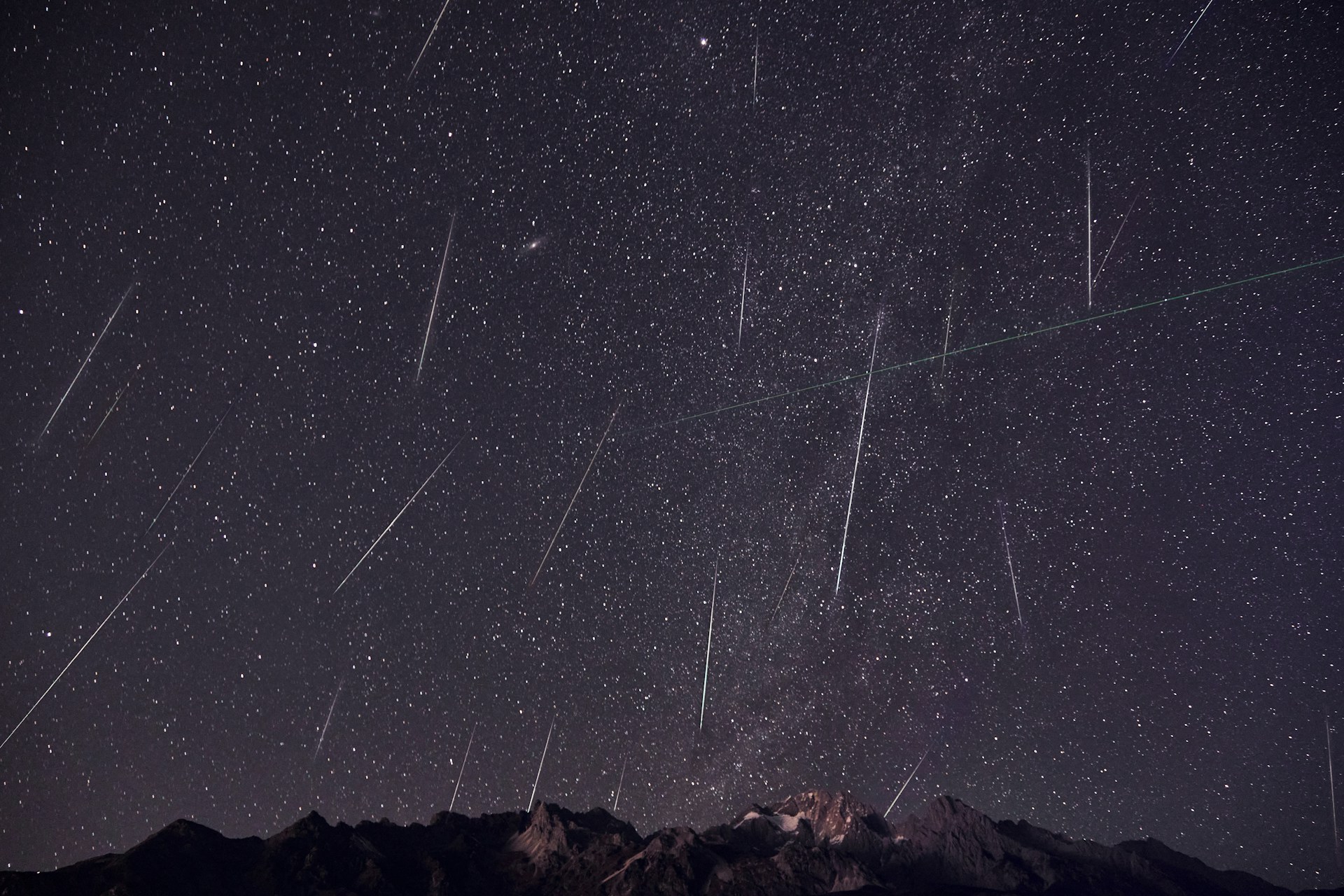
Photo by 张 嘴 on Unsplash (license)
The Orionids peak around October 21 to 22, and Halley’s Comet supplies the debris. They’re a modest shower, with 10 to 20 meteors per hour at maximum, according to the AMS. For 2026, the AMS expected a 74% waxing gibbous moon to interfere while it stayed up. However, brighter meteors remained visible.
Autumn nights turn cold at elevation, so pack a sleeping bag rated for the overnight low. The guide to sleeping bag ratings explains how comfort and limit numbers differ. Because the Orionids are modest, treat them as a low-pressure practice trip, and test your gear before the Geminids arrive.
Geminids Meteor Shower Camping: Winter’s Strongest Show
The Geminids peak around December 13 to 14. According to the AMS, they’re usually the strongest shower of the year. Their parent body is the asteroid 3200 Phaethon. The 2026 peak arrives under a 15% waxing crescent moon, which sets early and leaves a dark sky.
Good activity arrives before midnight, according to the AMS, with viewing from about 10 p.m. onward. As a result, you don’t need to stay up until dawn. Cold is the catch, however. December nights often drop below freezing at elevation. Therefore, read how cold is too cold to camp before you pick a high site.
Also bring an insulated pad, a hat, and a hot drink. Lying still for an hour chills you faster than hiking does.
Safety note: Lying still in freezing air chills you faster than active camping does. Rate your sleeping bag below the forecast low and tell someone your site location. Warm up in a vehicle when your hands go numb.
Pick a Dark Sky Campsite for Meteor Viewing
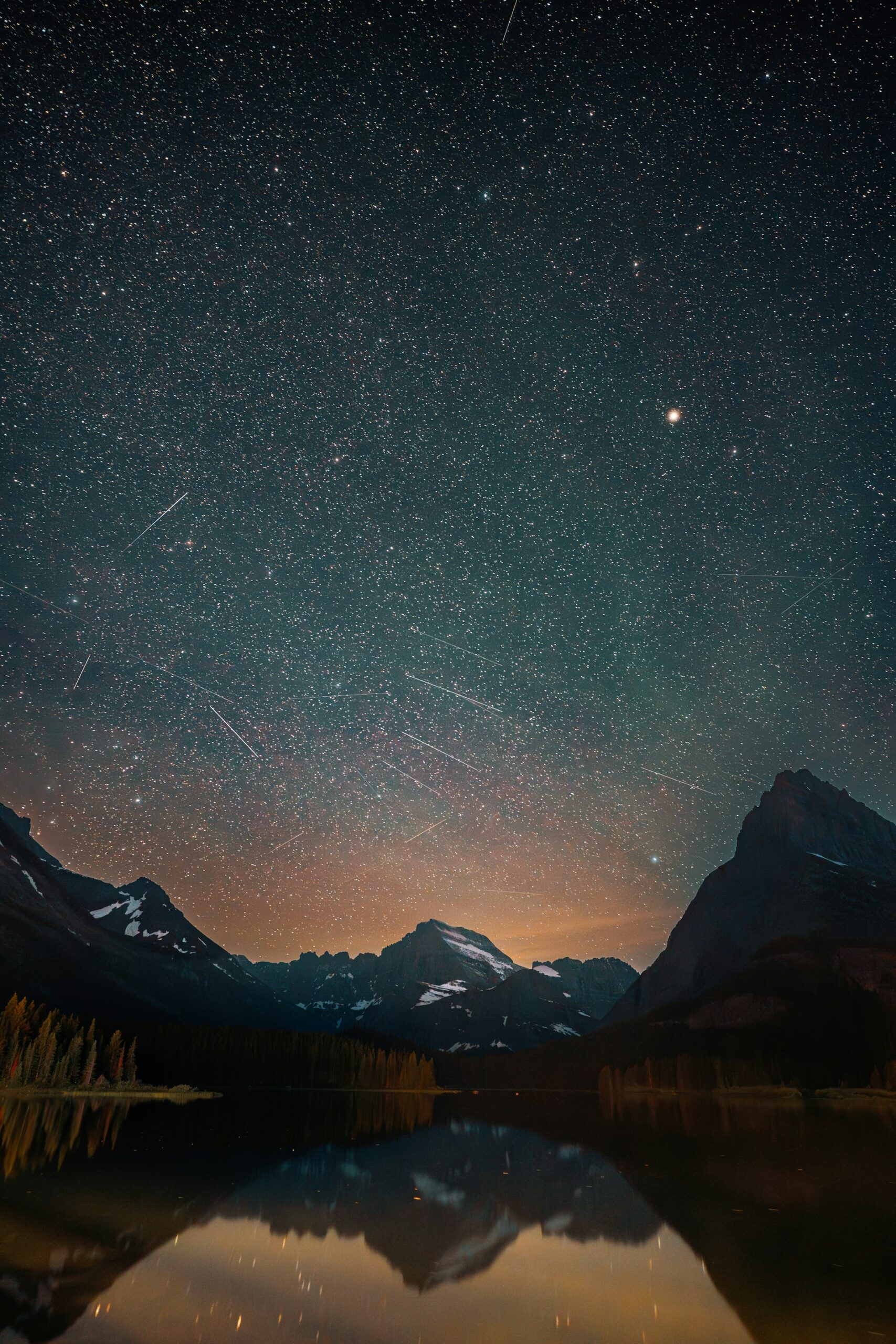
Photo by Ryan Kim on Unsplash (license)
Your site matters as much as the shower. Start with the dark sky campsite guide for BLM and national forest land. It covers the Bortle scale, dispersed camping rules, and daylight scouting. Then confirm local fire rules and stay limits, since both vary by field office.
Meteor viewing improves with a wide, open horizon. Instead of dense forest, look for a clearing, a ridgeline, or a flat meadow. Next, face away from town glow and lie back on a pad or in a reclining chair. Then let your eyes sweep the whole sky. Park with your headlights pointed away from camp, and switch to red light after dark.
Ready for Open Sky?
Pick Your Sky View Tent
Choose the XL for truck camps, or the Duo and Solo for lighter trips.
Sky View vs. Standard Tents for Meteor Nights
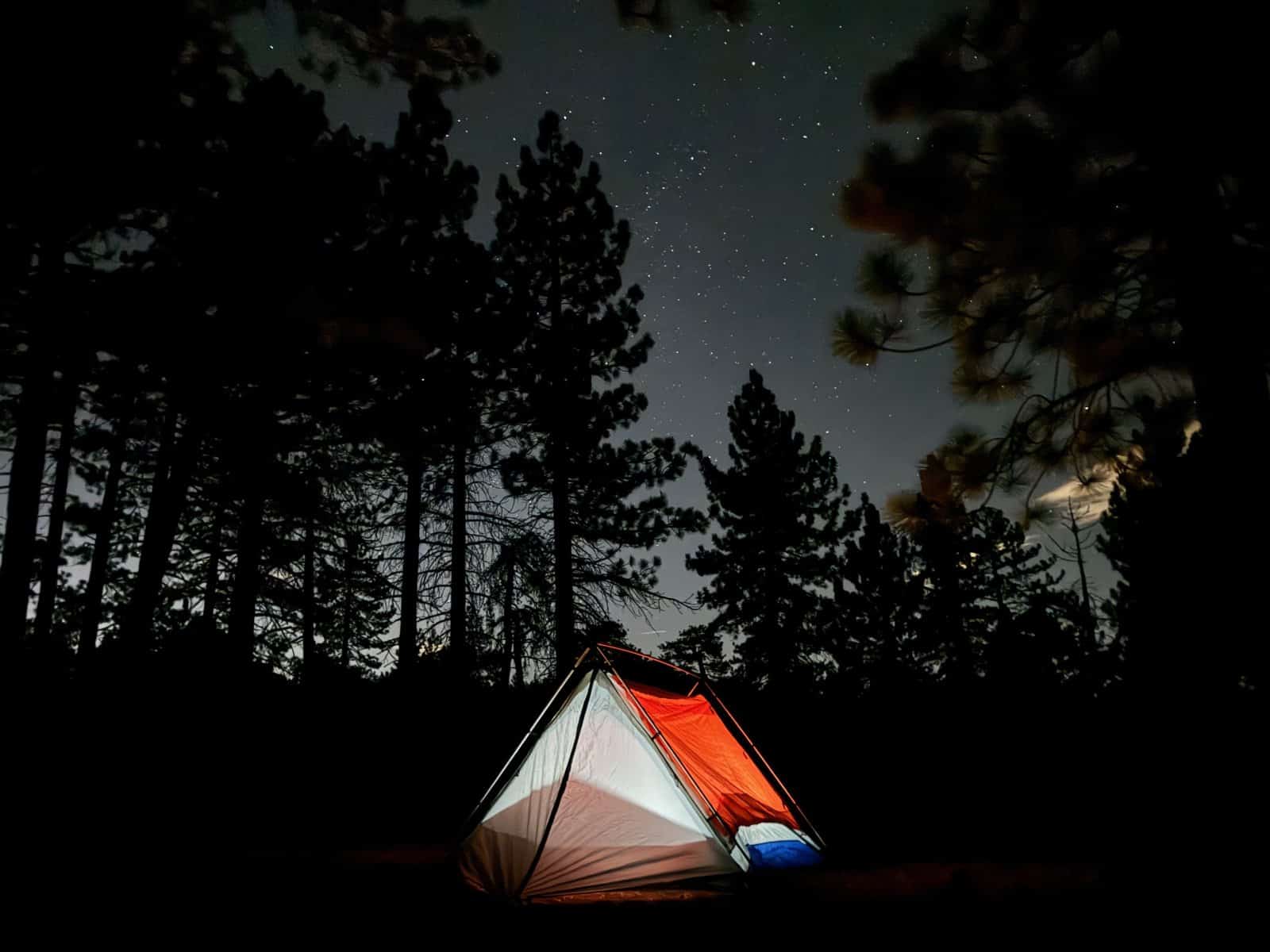
A standard tent hides the sky, so you sleep under fabric or skip the rainfly and gamble on the forecast. Sky View Tents, based in Buena Vista, Colorado, builds tents for this problem. According to the company, its 18×18 stargazing mesh gives clearer views than traditional mesh. Its patent-pending internal rainfly closes from inside, so you never leave your sleeping bag, per the company.
Three models cover most trips. The Sky View XL costs $499 and weighs 14.1 lbs. Per the company, its floor measures 90 by 90 inches with a 55-inch peak. At $399, the Duo weighs 5.6 lbs and drops to 3.6 lbs in Tree Mode. Priced at $299, the Solo weighs 3.8 lbs and fits one camper up to 6 feet 1 inch tall. Each ships with a footprint, free shipping, and a 6-month warranty.
The 4WDTalk review of the Sky View XL Gen 2 found setup quick and the interior roomy. It recommends the tent mainly for families who camp from a truck or SUV. However, the review says wind and rain performance still needs longer testing. Therefore, treat the tent as a fair-weather shelter for now. For a clear-forecast night, the limit matters little. Freezing Geminids nights are different, because mesh walls hold less warmth than solid walls, so bring a warmer bag.
Pros
- 18×18 stargazing mesh for open views, per the company
- Internal rainfly closes without leaving your bag
- Duo drops to 3.6 lbs in Tree Mode
- Solo weighs 3.8 lbs
- XL floor measures 90 by 90 inches
- Footprint and free shipping included
Cons
- XL weighs 14.1 lbs, too heavy for backpacking
- 6-month warranty is short for a $299 to $499 tent
- 4WDTalk’s review says wind and rain performance needs longer testing
- Review counts are small: 17 for the XL, 10 for the Duo, 1 for the Solo
- Mesh walls hold less warmth than solid walls on freezing nights
Final Verdict
Photo by Idin Ebrahimi on Unsplash (license)
Meteor shower camping rewards planners, and the moon is the first choice to make. The 2026 Geminids offer the cleanest moon of the three showers, with a 15% crescent. In contrast, the 2027 Perseids face a 79% gibbous moon. Therefore, circle December 13 to 14 and build your trip around it.
Sky View tents suit campers who want to watch from bed. However, the XL weighs 14.1 lbs, the warranty runs 6 months, and the review base is small. Campers who want a four-season shelter should choose a hot tent or a standard ground tent for freezing nights.
Priced at $299 to $499 with a footprint and free shipping, the line costs more than a basic dome tent. The open mesh and internal rainfly earn the price if you sleep under open sky several times a year. In contrast, occasional campers save money with a standard tent and a good sleeping pad.
Start with a daylight scouting trip, a clear forecast, and a bag rated below the overnight low. Choose the XL for a truck camp or the Duo or Solo for a short hike-in. Keep a standard tent with a removable rainfly as the cold-weather backup, especially for the Geminids.
Your Next Clear Night
Pitch Under the Stars
Every Sky View tent includes a footprint, free shipping, and a one-year Dyrt PRO camping app subscription.
FAQ
What do you need for meteor shower camping?
You need a dark site, a clear forecast, and a warm sleep system. A reclining chair or pad lets you lie back, and a red-light headlamp protects your night vision. Also check the moon phase before you pick a date.
When is the best time to watch the Geminids?
The Geminids peak December 13 to 14, 2026. According to the AMS, activity is good before midnight, with viewing from about 10 p.m. onward. The moon will be a 15% waxing crescent, so it leaves most of the night dark.
Which meteor shower is best for beginners?
Beginners should pick the Perseids because they arrive in summer, with 30 to 50 meteors per hour from rural sites. However, the Geminids usually offer the strongest show of the year, if you pack for the cold.
Is meteor shower camping safe in freezing weather?
Yes, with preparation. Lying still in freezing air chills you faster than active camping does. Rate your sleeping bag below the forecast low and bring an insulated pad. Also keep a vehicle nearby for warming up.
Do you need a telescope or binoculars to see meteors?
No. Meteors streak across wide sections of sky, so your naked eyes work better than any magnified view. A reclining chair and a dark site matter more than optics.
Our articles might have affiliate links and the occasional sponsored content, but don’t sweat it – if you buy something, we get a little kickback at no extra cost to you, and we only hype products we truly believe in!