


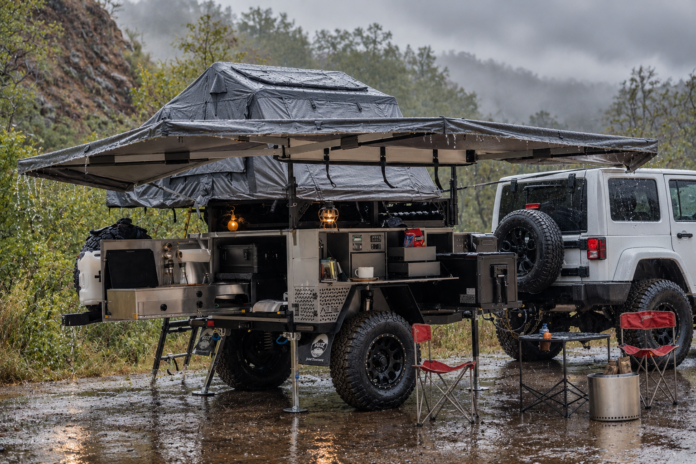

I’ve lost count of the nights I’ve spent camping in the rain, and the lesson never changes. Weather turns fast in the mountains, and comfort depends on choices you make before the first drop. I’ve learned camping in the rain works when you plan the site, the shelter, and the gear together.
I’ve toured the SNO Trailers facility and hauled the Alpine to wet, muddy campsites on real trips. So this guide blends my field notes with what the Alpine’s onboard systems add once the sky opens. Use it as a checklist, whether you tow a trailer or camp from your truck bed.
Quick Facts:
- Top priority: Pick a site with good drainage
- Cheapest upgrade: A rain tarp over your shelter zone
- Clothing rule: Dry layers in wool or synthetic, never cotton
- Alpine dry weight: 1,500 lbs
- Alpine starting price: Around $29,995
- Alpine systems: 30-gal water option, Joolca HOTTAP shower, 100Ah Renogy AGM, twin 10-lb propane
- Best for wet weather: Campers who want a settled, organized camp in wet weather
8 min read
In This Guide
- Camping in the Rain at a Glance
- SNO Trailers Alpine at a Glance
- Choose Your Campsite Before the Clouds Arrive
- Rig a Rain Tarp and Shelter Zone
- Keep Wet Gear Separate From Dry Gear
- Cook and Eat Comfortably in Wet Weather
- Stay Warm With Dry Layers
- Drive and Tow Safely on Wet Trails
- Manage Condensation and Airflow
- What the Alpine Adds to Camping in the Rain
- Pros and Cons
- Final Verdict
- Frequently Asked Questions
Camping in the Rain at a Glance

Camping in the rain goes well or badly based on choices you make before the first drop. Pick the right ground, rig a rain tarp, and sort your gear into dry and wet zones. Then the weather becomes part of the trip instead of a threat to it.
Most wet-weather misery comes from three failures. Water pools under the shelter, gear soaks through, and nobody stays warm. So this guide tackles each one in order, then shows what the Alpine adds. For a wider look at trailer choices, read my guide on what to look for in an overlanding camper trailer.
SNO Trailers Alpine at a Glance
The Alpine is the trailer I use as my wet-weather example. Its onboard water, power, kitchen, and shower systems matter most when the sky turns gray. My full SNO Trailers Alpine review covers the build in depth.
| Specification | Details |
|---|---|
| Length | 12’2″ |
| Width | 6’3″ |
| Height | 5’9″ |
| Dry Weight | 1,500 lbs |
| Suspension | Fabtech fully-integrated |
| Wheels | Method wheels with 275/70/R17 tires |
| Departure Angle | 40 degrees |
| Water Capacity | Up to 30 gallons |
| Kitchen | Integrated zone with twin 10-lb propane |
| Shower | Joolca HOTTAP essentials kit standard |
| Power | 100Ah Renogy AGM |
| Starting Price | Around $29,995 |
Buy Direct From SNO Trailers
See the Alpine at SNO Trailers
Starting around $29,995, the Alpine ships factory-direct with onboard water, power, kitchen, and shower.
Choose Your Campsite Before the Clouds Arrive
Camping in the rain starts with the ground. Look for a slight rise with good drainage, because flat low spots turn into ponds. Avoid dry washes, creek banks, and fresh-looking channels. Flash floods start miles away, so a clear sky overhead means little.
Next, check the surface too. Packed gravel and rock drain well, while clay and silt turn slick. Also, park with the nose pointed toward your exit. If the road softens overnight, you’ll want a straight line out. Finally, scan for dead branches overhead, since wet wood falls without warning.
Check the forecast with the National Weather Service before you leave. Then check it again each morning, because mountain storms shift quickly. Consequently, you’ll know whether to stay put or move camp early.
Rig a Rain Tarp and Shelter Zone
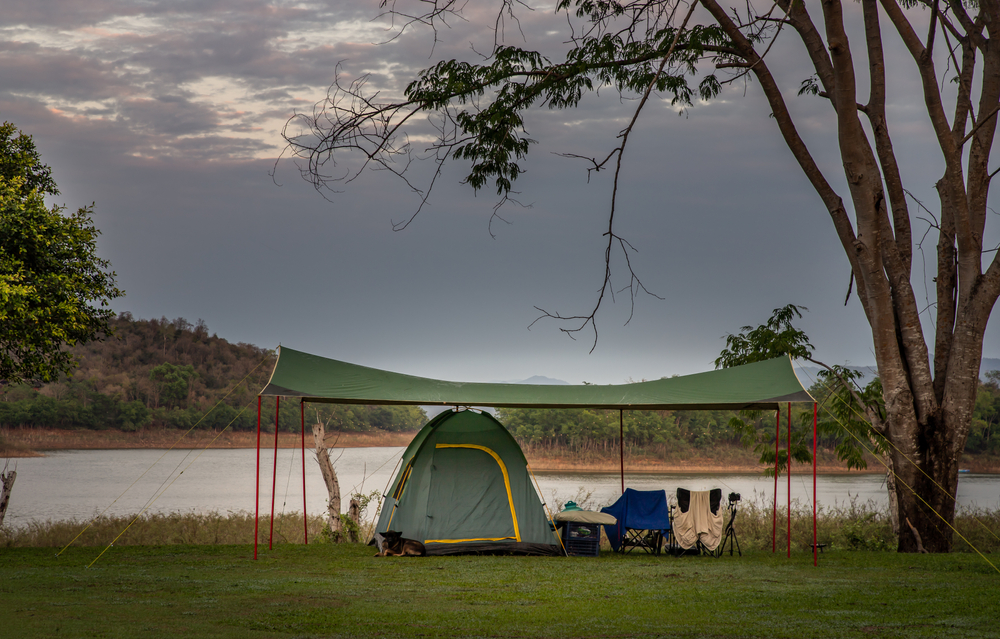
A rain tarp is the cheapest comfort upgrade in camping. First, hang it high at one end and low at the other, so water runs off instead of pooling. Next, aim for a steep pitch, then tension every line until the fabric stops flapping.
Build a shelter zone beneath it. Put a table, chairs, and a boot mat in the space, so camp life continues during showers. In addition, run a second line for hanging towels. A dry corner raises morale more than any gadget does.
Moreover, practice the setup at home once. A tarp you’ve pitched in the yard goes up in minutes when rain is already falling. In addition, carry spare cord and extra stakes, since wind loves to test weak anchors.
Keep Wet Gear Separate From Dry Gear
A simple system beats a pile of bags. Sort everything into three groups: dry gear, wet gear, and tools. Specifically, dry gear stays sealed in bins or dry bags. Meanwhile, wet gear goes under cover on a line or a rack, away from sleeping spaces.
Make the boundary firm. Nobody brings wet gear into the dry zone, and nobody leaves dry gear out overnight. Meanwhile, keep a small towel by the entrance for hands and boots. This habit sounds strict, but it prevents the soggy-sleeping-bag disaster on day two.
For example, a plastic bin by the door holds boots and wet jackets. Likewise, a mesh bag keeps damp socks from soaking the rest of your clothes. Therefore, bring more small bags than you think you need.
Cook and Eat Comfortably in Wet Weather

Hot food rescues a wet day. Plan simple one-pot meals with short cook times, because wind and rain steal heat from your stove. Also, keep fuel and matches dry, and cook under cover with good ventilation. Never run a stove inside a closed tent.
A trailer kitchen helps here. The Alpine’s integrated kitchen zone runs on twin 10-lb propane tanks, so you have fuel for several meals without a gear shuffle. As a result, dinner stays organized even when the weather isn’t cooperating.
Stay Warm With Dry Layers
Cold, not rain, ruins most wet trips. Specifically, cotton holds water and steals body heat, so pack wool or synthetic dry layers instead. Then keep one full set sealed away for sleeping only. This set never touches the damp pile.
Change out of wet clothes right after you arrive. Also, eat and drink often, since your body burns more fuel when it’s chilly. The Alpine’s Joolca HOTTAP shower is a real luxury here. A hot rinse after a wet hike resets your whole evening, and it lives in the same luxury backcountry camping mindset I love.
Stay Comfortable
Explore the Alpine Build
See configuration options and current pricing straight from the factory.
Drive and Tow Safely on Wet Trails
Wet roads change how a trailer behaves. First, slow down early, leave extra following distance, and avoid hard braking. Smooth inputs keep the trailer tracking straight behind you.
Next, walk any water crossing first. Check depth, current, and the bottom surface before you commit. The Alpine’s Fabtech suspension and 40-degree departure angle help on rutted exits, but good judgment matters more than any hardware. If a crossing looks doubtful, turn around.
Additionally, drop tire pressure only if your setup and terrain call for it, and re-inflate before you hit pavement. Meanwhile, keep recovery boards within reach, because slick ground grabs tires without warning.
Manage Condensation and Airflow

Condensation soaks sleeping spaces even without a leak. Warm breath meets cold fabric, and water forms on the inside. Crack vents on opposite sides to keep air moving, and avoid cooking where you sleep.
Wipe down surfaces each morning. Moreover, hang damp items outside the sleeping space whenever the rain eases. Good airflow solves most condensation complaints, and it keeps mildew away after the trip.
For example, a small battery fan moves air all night. Also, store wet boots outside the sleeping space.
What the Alpine Adds to Camping in the Rain
Camping in the rain rewards simple, dependable systems. Moreover, the best ones work without fuss. The Alpine carries up to 30 gallons of water, a 100Ah Renogy AGM battery, twin propane tanks, and a hot shower. Together they keep meals, lights, charging, and cleanup running when you’d rather stay put.
Specifically, the battery keeps lights and phone charging going through a gray afternoon. Meanwhile, the water supply means you never hike to a source in a storm. The result is a settled camp, not a scrambled one.
Ready to Buy?
Check Today’s Price on the Alpine
SNO Trailers ships factory-direct with configuration support before your build begins.
Pros and Cons
Alpine Pros in Wet Weather
- Up to 30 gallons of water means no refill trips in a storm
- Joolca HOTTAP shower warms you after a wet day
- 100Ah Renogy AGM runs lights and charging on gray days
- Twin 10-lb propane tanks keep the kitchen running
- Fabtech suspension and 40-degree departure angle suit rutted trails
Alpine Cons in Wet Weather
- Starting around $29,995
- 1,500-lb dry weight needs a capable tow vehicle on slick roads
- Backing a 12’2″ trailer is harder on soft ground
- A good rain tarp is still necessary for covered living space
- Mud adds cleanup after the trip
Final Verdict

Camping in the rain rewards preparation more than gear. Choose well-drained ground, rig a rain tarp, and keep wet gear separate from dry. Then pack dry layers and plan hot meals. These habits turn a forecast of showers into a calm, comfortable trip.
The Alpine earns its place on wet trips through its systems. Water, power, propane, and a hot shower keep camp running when conditions turn. Consequently, I recommend it for campers who value a settled base camp. Budget buyers should still master the basics above, since they work with any rig.
Frequently Asked Questions
How do you keep camp dry when camping in the rain?
Pitch on high ground with good drainage, rig a rain tarp, and sort gear into dry and wet zones. Keep the dry zone sealed and off the ground.
What should you wear for camping in the rain?
Wear wool or synthetic dry layers under a waterproof shell, and skip cotton. Keep one dry set for sleeping only.
How do you cook when it’s raining?
Cook under a tarp or covered area with good ventilation, and keep fuel dry. Plan quick one-pot meals. Never use a stove inside a closed tent.
How do you stop condensation in a sleeping space?
Keep air moving by opening vents on opposite sides, and avoid cooking where you sleep. Wipe surfaces each morning.
Is it safe to tow a trailer on wet trails?
Yes, with care. Slow down, brake gently, and walk any water crossing first. The Alpine’s 40-degree departure angle helps on rutted exits.
What does the SNO Trailers Alpine add to a rainy trip?
It carries up to 30 gallons of water, a 100Ah Renogy AGM battery, twin 10-lb propane tanks, and a Joolca HOTTAP shower. Those systems keep cooking, lighting, and cleanup running in bad weather.
Just so you know, some of the cool stuff we mention comes with affiliate links, meaning we earn a commission if you buy (no extra charge to you!). Plus, we occasionally feature sponsored content, but rest assured, we only shout out products we genuinely stand behind.