


Quick Facts:
- Product: Starlink Mini 2 (unannounced, revealed in firmware)
- Leak date: July 19, 2026, posted by Starlink researcher Oleg Kutkov
- Hardware revision: mini2_prod1
- Battery: Built-in 4S lithium pack, capacity unknown
- Charging: USB-C Power Delivery, 11 to 24V input
- Upload trade-off: Transmit duty cycle drops from 75% to 11%
- In-motion: GPS on board, set up for use while driving
- Price and release date: Not announced by SpaceX
- Current Starlink Mini price: From $199 in the US
- Best for: Overlanders deciding whether to buy the current Mini now or wait for the Mini 2
11 min read
In This Guide
- Starlink Mini 2 Overview: What the Firmware Leak Shows
- Key Facts: Starlink Mini 2 Against the Current Mini
- The Starlink Mini 2 Battery and What It Changes at Camp
- The Upload Trade-Off: Transmit Time Drops From 75% to 11%
- Size, Heat Limits, and Your Current Mount
- In-Motion Use: The Current Mini Already Qualifies
- Starlink Mini 2 Release Date and Price
- Should You Buy the Starlink Mini Now or Wait?
- Starlink Mini 2 vs Starlink Mini: Who Should Pick Which
- Final Verdict
- Starlink Mini 2 FAQ
Starlink Mini 2 Overview: What the Firmware Leak Shows
The Starlink Mini 2 is the next version of SpaceX’s portable dish, and its headline change is a built-in battery. SpaceX has not announced it. Instead, the details come from Starlink firmware. Oleg Kutkov, a Ukrainian Starlink researcher and repair specialist, posted them on X on July 19, 2026. His original leak post opens with a direct claim: “Starlink Mini 2 is finally entering production, with a built-in battery now confirmed.”
For overlanders, the battery changes the camp setup more than anything else in the leak. Today, you run the current Starlink Mini from a 12V outlet, a power station, or a clip-on battery pack. A dish with its own battery removes one box and one cable from your camp setup. However, the same firmware shows a steep cut in transmit time, which points to slower uploads.
The nearest alternative is the Starlink Mini you buy today. It starts at $199 in the US, and Starlink now rents it at no hardware cost to some Residential customers by email invitation. For most readers, the real decision comes down to timing. You either buy a proven dish now, or you wait for a product with no price and no date.
This guide separates confirmed facts from rumors. For example, a 71Wh battery figure keeps showing up on forums and vendor blogs. The original leak lists capacity as unknown, so we leave the 71Wh number out. Next, we cover power, uploads, mounting, and in-motion rules, then finish with a buy-or-wait checklist built for trail use.
Key Facts: Starlink Mini 2 Against the Current Mini
The table below shows Starlink Mini 2 vs Starlink Mini specs for every item the leak covers. Current Mini figures come from Starlink’s official Mini product page, while every Mini 2 figure comes from the firmware leak.
| Specification | Starlink Mini (current) | Mini 2 (leaked) |
|---|---|---|
| Status | On sale, from $199 | Not announced |
| Battery | None, external power required | Built-in 4S lithium, capacity unknown |
| Power input | 12 to 48V DC (60W max), or 100W USB-C PD at 20V and 5A | USB-C PD, 11 to 24V |
| Average power draw | 25 to 40W | Unknown |
| Antenna board | 9.29 x 10.87 in, 571 elements | 8.86 x 10.75 in, 549 elements |
| Outer dimensions | 11.75 x 10.2 x 1.45 in | Unknown |
| Weight | 2.4 lb (2.56 lb with kickstand) | Unknown |
| Transmit duty cycle | 75% | 11% |
| Internal chip heat limits (two thresholds) | 174°F and 181°F | 203°F and 210°F |
| In-motion use | Supported on Roam plans up to 100 mph | GPS on board, configured for in-motion use |
| WiFi | WiFi 5 | Unknown |
| Price | $199, or $16 a month for 12 months | Unknown |
Treat the right-hand column as a preview, not a spec sheet. Firmware describes hardware in testing, and SpaceX has published none of these numbers. Also, the leaked board size describes the circuit board inside the case, not the case you mount. Since the battery row holds the biggest change for trail use, we start there.
If the current Mini wins your decision, these power and carry pieces work with it today.
| Most Compact Battery | Longer Runtime | Current-Mini PD Cable | Best Carry Case | |
|---|---|---|---|---|
| Product | TOP PICK PeakDo LinkPower 2 PeakDo LinkPower 2 |  Devos AMPak 145 Devos AMPak 145 |  STARGEAR USB-C to DC Cable STARGEAR USB-C to DC Cable |  Daqa EVA Case Daqa EVA Case |
| Rating | ★★★★☆ 3.7 69 ratings | ★★★★☆ 4.0 6 ratings | ★★★★☆ 4.5 96 ratings | ★★★★★ 4.8 607 ratings |
| Type | Clip-on battery | Kickstand battery | 140W USB-C PD cable | Soft case |
| Key spec | 99Wh, about 5 hr | 145Wh, about 7 hr | 6.5 ft, 18AWG | 1.7 lb |
| Price | $206.10 as of Sep 29, 5:44 pm | $199.99 as of Sep 29, 10:32 am | $17.99 as of Sep 29, 9:40 am | $35.98 as of Sep 29, 5:09 pm |
| Check Price → | Check Price → | Check Price → | Check Price → |
The Starlink Mini 2 Battery and What It Changes at Camp
The Starlink Mini 2 battery is a 4S lithium pack, meaning four cells wired in series. A Texas Instruments BQ40Z-series chip manages it, according to Kutkov. He lists the capacity as unknown. Therefore, nobody outside SpaceX knows the runtime yet, and any hour figure you see online is a guess.
One Less Box in the Truck
Right now, off-grid Mini owners carry a separate power source. Our best Starlink Mini battery picks start with the 99Wh PeakDo LinkPower 2 at about 5 hours. At the top sits the 576Wh Star-Batt Plus, rated for more than 24 hours. Each option adds weight, a cable, and a spot to secure it. A battery inside the dish removes the extra box and cable for short stops. Think of a weather check at a trailhead or a message from a pullout.
Still, an internal pack is unlikely to match a 576Wh external battery on multi-day camps. In our Star-Batt Plus runtime test, the pack ran a current Mini for 27 hours and 27 minutes. Its 19W average draw sits below Starlink’s 25 to 40W rating, so size any battery around the official range. For a long weekend of remote work, plan to bring a power station or solar panel along, even with a Mini 2.
From experience: Across our Starlink Mini testing, the dish has been the easy part, and power has been the hard part. The Star-Batt Plus solved runtime, yet it weighs 22 pounds, with the battery built into a Pelican 1450 case. A battery inside the dish changes how you pack more than how the dish performs. Judge the Mini 2 on runtime numbers once SpaceX publishes them.
What the 11 to 24V Input Means for Your Vehicle
The current Mini runs on 12 to 48V DC through its barrel plug, with a 60W maximum. Over USB-C, Starlink requires a 100W Power Delivery source at 20V and 5A. The dish will not run on chargers rated 65W or lower. This strict rule explains a steady run of r/Starlink threads about chargers failing to start the dish. In contrast, the Mini 2 leak lists USB-C Power Delivery charging with an 11 to 24V input range.
This range covers USB-C PD’s standard 15V and 20V levels, which higher-wattage chargers and power stations supply. However, it excludes the 5V and 9V levels where small phone chargers top out. Charging from a power station or a laptop-class USB-C charger looks simpler on paper as a result. Still, the leak gives no charger wattage, so hold off on new cables until SpaceX publishes a spec sheet.
Also, the leak mentions no barrel-plug DC input. If you hardwired 12V power for your current Mini, plan for possible rework once SpaceX confirms the Mini 2’s inputs. For the current dish, 12V wiring, solar, and runtime math all appear in our Starlink Mini power consumption tests.
The Upload Trade-Off: Transmit Time Drops From 75% to 11%
The biggest catch in the leak is upload speed. Kutkov reports the transmit duty cycle drops from 75% on the current Mini to 11% on the Mini 2. In plain terms, the new dish transmits for about one-seventh as much of the time. He expects lower uplink speeds and ties the change to the terminal’s power budget.
Average radiated power (EIRP) barely moves, from 27.57 dBW to 27.40 dBW. So each transmission stays about as strong, while the dish sends less often. Notably, the leak gives no Mbps figure, and no credible follow-up report has one either. Downloads do not show up in the leak as a concern.
Separately, SpaceX put its first 26 operational V3 satellites in orbit on September 28, 2026, during Starship Flight 14. Reuters, citing SpaceX, reports each V3 satellite handles 10 times more data than the V2 Mini satellites before it. Even so, no source ties V3 capacity to Mini 2 upload speeds. Do not count on the network to offset the shorter duty cycle.
For trail use, uploads matter most for these jobs:
- Trail video and photo sets posted from camp
- Video calls for remote work, where your camera feed goes out over the uplink
- Cloud backups of drone or camera files
If your Mini mostly pulls weather radar, map updates, and messages, the upload cut matters less. However, remote workers and creators should wait for real-world upload tests before selling a current dish.
Size, Heat Limits, and Your Current Mount
The Mini 2 antenna board measures 8.86 x 10.75 inches, compared with 9.29 x 10.87 inches on the current Mini. As a result, the new board has about 6% less area and 549 antenna elements instead of 571. However, those are circuit-board numbers. The outer case dimensions have not surfaced, and the battery adds bulk somewhere.
Current Mount Fit Remains Unknown
For mounts, fit is the open question. Current Mini mounts are sized to the current case and the pipe adapter Starlink ships in the box. Until Starlink publishes outer dimensions, nobody knows whether today’s mounts fit the Mini 2. Buy the current Mini now, and the gear in our tested Starlink Mini accessories guide works right away. For example, the pole setup in our FlagPole Buddy hitch mount field review lifted a current Mini above camp at Thomas Hunting Grounds.
Higher Heat Limits for a Battery Dish
The Mini 2 tolerates more internal heat. Specifically, the firmware raises the internal chip thresholds to 203°F and 210°F, up from 174°F and 181°F on the current Mini. The battery itself shuts down at an internal 176°F. These are internal temperatures, not air temperatures. For comparison, Starlink rates the current Mini for air temperatures from -22°F to 122°F, and the Mini 2 rating is unknown.
A lithium battery in a dark dish on a desert roof raises a real concern, because lithium cells age faster in heat. The 176°F battery cutoff shows SpaceX planned for heat. Even so, summer desert travelers should wait for owner reports on heat behavior before relying on the internal battery.
In-Motion Use: The Current Mini Already Qualifies
The leak confirms GPS and an in-motion configuration on the Mini 2, and some coverage listed it among the upgrades. For US overlanders, though, the current Mini already qualifies. Starlink’s in-motion support page lists the Mini as supported hardware. Also, Roam plans allow in-motion use up to 100 mph in authorized locations, while Residential plans and Standby Mode do not.
Mounting and plan rules for the current dish live in our guide to using Starlink Mini while driving. On the Mini 2, the leak confirms GPS hardware, yet SpaceX has published no plan terms for the new dish. Before you buy a Mini 2 for in-motion use, check its supported hardware listing first.
Starlink Mini 2 Release Date and Price
Nothing about the Starlink Mini 2 release date is official. As of September 29, 2026, SpaceX has not named the product, published specs, or set a price. Earlier predictions pointed to a mid-2026 launch, and the window has all but closed without a product.
Two signals suggest work continues. First, Elon Musk showed two new, slimmer terminals in a SpaceX video posted June 8, 2026. He described them as terminals SpaceX makes “in much higher volume than the current terminals.” He gave no names or specs, so linking either one to the Mini 2 is a guess. Second, Kutkov reads the mini2_prod1 revision name as production hardware.
No Mini 2 price has surfaced. For reference, the current Mini starts at $199 in the US, or $16 a month for 12 months. Tech Digest reports analysts expect the battery to push the Mini 2 higher. Until SpaceX sets a date, treat every launch rumor as speculation.
Should You Buy the Starlink Mini Now or Wait?
The answer depends on two things: how soon you need internet off-grid and how much you upload. Here is how we would decide.
Buy the Current Mini Now If
- You have trips planned this fall or winter and need a connection now
- You upload video, run video calls, or back up files from camp
- You already own a power station or a Mini battery pack
- You want in-motion use on a Roam plan today
- Starlink offers you the free Mini rental with your Residential plan
Buying now also gets you a known product. The current Mini launched in 2024, so it has two years of owner reports, mounts, and accessories behind it. In contrast, the Mini 2 has one leaked post.
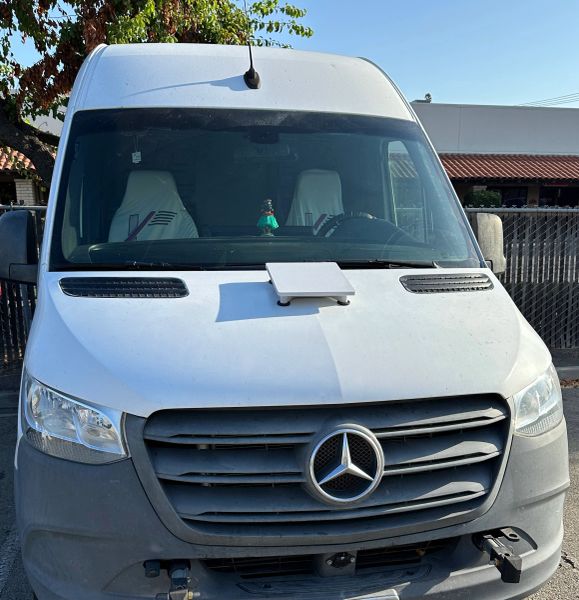
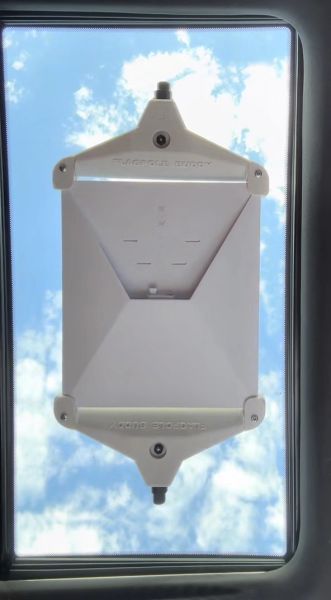
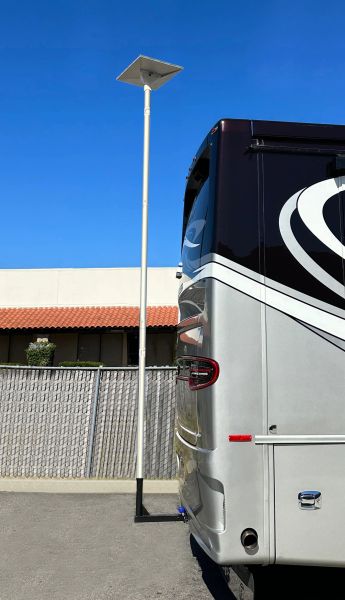
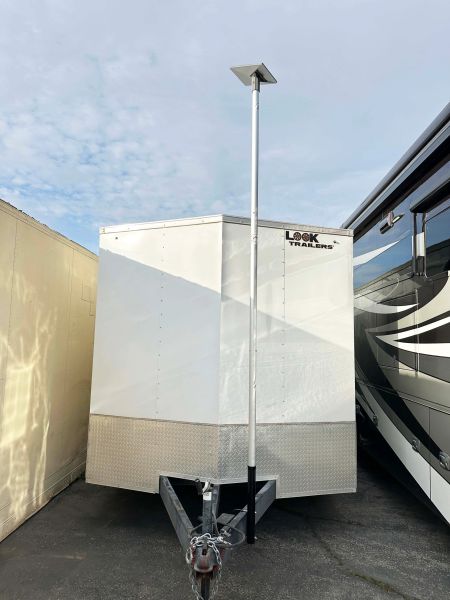
Mount Your Current Starlink Mini: FlagPole Buddy Options

Wait for the Mini 2 If
- You mostly download: weather, maps, streaming, and messages
- You want fewer loose parts in a day-trip kit
- You have no trip needing satellite internet in the next few months
- You want to skip buying an external battery pack
Waiting carries a cost, though. You wait with no price, no date, and no confirmed specs. In addition, every trip without a dish is a trip without a satellite backup for weather updates and emergency messages.
The Rental Route Lowers the Risk
The rental route gives you a dish now without owning hardware the Mini 2 might replace. If you later cancel, you return the kit within 30 days to avoid a purchase charge, instead of reselling a dish you own. Starlink’s Optional Mini Kit for Travel lets eligible Residential customers claim a Mini with no monthly hardware rental cost.
To keep the free rental, hold the Mini on a Roam plan or Standby Mode. You also need an active Residential plan at home. Notebookcheck and Digital Trends report Residential Max customers get 50% off Roam, while lower tiers get 20% off. Offers arrive by email invitation, so not every account sees one yet. Also, Starlink notes rentals ship refurbished in some cases.
Starlink Mini 2 vs Starlink Mini: Who Should Pick Which
The Starlink Mini 2 vs Starlink Mini choice depends on how you travel. Here is how the leaked changes line up with common trip types:
- Remote work from camp: the current Mini, because video calls lean on the uplink the Mini 2 cuts back
- Posting video or photos from the trail: the current Mini, for the same upload reason
- Day trips and quick weather checks: the Mini 2 once it ships, since the internal battery replaces a separate pack
- Summer desert travel: the current Mini with an external battery, until owner reports cover Mini 2 heat behavior
- Driving with the dish running: the current Mini on a Roam plan, which Starlink already supports up to 100 mph
- A week at base camp: either dish with a power station, since no internal pack replaces one yet
Most other details, from weight to WiFi to price, remain unknown. For now, the current Mini fits heavy users, while the Mini 2 targets short, light connections.
Final Verdict
The Mini 2 looks built for overlanders who want satellite internet with fewer parts to pack. Its biggest strength is the built-in battery. It removes the separate power pack and cable many off-grid Mini owners carry today.
The trade-off is upload capacity. A duty cycle cut from 75% to 11% points to slower uploads. As a result, remote workers and content creators should wait for real-world tests before switching. If you need a dish for trips this season, the current Mini is the one to get.
Value stays impossible to judge without a price. The current Mini starts at $199, and some Residential customers get one at no hardware cost. For anyone with trips on the calendar, the current dish is the safer spend.
Our recommendation: buy or rent the current Starlink Mini now if you travel in the next few months. Then pair it with one of the battery picks above. If you mostly download and travel light, wait for official Mini 2 specs, then compare runtime and upload speed before buying.
Starlink Mini 2 FAQ
Is the Starlink Mini 2 out yet?
No. As of September 29, 2026, SpaceX has not announced the Mini 2 or listed it for sale. Every detail comes from a firmware leak posted July 19, 2026.
When is the Starlink Mini 2 release date?
SpaceX has not set one. Earlier predictions pointed to mid-2026, and the window has all but closed without a launch. The mini2_prod1 revision name suggests production hardware, but SpaceX has confirmed nothing.
How long will the Starlink Mini 2 battery last?
Nobody knows yet. The leak confirms a 4S lithium pack, but it lists the capacity as unknown. Ignore any runtime or 71Wh figure until SpaceX publishes a spec sheet.
Will my current Starlink Mini mount fit the Mini 2?
Not confirmed. The antenna board is slightly smaller at 8.86 x 10.75 inches, but the outer case size has not leaked. Wait for official dimensions before you buy mounts for a Mini 2.
Is the Starlink Mini 2 slower than the original?
Uploads look slower, since the transmit duty cycle drops from 75% to 11%. The leak gives no Mbps figures. Downloads show no sign of change in the leaked data.