


Quick Facts:
- Category: Starlink Mini battery packs compared
- Top pick for runtime: Star-Batt Plus, rated over 24 hours per charge
- Most compact pick: PeakDo LinkPower 2, under 1.5 pounds
- Middle-ground pick: Devos AMPak 145, about 7 hours of runtime
- Price range: $169 to $1,599
- Battery chemistry: LiFePO4 (Star-Batt) or lithium-ion (PeakDo, Devos)
- Airline-friendly options: PeakDo (under 100Wh) and Star-Batt Plus (hot-swappable cells)
- Best for: overlanders, remote workers, and anyone running a Starlink Mini off-grid
9 min read
In This Guide
Why the Right Starlink Mini Battery Matters
I am a fan of the power of three. I ran a Starlink Mini off each of these batteries across different trips. Star-Batt, PeakDo, and Devos are the three I recommend without hesitation. Finding the best Starlink Mini battery comes down to one trade-off: runtime against size. In practice, a bigger battery keeps you online longer. However, you pay for the extra capacity in weight, bulk, and price. Our own breakdown of Starlink Mini power consumption covers the exact watt draw before you size a battery to your trips.
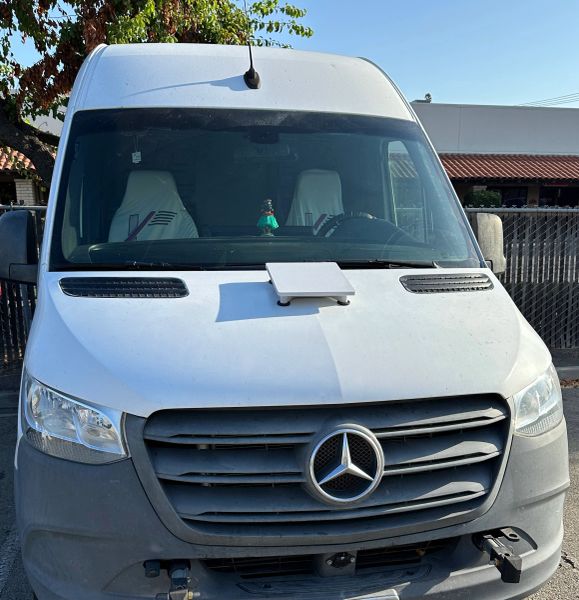
This guide is for anyone who runs a Starlink Mini away from shore power. Think overlanders, remote workers checking in from camp, or hunters and anglers who want a way to call for help. Families who want internet at a site with zero signal count too. For instance, a general-purpose power station like a Jackery or Anker unit works fine. It also costs less if you only need power for an hour or two at a time. These three batteries earn their place instead, because they are built specifically for the Mini and mount the way overlanding gear needs to mount. Some even double as their own Starlink Mini battery mount, so you might not need a separate accessory at all. If you also want a dedicated Starlink Mini magnetic mount for a roof rack or dash, pair one of these three with this setup.
Price separates these three fast. PeakDo prices the LinkPower 2 at $229, Devos prices the AMPak 145 at $199.99, and Star-Batt asks $1,599 for the Plus. Notably, this is a wide spread for the same basic job. The sections below explain exactly what each price buys, so you land on the best Starlink Mini battery for your trips.
Key Specs at a Glance
Starlink Mini battery life is the single factor separating these three the most. Runtime ranges from about 4.5 hours on the lightest pick to more than 24 on the heaviest. Specifically, here is how each Starlink Mini battery pack compares before the details below.
| Specification | Star-Batt Plus | PeakDo LinkPower 2 | Devos AMPak 145 |
|---|---|---|---|
| Price | $1,599 | $229 to $289 | $199.99 |
| Battery capacity | 576Wh LiFePO4 | 99Wh, 27,500mAh Li-ion | 145Wh Li-ion |
| Rated runtime | Over 24 hours | About 5 hours | About 7 hours |
| Weight | 22 lbs | About 1.4 lbs | 1.9 lbs |
| Airline compliant | Yes, via 6 hot-swap 96Wh cells | Yes, under the 100Wh limit | Needs airline approval, over 100Wh |
| Where to buy | star-batt.com | Amazon or peakdo.com | Amazon or devosoutdoor.com |
The 3 Starlink Mini Batteries We Recommend
Star-Batt Plus: The Longest Runtime
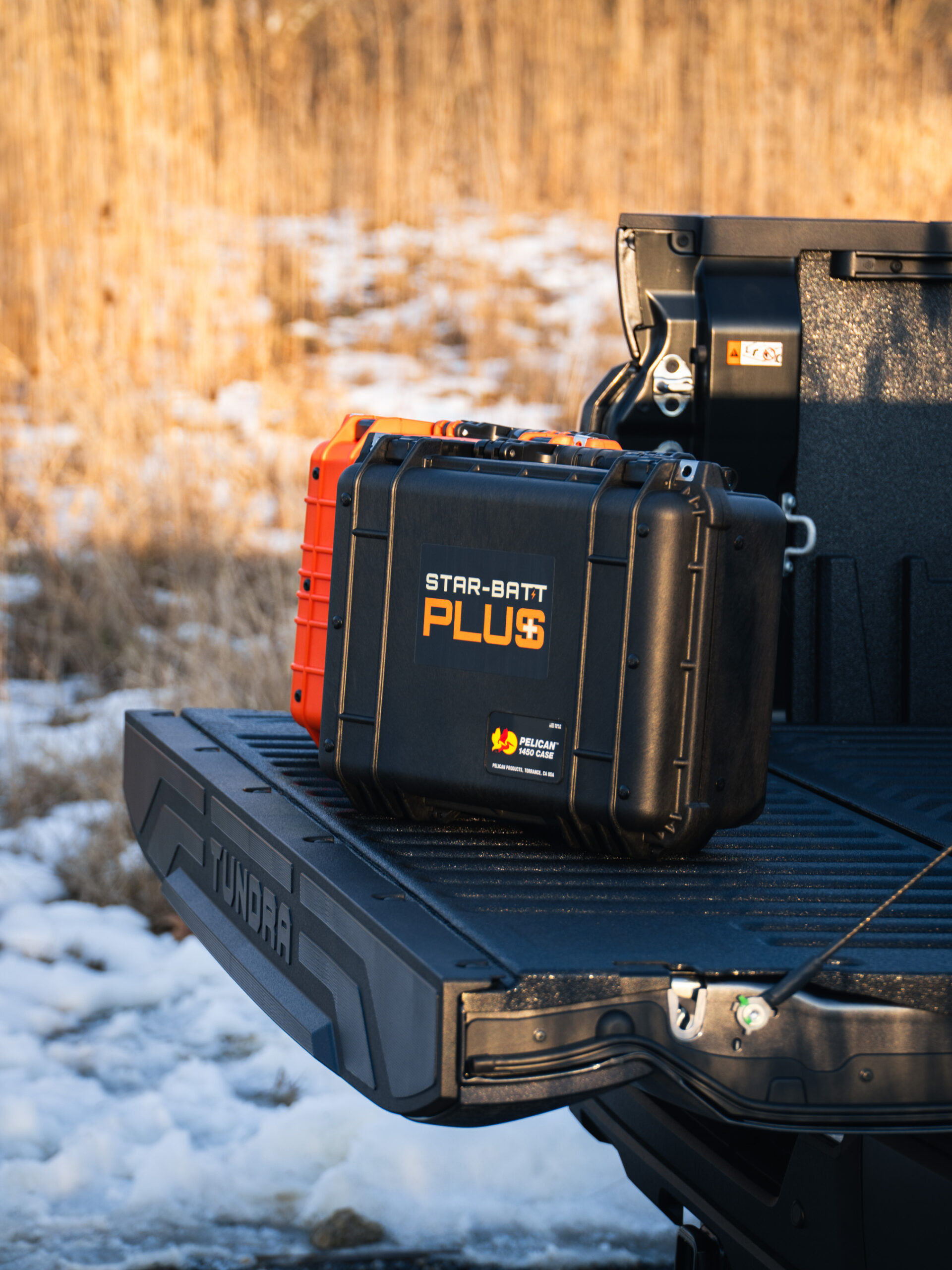
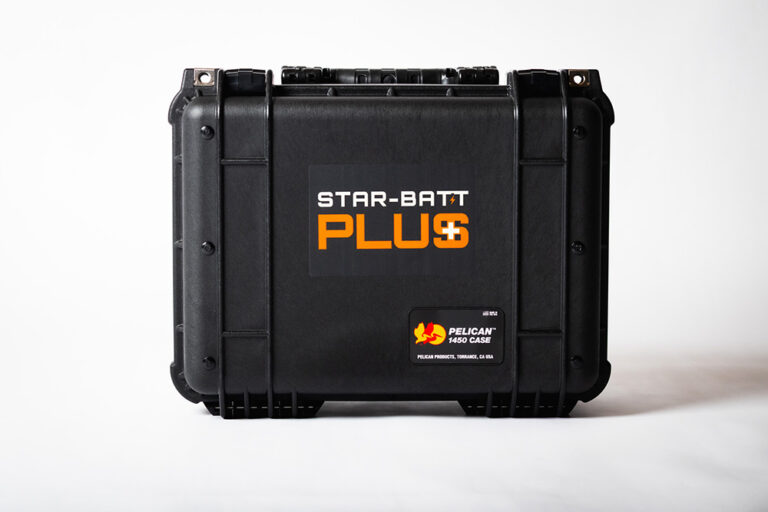
Built around a 576 watt-hour LiFePO4 battery, the Star-Batt Plus runs a Starlink Mini for over 24 hours on a single charge. This kind of Starlink Mini battery life puts the Star-Batt in a different class from the other two batteries in this guide. The price reflects it. If you need something bulletproof, something you leave running at camp without doing runtime math in your head, the Star-Batt is the pick.
It ships in a Pelican 1450 case and splits into six hot-swappable 96 watt-hour cells. This configuration is how it clears FAA carry-on rules despite the large total capacity. In addition, a built-in RJ45 Ethernet port lets you hardwire a router or laptop straight to the case without opening it. The unit weighs 22 pounds and accepts up to 160 watts of solar input. Notably, its LiFePO4 cells are rated for 2,000 cycles at full depth of discharge, or 6,500 cycles at half discharge. Degradation should not worry you for years of regular use.
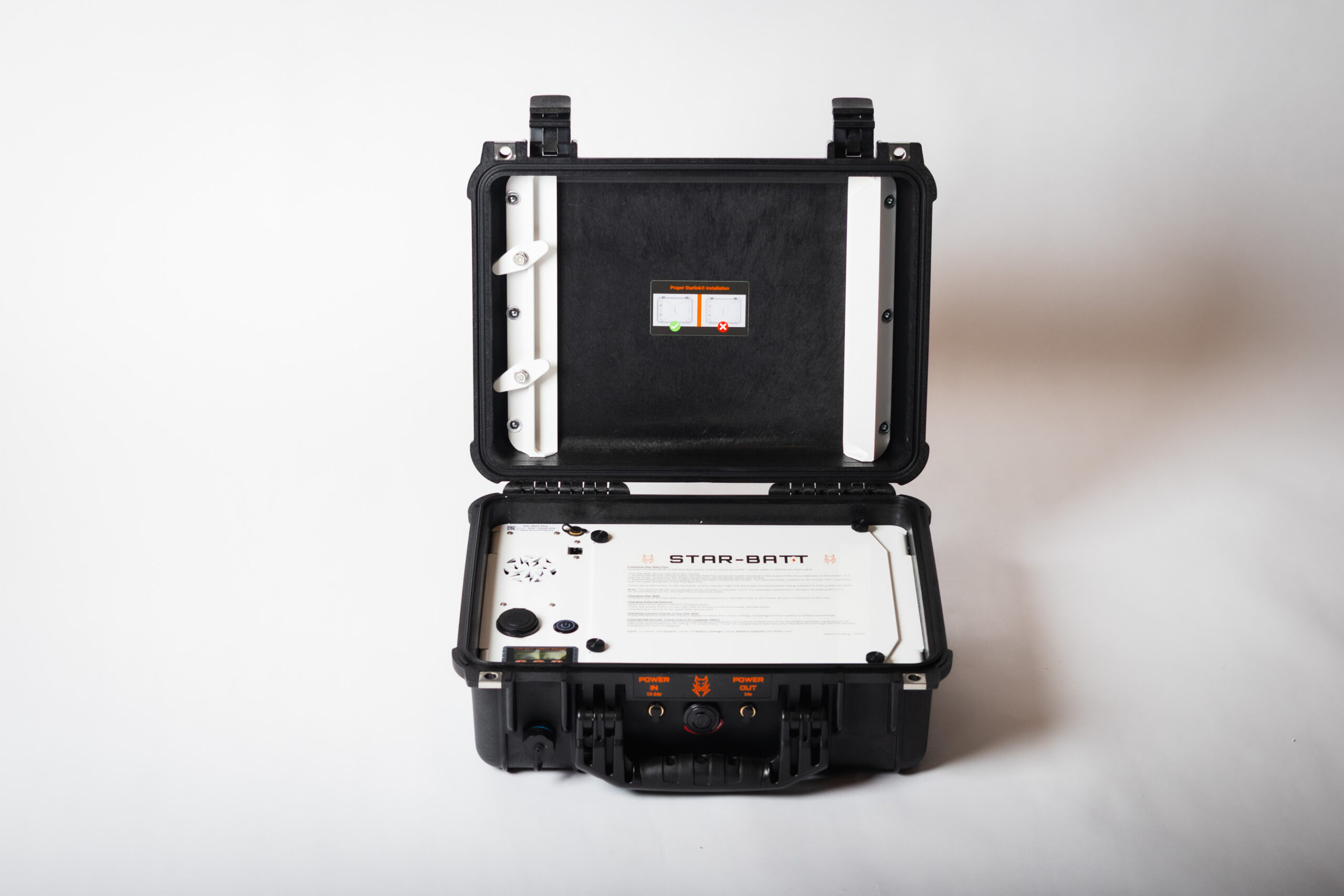
Owners consistently praise the build quality. For example, the case shrugs off dust and washboard roads, and the magnetic mount holds firm through rough trail miles. The catch is cost and bulk. At 22 pounds and over $1,500, this is not a grab-and-go option for a weekend trip. You also need to remember to power it down between sessions, since a full day of continuous use will still drain it. Pair it with the optional solar panel for multi-day trips, or treat it as an on-demand connection you switch on when you need internet.
PeakDo LinkPower 2: The Most Compact
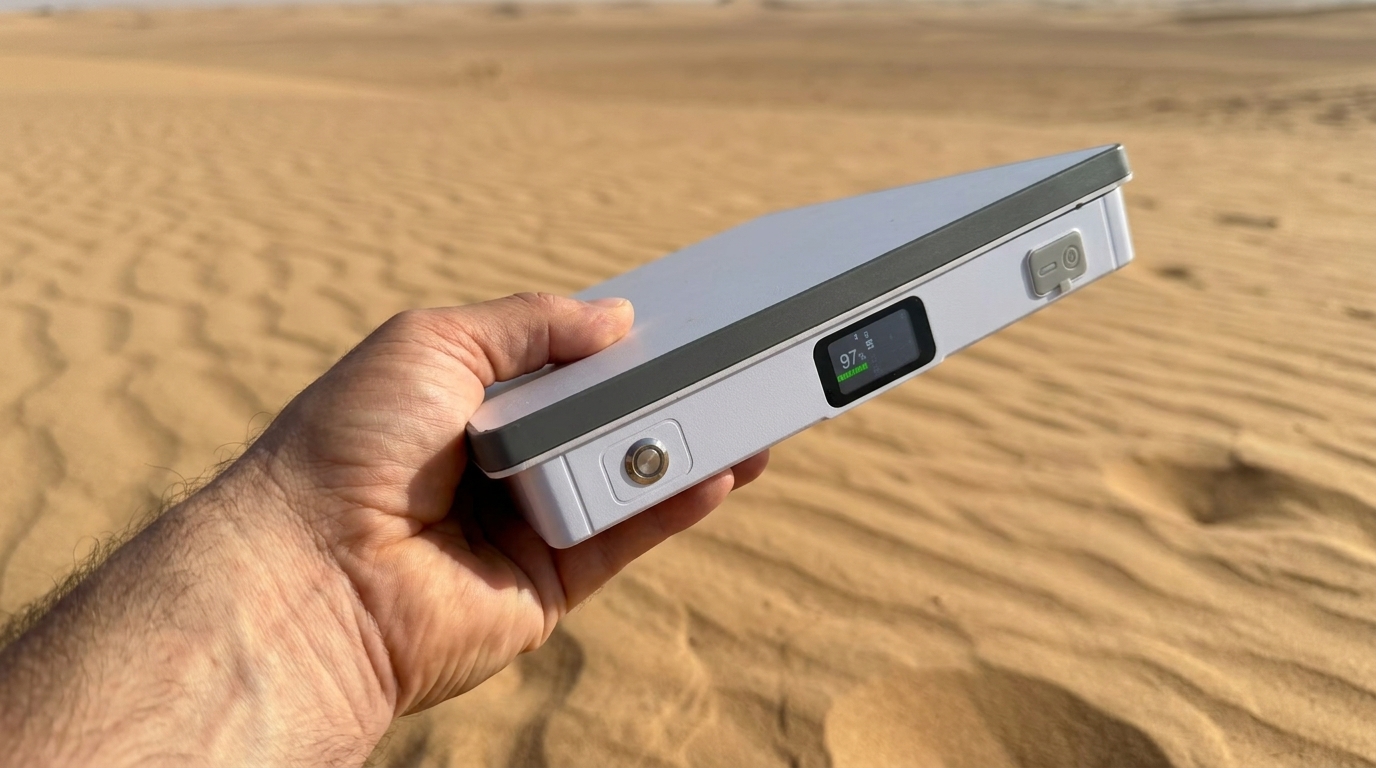
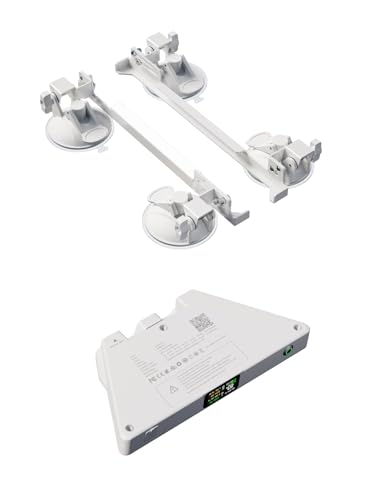
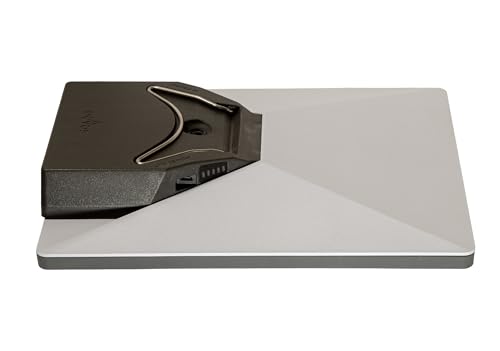
The PeakDo LinkPower 2 is a Starlink Mini power bank built to disappear into your kit. It clips onto the back of the Starlink Mini itself instead of living in a separate case. This doubles as a simple Starlink Mini battery mount. Notably, at under a pound and a half, it is the lightest battery in this guide by a wide margin. If you backpack in, travel by air, or prefer one less bulky box in the truck, this is especially the pick.

PeakDo LinkPower Power Bank and Mount Compatible with Starlink Mini
The lightest way to run a Starlink Mini, built to clip directly onto the unit.
- Clips directly onto the Starlink Mini, doubling as a mount
- Under 1.5 pounds, the lightest option in this guide
- Full metal heatsink and Smart Bypass Mode
- Stays under the 100Wh airline threshold
- Power button does not always shut the unit down cleanly
- About 5 hours of runtime, far less than the Star-Batt Plus
LinkPower 2 vs. LinkPower 1: What You Get
The LinkPower 2 carries the same 99 watt-hour, 27,500mAh battery as the LinkPower 1. Both models share Bluetooth app control, a built-in tripod mount, and pass-through charging, which powers the Mini while the battery itself recharges. What the LinkPower 2 adds is a full metal heatsink for better cooling and a Smart Bypass Mode. It also brings more charging flexibility, with DC, magnetic DC, and USB-C input options, and edges out the LinkPower 1 on runtime, rated for about 5 hours against 4.5. Both models stay under the 100 watt-hour airline threshold, so neither one needs pre-approval to fly. If the extra $60 is not worth it to you, the LinkPower 1 covers the same core job at $169.
Owners also like how easily it fits the Mini, and how closely real-world runtime matches the advertised number for most users. The recurring complaint, though, is a power button which does not always shut the unit down cleanly. Left unchecked, this drains the battery faster than expected. Buying through Amazon instead of ordering direct from PeakDo also sidesteps a shipping delay. Some buyers reported two- to three-week shipping times when ordering straight from the manufacturer’s site.
Devos AMPak 145: The Middle Ground

The Devos AMPak 145 splits the difference between the other two. Specifically, it carries a 145 watt-hour lithium-ion battery, good for about 7 hours of runtime, and weighs 1.9 pounds. This puts it well ahead of the PeakDo on capacity and runtime, while staying far lighter and cheaper than the Star-Batt.

Devos AMPak 145 Portable Battery for Starlink Mini – 145Wh Lithium Power Bank with Integrated Kickstand, & USB-C Fast Charging – Compact Backup Power for Travel, Camping & Emergency Use
145 watt-hours of runtime for less than a PeakDo LinkPower 2, with a built-in kickstand mount.
- 145Wh capacity, well ahead of the PeakDo's 99Wh
- Integrated kickstand doubles as a Starlink Mini mount
- Dual USB-C ports also charge phones and tablets
- Backed by a 2-year warranty
- Exceeds the 100Wh airline no-approval threshold
- Thin owner-review sample since it is newer to market
AMPak 145 Features and Trade-Offs

An integrated kickstand functions as a built-in Starlink Mini battery mount, clicking the Mini into place at the right angle without extra hardware. In addition, dual USB-C ports let this Starlink Mini power bank double as a charger for your phone or tablet. This comes in handy when you are not running Starlink. It also charges over USB-C PD at up to 45 watts, and Devos backs it with a 2-year warranty. At $199.99, it costs less than the PeakDo LinkPower 2 while offering meaningfully more capacity.
There is a trade-off worth knowing before you buy. A 145Wh battery sits above the 100 watt-hour threshold airlines let you carry without pre-approval. This is not the pick if you fly with it regularly. Early owner feedback is thin, since the AMPak 145 is newer to market than the other two. However, what exists so far is generally positive but generic, more “works well” than detailed field reports. This is not a red flag. It is simply a reminder the track record here is shorter than Star-Batt’s or PeakDo’s.
Why We’re Cautious About Cheap Starlink Mini Battery Packs on Amazon
Search Amazon for a Starlink Mini battery pack, and you will find no-name packs claiming 200 or 300 watt-hours for $50 or $60. In contrast, those prices make the three batteries above look expensive. Treat listings like these with real skepticism. Notably, testers who buy unbranded packs rarely get more than half the advertised watt-hours out of them in real use. The capacity numbers on the box often reflect a best-case lab test rather than what you see powering a Starlink Mini in the field.
The bigger issue is what you cannot see. Does the pack have a real battery management system protecting the cells from overcharging, overheating, or drawing down too far? Star-Batt, PeakDo, and Devos all publish cell type, cycle behavior, and safety certifications for buyers to verify. In contrast, most sub-$70 no-name listings publish none of this. If something goes wrong, there is rarely a warranty process behind it. When a listing’s price and claimed capacity seem too good to be true, they usually are.
Star-Batt vs. PeakDo vs. Devos
These three batteries solve the same problem, keeping a Starlink Mini running off-grid, at three different price points. The right one depends on how you use your Starlink Mini. Do you leave the Mini running for most of the day, camp for multiple nights without recharging, or need a system professional enough for fieldwork? If so, the Star-Batt Plus justifies its price. Specifically, its 576Wh capacity and hot-swappable cells exist for exactly this use case.
If weight and packability matter more than raw runtime, the PeakDo LinkPower 2 wins. It weighs a fraction of what the Star-Batt does and mounts directly to the Mini. It also covers the 2- to 5-hour Starlink sessions most weekend campers need. In contrast, the Devos AMPak 145 sits between the two. It is worth considering if you want meaningfully more runtime than PeakDo without stepping up to Star-Batt money. This especially applies if you are not flying with it regularly.
From experience: I reach for the Star-Batt when I know I will be off-grid for days and do not want to think about power at all. When I am packing light or flying somewhere, the PeakDo comes with me instead, since I would rather carry a pound than 22. Devos has earned a spot as the one I hand to friends who want more runtime than PeakDo without committing to Star-Batt money.
Final Verdict
Buy the Star-Batt Plus if you run your Starlink Mini hard: multi-day trips, professional fieldwork, or any situation where losing connectivity is not an option. The price stings, but the runtime, build quality, and hot-swappable cells earn it for this use case. Notably, nothing else in this guide comes close on capacity.
Buy the PeakDo LinkPower 2 if weight and packing space matter more than all-day runtime. It fits the Mini directly, flies without airline approval, and costs a fraction of the Star-Batt. However, check the power button before you walk away from camp. It is the one recurring complaint worth watching for.
Buy the Devos AMPak 145 if you want more runtime than PeakDo without the size, weight, or price of Star-Batt. It is also a good fit if you do not fly with it often. It is the newest of the three, so the track record is shorter. However, the specs and early reviews back up the price.
Whichever Starlink Mini battery pack you pick, avoid the unbranded no-name packs flooding Amazon search results for this category. The three batteries above cost more for a reason: published specs, real warranty support, and battery management systems built for the job.
Mount Your Starlink Mini

FAQ
Does the Starlink Mini have a built-in battery?
No. The Starlink Mini needs a constant power source: AC power, a car adapter, or one of the portable batteries in this guide. Without a battery attached, it only runs while plugged into an outlet or vehicle.
How long will a battery pack run a Starlink Mini?
It depends on capacity. Expect around 4.5 to 5 hours from a 99Wh pack like the PeakDo LinkPower, and about 7 hours from a 145Wh pack like the Devos AMPak 145. A 576Wh unit like the Star-Batt Plus runs over 24 hours.
What size battery do I need to power a Starlink Mini?
A Starlink Mini draws roughly 20 to 40 watts depending on conditions like temperature and signal search. For a few hours of use per session, a 99 to 145Wh Starlink Mini power bank is plenty. For all-day or multi-day connectivity, look at something in the 500Wh-plus range instead.
Can you charge a Starlink Mini battery with solar?
Yes, though the method varies by battery. The Star-Batt Plus accepts up to 160 watts through a dedicated solar input. The PeakDo and Devos batteries recharge through USB-C PD instead, so you need a compatible USB-C solar panel for those two. For the bigger picture on pairing solar with your setup, see our guide to how solar power works for overlanding.
Is a cheap Amazon battery pack safe for a Starlink Mini?
Approach unbranded, ultra-low-price packs with caution. Many overstate their real capacity and skip publishing details on their battery management systems. In contrast, sticking with a purpose-built option, one which publishes real specs and stands behind a warranty, is the safer route.
Do I need an airline-compliant battery for a Starlink Mini?
Only if you plan to fly with it. Airlines generally allow lithium batteries up to 100 watt-hours without pre-approval under FAA guidance, which covers the PeakDo LinkPower. Star-Batt clears the same rule differently, by splitting the Plus into six smaller hot-swappable cells. The Devos AMPak 145, at 145Wh, exceeds the no-approval threshold.
Related Reading
Gear mentioned in this article
PeakDo LinkPower Power Bank and Mount Compatible with Starlink Mini