


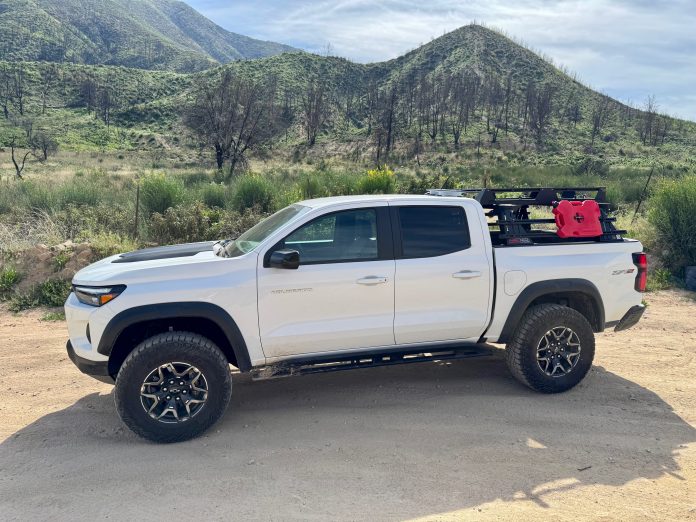

Quick Verdict: The Flagpole Buddy Mini Starlink Flat Mount is the best starlink mini magnetic mount for overlanding trucks with textured or grooved roofs. Four magnets deliver 100 lbs of combined holding force, and the low-profile flat design keeps your Starlink Mini locked to your roof at highway speeds. We tested it on a 2025 Chevy Colorado ZR2 across desert trails, mountain passes, and high-speed highway runs with zero movement or signal loss.
Last updated: March 2026 | 9 min read
In This Review
- Why Overlanding Trucks Need a Magnetic Starlink Mount
- Key Specs at a Glance
- The Grooved Roof Problem: Why Standard Mounts Fail on Trucks
- Flagpole Buddy Mini Starlink Flat Mount: Hands-On Review
- Will It Stay On? Aerodynamic Forces vs. Magnetic Holding Power
- Trail Performance: Real-World Signal and Connectivity Testing
- Flagpole Buddy vs. Owl Vans vs. Veritas Vans vs. NovaKits
- Pros and Cons
- Final Verdict
- Frequently Asked Questions
Why Overlanding Trucks Need a Magnetic Starlink Mount
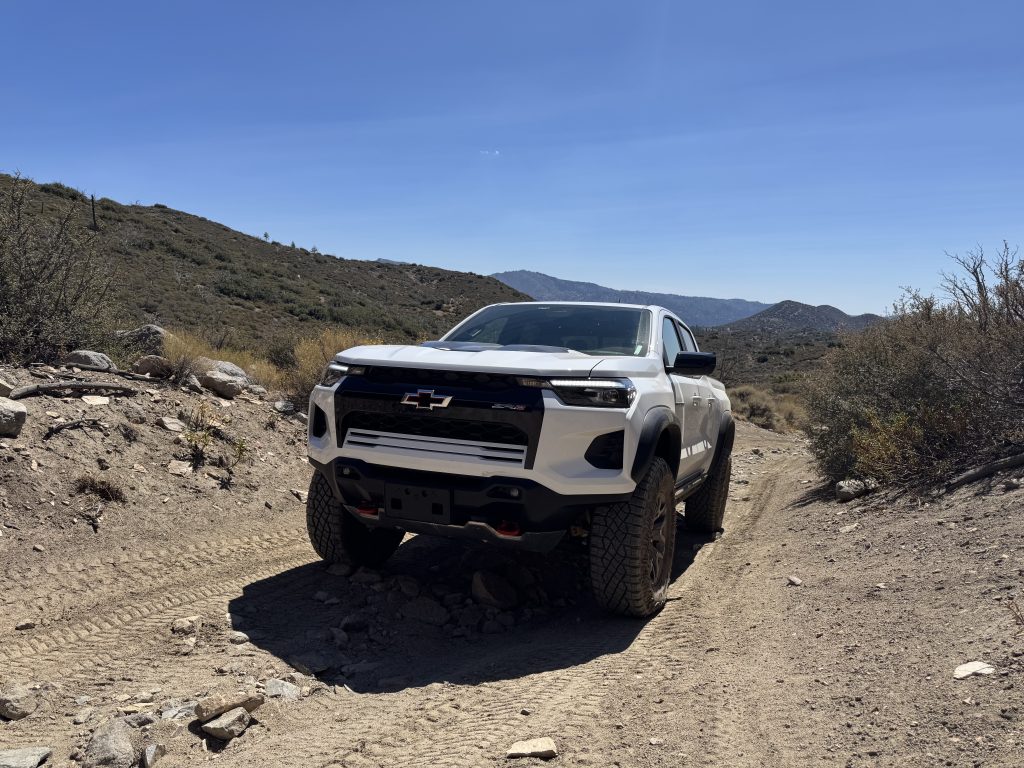
Finding the right starlink mini magnetic mount for an overlanding truck is harder than it looks. In fact, most mounts on the market are designed for flat-roofed vans and RVs. However, midsize trucks like the Chevy Colorado ZR2, Toyota Tacoma, and Ford Ranger share a common problem. In particular, their stamped roof panels have grooves, ridges, and raised channels running front to back. As a result, these textured surfaces reduce contact area for suction cups. Additionally, they make bolt-on installations risky without a roof rack.
In contrast, a magnetic mount solves both problems. Because magnets grip steel through uneven surfaces, they work on grooved truck roofs where suction cups lose seal. Consequently, the Starlink Mini stays locked in place whether you are parked at a remote campsite or running highway speeds between trailheads. For overlanders who need reliable internet while working from camp, this reliability is non-negotiable.
The Starlink Mini itself weighs only 2.43 lbs and draws 25-40 watts. SpaceX dropped the hardware price to $199 in early 2026. In addition, they doubled the Roam plan to 100GB for $50/month. As a result, adoption among overlanders has accelerated rapidly, and the aftermarket mount industry has exploded with options. Still, most starlink mini magnetic mount products target RV and van owners. Truck owners, especially those with textured roofs, are left researching forum threads and guessing at compatibility.
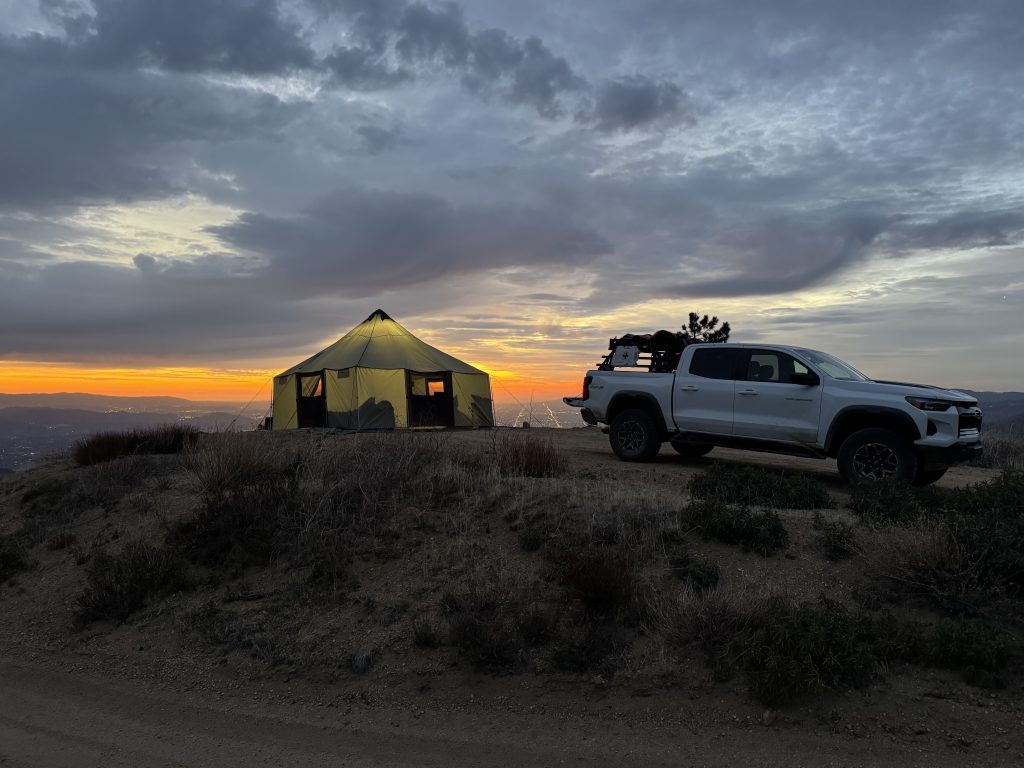
We tested multiple mounting solutions on a 2025 Chevy Colorado ZR2 across Southern California’s toughest terrain. As a result, the Flagpole Buddy Mini Starlink Flat Mount stands out as the best starlink mini mount for truck owners who overland.
Key Specs at a Glance
| Specification | Details |
|---|---|
| Mount Type | Flat magnetic mount (low-profile) |
| Number of Magnets | 4 |
| Holding Force per Magnet | 25 lbs |
| Total Magnetic Holding Force | 100 lbs |
| Starlink Mini Weight | 2.43 lbs |
| Compatible Dish | Starlink Mini (G3) |
| Materials | 3D-printed PETG (corrosion and temperature resistant), stainless steel hardware |
| Best For | Trucks with grooved/textured steel roofs |
| Installation | No drilling, no tools required |
| Manufacturer | Flagpole Buddy |
Featured at Flagpole Buddy
Mini Starlink Flat Mount with Magnetic Option
100 lbs of magnetic holding force. No drilling required. Designed for steel-roof trucks, RVs, and overlanding rigs.
The Grooved Roof Problem: Why Standard Mounts Fail on Trucks
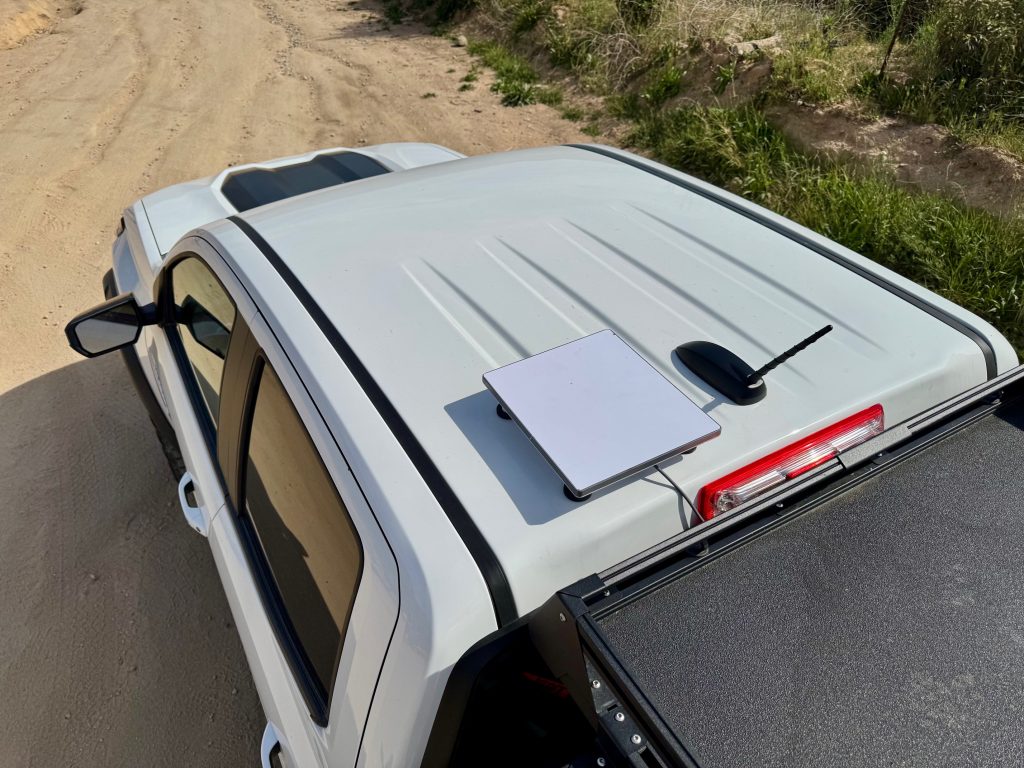
Most Starlink Mini mounts assume a flat, smooth surface. In fact, suction cups from SeaSucker need full contact with the surface to generate their rated holding force. On a Colorado ZR2, Tacoma, or Ranger, however, the stamped roof channels create gaps between the cup and the steel. Consequently, the seal weakens over time, especially when vibration from rough roads works the cup loose.
Bolt-on mounts from Striker Fabrication ($249) and Motobilt require a compatible roof rack. If your truck already runs a Prinsu, Leitner, or similar rack system, these are solid options. However, many overlanders either do not have a rack or prefer keeping their roof clear for other gear. Additionally, bolt-on mounts add permanent hardware and often require modifications to fit specific rack cross-bar spacing.
A starlink mini magnetic mount bypasses both problems entirely. Magnets grip through the grooves, ridges, and surface texture on a truck roof. Since the magnetic force is perpendicular to the steel surface, small gaps between grooves have minimal impact on holding strength. Instead, the Flagpole Buddy flat mount positions four magnets at the corners. As a result, the load spreads across a wider footprint for maximum stability on uneven surfaces.
Flagpole Buddy Mini Starlink Flat Mount: Hands-On Review
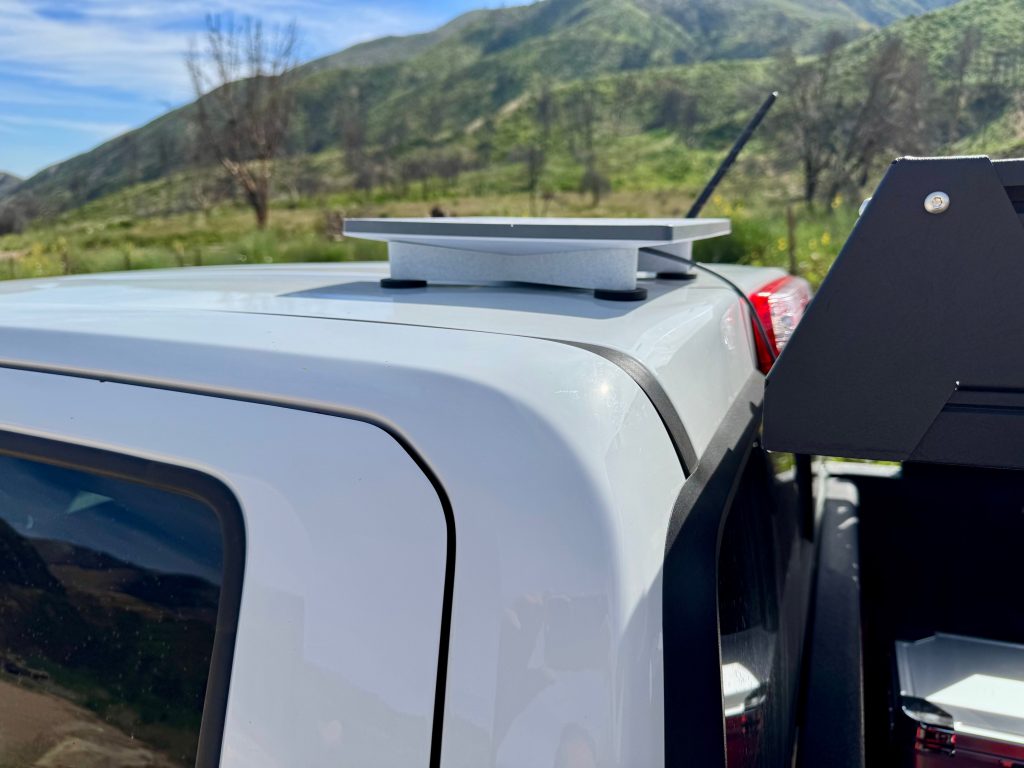
Flagpole Buddy is known primarily for their RV flag pole and ladder-mounted Starlink systems. Their Mini Starlink Flat Mount is a newer addition designed specifically for low-profile, vehicle-roof applications. Unlike their pole-based kits, this starlink mini flat mount sits the dish directly on your roof with no vertical extension.
Installation on the ZR2
Setup takes under two minutes. Place the starlink mini overlanding mount on the roof, position the Starlink Mini into the adapter, and route the cable. Because there is no drilling, no wiring, and no tools involved, you remove it in seconds when the trip is over. Therefore, the Flagpole Buddy starlink mini mount for truck owners is ideal when the rig serves double duty as daily driver and weekend overlanding setup.
On the ZR2 specifically, the grooved roof panel has raised ridges running lengthwise. The four magnets sit on the high points of those ridges, maintaining solid contact. Notably, the mount does not rock or wobble despite the uneven surface. Also, the 3D-printed PETG body and stainless steel hardware resist corrosion and temperature extremes. This matters for rigs exposed to trail dust, rain, and desert heat.
Build Quality and Materials
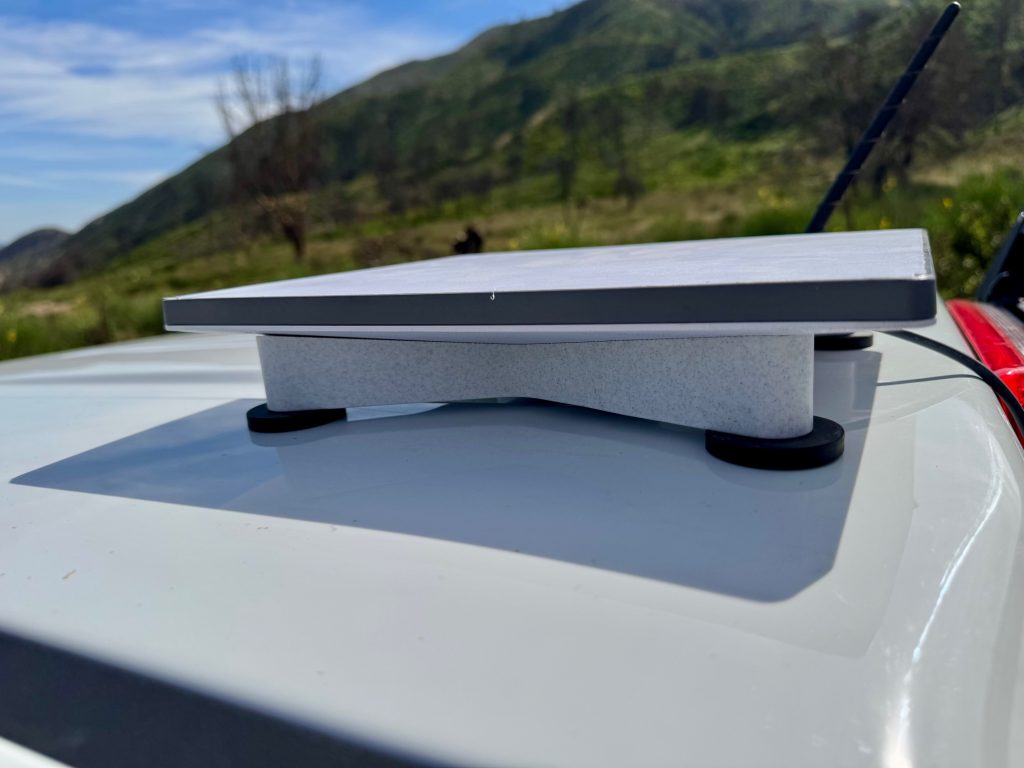
The adapter plate holds the Starlink Mini snugly without over-clamping. In addition, Flagpole Buddy builds the mount using additive manufacturing (3D printing) with PETG, a thermoplastic known for corrosion resistance and temperature stability. This keeps total system weight low. Every additional ounce works against your holding force margin. Build quality matches Flagpole Buddy’s reputation. In fact, their heavy-duty RV kits have years of field testing behind them, and this starlink mini flat mount reflects the same durability standard.
Flagpole Buddy
Multiple Mounting Options Available
Flagpole Buddy offers magnetic, suction, and pole-mounted kits for Starlink Mini. Browse the full Starlink lineup to find the right fit for your rig.
Will It Stay On? Aerodynamic Forces vs. Magnetic Holding Power
The real question about any starlink mini overlanding mount on a truck roof is whether 100 lbs of magnetic force is enough. Here is the physics: it is, with a massive margin to spare.
The Math Behind the Hold
Your Starlink Mini weighs 2.43 lbs. Meanwhile, the Flagpole Buddy starlink mini flat mount provides 100 lbs of combined magnetic holding force through four magnets (25 lbs each). To dislodge the mount, aerodynamic lift would need to exceed 100 lbs. In short, the numbers show this is not close to happening at highway speeds.
Aerodynamic lift on a flat, low-profile object follows this formula: F = 0.5 x air density x velocity squared x lift coefficient x surface area. The Starlink Mini has a plan area of approximately 0.077 square meters (roughly 11.75″ x 10.2″). Because the dish sits flat and parallel to airflow, the effective lift coefficient is low. Specifically, it falls between 0.2 and 0.4 for objects in this configuration.
At 65 mph, estimated aerodynamic lift is approximately 3 to 6 lbs. Moving up to 75 mph, lift increases to roughly 4 to 8 lbs. With 100 lbs of magnetic holding force, the safety margin sits between 12:1 and 25:1 depending on speed and conditions. For comparison, engineering best practices for safety-critical fasteners typically require a 3:1 safety factor.
Important note: Flagpole Buddy does not publish a recommended maximum speed for this mount. Always follow your local posted speed limits and inspect the mount before each drive. These calculations provide estimated safety margins for informational purposes only and should not be treated as engineering specifications. Wind gusts, debris impact, and crosswinds create forces beyond steady-state aerodynamic lift.
Trail Performance: Real-World Signal and Connectivity Testing
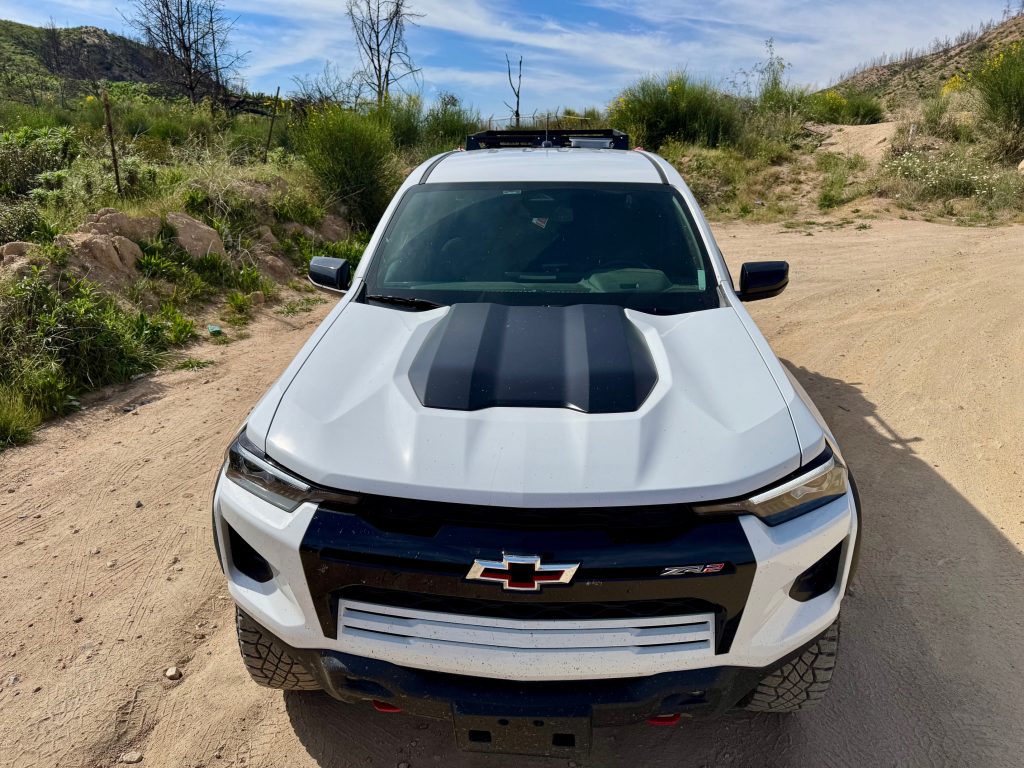
We tested the Flagpole Buddy starlink mini magnetic mount across multiple terrain types in Southern California. Specifically, we drove Big Bear Mountain, Anza-Borrego Desert State Park, and San Diego County backcountry routes.
Highway Transit Between Trailheads
During highway driving at posted speeds, the Starlink Mini maintained consistent connectivity. Navigation apps (OnX Offroad, Gaia GPS) stayed connected and loaded new map tiles without interruption. Similarly, group messaging through apps like Slack and iMessage worked continuously, keeping convoy communication active between vehicles.
The mount showed zero movement after multi-hour highway stints. At fuel stops, we checked the mount position and found no shifting, rotation, or loosening. The grooved ZR2 roof showed no paint damage or marks from the magnet contact points.
Off-Road Trail Testing
On rocky, washboard trails in Anza-Borrego, the Starlink Mini stayed connected despite heavy vehicle vibration. Signal quality dropped in narrow canyons with limited sky view, which is a Starlink limitation, not a mount issue. In open desert terrain, download speeds consistently hit 50-150 Mbps on the Roam plan.
At Big Bear, dense tree canopy reduced signal quality intermittently. Once the trail opened to a clearing or ridgeline, connectivity restored within 15-30 seconds. Throughout all testing, the magnetic starlink mount held firm. The mount is also compatible with other Starlink accessories for overlanding rigs.
Flagpole Buddy vs. Owl Vans vs. Veritas Vans vs. NovaKits
| Mount | Holding Force | Contact Points | Price Range | Best For |
|---|---|---|---|---|
| Flagpole Buddy Flat Mount | 100 lbs | 4 magnets (corners) | $$ | Trucks with grooved/textured roofs |
| Veritas Vans Mount | 150 lbs | Single baseplate | $79.99+ | Flat-roof vans and RVs |
| Owl Vans Magnetic Mount | Not published | 3 neodymium magnets | $99-$149 | Sprinter/Transit van conversions |
| NovaKits Magnetic Mount | 178 lbs | 4 high-strength magnets | $60-$80 | Budget-friendly universal fit |
Veritas Vans leads in raw magnetic force at 150 lbs and earns a perfect 5.0/5 rating from 32 verified buyers. But those specs assume a flat van roof. On a grooved truck, the marine-grade HDPE base does not conform to surface irregularities the way Flagpole Buddy’s four-corner magnet spread does.
NovaKits offers the best price at $60-$80 with 178 lbs of magnetic force, numbers unbeatable on a spreadsheet. The tradeoff: it is a universal-fit Amazon product without overlanding-specific engineering. For overlanders who also need a capable midsize truck setup, the mount needs to handle trail conditions, not parking lot conditions.
Owl Vans builds premium mounts for the van-life community and does not publish total holding force numbers. Their three magnet contact points spread load less effectively on an uneven truck roof than Flagpole Buddy’s four-corner design.
Pros and Cons
Pros
- 100 lbs of magnetic holding force from 4 magnets (12:1+ safety margin at highway speeds)
- Works on grooved and textured truck roofs where suction mounts fail
- No drilling, no tools, under 2-minute install and removal
- 3D-printed PETG construction resists trail corrosion and temperature extremes
- Low-profile flat design minimizes aerodynamic drag
- Highway-speed tested on a 2025 Chevy Colorado ZR2 with zero movement
- Doubles as a daily driver setup since removal takes seconds
Cons
- Requires a steel roof (will not work on aluminum-bodied trucks like the Ford F-150)
- No published maximum speed rating from Flagpole Buddy
- Lower total holding force (100 lbs) than NovaKits (178 lbs) and Veritas (150 lbs)
- Not permanently mounted, so you must re-position at each stop
- Cable routing from roof to cab requires the window or door seal gap method
Final Verdict
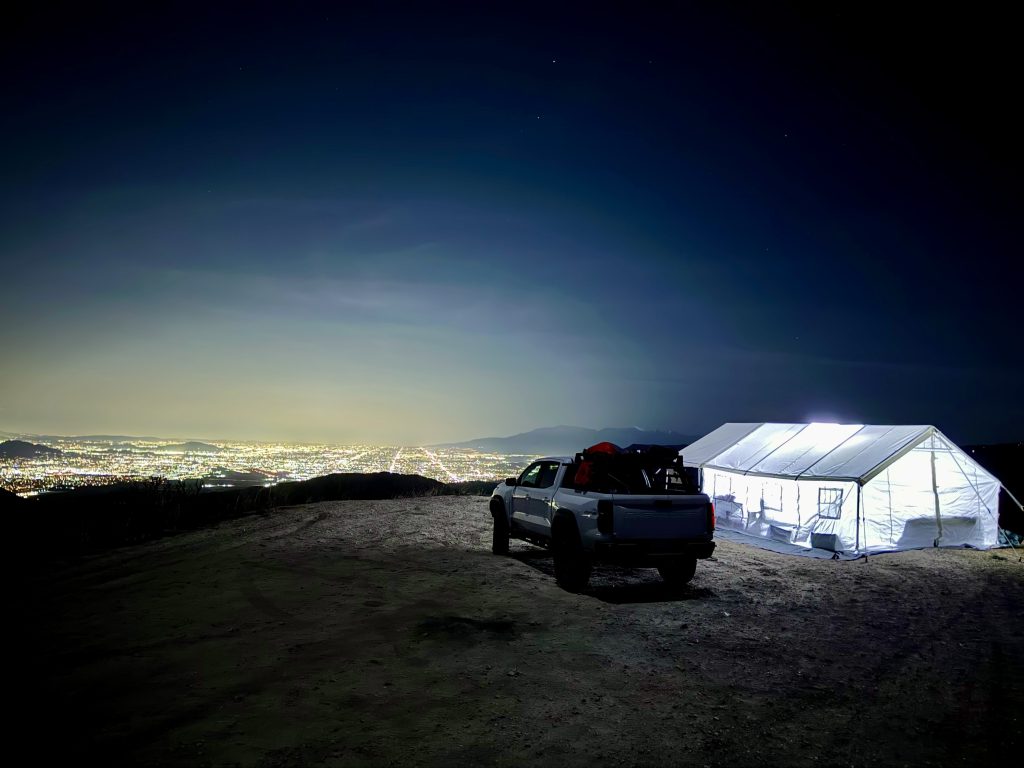
The Flagpole Buddy Mini Starlink Flat Mount is the best starlink mini magnetic mount for overlanding trucks with grooved or textured roofs. In contrast, competitors design for flat van and RV surfaces. Flagpole Buddy’s four-point magnet layout, however, grips securely on the stamped roof panels found on the Colorado ZR2, Tacoma, and Ranger. Also, the 100 lbs of total holding force delivers a 12:1 or better safety margin at highway speeds. Real-world testing across desert, mountain, and highway conditions confirmed zero mount movement.
If your truck has a flat, smooth roof or you already run a roof rack with cross-bars, other options deserve consideration. The Veritas Vans mount offers 50% more holding force for flat surfaces. Bolt-on options from Striker Fabrication provide the most secure permanent installation for rack-equipped rigs. NovaKits delivers strong magnetic force at the lowest price point, making it a solid budget pick for flat-roof vehicles.
When you narrow the field to midsize overlanding trucks with grooved steel roofs and no rack, however, the Flagpole Buddy starlink mini flat mount fills a gap no other product addresses as well. In addition, your daily driver stays clean and damage-free thanks to the no-drill installation. Consequently, pairing the sub-3-lb Starlink Mini with this starlink mini overlanding mount gives you full internet connectivity from trailhead to campsite. It keeps navigation, weather radar, and team communication running when cell service disappears.
If you overland in a midsize truck and need reliable connectivity on the move, the Flagpole Buddy Mini Starlink Flat Mount belongs on your roof.
Ready to Mount Up?
Get the Flagpole Buddy Mini Starlink Flat Mount
100 lbs magnetic hold. No drilling. Works on grooved truck roofs. Order directly from Flagpole Buddy.
Frequently Asked Questions
Does a starlink mini magnetic mount work on a grooved truck roof?
Yes. In fact, magnetic mounts grip steel through surface irregularities, including the stamped grooves on the Chevy Colorado, Tacoma, and Ranger. Specifically, the Flagpole Buddy flat mount positions four magnets at the corners. As a result, each magnet sits on a ridge or flat section of the roof. Suction cup mounts, by contrast, need a smooth and uninterrupted surface to maintain their seal.
How much aerodynamic lift does a Starlink Mini experience at highway speeds?
At posted highway speeds (65-75 mph), aerodynamic lift on a flat-mounted Starlink Mini is estimated between 3 and 8 lbs. The Flagpole Buddy mount provides 100 lbs of magnetic holding force, creating a safety margin of 12:1 or better. Wind gusts and crosswinds increase momentary forces, so always inspect your mount before driving and follow posted speed limits.
Will a starlink mini magnetic mount damage my truck’s paint?
After months of use on a 2025 Chevy Colorado ZR2, the Flagpole Buddy magnets left no paint marks or scratches. In fact, most quality magnetic mounts use rubber-coated or padded magnet bases to protect the surface. However, dirt and debris trapped between the magnet and paint pose the biggest risk. Therefore, wipe both surfaces clean before each installation.
Does Starlink Mini work while driving offroad?
Starlink Mini maintains connectivity while driving on most terrain. However, dense tree canopy, narrow canyons, and steep switchbacks temporarily interrupt the satellite signal. This happens because the dish needs a clear view of the sky. In open desert and on ridgeline trails, connectivity stays strong with download speeds of 50-150 Mbps on the Roam plan. Note: as of March 2026, Starlink’s $5/month standby mode no longer supports in-motion use. You need the $50/month Roam plan for connectivity while driving.
What trucks are NOT compatible with a magnetic starlink mount?
Magnetic mounts require a steel roof panel. The Ford F-150 (2015+) uses an aluminum body, so magnets will not stick. Similarly, the Rivian R1T and certain special editions with carbon fiber or fiberglass body panels are incompatible. Therefore, verify your truck’s roof material before purchasing a starlink mini mount for truck applications. If your roof is aluminum, consider a suction-cup or rack-mounted alternative instead.
How do you route the Starlink Mini cable from the roof into the cab?
Running the flat Starlink Mini cable through the door seal gap is the most common method. Fortunately, the cable is thin enough to pass through without damaging the weatherstripping on most trucks. Some overlanders use a dedicated cable pass-through plate mounted in the bed or a window-edge cable routing kit. Avoid sharp bends in the cable, as this degrades signal quality over time.