


Quick Facts:
- Product: Starlink V5 dish, announced July 14, 2026
- Dish weight: 2.4 lbs (1.1 kg), against 6.4 lbs on the V4
- Kit weight: 8.4 lbs (3.8 kg) with router, cable, and power supply
- Power draw: 35 to 50 watts average, roughly half the V4
- Peak download: 375+ Mbps, down from 400+ Mbps on the V4
- Wind rating: 165 mph mounted
- In-motion use: not supported, per Starlink
- Power input: AC supply, with no DC-native input
- Best for: stationary basecamps and home service, not a rig on the move
8 min read
In This Guide
- Overview: Smaller, Lighter, Half the Power
- Starlink V5 Specs Against the V4
- Power Draw: What 50 Watts Costs a Battery Bank
- Why the New Dish Stays Parked
- Mounting Starlink V5 on an Overland Rig
- Roam Plans Changed the Same Week
- Starlink V5 or the Mini for Overlanding
- Where the Dish Fits in an Overland Build
- Starlink V5 FAQ
Starlink V5 Overview: Smaller, Lighter, Half the Power
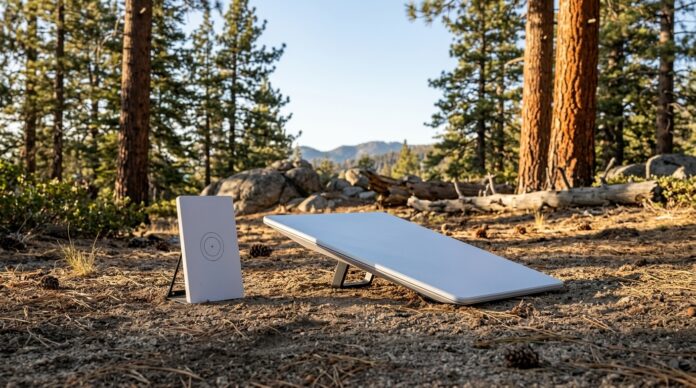
Starlink V5 arrived on July 14, 2026, and the spec sheet answers four complaints overlanders have made for years. Dish weight drops to 2.4 pounds. Average draw falls to 35 to 50 watts. Moreover, the mounted wind rating climbs to 165 mph, and every kit now ships with a pipe adapter in the box.
Then you reach the line buried in Starlink’s own support article: the dish is not intended for in-motion use. Independent hardware researcher Oleg Kutkov examined the board configuration and reported no GNSS module on the standard version. Without a GPS chip, a dish has no approved path to moving-vehicle service. SpaceX shaved 4 pounds off the V4 and aimed the result squarely at rooftops.
For a rig, consequently, the answer depends entirely on how you travel. Parked at a basecamp for a week, the new dish beats the V4 on every metric an off-grid power system cares about. Bolt it to a rack on a moving vehicle, however, and you have the wrong hardware.
This guide covers the specs, the watt math against a real battery bank, the mounting situation, and the plan changes Starlink pushed through the same week. Because the plan side moved at the same time, the hardware story alone will mislead you. Full figures below come from Starlink’s published V5 specifications.
| Top Pick | Best for Basecamp | Best Power Station | |
|---|---|---|---|
| Product | TOP PICK Starlink Mini Kit Starlink Mini Kit |  Starlink Standard Kit Starlink Standard Kit |  Jackery Explorer 1000 v2 Jackery Explorer 1000 v2 |
| Rating | ★★★★☆ 4.4 1,301 ratings | ★★★★☆ 4.6 435 ratings | ★★★★★ 4.7 3,480 ratings |
| Weight | 2.4 lbs | 6.4 lbs | 23.8 lbs |
| Power | 20-40W avg draw | 75-100W avg draw | 1500W AC output |
| Price | $349.00 as of Sep 12, 4:44 pm | $559.00 as of Sep 12, 8:24 pm | |
| Check Price → | Check Price → | Check Price → |
Starlink V5 Specs Against the V4
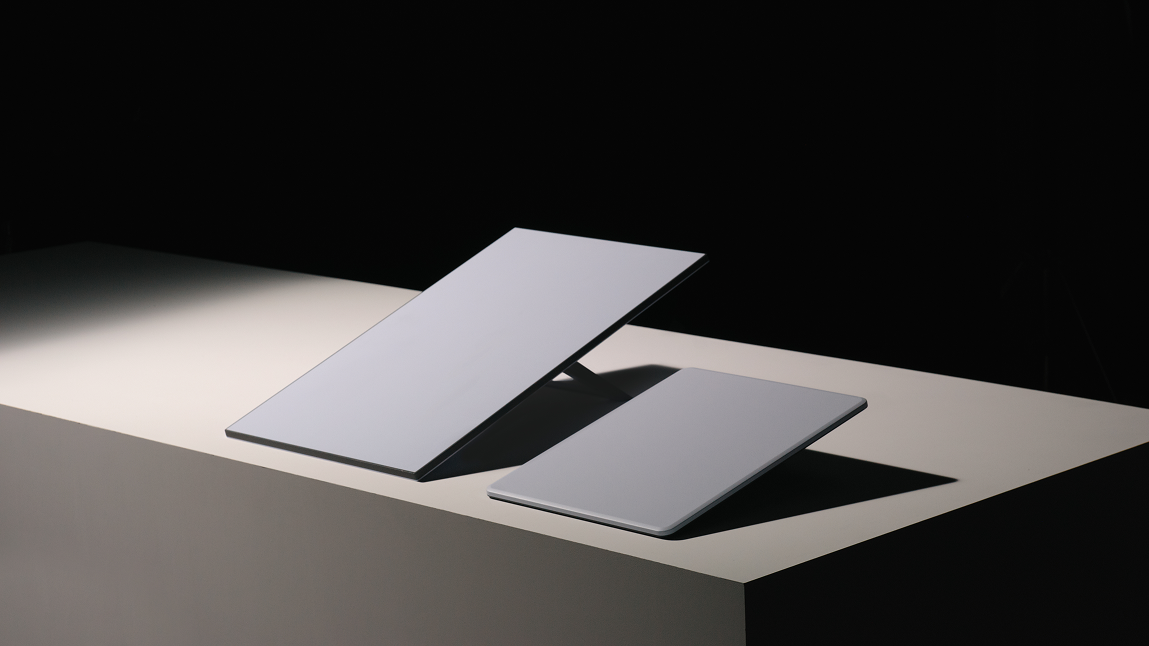
Numbers first, then what they mean on the trail. The table below lines up the new dish against the V4 it replaces, using Starlink’s published figures.
| Specification | V5 | V4 |
|---|---|---|
| Peak download | 375+ Mbps | 400+ Mbps |
| Dimensions | 384 x 306 x 34 mm (15.1 x 12.1 x 1.3 in) | 594 x 383 x 39.7 mm (23.4 x 15.1 x 1.5 in) |
| Dish weight | 1.1 kg (2.4 lbs) | 2.9 kg (6.4 lbs) |
| Kit weight | 3.8 kg (8.4 lbs) | Heavier, dish alone runs 6.4 lbs |
| Average power | 35 to 50 W | 75 to 100 W |
| Field of view | 110 degrees | 110 degrees |
| Wind (mounted) | 265 kph (165 mph) operational | 96 kph+ (60 mph+) operational |
| Operating temp | -30C to 50C (-22F to 122F) | -30C to 50C (-22F to 122F) |
| Snow melt | Up to 40 mm/hr (1.6 in/hr) | Up to 40 mm/hr (1.6 in/hr) |
| In-motion use | Not supported | Supported on Roam plans |
A 25-Mbps reduction in peak download reads worse on paper than in camp. Peak figures describe hardware ceilings, while your real throughput tracks how many subscribers share your cell at the time. At 375 Mbps you still stream, upload edited photos, and hold video calls without meeting a limit. Notably, the kit also includes a Router Mini running Wi-Fi 6, which covers a camp table and a trailer without a second access point.
Power Draw: What 50 Watts Costs a Battery Bank
Halving the draw is the headline number for anyone running a dual-battery system or a power station. The V4 averaged 75 to 100 watts, which is household-appliance territory. Starlink V5 averages 35 to 50 watts instead. Over a full 24 hours at the top of the range, therefore, you are looking at 1,200 watt-hours.
Run the same math at the V4 ceiling and you reach 2,400 watt-hours a day. A 1,000 Wh power station covers neither figure. Meanwhile, a 100 Ah lithium battery holds roughly 1,280 Wh before you account for inverter losses. Consequently, the newer dish turns a two-battery problem into a one-battery problem for a stationary camp, and a nightly shutdown routine stretches it further.
Two caveats belong on the math above. First, the kit ships with an AC power supply rather than a DC input, so a 12-volt system reaches it through an inverter, where losses of 10 to 15 percent are typical. Second, no verified 12-volt bench test had surfaced as of late July 2026. Treat every DC figure circulating online as unconfirmed until someone publishes a meter reading.
Snow melt adds load on top of the average, and Starlink has not published a V5-specific snow melt wattage. Winter camping in the mountains, therefore, breaks the tidy 1,200 Wh estimate. Anyone sizing a system around cold-weather trips should budget headroom instead of planning to the published average. For the chemistry side of the decision, see our guide to choosing a battery for your rig.
Why the New Dish Stays Parked
Power sizing assumes you are parked, and with this dish you always are. Starlink states the position plainly in its own support documentation. Behind the policy sits a hardware reason, since Kutkov’s teardown notes report no GNSS receiver on the standard board, and moving-vehicle service depends on positional data.
Meanwhile, an automotive variant of the same platform does carry a GNSS chip. PCMag reported the version heading into Tesla’s Cybercab, which confirms the underlying design supports motion. SpaceX split the product line instead of shipping one dish for both jobs. Consumers received the stationary version.
Practically, moving-vehicle service matters less to overlanders than forum arguments suggest. Most of us set up at camp and tear down at departure. However, a second consequence costs you more. A dish without GPS has no clean route onto a Roam plan, and Roam is the plan family built for travel. RV-focused retailers reported new Roam signups still pointing customers toward the Mini or the Performance dish.
Anyone hoping a firmware update reverses this should plan around the hardware instead. Adding a GNSS receiver over software is not possible. The stationary status, therefore, looks permanent for the standard version.
Mounting Starlink V5 on an Overland Rig
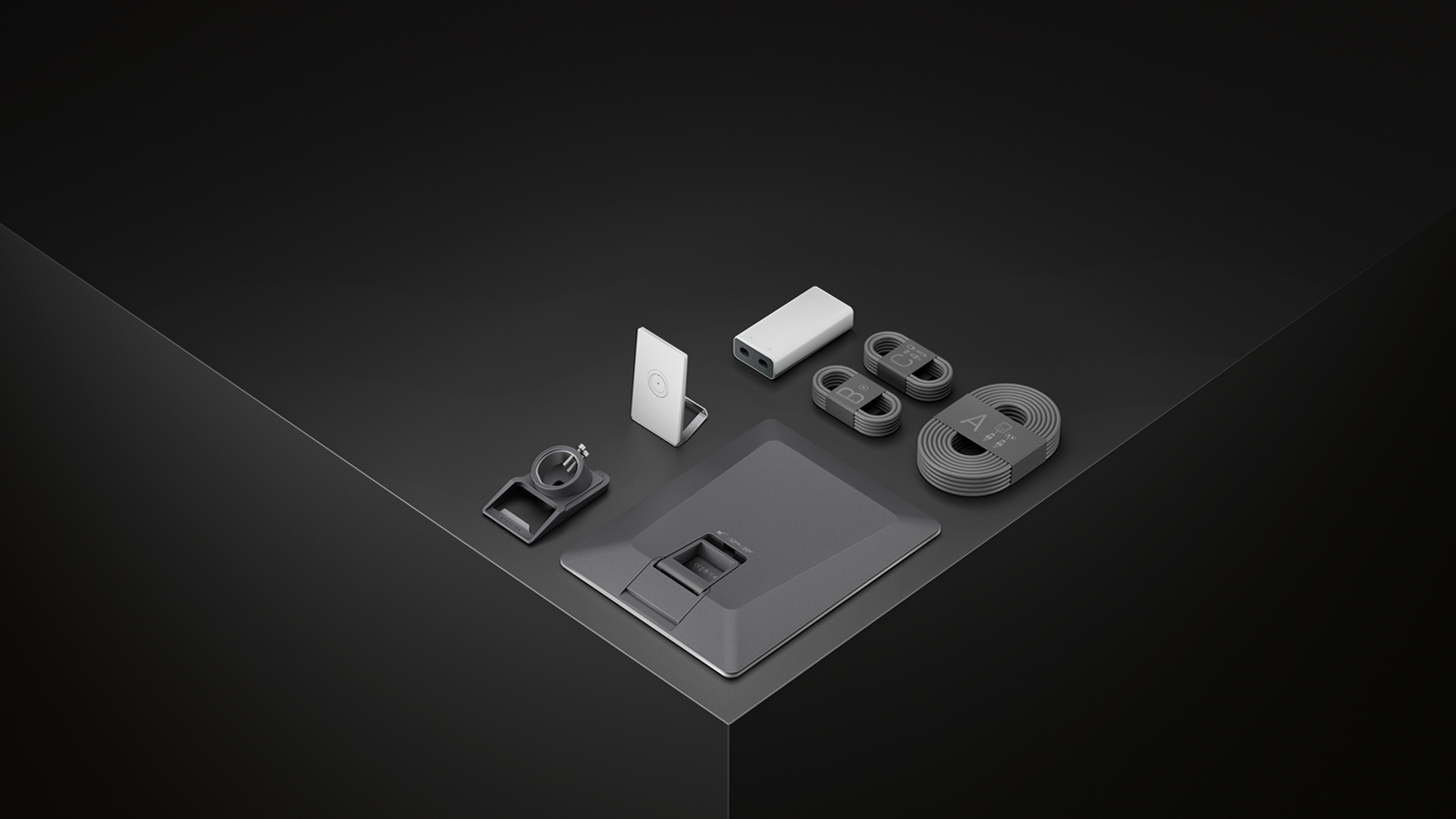
Mounting is where Starlink V5 gets genuinely interesting for a basecamp setup. Every kit now includes a pipe adapter, which used to be a separate purchase. Kutkov’s first look also flagged four notches on the back panel, plus a kickstand relocated to the edge for the new internal layout.
The catch is compatibility. Community teardown photos show the V5 dropping the V4 trapezoidal mount interface, and accessory vendors report older brackets need adaptation. Anyone already running a pole or ladder bracket built for the previous dish should budget for new hardware alongside the kit. Commercial V5-specific brackets were still scarce two weeks after launch.
Cable length shapes placement more than most people expect. The kit ships with a 15-meter (49.2 ft) Starlink cable, which gives real freedom to stake a dish away from your rig and clear of tree cover. Siting matters as much as mounting, since the 110-degree field of view carries over unchanged, so read our walkthrough on keeping a dish connected under tree cover.
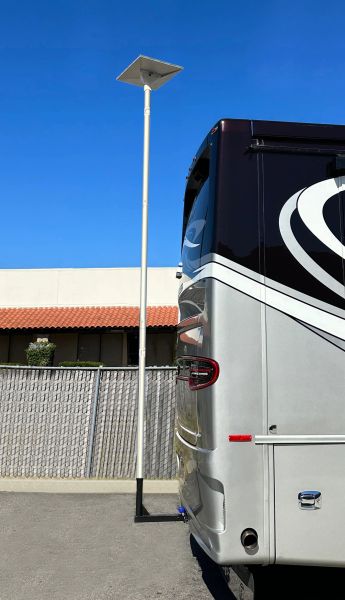
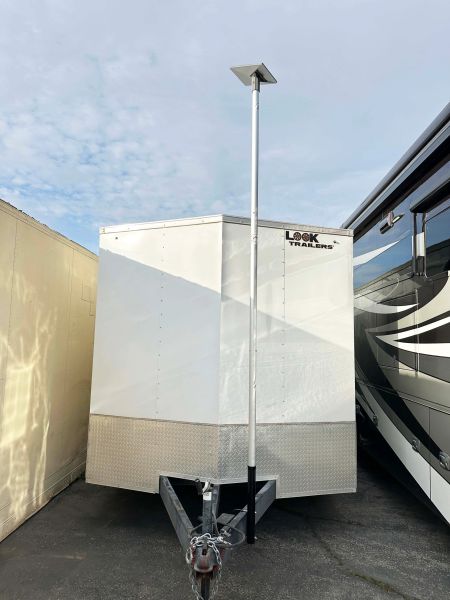
For a pole-mounted setup, the 165-mph wind rating is the specification worth noticing. A dish rated for hurricane-force wind handles canyon gusts without drama. Our two months of field testing on a hitch mount covers how pole-mounted dishes behave in real weather.
Roam Plans Changed the Same Week
Hardware news drew the attention, while the plan changes affect far more overlanders. Global Roam closed to new customers on July 15, 2026, one day after the announcement, and service ends for existing customers on August 17, 2026. Anyone still on the plan needs a replacement before then, since billing stops rather than rolling over.
Starlink Roam Unlimited now permits up to 30 days of use outside your home country at a time. Metered Roam tiers lose international use entirely. The United States and Canada count as one region, while Mexico sits outside it. For anyone wintering in Baja, consequently, a 30-day clock replaces what felt like an open-ended arrangement.
Global Priority is the replacement for long international trips. It starts around $250 a month for 50 GB and climbs to roughly $2,150 a month for 2 TB, according to specialist RV connectivity outlets tracking the change. Priority also permits travel in motion up to 100 mph. Compared to what long-haul travelers paid before, the increase is substantial.
Starlink Roam therefore splits into a domestic tool and an expensive international one. Overlanders running domestic routes feel none of this. Cross a border for more than a month, however, and the cost structure changes shape. Our coverage of the spring 2026 Roam price increase tracks how quickly this plan family keeps moving.
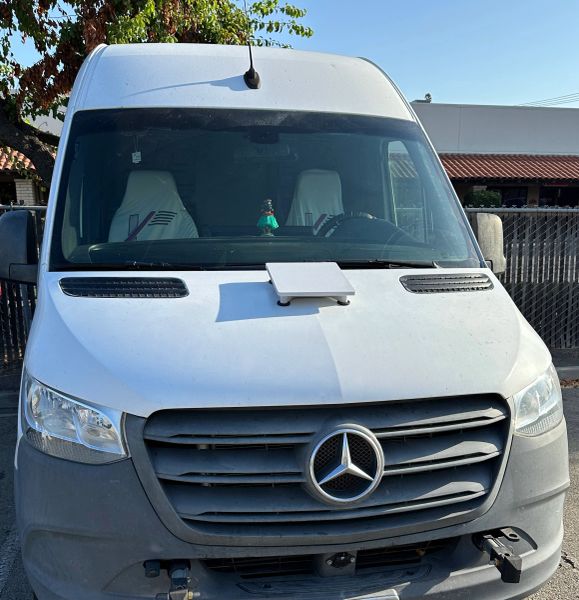
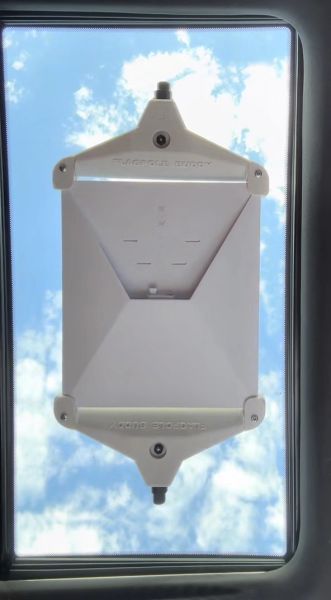
Mount Your Starlink Mini: FlagPole Buddy Options

Starlink V5 or the Mini for Overlanding
Weight no longer separates them. The Mini dish weighs 2.43 pounds against 2.4 pounds for the newer unit, a difference of roughly half an ounce. Similarly, both store flat against a panel or inside a gear drawer.
Power and permissions separate them instead. The Mini averages 20 to 40 watts, accepts direct DC input and USB-C power delivery, and carries in-motion approval alongside the Performance and Standard 4 dishes. Starlink V5 averages 35 to 50 watts, wants AC through its supplied brick, and stays stationary by design. For a moving rig, therefore, the Mini wins on power and permissions at the same time.
One setting favors the newer dish: a fixed pole at a long-stay camp, thanks to the wind rating and the included pipe adapter. For which connectivity tool to buy first, read our breakdown of Starlink Mini against a cell booster.
Where Starlink V5 Fits in an Overland Build
Treat this dish as basecamp hardware rather than trail hardware. Hunting camps, seasonal desert setups, work-from-the-road stints parked for weeks, and home service between trips all suit it well. In each case the unit sits on a pole, sees open sky, and sips half the power the V4 demanded.
Overlanders moving every day or two land somewhere different. Swapping a working Mini for a V5 surrenders the three advantages above, in exchange for a higher wind rating and a bundled pipe adapter. Few travel patterns make the trade worthwhile.
Timing argues for patience anyway. Availability at launch covered a short list of US states, according to developer Jesse Nowlin, who checked all 50 states and Washington DC through the order page. Meanwhile, Kutkov reported a next-generation Mini entering production with an internal battery and GPS configured for travel in motion. Starlink has confirmed none of it, and no capacity figure or release date exists publicly.
If those leaked details hold, an unannounced Mini rather than Starlink V5 becomes the dish built for how overlanders travel. Nothing is official yet, so waiting to see what Starlink ships costs you nothing.
Starlink V5 FAQ
Does Starlink V5 work in motion?
No. Starlink states the dish is not intended for in-motion use, and independent teardown reporting found no GNSS module on the standard board. Moving-vehicle service depends on positional data from a GPS receiver. Use the Mini for a rig on the move.
How much power does the V5 draw?
Starlink publishes an average of 35 to 50 watts, roughly half the 75 to 100 watts of the V4. At the top of the range, therefore, a full day of service consumes about 1,200 watt-hours. Snow melt adds load beyond the average, and no V5-specific figure exists for it.
Is Starlink V5 available on a Roam plan?
Not as a practical option. Roam plans exist for travel and lean on in-motion capability, which this dish lacks. RV connectivity retailers reported new Roam signups pointing toward the Mini or the Performance dish instead.
Will my V4 mount fit the new dish?
Probably not. Teardown photos show the V5 dropping the V4 trapezoidal mount interface, and accessory vendors report older brackets need adaptation. Budget for a new mount, and note the pipe adapter now ships in every kit.
Is the V5 slower than the V4?
On paper, slightly. Peak download drops from 400+ Mbps to 375+ Mbps. Those numbers describe hardware ceilings, while your speed in camp tracks network congestion at your location, so most users will notice nothing.
Should I replace my Mini with a Starlink V5?
For a moving rig, no. The Mini keeps DC input, in-motion approval, and Roam eligibility, while weighing the same. For a stationary basecamp on a pole, however, the wind rating and included pipe adapter make a reasonable case.
Related Reading