



Quick Facts:
- What it is: Dispersed camping on public land, outside developed campgrounds
- Best for: Overlanders and vehicle-based campers who want solitude and freedom
- Cost: Free on most BLM and U.S. Forest Service land
- Typical stay limit: Often 14 days per 28-day period, though it varies locally
- Main land managers: Bureau of Land Management and U.S. Forest Service
- Key tools: MVUMs, overlanding apps, satellite maps, ranger offices
- What to expect: No water, toilets, hookups, or trash service
- Difficulty: Beginner-friendly with preparation
14 min read
In This Guide
- What Is Dispersed Camping?
- Where Is Dispersed Camping Legal?
- How to Find Dispersed Campsites
- Common Rules and Stay Limits
- Etiquette and Leave No Trace
- Fire Restrictions and Seasonal Considerations
- Safety Basics for Overlanders
- Vehicle and Gear Considerations
- Choosing Where to Go First
- Final Tips for a Great First Trip
- Frequently Asked Questions
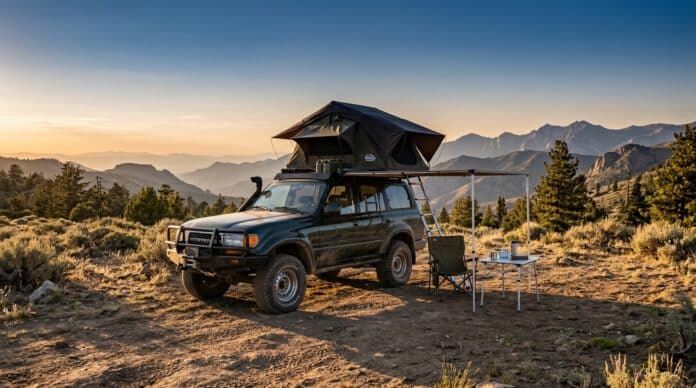
Dispersed camping is how overlanders sleep for free on public land, away from crowded campgrounds and reservation systems. The term covers any camping outside a developed campground, usually on Bureau of Land Management or U.S. Forest Service land. You trade picnic tables, flush toilets, and water spigots for solitude, dark skies, and a site you pick yourself. For many off-roaders, the freedom is the whole point.
The appeal is real, and so are the tradeoffs — read more on why you should try dispersed camping and how to do it right if you are still weighing the decision. Free sites come with no amenities and far more responsibility. You pack your own water, manage your own waste, and handle your own recovery. This guide covers what dispersed camping is, where it stays legal, how to find sites, how to stay safe, and which gear matters most. One principle holds throughout: rules vary by state, field office, and ranger district, so confirm them locally before you go.
What Is Dispersed Camping?
Dispersed camping means camping on public land outside developed campgrounds. There are no hookups, no fees, and no facilities. The BLM and the Forest Service both allow it across much of the land they manage, unless an area sits posted closed or restricted. In practice, you drive a back road, find an existing clearing or pullout, and set up camp. Afterward, you pack out everything you brought. The agency provides the ground; you provide the rest.
Definitions and management differ slightly by agency, so a Forest Service ranger and a BLM field office sometimes apply different limits to the same activity. Still, the core idea stays the same everywhere: primitive, self-reliant camping with no services and no reservation.
Dispersed Camping vs. Boondocking vs. Wild Camping
You will hear several terms for the same idea. If you want the full breakdown of what is boondocking, that covers how it overlaps with and differs from dispersed camping; the short answer is that boondocking usually refers to camping without hookups, a word RV owners reach for most often. Wild camping is the term campers outside the U.S. tend to use. Dry camping points to the lack of water and power, while what is off-grid camping explores how that concept extends into longer-term self-sufficient living. For our purposes, dispersed camping, boondocking, and free camping on public land describe one activity: no services, no fee, and a site you choose yourself.
Where Is Dispersed Camping Legal?
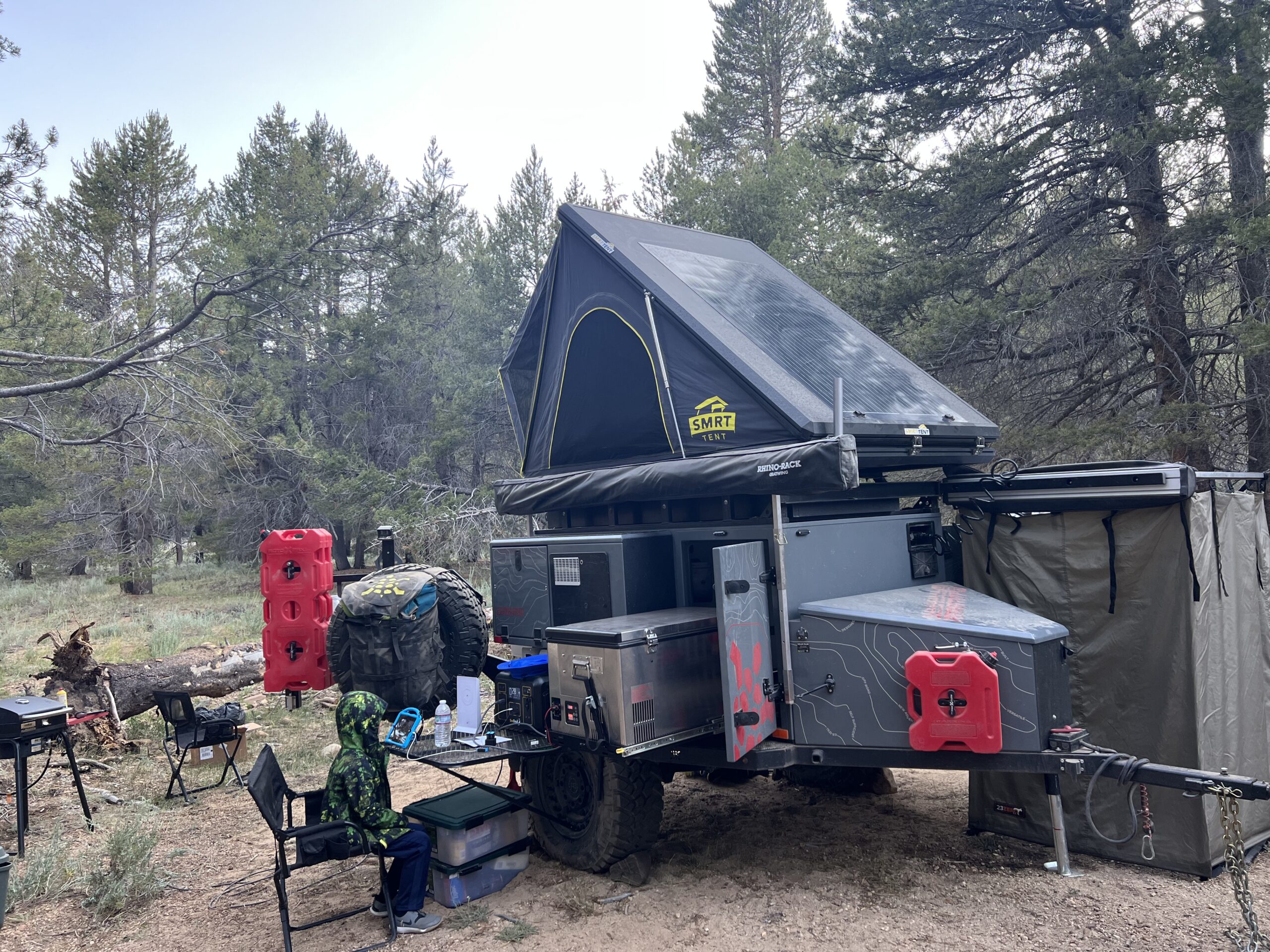
Two federal agencies manage most of the land overlanders camp on for free. The Bureau of Land Management oversees about 245 million surface acres, roughly a tenth of all U.S. land, concentrated across 12 western states. The U.S. Forest Service runs the National Forest System: 154 national forests and 20 national grasslands, about 193 million acres in total. Yes, the national grasslands are Forest Service land too. Some state trust lands and state forests also allow dispersed camping, though rules there differ widely and often require a permit.
BLM dispersed camping covers most field offices by default, with specific areas closed for conservation, fire damage, or overuse. National forest dispersed camping follows the Forest Service framework and the Motor Vehicle Use Map, which we cover below; for a deeper look, these critical tips for dispersed camping on Forest Service land cover the details that catch newcomers off guard. Free camping on this scale exists almost nowhere else, which is why the western states draw overlanders from across the country.
Where It Is Allowed, and Where It Is Not
National parks are the big exception. Most national parks prohibit dispersed camping and require you to use designated sites, often by reservation. So if your map shows a national park boundary, assume developed campgrounds only, unless a backcountry permit says otherwise. On BLM and Forest Service land, by contrast, free camping is the default across most areas.
Even where it stays legal, constraints apply. Most areas limit how close you set up to water, roads, and developed sites. Many also cap how long you stay, commonly at 14 days. Before you commit to an area, check the local ranger district or BLM field office for current rules, closures, and fire status. A five-minute phone call often saves a wasted drive.
How to Find Dispersed Campsites
Finding a good site is part research, part fieldcraft. Four methods cover almost every trip, and the best plans combine all of them. Start at home with maps and apps, then verify on the ground — or follow this step-by-step guide to finding free camping if you want a more structured walkthrough.
Online Maps and Satellite Imagery
Satellite view is one of the fastest free ways to turn up dispersed sites. Open a mapping app, switch to satellite imagery, and scan public land for tan clearings, wide pullouts, and short spur roads branching off a main route. These bare patches are usually established sites where others camped before. Still, the eye fools you from orbit: a clearing looks flat and open on the screen, then shows up rutted, fenced, or sloped when you arrive. Cross-check each one against a public-land layer to confirm it sits on BLM or Forest Service ground, not private property. A promising clearing on private land does you no good, and trespassing sours relations for everyone. When you want a repeatable system, this guide on how to find secluded camping spots breaks the process into practical steps for any level of experience.
Apps and Digital Tools
Several of the best off-road GPS and navigation apps map public-land sites for you. Some focus on user-submitted spots with photos, road conditions, and cell-signal notes. Others overlay land-ownership boundaries and Forest Service road data on a navigation map. A quick search for dispersed camping near me surfaces app results fast, yet treat those pins as leads, not gospel. User-submitted entries age quickly, and a site marked free two years ago might sit inside a new closure today. Treat every pin as a lead to scout, not a promise; the spot marked level and quiet is sometimes neither when you pull in. Always verify any app pin against the official agency map and the current regulations before you rely on it.
Motor Vehicle Use Maps (MVUMs)
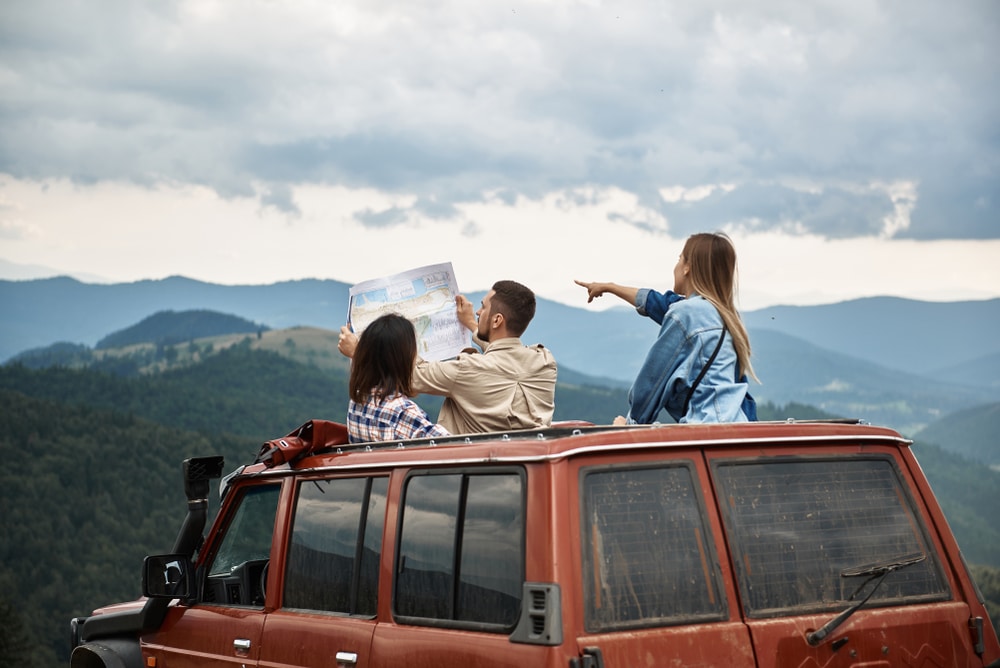
On national forests, the Motor Vehicle Use Map, or MVUM, is the legal authority for where you drive. The Forest Service publishes it free for every forest under the 2005 Travel Management Rule. Each MVUM shows which roads and trails stay open to motor vehicles and to which vehicle types and seasons — it is the core document for understanding the rules for off-road vehicles on national forests. Here is the part overlanders miss: if a route is absent from the MVUM, you are not allowed to drive it. Rangers issue citations for off-route travel.
The MVUM also tells you where roadside dispersed camping is allowed. In corridors marked with a distance allowance, you drive a short way off the road, commonly up to 300 feet from the centerline, to reach an established site. This allowance does not exist on every forest or every road, so read the legend carefully. Grab the current MVUM from the forest website, a ranger district office, or a georeferenced map app before your trip. Learning how to read MVUMs to find legal campsites keeps your whole route legal.
Ranger Stations and Local Knowledge
No app beats a five-minute conversation with someone who works the land. Call or visit the local ranger district or BLM field office before a trip. Ask about road conditions, seasonal closures, current fire restrictions, and areas they recommend for dispersed camping. Staff know which roads washed out last winter and which spots fill on weekends. They will also flag temporary closures no app has caught yet. Local knowledge turns a gamble into a plan.
Common Rules and Stay Limits
Dispersed camping rules on public land follow a rough framework, though the specifics shift from one jurisdiction to the next. Treat the points below as guidance, not legal advice. Always confirm the current local order before you set up, because the agency posting the rule has the final word.
| Rule | Typical Standard (Always Verify Locally) |
|---|---|
| Stay limit | 14 days within a 28-day period |
| Move distance after limit | 3 to 30 miles, or off the forest entirely |
| Distance from water | At least 200 feet (some forests 100 to 150) |
| Distance from roads | Within about 150 feet of a designated route |
| Distance from developed sites | Roughly 1 mile from campgrounds and trailheads |
| Vehicle travel | Designated roads only; no cross-country driving |
| Cost | Free on most land; a few areas charge or permit |
Stay Limits and the 14-Day Rule
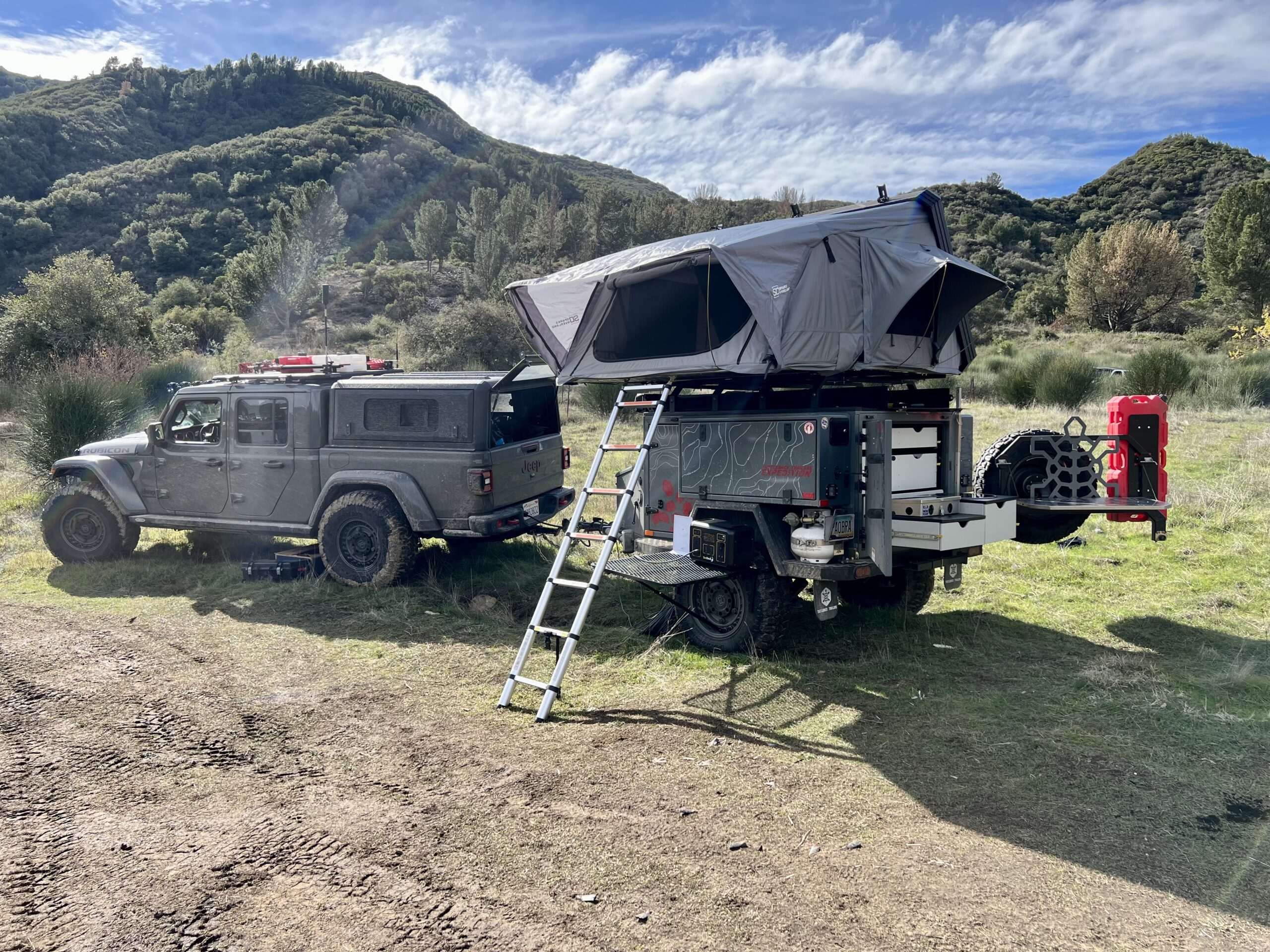
The most common stay limit runs 14 days within a rolling 28-day window. Once you hit it, you relocate, but how far varies a lot. Some forests want you 3 miles away. BLM areas often require a move of 25 to 30 miles. A few forests make you leave the forest entirely for a set number of days. Because the day count and the move distance are both set locally, check the field office or ranger district for your destination.
Distance and Surface Rules
Distance rules protect water and soil. As a rule of thumb, set up at least 200 feet from any lake, river, or stream. This matches the Leave No Trace standard and what most agencies recommend, though some forests set it at 100 or 150 feet. Keep your campsite within roughly 150 feet of an existing road so you avoid cutting new tracks. Park on durable surfaces like gravel, sand, or bare dirt, never on plants. Stay clear of developed campgrounds and trailheads; BLM suggests a one-mile buffer.
Rules differ enough to surprise you. One BLM district enforces a 25-mile relocation, while a neighboring national forest asks for three. Another forest sets the water setback at 200 feet; the next drops it to 100. Permits add another layer. Most camping on this land stays free and permit-free, yet some high-traffic areas now require a free permit or a small fee to manage crowds. The only safe move is to read the specific dispersed camping rules on public land for your exact destination.
Etiquette and Leave No Trace
Dispersed camping etiquette comes down to respect for the land and the people sharing it. The privilege of free camping survives only while campers follow strong Leave No Trace camping principles. Land managers close abused areas fast, and every closure shrinks the map for the rest of us.
Use an existing site whenever one exists. A bare, compacted clearing has already absorbed its damage, so camping there spares a fresh patch of ground. Resist the urge to build a new spur or pull onto green vegetation for a better view. Give other campers room, too. Even on a popular road, park well away from the next rig rather than crowding in. Quiet hours matter outdoors as much as in a campground, so keep generators and music low after dark.
Leave No Trace organizes the rest into seven principles, and Principle 3, Dispose of Waste Properly, matters most for dispersed campers. For human waste, dig a cat hole 6 to 8 inches deep and at least 200 feet from any water, trail, or camp, then cover and disguise it. Pack out toilet paper and wipes rather than burying them. Some desert, alpine, and river-canyon areas ban burying entirely and require a wag bag for everything. Check the rules before you arrive.
Trash discipline separates good campers from the ones who get areas closed. Pack out every scrap, including microtrash like bottle caps, twist ties, and cigarette butts. Do not cut live trees or branches for firewood; use dead and down wood only, or bring your own. Avoid building new fire rings when one already exists, and never leave food or scraps behind. Loose food habituates wildlife and ends badly for the animals. The goal stays simple: leave the site cleaner than you found it.
Fire Restrictions and Seasonal Considerations
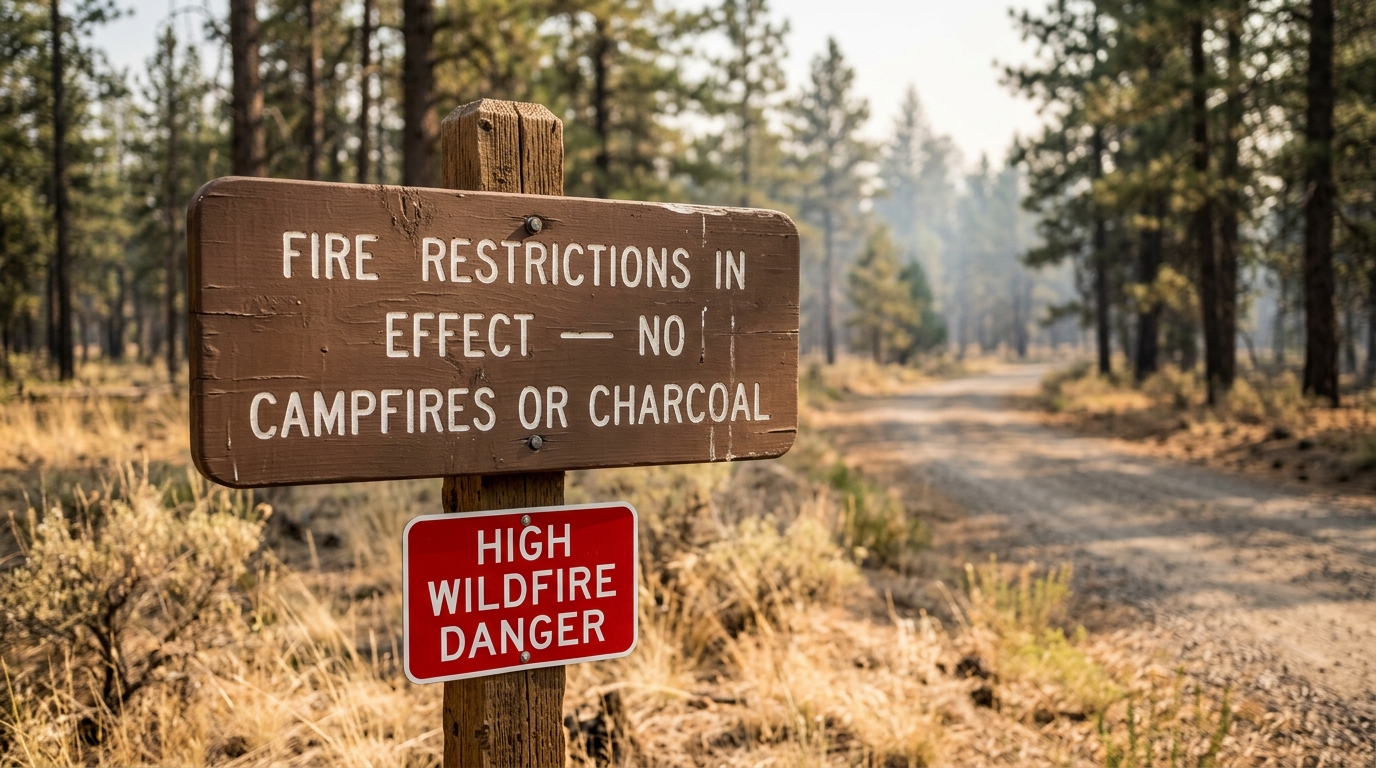
Fire restrictions are tiered, and they change fast. Stage 1 restrictions typically limit fires to developed campground rings and ban them at dispersed sites. By contrast, Stage 2 usually bans all open flame and charcoal everywhere, and sometimes adds limits on driving off-road, running equipment, and target shooting. Propane and liquid-gas camp stoves stay legal under both stages in most jurisdictions, though not all. Districts issue these orders locally, and the status shifts week to week during fire season.
When fires are banned, plan around it instead of risking a citation or a wildfire. A canister or liquid-fuel stove still cooks dinner under most restrictions, so meals are no problem. For warmth, layer up with insulation and a good sleeping bag rather than chasing a flame. A propane heater rated for tent use covers cold nights, run with proper ventilation. Always confirm a fire is dead out, cold to the touch, before you sleep or leave — review the full campfire safety tips for your next overland adventure so nothing gets missed. Check the current 2026 fire restrictions for camping and overlanding for your exact area before every trip, since conditions during fire season turn on a dime.
Season shapes access as much as fire does. Spring mud and snowmelt close high-country roads and swallow rigs whole. Summer brings extreme desert heat and, in the Southwest, monsoon storms with flash-flood risk in washes and canyons. Fall offers some of the best conditions, though hunting seasons fill popular areas. Winter locks out elevation entirely across much of the West. Match your destination to the season, and always carry layers for the temperature swing between a desert afternoon and a mountain night.
Safety Basics for Overlanders
Safety starts before you leave the driveway. The risk dispersed camping owns is mechanical: a stuck or broken rig sits hours from help. Tell someone your route and your expected return time, then stick to it or check in — these are among the 4 critical remote camping tips every overlander should nail before heading out. Cell coverage disappears on most dispersed land, so carry a satellite messenger or personal locator beacon for emergencies. Download offline maps before you lose signal. A written plan left with a friend turns a missed check-in into a fast rescue instead of a guessing game.
Carry more water, fuel, and food than the trip should need. A common standard is one gallon of water per person per day, plus a reserve for vehicle trouble or a longer stay. Top off fuel at the last town, because dispersed areas sit far from gas stations. Pack a day or two of extra food. Add a basic first-aid kit, and know how to use it — the full list of essential safety tips for camping and overlanding is worth reading before your first remote trip. Redundancy is cheap insurance when the nearest help sits hours away.
Roads, Recovery, and Solo Travel
Know the road before you commit to it. Scout conditions with the ranger office or a recent trip report, and turn around when a route exceeds your rig or your skill. Carry recovery basics and, more important, know how to use them before you need them. Solo travel rewards you with deep solitude, yet it raises the stakes on every decision, so build in extra margin when you camp alone. For remote or technical routes, a partner vehicle doubles your recovery options and your safety net. If you mostly travel alone, a primer on solo dispersed camping safety for overlanders goes deeper on the extra precautions.
Wildlife and Weather Awareness
Respect wildlife and weather as much as terrain. Store food in sealed containers or a hard-sided vehicle in bear country, and keep a clean camp; knowing how to pick a safe campsite: backcountry checklist helps you evaluate any spot before you commit. Never set up in a wash or a dry streambed, where a flash flood arrives with no warning from a storm miles away. Check the forecast for the whole region, not only your campsite. Weather you never see upstream still reaches you.
Vehicle and Gear Considerations
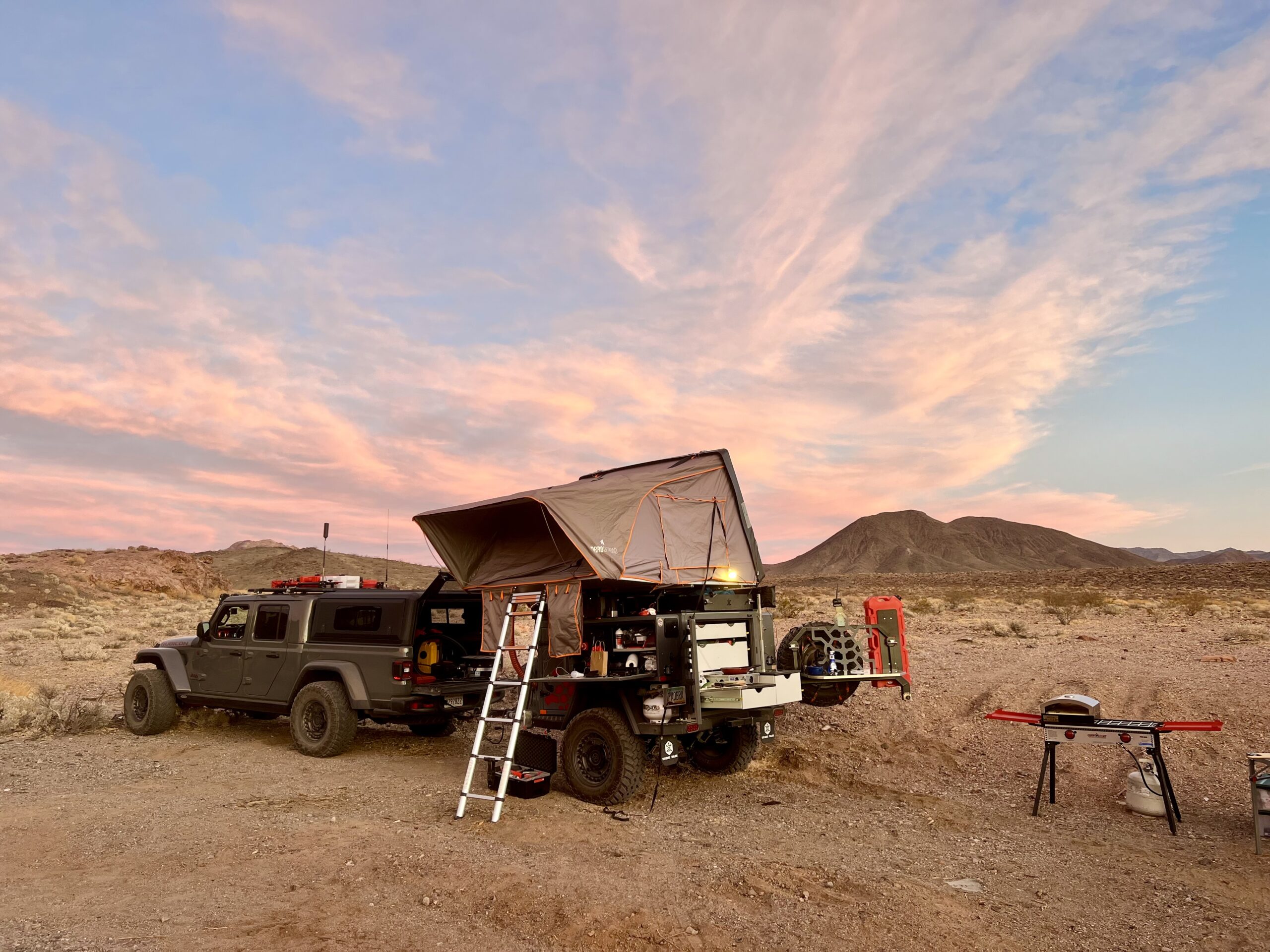
The right rig reaches sites a sedan never will. Ground clearance gets you over rocks and ruts without damage. Four-wheel drive and decent tires deliver traction in sand, mud, and snow. Fuel range matters most of all, since dispersed areas sit far from pumps; a long-range tank or spare fuel widens your options. You do not need a built-out expedition truck to start, though. In practice, a stock 4WD with good tires and recovery gear reaches most dispersed camping on public land. For more capability, a deeper look at the best overland rigs for dispersed camping helps once you outgrow a stock setup.
Gear bridges the gap left by missing amenities, and a solid set of primitive camping tips for staying comfortable without amenities keeps the learning curve short. Water storage tops the list; carry enough in sturdy containers, and bring a filter as backup. A portable power station or a dual-battery setup runs your fridge, lights, and devices off-grid. For sanitation, pack a trowel for cat holes, plus wag bags for areas where burying is banned. Lighting, a first-aid kit, and a basic tool roll round out the essentials.
Communication and recovery gear earn their weight every trip. A satellite messenger keeps you reachable where cell signal dies. Recovery basics, traction boards, a shovel, and an air compressor, get you unstuck on your own. Match the kit to your route and your experience, then practice with it at home before you need it in the field. A full rundown of essential gear for dispersed camping spans water, power, sanitation, and comms, and the list grows with the remoteness of your trips.
Choosing Where to Go First
With the rig and kit sorted, the last question is where to point them. A few regions stand out for accessible, legal dispersed camping, and they make solid first destinations. Treat the notes below as a starting point, not a list of exact coordinates. Sensitive spots get loved to death when they go public, so do your own legwork with regional guides and agency maps for any area you target.
Colorado and the broader Rockies offer national forest dispersed camping at altitude, with classic high-country meadows and aspen stands. Utah canyon country, including the land around Moab, pairs slickrock scenery with extensive BLM access for off-roaders. Free dispersed camping in Southern California deserts delivers year-round BLM access, best in the cooler months. The Pacific Northwest forests of Oregon and Washington trade desert heat for dense timber, rivers, and far more rain. Each region runs on its own rules and seasons, so lean on a dedicated guide before you commit.
Dedicated regional breakdowns help most here. A guide to the best free dispersed camping in Colorado, another for free dispersed camping in Utah and the area around Moab, one for Southern California, and one for the Pacific Northwest with free dispersed camping in Washington give you vetted starting points without exposing fragile sites to a crowd.
Final Tips for a Great First Trip
A great first trip rewards preparation over gear. Research the rules, closures, and fire status for your exact area before you load up. Line up a backup spot or two, because a first-choice site fills or closes more often than you would expect. Over-prepare water, fuel, and layers; the extra weight beats the alternative every time. Arrive with daylight to spare so you choose a site without rushing.
Once you are set up, the work pays off. Leave the site cleaner than you found it, douse any fire until it is cold, and pack out all of it. Done right, dispersed camping hands you more freedom, darker skies, and a deeper connection to wild places than any developed campground offers. The first trip teaches the most, so pick a forgiving area, keep it simple, and build from there.
Frequently Asked Questions
What is dispersed camping?
Dispersed camping is camping on public land outside developed campgrounds, with no hookups, fees, or facilities. It happens mostly on BLM and U.S. Forest Service land across the western United States. You choose your own site, pack in everything you need, and pack out all your trash and waste.
Is dispersed camping allowed in national forests?
Yes. Most national forests allow dispersed camping outside developed campgrounds, subject to local rules and any posted closures. The Motor Vehicle Use Map shows which roads you drive and where roadside camping is allowed. Always check the specific forest, since limits and corridors differ.
Is dispersed camping allowed in national parks?
Generally no. Most national parks prohibit dispersed camping and require designated sites, often by reservation. A few parks issue backcountry permits for primitive camping, but the casual roadside camping common on BLM and forest land is rarely allowed inside park boundaries.
Is dispersed camping free?
On most BLM and Forest Service land, yes, it is free. A growing number of high-traffic areas now require a free permit or a small fee to manage crowds and protect the land. Confirm the cost for your destination before you go, because the trend is shifting in popular spots.
How do you find dispersed camping sites?
Start with satellite imagery to spot clearings and spur roads on public land, then confirm ownership with a land-status layer. Overlanding and camping apps list user-submitted dispersed sites, though you should verify each against official maps. For national forests, the MVUM and a ranger district office give you the most reliable, current information.
Is dispersed camping safe?
Dispersed camping is safe for most people who prepare well. The real risks are environmental, not human: rough roads, weather, and remoteness far from help. Tell someone your plan, carry a satellite messenger, pack extra water and fuel, and know your vehicle limits. Solo trips raise the stakes, so build in extra margin when you camp alone.
Do you need a permit for dispersed camping?
Usually not. Most public-land camping requires no permit and no fee. However, some popular areas now use a free permit system or charge a small fee, and a few require fire permits for stoves or campfires. Check the local field office or ranger district before your trip.
How long is the dispersed camping stay limit?
The most common limit is 14 days within a 28-day period, after which you relocate. How far you move varies widely, from 3 miles on some forests to 25 or 30 miles on BLM land, or off the forest entirely in a few places. The day count and move distance are set locally, so confirm the rule for your exact area.