



Quick Facts:
- Topic: Free dispersed camping in Southern California
- Spots covered: 12 (desert, mountain, and OHV areas)
- Land managers: BLM, U.S. Forest Service, California State Parks
- Typical cost: $0 (no reservation, no campground fee)
- Stay limit: 14 days on most BLM land; 30 days at Anza-Borrego
- Vehicle needed: Stock crossover to built 4×4, depending on the spot
- Best season: October through April for the desert
- Best for: Off-roaders and overlanders who want solitude and dark skies
8 min read
In This Guide
- Dispersed Camping Southern California: What Free Public Land Means
- Free Dispersed Camping Rules for Southern California
- Anza-Borrego: The Best Free Desert Basecamp
- Desert Spots for Boondocking in Southern California
- Free Dispersed Camping in Southern California National Forests
- OHV Areas Where Your 4×4 Earns Its Keep
- Which Southern California Spot Fits Your Rig?
- Final Verdict
- Frequently Asked Questions
Dispersed Camping Southern California: What Free Public Land Means
Dispersed camping in Southern California costs nothing once you know where public land opens up. Off-roaders and overlanders here get two huge land managers working in their favor: the Bureau of Land Management and the U.S. Forest Service. Together they allow free primitive camping across millions of desert and mountain acres. For the price of fuel and a full water tank, you wake up under dark skies with no reservation and no campground host. If solitude is the goal, our guide on how to find secluded camping spots covers the search strategies that work best on public land.
This guide ranks 12 free spots, from desert washes near San Diego to high-country forest roads above Los Angeles. Each entry flags the road access, the clearance you need, and the season to target. Because 4wdTalk readers run real 4×4 rigs, the focus stays on where a stock crossover taps out and where a high-clearance build opens the best sites. New to the format? Start with our explainer on what dispersed camping is and how to do it right.
Free does not mean lawless. Public land carries rules: a 14-day stay limit on most BLM ground, a 200-foot setback from water, and seasonal fire restrictions. We cover those rules first, then walk through every spot. Afterward, a quick decision section matches each location to your rig and your weekend.
Free Dispersed Camping Rules for Southern California
Dispersed camping in Southern California runs on a short rulebook. The same free camping in Southern California playbook covers BLM and forest land alike. Learn it once and you stay legal across every spot below. Boondocking and dispersed camping mean the same free public-land setup here, so the same rules apply whether you sleep in a rooftop tent or a built van. For a deeper primer, see our guide to how to find free camping on public land.
| Rule | Details |
|---|---|
| Cost | Free on BLM and most National Forest land |
| BLM stay limit | 14 days in 28, then move 25+ miles |
| Forest stay limit | Varies by forest order; often 14 days or fewer |
| The 200 rule | Camp at least 200 feet from lakes, streams, and springs |
| Permits | Free campfire permit for forests; some sites need an Adventure Pass |
| Fire rules | Check the current fire order; many areas ban open flame |
| Vehicle access | Stay on existing roads; use established sites only |
One more habit separates welcome campers from the ones who get areas closed. Pack out everything, bury human waste six to eight inches deep, and respect Leave No Trace camping principles at every site. The Bureau of Land Management publishes current fire and closure notices, so check the managing agency before each trip.
Anza-Borrego: The Best Free Desert Basecamp
Anza-Borrego Desert State Park (San Diego County)
California’s largest state park is the rare one allowing free dispersed camping with no permit and no fee. Roadside pull-offs along paved and graded roads suit a stock crossover, as long as you park within one car length of the road. The real reward sits deeper, though: Fish Creek Wash, Sandstone Canyon, and Coyote Canyon. These sandy washes and creek crossings are where a stock crossover taps out and an aired-down high-clearance 4×4 shines. Stay limit runs 30 days per calendar year. Target October through April, because summer heat climbs past 110 degrees. Ground fires are prohibited, so pack a raised fire pan and carry out your ash.
Desert Spots for Boondocking in Southern California
BLM ground delivers the easiest free camping in the region. These three spots cover a first-timer flat, an iconic stargazing site, and a vast preserve for serious overlanders.
BLM Land South of Joshua Tree
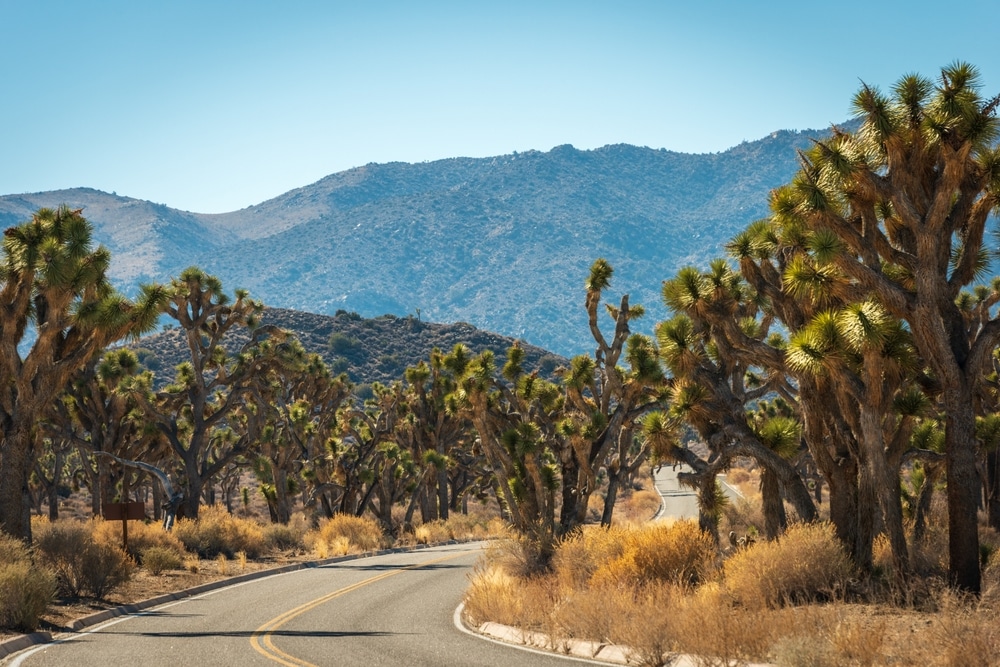
Off Cottonwood Spring Road north of I-10, a wide graded-dirt flat gives you free BLM camping minutes from the park’s south entrance. A stock crossover reaches the main area easily in dry weather. High-clearance helps only if you push down rougher spur roads for privacy. The standard BLM rule applies here: 14 days in a 28-day window. Cell coverage near the I-10 corridor stays decent, so remote workers favor this flat. Aim for fall through spring. Summer turns the open desert into an oven.
Trona Pinnacles
More than 500 tufa spires rise from a dry lakebed near Ridgecrest, a famous film backdrop and an astrophotography favorite. The five-mile dirt access road off SR-178 stays passable for a careful stock crossover when dry. After heavy rain, however, the clay turns to gumbo and the road closes. High-clearance buys peace of mind, not strict necessity. Free camping runs first-come with a 14-day limit. One vault toilet exists; water and trash service do not, so arrive self-contained.
Mojave National Preserve
The preserve charges no entrance fee, and every roadside site sits free for the taking. Camp only in previously used pull-offs with an existing fire ring. Graded dirt roads near Kelso Dunes and Kelbaker Road welcome a stock crossover in dry weather. The Mojave Road overland route, by contrast, demands a high-clearance 4×4 with sand and rock skills. Cell coverage drops to near zero across 1.6 million acres, so download your maps first. Plan on a 14-day limit, and confirm current rules with the Park Service before a long visit.
Free Dispersed Camping in Southern California National Forests
The four SoCal forests trade desert heat for pine shade and elevation. Rules tighten here, yet the payoff is cooler nights and forest-road solitude. Before you pick a site, pull up the Motor Vehicle Use Map for your forest — our primer on how to read MVUMs and find legal campsites walks through every step.
Los Padres National Forest
Oak-dotted dispersed turn-outs along Figueroa Mountain Road and Happy Canyon Road put you near Santa Barbara wine country. Most established pull-outs suit a stock crossover, though the mountain roads wind tightly. Rougher forest spurs reward high-clearance builds. A free California Campfire Permit is required year-round here, and fire rules tighten every summer. Spring brings the Figueroa wildflower bloom, the marquee window. Check the current forest order before you go, because occupancy limits shift often.
San Bernardino National Forest Yellow-Post Sites
Numbered yellow-post sites give you free dispersed camping with a fire ring and sometimes a table. Clusters like Black Mountain and Thomas Hunting Grounds sit on dirt forest roads where 4WD and high-clearance pay off. A stock crossover reaches some lower sites in dry weather, then taps out on the rocky spurs to the better ones. Carry an Adventure Pass to be safe, since some forest parking requires one. Sites open spring through fall, while snow closes the high country in winter.
Stockton Flats (San Bernardino National Forest)
Stockton Flats sits in the Mt. Baldy and Lytle Creek backcountry of San Bernardino National Forest, roughly 90 minutes from Los Angeles. Yellow-post sites 3 through 8 require a 4×4 over a rough forest road, so this entry rewards a high-clearance rig. A free California Campfire Permit covers any stove or fire. Sites open spring through fall, while winter snow shuts the access road. Always check the current forest order, because burn-scar and fire closures recur across the SoCal forests.
Cleveland National Forest
San Diego County’s mountain forest offers free dispersed camping, though a free Wilderness and Visitor Permit is required for overnight stays outside developed campgrounds. Target the Descanso district forest roads near Julian and Pine Valley. Graded roads suit a stock crossover when dry, while rougher spurs want high-clearance. No campfires are allowed anywhere in the forest, so pack a gas stove. Fall and spring deliver the best weather, since summer brings frequent fire closures.
OHV Areas Where Your 4×4 Earns Its Keep
These BLM off-highway areas pair free camping with trails built for capable rigs. Set up a basecamp, then explore from your tent.
Jawbone Canyon
Paved Jawbone Canyon Road leads into a free BLM staging basecamp in Kern County, easy for any vehicle towing a trailer. From camp, a network of dirt routes branches into rugged canyon terrain for capable 4×4 and OHV rigs. The 14-day limit applies. Wind blows often, so stake everything down. Street-legal 4x4s need no sticker, while non-street-legal machines require Green or Red Sticker registration.
Dove Springs
North of Red Rock Canyon State Park off SR-14, Dove Springs gives you free dispersed camping with no reservations. Most vehicles reach the staging flats, while rugged OHV trails test the built rigs. Weekdays stay quiet, a real bonus near such scenic country. Stay up to 14 consecutive days, then move at least 25 miles. Bring everything, since no amenities exist here.
Johnson Valley (King of the Hammers)
The largest OHV area in the country and home of King of the Hammers, Johnson Valley sets the SoCal off-road bar. Graded access off Camp Rock Road opens vast free camping with a 14-day limit. From there, world-famous rock trails like Backdoor and Sledgehammer demand a built high-clearance 4×4 with lockers. A stock crossover has no business on the Hammers, and even stock 4x4s should pick the easier routes. Avoid race week, which runs late January into early February, when the area fills and parts close.
Spangler Hills (Bonus Twelfth Spot)
Near Ridgecrest and a short hop from Trona Pinnacles, Spangler Hills rounds out the dozen. Free first-come camping fills staging areas like Teagle Wash and Searles Station, all under the 14-day limit. Scenery runs plainer than the marquee spots, yet the open OHV access and easy basecamp earn its place. Pair it with a Trona sunrise for a strong desert weekend.
From the 4wdTalk Garage
I live and wheel in Southern California, and I have run most of these spots myself. In Anza-Borrego, my Gladiator aired down for Fish Creek Wash while a friend’s stock crossover turned back at the soft sand. The ZR2’s extra clearance proved itself on the rough Stockton Flats road in San Bernardino National Forest. Johnson Valley humbled all of us, since the Hammers trails punish anything short of a locked, built rig. My honest take: start with Anza-Borrego or Joshua Tree South for an easy first night, then graduate to the OHV areas once you trust your setup.
Which Southern California Spot Fits Your Rig?
Pick by vehicle first. A stock crossover or 2WD does well at Joshua Tree South, the Jawbone staging flats, Dove Springs basecamp, and Trona Pinnacles when dry. These spots keep the dirt mild and the access short.
Step up to a high-clearance 4×4 for Anza-Borrego’s washes, the San Bernardino yellow-post sites, Stockton Flats, and the Mojave Road. Lockers and a built rig belong at Johnson Valley, where the rock trails turn brutal. For more route ideas, browse our roundup of best off-grid camping in Southern California.
Pick by distance next. Dispersed camping near Los Angeles points you to Stockton Flats, Johnson Valley, and Jawbone within two to two and a half hours. San Diego campers reach Anza-Borrego and Cleveland fastest, while desert seekers run to Mojave and Trona for the darkest skies.
Final Verdict
Southern California rewards off-roaders with more free public land than almost anywhere in the lower 48. Free camping in Southern California spans desert washes and pine forests alike. For a first trip, Anza-Borrego delivers the best mix of easy access, true 4×4 terrain, and dark skies.
Boondocking in Southern California asks for respect, though. Desert heat turns deadly in summer, so carry far more water than you expect to drink — brush up on our primitive camping tips before your first desert night. Always check the 2026 fire restrictions for camping and overlanding and current road conditions, because both shift fast after storms and through fire season.
Match the spot to your rig and you avoid the two classic mistakes: dragging a low car down a 4×4 wash, or wasting a built rig on a paved pull-off. The decision section above sorts every location by clearance and distance. Planning a longer loop? Our list of top Southern California overlanding destinations stitches several of these stops together.
Start close to home, build your kit, and work toward Johnson Valley as your skills grow. Free dispersed camping in Southern California stays open all year somewhere in the region, from coastal forests to the deep Mojave.
More Free Dispersed Camping Guides by State
- Best Free Dispersed Camping in Colorado
- Best Free Dispersed Camping in Utah
- Best Free Dispersed Camping in Washington
- Best Free Dispersed Camping in Oregon
Frequently Asked Questions
Is dispersed camping legal in California?
Yes. Dispersed camping is legal on most BLM land and in national forests across California, as long as you follow the posted rules. Stick to the 14-day stay limit, the 200-foot setback, and any current fire order. State and private land differ, so confirm the manager before you camp.
What is the 200 rule for camping?
The 200 rule means you camp at least 200 feet, roughly 70 steps, from any water source, such as a lake, stream, or spring. This setback protects water for wildlife and keeps campsites out of sight. Most BLM and Forest Service land enforces it. Follow it even where signs do not remind you.
Where is free camping allowed near Los Angeles?
Dispersed camping near Los Angeles centers on the Jawbone and Dove Springs BLM areas, Johnson Valley, and Stockton Flats in San Bernardino National Forest. Each sits within two to two and a half hours of the city. Public land closest to the city carries the tightest rules, so check the current forest order first.
What happens if you get caught dispersed camping?
On legal public land within the stay limit, nothing happens, because you broke no rule. Trouble starts when you overstay, camp in a closed area, or ignore a fire ban. Rangers issue warnings first in many cases, then fines for repeat or serious violations. Knowing the local rules keeps your trip clean.
Where is dispersed camping allowed in Southern California?
Dispersed camping in Southern California is allowed across BLM desert land, most national forests, and Anza-Borrego Desert State Park. The 12 spots above cover the proven options. Always camp in previously used sites and check for seasonal closures before you arrive.
Do you need a permit for dispersed camping?
It depends on the land. BLM desert areas and Anza-Borrego need no permit. Cleveland National Forest requires a free Wilderness and Visitor Permit, while the four SoCal forests want a free California Campfire Permit for any stove or fire. Carry an Adventure Pass for forest parking to stay safe.