



Quick Facts:
- Topic: Whether to regear for 35s, plus lockers and crawl ratio
- Who needs it most: Rigs leaving the factory on 3.45 to 3.91 axle ratios
- Who often skips it: Jeep Rubicon on 4.10, Bronco Sasquatch on 4.70
- Typical ratio step: One step for a Jeep, two steps for a Toyota
- Shop price, both axles: $2,050 to $2,700 at published 2026 rates
- Parts only, both axles: $878 to $1,043 for a bundled gear and install kit
- Selectable locker: $1,300 to $1,575 per axle before labor
- First fluid change: 500 miles after install
14 min read
In This Guide
- Do You Need to Regear for 35s? Start Here
- Factory Ratios and Regear Targets by Platform
- The Tire Math Almost Everyone Gets Wrong
- When You Should Skip the Regear for 35s
- Crawl Ratio by Platform, and What It Leaves Out
- Lockers, Limited Slips, and Traction Aids
- Carrier Breaks and Gear Strength Before You Order
- What a Regear Costs in 2026
- Gears or a Locker First? Spend It in This Order
- Speedometer, Break-In, and Fuel Economy
- Final Verdict
- Frequently Asked Questions
Do You Need to Regear for 35s? Start Here
Whether you should regear for 35s depends on one number. Look up the axle ratio on your build sheet first. A Jeep Wrangler Rubicon leaves the factory on 4.10 gears and a 32.8-inch tire. The Sport trim leaves on 3.45 gears and a tire under 31 inches. Both wear the same badge, yet only one of them survives a jump to 35s without feeling gutted.
Bigger tires act like taller gearing. The tire is the final reduction in your driveline. Adding diameter lowers the effective ratio and drops engine speed at every road speed. Your truck then lugs at low rpm and hunts between gears on grades. In low range it also loses torque multiplication. New ring and pinion sets restore the original relationship between engine speed and wheel speed.
The decision splits along three lines. First, how tall your factory ratio already sits. Second, how much weight you carry, since armor, a rooftop tent, drawers, water, and fuel all push the answer deeper. Third, how many usable ratios your transmission offers. A modern eight-speed papers over a mismatch far better than an old five-speed ever did.
This guide covers all three, then extends into the two subjects most gearing articles leave out. Lockers and crawl ratio belong in the same conversation, since they compete for the same budget and the same shop visit. By the end you will know your target ratio, your real cost, and whether your money belongs in gears at all.
Factory Ratios and Regear Targets by Platform
Start with what you own. The table below pairs published factory axle ratios with each driveline supplier’s suggested gear ratio for 35 inch tires. Jeep figures come from Stellantis specification sheets, Toyota figures from Toyota brochures, and Ford figures from Ford’s own technical specifications.
| Platform | Factory ratio | Suggested ratio on 35s |
|---|---|---|
| Wrangler JL Sport / Sahara | 3.45 | 4.56 auto, 4.88 manual |
| Wrangler JL Rubicon (gas) | 4.10 | 4.56, or leave it alone |
| Wrangler / Gladiator EcoDiesel | 3.73 | 4.10 |
| Gladiator JT Sport / Overland | 3.73 | 4.88 |
| Gladiator JT Rubicon / Mojave | 4.10 | 4.88 |
| Tacoma 3rd gen, V6 automatic | 3.909 | 5.29, or 4.88 near stock |
| Tacoma 4th gen, automatic | 3.583 | 5.29 estimated (no supplier chart yet) |
| 4Runner 5th gen | 3.727 | 4.88 to 5.29 |
| 4Runner 6th gen | 3.58 | 5.29 estimated (no supplier chart yet) |
| Bronco Sasquatch | 4.70 with 35s fitted | None needed |
| Bronco with open diff | 3.73 or 4.46 | 4.70 as the factory reference |
Three Caveats Behind the Table
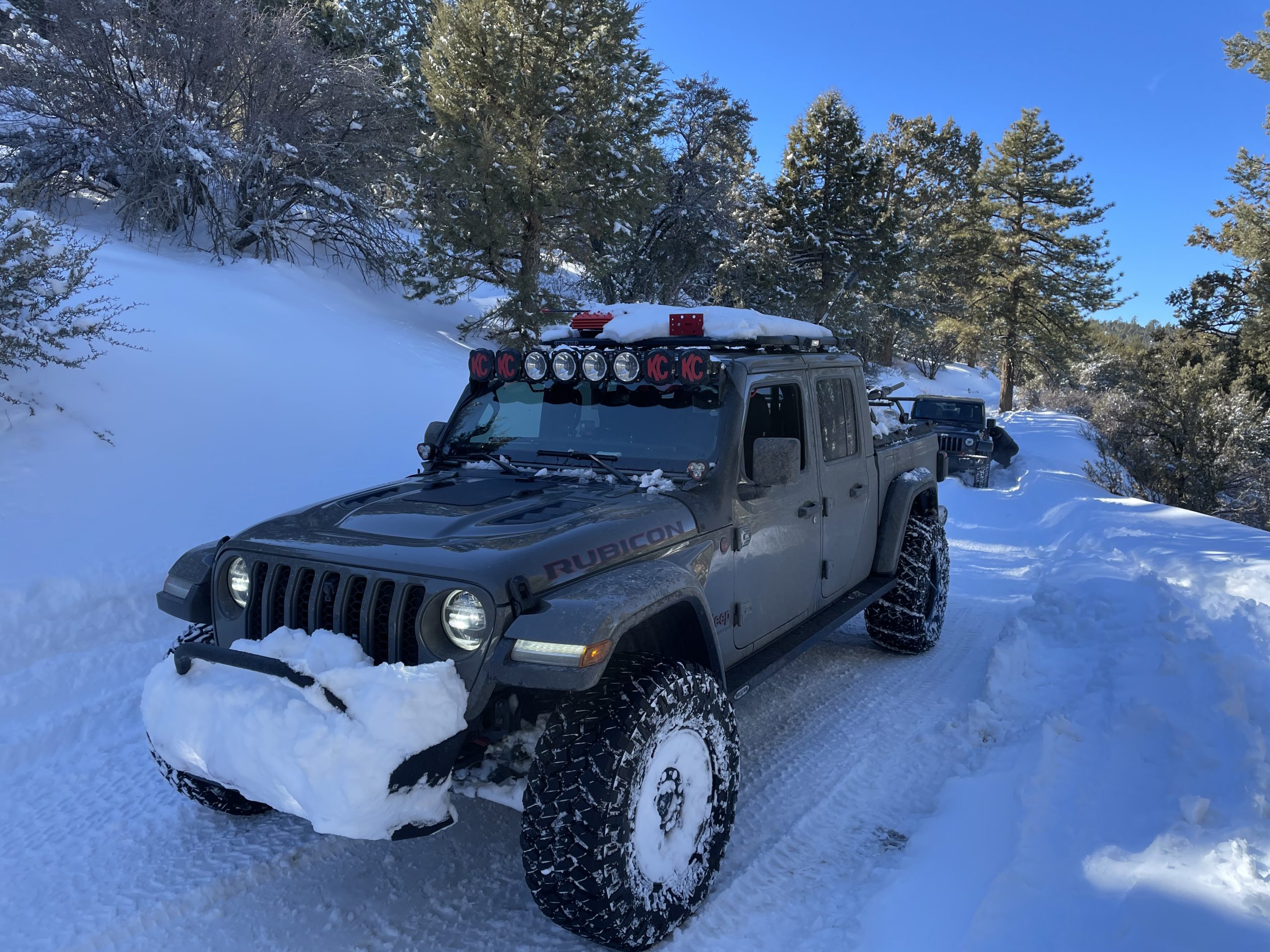
Two entries deserve a closer look. Ford ships the Sasquatch package with 315/70R17 tires and 4.70 gears together, so Ford itself treats 4.70 as correct for a 35-inch Bronco. Jeep gas Rubicons ship 4.10, while EcoDiesel Rubicons ship 3.73. Charts elsewhere online list 3.73 as the Rubicon ratio, and the diesel is where the confusion starts.
Notice how far apart the Jeep and Toyota answers land. Exodus 4×4 moves a Jeep one step, while Revolution Gear and Trail Tacoma both push a loaded Tacoma two steps to 5.29. The tire math in the next section explains why.
Weight shifts the answer again. Exodus publishes a blunt rule for overland builds. For every 300 pounds of permanent add-ons, such as a tent or bumpers, move up one ratio step. A stripped daily driver on 35s and a loaded expedition rig on the same tire want different gears.
| Best Budget | Best for Measuring | Top Pick | Best No-Phone Option | Best Premium | |
|---|---|---|---|---|---|
| Product |  JACO TreadPro Gauge JACO TreadPro Gauge |  Komelon 25-Ft Tape Komelon 25-Ft Tape | TOP PICK Veepeak OBD2 Scanner Veepeak OBD2 Scanner |  SinoTrack GPS HUD SinoTrack GPS HUD | 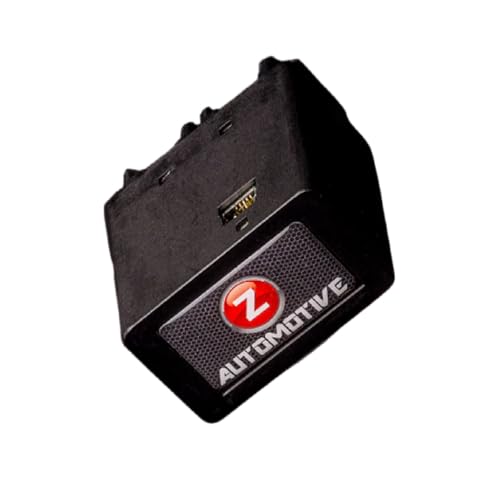 Tazer JL Mini Programmer Tazer JL Mini Programmer |
| Rating | ★★★★★ 4.8 1,421 ratings | ★★★★★ 4.7 18,911 ratings | ★★★★☆ 4.5 23,913 ratings | ★★★★☆ 4.2 1,507 ratings | ★★★★☆ 4.6 1,042 ratings |
| Job | Checks tread wear | Measures true rolling diameter | Quantifies actual mph error | Shows true speed on the dash | Corrects the speedometer permanently |
| Platform fit | Universal | Universal | Universal, phone and app required | Universal, USB/5V powered | Wrangler JL and Gladiator JT, 2018 and up, no Toyota option |
| Price | $15.90 as of Sep 16, 1:06 am | $9.99 as of Sep 16, 1:06 am | $31.98 as of Sep 16, 1:06 am | $31.33 as of Sep 16, 1:06 am | $329.00 as of Sep 15, 11:43 pm |
| Check Price → | Check Price → | Check Price → | Check Price → | Check Price → |
The Tire Math Almost Everyone Gets Wrong
Nearly every chart online treats a 35 as exactly 35 inches tall. Published manufacturer specs disagree. For example, Nitto lists the 35×12.50R17 Ridge Grappler at 34.8 inches. The 315/70R17 measures 34.4 inches, yet shoppers swap those two sizes freely. Similarly, the 285/70R17 everyone calls a 33 measures only 32.8 inches.
Run the real numbers and the picture changes. A Jeep Rubicon leaves the factory on a 32.8-inch tire. Therefore a 34.8-inch 35 adds only 6.1 percent in diameter. A third-generation Tacoma, in contrast, leaves on roughly 30.6 inches. For the Toyota, the same tire is a 13.7 percent jump. One rig faces double the correction of the other. Specifically, Toyota owners move two ratio steps while Jeep owners move one.
Loaded diameter shrinks further. Jeep publishes revolutions per mile for its factory fitments. Notably, the LT315/70R17 reads 604 revs per mile. Work backward and the rolling diameter lands near 33.4 inches, about an inch under the free-standing spec. As a result, any calculator fed a sidewall number overstates the correction you need.
Brand matters too. Jeep lists the same LT285/70R17C size at 637 revs per mile as a BFGoodrich KO2 in 2025 and 645 in 2021. As a Falken Wildpeak, it reads 617. Across supposedly identical sizes the spread reaches about 4.5 percent. Before you order gears, measure from the ground to your axle centerline and double it. Then feed the result into your math. For background, see our guide to how tire size affects gearing and our breakdown of 33 vs 35 inch tires.
When You Should Skip the Regear for 35s
Every shop and every gear brand has an obvious reason to tell you yes. Sometimes the honest answer is no. Specifically, skip the job when three conditions line up. First, a factory ratio of 4.10 or deeper. Second, an eight-speed or ten-speed automatic. Third, a light build with no towing.
Owners of eight-speed Wranglers report about 2,100 rpm at 80 mph with 35s fitted. Transmission breadth matters as much as the ratio itself. Because a wide-ratio automatic shifts more often, it keeps the engine in a usable band. The mismatch never becomes a daily annoyance. Add 600 pounds of armor and camp gear, however, and the same truck feels sluggish. Weight is the real trigger.
A Bronco with the Sasquatch package needs nothing at all. Ford already fits 35-inch tires and 4.70 gears at the factory, so the ratio and the tire arrive matched. Rubicon trims sit in a gray zone instead. Their 4.10 gears face a 6.1 percent tire increase, which leaves an effective ratio near 3.86. Plenty of Rubicon owners live with the stock setup and never regear.
Three Signs You Need the Regear After All
Three signs argue the other way. Your transmission hunts on moderate grades. Low range feels too fast to modulate. Added weight has also changed how the truck launches. When two of those appear together, gears will pay for themselves in drivability. Neither a lift nor a tune fixes the underlying ratio problem. Low-range control gives you the second test, and crawl ratio measures it.

Crawl Ratio by Platform, and What It Leaves Out
Crawl ratio multiplies three numbers: first gear, transfer case low range, and axle ratio. For example, a Wrangler Rubicon with the six-speed manual and 4.10 gears works out to 84.1 to 1. Jeep publishes 100 to 1 for the same truck on optional 4.88 gears. The arithmetic confirms it, since 5.13 times 4.0 times 4.88 lands at 100.1.
Ford publishes its own figures rather than leaving owners to calculate. A Bronco with the seven-speed manual and the Advanced 4×4 case reaches 94.75 to 1. Switch to the ten-speed automatic and the same setup reads 67.80 to 1. Toyota sits further back. Specifically, a fifth-generation 4Runner comes in at roughly 33.7 to 1.
Why Tire Diameter Breaks the Crawl Ratio Formula
Here is the part almost nobody mentions. Tire diameter never appears in the crawl ratio formula, although the tire is the last reduction before the ground. Two rigs sharing an 80 to 1 crawl ratio behave differently on 33s versus 40s. Because the taller tire covers more distance per revolution, it undoes some of the reduction. For a build on 35s, therefore, the raw crawl number alone tells you little.
Correct for it with one division. Divide your crawl ratio by your tire growth factor. For example, a Rubicon grows from 32.8 to 34.8 inches, a factor of 1.061. Its 84.1 to 1 therefore lands near 79 to 1 at the ground. A stock 4Runner on the same jump falls from 33.7 to 1 to roughly 31 to 1.
| Configuration | Low range | Crawl ratio |
|---|---|---|
| Wrangler JL Rubicon, 6-speed manual, 4.10 | 4.0:1 | 84.1:1 (calculated) |
| Wrangler JL Rubicon, manual, 4.88 | 4.0:1 | 100:1 (Jeep published) |
| Wrangler JL Rubicon, 8-speed auto, 4.10 | 4.0:1 | 77.2:1 (calculated) |
| Gladiator JT Sport, 8-speed auto, 3.73, Command-Trac | 2.72:1 | 47.8:1 (calculated) |
| Bronco, 7-speed manual, Advanced 4×4 | 3.06:1 | 94.75:1 (Ford published) |
| Bronco, 10-speed auto, Advanced 4×4 | 3.06:1 | 67.80:1 (Ford published) |
| Tacoma 3rd gen, V6 auto, 3.909 | 2.57:1 | 36.2:1 (calculated) |
| 4Runner 5th gen, 5-speed auto, 3.727 | 2.566:1 | 33.7:1 (calculated) |
Look carefully at the gap between 33.7 to 1 and 84.1 to 1. A stock 4Runner asks its brakes and its right foot to handle work a Rubicon hands to its driveline. Deeper axle gears raise crawl ratio in every gear. For most owners, therefore, low-speed control is the second benefit they feel after the highway improvement.
Lockers, Limited Slips, and Traction Aids
Gears fix how hard your engine works. A locker fixes where your torque goes. Because an open differential sends power to the wheel with the least grip, one spinning tire strands a rig with clearance to spare. For a plain-language start, see our primer on differential lockers explained.
Four traction devices compete for the same axle. First, a selectable locker stays open until you flip a switch. Second, an automatic locker engages under load without input, at the cost of on-road manners. Third, a helical limited slip biases torque continuously and never fully locks. Finally, factory traction control brakes a spinning wheel instead, which works better than most people expect on moderate terrain.
| Device | 2026 unit price | Notes |
|---|---|---|
| ARB Air Locker | $1,299.95 to $1,399.95 | Needs a compressor, $360 to $650 |
| Yukon Zip Locker | $1,369.89 to $1,539.89 | Also air actuated |
| Eaton ELocker | $1,429.43 to $1,572.99 | Electric, no compressor |
| Detroit Locker | $964.99 to $1,271.99 | Automatic, noticeable on pavement |
| Eaton Detroit TrueTrac | $590.99 to $856.99 | Helical limited slip, seamless on road |
Air Locker or Electric Locker for an Overland Build
The locker vs limited slip debate usually stops at price. For overlanders, however, the compressor line item deserves a second look. An air locker requires onboard air, wired to the locker’s own solenoids rather than plugged in after the fact. ARB builds its twin-motor onboard compressor around this exact wiring, with a plug-in loom sized for the locker control solenoids. A single-motor onboard unit starts near $360, while a twin-motor unit runs closer to $650. Budget it alongside the locker rather than assuming a portable inflator will cover the job.

ARB CKMTA12 '12V' On-Board Twin High Performance Air Compressor, Ideal for Air Lockers Locking Differentials, Tire Inflator, Air Horn, Air Tools and Pneumatic Tools.
ARB's twin-motor onboard compressor, the unit ARB's own Air Locker wiring diagrams are built around. It bolts in permanently and wires to the locker solenoids, rather than living in a bag for trailside tire duty.
- 6.16 CFM airflow (174 LPM), the highest-flowing 12V compressor ARB rates for its size class
- Wiring loom included with plug-in connectivity to Air Locker control solenoids
- 150 PSI max pressure with a pressure switch opening at 150 psi and closing at 135 psi
- Thermal-protected motors and an over-pressure safety valve for a permanent onboard mount
- Needs ARB's separate Manifold Kit, sold apart, to wire two locker solenoids
- Twin-motor onboard unit costs more and installs more permanently than a portable pack-along inflator
Electric units answer the opposite need. An Eaton ELocker uses an electromagnet, so no air lines run and nothing leaks. Skip either locker up front if you daily drive in snow. Yukon’s tech line instead advises a helical limited slip up front for winter. A locked front axle in four-high creates more trouble than it solves.
Which Axle to Lock First
Settle the locker vs limited slip question by asking how often a wheel leaves the ground. Rear axle first is the standard order. A rear locker adds traction where weight transfer already helps you, and it stays civil on the road. Front lockers earn their keep on ledges and off-camber climbs. Our guide to differential locks for rock crawling covers terrain like this.
Carrier Breaks and Gear Strength Before You Order
Carrier breaks explain most surprise quotes. A differential carrier accepts only a limited range of ratios. Cross the boundary and you need a different carrier, a ring gear spacer, or thicker gears. Each option adds hundreds of dollars per axle. West Coast Differentials describes the break as the point where changing carrier deck height beats adding ring gear material.
Good news arrives for most 35-inch builds. Notably, the Ford 8.8, Ford 9.75, GM 9.5, AAM 11.5, and Toyota 8-inch rear axles carry no break. Any ratio drops into the carrier you already own. The Dana 44 is the one to watch, since its break falls between 3.73 and 3.92. For instance, a Jeep on 3.73 moving to 4.88 crosses it, while a Rubicon on 4.10 does not.
Deeper Gears Are Also Weaker Gears
Deeper gears also mean weaker gears. ARB reports a 5.38 set typically uses 43 ring teeth and 8 pinion teeth. A 2.73 set, by contrast, uses 49 ring teeth and 18 pinion teeth. Fewer pinion teeth mean less material behind each tooth and fewer teeth meshing at any instant. Yukon states plainly a Dana 44 struggles with tall tires and ratios in the 4.89 and deeper range.
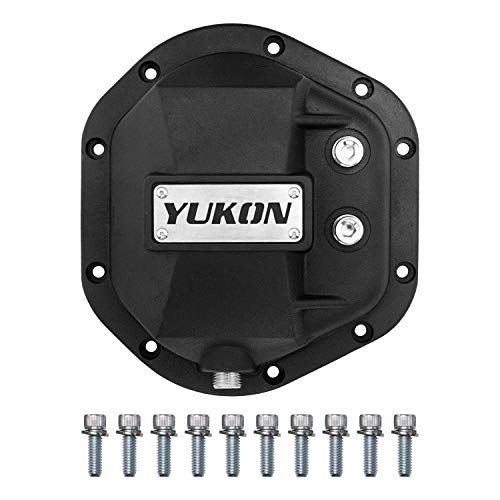
Yukon Hardcore Diff Cover for Dana 44
Sold by axle model, not vehicle year. Confirm you actually have a Dana 44 before ordering, since the wrong cover will not bolt on. Built for impact protection on the ring gear and carrier, not for added oil capacity or cooling fins.
- Thick-walled nodular iron construction, tough rather than brittle, absorbs impacts from rocks and debris
- Magnetic drain plug catches break-in metal before it recirculates
- High strength steel fasteners included for bolt-on installation
- Fits the Dana 44 only, confirm your axle tag before ordering
- 1-year manufacturer warranty against defects, not a lifetime warranty
Read those two facts together before you order. Going deeper than you need, purely to avoid a second job later, trades highway manners and gear life for a benefit you might never use. Instead, match the ratio to the tire and the weight you carry.
What a Regear Costs in 2026
Published shop pricing gives the clearest picture. Exodus 4×4 posts $2,150 for a Wrangler JK and $2,300 for a JL, with $50 more for a Gladiator. Its stated ranges span $2,050 to $2,700 for both axles across the JK, JL, and Gladiator. For a Tacoma, Trail Tacoma puts the typical regear cost between $2,000 and $3,500.
Parts alone cost far less. Yukon bundles gears and install kits for both axles at $877.89 for a non-Rubicon JL and $1,042.89 for a Rubicon. Bought separately, a ring and pinion set runs $340 to $535 per axle. Master install kits with bearings, shims, and seals add $175 to $415 per axle. Labor makes up the rest, and owners report $350 to $1,000 per axle.
| Line item | Both axles | Source type |
|---|---|---|
| Bundled gear and install kit package | $878 to $1,043 | Supplier list price |
| Turnkey shop install, Jeep | $2,050 to $2,700 | Published shop pricing |
| Turnkey shop install, Tacoma | $2,000 to $3,500 | Independent build site |
| Carrier change, if you cross a break | Several hundred per axle | Supplier tech pages |
| Selectable locker added during the job | $1,300 to $1,575 per axle | Manufacturer list price |
Ask what the quote includes. Exodus bundles both axles, install kits, new front seals, reprogramming for tire size, all fluids including the 500-mile change, and a follow-up inspection. Two quotes far apart often cover different work. Before you compare numbers, get each shop to list the same line items.
One tip saves real money. Because the axles come apart anyway, a locker, upgraded shafts, or fresh ball joints cost only parts and a little extra bench time. Exodus recommends stacking those jobs onto a regear for exactly this reason. Splitting them across two visits pays the teardown labor twice.
Gears or a Locker First? Spend It in This Order
Most owners face one budget and two wish lists. The spending order below comes from the numbers above. Your factory ratio and your terrain decide which line you start on.
| Budget | Factory ratio 3.45 to 3.73 | Factory ratio 4.10 or deeper |
|---|---|---|
| Under $1,000 | Helical limited slip, rear only | Helical limited slip, rear only |
| $2,050 to $2,700 | Gears in both axles | Rear selectable locker |
| $3,000 to $4,000 | Gears plus a rear locker, one visit | Rear locker plus gears if loaded |
| $5,000 and up | Gears, front and rear lockers, shafts | Front locker and upgraded shafts |
Notice the split. A Wrangler Sport on 3.45 gears feels broken on 35s, so gears come first. Rubicon trims already carry lockers front and rear, so their money belongs in ratio only when weight demands it. Owners of Toyota trucks with a factory rear locker sit between the two.
Terrain changes the order as well. Rock ledges and steep loose climbs reward a locker most, since traction beats torque when a wheel lifts. Long forest roads and highway miles reward gears, because the engine spends hours in the wrong band. Match the upgrade to where you drive rather than to what looks good on a build sheet. A supporting lift matters too, and our guide to choosing a Jeep lift kit covers the clearance side.
Speedometer, Break-In, and Fuel Economy
Larger tires make your speedometer read low and your odometer undercount. Hypertech states both tire size and axle ratio feed the calculation on the platforms it supports. Uncorrected numbers also affect part-throttle shift points. On a Wrangler or Gladiator, a handheld programmer offers separate settings for tire size and for gear ratio.
Z Automotive Tazer Mini Programmer | Fits 2018-2026 Jeep Wrangler JL and Gladiator JT | Customize Over 70 Settings | Activates Anti-Theft Pin Lock, Rock Crawl, Winch Mode and More!
The same premium-row tool from the measurement table, now in the section explaining why it exists.
- Separate tire size and gear ratio inputs correct the speedometer and shift points together
- Plug and play install located above the OBD2 diagnostic connector, then controlled from the steering wheel buttons
- Also reads and clears diagnostic trouble codes system-wide
- Covers Wrangler JL and Gladiator JT platforms only, 2018 and up, Toyota Tacoma and 4Runner have no consumer handheld equivalent
Fix it during the install. Good driveline shops include reprogramming in the price, and Exodus lists it as part of the job. Left uncorrected, the error lets warranty intervals and resale mileage accrue on a wrong count. Correction takes minutes, so treat it as part of the work rather than a later errand.
How to Break In New Gears
New ring and pinion sets need heat cycling, and skipping it overheats the oil during the first hard miles. Pitted teeth and a repeat setup bill follow. Yukon publishes the procedure. First, drive 15 to 20 mph for about 20 minutes, then let the axles cool for half an hour and repeat. Next, run 15-mile freeway legs at 45 to 50 mph, cooling 20 minutes between legs, for roughly 45 miles total.
Change the gear oil at 500 miles. Yukon calls for conventional 80W-90 during the first stretch. Metal particles and dark oil at the first drain are normal, so do not panic. Towing or hard wheeling adds load to the pinion. Yukon therefore asks owners to repeat the sequence the first time they load the truck.

Lucas Oil 10046 SAE 80W-90 Heavy Duty Gear Oil - 1 Gallon
Yukon's break-in procedure calls for conventional 80W-90 for the first 500 miles, then a synthetic refill after. Check your gear set's own spec sheet before you buy.
- Anti-wear and lubricity additives protect gear components and reduce drag, per the listing
- 1-gallon (128 fl oz) bottle covers both axles with extra left over
- Formulated for high-performance and heavy-duty gear applications
- Conventional oil, not the synthetic refill most techs recommend after break-in
- Confirm your own gear manufacturer's viscosity spec before ordering
Fuel Economy After a Regear
Answers split, and both sides have a point. Trail Tacoma tracked fuel across many tanks after moving to 5.29 gears and reported an average lift from 13 to 15 mpg. The same test found no improvement while towing. Owner reports elsewhere describe flat or slightly worse numbers after a change.
The mechanism explains the disagreement. Correcting a badly tall ratio moves the engine back into an efficient band and stops constant downshifting, which recovers part of the loss your tires created. At any fixed speed, however, deeper gears raise engine speed and burn more fuel. New gears never undo the weight and drag of a lifted 35-inch build.
Final Verdict
Decide with your build sheet, not with a forum thread. A rig on 3.45 gears feels genuinely broken on 35s, so the regear for 35s pays back in daily drivability. Owners on 3.73 decide by weight. Rigs on 4.10 or deeper live in a gray zone where weight, transmission, and terrain settle the question.
Costs are predictable once you know your axle. Expect $2,050 to $2,700 for a Jeep at a published shop rate, and up to $3,500 for a Tacoma. Crossing a carrier break adds several hundred dollars per axle. Among common axles, only the Dana 44 puts a break in the path of most 35-inch builds. Ask about the break before you accept any quote.
Skip the job when you sit on 4.10 or deeper, your automatic holds a comfortable cruise, and your build stays light. Owners of a Bronco Sasquatch never need it, since Ford matched 4.70 gears to 35-inch tires at the factory. Spend the money on recovery gear, better tires, or a rear locker instead.
For everyone else, the honest sequence is gears first on a tall factory ratio, a rear selectable locker next, and front traction last. Stack the work into one visit while the axles sit open. Choose the ratio your loaded weight demands rather than the deepest set your shop stocks.
What the Job Actually Needs From You
ARB CKMTA12 '12V' On-Board Twin High Performance Air Compressor
Z Automotive Tazer Mini Programmer | Fits 2018-2026 Jeep Wrangler J…
Frequently Asked Questions
How much does it cost to regear both axles?
Published shop pricing runs $2,050 to $2,700 for a Jeep and up to $3,500 for a loaded Tacoma. Parts alone cost $878 to $1,043 as a bundled package. A regear cost quote should list both axles, install kits, seals, fluids, reprogramming, and the 500-mile follow-up.
Do I have to regear the front axle too?
Yes. Front and rear ratios must always match. On a part-time system the driveline binds in four-wheel drive and parts fail. A full-time case with a center differential absorbs the difference instead, though it then works constantly, runs hot, and still binds in low range. One visit also saves labor, since a second teardown later doubles setup time and raises the total regear cost.
What gear ratio for 35 inch tires should I run?
Your factory ratio decides. A Jeep JL on 3.45 typically moves to 4.56 with an automatic or 4.88 with a manual. Third-generation Tacoma owners on 3.909 move to 5.29 on 35s, with 4.88 reserved for near-stock builds. Add one step for every 300 pounds of permanent gear.
Can I run 35s without new gears?
Many owners do. A modern eight-speed or ten-speed automatic hides a mismatch well, especially from a factory ratio of 4.10 or deeper. Watch for constant hunting on grades and descents too fast to modulate in low range. Those two symptoms signal the ratio no longer suits the tire.
Do I need to recalibrate my speedometer after a regear?
Yes. Both tire diameter and axle ratio feed the speed calculation on many platforms, and shift scheduling depends on the same signal. Most driveline shops handle reprogramming as part of the job. Owners of a Wrangler or Gladiator also fix it with a handheld programmer in a few minutes.