


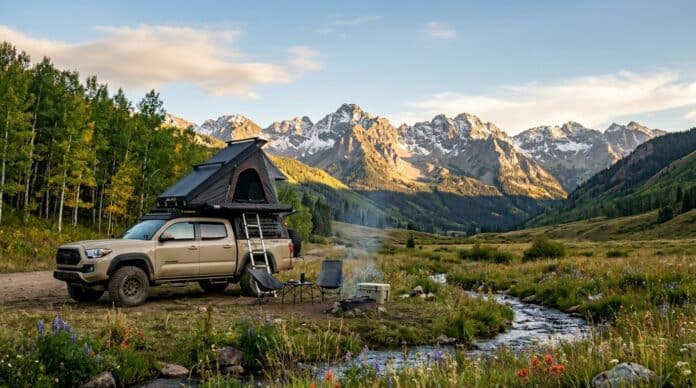

Quick Facts:
- Topic: Free dispersed camping in Colorado
- Spots covered: 12 (river benches, slickrock, and alpine passes)
- Land managers: BLM and U.S. Forest Service
- Typical cost: $0 (some busy corridors use free numbered sites)
- Stay limit: 14 days on most land; 16 in the San Juan National Forest
- Vehicle needed: Stock SUV to built 4×4, depending on the spot
- Elevation range: 7,700 ft basecamps to 12,800 ft passes
- Best season: July through September for the high country
- Best for: Off-roaders and overlanders chasing alpine solitude
8 min read
In This Guide
- Dispersed Camping Colorado: What Free Public Land Means
- Free Dispersed Camping Rules in Colorado
- Best Free Dispersed Camping near Buena Vista, Colorado
- Boondocking in Colorado’s Gunnison Country
- San Juan Mountains: Dispersed Camping for Serious 4×4 Rigs
- Northwest Colorado and the Grand Mesa
- Which Colorado Spot Fits Your Rig and Season?
- Final Verdict
- Frequently Asked Questions
Dispersed Camping Colorado: What Free Public Land Means
Dispersed camping in Colorado rewards off-roaders with high-alpine basecamps for the price of fuel. Two land managers open the door: the Bureau of Land Management and the U.S. Forest Service. Together they allow free primitive camping across millions of acres, from sagebrush river benches to 11,000-foot meadows below the passes. Pull off a forest road, set up in a used site, and the Rockies become your backyard. Free camping in Colorado rarely comes easier than a forest-road pullout below the peaks.
This guide ranks the best dispersed camping in Colorado for rigs of every build, from Buena Vista granite to the San Juan shelf roads. Each entry flags road condition, the clearance you need, elevation, and the short alpine season. Because 4wdTalk readers run real 4x4s, the focus stays on where a stock crossover taps out and where lockers and low range earn their place. New to the style? Read our take on dispersed camping the right way.
Free does not mean unrestricted. Colorado’s busiest corridors have shifted from open dispersed camping to numbered designated sites, and stay limits run 14 days on most land and 16 in the San Juan National Forest. We cover the rules first, then walk every spot. Afterward, a decision section matches each location to your rig and the season.
Free Dispersed Camping Rules in Colorado
Dispersed camping in Colorado runs on a short rulebook. On BLM and forest land, free camping in Colorado follows the same logic, with one twist: the busiest corridors now require numbered designated sites. Boondocking in Colorado means the same free public-land camping whether you sleep in a rooftop tent or a teardrop. Learn the basics once and you stay legal statewide. Our primer on how to find free camping covers the groundwork.
| Rule | Details |
|---|---|
| Cost | Free on BLM and National Forest land |
| Stay limit | 14 days in 30; 16 days in San Juan NF |
| Designated sites | Some corridors allow numbered sites only (still free) |
| MVUM | Check the Motor Vehicle Use Map for legal roads |
| The 200 rule | Camp at least 200 feet from lakes, streams, and springs |
| Fire bans | Stage 1 or Stage 2 bans common in summer |
| Elevation and season | High spots open roughly July through September |
Two habits keep you legal and welcome. First, check the Motor Vehicle Use Map for your forest — see our guide on how to read an MVUM — because it marks which roads allow camping, and designated-site conversions spread every season. Second, pack out everything and follow Leave No Trace principles. The Bureau of Land Management posts current fire orders, which reach Stage 1 or Stage 2 bans on short notice through the dry months — check our 2026 fire restrictions for camping and overlanding resource before you go.
Best Free Dispersed Camping near Buena Vista, Colorado
The Arkansas Valley around Buena Vista and Salida holds the most forgiving free camping in the state, with lower elevation and a longer season than the passes.
Fourmile Recreation Area
The BLM’s Fourmile area spreads 100,000 acres of pinyon and granite northeast of Buena Vista. County Road 371 runs mostly paved, then CR 375 turns to graded dirt any SUV handles in dry weather. Still, push onto the rougher gulch spurs like Dorman’s Delight, and a high-clearance 4×4 opens the best sites. Sitting near 8,000 feet, it holds a longer season than the passes. Expect 14-day limits, Collegiate Peaks views, and climbing and OHV access out the door.
Chalk Creek and Browns Creek
The Chalk Creek drainage near Nathrop now limits camping to numbered designated sites, all still free. For open dispersed, drop south to the Browns Creek area off Forest Road 295, reachable by most high-clearance vehicles. From here, the St. Elmo ghost town and the Mt. Antero road climb past 13,000 feet for built rigs. Camp sits near 9,000 feet, so plan on a June-through-September window. Afternoon lightning hits the high trails hard.
Weston Pass and South Park
Weston Pass links the Arkansas Valley to South Park on a graded-to-rocky road, one of the friendlier high passes for a stock high-clearance 4×4. Free sites line the South Fork South Platte near 9,800 feet, with fishing and Buffalo Peaks Wilderness trails close by. Crowds thin here compared to the Sawatch hotspots. Camping rules around South Park keep shifting, so check the current map before you commit. Snow gates the top from October through late spring.
Boondocking in Colorado’s Gunnison Country
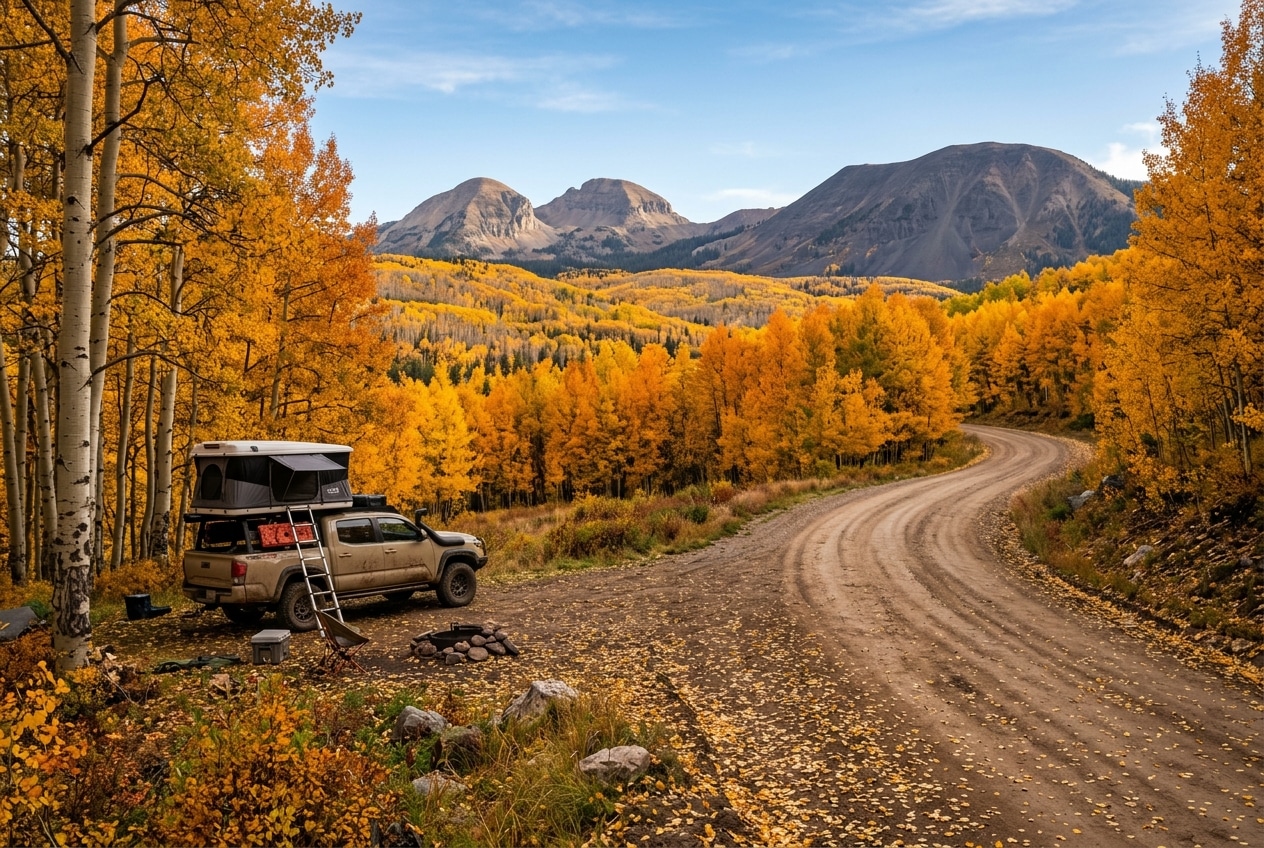
Gunnison County packs three styles of free camping into one region: river benches, slickrock, and aspen passes.
Taylor Park
Taylor Park opens a vast dispersed and OHV playground in the Gunnison National Forest. Cottonwood Pass now runs paved to its 12,126-foot summit, so any vehicle reaches the basin from Buena Vista. Most reservoir-area sites suit a van or SUV, while the Italian Creek and Tincup spur roads reward a high-clearance 4×4. Camp sits near 9,300 feet, so plan on a July-through-September season. Some sub-areas have moved to designated sites, so check the current map first. Reservoir fishing anchors the basin.
Hartman Rocks
Hartman Rocks rewards rigs of every size with about 50 free designated sites on a 14,000-acre granite playground south of Gunnison. Entrance-area sites reach standard vehicles, while interior roads want high-clearance. The real draw is the trail network: roughly 45 miles of singletrack plus a web of 4×4 routes and climbing crags. Because it sits near 7,700 feet, it shines in spring and fall when the passes stay buried. Shade runs thin, though, so summer afternoons bake. Vault toilets and trash sit near the entrance.
Kebler Pass
Kebler Pass crosses Colorado’s largest aspen grove west of Crested Butte, riding a wide graded road most cars handle when dry. Camping here runs free but designated, with about 36 numbered sites under a 2022 forest order. Arrive early in late September, because the fall color draws crowds and sites fill fast. The pass tops out near 10,000 feet and closes through winter. Rougher spurs toward Ohio Pass and Lake Irwin reward a high-clearance rig.
San Juan Mountains: Dispersed Camping for Serious 4×4 Rigs
The San Juans hold the best dispersed camping in Colorado for capable rigs, paired with the state’s most demanding shelf roads. Stay limits here run 16 days, not 14.
The Alpine Loop: Cinnamon and Engineer Pass
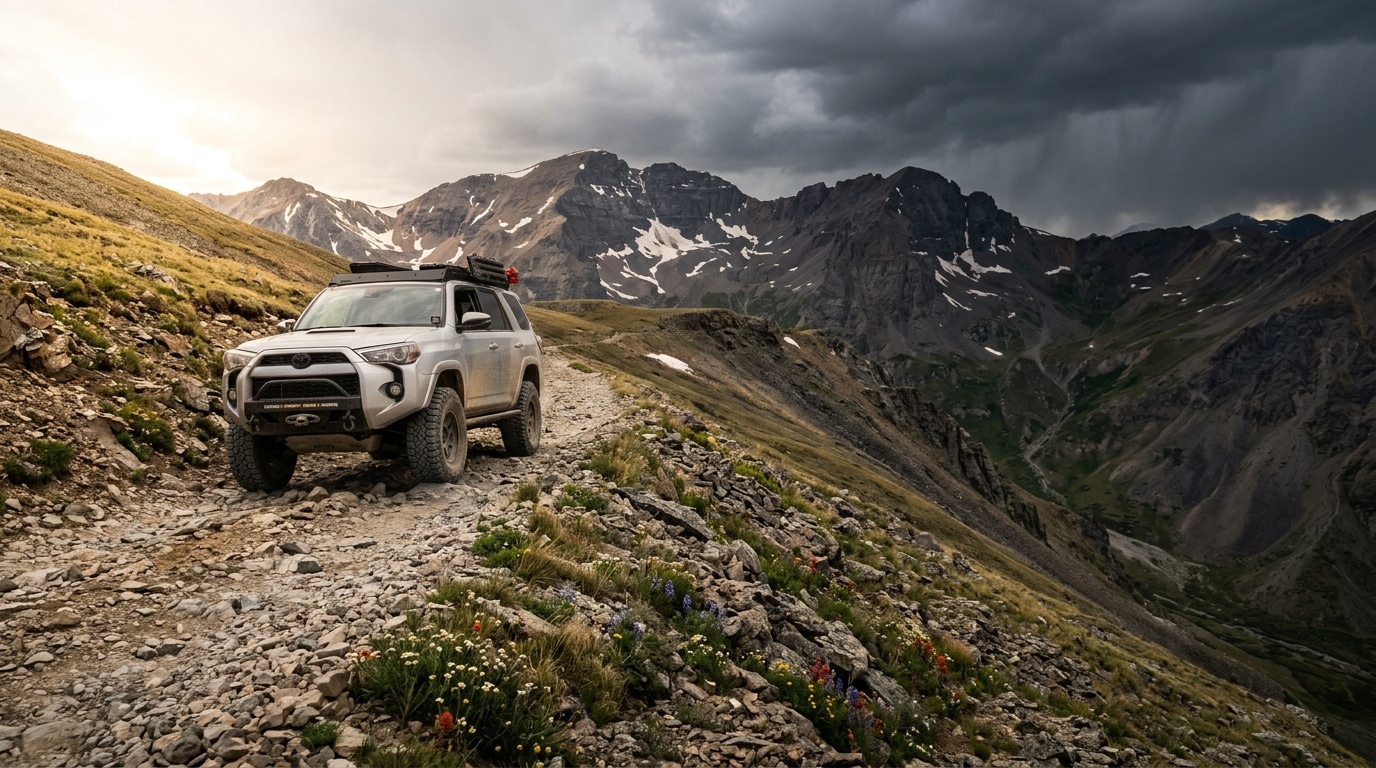
The Alpine Loop strings together Lake City, Silverton, and Ouray over Cinnamon Pass at 12,640 feet and Engineer Pass at 12,800 feet. Free sites cluster near Burrows Park and along Henson Creek, mostly between 9,000 and 11,000 feet. This is true high-clearance 4×4 country. Meanwhile, the west side of Engineer turns steep, narrow, and exposed, so a crossover taps out long before the top. Carry skid protection and low range, and clear the passes before midday storms. Ghost towns and American Basin wildflowers reward the effort.
Ironton Park and the Million Dollar Highway
Ironton Park offers free sites a short hop from US-550 between Ouray and Silverton, sitting near 9,600 feet. Meanwhile, the easy access makes it a smart basecamp under hardcore trails like Corkscrew Gulch and Poughkeepsie Gulch. Verify the current map, since heavily used San Juan corridors keep shifting toward designated sites. Best months run July through September. No water or restrooms exist, so arrive self-contained.
Last Dollar Road
Last Dollar Road links Telluride and Ridgway on a graded-to-rough dirt route best driven with high-clearance and 4WD, especially when wet. In addition, free Forest Service sites sit above 9,000 feet with panoramic Sneffels Range views. Also, the road usually clears by early June and closes around November. In fall, the aspens turn electric, making late September the prize window. Bring everything, since the road offers no services.
La Plata Canyon
Northwest of Durango, La Plata Canyon climbs from an 8,000-foot creek floor toward 11,000-foot basins. For instance, lower County Road 124 stays graded and reaches the first free dispersed areas in most vehicles. However, higher up toward Kennebec Pass, the road turns rocky and demands a high-clearance 4×4. The San Juan stay limit of 16 days applies, then you move at least five road miles. Waterfalls, mining history, and quiet set it apart from the Ouray crowds.
Northwest Colorado and the Grand Mesa
Two more spots round out the dozen, both easier on a rig and longer on solitude.
Rabbit Ears Pass
Near Steamboat Springs, Rabbit Ears Pass offers some of the easiest designated dispersed in the state, with graded sites a short distance off US-40. Most vehicles and vans reach them in dry weather, making this a forgiving basecamp near 9,500 feet. Meanwhile, wide meadows, wildflowers, and fall aspen frame the camp. Snow lingers into June and returns by October, so July through September runs safest. Mud season is the main hazard to skip.
Grand Mesa
The Grand Mesa rises as one of the largest flat-topped mountains on earth, topping 10,000 feet with roughly 300 lakes. Free primitive sites line Lands End Road and Forest Roads 105 and 108, graded gravel passable to most vehicles when dry. A few spurs, though, want high-clearance. Cool summer temperatures, meanwhile, make it a refuge when the valleys roast. Fishing and stargazing headline the experience. Snow gates the top outside the July-through-September window.
From the 4wdTalk Garage
Colorado sorts rigs by two things, clearance and weather sense. A stock crossover handles the graded basecamps at Fourmile, Rabbit Ears, and Taylor Park, then stops where the shelf roads start. For the Alpine Loop and upper La Plata Canyon, you want a true high-clearance 4×4 with skid plates and low range. Lockers also help when the rock steps go dry to greasy. Two rules keep you alive above treeline: clear the high passes before the early-afternoon storms build, and turn around when a shelf road goes wet. No view is worth a slide. For the electrical side of a long stay, see our notes on boondocking power needs.
Which Colorado Spot Fits Your Rig and Season?
Pick by clearance first. A stock crossover or SUV does well at Fourmile, Hartman Rocks, Rabbit Ears, Kebler Pass, and the Taylor Park basecamps, where graded roads reach good sites.
Step up to a high-clearance 4×4 for upper La Plata Canyon, Last Dollar Road, and Weston Pass. Save the Alpine Loop for a built rig with skid plates and low range, since Cinnamon and Engineer punish anything less. For quieter nights, our guide to finding secluded campsites helps you read a map.
Pick by season next. Dispersed camping in Colorado splits cleanly by elevation. Lower BLM spots near Buena Vista and Gunnison open spring through fall. By contrast, the alpine passes hold snow until July and ice up again by October.
Final Verdict
Colorado offers off-roaders more high-alpine free camping than any state in the Rockies. For a first trip, Fourmile or Taylor Park delivers easy access, room to spread out, and a long season.
The mountains demand respect, though. Afternoon lightning above treeline kills, so clear the high passes by early afternoon. Watch the stay limits too, since most land allows 14 days and the San Juan National Forest allows 16.
Match the spot to your build and you skip two classic errors. Avoid grinding a low car up a shelf road, or burning a built rig on a paved pullout. The decision section above sorts every site by clearance and elevation. Check the forest’s Motor Vehicle Use Map before each trip, because designated-site rules keep spreading.
Start at a graded basecamp, build your kit and your weather sense with our primitive camping tips, then earn the San Juan passes. Free dispersed camping in Colorado runs from June river benches to September aspen gold, open somewhere all summer long.
More Free Dispersed Camping Guides by State
- Best Free Dispersed Camping in Southern California
- Best Free Dispersed Camping in Utah
- Best Free Dispersed Camping in Washington
- Best Free Dispersed Camping in Oregon
Frequently Asked Questions
Is dispersed camping free in Colorado?
Yes. Dispersed camping in Colorado is free on most BLM and National Forest land. A handful of busy corridors now use numbered designated sites, which stay free but require you to camp at a marked spot. Always confirm the rule for your road on the current forest map.
What is the stay limit for dispersed camping in Colorado?
Most BLM and National Forest land allows 14 days within a 30-day period. The San Juan National Forest sets a longer 16-day limit, after which you move at least five road miles. Rangers enforce these limits in popular areas, so track your nights.
Do you need a 4×4 for dispersed camping in Colorado?
It depends on the spot. Graded basecamps like Fourmile, Rabbit Ears, and Taylor Park welcome a stock SUV or van. The alpine passes, including the Alpine Loop and upper La Plata Canyon, demand a high-clearance 4×4 with low range. Match the rig to the road and check conditions first.
Where is dispersed camping allowed near Colorado Springs?
Free options near Colorado Springs have tightened. Rampart Range now charges for numbered sites, so it no longer counts as free dispersed. For open free camping, plan a longer drive west to the Buena Vista and Salida public lands, roughly two hours away. There, BLM and National Forest dispersed remains open.
What is the difference between BLM and National Forest dispersed camping?
Both allow free primitive camping, but the agencies differ. BLM land tends toward open desert and river benches at lower elevation with 14-day limits. National Forests cover the high country and increasingly use designated sites plus a Motor Vehicle Use Map marking legal roads. Read the map for whichever agency manages your spot.
When is the best time for dispersed camping in Colorado?
July through September suits the high country, when snow clears the passes and roads dry out. Lower BLM spots near Buena Vista and Gunnison open as early as April and hold into October. Avoid mud season in late spring, and watch afternoon thunderstorms all summer above treeline.