


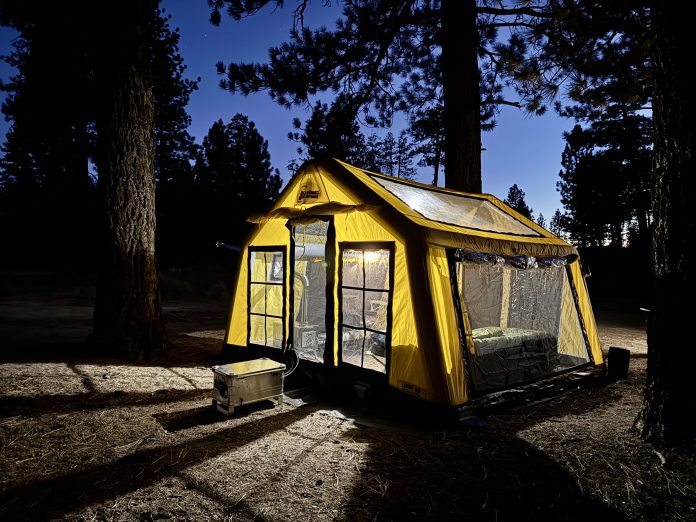
Quick Verdict: Leave no trace camping is the single most important practice keeping your favorite public lands open. Since 2020, the BLM has closed over 317 miles of backcountry routes near Moab and restricted 15,087 acres near Zion, specifically because of trash, human waste, and overuse. Following the 7 core principles takes minimal effort, costs less than $50 in gear, and directly prevents the closures threatening dispersed camping access across the West.
Last updated: March 2026 | 12 min read
In This Guide
- Why Leave No Trace Camping Matters More Than Ever
- The Post-COVID Surge and Its Consequences
- Key Facts at a Glance
- The 7 Leave No Trace Principles for Overlanders
- The Human Waste Crisis on Public Lands
- Pack It In, Pack It Out: A Practical Breakdown
- Campfire Responsibility and Fire Pans
- Gray Water Disposal Done Right
- Recommended Leave No Trace Gear
- Dispersed Camping vs. Developed Campgrounds: Responsibility Differences
- Pros and Cons of Strict Leave No Trace Practice
- Final Verdict: Be Better Than the Last Camper
- Frequently Asked Questions
Why Leave No Trace Camping Matters More Than Ever
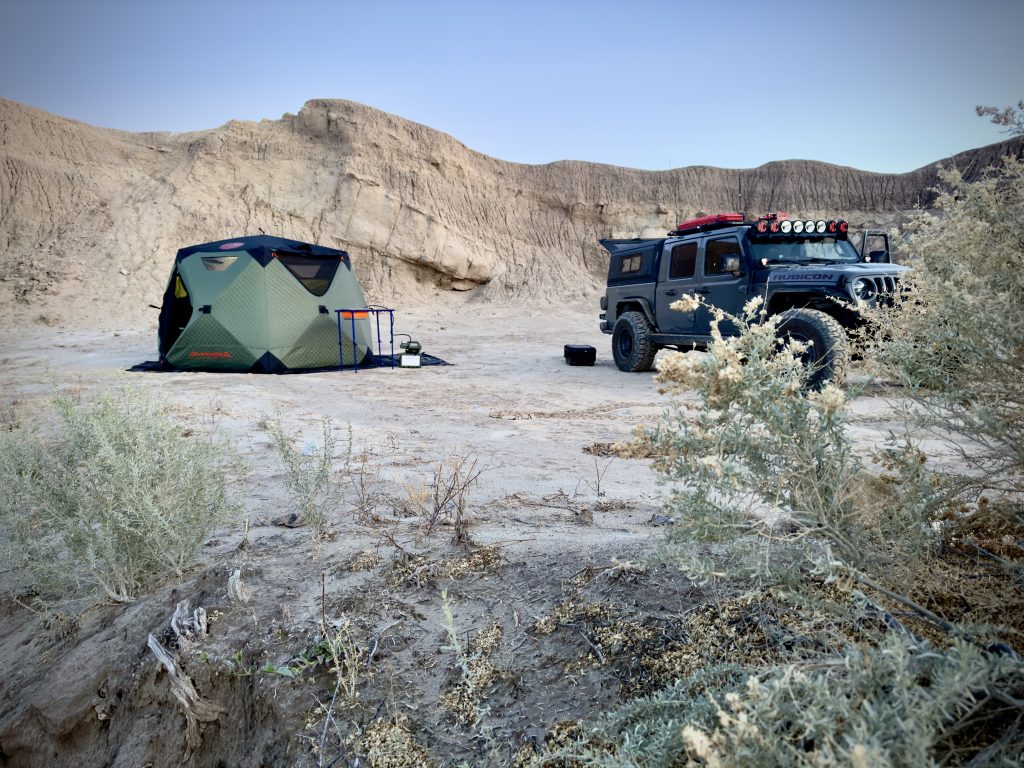
Your favorite dispersed campsite is one bad season away from a locked gate. Leave no trace camping is the set of seven outdoor ethics standing between open public land and permanent closures. For overlanders who rely on backcountry access, these principles are the difference between keeping a trail open and watching it get shut down. If you’re still building out your setup, our Dispersed Camping for Overlanders pillar guide covers the rules and how to find free sites. The formal seven principles were finalized in 1999 by the Leave No Trace Center for Outdoor Ethics, originally developed through a partnership between the U.S. Forest Service, Bureau of Land Management, and National Park Service. They remain unchanged today, although the urgency of following them has never been higher.
If you spend time on BLM land, national forest roads, or any backcountry campsite (and if you’re new to it, check out our guide on why you should try dispersed camping), this leave no trace camping guide is for you. Overlanders face a specific challenge: our rigs let us reach remote areas, and remote areas have zero trash service. Consequently, every piece of garbage, every fire ring, every pile of toilet paper left behind accumulates. Because these spots lack the maintenance crews of developed campgrounds, the damage compounds fast. As a result, one bad weekend of trash at a popular dispersed site is enough to trigger a closure review.
The stakes are real. Alabama Hills near Lone Pine, California implemented a mandatory permit system in October 2024 after years of overuse. The BLM closed 317.2 miles of backcountry routes near Moab in October 2023. Near Zion, the BLM restricted 15,087 acres and cut 56 dispersed sites down to 30 designated spots. These are places overlanders love, and they’re disappearing because too many people failed at basic campsite cleanup and responsible overlanding.
The Post-COVID Surge and Its Consequences
COVID-19 pushed a historic wave of new people into outdoor recreation. According to the KOA North American Camping Report, 92 million U.S. households now identify as campers, while 58 million went camping in 2022 alone. In 2020, 21% of all campers were first-timers, compared to 4% in 2019. Notably, 40% of all campers are Millennials, and 82% of first-time camping households included children.
These numbers reshaped public lands overnight. As a result, dispersed camping areas saw unprecedented traffic. BLM and USFS offices across the West reported overflowing fire rings, scattered trash bags, toilet paper graveyards behind every bush, and illegal fire scars on pristine ground. The problem was straightforward: millions of new campers entered the outdoors without knowing the basics of dispersed camping etiquette or responsible overlanding practices. Proper campsite cleanup was a foreign concept to most of them.
Specific Sites Lost to Overuse
Joshua Tree National Park experienced a sanitation crisis during the 2018-2019 government shutdown when maintenance staff were furloughed. Consequently, garbage overflowed, visitors created illegal roads by driving off-trail, and several Joshua trees were destroyed. The park now maintains a dedicated webpage addressing ongoing human waste and trash problems. Similarly, during early 2020 COVID overcrowding, visitors left trash on surrounding private properties.
In Moab, the BLM finalized supplementary rules in May 2022 requiring portable toilets at Klondike Bluffs campsites. By October 2023, the agency closed 28% of all inventoried backcountry routes in the Labyrinth Rims and Gemini Bridges area. Within 20 miles of Moab, dispersed camping is now limited to developed campgrounds only. Near Zion, the BLM’s SR9 Camping Management Plan reduced dispersed sites by 46%, while building two new developed campgrounds as replacements. Consequently, the pattern is clear: overuse leads to restrictions, and restrictions lead to closures.
Key Facts at a Glance
| Fact | Details |
|---|---|
| Leave No Trace Principles | 7 (established 1999, unchanged) |
| New Campers Since COVID (2020-2022) | 44 million new camping households |
| Backcountry Routes Closed Near Moab | 317.2 miles (28% of inventoried routes) |
| Dispersed Acres Restricted Near Zion | 15,087 acres |
| Alabama Hills Permit Requirement | Mandatory since October 1, 2024 |
| Minimum Distance from Water for Waste | 200 feet |
| Cat Hole Depth | 6-8 inches |
| Estimated Cost for Basic LNT Gear Kit | Under $50 |
The 7 Leave No Trace Principles for Overlanders
The seven principles were written broadly for all outdoor users, from backpackers to paddlers. For overlanders and car campers, each principle has specific, practical applications. Here is what each one means when you’re running a rig on public land.
1. Plan Ahead and Prepare
Before heading out, spend 15 minutes on your destination’s BLM or USFS field office website. Look for fire bans, permit requirements, and water sources. The rules are changing fast: Moab started requiring portable toilets at Klondike Bluffs in 2022, and Alabama Hills went permit-only last October. Ignorance will not save you from violations, but five minutes of research will.
2. Travel and Camp on Durable Surfaces
Stay on established roads and camp in existing cleared sites. For overlanders, this means resisting the urge to create new pull-offs or widen existing ones. During Joshua Tree’s 2018-2019 crisis, off-trail driving created illegal roads visible on satellite imagery. Instead, stick to designated routes and previously impacted campsites to concentrate wear on ground already disturbed.
3. Dispose of Waste Properly
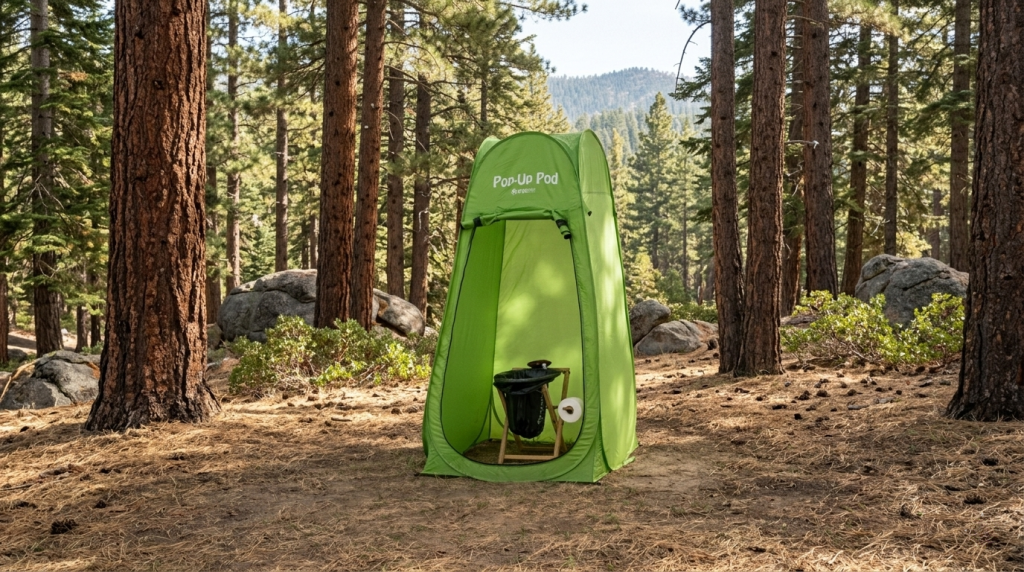
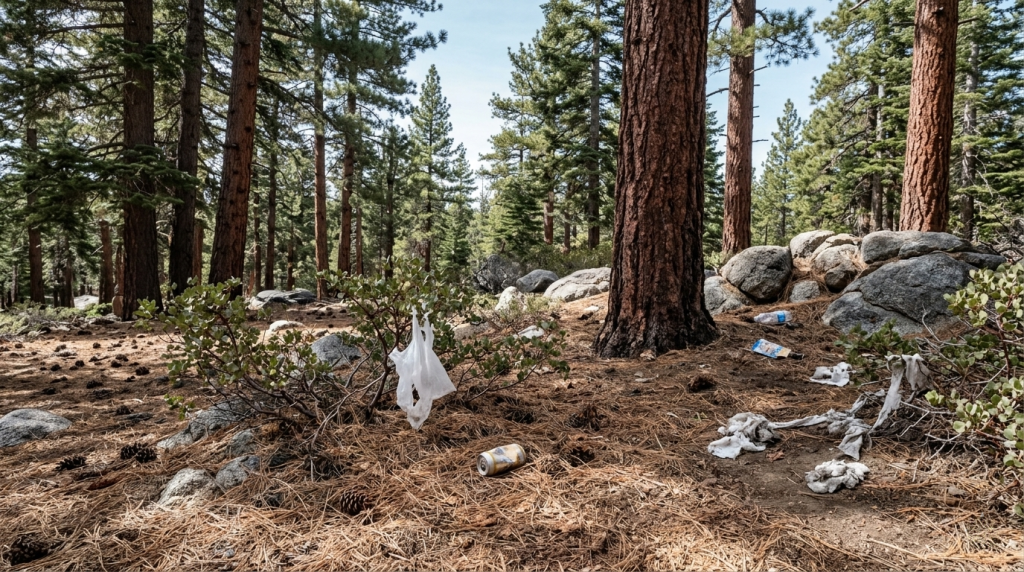
This is the principle most people violate, and the one responsible for the majority of site closures. Therefore, pack out everything you bring in: food wrappers, aluminum foil, bottle caps, cigarette butts, and especially toilet paper. In arid environments like the desert Southwest, human waste and toilet paper do not decompose for months or years. The BLM now requires pack-out waste systems in several zones across Utah specifically because of this failure.
4. Leave What You Find
Do not remove rocks, plants, or cultural artifacts. Also, do not build structures, dig trenches around your tent, or hammer nails into trees. Overlanders sometimes stack rocks to mark campsites or trails, and while this seems harmless, it disrupts natural drainage patterns and confuses other visitors about where established routes go.
5. Minimize Campfire Impacts
Use existing fire rings when available. Keep fires small and burn only dead, downed wood you gather from the ground. Better yet, bring a portable fire pit to leave zero ground scarring. Always check local fire restrictions before striking a match, since many BLM and USFS areas implement seasonal bans.
6. Respect Wildlife
Your rig doubles as the best bear canister on the market. Store all food and scented items inside it. Feeding wildlife, even unintentionally through loose food scraps, creates food-conditioned animals. Those animals become aggressive and frequently end up euthanized by wildlife management. Therefore, a clean camp kitchen protects both animals and your fellow campers.
7. Be Considerate of Other Visitors
Nobody drove 3 hours into the backcountry to listen to your Bluetooth speaker. Keep generators and music at reasonable levels, especially after dark. Yield to other vehicles on narrow forest roads. Also, camp at least 200 feet from water sources to leave access for wildlife and other visitors. If a site already has someone nearby, move on to the next clearing instead of crowding in.
The Human Waste Crisis on Public Lands
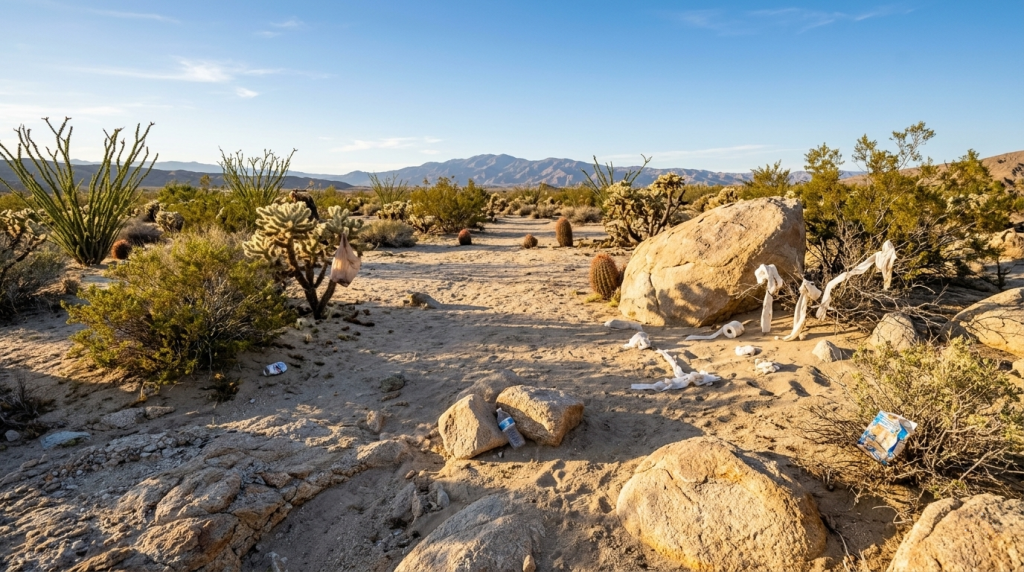
Of the seven principles, waste disposal failures cause the most closures. Toilet paper graveyards are now common at heavily used dispersed camping areas across the West. Walk 50 feet behind any popular free campsite in the desert, and you will find white flags of tissue scattered behind rocks and bushes. The problem multiplied during the COVID camping surge as millions of first-time dispersed campers arrived without portable toilets or even basic knowledge of cat hole practices.
Moreover, in arid and alpine environments, human waste decomposes extremely slowly. Scientific research shows pathogens persist in desert soil far longer than in wetter climates, meaning improperly buried waste poses health risks for months. For this reason, the BLM’s Moab Field Office now requires portable or established toilets for human waste at multiple designated areas. Narrow river canyons mandate full pack-out of solid human waste.
For overlanders committed to leave no trace camping, the fix is simple. Carry a portable toilet or a supply of WAG bags. WAG bags from Cleanwaste cost roughly $3 each and include gelling powder, an outer puncture-resistant bag, toilet paper, and a hand wipe. Each bag handles up to 32 ounces. For longer trips, a portable composting toilet like the Trelino Evo S or a budget-friendly Boxio fits inside most rigs and eliminates the problem entirely.
Pack It In, Pack It Out: A Practical Breakdown
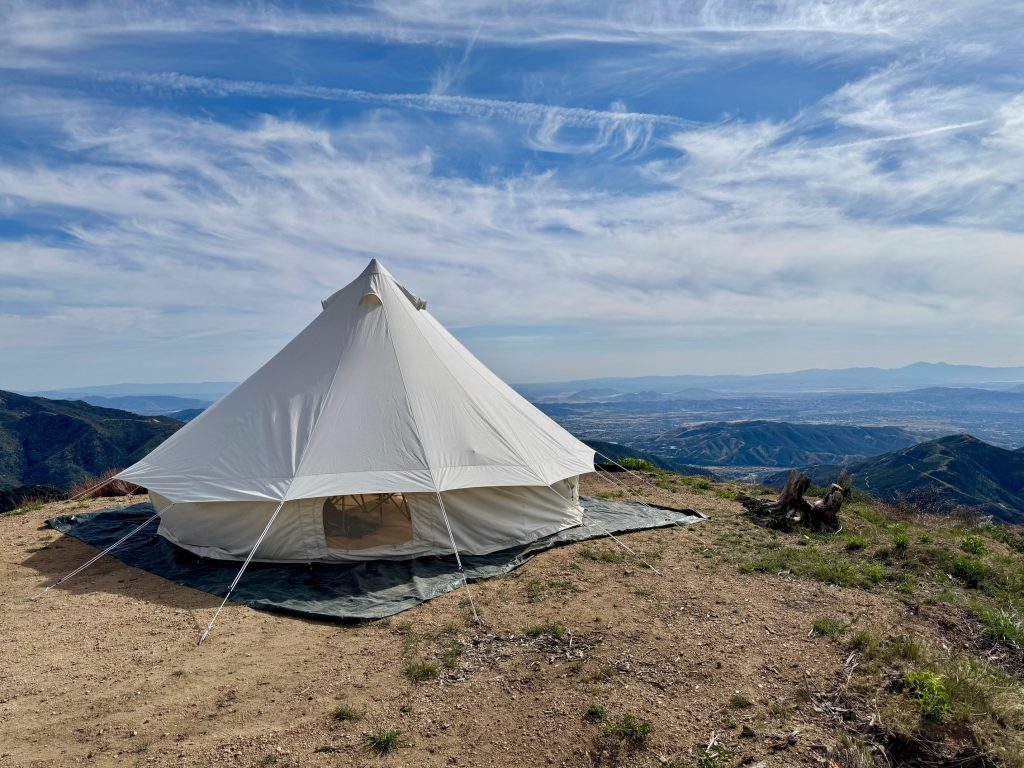
The pack it in pack it out principle sounds simple, yet it fails in practice because people do not plan for it. Responsible overlanding requires treating campsite cleanup as non-negotiable, not optional. Here is a step-by-step approach for overlanders heading into dispersed camping areas. (For a full packing rundown, see our overlanding gear checklist.)
Reduce Waste Before You Leave Home
Repackage food into reusable containers or ziplock bags before your trip. Remove cardboard boxes, plastic overwrap, and styrofoam trays at home where you have a recycling bin. Similarly, plan meals to minimize food waste, since leftovers attract wildlife and create disposal problems. Consequently, this step alone cuts your campsite trash by 30-50%.
Trash Management at Camp
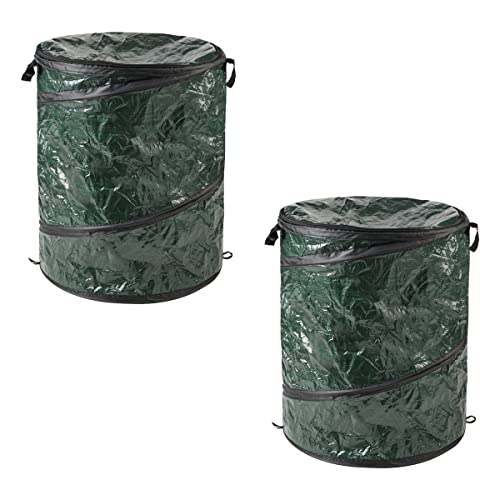
Bring a collapsible trash bin to keep garbage contained and organized. The Wakeman Pop Up Trash Can holds 29.5 gallons and folds to roughly 2 inches for storage. Alternatively, a reinforced collapsible bag holder with legs keeps bags upright and off the ground. Store filled trash bags inside your vehicle overnight, since bears and coyotes will tear through bags left outside. Consequently, keeping a clean camp reduces wildlife encounters and keeps your site tidy.
Micro-Trash Matters
Bottle caps, twist ties, cigarette butts, food foil, and small plastic wrappers are the items most commonly left behind. Before breaking camp, do a “micro-trash sweep.” Walk the entire campsite in a grid pattern, scanning the ground at close range. Then pick up every small piece. Notably, this five-minute sweep removes the debris other campers leave behind and prevents accumulation over time.
Campfire Responsibility and Fire Pans

Campfires create lasting ground scars when built directly on soil or vegetation. Traditional fire rings blacken rocks, sterilize the soil beneath them, and leave charcoal for the next camper to deal with. A portable fire pan eliminates this damage completely.
The FIRESIDE OUTDOOR Pop-Up Fire Pit is one of the most popular options for overlanders. It uses a patented Fire Mesh design producing 80% less smoke than traditional fires, opens to a 24-by-24-inch surface, and includes a heat shield preventing any ground contact. The Primus Kamoto OpenFire Pit offers a more compact option with an integrated ashtray and collapsible design accommodating logs up to 16 inches. Both pack flat for easy storage in your rig.
Always check 2026 fire restrictions for camping and overlanding before building any fire. Many BLM and USFS areas implement seasonal fire bans from late spring through fall. When fires are allowed (and if you need a refresher, read our guide on four ways to start a campfire), burn only dead, downed wood gathered from the ground. Also, never cut standing trees, even dead ones, since they provide habitat for wildlife. Before leaving, drown your fire with water, stir the ashes, and confirm everything is cold to the touch. This fire cleanup step is essential, since one hot ember left behind starts wildfires.
Gray Water Disposal Done Right
Gray water from dishwashing and cooking requires proper disposal to protect water sources and soil. First, strain all food particles from your dishwater using a small mesh strainer or bandana. Pack it in pack it out applies to food particles too, so bag those solids with your trash.
Next, carry the strained water at least 200 feet from any creek, lake, or river. Scatter it broadly over a wide area in direct sunlight, or dig a small sump hole and pour the water in so soil filters it naturally. Although biodegradable soap breaks down eventually, it degrades slowly in water, so never wash dishes or yourself directly in a water source. Instead, carry water to your washing station, keeping the 200-foot buffer at all times.
A collapsible water container like the Reliance Fold-a-Carrier makes transporting and disposing gray water straightforward. The 5-gallon version includes an on/off spigot and folds flat when empty.
Recommended Leave No Trace Gear
| Product | Category | Price Range | Why You Need It |
|---|---|---|---|
| Cleanwaste WAG BAG (12-Pack) | Waste Disposal | $25-35 | Required in Moab and other BLM zones; gels waste, includes TP and wipe |
| RESTOP 2 Waste Bags | Waste Disposal | $20-30 | Bag-within-a-bag design for complete odor and puncture containment |
| FIRESIDE OUTDOOR Pop-Up Fire Pit | Campfire | $100-130 | Zero ground scarring, 80% less smoke, packs flat |
| Primus Kamoto OpenFire Pit | Campfire | $80-110 | Compact with integrated ashtray; fits 16″ logs |
| Wakeman Pop Up Trash Can | Trash Management | $15-25 | 29.5-gallon capacity, folds to 2 inches for storage |
| Reliance Fold-a-Carrier (5-Gallon) | Gray Water | $10-15 | Collapsible with spigot; haul water 200 ft from sources for washing |
| Campsuds Biodegradable Soap | Cleaning | $5-10 | Concentrated, unscented option for dishes and personal washing |
| Deuce of Spades Trowel | Waste Disposal | $25-30 | Lightweight aluminum trowel for digging proper 6-8 inch cat holes |
| Boxio Portable Toilet | Portable Toilet | $150-180 | Compact separating toilet; fits in tight rig spaces; no power needed |
Leave No Trace Gear Mentioned in This Guide

Cleanwaste WAG Bag Portable Toilet Kit with Odor Control Bags



Dispersed Camping vs. Developed Campgrounds: Responsibility Differences
Developed campgrounds provide trash dumpsters, vault toilets, fire grates, and often a camp host enforcing rules. Dispersed camping on BLM or USFS land provides none of these services. You are the waste management system, the fire marshal, and the cleanup crew. (Our primitive camping tips cover more on self-sufficient camping.) This difference is why dispersed camping etiquette matters so much more on public land than at a paid campsite.
At a developed campground, you bag your trash and walk it to a dumpster. On dispersed land, you bag it and drive it to the nearest town. At a developed site, you walk to a vault toilet. On dispersed land, you dig a cat hole or use a WAG bag. The convenience gap is significant, and bridging it requires preparation and the right gear. Overlanders who invest $50-150 in a basic leave no trace camping kit (WAG bags, collapsible trash bin, trowel, biodegradable soap) eliminate the excuses for leaving a mess behind.
Also consider this: the more dispersed camping areas close due to neglect, the more pressure falls on the remaining open spots and developed campgrounds. Protecting dispersed access through leave no trace camping benefits everyone in the overlanding community, while losing it concentrates impact on fewer and fewer locations. If you want to put these principles into practice on a real trip, check out the best free dispersed camping in Colorado for a solid starting point.
Pros and Cons of Strict Leave No Trace Practice
Pros
- Keeps BLM and USFS dispersed camping areas open and accessible
- Prevents permit systems and closures at places like Alabama Hills and Moab
- Protects water sources from contamination by human waste and gray water
- Reduces wildlife conflicts caused by improperly stored food and trash
- Basic gear kit costs under $50 and fits in any rig
- Portable fire pans eliminate ground scarring and speed up campfire cleanup
- Pre-trip food repackaging reduces trash volume by 30-50%
Cons
- Requires advance planning and extra packing space in your rig, although a basic kit fits in a single storage bin
- WAG bags add ongoing cost at roughly $3 per use, but a single dispersed camping trip saves $30-50 over a developed campground fee
- Hauling trash and waste back to town adds 20 minutes to your departure drive
- Portable fire pans limit fire size compared to ground-level rings, though the FIRESIDE OUTDOOR at 24×24 inches accommodates multiple logs
- Gray water disposal at 200 feet requires hauling a water container, adding about 5 minutes to your evening cleanup
Final Verdict: Be Better Than the Last Camper

Leave no trace camping is the price of admission for dispersed public land access. The 44 million new camping households since 2020 put unprecedented pressure on BLM and USFS lands, and the closures at Alabama Hills, Moab, Zion, and Joshua Tree prove the consequences are real and accelerating. Following pack it in pack it out practices and thorough campsite cleanup is not optional for overlanders who want these places to stay open.
The practical effort is minimal. For under $75, a pack of WAG bags ($25), a collapsible trash bin ($15), biodegradable soap ($5), and a trowel ($25) cover your basics. Adding a portable fire pan ($80-130) rounds out a complete responsible overlanding kit. These small investments prevent ground scarring, protect water sources, and keep dispersed sites off the closure list.
Here is the closing challenge. As you clean up your camp and get ready to head home, be better than the last camper who was there. If you see trash left behind by someone else, pick it up. Toss it in with your own garbage. Grab the old toilet paper someone left behind a boulder. Pull the half-burned cans out of a fire ring. Every piece of someone else’s trash you carry out is one less piece triggering a ranger’s closure recommendation. Your favorite campsite stays open because someone cared enough to leave it cleaner than they found it. Make sure you are someone.
Frequently Asked Questions
What are the 7 leave no trace principles?
The seven principles are: plan ahead and prepare, travel and camp on durable surfaces, dispose of waste properly, leave what you find, minimize campfire impacts, respect wildlife, and be considerate of other visitors. Established in 1999 by the Leave No Trace Center for Outdoor Ethics, these principles remain the standard for all outdoor recreation on public lands.
How do you properly dig a cat hole for human waste?
Dig a hole 6 to 8 inches deep and at least 200 feet from any water source, trail, or campsite. Use a trowel like the Deuce of Spades for proper depth. After use, cover the hole completely with the original soil. In arid or heavily trafficked areas, pack out your toilet paper in a sealed bag instead of burying it, since it decomposes slowly in dry conditions.
Where are WAG bags required for camping?
WAG bags or portable toilets are mandatory at BLM Klondike Bluffs campsites near Moab (since May 2022), several narrow river canyon corridors in Utah, and Indian Creek camping areas. Additional BLM and USFS zones are adding pack-out waste requirements each year. Check with the local field office for your destination before every trip, since requirements change frequently.
Why are dispersed camping sites closing across the West?
Site closures accelerated after the post-COVID camping surge brought 44 million new households to campgrounds between 2020 and 2022. The BLM cited trash accumulation, human waste contamination, illegal fire rings, and vegetation destruction as primary reasons. Specific closures include 317.2 miles of backcountry routes near Moab (October 2023), 15,087 acres near Zion (2023-2024), and Alabama Hills permit requirements (October 2024).
What is the best portable fire pit for leave no trace camping?
The FIRESIDE OUTDOOR Pop-Up Fire Pit is one of the top choices for overlanders. It uses a patented Fire Mesh design producing 80% less smoke, opens to 24 by 24 inches, and includes a heat shield preventing ground damage. The Primus Kamoto OpenFire Pit offers a more compact alternative with an integrated ashtray and space for 16-inch logs. Both pack flat and weigh under 10 pounds.
How do you dispose of gray water while camping?
Strain food particles from dishwater using a mesh strainer, then pack those solids out with your trash. Carry the strained gray water at least 200 feet from any water source. Scatter it broadly over a wide area in direct sunlight, or pour it into a shallow sump hole where soil filters it naturally. Never wash dishes or use soap directly in a stream or lake, even with biodegradable products.