


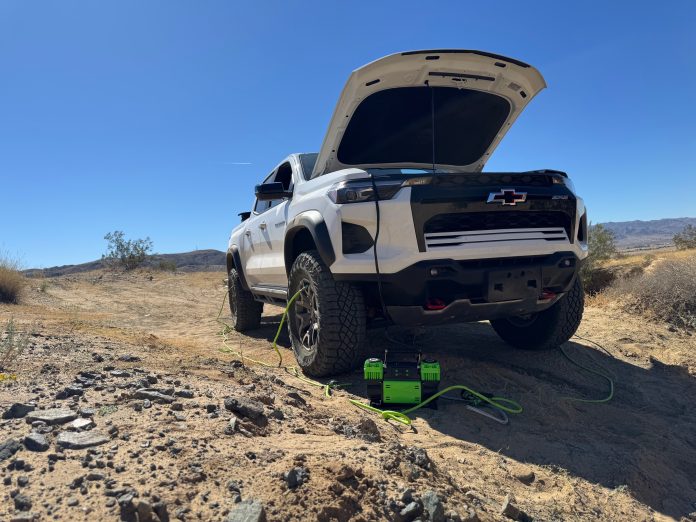

I’ve been running air systems on off-road rigs for years, and one pattern repeats itself constantly: builders buy the wrong compressor for where their build is going, not where it is today. Someone running stock 31-inch tires picks up a budget 1.5 CFM unit, then upgrades to 35s two seasons later and finds themselves standing at the trailhead watching the compressor overheat halfway through the third tire. I’ve made similar mistakes myself. The way to avoid them is to design your scalable off-road air system as a system from the start. Each piece you add should build on the last rather than replacing it entirely. Each off-road air compressor upgrade pays off across multiple build stages.
I founded 4WD Talk after decades of wheeling across the Southwest, and I’ve run MORRFlate gear for years across multiple rig configurations. The TenSix PSI Pro Gen 2 has been my exclusive compressor for several years now. The reason it works at every stage of a build is because it was designed to scale. This guide walks through the four stages of an overlanding air system build in order: what each stage looks like, when to move to the next one, and how to make each upgrade add capability instead of replacing what you already have. Whether you’re starting fresh on a new build or trying to make sense of a mismatched stack of gear, this framework gives you a clear path forward.
Quick Facts:
- Topic: Scalable off-road air system design, Stage 1 through Stage 4
- Skill Level: Beginner to intermediate
- Core Component: MORRFlate TenSix PSI Pro Gen 2 ($325) with 4-tire hose kit ($215-$255)
- CFM Range Covered: 1.5 CFM (Stage 1) through 10.6 CFM (Stage 2+)
- Key Upgrade Trigger: Tire size past 33 inches, air lockers, or group/trailer use
- Compressor Warranty: 3-year No Hassle warranty (MORRFlate TenSix)
- Best For: Overlanders and wheelers building or upgrading their rig’s air capability in stages
8 min read
In This Article
- Why Most Builds Get the Air System Wrong
- CFM and Duty Cycle: The Two Specs That Matter Most
- Stage 1: Stock Tires to 33 Inches
- Stage 2: 33 to 37 Inches and Multi-Tire Inflation
- Stage 3: Air Lockers and On-Demand Pressure
- Stage 4: Trailers, Group Trips, and Extended Duty
- Portable vs. Onboard: Which Architecture Wins?
- Pros and Cons
- Final Verdict
- Frequently Asked Questions
Why Most Builds Get the Scalable Off-Road Air System Wrong

The core mistake is buying for the rig you have today and ignoring the one you’re building toward. A 1.5 CFM portable compressor works fine on 31-inch stock tires. However, once you step up to 33s on an AT tire with stiffer sidewalls, or add a trailer with two more tires to inflate, the same unit is suddenly undersized. Worse, the duty cycle limits become a problem before you even hit the CFM ceiling: many budget portables run a 30-50% duty cycle, meaning 18-30 minutes of operation per hour before a forced cooldown. On a hot trail day with multiple vehicles, a 30% duty cycle compressor becomes the bottleneck your whole group waits on.
The solution isn’t to buy the most powerful compressor available on day one. A high-CFM onboard twin compressor wired into your engine bay is overkill for a mildly modified truck with 33s and no lockers. It also locks you into a permanent installation before your build direction is settled. Instead, the right approach is to build in stages, where each piece works independently and also integrates with what comes next. For more on the most common errors new builders make managing pressure, our article on common tire pressure mistakes covers the habits to break early.
CFM and Duty Cycle: The Two Specs That Matter Most

Before mapping the stages, two numbers deserve attention because every other spec follows from them.
CFM for off-road tires is the spec determining how long you wait at the trailhead. CFM (cubic feet per minute) measures how much air the compressor moves at a given pressure. A single standard tire valve stem accepts roughly 1.8 to 2.0 CFM at 20 PSI because the Schrader valve inside restricts flow to approximately a 1/16-inch opening. A compressor pushing 5 or 10 CFM into a single tire doesn’t move air five times faster. Instead, it creates backpressure and forces the motor to work against itself. Spreading output across multiple tires simultaneously through a 4-tire hose kit is the correct way to use high CFM productively. For 33-inch tires, 2 to 3 CFM is the minimum for reasonable single-tire inflation times. Larger tires, specifically 35 to 37 inches, benefit from 5+ CFM paired with a multi-tire kit. Without the multi-tire kit, backpressure damage to the compressor becomes a real risk.
Duty cycle is the percentage of time the compressor runs before it needs to cool down. A 50% duty cycle means 30 minutes of runtime per 60-minute window. An 80% duty cycle means 48 minutes per hour. For solo trail runs, the difference is minor. For group trips where you’re inflating 6 to 12 tires back to highway pressure, duty cycle determines whether you finish in one cycle or stop and wait. The MORRFlate TenSix PSI Pro Gen 2 runs an 80% duty cycle at 0 PSI, which is what allows it to air up 6 to 8 vehicles before a cooldown is needed.
Stage 1: Stock Tires to 33 Inches
At Stage 1, your rig is stock or lightly modified. Tires are 31 to 33 inches. You air down for occasional trail days and need to air back up before the highway. At this stage, a portable 1.5 to 2.5 CFM unit is appropriate. The main requirement is reliability and portability, not speed.
The right setup here is a single-output portable compressor with battery clamps, a carry bag, and a digital gauge. Budget units in the $80 to $150 range work at this stage. However, the smarter investment is to buy the Stage 2 compressor now at a price point you don’t have to repeat later. A unit like the MORRFlate TenSix PSI Pro Gen 2 costs $325, but it also eliminates the Stage 1-to-2 upgrade cost entirely. If you’re running 33s and plan to go bigger, buy the Stage 2 compressor now. Scaling through stages 2, 3, and 4 with the same core compressor is more efficient than replacing gear along the way.
At this stage, you don’t need the 4-tire hose kit yet. Running one tire at a time with a 10.6 CFM compressor is not ideal due to backpressure. However, on smaller 33-inch tires with short sessions, it falls within tolerances. Invest in the hose kit before you upsize to 35s.
Buy Direct From MORRFlate
MORRFlate TenSix PSI Pro Gen 2
10.6 CFM, 80% duty cycle, auto-shutoff PSI Pro controller. Inflates four 35-inch tires from 10 to 40 PSI in under 5 minutes. 3-year No Hassle warranty.
Stage 2: 33 to 37 Inches and Multi-Tire Inflation

Stage 2 is where most serious wheelers land. Tires are 33 to 37 inches on a lifted rig. You run multiple trail days per month and want air-up times under 10 minutes. Single-tire inflation no longer makes sense at this tire size, both for time efficiency and compressor health.
The core of Stage 2 is the MORRFlate TenSix PSI Pro Gen 2 paired with a 4-tire Quad hose kit. Combined, these inflate four 35-inch tires from 10 to 40 PSI in under 5 minutes. The TenSix’s 10.6 CFM at 0 PSI is the compressor spec making the multi-tire kit work as designed, because the 4-valve setup distributes the 10.6 CFM across four Schrader valves simultaneously instead of forcing all of it through one. The PSI Pro controller lets you dial in a target pressure and walk away; the compressor shuts off automatically when all four tires reach it, accurate to within 1 PSI.
Stage 2 also introduces the value of the auto-shutoff for group trail days. When multiple vehicles need air, set the pressure once and connect the next rig. The compressor handles the first vehicle while you prepare the next. For a deeper field assessment of how this system performs over years of real use, read our three-year long-term review of the MORRFlate TenSix.
Stage 3: Air Lockers and On-Demand Pressure
Stage 3 applies specifically to builds adding pneumatic air lockers. If lockers aren’t in your plan yet, you don’t need to execute Stage 3 now; file it as a future reference and stay at Stage 2. ARB Air Lockers are the most common example. They require a continuous compressed air source to actuate. The compressor pushes air through a solenoid and into the locker piston, locking the differential on demand. Releasing the locker vents the air back out.
The key decision at Stage 3 is whether your existing portable compressor handles locker activation alongside tire inflation, or whether locker duty warrants a separate dedicated onboard compressor. Most serious air locker builds use a hard-mounted onboard compressor for locker activation. Lockers need the air source available at ignition without routing an external cord or retrieving a case from storage. Portable units like the TenSix excel at tire inflation but aren’t designed to sit wired into a permanent locker activation circuit.
The pragmatic Stage 3 architecture is a hard-mounted onboard unit for locker activation only, paired with the TenSix portable for tire inflation. A low-CFM, low-cost unit works fine for the locker circuit specifically, since lockers need pressure rather than volume. This keeps the locker circuit clean and always-ready while preserving the TenSix’s advantages for the tire inflation task. Our air lockers explained breakdown covers engagement methods, pressure requirements, and the full ARB installation context in detail.
Save on Your Scalable Air Setup
Build Stage 2 Now, Scale Later
The TenSix PSI Pro Gen 2 with a Quad hose kit is the core of a Stage 2 through Stage 4 air system. Buy it once, add to it as your build grows.
Stage 4: Trailers, Group Trips, and Extended Duty

Stage 4 builds add an expedition trailer or involve regular group trips. At this stage, the tire count per outing climbs from four to six, eight, or more. The Stage 2 setup already handles this better than most people realize: MORRFlate’s 2-tire extension hose kit connects to the existing Quad hose kit, extending it to a 6-tire simultaneous inflation setup. Airing up a vehicle plus a tandem-axle trailer goes from a 30-to-40-minute one-tire-at-a-time ordeal to a sub-10-minute press-and-walk-away operation.
For group trips with 6 or more vehicles, the TenSix’s 80% duty cycle and 45-minute continuous runtime allow 6 to 8 vehicle inflation sets before a cooldown is needed. In practice, the time between vehicles (connecting hoses, setting PSI on the controller) provides enough natural rest for the compressor to recover. Beyond 8 vehicles in a continuous session, a second TenSix in the group is a practical solution rather than a single higher-output unit.
Stage 4 is also where the portability advantage of the TenSix pays off differently from Stage 2. A hard-mounted onboard compressor stays on one vehicle. The TenSix moves between vehicles, helping trail buddies air up when they don’t have their own compressor. On group trips across California and Nevada, this flexibility has made the TenSix a community resource rather than a personal tool alone. For a full installation reference if you do choose to semi-permanently mount the TenSix, our guide on how to install an onboard air system covers mounting locations, wiring, and integration options in detail.
Portable vs. Onboard: Which Architecture Wins?
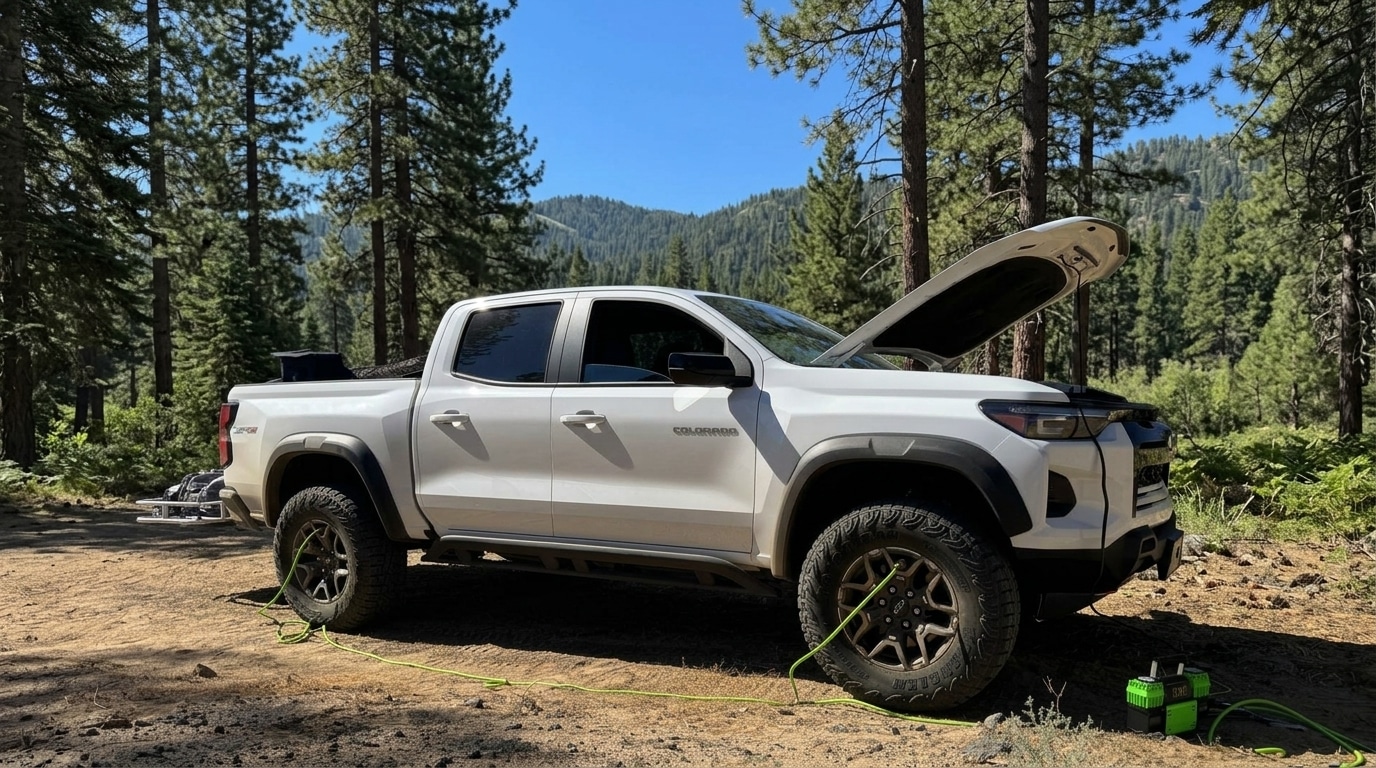
The portable vs onboard air compressor debate resolves quickly when you apply the stage framework. Portable wins at Stages 1 and 2 because it requires no installation, moves between vehicles, works on any build configuration, and costs significantly less than an onboard twin install ($325 vs. $650 to $950 for ARB onboard systems). Onboard wins at Stage 3 specifically for air locker activation, because lockers need an always-ready pressure source tied to ignition.
However, the ARB Twin onboard is a better choice in three scenarios: you run ARB Air Lockers, you power air tools regularly from a dedicated tank, or you make over 10 trail trips per month. In those cases, not retrieving a case each time outweighs the higher install cost. For most overlanders running 35 to 37-inch tires with weekly trail days and occasional group trips, the TenSix PSI Pro Gen 2 covers the complete tire inflation requirement. The cost is significantly less than an ARB Twin installation. Specifically, the complete MORRFlate system (compressor plus Quad hose kit) runs $540 to $580 depending on wheelbase, versus $650 to $950 installed for the ARB Twin.
Pros and Cons
Pros
- A stage-based design eliminates the cost of replacing gear. Each upgrade adds capability without discarding the previous investment.
- The TenSix PSI Pro Gen 2’s 10.6 CFM output makes it viable from Stage 2 through Stage 4 without replacement.
- Portability means one compressor services multiple vehicles, including trail buddies who lack their own unit.
- The PSI Pro auto-shutoff controller removes the need to monitor inflation; it stops at the target PSI within 1 PSI every run.
- Multi-tire hose kit expansion (adding the 2-tire extension) scales the system to 6-tire simultaneous inflation without purchasing a new compressor.
- An 80% duty cycle at 0 PSI supports 6 to 8 consecutive vehicle inflation sets before a cooldown is needed.
- Compared to the ARB Twin onboard at $650 to $950 installed, the TenSix plus Quad hose kit runs $540 to $580 with no installation cost.
Cons
- The TenSix is not suitable for Stage 3 air locker activation. A dedicated hard-mounted onboard compressor is still required for pneumatic lockers.
- At 20 lbs, the TenSix is heavier than entry-level single-output portables. Retrieval from storage adds roughly 60 seconds versus a hard-mounted switch.
- Running the TenSix on one tire at a time creates backpressure damage risk. The 4-tire hose kit is a required co-purchase for Stage 2 and beyond.
- The $325 compressor plus $215 to $255 hose kit is a higher initial Stage 2 entry cost than budget alternatives, though the no-replacement scaling model recoups it over the build.
Final Verdict

A scalable off-road air system doesn’t require buying the most expensive gear up front. It requires buying gear where each piece remains useful as the build evolves. For most wheelers building toward a serious overlanding rig, the MORRFlate TenSix PSI Pro Gen 2 paired with a 4-tire hose kit is the right Stage 2 foundation. Build the entire system around it. It handles Stage 2 tire inflation better than any portable in its price class, extends to Stage 4 group and trailer use without replacement, and costs significantly less than an ARB Twin onboard installation ($540-$580 vs. $650-$950 installed).
The one gap in a pure TenSix-based system is Stage 3 air locker activation. If ARB or similar pneumatic lockers are in your build plan, budget separately for a small dedicated onboard compressor for the locker circuit. An affordable low-output unit handles locker activation without burning the locker duty into your tire inflation compressor’s runtime. Two purpose-built components in parallel outperform one overloaded unit trying to do both jobs.
Stage 4 buyers adding a trailer or running group trips regularly will find the 2-tire extension hose kit is the most cost-effective Stage 4 upgrade available. For under $100, it extends an existing Stage 2 setup to 6-tire simultaneous inflation without requiring a new compressor. The scalable off-road air system principle is exactly this: spend on extensions, not replacements.
Builders who want a single-purchase answer starting at Stage 2 and scaling through Stage 4 should buy the TenSix PSI Pro Gen 2 and the Quad hose kit sized to their wheelbase. Builders at Stage 1 on a budget should buy a mid-range portable now and plan to add the TenSix when the tire size upgrade happens, rather than stepping through two full compressor purchases. Either path ends at the same Stage 2 foundation.
Ready to Build Stage 2?
Check Today’s Price on the TenSix PSI Pro Gen 2
Backed by a 3-year No Hassle warranty. Bundle with a Quad hose kit to complete the Stage 2 system in one order.
Frequently Asked Questions
What CFM do I need for 35-inch tires on a 4-tire inflation kit?
The MORRFlate TenSix PSI Pro Gen 2 at 10.6 CFM is well matched for 35-inch tires on a 4-tire hose kit. Each tire valve stem flows roughly 1.8 to 2.0 CFM at 20 PSI, so four tires simultaneously handle about 7 to 8 CFM of useful flow. The TenSix’s 10.6 CFM at 0 PSI and 6.5 CFM at 30 PSI puts you above the useful threshold at trail inflation pressures, which is why four 35-inch tires inflate from 10 to 40 PSI in under 5 minutes.
When should I upgrade from a portable to an onboard air compressor?
The upgrade trigger for onboard is almost always air lockers, not tire size. For tire inflation through Stage 4 group and trailer use, a high-quality portable like the TenSix handles the multi-tire inflation system task without the installation cost or vehicle-specific wiring of an onboard unit. If you add pneumatic lockers, a small dedicated onboard compressor for the locker circuit makes sense; keep the portable for tires.
Is the MORRFlate TenSix a scalable off-road air system on its own?
The TenSix is the core compressor of a scalable system, but it needs the 4-tire hose kit to operate correctly at Stage 2 and above. Running the TenSix on a single tire at a time creates backpressure reducing efficiency and shortens compressor life. With the Quad hose kit, the TenSix scales from Stage 2 single-vehicle use through Stage 4 multi-vehicle and trailer use. The 2-tire extension kit further expands the system to 6-tire simultaneous inflation without buying a new compressor.
What is duty cycle and why does it matter for off-road use?
Duty cycle is the percentage of time a compressor runs before it needs to cool down. A 50% duty cycle means 30 minutes of runtime per hour. An 80% duty cycle means 48 minutes per hour. For solo trail days on a single vehicle, even a 50% duty cycle is rarely a limiting factor. For group trips where you’re inflating 6 to 8 vehicles consecutively in desert heat, duty cycle determines whether you finish in one uninterrupted session or stop and wait. The TenSix’s 80% duty cycle at 0 PSI covers 6 to 8 vehicles before needing rest.
Does the MORRFlate TenSix work for air locker activation?
The TenSix is not designed for permanent air locker activation duty. It lacks the ignition-switched wiring circuit and always-ready pressure air lockers require for engagement on demand. For ARB Air Lockers and similar pneumatic systems, a dedicated hard-mounted onboard compressor handles the locker activation circuit. The TenSix remains the tire inflation component of the system, while the onboard unit handles locker pressure exclusively. Our article on air lockers explained covers the pressure and installation requirements in detail.
Heads up: Clicking on our affiliate links and exploring our sponsored content helps us at no extra cost to you, and we only recommend gear we’re absolutely crazy about!