


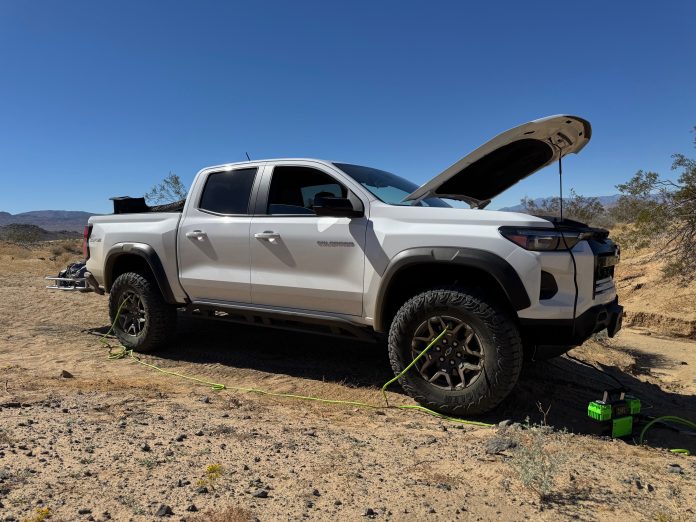

I’ve been running trails for years, and the single most consistent off-road tire pressure mistake I see from new wheelers isn’t a recovery skill gap or a rig problem. People who’ve spent thousands on lift kits and lockers show up at the trailhead running street pressure, then wonder why they’re spinning out on loose rock while their buddies float right over. The physics aren’t complicated: lower off-road tire pressure increases your tire’s contact patch, distributes weight more evenly, and lets the tire conform to terrain in a way a stiff, overinflated tire never will.
Over the years, I’ve dialed in my process using MORRFlate’s gear, specifically the TenSix PSI Pro Gen 2, which has been my exclusive compressor for several years now. Because I’ve stopped babysitting my tires, I have more mental bandwidth at the trailhead to watch for what new wheelers are doing wrong. These off-road tire pressure mistakes repeat themselves trip after trip. This article covers the five I see most often, why each one matters, and what the correct approach looks like in practice.
Quick Verdict: Off-road tire pressure management is one of the highest-impact skills a new wheeler develops. Most beginners either skip airing down entirely or guess at a number without a reliable process. After years running MORRFlate gear across California, Utah, Arizona, and Nevada, I see the same five off-road tire pressure mistakes repeated constantly. The fixes are simple, and the right equipment makes all of it faster and more precise.
Last updated: May 2026 | 8 min read
In This Article
- Key Facts at a Glance
- Mistake #1: Not Airing Down at All
- Mistake #2: Airing Down to the Wrong PSI for the Terrain
- Mistake #3: Guessing Instead of Measuring
- Mistake #4: Using the Wrong Compressor Setup to Air Back Up
- Mistake #5: Forgetting to Air Back Up Before Highway Driving
- Pros and Cons of a Proper Tire Pressure System
- Final Verdict
- Frequently Asked Questions
Key Facts at a Glance
| Terrain Type | Recommended PSI Range |
|---|---|
| Highway / Street (most vehicles) | 32–38 PSI |
| Hard-packed dirt / gravel roads | 25–30 PSI |
| Rocky trails / technical terrain | 18–22 PSI |
| Sand dunes / soft sand | 12–18 PSI |
| Mud (aggressive tread pattern) | 20–26 PSI |
| Minimum safe PSI (most 33–37 inch tires) | 12–15 PSI (avoid debeading risk below this) |
Mistake #1: Not Airing Down at All
The most common off-road tire pressure mistake is also the simplest to explain: new wheelers don’t air down because they don’t understand what it does. Running highway pressure on a technical trail, typically 35–38 PSI for most trucks, means your tire’s contact patch with the ground is roughly the size of your hand. A small, rigid contact patch skips across rocks, struggles to grip loose terrain, and transmits every impact directly through your suspension and into the cab. Traction suffers. Ride quality suffers. Your rig works harder for every foot of forward progress.
Specifically, a 35-inch tire aired down to 20 PSI increases its footprint by 30–40% compared to highway pressure, depending on vehicle load. A wider, flatter contact area grips rock edges, absorbs terrain variation, and reduces hammering on suspension components. The difference is immediately noticeable to anyone who has driven the same trail both ways. New wheelers skip this step because the deflation process feels inconvenient without the right tools. Once you have a quality set of deflators and a fast compressor waiting at the trailhead exit, the inconvenience disappears entirely, and airing down for off-road driving becomes automatic.
Mistake #2: Airing Down to the Wrong PSI for the Terrain

Airing down at all is progress. However, airing down to the wrong off-road tire pressure for the specific terrain still leaves performance on the table, and in some situations creates new risks. I’ve watched new wheelers drop to 25 PSI for a sand run, which does essentially nothing for flotation in soft sand where 12–15 PSI is the target for most 33–37 inch tires. Conversely, I’ve seen people go all the way to 12 PSI on hard rocky terrain, which creates debeading risk without providing meaningful traction benefits stopping at 18–20 PSI wouldn’t already deliver.
The right overlanding tire pressure depends on terrain type, tire size, vehicle weight, and load. A 6,000-pound truck on 35-inch tires running at 18 PSI on slickrock is in a fundamentally different situation than a lighter rig on 33s at the same pressure. As a starting framework, rocky trails generally call for 18–22 PSI, hard-packed dirt roads land around 25–30 PSI, and soft sand drops to 12–18 PSI depending on conditions. These are starting points. Trial and adjustment based on your specific rig is how you dial in the right numbers over time. Therefore, carrying a reliable gauge and a fast portable air compressor for off-road use isn’t optional; it’s the foundation of the whole process.
Recommended on 4WD Talk
MORRFlate TenSix PSI Pro Gen 2
The compressor I’ve run exclusively for years. Set your target PSI, press go, and walk away. All four tires done in under 8 minutes.
Mistake #3: Guessing Instead of Measuring

Guessing off-road tire pressure by kicking the sidewall is a joke until you realize how many people do it. A tire at 18 PSI and a tire at 28 PSI look surprisingly similar to the naked eye. Even experienced hands pressing on a sidewall struggle to differentiate 5 PSI increments reliably. The result is inconsistent pressure between tires, which affects handling, traction balance, and wear patterns in ways you won’t notice on a single outing but will absolutely feel over a season of trail running.
A quality digital gauge solves this entirely. More importantly, a compressor with a built-in digital controller eliminates the measurement problem at the air-up stage. The MORRFlate TenSix PSI Pro Gen 2’s controller lets me dial in an exact target, and the compressor auto-shuts at the target pressure within 1 PSI of the set value. I verified this against a standalone gauge repeatedly during my first season with the unit. Because all four tires inflate simultaneously from the same pressure source, they also end up at the same PSI. You simply cannot replicate level of consistency by guessing, and it matters more on technical terrain where even small pressure differentials change how your rig tracks through a line.
Mistake #4: Using the Wrong Compressor Setup to Air Back Up
New off-roaders often treat the need to air up tires after the trail as an afterthought. They’ll air down properly, run a great trail, and then spend 25–35 minutes at the exit airing up one tire at a time with a 2–3 CFM entry-level compressor. One of those entry-level compressors is also probably overheating by the third tire, which extends the wait further. I lived this reality for years before switching to a 4-tire simultaneous setup, and the time difference isn’t marginal. It’s a complete rethink of the process.
The physics behind why single-tire compressors underperform is worth understanding. A standard tire valve stem’s Schrader valve allows roughly 1.8–2.0 CFM of airflow at 20 PSI. A portable air compressor for off-road pushing 3–5 CFM into a single valve creates backpressure because the tire physically won’t accept air faster than the valve allows. Backpressure forces the compressor to work harder, generates more heat, and shortens the duty cycle. By connecting to four tires simultaneously, you distribute airflow across four valve stems, which means a 10.6 CFM compressor like the TenSix PSI Pro Gen 2 uses its full output productively instead of fighting backpressure. The result is faster inflation for every tire, less heat in the compressor, and a process you walk away from entirely. For more on evaluating compressor specs for your rig, our air compressor buying guide breaks down CFM, duty cycle, and what those numbers mean in the field.
Stop the One-Tire-at-a-Time Grind
Inflate All 4 Tires Simultaneously
The MORRFlate TenSix PSI Pro Gen 2 paired with a 4-tire hose kit inflates 35-inch tires from 10 to 40 PSI in under 5 minutes. No monitoring required.
Mistake #5: Forgetting to Air Back Up Before Highway Driving
This off-road tire pressure mistake is less about traction and more about safety. A tire running at 15–18 PSI on a highway generates excess heat from the flexing sidewall, wears unevenly, and handles with significantly reduced precision. At highway speed, underinflated tires also increase blowout risk because sidewall flex generates heat faster than the tire dissipates it. Trail pressure on a 35-inch tire at 65 mph is a real problem. I’ve seen it happen, and the result is expensive and dangerous.
The fix is procedural. Build the process to air up tires after the trail into your post-trail habit the same way you build airing down tires off-road into your pre-trail habit. Because the TenSix PSI Pro Gen 2 with a 4-tire hose kit does the work in under 8 minutes, there’s no excuse to skip it. I also run a TPMS system on my truck specifically to catch pressure anomalies on the highway, because even careful wheelers occasionally miss a tire or set the compressor to the wrong target. A quality portable air compressor for off-road and a reliable gauge aren’t convenience tools alone; they’re part of operating your rig safely between the trailhead and home. Understanding your full mechanical setup matters too, and articles like our guide to locking differentials pair well with overlanding tire pressure fundamentals when you’re building your off-road knowledge base.
Pros and Cons of a Proper Tire Pressure System
Pros
- A 30–40% larger footprint at 20 PSI versus 35 PSI dramatically improves traction on rock and loose terrain.
- Simultaneous 4-tire inflation with a 10.6 CFM compressor reduces air-up time from 20+ minutes to under 8 minutes.
- Auto-shutoff technology eliminates overinflation errors and the need to monitor the gauge manually.
- Correct off-road tire pressure management reduces sidewall stress and tire wear over a full season of trail running.
- An 80% duty cycle on the TenSix PSI Pro Gen 2 allows 6–8 vehicles per session before a cooldown is needed.
- Consistent PSI across all four tires, inflated simultaneously from the same source, improves handling balance on the trail exit.
Cons
- The TenSix PSI Pro Gen 2 carries a $325 price point, which is a significant investment for new wheelers on a tight budget.
- The 4-tire hose kit adds additional cost ranging from $215 to $255 depending on wheelbase, on top of the compressor.
- At 20 lbs, the TenSix is heavier than entry-level single-output compressors, though it replaces a process taking three times as long.
- Running the TenSix on a single tire at a time voids the efficiency advantage and risks compressor damage from backpressure; this unit is designed for multi-tire simultaneous use.
Final Verdict
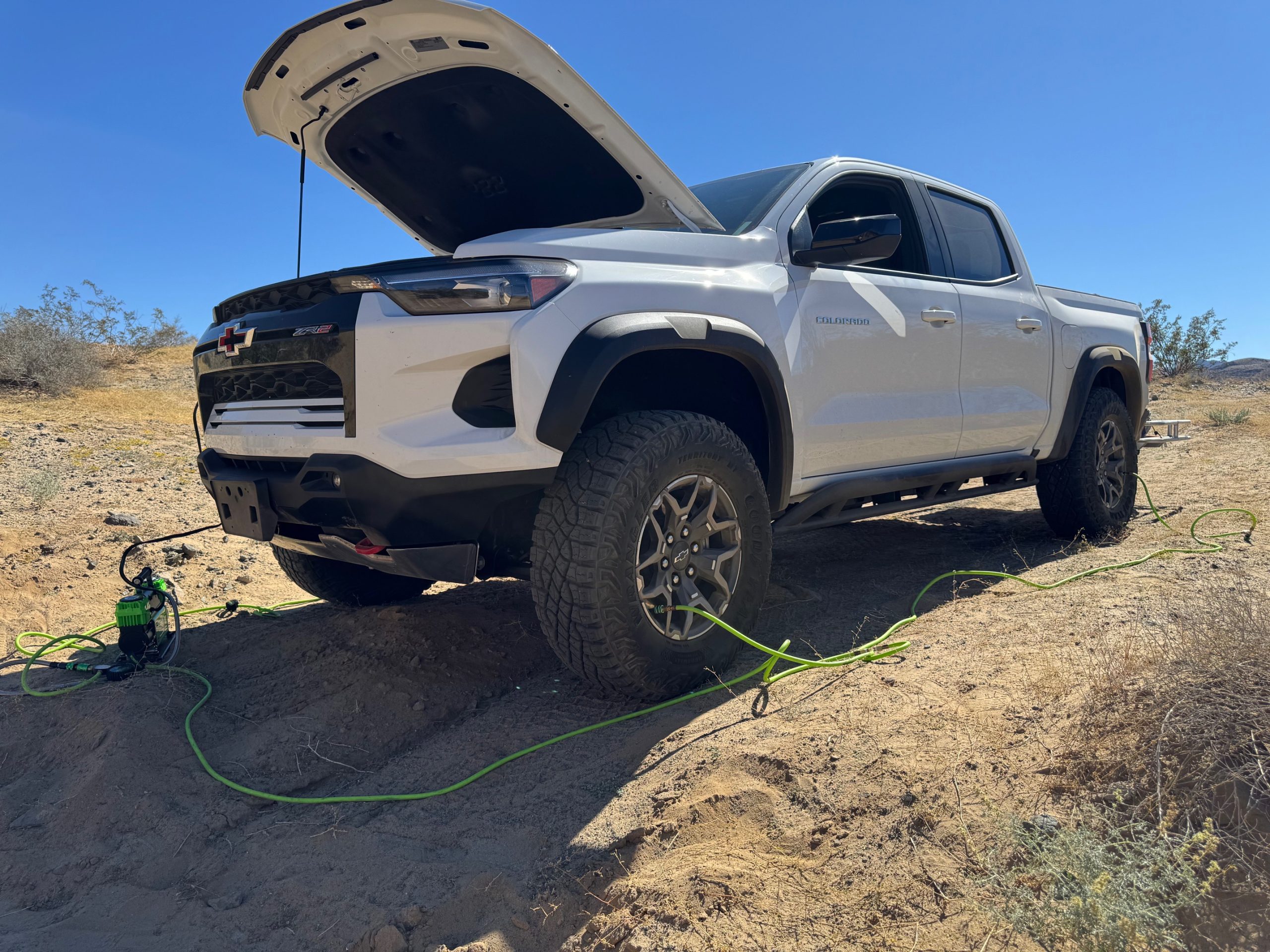
Off-road tire pressure mistakes cost new wheelers traction, tires, and time, often all three on the same outing. The errors I’ve outlined above aren’t obscure or advanced. They’re the same five tire pressure mistakes off-road that I see repeated at trailheads constantly, and every one of them is fixable with a solid understanding of the principles and the right gear in place. Getting your off-road tire pressure management dialed in is one of the highest-return investments you’ll make as a new wheeler.
The equipment side of the equation matters more than most beginners realize. A fast, accurate compressor removes every excuse for skipping the air-up process. After several years running the MORRFlate TenSix PSI Pro Gen 2 as my exclusive portable air compressor for off-road use, I’ve stopped thinking about the air-up as a chore. It’s a 7-minute process I don’t have to watch. The unit’s PSI Pro auto-shutoff, 10.6 CFM output, and 80% duty cycle make it the right tool whether you’re running solo or helping out a group at the trailhead. New wheelers who invest in this system early skip the frustrating trial-and-error phase most of us went through.
If you’re ready to stop guessing at off-road tire pressure and start running a process guaranteed to be fast, accurate, and genuinely hands-free, the MORRFlate TenSix PSI Pro Gen 2 is the compressor I’d point you toward. Pair it with a MORRFlate 4-tire hose kit sized for your wheelbase, and you’ll have a setup worth every dollar years from now.
Frequently Asked Questions
What PSI should I use for airing down tires off-road?
The right off-road tire pressure depends on terrain and tire size. Rocky technical trails generally call for 18–22 PSI on 33–37 inch tires, hard-packed dirt roads land around 25–30 PSI, and soft sand requires 12–18 PSI for adequate flotation. Vehicle weight and load also factor in, so treat these as starting points and adjust based on your specific rig’s performance on each surface type.
Is it safe to drive on the highway with trail tire pressure?
No. Trail pressures in the 12–22 PSI range generate excessive sidewall flex and heat at highway speeds, which significantly increases blowout risk and causes accelerated, uneven tire wear. Always air back up to your vehicle’s recommended highway pressure before leaving the trailhead. A portable air compressor for off-road use at the exit point makes this non-negotiable rather than optional.
Why does the MORRFlate TenSix need a 4-tire hose kit?
The TenSix PSI Pro Gen 2 pushes 10.6 CFM, but a single tire valve stem accepts only about 1.8–2.0 CFM at 20 PSI. Inflating one tire at a time creates backpressure forcing the compressor to work against its own output. By connecting to four tires simultaneously, you distribute airflow across four valve stems, use the compressor’s full output productively, reduce heat buildup, and cut inflation times from 20+ minutes down to under 8 minutes for a full set.
How low is too low for overlanding tire pressure?
Most 33–37 inch tires on standard (non-beadlock) wheels should stay above 12–15 PSI to avoid debeading risk, where the tire separates from the rim. Running below 12 PSI without beadlock wheels is dangerous for most setups. Additionally, extremely low off-road tire pressure on hard rocky terrain doesn’t provide meaningful traction gains over 18–20 PSI but does increase sidewall puncture vulnerability significantly.
What’s the difference between Auto Mode and Manual Mode on the TenSix PSI Pro?
Auto Mode allows pressure settings from 10 to 120 PSI, with the compressor auto-shutting off when the target is reached across all connected tires. Manual Mode extends the range to 150 PSI for applications beyond standard off-road tires, such as trailer tires or onboard tank charging. For typical trail use on 33–37 inch tires, Auto Mode handles the full off-road tire pressure range you’d ever need.
Just so you know, some of the cool stuff we mention comes with affiliate links, meaning we earn a commission if you buy (no extra charge to you!). Plus, we occasionally feature sponsored content, but rest assured, we only shout out products we genuinely stand behind.