


Quick Facts:
- Topic: Powering a 12V diesel air heater off-grid
- Startup draw: roughly 7 to 18 amps, depending on the unit
- Running draw: 1.25 to 2.45 amps on OEM units
- Typical power station 12V port: 10 amps maximum
- Common failure: the port shuts off during the glow-plug cycle
- Fixes: high-output DC port, dual battery, or a standalone LiFePO4 pack
- Battery size: 100 Ah recommended for 8 kW units
- Wire gauge: 14 AWG minimum, 12 AWG beyond six feet
- Best for: Overlanders and truck campers heating through winter
8 min read
In This Guide
- Diesel Heater Power Consumption: The Real Numbers
- Startup Versus Running: Two Different Numbers
- Why Your 12V Port Shuts Off
- Why Forum Advice Contradicts Itself
- Three Ways to Power a Diesel Heater
- Sizing Battery and Fuel for Overnight Runtime
- Wiring, Fuses, and Voltage Drop
- Diesel Heater Power Consumption FAQ
Diesel Heater Power Consumption: The Real Numbers
Diesel heater power consumption confuses people because two numbers exist and most listings publish only one. A 12V diesel air heater sips current once it settles into a burn. During ignition, though, the glow plug pulls several times more, and the spike lasts long enough to trip protection on a portable power station.
The result is a familiar driveway discovery. You test the new heater at home on a power station, the display flashes an error, and the unit never lights. However, nothing is broken. Instead, the port simply hit its ceiling.
Below are manufacturer figures and measured install data rather than forum estimates. Webasto rates the Air Top 2000 STC at 1.25 to 2.45 amps while running, which works out to roughly 14 to 29 watts. Install guide FarOutRide measures startup on the same unit below 90 watts, lasting under two minutes. Meanwhile, VEVOR publishes a 12V power draw of 8 to 10 amps for its 5 kW class and 10 to 12 amps for its 8 kW class.
Espar sits between the two. The S3 D2L is rated at 90 watts or less on startup at 12V, behind a 20-amp fuse. Retailers go further, telling buyers to supply up to 18 amps, because the glow element is pulsed and its instantaneous peak sits above the rated average. Consequently, the honest planning number is a range, not a single figure.
Diesel Heater Power Consumption by Model
| Heater | Startup or Peak Draw | Running Draw |
|---|---|---|
| Webasto Air Top 2000 STC | Under 90 W, under 2 min (15 A fuse) | 1.25 to 2.45 A (14 to 29 W) |
| Espar S3 D2L | 90 W or less at 12V, up to 18 A advised (20 A fuse) | 12 to 27 W average |
| Budget 5 kW unit | 8 to 10 A published 12V draw | 1 to 7 A (VEVOR) |
| Budget 8 kW unit | 10 to 12 A published 12V draw | 1 to 7 A (VEVOR) |
Read the table as two separate problems. Diesel heater amp draw at ignition decides whether the unit lights at all. Running draw decides how long your battery lasts. Most buyers plan for the second number, then get caught by the first.
| Top Pick | Best High-Output Alternative | Best Standalone Battery | Best for Sub-Freezing Camps | |
|---|---|---|---|---|
| Product | TOP PICK Bluetti AC200L Bluetti AC200L | 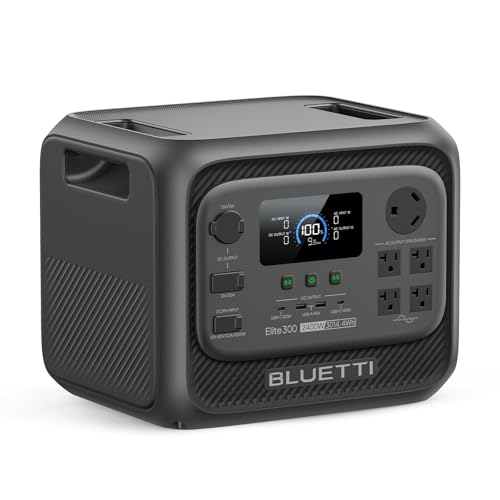 Bluetti Elite 300 Bluetti Elite 300 |  LiTime 100Ah Group 31 LiTime 100Ah Group 31 |  LiTime 100Ah Self-Heating LiTime 100Ah Self-Heating |
| DC Output | 30A RV port | 30A DC port | 100A continuous (BMS) | 100A continuous (BMS) |
| Capacity | 2048Wh | 3014Wh | 1280Wh | 1280Wh |
| Price | $1,098.99 as of Sep 26, 10:34 pm | $302.39 as of Sep 26, 10:34 pm | $368.99 as of Sep 26, 10:34 pm | |
| Check Price → | Check Price → | Check Price → | Check Price → |
Startup Versus Running: Two Different Numbers
The glow plug is the whole story. It is a resistive heating element, so it converts current straight into heat with no way to soften the load. Until the fuel ignites and the flame sensor confirms combustion, the plug stays energized.
Two things follow. First, the spike is short, typically one to two minutes. Second, the spike is unavoidable, because every start cycle repeats it. Therefore, a heater cycling on and off overnight repeats the surge each time, which matters more than the average figure suggests.
Running draw is trivial by comparison. An OEM unit settles near 2 amps, roughly the same as a pair of LED work lights. For instance, a full night of running costs less charge than a phone left plugged in.
Thermostat behavior changes the math again. A unit set to hold a temperature in mild weather short-cycles, so it starts repeatedly. In hard cold, it runs continuously and draws less overall. Counterintuitively, mild nights punish your battery harder than freezing ones.
Why Your 12V Port Shuts Off

Every mid-size power station in this comparison caps its cigarette-style 12V port at 10 amps. Jackery rates the Explorer 1000 v2 and the 1000 Plus at 12V and 10 amps. EcoFlow lists the DELTA 2 at 12.6V and 10 amps, or 126 watts. Bluetti’s AC180 and Anker’s SOLIX C1000 both stop at 12V, 10 amps, and 120 watts.
These ports use latching electronic limits rather than fuses, so the output cuts and stays off until you reset it. Compare those ceilings against the startup column above. A budget 8 kW heater asking for 10 to 12 amps meets a hard 10-amp limit, so the port cuts out mid-cycle. A 5 kW unit at 8 to 10 amps sits right at the ceiling, which is why some readers succeed and others fail on the same station.
Notably, one exception exists. Bluetti’s AC200L carries an RV port rated 12V and 30 amps, alongside the usual 10-amp car socket. As a result, it is the only station-native solution in this comparison. The port was designed for RV loads rather than phone chargers.
Shopping for a power station for diesel heater duty means reading the DC output spec first. Capacity misleads people here. Specifically, a 2,000 Wh station with a 10-amp port still fails, while a smaller unit with a 30-amp output succeeds.
| Power Station | 12V Car Port | Higher-Output DC |
|---|---|---|
| Jackery Explorer 1000 v2 | 12V, 10 A | None |
| EcoFlow DELTA 2 | 12.6V, 10 A (126 W) | DC5521, 12.6V, 3 A |
| Bluetti AC180 | 12V, 10 A (120 W) | None |
| Bluetti AC200L | 12V, 10 A (120 W) | RV port, 12V, 30 A |
| Anker SOLIX C1000 | 12V, 10 A (120 W) | DC5521, 100 W max |
Why Forum Advice Contradicts Itself
Search this question and you get flatly opposed answers. Diesel heater amp draw at startup separates the two camps completely. One thread insists any power station runs a diesel heater fine. Another insists you need a dedicated battery. Both are reporting honestly, because they are describing different hardware.
OEM manufacturers publish conservative startup figures, 90 watts or less for both Webasto and Espar, which is roughly 7.5 amps at 12V. Budget units from VEVOR and similar brands publish 8 to 12 amps instead. Naturally, a Webasto owner and a 5 kW budget owner reach opposite conclusions from the same question.
Fuse ratings tell you what the manufacturer expects at worst. Webasto specifies a 15-amp fuse on the Air Top 2000, and Espar specifies 20 amps on the S3 D2L. Neither figure is the running draw. Instead, each reflects headroom for the ignition surge.
Our comparison of cheap versus expensive diesel heaters covers the same split in plain terms, and our VEVOR diesel heater writeup covers how one budget unit behaves against its published spec.
Three Ways to Power a Diesel Heater

Option one is the high-output DC port. If your station has a 30-amp RV output like the one on the AC200L, wire the heater there instead of the cigarette socket. This is the cheapest fix, since it costs a correctly rated adapter cable. Check fitment against your exact model first, because Bluetti’s 30-amp RV cable lists AC200MAX and AC200P compatibility rather than the AC200L.
Next, consider a dual-battery setup in the vehicle. An auxiliary battery with a DC-DC charger handles the surge without complaint and recharges while you drive. Because the alternator does the work, this suits anyone already building out a rig. Our guide to dual battery setup priorities covers where it sits in a build order.
Option three is a standalone LiFePO4 battery dedicated to the heater. A 100 Ah pack with a 100-amp BMS shrugs off the ignition surge and runs the heater for several nights. Moreover, it keeps heating separate from your fridge and lights, so a dead heater battery never costs you cold food.
Choosing between them comes down to your build stage. Weekend campers with an existing station should test the DC port first. Full-time travelers benefit more from the dual battery, while tent and rooftop campers with no vehicle wiring get the most from a standalone pack. Sizing all of this alongside solar is covered in our piece on sizing your solar and battery.
Whatever route you pick, the diesel heater power supply needs headroom above the surge figure. Size for 20 amps behind an Espar, matching its own fuse rating, and for 15 amps behind a budget 5 kW unit. Extra headroom costs little, while an undersized supply costs you a cold night.
Sizing Battery and Fuel for Overnight Runtime
Start from running draw, then add the starts. A heater pulling 2 amps for ten hours uses 20 amp-hours. Each ignition cycle adds a surge lasting one to two minutes, which contributes little in amp-hours but demands high instantaneous current.
VEVOR recommends a 100 Ah battery for its 8 kW unit, and the recommendation holds up. A 100 Ah LiFePO4 pack at 80 percent usable depth gives you 80 amp-hours, or roughly four nights of continuous running before a recharge. Lead-acid halves the figure, since deep discharge damages the plates.
The Standalone Battery and DC-DC Charger Route
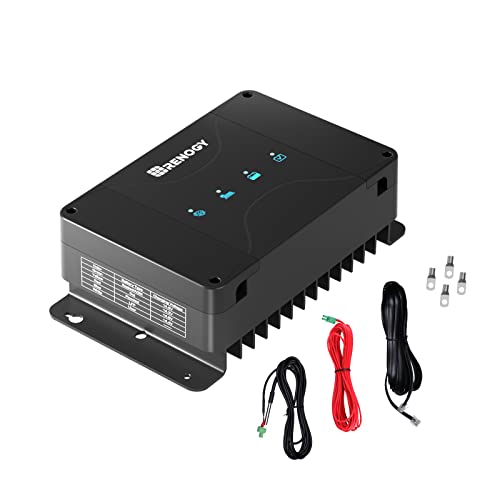


Fuel matters alongside amps. A budget 5 kW unit burns 0.15 to 0.42 liters per hour. At those rates, a 10-liter tank covers a long weekend on low settings. Plan both resources together rather than sizing the battery alone.
Cold weather cuts capacity further. LiFePO4 cells refuse to charge below freezing without a heated BMS, which is exactly the condition you bought the heater for. Therefore, look for a self-heating pack if you camp below 32 degrees Fahrenheit regularly.
Wiring, Fuses, and Voltage Drop
Notably, fuse ratings give you the target to wire against: 15 amps on a Webasto Air Top 2000, and 20 amps on an Espar S3 D2L. Moreover, undersized wire causes failures people blame on the heater. VEVOR specifies 14 AWG as a minimum for its units. At 18 amps over a long run, 14 AWG drops enough voltage to starve the glow plug, so the unit attempts ignition and fails.
Voltage range is narrow. Webasto lists an operating window of 10 to 15 volts on the Air Top 2000. Dipping under 10 volts during the surge triggers a shutdown. Consequently, a diesel heater power supply on thin cable behaves exactly like an undersized battery.
Three habits prevent most voltage-drop failures. First, run 12 AWG or heavier for anything over six feet. Second, fuse at the battery, not at the heater. Finally, use ring terminals on a proper busbar instead of alligator clips, since clip resistance rises as they corrode.
Carbon monoxide risk deserves its own reading before you install anything in a sleeping space. Our guide to diesel heater carbon monoxide risk covers exhaust routing and detector placement, which matter more than any wiring choice here. Espar publishes full electrical specifications in the S3 D2L technical manual for anyone verifying figures.
Diesel Heater Power Consumption FAQ
How many watts does a diesel heater use?
An OEM 2 kW unit uses 14 to 29 watts while running. Startup differs sharply, peaking below 90 watts on a Webasto Air Top 2000 STC. Budget units publish a 12V draw of 8 to 12 amps instead.
Will a Jackery run a diesel heater?
Not through the car port on most models. The Explorer 1000 v2 and 1000 Plus both cap the output at 10 amps. Startup demand on a typical 8 kW budget heater sits above it.
How long will a 100Ah battery run a diesel heater?
Roughly four nights of continuous running. A heater drawing 2 amps uses about 20 amp-hours over ten hours, and a 100 Ah LiFePO4 pack gives you around 80 usable amp-hours.
What is the best battery for a diesel heater?
Go with a 100 Ah LiFePO4 pack and a 100-amp BMS, which absorbs the ignition surge and runs several nights. Choose a self-heating model if you camp below freezing, since standard cells refuse to charge in the cold.
What should I look for in a power station for diesel heater use?
Check the DC output rating rather than the capacity. A power station for diesel heater duty needs a port rated above the ignition surge, so look for a 30-amp RV output like the one on the Bluetti AC200L.
Do diesel heaters need electricity to run?
Yes. The glow plug, fuel pump, and combustion fan all run on 12V. Therefore, the heater draws current the entire time it operates, not only at startup.