


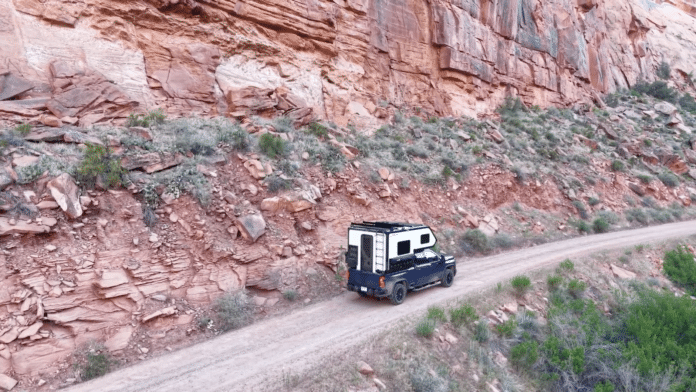

I’ve spent more than thirty years camping and overlanding across the U.S., and I’ve watched off-grid power overlanding change more in the last ten years than in the previous twenty combined. My first setups relied on a single lead-acid battery and a generator I dreaded starting at 6 a.m. next to a sleeping camp. Today, I run lithium banks and solar arrays quietly carrying a fridge, lights, and a laptop through a week of dispersed camping without a single drop of gas.
This piece is for overlanders who remember the old routine of babying a battery and rationing power. It is also for newer campers who only know the lithium era and want context for why today’s gear costs what it does. I have tested and lived with both generations of equipment, so the comparisons here come from actual trips, not spec sheets alone. Whether you drive a rooftop tent rig or a hard-side truck camper, the shift in off-grid power overlanding touches every build on the trail today.
Quick Facts:
- Topic: Off-grid power overlanding, from lead-acid to lithium and solar
- Old standard: Single lead-acid battery, a generator, and a hope it lasts
- Current standard: Lithium battery banks, MPPT solar, and DC-DC alternator charging
- Typical bank size today: 200Ah to 460Ah lithium, often heated for winter use
- Solar gains: Panels moved from 100W roof add-ons to 300W or more as standard equipment
- Monitoring: Phone apps and touchscreens replaced guessing at a voltage gauge
- Best for: Overlanders planning multi-day boondocking without a campground hookup
8 min read
In This Guide
- Then vs. Now: Key Power Numbers
- Lead-Acid to Lithium: Why the Switch Mattered
- Solar Charging Grew Up
- DC-DC Charging Ended the Alternator Guessing Game
- Monitoring and Smart Systems
- A Decade Ago vs. Today: What Changed for Real Trips
- Pros and Cons of Modern Off-Grid Power
- Final Verdict
- Frequently Asked Questions
Then vs. Now: Key Power Numbers
| Component | A Decade Ago | Today |
|---|---|---|
| Battery type | Single flooded lead-acid, 100Ah | Lithium iron phosphate, 200Ah to 460Ah, often heated |
| Usable capacity | Roughly 50 percent before damage risk | 80 to 100 percent depth of discharge |
| Solar | Optional 60W to 100W panel, PWM controller | Standard 200W to 320W, MPPT controller |
| Alternator charging | Basic isolator, slow and voltage-limited | DC-DC charger, 30 to 60 amps, lithium-tuned |
| Monitoring | Analog voltage gauge, guesswork | App or touchscreen, real-time state of charge |
| Cold weather use | Batteries often failed below freezing | Heated lithium packs charge in freezing temps |
Buy Direct From Iron Peak
See the Apex 8.0’s Modern Power System
The Apex 8.0 ships with a Victron inverter, heated lithium battery, and rooftop solar as standard equipment, not an upgrade.
Lead-Acid to Lithium: Why the Switch Mattered
Lead-acid batteries defined off-grid power overlanding for decades, and they came with real limits. You were limited to drawing down about half the rated capacity before risking permanent damage, so a 100Ah battery behaved more like a 50Ah battery in practice. Cold weather made this worse, since lead-acid chemistry loses capacity fast below freezing and fails outright if it takes a deep charge while cold.
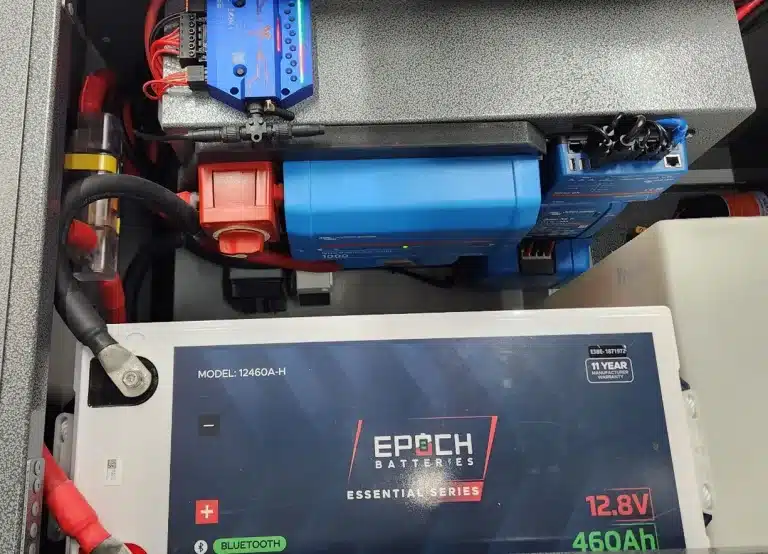
Lithium iron phosphate changed the math. A lithium battery of the same rated size lets you use 80 to 100 percent of its capacity without damage. As a result, a 100Ah lithium bank replaces roughly two lead-acid batteries in usable power. Consequently, builders now spec banks from 200Ah up to 460Ah as a single unit, and heated versions charge safely even in freezing camps. This is precisely the upgrade Iron Peak Campers built into the Apex Series. We covered it in our first look at the Iron Peak Apex truck camper, where a heated 460Ah Epoch lithium pack ships standard rather than as a costly add-on.
Weight dropped too. Lithium packs run lighter than lead-acid batteries of comparable usable capacity, which matters directly for payload on a truck camper or trailer. For overlanders counting every pound before a long trip, this weight savings often means room for more water or gear instead of battery mass.
Solar Charging Grew Up
Ten years ago, solar on an overland rig usually meant a single 60W to 100W panel wired through a basic PWM charge controller. This setup trickled power into a battery slowly and lost efficiency whenever the panel was not aimed directly at the sun. Cloudy days or a shaded campsite often left you short by evening.
Today, 200W to 320W of rooftop solar is common as standard equipment, and MPPT controllers extract more usable power from the same panel area. As a result, a modern rig fully recharges a large lithium bank in a single sunny day, even with imperfect panel angle. Many builds also ship pre-wired for a second panel, so boondockers expand capacity without rewiring the whole system.
DC-DC Charging Ended the Alternator Guessing Game
Charging a battery bank from your truck’s alternator used to rely on a simple isolator splitting power between the starting battery and the house battery. This method charged slowly and failed to safely feed lithium chemistry, since lithium needs a specific charge profile a basic isolator cannot deliver.
DC-DC chargers solved this. These units regulate voltage and current specifically for lithium, typically delivering 30 to 60 amps while driving. Therefore a few hours on the highway add meaningful charge before you even reach camp. Combined with solar and shore power, most modern setups now draw from three charging sources instead of one. Consequently, a single cloudy stretch or short drive day rarely leaves you short on power.
Save on Your Configuration
Spec Solar, Storage, and Heat to Your Climate
Add a second battery, a second solar panel, or a diesel heater to the Apex 8.0 and price the exact build you want.
Monitoring and Smart Systems
Ten years ago, checking your power meant glancing at an analog voltage gauge and estimating how much run time remained. This method left plenty of room for error, and running a bank too low often happened before anyone noticed.
Smart monitoring changed this habit entirely. Systems built around a central monitor now report exact state of charge, solar input, and load draw in real time. Often this comes through a phone app or a dedicated touchscreen in the cabin. Notably, this shift turned power management from guesswork into a glance at a screen, which matters most on trips where the nearest outlet is days away.
A Decade Ago vs. Today: What Changed for Real Trips
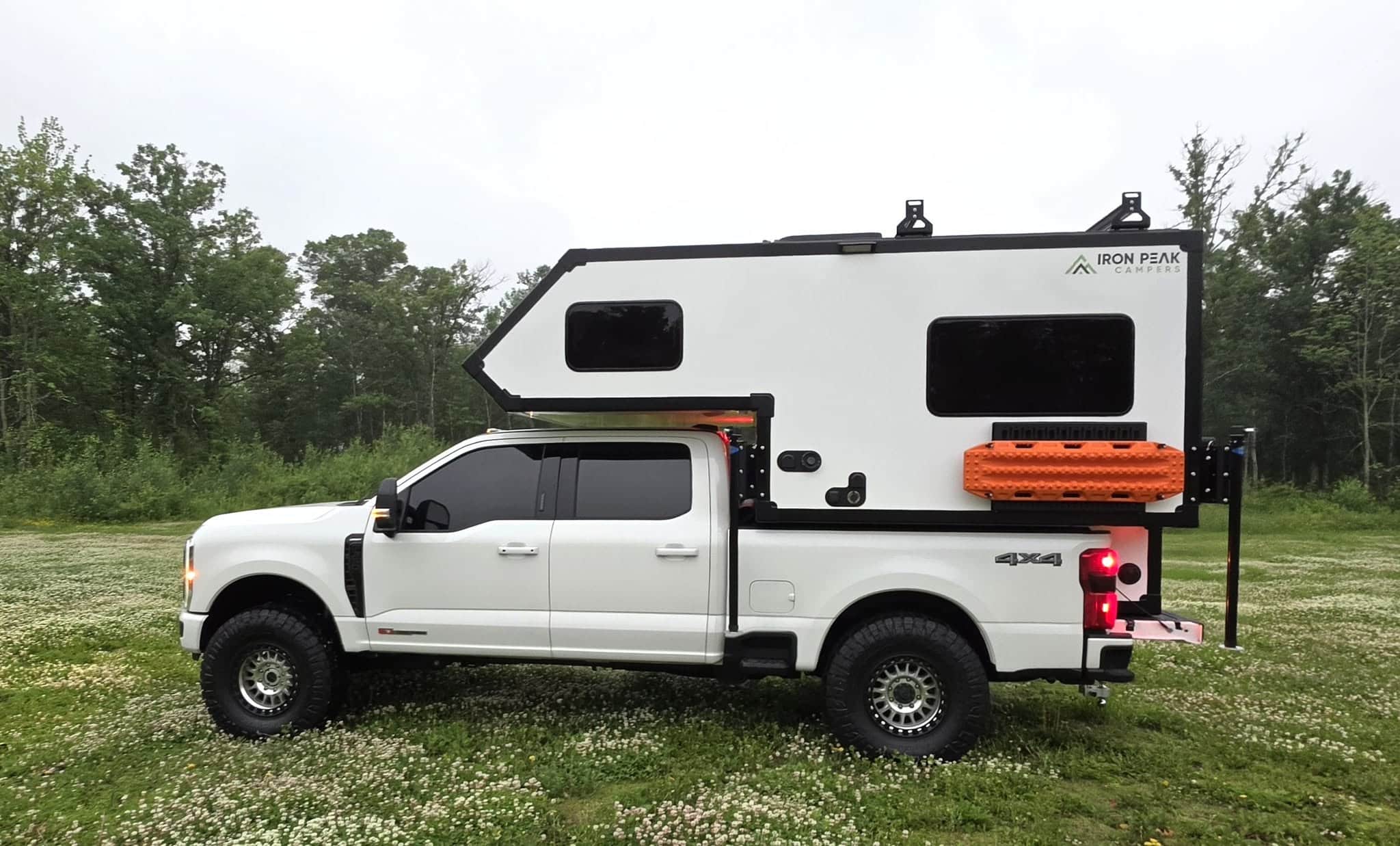
The practical difference shows up most on multi-day boondocking trips. A decade ago, a three-day dry camp meant running a fridge conservatively, skipping the coffee maker, and planning a generator run for the second night. Today, a well-built lithium and solar system carries a 12-volt fridge, lighting, a fan, and device charging through a week without a generator in most seasons.
Cold weather trips show the gap even more clearly. Older lead-acid setups often failed outright in freezing temperatures, forcing campers to store batteries indoors or skip winter trips entirely. Heated lithium packs remove this constraint, so four-season overlanding now depends more on insulation and heat than on whether the battery will survive the night.
Pros and Cons of Modern Off-Grid Power
Pros
- Lithium delivers 80 to 100 percent usable capacity versus roughly 50 percent for lead-acid
- MPPT solar controllers pull more power from the same panel size
- DC-DC chargers add 30 to 60 amps of safe lithium charging while driving
- Heated battery packs survive and charge in freezing conditions
- Real-time monitoring replaces guesswork with exact state of charge
- Three-source charging (solar, shore, alternator) reduces the risk of running out of power
- Lower weight per usable amp-hour frees up truck or trailer payload
Cons
- Lithium and MPPT components cost more upfront than older lead-acid setups
- Full smart systems add complexity some campers find harder to troubleshoot
- Heated lithium packs still draw some power to run the heating element in extreme cold
- Retrofitting an older rig with a full modern system is a significant expense
Final Verdict

Off-grid power overlanding has moved from a source of constant worry to a system most campers barely think about once it is set up correctly. Lithium batteries, MPPT solar, and DC-DC charging together solved the three biggest failure points of the old lead-acid era: limited usable capacity, slow charging, and cold-weather failure.
The trade-off is cost. A full modern power system costs more than a basic lead-acid setup, and campers on a tight budget still get by with older gear for short weekend trips. However, anyone planning regular multi-day boondocking or four-season camping gains real capability from the upgrade, beyond simple convenience.
Value comes through clearly when you compare total capability rather than sticker price alone. A single lithium and solar system now replaces what used to require a generator, careful rationing, and indoor battery storage every winter. This is a meaningful shift in what a self-contained camp now handles.
Some overlanders want this power standard already built in, not bolted on later. For them, it pays to look closely at how a builder specs its electrical system from the factory. Some rigs still treat lithium and solar as costly options, while others, like the Apex Series from Iron Peak, include the full stack standard.
Ready to Buy?
Check Today’s Price on the Apex 8.0
Every Apex ships hand-built in the USA with a lifetime plus 2-year warranty and a full Victron power system standard.
Frequently Asked Questions
Why did overlanders switch from lead-acid to lithium batteries?
Lithium batteries allow 80 to 100 percent usable capacity, while lead-acid batteries safely allow only about 50 percent. Lithium also weighs less per usable amp-hour and charges safely in a wider range of conditions, which matters for long off-grid power overlanding trips.
How much solar do I need for overlanding?
Most modern rigs now carry 200W to 320W of rooftop solar paired with an MPPT controller. This size typically recharges a 200Ah to 400Ah lithium bank in a single sunny day, though cloudy conditions or heavy fridge use often require a second panel.
What is a DC-DC charger, and do I need one?
A DC-DC charger regulates power from your truck’s alternator specifically for lithium batteries, usually delivering 30 to 60 amps while driving. If you run a lithium battery bank, a DC-DC charger is necessary since a basic isolator cannot safely charge lithium chemistry.
Do lithium batteries handle cold weather camping?
Standard lithium batteries struggle to charge below freezing, but heated lithium packs solve this by warming the cells before accepting a charge. This heated design is now standard on four-season builds like the Iron Peak Apex Series.
Is it worth upgrading an older overland rig to lithium and solar?
For campers who boondock regularly or camp through winter, the upgrade pays off in usable capacity and reliability. For occasional weekend campers with light power needs, an older lead-acid setup often remains adequate for now.
A quick heads-up: If you snag something through our affiliate links or check out our sponsored content, we might earn a commission at no extra cost to you. But fear not, we’re all about recommending stuff we’re truly stoked about!