


Quick Facts:
- Trip: Cape Lookout beach camping on North Core Banks and South Core Banks, North Carolina.
- Access: Vehicle ferry only, from Davis (South Core Banks) or Atlantic (North Core Banks).
- Permit: One ORV permit and decal per vehicle, bought on Recreation.gov.
- 2026 permit cost: $35 in the preseason window, then $75 from mid-March.
- Vehicle season: Mid-March through December 31, with no vehicles earlier in the year.
- Tire pressure: 18 to 20 PSI per Recreation.gov, with park pages ranging from 15 to 25 PSI.
- Stay limit: 14 consecutive days, on the oceanside beach.
- Best for: 4×4 trucks and SUVs, rooftop tents, and truck campers.
9 min read
In This Guide
- Cape Lookout Beach Camping by 4×4: What to Know First
- Permit Rules and Required Gear
- Cape Lookout Ferry Options From Davis and Atlantic
- North Core Banks vs. South Core Banks
- Tire Pressure and Driving on Soft Sand
- Setting Up Cape Lookout Beach Camping
- Tides, Recovery, and Storms
- Supplies, Bugs, and Seasons
- Final Thoughts
- FAQ
Cape Lookout Beach Camping by 4×4: What to Know First
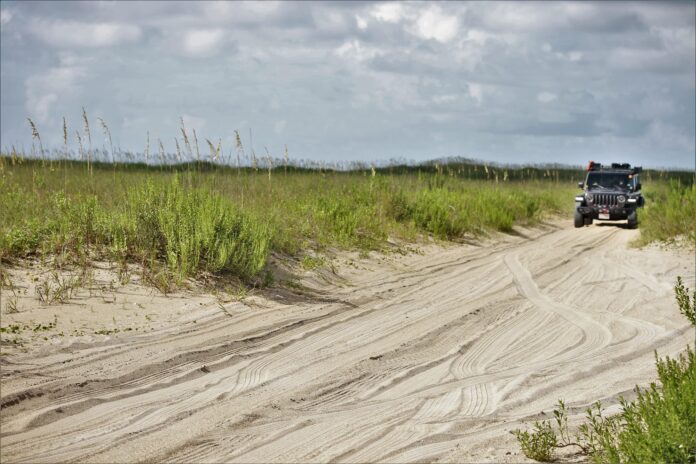
Cape Lookout beach camping puts your truck or SUV on a 55-mile chain of barrier islands off North Carolina. Two islands, North Core Banks and South Core Banks, allow vehicles. A ferry is the only way to reach them. This guide covers Cape Lookout National Seashore in North Carolina, not the Cape Lookout State Park on the Oregon coast.
For Cape Lookout beach camping, you park on the open oceanside beach and build a driftwood fire below the high tide line. You sleep in an International Dark Sky Park. However, the park runs no campgrounds, no stores, and no trash service. Therefore you carry in your food, bring plenty of water, and haul out all trash.
Four jobs come before departure: buy the ORV permit, reserve the ferry, plan your tire pressure, and pack recovery gear. Most groups need no camping permit, so the ferry and the ORV permit are your main bookings. Prices and rules come from the National Park Service, Recreation.gov, and both ferry operators as of late October 2026. Confirm them before you pay.
Permit Rules and Required Gear
Every vehicle on either island of Cape Lookout National Seashore needs its own permit. The Cape Lookout ORV permit comes only from Recreation.gov. For the 2026 season the price was $35 during the preseason window and $75 afterward. Check Recreation.gov for next season’s rates. Also, permits are non-refundable and non-transferable, and each one ties to the vehicle you registered.
Before you buy, watch the park’s 3 minute, 49 second driving video on the NPS permit page. Next, print the permit at home, since phone printing sometimes produces a blank page. Rangers issue the decal on the island, not by mail. Finally, your vehicle must be registered, licensed, and insured. Every driver must be 16 or older with a valid license.
Driving rules are short. The speed limit is 25 mph, dropping to 15 mph within 100 feet of anyone on the beach. Also, accessory light bars stay off at night, and drones, fireworks, and metal detectors are banned. Park in a single row, no more than one vehicle deep, and leave room for two-way traffic to pass. Never drive between a parked vehicle and the ocean, because fishing lines hang there.
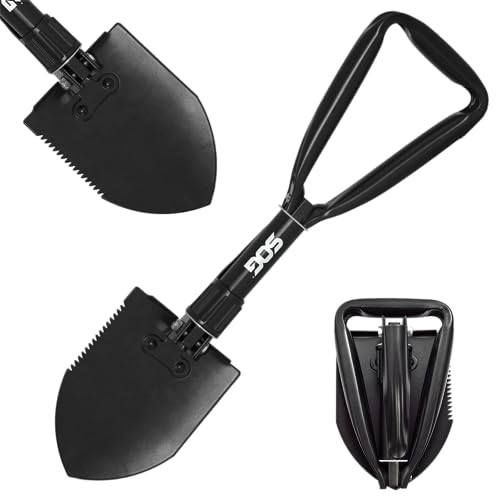
Recreation.gov recommends three items: a low-pressure tire gauge, a shovel, and a jack with a support board. In addition, the park’s driving tips add an air pump, boards for traction, a tow rope at least 14 feet long, extra water, and a fire extinguisher. For those three items, the JACO Elite Low Pressure Tire Gauge reads up to 30 PSI, enough for sand. Meanwhile, the SOG Entrenching Tool folds for storage, and the Hi-Lift Jack Off-Road Base keeps a jack from sinking.
Park-listed gear for soft sand

SOG Entrenching Tool- 18.25 Inch Folding Survival Shovel with Wood …

Cape Lookout Ferry Options From Davis and Atlantic
First, the park authorizes two vehicle ferries. The Davis ferry crosses 3.5 miles to Great Island Cabin Camp, the landing for South Core Banks camping, in about 45 minutes. In contrast, the Morris Marina ferry leaves Atlantic for Long Point on North Core Banks, a 3.75-mile trip of roughly one hour. You book a Cape Lookout ferry directly with the operator. The Davis office asks for your total length, including racks, campers, and trailers. Measure your rig with the tent closed and gear loaded.
Notably, both operators post the same round-trip vehicle tiers. The Davis ferry also lists $25 for each adult who rides along with a vehicle. Prices rise with total length, and widths over 8 feet or heavy loads change the price too. Both sites link to rate-increase notices filed with the North Carolina Utilities Commission, so expect these numbers to move.
| Vehicle length | Round trip |
|---|---|
| Up to 19 feet | $155 |
| Up to 22 feet | $175 |
| Up to 26 feet | $225 |
| Up to 30 feet | $250 |
The Davis ferry asks you to arrive one hour before your reservation, both outbound and on the return. Schedules change on holidays and from October through December. The office closes on Thanksgiving Day and from December 24 until the first Monday after New Year’s Day.
North Core Banks vs. South Core Banks
North Core Banks offers 22 miles of primitive beach for vehicles and tents. The island has seasonal restrooms and showers in the former Long Point cabin area, and a vehicle dump station sits in the same area. However, the park currently lists no drinking water there. Therefore bring every drop of water from the mainland.
The south island adds 24 miles of beach and more services. South Core Banks camping includes seasonal drinking water at the lighthouse restrooms and at a spigot on the back road. Also, dump stations serve Great Island and the point of the cape. However, the park shuts the water off during the coldest part of winter.
Two closures change your route. Specifically, vehicles are barred from the ocean beach in front of the Cape Lookout Light Station, so you detour onto the back road. Likewise, the sand flats on North Core Banks are closed to vehicles except on the posted trail to Portsmouth Village. For first trips, the south island is easier because the Davis ferry lands at Great Island, where rangers issue the decal.
Tire Pressure and Driving on Soft Sand
Park sources disagree on the exact number. Recreation.gov recommends 18 to 20 PSI. Meanwhile, the NPS driving page says 20 PSI or lower. Its permit FAQ says 15 to 20 PSI, and its tips page says 20 to 25 PSI. As a result, start near 20 PSI on all four tires and go lower in softer sand.
Air down at the landing, before the first soft stretch. Our airing down PSI by terrain chart explains how weight and tire size shift your target. Because low pressure hurts braking and handling on pavement, reinflate before you drive on it. Each cabin office has an air compressor for re-inflating tires.
Two-wheel drive and all-wheel drive vehicles stick easily in the soft sand, so the park strongly recommends four-wheel drive. For technique, read our sand driving techniques guide. Hold a steady pace, avoid hard steering, and stop before the wheels dig in.
Know where you are allowed to drive. First, use the open oceanside beach seaward of the dunes, plus the back road behind the dunes. Next, driving on or over the dunes is prohibited, as is driving on the soundside beach. Because closures protect bird and turtle nests, signs mark every detour. For a full closure, detour onto the back road; for a partial closure, stay behind the closure along the dunes.
Setting Up Cape Lookout Beach Camping
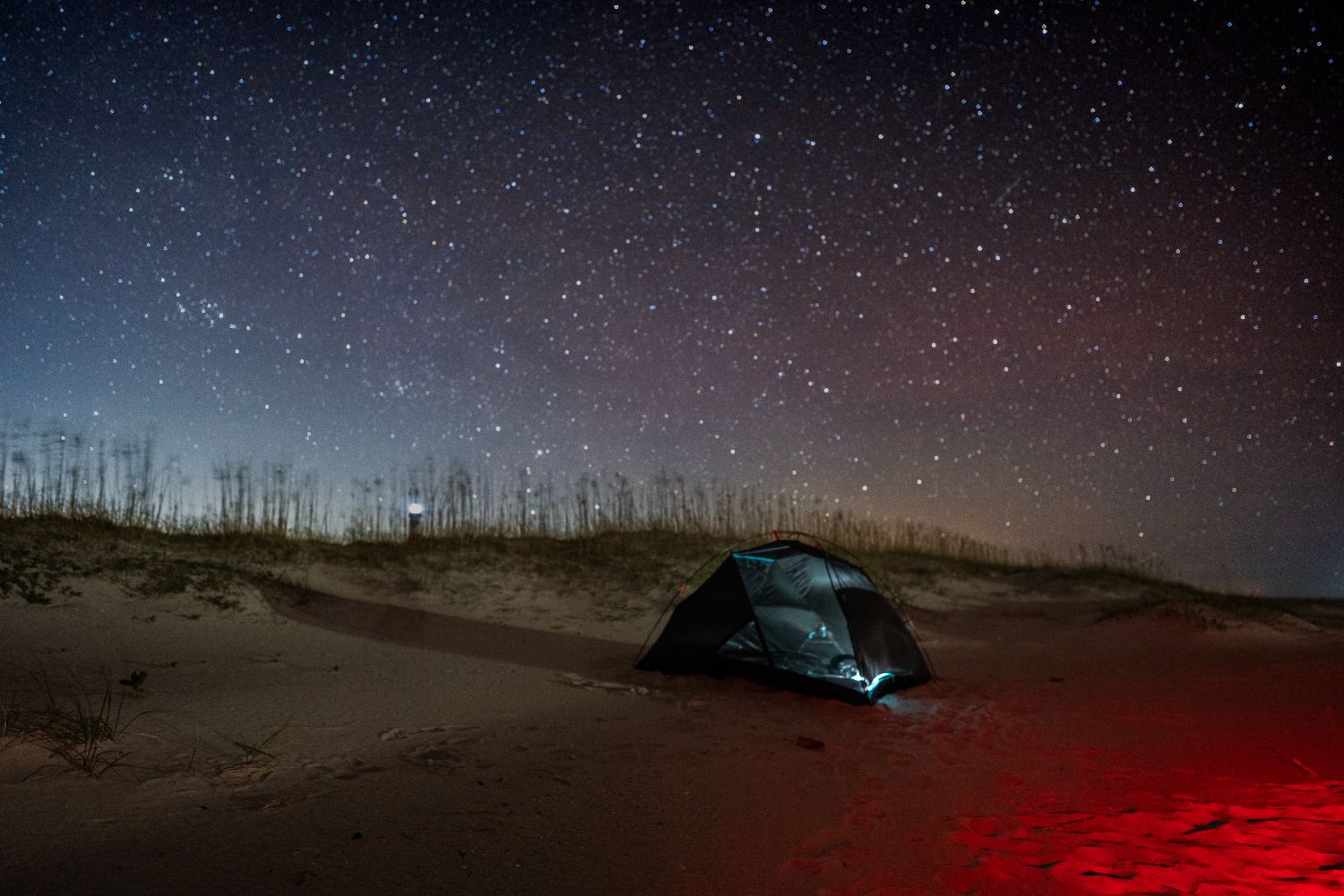
Most groups need no permit for Cape Lookout beach camping. Groups of 25 or more need a special use permit. Vehicles, trailers, pop-ups, rooftop tents, and truck campers must stay on the oceanside beach seaward of the primary dunes. However, camping on the back road is prohibited unless a sign marks a designated spot.
Camping is closed in wildlife protection zones, long-term parking lots, and any spot within 100 feet of a dock, shade shelter, or restroom. Stay at least 100 yards from the lighthouse and from any cabin or house. Also, the stay limit is 14 consecutive days, and the park has no RV hookups.
Plan your setup around wind. The park recommends tent stakes about one foot long. Our beach camping tips cover setup for any coastline.
Fire rules are strict. Build open fires below the high tide line in damp sand, no wider than 3 feet, with no bonfires. Then extinguish them fully with water. Firewood is not sold on the islands, so bring your own. The park allows only loose dead wood within 200 feet of the shore. However, a contained stove or fire pit is allowed between the tide line and the dunes.
Finally, take all trash home. Pack a sealed bin for the truck bed.
Tides, Recovery, and Storms
Plan each drive around the tide table, and use the back road when a closure blocks the beach. Also, rangers are not allowed to pull or tow vehicles. Commercial towing is limited.
Safety note: Never park below the high tide line. The park shows a vehicle left below the line. It sank into the sand when the tide came in. If your truck sticks near the water, dig and lay boards right away.
Carry a complete kit and learn how to use it before you arrive. Our guide to what to do stuck in sand walks through the dig-out steps. The traction board buyer’s guide explains how to choose boards.
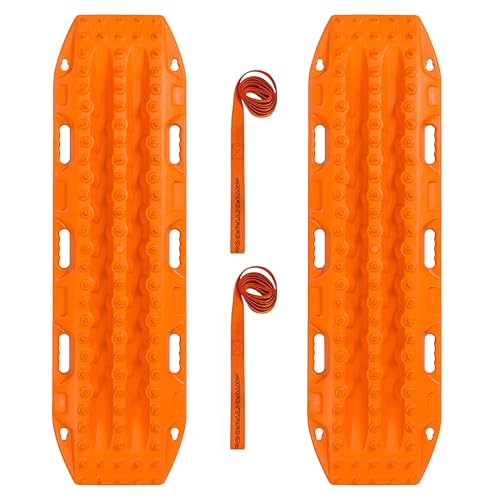
Three upgrades finish the kit. The MAXTRAX MKII Recovery Boards give tires a ramp out of soft sand. Next, the Rhino USA 3 in x 30 ft Recovery Tow Strap exceeds the park’s 14-foot, 20,000-pound rope guidance. Finally, the VIAIR 400P Portable Air Compressor runs off a 12V battery and handles tires up to 35 inches. Expect rest breaks, because its duty cycle is 33 percent at 100 PSI.
Recovery and air-up gear


Supplies, Bugs, and Seasons
Plan Cape Lookout beach camping around full self-sufficiency, with food, plenty of water, and firewood for the whole stay.
Biting insects arrive from late spring through October. Specifically, the park lists mosquitoes, greenhead flies, deerflies, gnats, and ants, along with chiggers and ticks. Bring repellent and a tent with fine netting, especially in summer. See our guide to keeping bugs out of camp.
Weather changes fast on a barrier island. Check the forecast and the tide table before every drive, and follow ferry updates as storms approach. Vehicles are allowed from mid-March through the end of the year. Because summer temperatures usually run from 80 to 100 degrees with high humidity, pack shade and extra water.
Final Thoughts
Cape Lookout beach camping rewards the work you put in before you board the ferry. The permit, the reservation, and a sensible tire plan take an evening. Afterward, you wake up on an empty beach with your rig parked beside the surf.
Ferry costs add up for a long rig. Vehicles without four-wheel drive stick in the sand, and rangers will not tow you out. Because the park calls RVs and camping trailers generally unsuitable, a truck camper or rooftop tent suits it best.
If your rig is not ready, take the passenger ferry from Harkers Island or Beaufort to the lighthouse first. Then return with a permit, boards, and plenty of water. Pack out everything you bring, and the next camper finds the beach clean. Salt and sand ride home with you, so rinse the underbody soon after the return ferry.
FAQ
Is camping allowed at Cape Lookout National Seashore?
Yes. Cape Lookout beach camping is allowed with vehicles or tents on North Core Banks and South Core Banks. Shackleford Banks allows tent camping only. However, the park has no campgrounds, and the stay limit is 14 consecutive days.
Do you need a permit for Cape Lookout beach camping?
Camping itself needs no permit for most groups. Groups of 25 or more need a special use permit. However, any vehicle on the islands needs an ORV permit and decal.
How much is the Cape Lookout ORV permit?
For the 2026 season, Recreation.gov listed $35 in the preseason window and $75 afterward. Rates for later seasons appear on the same page. The permit is non-refundable and non-transferable.
How much does the vehicle ferry to Cape Lookout cost?
Round-trip rates start at $155 for vehicles up to 19 feet and rise with total length. The Davis ferry adds $25 for each adult riding with a vehicle. Check with the Davis or Atlantic operator for current prices.
What tire pressure works on Cape Lookout beaches?
Recreation.gov recommends 18 to 20 PSI, and park pages range from 15 to 25 PSI. Start near 20 PSI, then lower it in softer sand. Reinflate before you drive on pavement.
Do you need 4WD at Cape Lookout?
Yes. The park strongly recommends four-wheel drive for Cape Lookout beach camping. Two-wheel drive and all-wheel drive vehicles stick easily in the soft sand.