




I’ve camped for more than three decades and overlanded for about half of them. Bugs have ruined more evenings around camp than bad weather ever has. Mosquitoes swarming at dusk, ticks picked up from tall grass, and a tent full of moths after one careless minute with the door open are all mistakes I made early on. I stopped making them once I understood why they happened.
This guide covers what works to keep bugs out of a campsite and a tent, based on real trips across the American West. It skips the gadgets sounding good but doing little. Instead, it focuses on site choice, tent design, and a few habits making the biggest difference. Here is what I would tell a friend before their next trip into bug season.
Quick Facts:
- Topic: Keeping bugs out of a campsite and tent
- Skill level: Beginner
- Time required: 10 to 20 minutes of prep per trip
- Tools needed: Mesh tent, repellent, campsite chosen away from standing water
- Difficulty: Easy
- Cost: $10 to $50 for repellent and basic bug gear
- Best for: Any camper dealing with mosquitoes, ticks, or general bug pressure
8 min read
In This Guide
- Keeping Bugs Out: Overview
- Bug Control Essentials at a Glance
- Choosing a Campsite With Fewer Bugs
- Tent Features Built to Keep Bugs Out
- Daily Habits for Cutting Down on Bites
- Managing Ticks and Crawling Insects
- Repellent vs. Physical Barriers: What Works Best
- Pros and Cons of a Mesh-Heavy Tent Design
- Final Verdict
- Frequently Asked Questions
Keeping Bugs Out: Overview

Bugs at camp come down to two problems: attraction and access. Standing water, food smells, and warm bodies attract mosquitoes and other insects toward your site. Gaps in a tent, from an unzipped door to a torn mesh panel, give them access once they arrive. Solving both problems together works far better than tackling only one.
Most campers reach for spray repellent first, and it helps. However, site selection and tent design do more of the heavy lifting over a multi-day trip. A campsite pitched near standing water fights an uphill battle no matter how much repellent you apply. Meanwhile, a tent with solid mesh coverage and a sealed floor keeps bugs out passively, all night, without any extra effort.
Picture a July evening in Wyoming: mosquitoes rising off nearby wetlands right at dusk, right as you’re cooking dinner. A camper who picked a dry, breezy site and set up a tent with full mesh coverage barely notices. A camper who pitched next to the water spends the whole evening swatting. The difference comes down to a few decisions made earlier in the day.
Bug Control Essentials at a Glance
| Strategy | What It Does |
|---|---|
| Site selection | Avoid standing water and tall grass to reduce mosquito and tick exposure |
| Mesh tent walls | Blocks insects while allowing airflow, no chemicals needed |
| Sealed groundsheet | Stops crawling insects from entering along the floor edge |
| DEET or picaridin repellent | Reduces bites on exposed skin during outdoor time |
| Tick checks | Nightly inspection catches ticks before they attach long-term |
| Quick door discipline | Zip entrances immediately to prevent bugs following you inside |
Buy Direct From Stout Tent
The 5M Pro’s Double-Wall Mesh Keeps Bugs Out Without Sealing You In
Full mesh sidewalls under the canvas let you roll up for airflow while keeping mosquitoes and ticks outside where they belong.
Choosing a Campsite With Fewer Bugs
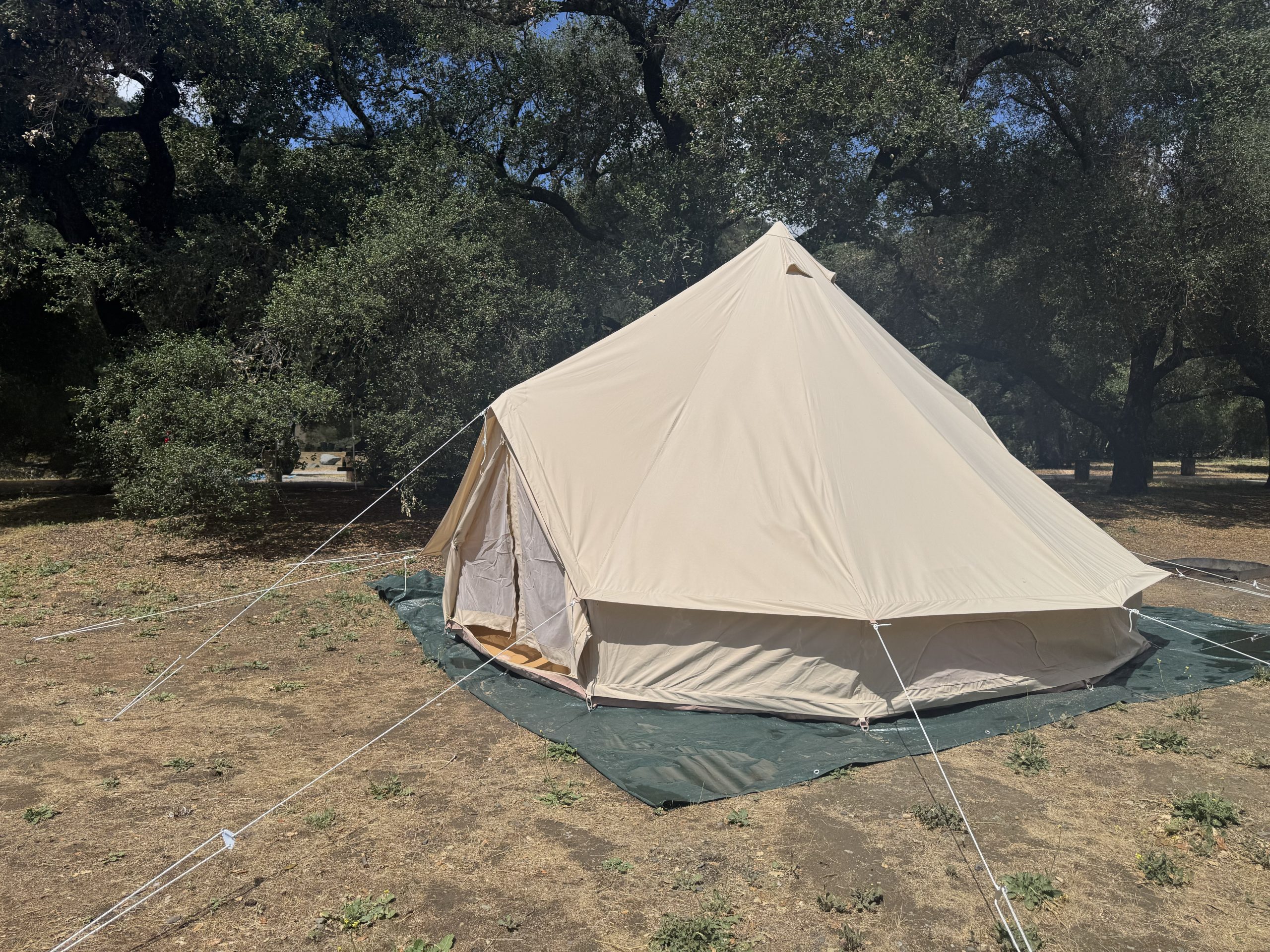
Standing water tops the list of things to avoid. Ponds, slow-moving streams, and puddles left over from rain all serve as mosquito breeding grounds. Camp at least 200 feet away from any of these when a site offers the choice. Our guide to choosing the ideal campsite covers water and drainage considerations in more depth.
Breeze matters almost as much as water. Mosquitoes are weak fliers. A site with steady airflow, such as a slight rise or an open clearing, keeps them from settling in as easily as a still, sheltered pocket does. Tall grass and dense brush also hold ticks and other crawling insects. A cleared or mowed site reduces exposure before you even set up. Our campsite layout guide covers additional zoning tips for keeping your kitchen and sleeping areas away from bug-heavy spots.
Time of day shapes your risk too. Mosquitoes peak at dawn and dusk, so plan cooking and cleanup around those windows when possible. If a site forces you closer to water than you would like, lean harder on tent mesh and repellent to make up the difference.
Tent Features Built to Keep Bugs Out
Mesh coverage matters more than any spray or device. A tent with full mesh panels on doors and windows blocks mosquitoes, gnats, and flying insects passively, all night. Our beginner’s guide to setting up camp touches on mesh basics for first-time campers still shopping for a tent.
A double-wall design offers the best of both worlds. You roll up the outer canvas or nylon wall for airflow on warm nights. The inner mesh layer stays sealed, keeping bugs out even with the outer wall open. This setup works better than a single-wall tent, which forces a choice between airflow and bug protection rather than both at once.
Floor design deserves equal attention. A sealed, tub-style groundsheet with no gaps at the edges stops crawling insects. Ticks and ants both work their way in along a floor seam otherwise. Check zippers regularly too, since a torn zipper track creates a gap bugs find within minutes of a tent being pitched.
Daily Habits for Cutting Down on Bites
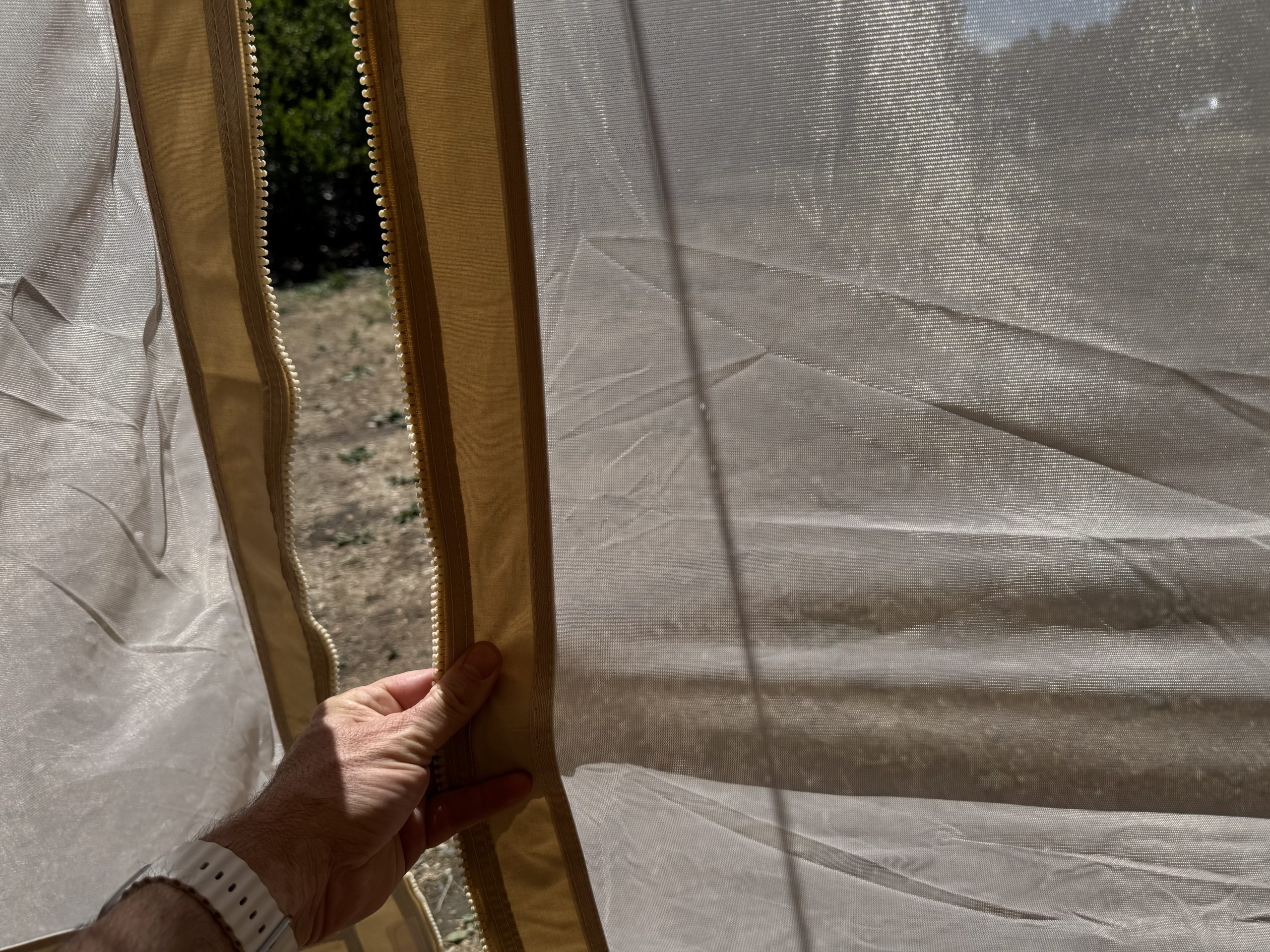
Zip the tent door immediately after entering or exiting. This single habit prevents more bites than almost any other step, since bugs follow light and body heat straight through an open flap. Keep a small battery lantern near the door so you are not fumbling with a zipper in the dark.
Store food sealed and away from the sleeping area. Crumbs and food smells draw ants, wasps, and other insects toward camp. Once they associate your site with food, they keep coming back. A dedicated cooking zone, set apart from the tent, helps keep this traffic away from where you sleep.
Apply repellent before dusk rather than after the bugs show up. A DEET or picaridin-based repellent applied 20 to 30 minutes before mosquito activity picks up works far better than reactive spraying. Waiting until you are already getting bitten costs you precious minutes.
Managing Ticks and Crawling Insects
Ticks require a different approach than flying insects, since they climb rather than fly. Treat clothing and gear with permethrin before a trip into tick-heavy regions. Tuck pants into socks too when walking through tall grass or brush. Light-colored clothing makes ticks easier to spot before they attach.
Check yourself, kids, and pets each evening, focusing on the scalp, behind the ears, and the waistband, since ticks favor warm, hidden spots. Early removal within a few hours dramatically lowers the risk of disease transmission. A nightly check matters as much as any repellent you apply.
Save on Bug-Free Camping
Need Room for the Whole Crew? Try the 5M Pro Double Door
A second mesh-backed entrance means less time with a door open, and less chance for bugs to slip in behind you.
Repellent vs. Physical Barriers: What Works Best
Spray repellent works well for exposed skin during active hours, hiking, cooking, or sitting around a fire. It wears off with sweat and time, though. It also does nothing to stop bugs from entering a tent once you are inside for the night.
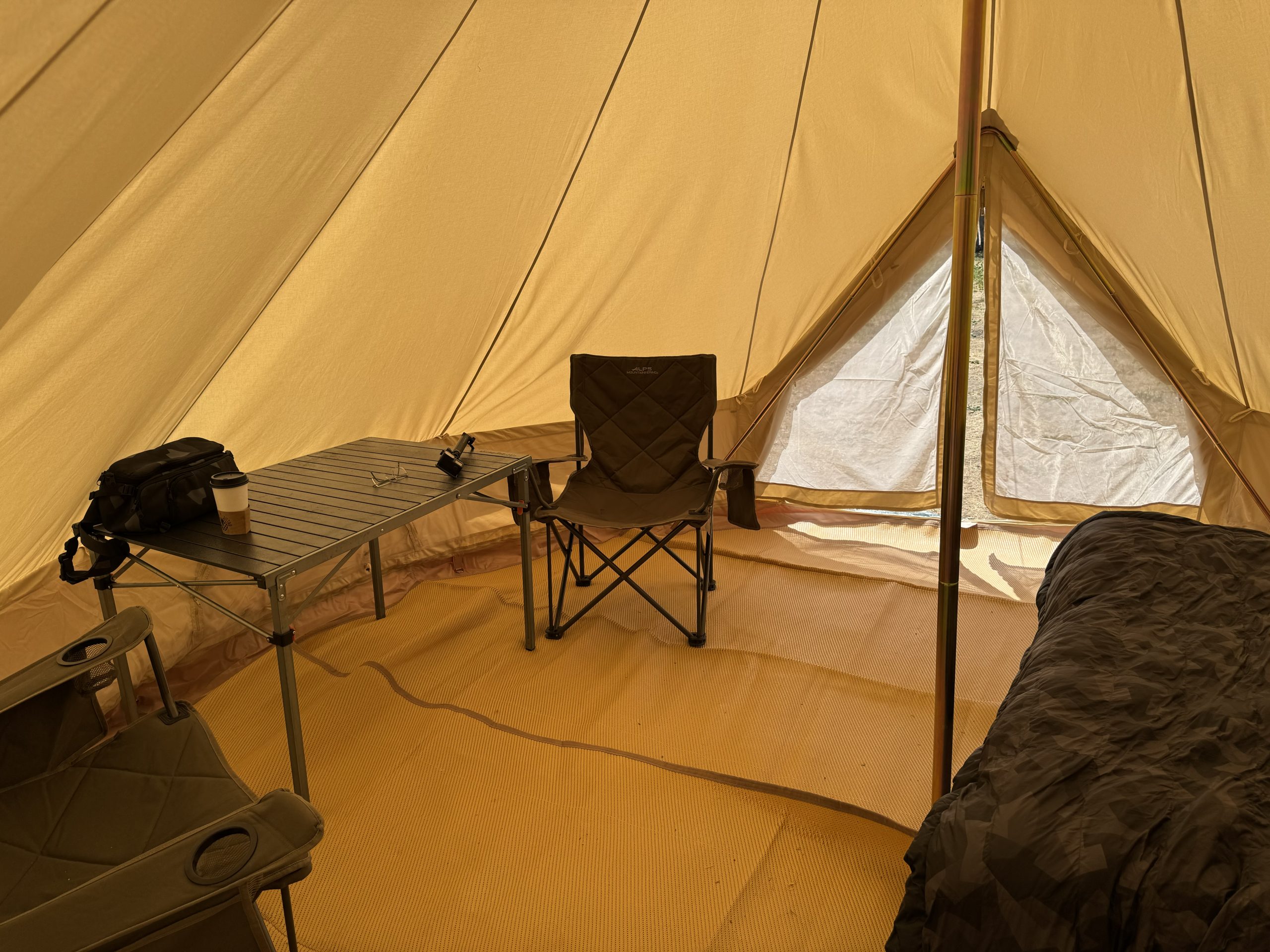
Physical barriers, mainly mesh tent walls and sealed floors, protect passively for as long as you are inside. They need no reapplication and carry no chemical exposure. The trade-off is upfront cost, since a well-built mesh tent costs more than a bottle of spray.
The strongest approach combines both. Use repellent during the day while you are active and exposed. Rely on a mesh-sealed tent overnight instead, for protection without smell or reapplication. Neither approach alone covers every hour of a camping trip as well as the two working together.
Pros and Cons of a Mesh-Heavy Tent Design
Pros
- Blocks insects passively, all night, without chemicals
- Keeps airflow open on warm nights via double-wall design
- No reapplication needed, unlike sprays
- Sealed floors stop crawling insects at the edges
- Reduces reliance on scented repellents around camp
Cons
- Costs more upfront than basic repellent alone
- Mesh tears over time and needs periodic inspection
- Does not protect skin during outdoor activity away from the tent
- Still requires door discipline to stay fully effective
Final Verdict

Keeping bugs out of your campsite and tent comes down to three layers: site choice, tent design, and daily habits. Skip standing water and dense brush when picking a spot. Choose a tent with full mesh coverage and a sealed floor, since passive protection beats reactive spraying every time. Then zip doors quickly and store food away from the sleeping area to close the remaining gaps.
The trade-off with a mesh-heavy tent, such as the Stout Tent 5M Pro, is upfront cost. A basic dome tent and a bottle of spray cost less at the register. However, this cost pays off across every bug season afterward, not only one trip, since the mesh and sealed floor keep working without any ongoing effort.
For most campers, I recommend starting with site selection, since it costs nothing and prevents the worst bug pressure before it starts. Add a mesh-forward tent and a few daily habits on top, and bugs stop ruining evenings at camp.
Ready to Buy?
Check Today’s Price on the 5M Pro Bell Tent
Stout Tent backs the 5M Pro with a lifetime warranty and free shipping across the contiguous US.
Frequently Asked Questions
How far should I camp from standing water to avoid mosquitoes?
Aim for at least 200 feet from ponds, slow streams, or puddles when a site gives you the choice. Standing water serves as a mosquito breeding ground, so distance reduces exposure significantly.
Does a campfire keep bugs away?
Smoke does discourage some flying insects near the fire itself. The effect stays limited to the immediate area, though, and fades once you move away. It works better as a supplement to a mesh tent than as a standalone solution.
What is the best repellent for camping?
DEET and picaridin-based repellents both perform well against mosquitoes and ticks. Apply either 20 to 30 minutes before bugs become active, generally at dawn and dusk.
How often should I check for ticks while camping?
Check yourself, kids, and pets every evening, paying close attention to the scalp, behind the ears, and the waistband. Early removal within a few hours lowers the risk of tick-borne illness significantly.
Are single-wall or double-wall tents better for keeping bugs out?
Double-wall tents perform better, since the mesh inner layer stays sealed even when you roll up the outer wall for airflow. Single-wall tents force a trade-off between ventilation and bug protection.
Why do bugs keep getting into my tent even with the door zipped?
Check for torn mesh panels, gaps at the floor seam, or a damaged zipper track. Any of these creates an entry point bugs find quickly, even with the main door fully closed.
Just so you know, some of the cool stuff we mention comes with affiliate links, meaning we earn a commission if you buy (no extra charge to you!). Plus, we occasionally feature sponsored content, but rest assured, we only shout out products we genuinely stand behind.