


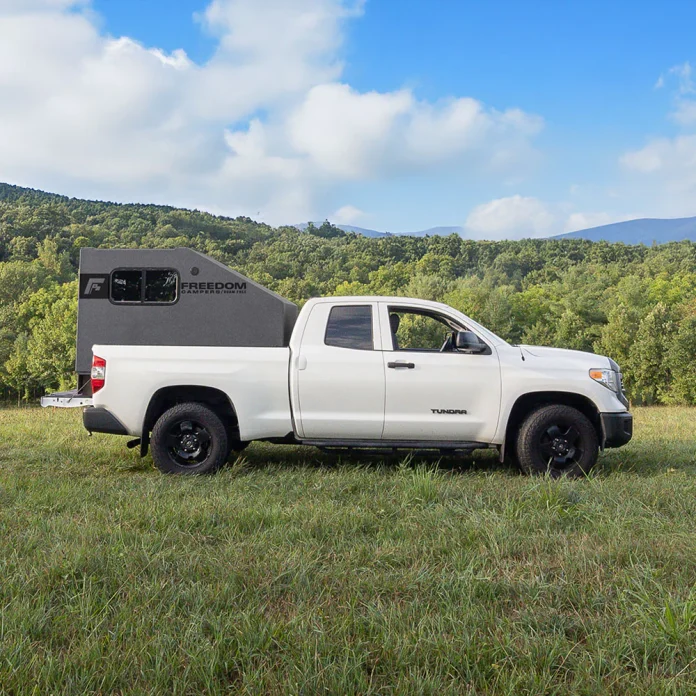

Quick Verdict: A proper truck bed camping setup costs between $3,000 and $5,000 for a complete, comfortable rig. The Freedom Camper ($3,299 base) is the lightest hard-sided option at 180 lbs, fits trucks from the Ford Maverick to the F-Series, and keeps the interior warm down to 20°F. The trade-off: you build out the interior yourself, which is either a pro or a con depending on how you look at it.
Last updated: March 2026 | 12 min read
Shopping for your first rig? Read our truck bed camper buying guide to weigh pop-up versus hard-side and match the camper to your truck’s payload.
In This Guide
- Truck Bed Camping Setup Overview: Why Beginners Are Choosing This Route
- Key Specs at a Glance
- Choosing Your Truck Bed Camper: Hard-Sided vs. Soft-Sided vs. DIY
- Truck Compatibility: Which Camper Fits Your Truck
- Step-by-Step Truck Bed Camping Setup
- Essential Gear for Your First Trip
- Truck Camper Setup Ideas: Customizing Your Interior
- Freedom Camper vs. Pop-Up Truck Campers: Which Should You Pick?
- Pros and Cons
- Final Verdict
- Frequently Asked Questions
Truck Bed Camping Setup Overview: Why Beginners Are Choosing This Route
Your first truck bed camping setup doesn’t need to cost five figures or require an engineering degree. The concept is straightforward: mount a weatherproof shelter in your pickup bed, outfit the interior with sleep and storage essentials, and drive to wherever the road takes you. For thousands of truck owners, this approach has replaced expensive RVs and flimsy tents as the go-to way to camp.
So what makes a truck bed camper different from a standard camper shell or topper? It comes down to insulation and livability. A basic fiberglass cap keeps rain out. A purpose-built truck bed camper keeps rain out, holds warmth in, and gives you a secure, enclosed space to sleep, cook, and store gear. The Freedom Camper, for example, uses a proprietary insulation method rated to 20°F, which means shoulder-season and winter camping are on the table from day one.
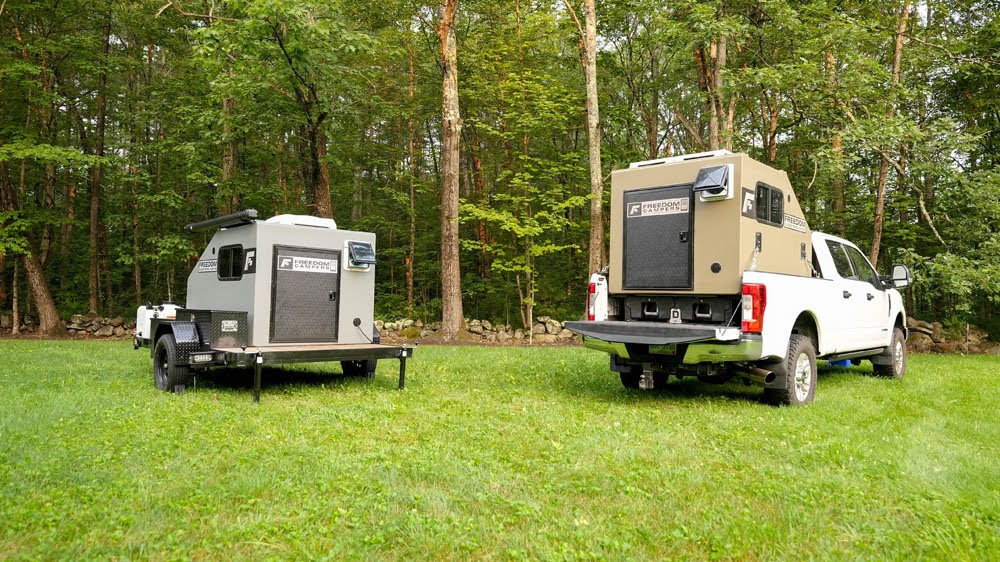
As a result, the price gap between truck bed campers and traditional slide-in campers is significant. Slide-in pop-up campers range from $15,000 to $30,000+ and weigh 800 to 1,500 lbs. The Freedom Camper starts at $3,299 and weighs 180 lbs. Two people load it into a truck bed in about five minutes. Because of the light weight, you also have a second option most truck campers don’t give you: pull it off the truck and mount it on a 5×8 utility trailer instead. One camper, two rigs.
I flew out to Missouri six months ago to visit the team behind Freedom Campers and saw firsthand how these are built. The attention in the manufacturing process surprised me, especially at this price point. I also met an owner who swaps his Freedom Camper between his pickup and a utility trailer depending on the trip. That flexibility is what most people overlook until they experience it.
Key Specs at a Glance
| Specification | Details |
|---|---|
| Starting Price | $3,299 |
| Weight | 180–190 lbs (depending on model) |
| Sizes Available | 4 models: 48″x79″, 48″x89″, 58″x79″, 58″x89″ |
| Insulation Rating | Rated to 20°F |
| Shell Material | Polyurea-coated foam |
| Sleeping Capacity | 1–2 adults |
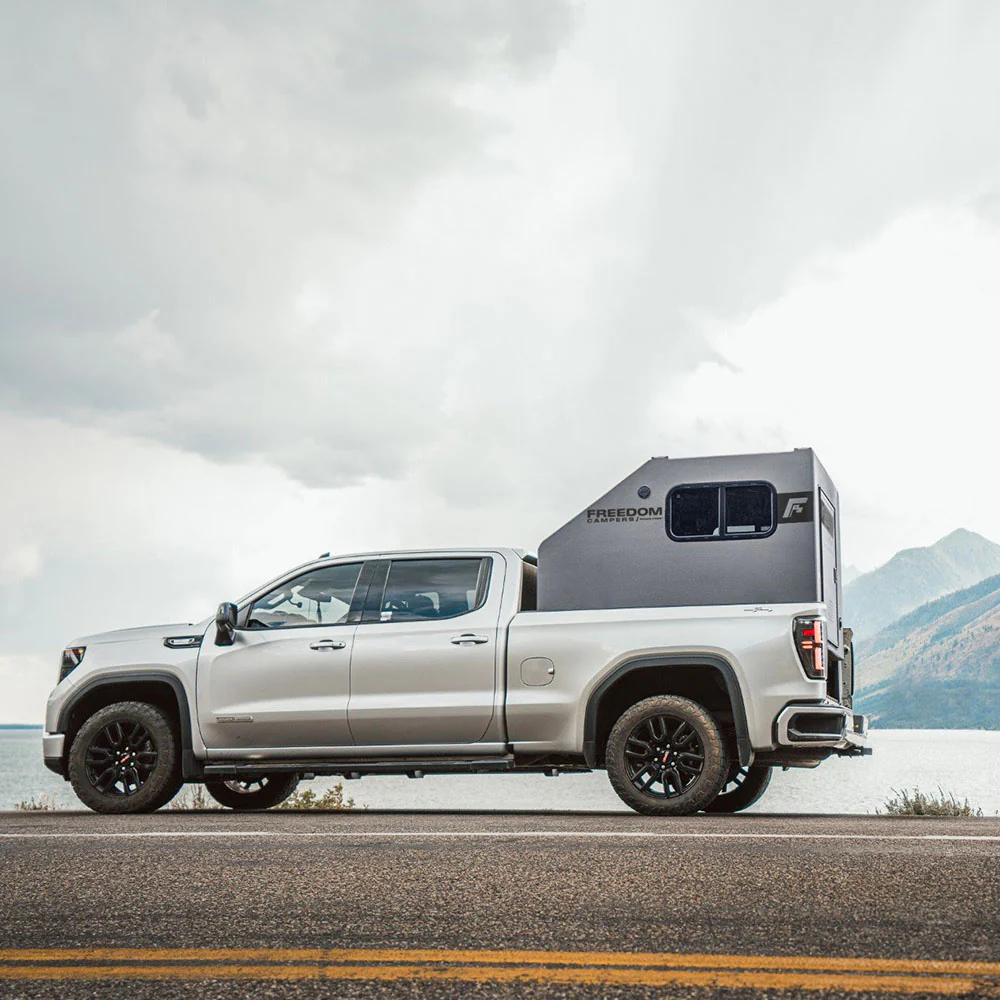
| Compatible Trucks | Midsize (Tacoma, Ranger, Colorado) to full-size (F-150, Tundra, Silverado) |
| Trailer Compatible | Yes, fits 5×8 trailers and larger |
| Setup Time | ~5 minutes with two people |
| Made In | Missouri, USA |
Featured at Freedom Campers
Freedom Camper Starting at $3,299
Ultra-insulated, 180 lb truck bed camper. Fits midsize and full-size trucks, plus utility trailers. American-made in Missouri.
Best Value
Freedom Camper by Redneck Blinds
Budget-friendly truck bed camper with 4-season insulation and fast setup. Fits most half-ton and mid-size pickups. Current best-value pick for beginners.
Choosing Your Truck Bed Camper: Hard-Sided vs. Soft-Sided vs. DIY
Before you spend a dollar, you need to decide which type of truck bed camping setup matches your budget, your truck, and how you plan to use it. There are three main categories, and each comes with distinct trade-offs in cost, durability, and convenience.
Hard-sided truck bed campers like the Freedom Camper use rigid, insulated panels to create a weatherproof shell. They handle rain, snow, and wind better than soft alternatives. Because the Freedom Camper is built from polyurea-coated foam, it resists UV damage and holds up to years of outdoor exposure. The downside: these are a larger upfront investment than a tent, typically $3,000 to $6,000 for a quality unit.
Soft-sided options include truck bed tents and pop-up canvas toppers. Prices range from $150 to $600. They pack down small and weigh under 20 lbs, making them appealing for occasional weekend trips. However, they offer zero insulation, struggle in wind over 25 mph, and wear out after one to two seasons of regular use. For a deeper comparison, check out our truck bed camper vs. rooftop tent breakdown.
DIY builds range from plywood sleeping platforms ($100 in lumber) to fully custom builds exceeding $2,000 in materials. In theory, the appeal is full control over layout and features. The risk is waterproofing, insulation quality, and structural integrity, all of which require real building skill to get right. Most beginners who start DIY end up spending more time troubleshooting leaks and condensation than camping.
Truck Compatibility: Which Camper Fits Your Truck
Of course, the most common question from first-time buyers is whether a truck bed camper will fit their specific truck. The answer depends on two measurements: bed width and bed length. Here is a quick reference for the Freedom Camper lineup and common trucks.
48″ x 79″ model: Built for midsize trucks including the Toyota Tacoma, Ford Ranger, Ford Maverick, Chevrolet Colorado, GMC Canyon, Nissan Frontier, Honda Ridgeline, and Jeep Gladiator. This size also fits inside full-size truck beds with the tailgate closed, though it requires a raised platform to clear the wheel wells. The platform adds about $150 in materials and creates usable storage space underneath the camper.
48″ x 89″ model: Designed for full-size trucks like the Ford F-150, Toyota Tundra, and Chevrolet Silverado 1500. This model slides directly onto the bed rails without a platform, which simplifies installation and keeps the overall setup height lower.
58″ x 79″ model: Fits trucks with a 6’6″ bed (tailgate down or removed) or a 6’9″ bed (tailgate closed). This wider model gives you more shoulder room inside, which matters for side sleepers and anyone over 5’10”.
58″ x 89″ model: The best-selling Freedom Camper model. The extra length makes it comfortable for campers up to 6’4″. It fits all full-size truck beds and works on 5×8 utility trailers and larger. If you are unsure which size to choose, our Freedom Camper size guide walks through every truck and trailer combination.
Step-by-Step Truck Bed Camping Setup
Getting your truck bed camper from the box to trail-ready takes about an afternoon. Here is the process from start to finish, using the Freedom Camper as the reference.
Loading and Mounting (Steps 1–3)
Step 1: Prepare your truck bed. First, remove any loose items, tonneau covers, or bed liners with raised edges. Clean the bed surface. If your model requires a raised platform (48″x79″ in a full-size truck), build or install the platform first. Standard 2×4 lumber and 3/4″ plywood work well. Measure twice: the platform needs to sit level and clear your wheel wells by at least 1 inch on each side.
Step 2: Load the camper. Next, with a helper, lift the Freedom Camper onto the truck bed or platform. At 180 lbs, two adults handle this comfortably. Slide the camper toward the cab until it seats properly against the front of the bed.
Step 3: Secure with the mounting kit. Then attach the eight side mount plates (four per side), connect the four D-rings, and tighten the turnbuckles until the camper is snug. The Freedom Camper Truck Mounting Kit uses four turnbuckles and side mount plates to lock the camper to your bed rails. The whole process takes about 15 minutes. Give each turnbuckle a final check before driving.
Outfitting the Interior (Steps 4–6)
Step 4: Install ventilation. The optional 11″ 12-volt vent fan fits into the pre-cut opening on the roof. It includes a twist-dial for airflow control, a built-in LED light, and a bug screen. Ventilation is critical for managing condensation, especially in cold weather. Without a vent fan, moisture from your breath will condense on the interior walls overnight.
Step 5: Add your sleep system. After that, lay a foam mattress or sleeping pad on the floor. A 4″ memory foam mattress (twin or custom cut) fits the 48″ models. The 58″ models accommodate a full-size pad. Bring a sleeping bag rated 10-15°F below the lowest temperature you expect. The Freedom Camper’s insulation handles the walls and ceiling; your sleep system handles the floor.
Step 6: Organize gear. Finally, use stackable bins or soft bags along the sidewalls. Vertical space matters in a truck bed camper. Hanging organizers on the interior walls keep headlamps, phone chargers, and small tools within reach.
Freedom Campers Mounting Kit
Quick-Release Tie Down System
Load and unload your Freedom Camper in minutes. Includes turnbuckles, side mount plates, D-rings, and all hardware.
Essential Gear for Your First Trip
Your truck bed camper is the shelter. However, everything else you bring determines whether the trip is comfortable or miserable. Here is the gear list organized by priority, starting with the items you should not leave home without.
Sleep essentials: A 4″ foam mattress or quality self-inflating pad ($60–$150) makes the biggest difference in comfort. Pair it with a sleeping bag rated for the season. Bring a pillow from home; inflatable camp pillows are universally terrible for side sleepers. A headlamp with a red light mode keeps your night vision intact for bathroom trips.
Power and lighting: A portable power station in the 300-500Wh range ($200–$350) runs your vent fan, charges devices, and powers a small light. The Freedom Camper’s roof has two raised composite wood areas specifically designed as mounting points for solar panels. A 100W portable panel ($100–$150) keeps the power station topped off during multi-day trips.
Cooking setup: A single-burner propane stove ($25–$40) and a compact cookware set handle most meals. Cook outside the camper, not inside. Even with ventilation, burning propane in an enclosed space creates dangerous carbon monoxide buildup. A small folding table ($30) beside the tailgate becomes your kitchen counter.
Storage and organization: Two to three medium stackable bins keep food, cooking gear, and clothing separated. Label them. In a truck bed camper, you don’t have room to dig through a pile looking for your camp stove at 6 AM. Hanging shoe organizers on the interior walls hold small items.
Weather protection: An awning attached to the roof rack or side rail gives you covered outdoor space for cooking and sitting. The Freedom Camper’s roof supports awning mounting. Bring a ground tarp and a small broom to keep dirt out of your sleeping area.
Truck Camper Setup Ideas: Customizing Your Interior
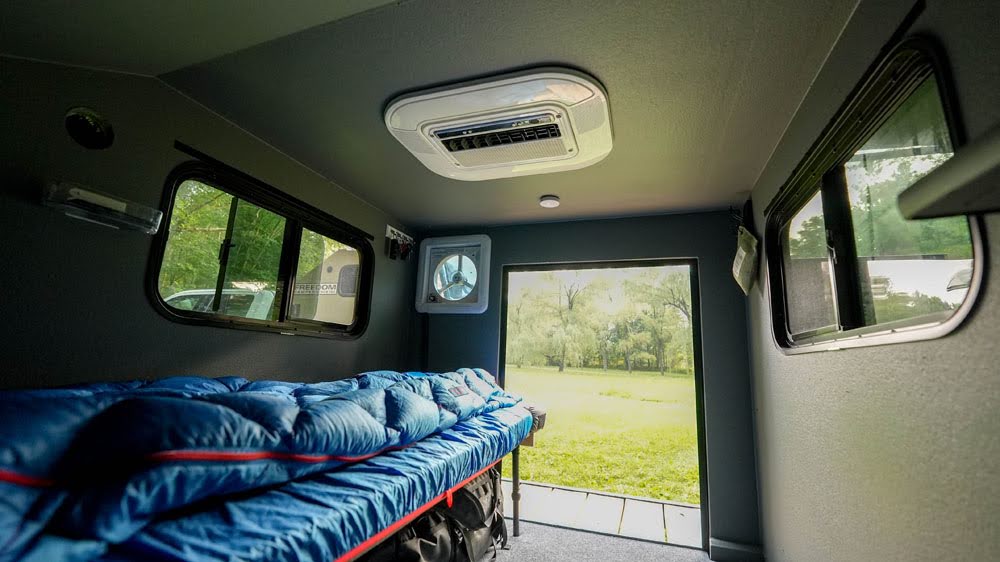
The Freedom Camper ships as a blank canvas by design. You pick what goes inside and how much to spend. Here are the truck camper setup ideas owners use most often, organized by budget.
The Weekend Warrior ($200 budget): Foam mattress, battery-powered LED strip along the ceiling, a plastic bin for gear, and a hanging organizer on the back wall. This setup takes 30 minutes and handles two-night trips without any modifications to the camper itself. It’s how most beginners start, and plenty of owners never feel the need to go further.
The Extended Trip Rig ($500–$800 budget): Add a 12V vent fan, 300Wh power station, 100W solar panel on the roof, and a slide-out kitchen drawer mounted at the tailgate end. The roof’s composite mounting areas support the solar panel, and the embedded mounting strips in the camper walls hold interior shelving. This setup handles week-long trips comfortably. For more inspiration, see our article on building the ultimate adventure rig with the Freedom Camper.
The Four-Season Hunter ($800–$1,200 budget): Add the vent fan, a 12V diesel heater ($150–$250), blackout curtains over the rear opening, and a small 12V refrigerator. The Freedom Camper’s insulation handles temperatures down to 20°F on its own, but a small heater extends your camping season through single-digit nights. Our guide on four-season travel with the Freedom Camper covers this setup in depth.
The Trailer Pod ($400–$600 budget): Mount the Freedom Camper on a 5×8 utility trailer instead of your truck. Add stabilizer jacks on the trailer corners, an outdoor LED light bar, and a fold-down side table. This turns your camper into a drop-camp basecamp you tow to the site and leave while your truck stays free for day trips, gear runs, or trail riding.
Freedom Camper vs. Pop-Up Truck Campers: Which Should You Pick?
Pop-up truck campers start at $15,000 and weigh 800 to 1,050 lbs. The Four Wheel Camper Fleet, one of the most popular models, lists at $29,495 MSRP and weighs 1,050 lbs dry. A Freedom Camper is $3,299 and 180 lbs. Here’s why the gap matters for your truck bed camping setup.
| Feature | Freedom Camper | Pop-Up Camper (e.g., FWC Fleet) |
|---|---|---|
| Starting Price | $3,299 | $15,000–$29,495+ |
| Weight | 180 lbs | 800–1,050 lbs |
| Standing Headroom | No | Yes (when popped up) |
| Built-in Kitchen | No (DIY add-on) | Yes |
| Insulation | 20°F rated | Varies by model |
| Trailer Compatible | Yes | No |
| Midsize Truck Friendly | Yes (all models) | Limited (payload concerns) |
| Setup Time | 5 minutes (2 people) | 15–30 minutes |
On an F-150 with a 1,700 lb payload rating, a 1,050 lb pop-up leaves you with 650 lbs for gear, water, and passengers. The Freedom Camper leaves over 1,500 lbs. On a midsize Tacoma with 1,400 lbs of payload, most pop-ups push the truck past safe limits before you add a single cooler. The Freedom Camper leaves 1,200+ lbs to spare. If payload capacity concerns you, our in-depth Freedom Camper feature breaks down the numbers truck by truck.
Besides the weight savings, there’s flexibility. A pop-up camper stays bolted to your truck. Period. I met an owner in Missouri who swaps his Freedom Camper between his pickup and a utility trailer depending on the trip. His truck hauls ATVs on family weekends while the camper sits on the trailer at the campsite. Try doing the same with an 1,050 lb pop-up. It’s not happening.
Pros and Cons
Pros
- Starting price of $3,299 undercuts most hard-sided truck campers by $5,000+
- 180 lb weight allows two-person loading and fits midsize trucks safely
- Insulation rated to 20°F extends camping into winter and shoulder seasons
- Four size options cover trucks from the Ford Maverick to the Ford F-350
- Dual-use design works on both truck beds and utility trailers
- American-made in Missouri with polyurea-coated foam construction
- Blank-canvas interior lets you customize to your exact needs and budget
- Roof mounting areas support solar panels, awnings, and roof racks
Cons
- No standing headroom; interior height is limited to a sit-up or crawl-in layout
- No built-in kitchen, plumbing, or electrical; all amenities are DIY additions
- The 48″ wide models require a raised platform on full-size trucks, adding $100-$150 in materials
- Sleeps 1-2 adults only; does not accommodate families with children
- Condensation management requires an aftermarket vent fan ($80–$120)
Final Verdict
The Freedom Camper is built for the person who wants to start truck bed camping without spending $15,000 to $30,000 on a traditional truck camper. If you own a pickup truck, any pickup truck, from a Maverick to an F-350, this $3,299 insulated shell gets you into a weatherproof, four-season-capable camping setup in a single afternoon. Hunters, solo travelers, overlanders, and weekend campers all benefit from the same core product.
The real trade-offs are clear. You don’t get standing headroom, a built-in kitchen, or plumbing. If those features matter to you, a pop-up truck camper or a small travel trailer is a better fit, at two to four times the price. In short, the Freedom Camper works best for people who prefer simplicity or who want to build out their interior on their own terms.
The Bottom Line on Value
The value proposition holds up under scrutiny. A Freedom Camper plus $500 in build-out accessories ($3,800 total) gives you a four-season truck bed camping setup with ventilation, solar power, comfortable sleep, and organized storage. By comparison, an insulated pop-up camper runs $15,000 to $30,000 and weighs five to six times as much. On top of that, the Freedom Camper gives you something no pop-up does: the option to move it to a trailer, freeing your truck bed for other loads.
For first-time truck bed campers on a budget, the Freedom Camper is the strongest option available in 2026. If you want a more feature-rich setup out of the box and have a higher budget, look at the best truck campers of 2025 for alternatives in the $15,000 to $30,000 range.
Stock note: The 58″x89″ is the best-selling model, and popular sizes tend to ship within 2 weeks during peak season (March through June). Check current availability before spring camping season drives demand higher.
Ready to Start Truck Bed Camping?
Get Your Freedom Camper Today
Four sizes, every truck. Starting at $3,299. Ships from Missouri. Check current availability and pricing.
Essential Accessory
Freedom Camper Mounting Kit
Four-point anchor kit to secure the Freedom Camper to your bed. Required hardware for proper installation.
Frequently Asked Questions
How do you set up a truck bed camper?
Start by clearing your truck bed and installing a raised platform if your model requires one. Lift the camper into the bed with a helper (the Freedom Camper weighs 180 lbs, so two adults handle it easily). Secure it with the mounting kit using turnbuckles and side mount plates. Install the vent fan, lay your mattress, and organize gear along the walls with bins or hanging organizers. The entire truck bed camper setup takes about one to two hours for the first time.
What size truck bed camper do I need?
Measure your truck bed’s inside width and length. Midsize trucks (Tacoma, Ranger, Colorado, Gladiator) fit the 48″x79″ model. Full-size trucks with short beds (F-150, Silverado 1500, Tundra) fit the 48″x89″ or 58″x79″. Full-size trucks with standard or long beds fit the 58″x89″, which is the most popular model. If you plan to also use a trailer, the 58″x89″ fits 5×8 utility trailers and larger.
How much does a truck bed camper cost?
Budget truck bed campers like the Freedom Camper start at $3,299. Add $200–$500 for essential accessories (vent fan, mattress, power station). A complete, comfortable truck bed camping setup runs $3,500–$4,500 total. By comparison, pop-up truck campers start around $15,000, and hard-sided slide-in campers range from $20,000–$40,000.
Is a truck bed camper worth it?
For budget-conscious truck owners who want four-season camping capability, yes. A truck bed camper gives you insulated, weatherproof shelter at a fraction of the cost of an RV or pop-up camper. The Freedom Camper pays for itself after roughly 30 nights compared to motel costs at $100/night. The trade-off is limited interior space and a DIY approach to amenities.
How do you insulate a truck bed camper?
Buy a pre-insulated unit like the Freedom Camper and the work is done for you; the insulation is factory-built into the walls, floor, and ceiling with a proprietary method rated to 20°F. If you’re going the DIY route, rigid foam board (1.5″ to 2″ thick, R-10 or higher) goes on walls and ceiling. Seal every joint with spray foam to eliminate cold spots. The part most people miss: add a vapor barrier on the warm side to stop condensation. Get this wrong and you’ll wake up to moisture dripping on your face and gear, which leads to mold in a matter of weeks.
Do you need a full-size truck for a truck bed camper?
No. The Freedom Camper has models for midsize trucks (Tacoma, Ranger, Colorado, Maverick, Gladiator). At 180 lbs, it barely touches your payload.