


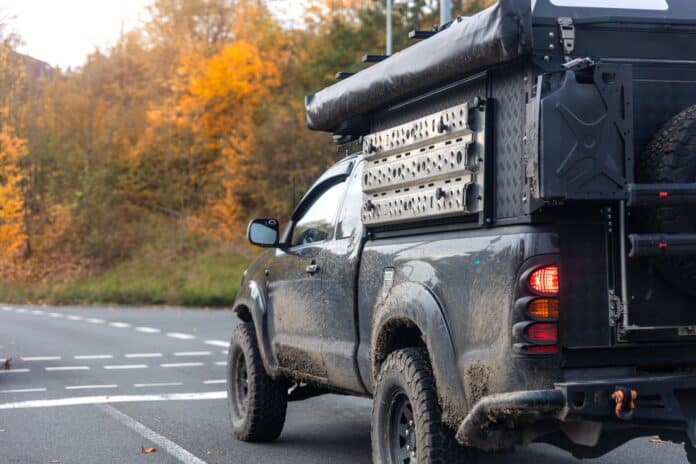
Quick Facts:
- Topic: A post trail inspection for trucks, SUVs and Jeeps after any off-road run.
- Skill level: Beginner to intermediate, with basic hand tools.
- Time: A few minutes at the trailhead, then roughly an hour in the driveway.
- Tools needed: Flashlight, air compressor, tire pressure gauge, torque wrench, jack stands and a hose.
- Trailhead checks: Brush on the underbody, tire damage, tire pressure and leaks.
- Driveway checks: Lug nuts, brakes, boots, bolts, wheel bearing play, driveline, fluids and radiator.
- Best for: Owners who drive trails, dirt roads and washboard.
8 min read
In This Guide
Why a Post Trail Inspection Matters
A post trail inspection costs you about an hour and helps you avoid a breakdown on the next trip. Rocks bend skid plates, washboard shakes bolts loose, and packed mud hides leaks. Ten checks in the same order every time catch what a quick glance misses.
Vehicle makers publish their own versions of this routine. The 2023 Jeep Wrangler owner’s manual has a section titled “After Driving Off-Road.” Chevrolet’s 2023 Colorado manual has one too. Toyota’s 2025 Tacoma maintenance guide lists daily checks after deep sand, mud or water. Together they cover the underbody, tires, brakes and fasteners.
I have owned five Jeeps, including two Grand Cherokee Overlands, a couple of Wranglers and a Gladiator. Today I drive a 2025 Chevy Colorado ZR2. The trucks changed, but my advice stays the same. Look the rig over while the trip is fresh in your mind.
This checklist runs in two parts. Do the first three checks at the trailhead, then do the other seven at home. Also see the tips for the drive home after a trail day. Before your next run, use the pre-trip off-road checklist.
What You’ll Need
Tools
- Flashlight or headlamp.
- Portable air compressor and tire pressure gauge.
- Tread depth gauge or a penny.
- Torque wrench with the right socket for your lug nuts.
- Floor jack and two rated jack stands.
- Garden hose or low-pressure sprayer.
Materials
- Plain water for rinsing.
- Shop rags.
- Notepad or a phone for notes.
- Tire plug kit and recovery gear spares.
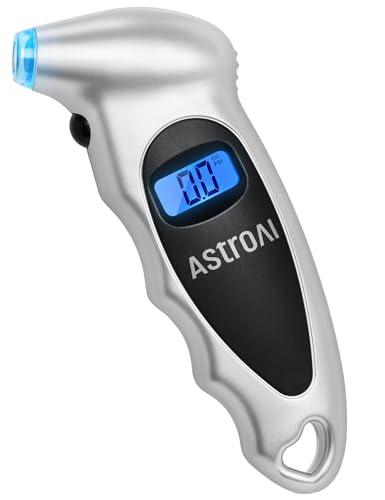
Three items from the tools list above cover the first checks. The AstroAI digital gauge reads 0 to 150 psi, while the JACO TreadPro reads tread depth in 32nds. A headlamp such as the Black Diamond Spot 400 gives 400 lumens on an adjustable headband.
Tools for the tire and underbody checks


Post Trail Inspection at the Trailhead
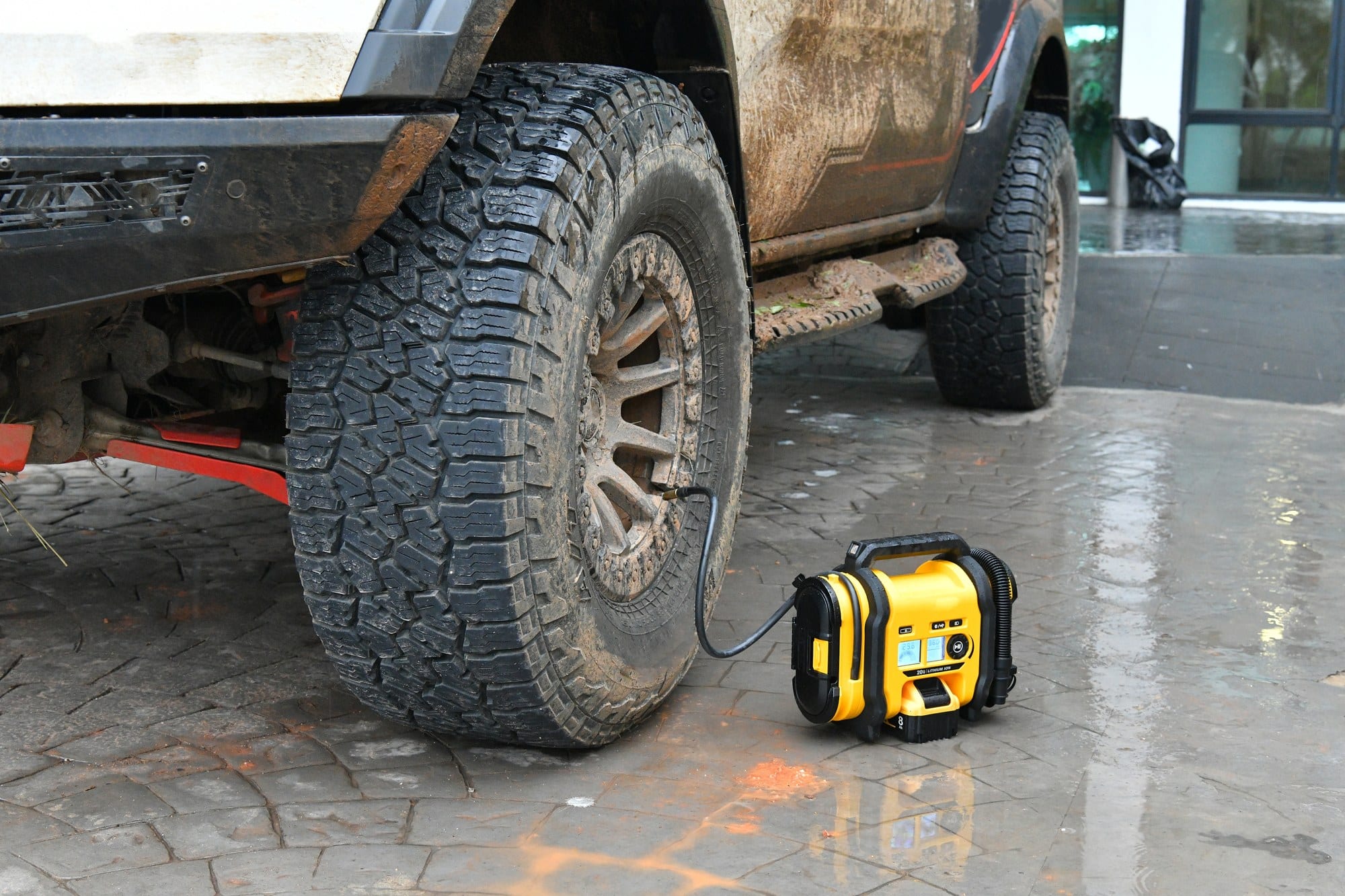
These three checks take only a few minutes. They also catch problems before they get worse with every mile of pavement.
1. Cool Down and Clear the Brush
Park on bare ground, never over dry grass. The Colorado manual warns hot exhaust parts ignite leaves and grass. Once the exhaust cools, pull grass, brush and sticks from the skid plates, wheel wells and exhaust area. Jeep and Chevrolet both call brush on the underbody a fire hazard. Brush might also hide damage to fuel lines, brake hoses, pinion seals and driveshafts, according to Jeep.
2. Post Trail Tire Check and Air Up
Walk each tire and read the sidewall first. A bulge or bubble means the tire failed inside, and Michelin advises replacing it right away. Michelin also notes sidewall damage cannot be repaired, so mount the spare.
Next, scan the tread for embedded stones, nails and cuts. If a puncture sits in the tread, follow the steps to plug a punctured tire. Treat the plug as temporary until a tire shop looks at it.
Then air the tires up to the driver’s door placard pressure, never the maximum molded into the sidewall. NHTSA agrees, and the Colorado manual tells owners to inflate to the label after off-road use. While the tires are in view, check the tread depth. NHTSA puts the minimum at 2/32 inch, and a penny upside down in the groove shows it. If you see the top of Lincoln’s head, replace the tire.
Recheck the pressure cold the next morning. Tire Rack found tires set in warm afternoon heat would be 2 to 5 psi low the next morning. It also estimates about 1 psi for every 10 degrees Fahrenheit.
3. Walk Around and Look Underneath
Walk the full rig and look for new dents, hanging shields and wet spots. Afterward, lie down with a flashlight. Check the exhaust, fuel lines and brake hoses for chafing and drips. Skid plates protect your underbody, so look for bent plates touching a line or a pan. Fresh bright scrapes show where something hit.
Post Trail Inspection in the Driveway
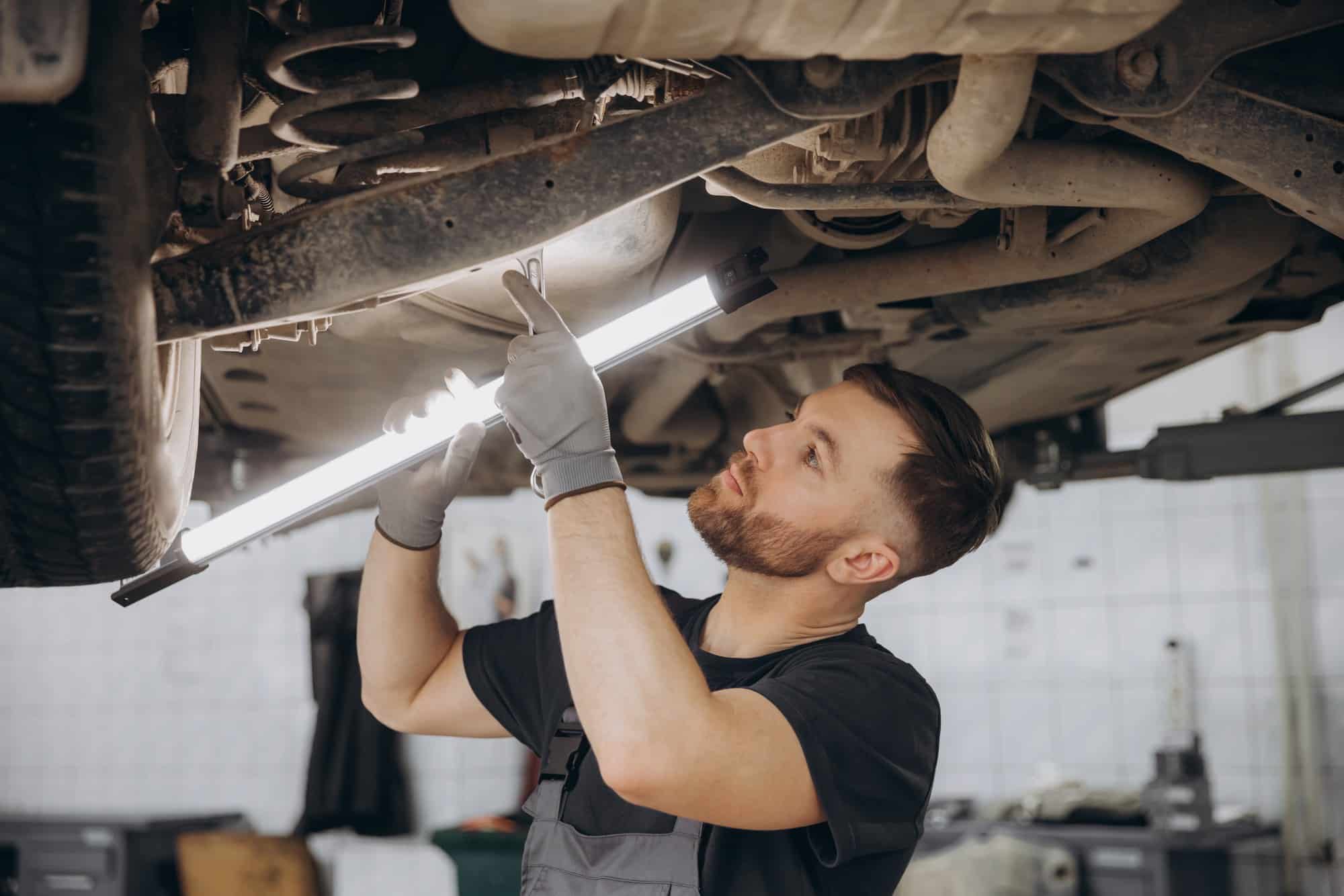
Do checks 4 through 8 on a cold rig. Wait for the wheels and brakes to cool before you touch a torque wrench or a hose.
Safety note: A factory jack is for changing tires only. The Jeep, Ram and Chevrolet manuals all warn against getting under a vehicle held up by its jack. Use rated jack stands on firm, level ground, and check your stands against NHTSA recall notices.
4. Wheels and Lug Nuts
Check each lug nut for gaps and rust streaks. Then recheck the torque on cold wheels, because Tire Rack warns never to torque a hot wheel. Torque values differ by vehicle, so use the number in your owner’s manual. After wheel service, retorque timing varies. The 2023 Wrangler manual says to recheck a freshly mounted wheel after 25 miles. Tire Rack, however, suggests 50 to 100 miles for new wheels.
Look at each rim lip for bends and dents. Clear packed mud from inside the wheel. Jeep says packed material unbalances a wheel and causes vibration.
5. Brake Pads, Rotors and Packed Mud
Shine your flashlight through the wheel spokes at the pads and compare left and right. Brembo says pads usually need replacing near 1/8 inch, or 3 millimeters, of friction material. Treat it as the point to plan the job, not as a legal limit. Look for deep rotor grooves, and check each caliper for packed mud and stones.
Mud and sand matter here. Jeep warns abrasive material might wear brakes and make braking unpredictable, and Chevrolet cites glazing and uneven braking. Both tell owners to have the brakes cleaned and checked after dirty runs. If you crossed water, press the brake pedal gently a few times on the drive home. The Colorado manual says this dries the pads.
6. Suspension, Steering and Post Trail Bolt Checks
Look at each shock for an oily film and each rubber boot for splits. Toyota’s off-road list covers ball joints, dust covers, steering boots and driveshaft boots. A torn boot lets dirt into the joint, so fix it early.
Have a helper rock the steering wheel. Watch the tie rod ends and ball joints for free play. Then lift one corner onto jack stands and rock the wheel by hand at the top and bottom. Any clunk or movement points to wheel bearing play or a worn ball joint, so book a shop visit.
Finally, tug on everything bolted to the truck. Jeep says to check chassis, drivetrain, steering and suspension fasteners and retighten them to the service manual values. For roof racks, Rhino-Rack says to check bolts about every 620 miles and before each trip. Check more often on dirt.
7. Driveline, Seals and Milky Gear Oil
With the parking brake set, grab each end of the driveshaft and try to twist and lift it. Dana’s Spicer service manual says the end fittings should show no movement relative to the shafts they connect to. Look at the pinion, transfer case and output seals for wet, dirt-caked oil.
Next, check the differential and transfer case fluid at the fill plug, especially after a water crossing. Mobil’s industrial guidance links milky gear oil to water contamination, so have it inspected before you drive farther.
8. Radiator, Condenser and Air Filter
Shine a light through the grille at the radiator and A/C condenser. Grass seed, leaves and mud block airflow. Toyota says to inspect and clean the radiator and condenser, and Jeep says the same for the radiator. Also pull the engine air filter after dusty or sandy runs. The 2023 Wrangler and 2020 F-150 manuals both call for filter checks in dusty or off-road use. Toyota says to replace a filter with damage, excessive wear or oiliness.
Wash, Gear Check and Post Trail Notes
9. Undercarriage Inspection After a Gentle Rinse
Wash the truck soon after the trip. Chevrolet tells Colorado owners to flush the underbody with plain water at least twice a year. It also says to clean the places where mud and debris collect. Once it dries, run your undercarriage inspection again, since fresh leaks stand out as wet spots.
Safety note: Never aim a pressure washer at axle or transfer case output seals. Chevrolet warns high-pressure water might overcome the seals and contaminate the fluid. For paint, keep the nozzle at least 12 inches away and the pressure below 1,200 psi.
Instead of a pressure washer, a garden hose keeps the rinse gentle. The Beitopamz 50 ft hose pairs with the RESTMO nozzle, which has 9 spray patterns and thumb flow control. Afterward, Utopia cotton shop towels dry the wet spots before you look for fresh leaks.
Low pressure rinse and dry gear


10. Post Trail Gear Check, Tick Check and Repair List
Inspect your recovery gear before you put it away. Retire any strap with cuts or frays. WARN says to replace synthetic winch rope once 25 percent of a strand abrades away. Replace it too if two adjacent strands are cut. Check shackle pins and threads too, since Crosby’s inspection list covers incomplete pin engagement, cracks and damaged threads.
Next, check yourself for ticks. The CDC says to shower within two hours of coming indoors. It also says to tumble dry clothes on high for 10 minutes.
Test every light, look over the glass, and restock your plug kit, gloves, water and first aid supplies. Afterward, write down what you hit, any new noises or smells, and the tire pressures you read. Sort your findings into three groups: fix now, fix before the next trip and watch.
When to Park the Truck and When to Book a Shop Visit
Not every finding needs a tow. Sort what you found with this rule.
Stop driving and get help if you find any of these:
- A bulge or bubble on a tire sidewall.
- Milky gear oil after a water crossing.
- Wet brake hoses or a soft brake pedal.
- Wheel bearing play, or movement in a driveshaft, ball joint or tie rod end.
Book a shop visit soon for these, and keep anything milder on your watch list:
- A split CV or steering boot.
- Brake pads near 1/8 inch.
- Seeping seals or small drips.
- A bent skid plate, control arm or rim.
Final Thoughts
If you drive dirt, rock, sand or washboard, this routine fits your rig. It suits a stock Colorado as well as a built Wrangler. Three quick checks at the trailhead and seven careful ones at home are all it takes. Nothing here needs a shop lift or a scan tool.
It costs you time. Expect about an hour in the driveway and a few small chores you did not plan. I would rather find a split boot in my driveway than on a trail.
No jack stands or torque wrench? A shop’s multi-point inspection covers many of the same checks. It will not know what you hit out there, though, so your notes fill the gap. Print this list, keep it in the glovebox, and run it after your next trip. An hour after each trip finds problems early, on your schedule.
FAQ
What should you check after off roading?
Check the tires, wheels, brakes, suspension boots, fluids, radiator and recovery gear. The ten checks above run in order, starting with brush and tire damage at the trailhead.
How soon should you start a post trail inspection?
Do the three trailhead checks right away and the driveway checks the same day or the next morning. Toyota’s Tacoma guide lists its off-road items as daily whenever you drive through deep sand, mud or water.
How do you know if water got into your differential?
Look at the fluid at the fill plug. Milky or hazy gear oil points to water contamination, so have the differential inspected before you drive farther.
Should you recheck tire pressure the morning after a trail run?
Yes. According to Tire Rack, tires set in warm afternoon heat would be 2 to 5 psi low the next morning. Set the final pressure cold to the door placard value.
Is it safe to pressure wash your engine bay after off roading?
Chevrolet allows careful pressure washing under the hood with the pressure below 2,000 psi, the water below 180 degrees Fahrenheit, a 40-degree nozzle and a distance of at least 1 foot. Check your own manual first, and skip the engine bay unless it is packed with mud.
Related Reading