


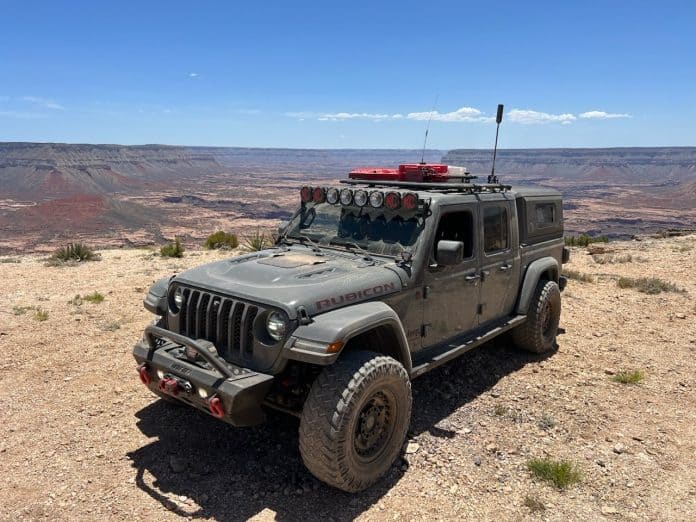

I’ve wheeled and overlanded for a long time across Wyoming, Utah, the Sierra Nevada, and the Southwest. I’ve learned a lot of lessons during those miles, and ended plenty of trail days exhausted, dusty, and still facing a three-hour drive home, long after the fun part of the day ended.
Most trail damage and driving mistakes happen after the wheeling stops, not during it. A skipped tire pressure check, an overtired driver, or a loose item shifting in the truck bed causes more trouble than the trail itself on many trips. This guide covers the exact routine I run at every trailhead before pointing my truck toward pavement, built from decades of getting this step right and occasionally wrong.
This routine matters most after a hard trail day involving rock crawling, mud, or extended airing down, and on drives longer than an hour back to pavement. A short, easy trail with a five-minute drive home needs far less of this planning than a full day on a demanding route.
Picture two groups finishing the same trail at dusk. One airs up, checks fluids, and takes a 20-minute break before the highway. The other jumps straight onto the interstate at trail pressure, running on adrenaline and little rest. Only one group arrives home without an incident.
Quick Facts:
- Topic: What to do and bring for the drive home after an off-road trail day
- Skill level: Beginner to intermediate
- Time needed: 15 to 20 minutes at the trailhead
- Tire pressure reset: Back to street PSI before highway speeds
- Rest recommendation: A 20-minute break for every 2 hours of driving after a hard trail day
- Cleanup cost: $15 to $40 for a rinse-free wash kit
- Best for: Day-trippers and overlanders heading home after off-roading
8 min read
In This Guide
- Key Drive-Home Facts at a Glance
- Quick Vehicle Check Before the Highway
- Post-Trail Inspection: What to Look For
- Managing Driver Fatigue for the Drive Home
- Cleaning Up Before You Get Back in the Cab
- Packing and Securing Gear for the Road
- Airing Up at the Trailhead vs. Waiting for Pavement
- Pros and Cons of Driving Home the Same Day
- Final Verdict
- Frequently Asked Questions
Rugged Revive sells its rinse-free sponges in three pack sizes on Amazon. Here is how they compare for a trail-day cleanup kit.
| Best for One Rig | Best for a Full Season | Best for Group Travel | |
|---|---|---|---|
| Product | TOP PICK Rugged Revive 25-Pack Rugged Revive 25-Pack |  Rugged Revive 50-Pack Rugged Revive 50-Pack |  Rugged Revive 100-Pack Rugged Revive 100-Pack |
| Rating | ★★★★☆ 4.3 62 ratings | ★★★★☆ 4.3 62 ratings | ★★★★☆ 4.3 62 ratings |
| Sponges per pack | 25 | 50 | 100 |
| Best fit | Glove box or door pocket | Trail bag or second rig | Group trips and base camp |
| Water to activate | 3 oz per sponge | 3 oz per sponge | 3 oz per sponge |
| Price | $14.99 as of Oct 10, 12:18 pm | $29.50 as of Oct 10, 12:18 pm | $49.95 as of Oct 10, 12:18 pm |
| Check Price → | Check Price → | Check Price → |
Key Drive-Home Facts at a Glance
| Task | Why It Matters | Time Required |
|---|---|---|
| Air up tires | Prevents overheating and blowouts at highway speed | 5 to 10 minutes |
| Check fluids and undercarriage | Catches leaks or damage before highway speeds | 5 minutes |
| Rest and hydrate | Reduces fatigue-related driving errors | 15 to 20 minutes |
| Clean up dust and mud | Prevents grime spreading through the cab | 5 to 10 minutes |
| Secure loose gear | Prevents shifting cargo during highway driving | 5 minutes |
Quick Vehicle Check Before the Highway

Air your tires back up to street pressure before hitting pavement. Trail pressure runs low for traction, and driving on it at highway speed builds excess heat, risking a blowout.
Check for fluid leaks under the vehicle while you air up, especially after a rocky section or a hard hit on the trail. A quick glance at the ground where the vehicle sat overnight or during a break reveals most leaks before they become a highway problem.
Test your lights, mirrors, and brakes before pulling out, since trail vibration occasionally loosens a connection or knocks a mirror out of position. This two-minute check catches small issues while you still have tools and daylight on your side.
Post-Trail Inspection: What to Look For
A hard trail day stresses suspension components, skid plates, and drivetrain parts in ways daily driving never does. Our guide to identifying worn or damaged leaf springs covers the specific signs worth checking after a rough trail, including cracks, sagging, and loose mounting hardware.
Inspect your skid plates and rocker guards for new dents or loose bolts, since a hard impact sometimes loosens hardware without causing visible damage right away. Walk the full perimeter of your rig before departure rather than relying on a quick glance from the driver’s seat.
Keep basic tools and recovery gear accessible for the drive home, not buried under camp gear in the back. Our guide to off-road recovery gear covers what belongs within easy reach for exactly this reason.
Managing Driver Fatigue for the Drive Home
A hard trail day drains a driver more than an equivalent day on pavement. Constant focus, vibration, and physical effort behind the wheel add up, even when the trail itself felt fun rather than exhausting.
Build in a 20-minute rest for every two hours of driving after a demanding trail day, and treat this as a plan rather than an afterthought. Hydrate and eat something substantial before starting the drive, since dehydration and low blood sugar both accelerate fatigue.
Share driving duties when possible, and switch drivers at the first sign of heavy eyelids or wandering attention. Pulling over for a short break costs far less time than the risk of driving impaired by exhaustion.
Cleaning Up Before You Get Back in the Cab
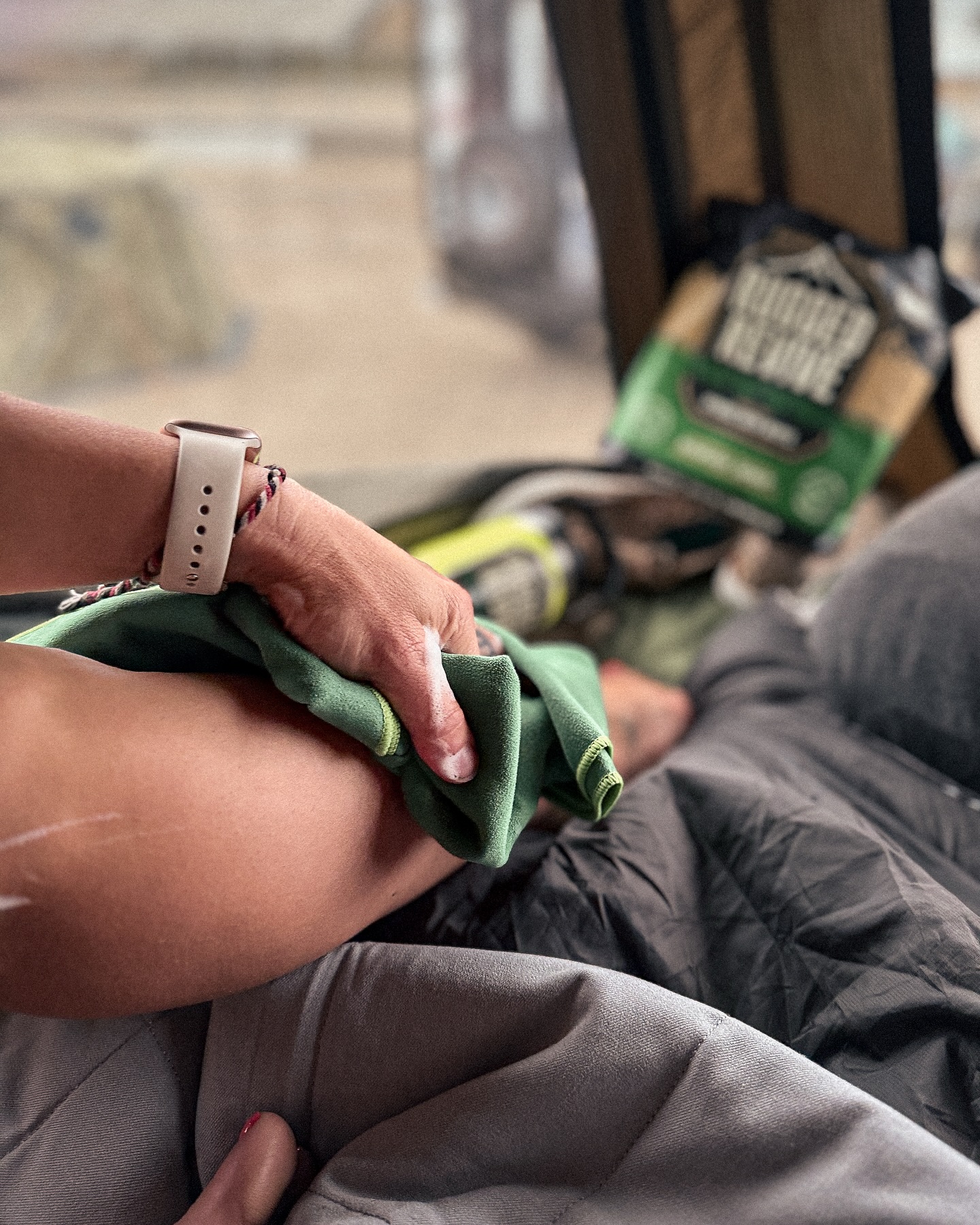
Trail dust and sweat cling to skin and clothing after a hard day, and they transfer directly onto seats, steering wheels, and pedals during a long drive home. A quick cleanup before departure keeps your cab from turning into a dust bowl for the next several hours.
Rugged Revive handles this without a shower or extra water bottles. A lathering sponge activates with a few ounces of water, cutting through trail dust and sweat in a few minutes at the trailhead. Each sponge packs flat, so it costs almost no space in a glove box or door pocket.
Our earlier guide to no-shower camping hygiene hacks covers additional low-water cleanup options worth keeping in the rig for the drive home, particularly on multi-day trips ending far from a shower.
Packing and Securing Gear for the Road
Loose gear shifts under braking and cornering, turning a minor stop into a cabin full of flying tools and coolers. Secure heavy items with cargo straps or a net before leaving the trailhead, regardless of how short the remaining drive looks.
Store muddy or wet gear separately from clean items, using a dedicated bin or bag to prevent grime from spreading through your cargo area. Wet recovery straps and traction boards especially benefit from their own sealed container.
Double check exterior-mounted gear such as roof baskets, spare tires, and awning mounts before departure. Trail vibration loosens straps and hardware more often than most drivers expect, and a lost item at highway speed endangers everyone behind you.
Airing Up at the Trailhead vs. Waiting for Pavement
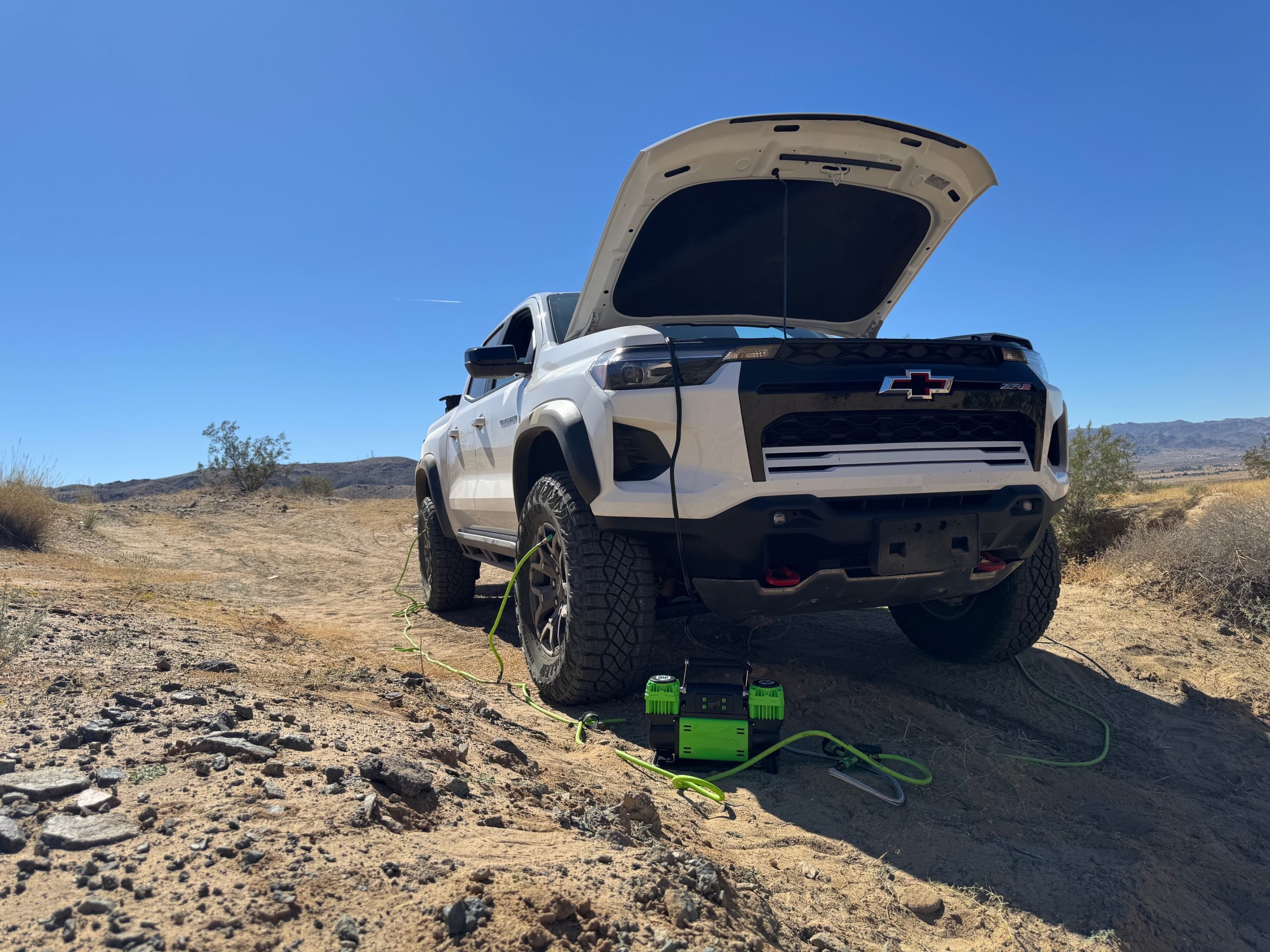
Airing up at the trailhead wins on safety and convenience. A portable compressor takes five to ten minutes right where you finished the trail, and correct pressure protects your tires for the entire drive home.
Waiting until you reach a gas station saves you from unpacking a compressor at the trailhead, though it means driving on trail pressure for however many miles separate you from pavement and a working air pump.
For any drive longer than a few miles on pavement, air up before you leave the trailhead. The five minutes spent there costs far less than the risk of running underinflated tires at highway speed.
Pros and Cons of Driving Home the Same Day
Pros
- Sleeps in your own bed instead of a trailhead parking area
- Avoids an extra night of gear and food logistics
- Works well for shorter drives or a lighter trail day
Cons
- Fatigue risk climbs significantly after a hard trail day
- Longer drives compound exhaustion from the day’s effort
- Rushing the drive skips important vehicle and gear checks
25 Pack Rugged Revive No Rinse Bathing Wipes for Adults, Body Sponge Bath
A rinse-free sponge bath that clears trail dust and sweat at the trailhead in the time it takes to air up.
- Activates with about 3 oz of water and needs no rinse
- Cuts trail dust and sweat in a few minutes at the tailgate
- Packs flat enough to live in a glove box or door pocket
- Keeps seats, wheel, and pedals clean for the whole drive
- Single use, so used sponges ride home with the rest of your trash
- Still needs a few ounces of water on hand at the trailhead
Final Verdict
The drive home deserves the same planning as the trail itself, especially after a hard day of rock crawling, mud, or extended airing down. Anyone facing more than an hour of highway driving benefits most from a short trailhead routine before pulling out.
The real trade-off is time against safety margin. Fifteen to twenty minutes spent airing up, checking fluids, and resting costs little compared to a blowout, a fatigue-related mistake, or shifting cargo at highway speed. Short, easy trail days with quick drives home need far less of this routine.
Cleanup belongs in this routine as much as the mechanical checks. A rinse-free wash costs little, takes minutes, and keeps the cab clean for the entire drive rather than turning your seats into a dust trap.
Build your trailhead routine in this order: air up tires first, check fluids and gear second, clean up and rest third, then hit the road. This sequence covers the most common causes of a bad drive home before the rarer ones.
Frequently Asked Questions
Why should I air up my tires before driving home from the trail?
Trail pressure runs low for traction, and driving on it at highway speed builds excess heat inside the tire. Airing back up to street pressure prevents overheating and reduces blowout risk.
What should I check on my vehicle before leaving the trailhead?
Check tire pressure, look for fluid leaks under the vehicle, inspect skid plates and rocker guards for new damage, and test your lights and brakes before pulling out onto pavement.
How do I stay alert for the drive home after a tiring trail day?
Build in a 20-minute rest for every two hours of driving, hydrate and eat before starting the drive, and share driving duties when possible. Pull over at the first sign of heavy eyelids or wandering attention.
How do I clean up before the drive home without a shower?
A rinse-free sponge bath, such as Rugged Revive, activates with a few ounces of water and requires no rinsing. It clears trail dust and sweat in minutes, keeping your seats and steering wheel clean for the drive.
Should I air up at the trailhead or wait until I find a gas station?
Air up at the trailhead whenever the drive home covers more than a few miles of pavement. Running trail pressure at highway speed for an extended distance raises the risk of tire damage significantly.
What is the most common mistake after a hard trail day?
Skipping the tire pressure reset and driving straight onto the highway ranks among the most common mistakes, followed closely by ignoring driver fatigue and failing to secure loose gear before departure.
A quick heads-up: If you snag something through our affiliate links or check out our sponsored content, we might earn a commission at no extra cost to you. But fear not, we’re all about recommending stuff we’re truly stoked about!