


Quick Facts:
- Update: RivianOS 2, delivered in the 2026.31 over-the-air release
- Announced: September 4, 2026
- Who gets it: Every R1T and R1S, both Gen 1 and Gen 2
- Graphics: Unreal Engine 5 on Gen 2 and R2, Unreal Engine 4 on Gen 1
- Headline feature: Route alerts using Google Maps data
- Subscription gated: Weather app and mobile trip planning need Connect+
- Rollout: Staged, so check the app for eligibility
- Max ground clearance: 14.9 inches on R1T and R1S
- Offline trail maps: Not part of this release
- Best for: R1T and R1S owners who leave pavement
8 min read
In This Guide
What RivianOS 2 Changes
Every R1T and R1S on the road has received the biggest software update in Rivian’s history, and most coverage got the trail story wrong. The 2026.31 release rebuilds Rivian R1T off-road technology, along with the rest of the R1 software experience, on RivianOS 2, the platform introduced with the R2. Rivian announced it on September 4, 2026, calling it the biggest software transformation in the R1’s history. Notably, every R1T and R1S is in scope, Gen 1 and Gen 2 alike.
Most coverage has framed this as a consumer-tech story about a prettier interface. However, for anyone who leaves pavement, the interesting questions are different. Does trail navigation improve? Do the drive modes change? What happens to camp power and gear security on a week-long trip?
First, the short answer is honest rather than flattering. RivianOS 2 is a substantial platform rebuild, and it improves the screen you stare at for hours. However, it adds no new off-road hardware capability. Moreover, one widely repeated assumption about the navigation upgrade fails a careful read of Rivian’s own announcement.
Both trucks remain serious platforms regardless. Our look at electric off-road vehicles in overlanding covers where the category sits, and current R1T and R1S lease terms explain why more of them are showing up at trailheads.
| Top Pick | Best for Full Navigation | Universal Mount | |
|---|---|---|---|
| Product | TOP PICK Garmin inReach Mini 2 | 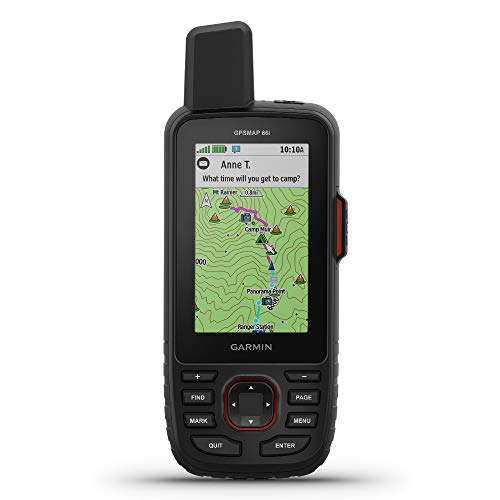 Garmin GPSMAP 66i |  RAM X-Grip Mount |
| Rating | ★★★★☆ 4.6 400 ratings | ★★★★☆ 4.6 800 ratings | ★★★★★ 4.7 3,900 ratings |
| Category | Satellite Communicator | Handheld GPS Navigator | Phone/Tablet Mount |
| Key Spec | Two-way messaging plus SOS alerts | Preloaded TopoActive maps plus inReach messaging | Fits phones 1.75 to 4.5 inches wide |
| Best For | Lightweight backup communication | Dedicated trail navigation and mapping | Mounting a phone running onX or Gaia |
| Price | $699.99 as of Oct 23, 5:43 pm | $39.49 as of Oct 24, 2:09 am | |
| Check Price → | Check Price → | Check Price → |
What Is Inside the Rivian R1T Off-Road Technology Update
Rivian’s own announcement is the reliable source here, so the table below sticks to company-confirmed items.
| Feature | Detail |
|---|---|
| Release | 2026.31 over-the-air update |
| Eligible vehicles | All R1T and R1S, Gen 1 and Gen 2 |
| Rendering engine | Unreal Engine 5, except Gen 1 R1 on Unreal Engine 4 |
| Route alerts | Google Maps police and speed-camera data in navigation |
| Interface layout | Quick controls and media player on either side, vertical status bar |
| Settings 2 | Rebuilt with context-aware controls and universal search |
| Weather app | Conditions, air quality, 10-day forecast. Connect+ required |
| Mobile trip planning | Start and update trips from the phone app. Connect+ required |
| Compute layer | Rivian Unified Intelligence, more onboard compute on Gen 2 |
Notably, two of the most useful additions for trip planning sit behind a subscription. The Weather app and Mobile Live Trips both require Connect+. Consequently, an owner without Connect+ gets the interface rebuild and the route alerts, and little else from this list.
Navigation in Rivian R1T Off-Road Technology: Read the Fine Print
The navigation headline needs care, because early coverage has blurred it. Rivian’s Real-Time Route Alerts integrate Google Maps data on police presence and speed cameras into in-vehicle navigation. The feature draws on local authorities, third-party sources, and real-time Google Maps and Waze community contributions.
Read the description again with a trail in mind. Specifically, police presence and speed-camera alerts are highway features. Rivian makes no claim of trail routing, forest-road data, or track overlays anywhere in the announcement. Therefore, a Google Maps integration is no backcountry navigation upgrade, whatever the phrase suggests.
Similarly, offline maps deserve the same scrutiny. Owner forums consistently report Rivian navigation does not support downloading map regions ahead of time. Rivian has published no statement confirming offline or downloadable trail maps in this release. Treat any claim otherwise as unverified until Rivian says so directly.
As a result, the practical consequence is unchanged. An R1T or R1S owner heading somewhere without signal still needs a dedicated solution: a phone running onX or Gaia with regions cached, paper maps, or satellite connectivity. Satellite messengers cover the heavier end of the range.
Gen 1 vs. Gen 2 Rivian R1T Off-Road Technology

Rivian split the update along hardware lines, and the division is more interesting than it first appears. Most R1 and R2 vehicles run Unreal Engine 5 for real-time 3D visualization of the vehicle and its surroundings on the center display. Gen 1 R1 is the exception, staying on Unreal Engine 4 to preserve screen responsiveness on its display hardware.
The decision favors owners over marketing. A 3D terrain render at 12 frames per second is worse than a simpler render at full speed, especially while placing a wheel on a ledge. Rivian chose responsiveness for the older fleet instead of feature parity. For anyone using the screen while moving, this is the right call.
Meanwhile, compute follows the same division. R2 and Gen 2 R1 receive more onboard compute for low-latency hybrid edge processing. Meanwhile, both Gen 1 and Gen 2 R1 get expanded cloud-assisted voice capabilities and refreshed driver-display hierarchies.
Notably, cloud-assisted is the operative word for the backcountry. Voice features leaning on a connection degrade where there is no signal, which is exactly where hands-free control matters most. Gen 1 owners lose the least here, since they were never getting the heavier onboard processing anyway.
Drive Modes and Ground Clearance
Nothing in RivianOS 2 changes what the truck does mechanically. Rivian describes an eight-mode drive architecture, four on-road and four off-road, adjusting ride height, suspension stiffness, throttle response, and all-wheel-drive behavior. Those eight modes predate this release and carry over unchanged.
Ground clearance is likewise a hardware figure. Rivian lists maximum ground clearance for the R1T and R1S at 14.9 inches, depending on suspension setting and wheel configuration. For comparison, the company lists the smaller R2 at 9.6 inches. A software update moves neither number.
The change is in how you reach the controls. Settings 2 is rebuilt around context-aware controls with universal search, so finding a specific suspension or drive setting takes fewer taps. On a trail, with a spotter waiting at a pinch point, fewer taps make a real difference.
Therefore, buyers comparing platforms should weigh hardware over interface. Our comparison of the R1T against Scout lays out the specification differences no software release will touch.
Gear Guard and Camp Power
Gear Guard remains one of the stronger arguments for the R1T as an overland platform. The system uses five cameras around the truck plus a braided steel cable to secure bed and roof gear, with an animated character on the center display signaling an active watch. Its interface includes Road Cam, Incidents, Motion Cam, and an alarm function.
However, subscription status matters for the useful part. Gear Guard Live Cam, which lets you view the feed remotely, is supported on Gen 1 and Gen 2 vehicles through Connect+. Consequently, the remote view depends on both a subscription and a cellular connection. A dispersed site with no bars gets local recording rather than live monitoring.
Meanwhile, camp power planning is where an electric platform changes the trip most. Running a fridge, lights, and a device charger from the vehicle removes the separate battery box most builds carry, and our history of how off-grid power has evolved shows how recent the shift is. Rivian did not publish new outlet specifications with this release, so verify wattage figures against your own vehicle rather than aggregator articles.
Otherwise, the discipline is the same as any off-grid setup. Budget your draw before the trip, because every amp spent at camp removes range from the drive out. Similarly, sizing a solar setup to offset camp loads applies to an R1S exactly as it applies to a built Tacoma.
Trip Planning and Charging
Camp power draws from the same pack getting you to the next charger, so trip planning matters as much as the drive modes. Mobile Live Trips is the feature with the most practical upside for remote travel. Starting, viewing, and updating a trip from the phone app moves planning off the center display. For a multi-day route with charging stops, the difference is real.
Connect+ gates it, however, alongside the Weather app. Ten-day forecasts, current conditions, and air quality viewable along a route address a genuine overlanding need, especially for fire season and mountain weather. Owners on the base subscription tier should price the upgrade against how often they leave pavement.
However, charging infrastructure remains the harder constraint, and no software release fixes it. Our breakdown of Rivian’s Adventure Network buildout covers where the company’s own chargers sit relative to popular trail systems. Route planning around those sites is still the limiting factor on a long backcountry loop.
Camp power and cargo security gear mentioned in this article


Final Verdict
RivianOS 2 is a real upgrade for anyone spending hours behind an R1T or R1S screen, and the rollout to the entire fleet, rather than to new builds alone, deserves credit. Universal search is the single most useful piece for trail use, because it cuts the taps between you and a suspension change. Keeping Gen 1 on Unreal Engine 4 for responsiveness is the right engineering trade.
The trade-off is expectation management. This release changes no drive modes, no ground clearance, no fording capability, and no charging hardware. Two of the features overlanders would use most, the Weather app and mobile trip planning, require a Connect+ subscription. Anyone hoping the Google Maps integration meant trail routing or offline maps should drop the expectation now.
Consequently, value depends on your subscription and your generation. A Gen 2 owner already paying for Connect+ gets meaningful trip-planning tools at no additional cost. Without the subscription, a Gen 1 owner gets an interface rebuild, which is pleasant rather than transformative.
For the practical next step, check the Rivian app or your center display for eligibility, since the rollout is staged rather than simultaneous. Then treat backcountry navigation as an unsolved problem on this platform and keep running onX or Gaia with regions cached before you lose signal. Anyone cross-shopping an electric truck primarily for trail navigation should look at the hardware specifications rather than the software headline.
Related Reading
Frequently Asked Questions
Does RivianOS 2 improve off-road navigation?
No. The new Real-Time Route Alerts add Google Maps data on police presence and speed cameras to in-vehicle navigation, which are highway features. Rivian makes no claim of trail routing, forest-road data, or track overlays in the announcement.
Can the Rivian R1T navigate trails without cell signal?
Not reliably. Owner forums report Rivian navigation does not support downloading map regions for offline use, and Rivian has published no statement confirming offline trail maps in this release. Carry a phone running onX or Gaia with regions cached before you lose signal.
What drive modes does the Rivian R1T have for off-roading?
Rivian describes an eight-mode drive architecture, four for road and four for off-road, adjusting ride height, suspension stiffness, throttle response, and all-wheel-drive behavior. Those drive modes predate RivianOS 2 and are unchanged by this update.
How much ground clearance does the R1T have?
Rivian lists maximum ground clearance for the R1T and R1S at 14.9 inches, depending on suspension setting and wheel configuration. The smaller R2 is listed at 9.6 inches. Software updates do not change these figures.
What is Rivian Gear Guard and does it work off-grid?
Gear Guard uses five cameras around the R1T plus a braided steel cable to secure bed and roof gear, with Road Cam, Incidents, Motion Cam, and an alarm in the interface. Remote viewing through Gear Guard Live Cam requires a Connect+ subscription and a cellular connection, so it will not work at a site with no signal.
Which Rivians get the RivianOS 2 update?
Every R1T and R1S, both Gen 1 and Gen 2, plus the R2 which shipped with the platform. Gen 1 vehicles stay on Unreal Engine 4 rather than Unreal Engine 5 to preserve screen responsiveness. The rollout is staged, so check the Rivian app or center display for eligibility.