


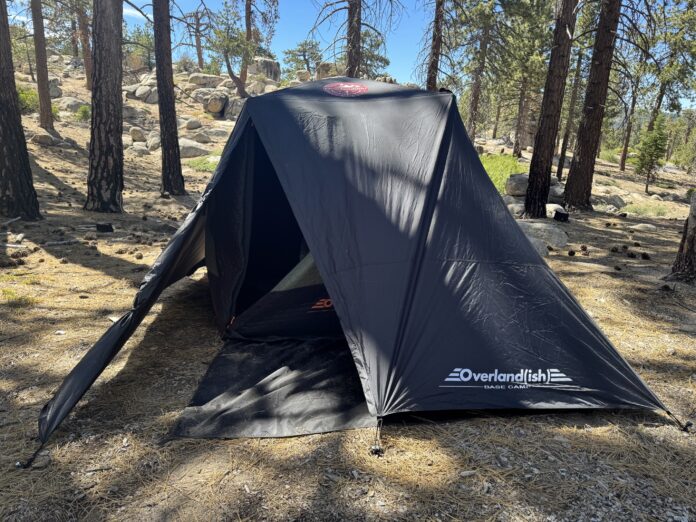

Quick Facts:
- Product: Overlandish Full Coverage Weather Pack (rainfly kit)
- What it does: Adds an insulating air gap, so a rainfly keeps you warmer in winter and cooler in summer
- Includes: Full-coverage rainfly, footprint, stakes, and guylines
- Fits: Overlandish Basecamp and Basecamp SOLO ground tents
- Fly features: Built-in windows, adjustable side windows, adjustable roof vents
- Price: $229.99 standalone, or $169.99 as a tent add-on
- Best for: Overlanders who want one cheap upgrade for every season
8 min read
In This Guide
- Does a Rainfly Keep You Warmer? Start With the Air Gap
- Overlandish Weather Pack at a Glance
- What a Rainfly Does Beyond Blocking Rain
- Does a Rainfly Keep You Warmer in Winter?
- How the Air Gap Keeps Your Tent Cool in Summer
- The Cheap-Upgrade Math: Less Fuel and Battery
- Double-Wall vs Single-Wall: Which Stays Comfortable?
- Weather Pack Pros and Cons
- Final Verdict
- Frequently Asked Questions
Does a Rainfly Keep You Warmer? Start With the Air Gap
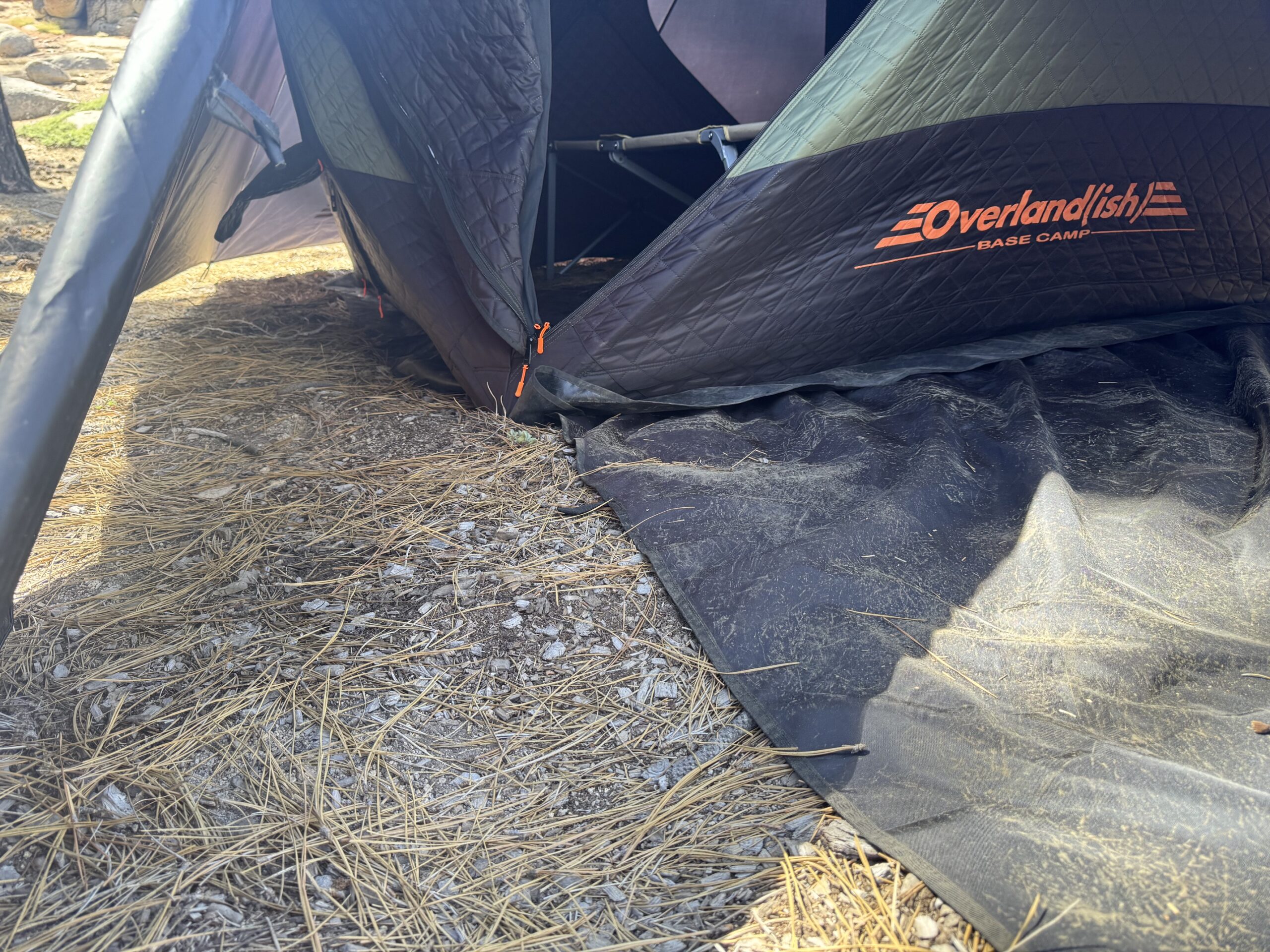
Does a rainfly keep you warmer? Yes, and the reason surprises most campers. A full-coverage fly blocks rain, yet it also traps a thin layer of air between your tent wall and the fly. This trapped air behaves like insulation. As a result, your tent loses less heat on cold nights and gains less heat under the summer sun. One simple upgrade earns its place in both seasons.
This guide speaks to overlanders and campers who run a ground tent across mixed conditions. For instance, if you own an Overlandish Basecamp SOLO, or you shop for a four-season shelter, the fly is your cheapest comfort upgrade. Weekend campers notice the difference first on frosty mornings and hot afternoons. Because the physics stays the same, the benefit holds whether you camp high in the Sierra or low in the desert.
I shot a set of videos with the Basecamp SOLO in Big Bear this past weekend, and the fly went on in under five minutes. Compared to a heater or an air conditioner, a fly costs little and needs no power. Better yet, the Overlandish Full Coverage Weather Pack bundles the fly, a footprint, stakes, and guylines, so you get a complete weather kit in one box. For a broader view of shelters worth this upgrade, see our roundup of the best overland ground tents.
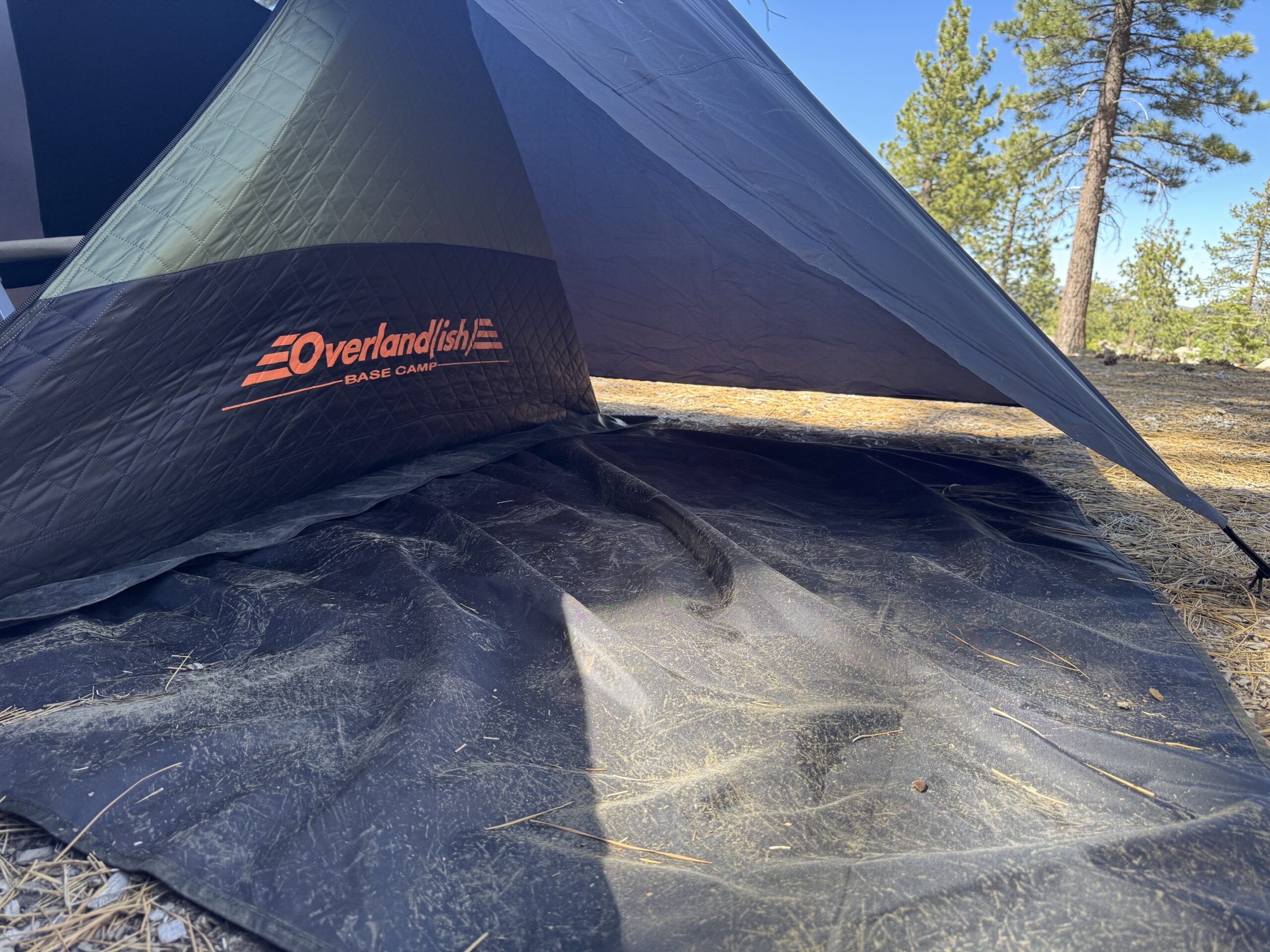
Picture a clear October night in the mountains. Without a fly, your tent radiates warmth straight to the cold sky. With the fly on, your heat stays closer to you. Meanwhile, the same fly shades the tent at noon in July, so the interior stays cooler while you rest. Next, look at what the Weather Pack includes before the science explains why it works.
Overlandish Weather Pack at a Glance
The Weather Pack is a rainfly bundle built for the Basecamp platform. First, here are the numbers before the deep dive.
| Specification | Details |
|---|---|
| Product | Full Coverage Weather Pack (SKU WP-1) |
| Coverage | Full-coverage fly over the entire tent |
| Bundle contents | Rainfly, footprint, stakes, guylines |
| Ventilation | Built-in fly windows, adjustable side windows, adjustable roof vents |
| Compatible tents | Basecamp and Basecamp SOLO |
| Price (standalone) | $229.99 |
| Price (tent add-on) | $169.99 |
| Alternative | Speed Fly (partial coverage) at $109.99 |
Buy Direct From Overlandish
Get the Full Coverage Weather Pack
The fly, footprint, stakes, and guylines ship together for $229.99. Add it to a new tent for $169.99.
What a Rainfly Does Beyond Blocking Rain
A rainfly handles the obvious job first. It sheds rain, wind, and morning dew. Beyond the obvious, it adds a second wall to your shelter. Two walls with a gap between them trap still air, and still air is a poor conductor of heat. The fly turns a single-layer tent into a buffered, double-layer shelter.
The real trick is convection. In an open space, warm air rises while cool air sinks, carrying heat across the gap. Trap the air so it stops circulating, and you block most of the transfer. Home insulation works the same way. Fiberglass and foam do not insulate on their own; instead, they hold pockets of air still, per the R-value reference on trapped air.
For example, you already own this technology at home. A double-pane window seals a still-air gap between two sheets of glass, and the gap supplies most of the insulation. Windows reach peak insulation with a gap of five eighths to three quarters of an inch, about 16 to 19 mm. Go wider, and convection currents start again. A fly follows the same rule, so you want a real air gap, not a loose fly flapping in the wind.
How much does the gap add? A sealed air space is worth about R-0.9 to R-1.0, similar to a single pane of glass. Still, the number reads small at first. Across a whole night, however, it slows the heat leaving your body and your heater, and small gains stack up by morning.
Does a Rainfly Keep You Warmer in Winter?
Does a rainfly keep you warmer in winter? The biggest factor is the night sky. On a clear night, your tent radiates heat toward space, which sits near absolute zero. This is why frost forms on a tent even when the air stays above freezing. As a result, a bare tent has nothing to slow this loss.
A fly overhead behaves like a cloud. Instead of losing warmth to the cold sky, your tent trades heat with the fly surface a few inches away. Clear-sky surfaces drop 27 to 36°F below the air temperature at night, roughly 15 to 20°C, according to peer-reviewed radiative-cooling research, so blocking the path to the sky matters. Then the fly reflects your warmth back down.
The air gap adds a second layer of defense. Warm air from your body and heater stays trapped against the inner wall rather than escaping. Because the inner wall stays warmer, tent condensation forms on the fly instead of the surface you touch. Then vent the fly’s roof vents, and humid air leaves before it soaks your sleeping bag. Our breakdown of two-layer tent thermal design shows the same principle in a purpose-built cold-weather shelter.
A verified Basecamp SOLO owner reports camping in below-freezing weather, with the shelter warming fast under a small heater and holding heat overnight. Their on-site review matches the physics above rather than a lab rating. For a full setup guide, read our notes on keeping a tent warm in winter.
How the Air Gap Keeps Your Tent Cool in Summer
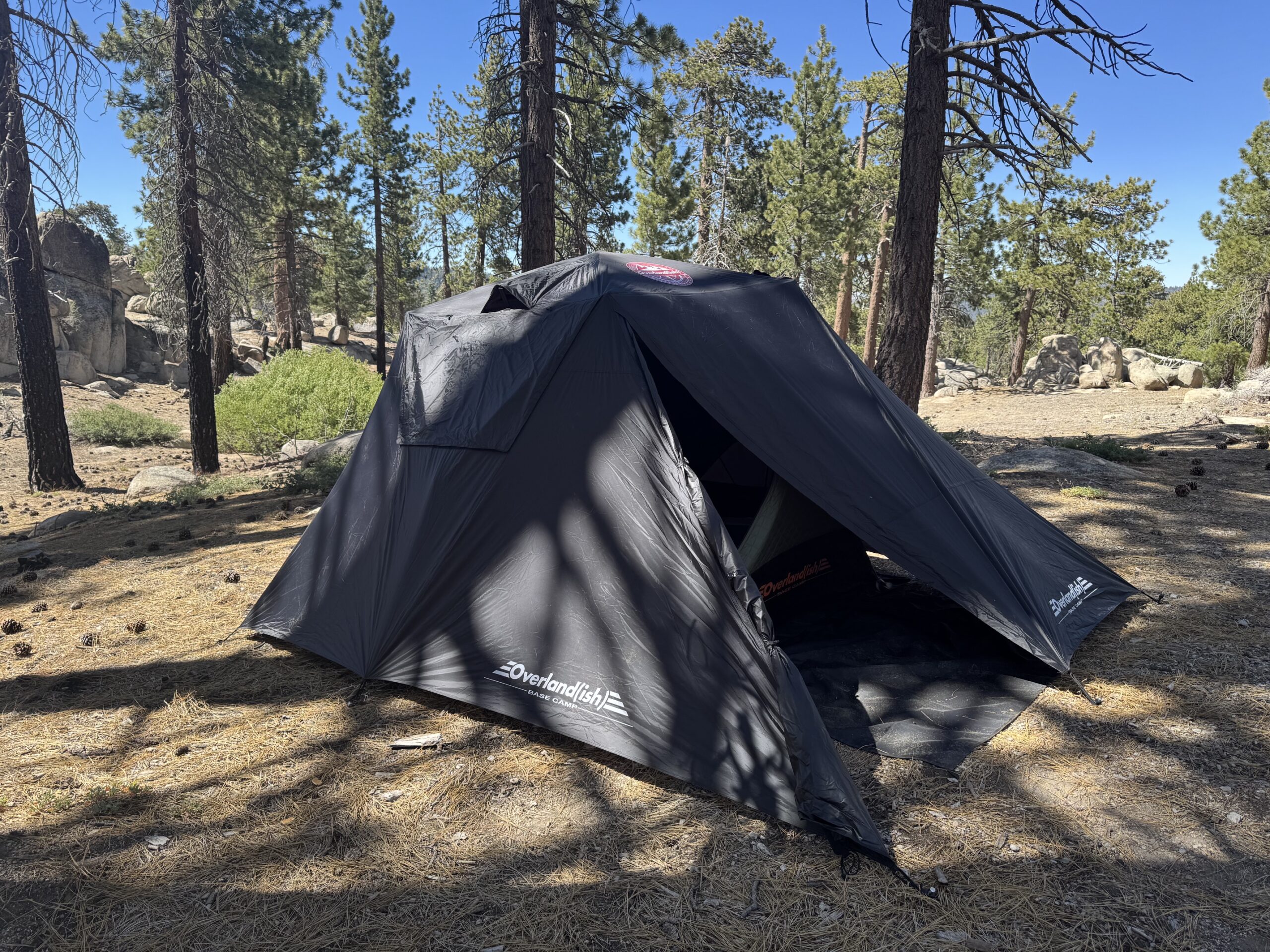
The same fly pays off again in July. Direct sun adds up to 15°F to the heat you feel, per the National Weather Service heat-index guidance, and the fly shades the tent body from the radiant load. For instance, shade alone changes your comfort during a midday rest.
Yet the fly does more once you vent it. Open the low wall vents, and the tent pulls in cooler, shaded air from the gap. Warm air then rises and exits the high roof vents. This draft is the stack effect, the same force a chimney uses. A bigger temperature difference drives a stronger pull, so hot days vent well.
Overlandish built the Full Coverage fly around exactly this idea. With the fly on and the low vents open, you feed the tent the coolest air nearby, which is the shaded air-gap air. So the fly improves airflow rather than trapping heat. In Big Bear this weekend, the shaded gap felt noticeably cooler than the sunlit tent skin.
Here is where campers get confused. Some advice says strip the fly for airflow, and stripping it works for a quick, dry night. A taut fly with an open air gap, though, beats a bare tent under strong sun, because it blocks the radiant load while still venting. A fly pitched tight against the inner wall, with no venting, is the one setup to avoid.
The Cheap-Upgrade Math: Less Fuel and Battery
Better insulation lowers the energy you spend on comfort. The EPA estimates air sealing and added insulation save homeowners about 15% on heating and cooling costs, per Energy Star. Your tent follows the same physics on a smaller scale. So does a rainfly keep you warmer without a bigger fuel bill? The numbers point to yes.
A warmer tent needs less runtime from your buddy heater, so a propane canister lasts longer. A cooler tent needs less from a fan or a 12-volt cooler, which spares your battery. Over a season of trips, the fly pays for itself in fuel and power you no longer burn.
At $229.99 standalone, or $169.99 with a tent, the Weather Pack costs far less than a night in a lodge. It also adds a footprint and stakes, so the value stretches past thermal comfort alone. For more ideas in this range, see our guide to double-wall construction and heat retention.
Cut Your Fuel and Battery Use
Add the Air Gap to Your Basecamp SOLO
One fly keeps you warmer in winter and cooler in summer, so your heater and battery work less.
Double-Wall vs Single-Wall: Which Stays Comfortable?
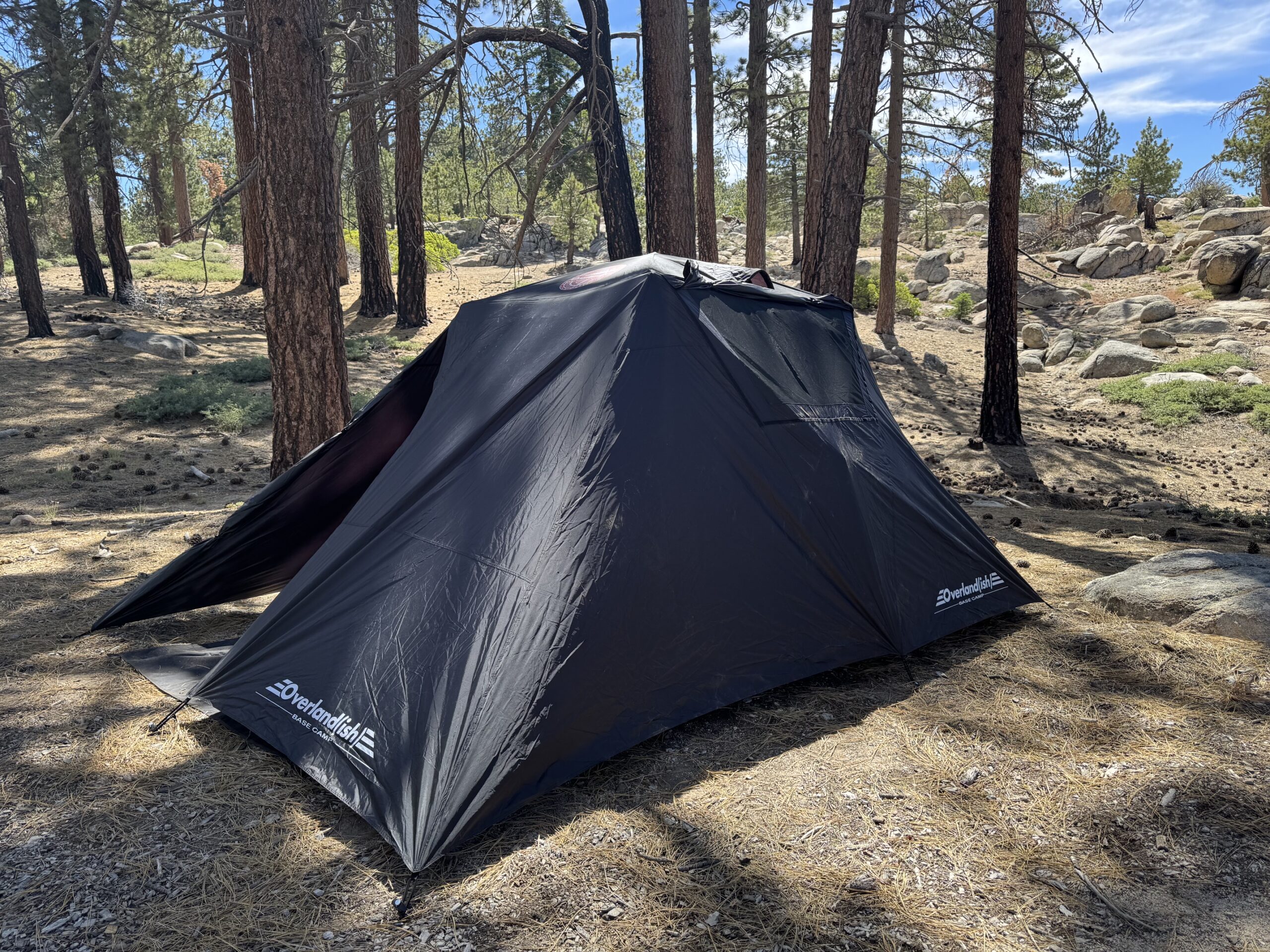
A double wall tent gives you a breathable inner wall plus a separate fly. A single wall tent uses one layer for everything. The air gap is the whole difference, and it decides how the shelter behaves across seasons.
In cold weather, the double wall tent wins. The inner wall stays above the dew point, so you wake up dry instead of damp, and tent condensation lands on the fly. In heat, the double wall tent breathes better too, because fresh air moves through the gap even with the fly on. In contrast, a single wall tent traps more of your moisture and heat against one surface.
Still, a single wall tent packs smaller and lighter, which suits fast, minimalist trips. For mixed-season overland camping, however, the double-layer setup keeps you comfortable across a wider range. Adding the Weather Pack turns your Basecamp SOLO into a true double-wall shelter, which is the point of the whole upgrade.
Full Coverage Fly vs Speed Fly
Overlandish sells two flies. Here is how they compare as tent add-ons, so you pick the right one for your climate.
| Feature | Full Coverage Fly | Speed Fly |
|---|---|---|
| Coverage | Over the entire tent | Partial, top-focused |
| Air gap for thermal buffer | Full wall coverage | Limited to the roof area |
| Best use | All-season, longer setups | Fair-weather, quick trips |
| Bundle | Fly, footprint, stakes, guylines | Fly, footprint, stakes, guylines |
| Add-on price | $169.99 | $109.99 |
Weather Pack Pros and Cons
Pros
- Adds a warmer-in-winter, cooler-in-summer air gap for $229.99
- Bundles the fly, footprint, stakes, and guylines in one weather kit
- Moves tent condensation to the fly, so the inner wall stays dry
- Built-in fly windows and roof vents control airflow with the fly on
- Fits both the Basecamp and Basecamp SOLO
- Full coverage keeps sideways rain and wind off the tent
Cons
- Adds a few setup steps versus a bare tent
- Adds weight and pack bulk to your load
- Costs $60 more than the partial-coverage Speed Fly
- Sells out often, so stock timing matters
- No published lab temperature rating; the benefit is qualitative
Final Verdict
The Weather Pack suits any Basecamp owner who camps across real seasons. Its biggest strength is range: one fly warms cold nights, shades hot afternoons, and keeps the inner wall dry. For overlanders who leave a shelter pitched for days, the flexibility beats a single-purpose accessory.
The trade-offs are honest. You add setup time, weight, and pack bulk, and full coverage runs $60 above the Speed Fly. If you camp only on warm, dry weekends, a lighter partial fly or no fly at all will serve you fine. Storm campers and shoulder-season travelers gain the most here.
On value, the math works. A footprint, stakes, and guylines come in the box, and the fuel and battery you save across a season offset the price. Few comfort upgrades cost this little and work in every month of the year.
Finally, my recommendation is simple. If you run a Basecamp SOLO in mixed conditions, choose the Full Coverage Weather Pack over the Speed Fly for the extra protection and the larger air gap. Budget-focused fair-weather campers should look at the Speed Fly at $109.99 instead. For the tent itself, read our Overlandish Basecamp all-season tent review.
Ready to Buy?
Check Today’s Price on the Weather Pack
The bundled footprint and stakes make it a complete weather kit for every season.
Frequently Asked Questions
Does a rainfly keep you warmer at night?
Yes. A rainfly blocks the heat your tent radiates to the cold night sky, and the trapped air gap slows heat loss. Together they keep the interior warmer than a bare tent, especially on clear, calm nights.
How much warmer does a rainfly make a tent?
No lab rating exists for a specific tent, so treat published numbers with care. Campers on backpacking forums commonly report roughly 5 to 15°F of extra warmth in still conditions. Your result depends on wind, sky clarity, and how well you vent the fly.
Should I take the rainfly off in hot weather?
Usually no. A taut fly with an open air gap shades the tent and still vents warm air through the stack effect. To keep your tent cool in summer, leave the fly on but open the low and high vents.
Does a rainfly help with tent condensation?
Yes. In a double-wall setup, moisture passes through the breathable inner wall and lands on the fly. The inner wall stays warmer than the dew point, so tent condensation collects where you do not touch it.
Do I need a rainfly if rain is not in the forecast?
Often yes. Beyond rain, the fly adds warmth, blocks solar heat, and controls condensation. Even on a dry night, the air gap makes the shelter more comfortable and cuts your heater and battery use.