



Quick Facts:
- Topic: Traction boards vs winch, and where recovery gear money goes first
- Traction board cost: $150 to $300 for a quality pair
- Winch cost installed: $400 to $1,200+ with mount and wiring
- Board weight: Roughly 8 to 20 pounds per pair
- Winch weight: Roughly 60 to 90 pounds plus a bumper
- Skill to use boards: Beginner, self-recovery in minutes
- Skill to use a winch: Intermediate, needs a solid anchor
- Best for: Overlanders, sand and beach drivers, rock crawlers, solo remote travelers
7 min read
This article contains Amazon affiliate links. As an Amazon Associate, 4wdTalk earns from qualifying purchases at no extra cost to you.
In This Guide
The Recovery Money Question: Traction Boards vs Winch
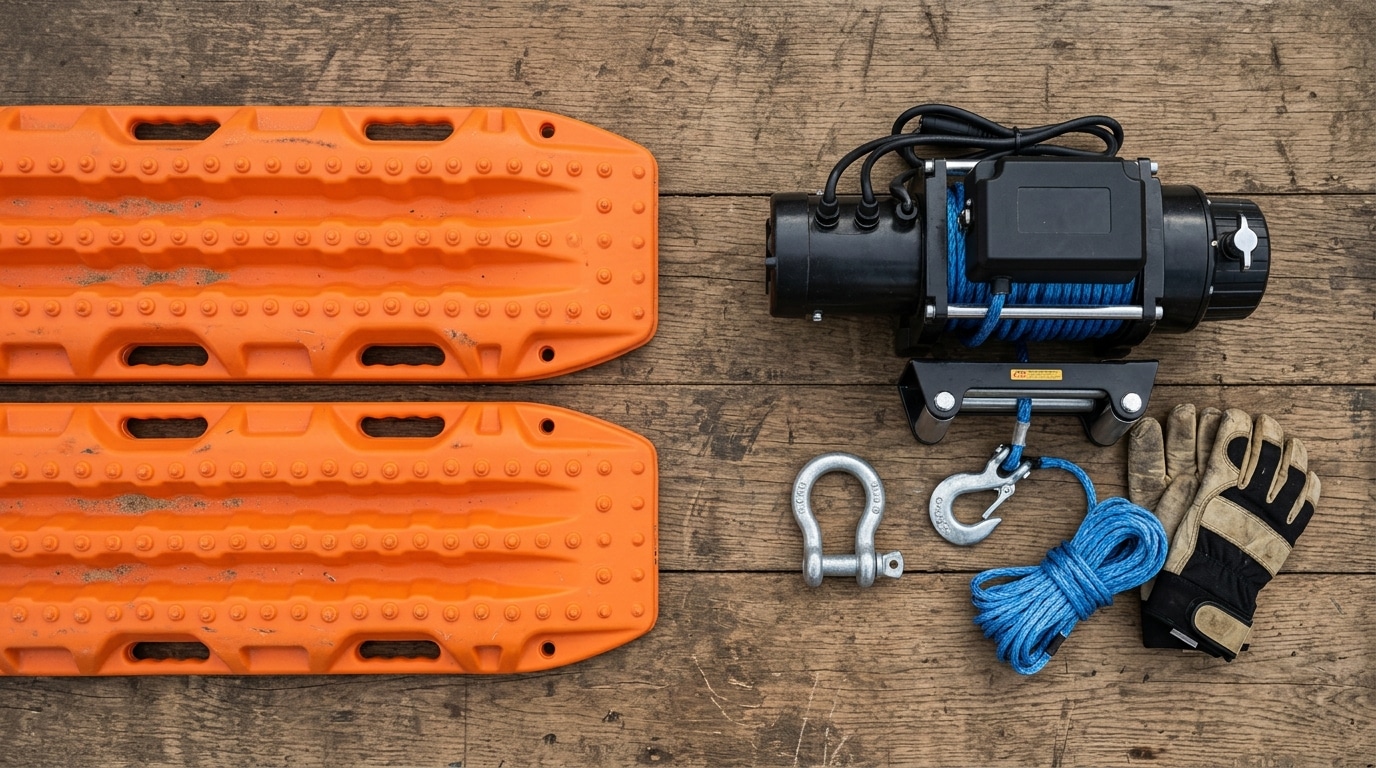
The traction boards vs winch debate comes down to one honest question. Where should your first recovery dollars go? In addition, both tools free a stuck rig, yet they solve different problems at wildly different price points. In practice, boards handle the everyday stuck. By contrast, a winch handles the rare, ugly, truly buried situation.
I have used both in the field, and my spending advice surprises people. In practice, most drivers reach for boards far more often than a winch. For this reason, boards usually earn the first slot in a complete recovery gear kit. A winch then follows once your terrain and travel style justify the cost.
In short, this guide is built for off-road and overland drivers who want to prioritize spend, not read another product roundup. First, we break down how each tool works. Then we compare real-world use frequency, total cost, weight, and skill. Finally, you get a clear buy-first recommendation for your specific use case.
Traction Boards vs Winch at a Glance
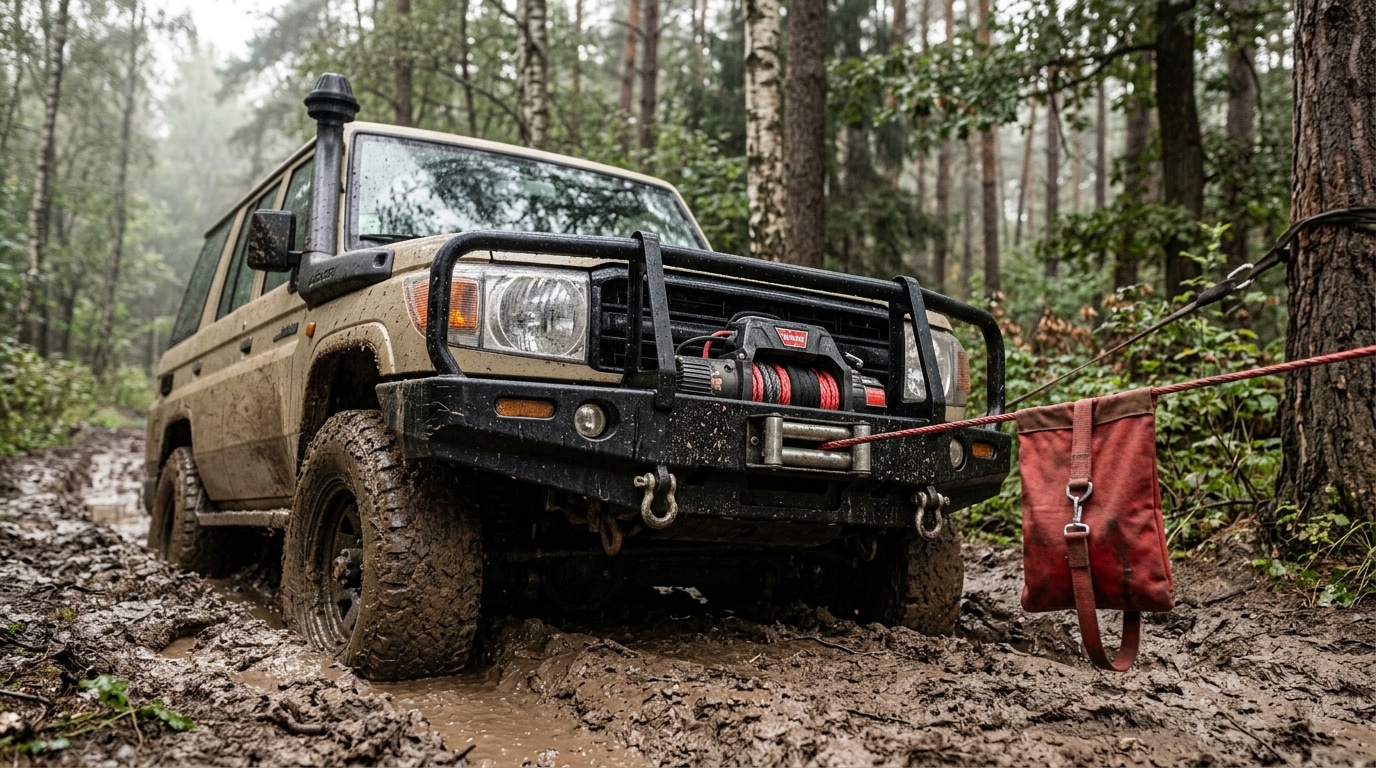
Before the deep dive, here is the head-to-head. These figures reflect quality mid-range gear a typical US buyer would pick.
| Factor | Traction Boards | Electric Winch |
|---|---|---|
| Typical cost | $150 to $300 per pair | $400 to $1,200+ installed |
| Weight | 8 to 20 lb per pair | 60 to 90 lb plus a bumper |
| Setup time | 2 to 5 minutes | 10 to 20 minutes with rigging |
| Needs an anchor | No | Yes, a tree, rock, or second rig |
| Best terrain | Sand, mud, snow, ruts | Steep, deep mud, hard-stuck |
| Skill level | Beginner | Intermediate |
Start Your Recovery Kit
MAXTRAX MKII Recovery Boards
The board pair most drivers reach for first. Lightweight, no anchor needed, and ready in minutes on sand, mud, or snow.
How Traction Boards Get You Unstuck
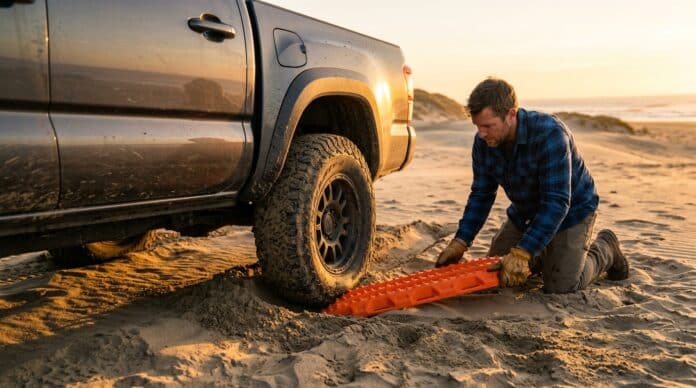
To begin, traction boards are simple, and simplicity is their strength. Specifically, each board is a stiff nylon ramp with molded teeth along the surface. First, you dig or wedge one under the leading edge of a spinning tire. Then you ease onto the throttle. As a result, the teeth bite the tread, the board bridges the soft spot, and the tire climbs out onto firm footing.
Because the whole process is self-recovery, you need no second vehicle and no anchor. Such independence matters most on sand and snow, where the ground offers nothing to pull against anyway. For a full breakdown of tooth patterns, ramp angles, and materials, see our guide to choosing a traction board.
For example, quality boards from MAXTRAX or similar brands run about $150 to $300 a pair. Cheaper sets exist near $70, yet many flex or shear teeth under a heavy rig on hard ground. Since a failed board strands you far from help, I treat boards as gear worth buying once and buying well. Reinforced nylon construction lasts for years of hard use.
How a Winch Gets You Out
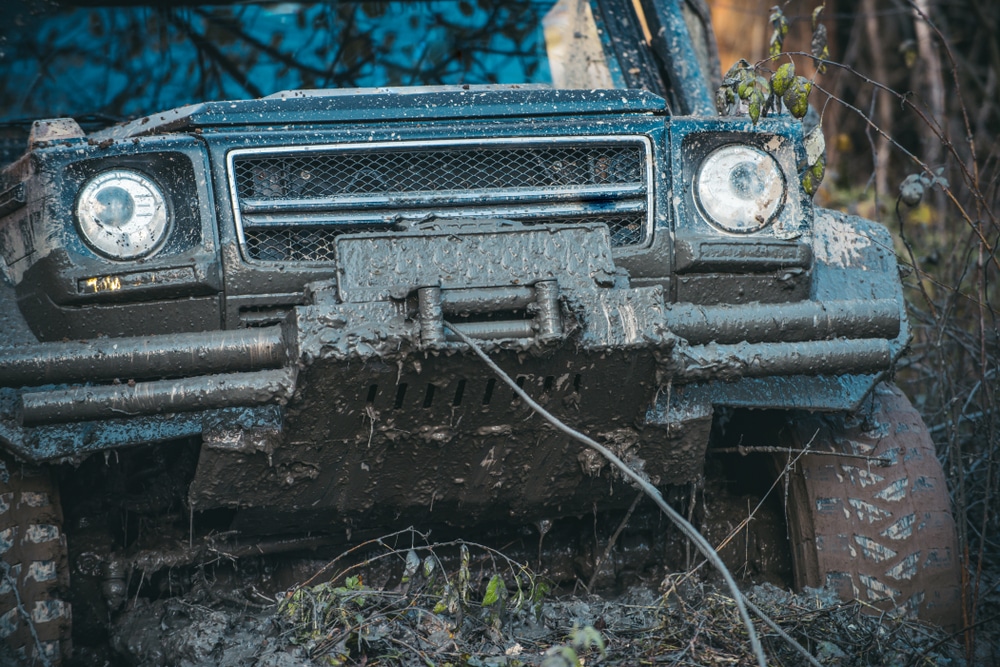
By contrast, a winch pulls your rig toward a fixed point using a motor-driven drum and a synthetic rope or steel cable. Next, mount it to the front bumper, run the line to an anchor, and the motor reels you forward. For instance, on a mid-size or full-size 4×4, a line-pull rating of 9,500 to 12,000 pounds covers most needs.
Here is the catch shaping the whole traction boards vs winch decision. A winch needs a solid anchor. On an open beach or a bare desert flat, there might be no tree, no boulder, and no second rig within reach. Without an anchor, the winch sits useless. A ground anchor helps, though setup eats time and effort.
When conditions suit it, though, a winch is unmatched. A steep, greasy hill climb or a frame-deep mud hole often defeats boards entirely. In that case, the winch shines, dragging a fully buried truck out under static, controlled tension. To compare pull ratings and rope types across brands, review our roundup of the best off-road winches.
Real-World Use Frequency
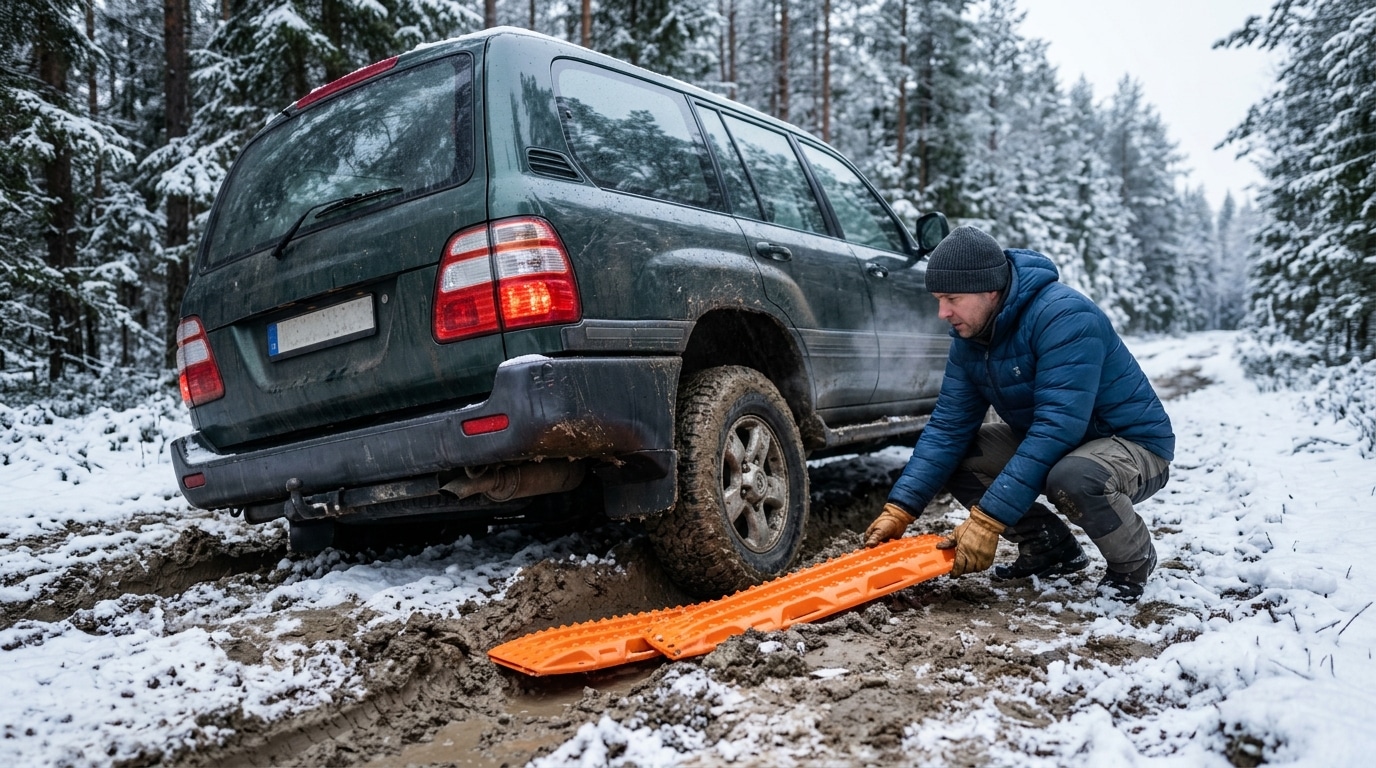
Frequency is the part most buyers overlook, yet it drives smart spending. Across years of trail and overland miles, roughly four out of five of my own recoveries came down to boards, not a winch. For example, a tire drops into a rut, a sandy climb bogs down, or fresh snow swallows a wheel. In each case, boards solve all three in a couple of minutes.
A winch, by contrast, earns its keep only in the harder minority of recoveries. As a result, it sits idle on most trips. For instance, think a solo hard-stuck in deep mud, a failed steep ascent, or a night where no other rig is around to snatch you. Those moments are real, but they arrive far less often than a simple bog. Our article on whether you need a winch at all makes the same point.
So the pattern is clear. Boards get used often and early. A winch waits for the rare event, then becomes priceless when it arrives. Consequently, the tool you buy first should match how often each one comes off the rack.
Cost, Weight, and Mounting Compared
Above all, money is where the traction boards vs winch gap widens most. A quality board pair costs $150 to $300, and mounting is trivial. You strap them to a roof rack, bed rails, or a rear door. Total added weight stays around 8 to 20 pounds, which barely touches your payload.
A winch is a bigger commitment. Moreover, the unit alone runs $250 to $700, and a winch-ready bumper adds $300 to $900 more. Add wiring, a solenoid, and occasional labor, and an installed setup often lands between $400 and $1,200 or higher. The hardware also adds 60 to 90 pounds hung over the front axle, which shifts balance and eats payload.
The Cost of Getting Stuck Without Gear
Skipping recovery gear carries its own price. A professional off-road extraction is not cheap. As our breakdown of a professional recovery bill shows, a single callout often runs $500 to $1,000 or more. One avoided tow pays for a full board set several times over. Because of this math, boards are the highest-value first purchase in any off road recovery budget.
Traction Boards vs Winch: Which to Buy First
Ultimately, your terrain and travel style decide the order. For most overlanders, boards come first because they solve the common sand, mud, and rut situations you meet on trails and forest roads. Then a winch becomes the second buy once you tackle steeper or more remote ground.
By contrast, rock crawlers flip this logic. If you run technical trails where a failed line leaves you wedged against granite, a winch earns first place, with boards as backup on the softer approaches. Beach and sand drivers, meanwhile, should buy boards and rarely bother with a winch, since open sand offers no anchor and boards handle the terrain perfectly.
Meanwhile, solo remote travelers face the toughest math. When no second rig is around to snatch you, self-recovery is everything. Start with boards for daily bogs, then add a winch and a ground anchor before venturing far from help. In short, this two-tool kit covers both the common and the catastrophic.
Final Verdict
For the vast majority of off-road and overland drivers, traction boards are the smarter first purchase. In particular, they cost a fraction of a winch, weigh almost nothing, need zero anchor, and solve the stuck situations you meet most weekends. For example, one quality pair pays for itself the first time it saves a tow bill.
A winch is not a luxury, though, and some drivers should reverse the order. Rock crawlers on unforgiving terrain and hardcore solo travelers heading deep into the backcountry gain real safety from a winch and its static pulling power. For those users, the anchor limitation is manageable and the payoff is large.
In the end, value comes down to matching the tool to your real risk. Overall, boards deliver the best return per dollar for common recoveries. A winch delivers irreplaceable capability for the rare, severe, solo, or steep event boards leave undone.
Ready for the Hard Stuff?
Smittybilt X2O-10K Winch
A 10,000-pound waterproof winch with synthetic rope, sized right for a mid-size or full-size 4×4 heading into steep or remote terrain.
Finally, my recommendation for a first-time buyer is straightforward. Start with a quality board pair such as the MAXTRAX MKII, then add a properly rated winch like the Smittybilt X2O once your terrain demands it. This order matches how often you get stuck.
Frequently Asked Questions
Are traction boards better than a winch?
For everyday recoveries, yes. Traction boards free a lightly stuck rig in minutes with no anchor and no second vehicle. A winch wins only in the harder cases, such as a frame-deep bog or a failed steep climb. Most drivers use boards far more often, so boards are the better first buy.
Do I need a winch if I have traction boards?
Not always. If you stick to sand, forest roads, and moderate trails, a board set covers the common stuck situations well. A winch earns its place once you run technical rock, deep mud, or remote solo trips where self-recovery matters most.
How much does it cost to install a winch?
Expect $400 to $1,200 or more for a full setup. The winch itself runs $250 to $700, a winch-ready bumper adds $300 to $900, and wiring plus labor bump the total further. This cost gap is a major factor in the traction boards vs winch decision.
What line pull rating do I need for my 4×4?
A common rule sizes the winch at roughly 1.5 times your loaded vehicle weight. For most mid-size and full-size 4×4 rigs, a 9,500 to 12,000 pound rating fits well. Heavier trucks and trailers push toward the top of the range.
Will a winch work without an anchor point?
Only with a ground anchor, and even then setup is slow. A winch needs something solid to pull against, such as a tree, a boulder, or another rig. On open sand or bare flats with no anchor, traction boards are the more reliable choice.
Are traction boards worth it for overlanding?
Yes. For overlanders, quality traction boards also rank as the highest-value piece of off road recovery equipment you own. For instance, they handle sand, mud, ruts, and snow, weigh little, and cost a fraction of a winch. This mix makes them the standard first purchase.