


Quick Facts:
- Product: ROAM Vagabond 2.0 rooftop tent, by ROAM Adventure Co
- Type: Softshell foldout, sleeps 2 to 3
- Sleeping size: 56″ W x 96″ L x 52″ H
- Closed size: 56″ W x 48″ L x 9″ H
- Weight: 150 lbs, up from 130 lbs on the original Vagabond
- Mattress: 2.5″ dual-layer memory foam, ROAM-rated R-10.2
- Body fabric: 600D ripstop poly/cotton; UV, water, and mold resistant
- Rainfly: 420D PU-coated diamond ripstop nylon, two vinyl skylights
- Ladder: 7.5-foot quick-disconnect telescopic aluminum
- Setup and teardown: 5 minutes, per ROAM
- Warranty: 2 years, manufacturer and craftsmanship
- Price: $2,399, or $2,849 bundled with the annex
- Public owner reviews: One, as of August 2026
- Best for: Buyers who want a big softshell footprint and a warm mattress at a mid-tier price
11 min read
In This Review
ROAM Vagabond 2.0 Overview
The ROAM Vagabond has been the brand’s flagship rooftop tent since roughly 2019. In October 2025, ROAM replaced it with the Vagabond 2.0. The pitch is short: “lighter, tougher, and more comfortable than ever.” ROAM built the update around a low-profile redesign, a new memory foam mattress, LED lighting, internal storage, and an insulated base.
One of those three adjectives holds up under the spec sheet. A second runs backwards, and the third has no evidence either way. Start with the headline number: the tent marketed as lighter gained 20 pounds. We work through all three below.
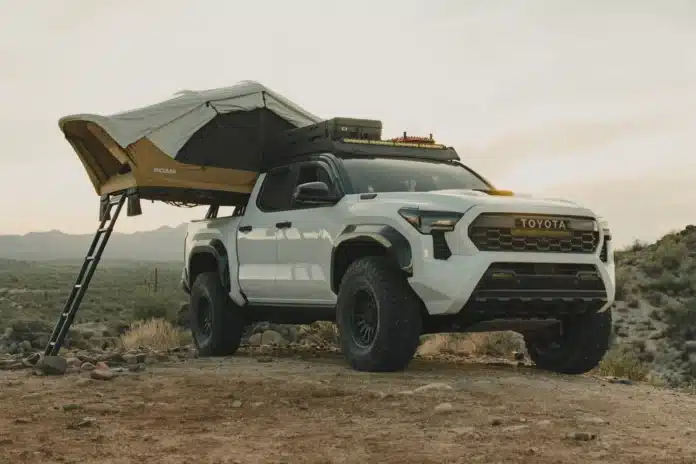
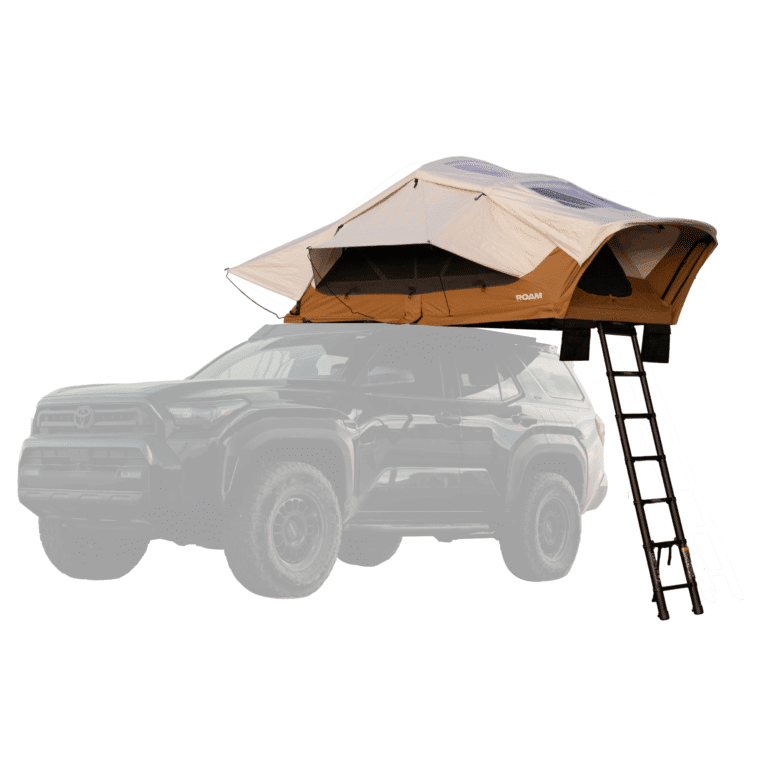
Mechanically, the Vagabond 2.0 is a softshell foldout. It folds over the side of your rack, and the ladder doubles as the support arm. A PVC travel cover zips over the whole package. Sleeping area runs 56 by 96 inches with 52 inches of interior height. For a two- to three-person tent, the footprint is large. Closed, it packs to 56 by 48 by 9 inches.
ROAM’s MSRP is $2,399, and Spirit of 1876 lists it at the same figure. ROAM offers two colorways, Black and the new Sand. Adding the annex at purchase brings the total to $2,849.
Who ROAM Is
ROAM Adventure Co launched in Austin, Texas in 2017. Most overlanders know the brand for its Rugged Cases, LLDPE-shell boxes in 83, 95, and 105 liters, inside a storage catalog of more than fifty products. Its tent catalog runs to 22 products, including the hardshell Desperado and Rambler alongside the Vagabond family.
One item in ROAM’s warranty language deserves attention up front. The Made to ROAM warranty runs two years. Its exclusions list, though, covers “any weather related damage.” Weather resistance is this product’s entire job. Ask your dealer how ROAM applies the clause before you buy.
How We Evaluated This Tent
I spent a day on the floor at the Spirit of 1876 warehouse showroom in Castle Rock, Colorado, which gave me the category context behind this review. However, I have not been hands-on with this specific model, and I have not slept in one. Every durability and comfort claim below traces to ROAM’s published specs or to owner reports. I label which is which throughout.
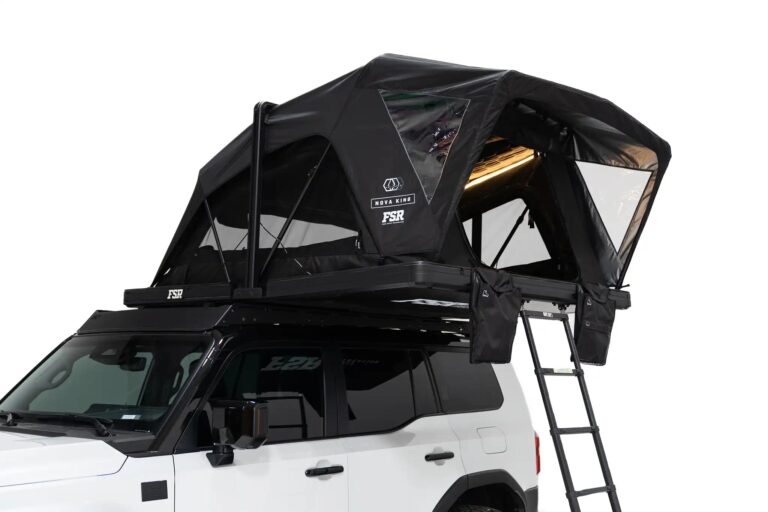
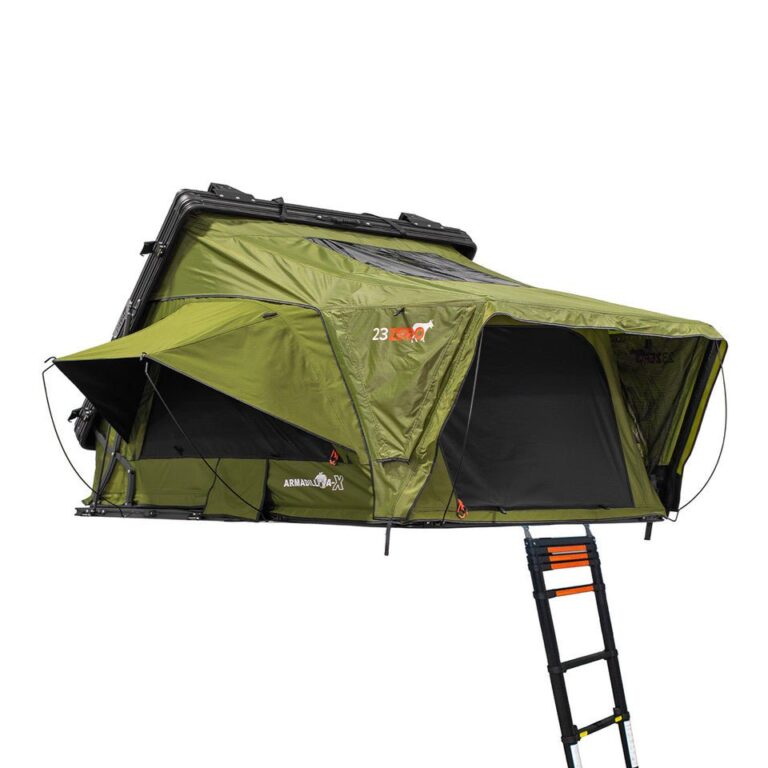
Other Rooftop Tents in This Class

Key Specs at a Glance
These figures come from ROAM’s published spec sheet and its user manual. Where a retailer listing disagrees, both numbers appear below.
| Specification | Details |
|---|---|
| Type | Softshell foldout, double wall |
| Capacity | 2 to 3 people per ROAM, listed as 3-person by Backcountry |
| Weight | 150 lbs |
| Size, sleeping | 56″ x 96″ x 52″ |
| Size, closed | 56″ x 48″ x 9″ |
| Body fabric | 600D ripstop poly/cotton; UV, water, and mold resistant |
| Rainfly | 420D PU-coated diamond ripstop nylon, two clear vinyl skylights |
| Mattress | 2.5″ dual-layer memory foam, ROAM-rated R-value 10.2 |
| Base | Insulated aluminum |
| Frame | 1″ aluminum with aluminum joints |
| Cover | 720 GSM laminated PVC, black |
| Ladder | 7.5-foot quick-disconnect telescopic aluminum |
| Also included | LED strip with white and red modes, 2 boot bags, gear hammock, 4 internal panels, tool bag, mounting hardware |
| Season rating | 3-season per Backcountry; ROAM publishes no season rating |
| Warranty | 2 years, manufacturer and craftsmanship |
| Price | $2,399, or $2,849 with the annex |
Two omissions are worth naming. ROAM publishes no hydrostatic head rating for the body or the fly. Its only water language is “water resistant” on the body, “PU-coated” on the fly, and the marketing phrase “all-weather tent.” ROAM also publishes no static load rating for the tent, only a rack requirement. The setup section below covers it.
What Changed From the Original Vagabond
ROAM published its own install walkthrough for the 2.0 in April 2026, six months after launch. It is the only footage of the current tent, so treat it as manufacturer material rather than an evaluation. Watch it for the fold, the ladder, and the sandwich-plate mounting hardware, then read the changes below.
ROAM delisted the original Vagabond when the 2.0 arrived. No side-by-side remains on ROAM’s own site. Comparing the 2.0 spec sheet against archived V1 listings produces a clearer picture than the marketing copy does.
| Spec | Original Vagabond | Vagabond 2.0 |
|---|---|---|
| Weight | 130 lbs | 150 lbs |
| Closed height | 12″ | 9″ |
| Sleeping size | 56″ x 96″ x 52″ | Unchanged |
| Rainfly | 600D ripstop nylon | 420D ripstop nylon |
| Mattress | 3″ high-density foam, anti-condensation mat | 2.5″ dual-layer memory foam, R-10.2 |
| Lighting | None | USB LED strip, white and red, doubles as a lantern |
| Internal storage | Not listed | 4 organizational panels |
| Mounting | Universal sliding brackets | Bolts and sandwich plate |
| Colorways | Black, Forest Green with Hyper Orange | Black, Sand |
Testing ROAM’s Three Claims Against the Spec Sheet
ROAM’s headline for the 2.0 reads “lighter, tougher, and more comfortable than ever.” Published weight went from 130 pounds to 150 pounds. So the tent gained 20 pounds, roughly 15 percent, in the generation marketed as lighter.
The likely explanation sits in the next row down. Closed height dropped from 12 inches to 9 inches, and the base changed from diamond plate to insulated aluminum. Both changes read as a low-profile redesign rather than a weight-reduction program. ROAM has published nothing reconciling the two figures.
The “tougher” half deserves the same scrutiny. Rainfly denier went the wrong way, from 600D down to 420D. Denier alone does not settle durability, since coating and weave matter. Even so, the one hard number ROAM changed on the fly went down, not up.
Which Fabric Is in the 2.0
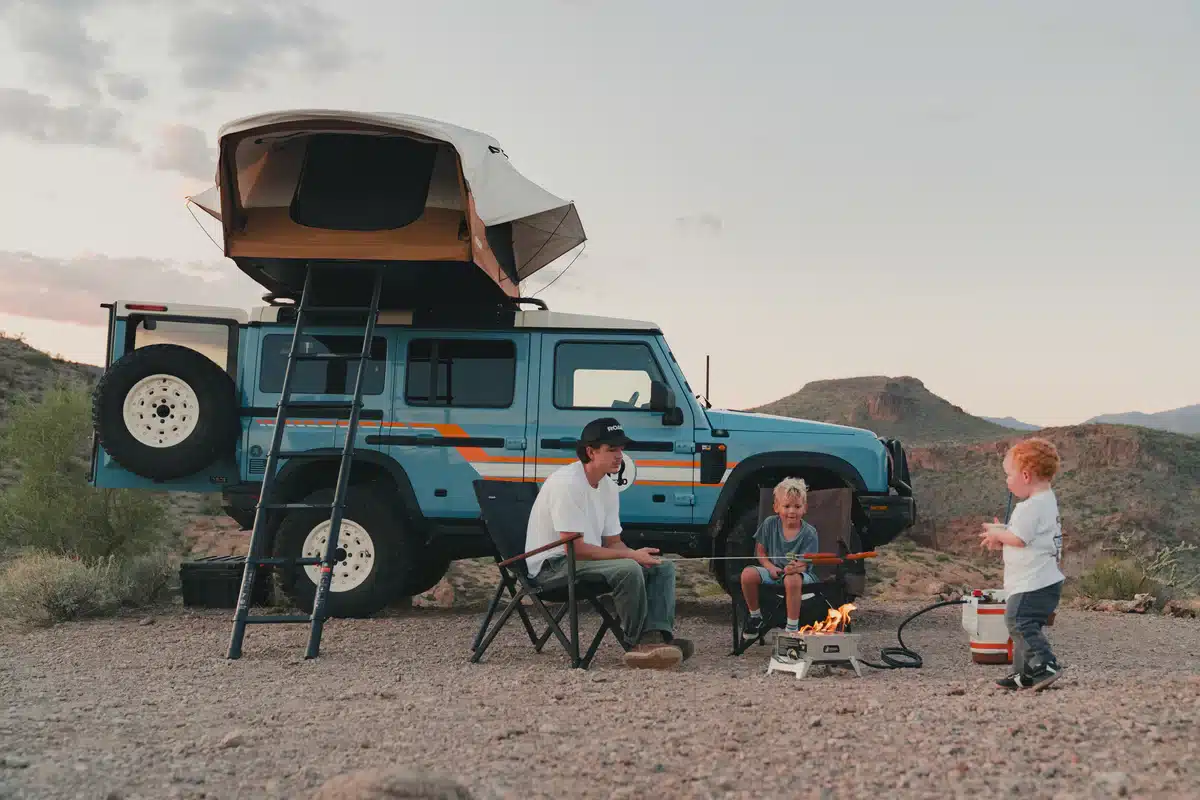
The body fabric is murkier. ROAM’s 2.0 spec table reads 600D ripstop poly/cotton. Lower on the same page, though, its feature copy still says “we used a 280g PU coated poly cotton ripstop,” which was the V1 figure. Two incompatible fabric specs sit on one live page, so nobody outside ROAM knows whether the body changed at all.
“More comfortable” is the claim with the most support, though it is softer than it looks. The 2.0 runs 2.5 inches of dual-layer memory foam against V1’s 3 inches of high-density foam plus an anti-condensation mat. ROAM published no R-value for V1, so no measured comparison exists. Note the mat: V1 shipped one and the 2.0 does not, which matters for anyone camping in the cold. The clear wins are the LED strip and the four storage panels, neither of which V1 had.
None of this makes the 2.0 a bad tent. Rather, buy it for the low profile, the mattress, and the interior kit. Do not buy it for the weight savings ROAM advertises, because there are none.
How the Vagabond 2.0 Sets Up
ROAM rates setup and teardown at five minutes. No independent timing exists, so treat it as the manufacturer’s number. Note also the one recurring complaint on the original Vagabond: setup effort. Hardshells in this bracket advertise well under a minute, so speed is the tradeoff a softshell asks you to accept.
The routine is standard for the category. You open the PVC cover, extend the ladder fully, and press down to swing the tent open. Six spring rods ship in the box for the window bars, and a separate step extends the lower and upper porch bars. The ladder carries the fold-out half. Repacking the cover is where softshells cost you time, so budget accordingly.
Rack Requirements and Install
ROAM’s install spec is explicit: your rack needs a dynamic weight rating of 150 pounds or greater. The figure equals the tent’s own weight. So it is the minimum your crossbars must carry at highway speed, not a tent load rating. Static capacity while parked runs far higher on most racks, which is what supports occupants overnight. Our rooftop tent buyer’s guide explains both ratings in full.
The 2.0 mounts with aluminum extrusions on the base, bolts, and a sandwich plate under your crossbars. This is a change from V1, whose sliding brackets drew a note of friction in one independent 2021 install writeup, which scored ease of install 7.0 out of 10. Whether the new hardware goes on easier is untested, since nobody has published a 2.0 install. ROAM ships four mount plates, eight bolts, eight nuts, a wrench, and a tool bag in the box.
One warning carries over from V1. A buyer left a five-star review flagging a purchase surprise: he did not realize rack mounts were required. His caution, verbatim: without them “the tent will make a lot of noise and potentially cause damage to your rack.” Use the supplied hardware. ROAM does not publish a crossbar spread for the 2.0, so confirm spacing with your dealer before delivery. At 150 pounds, plan a two-person install at minimum.
Inside the Vagabond 2.0
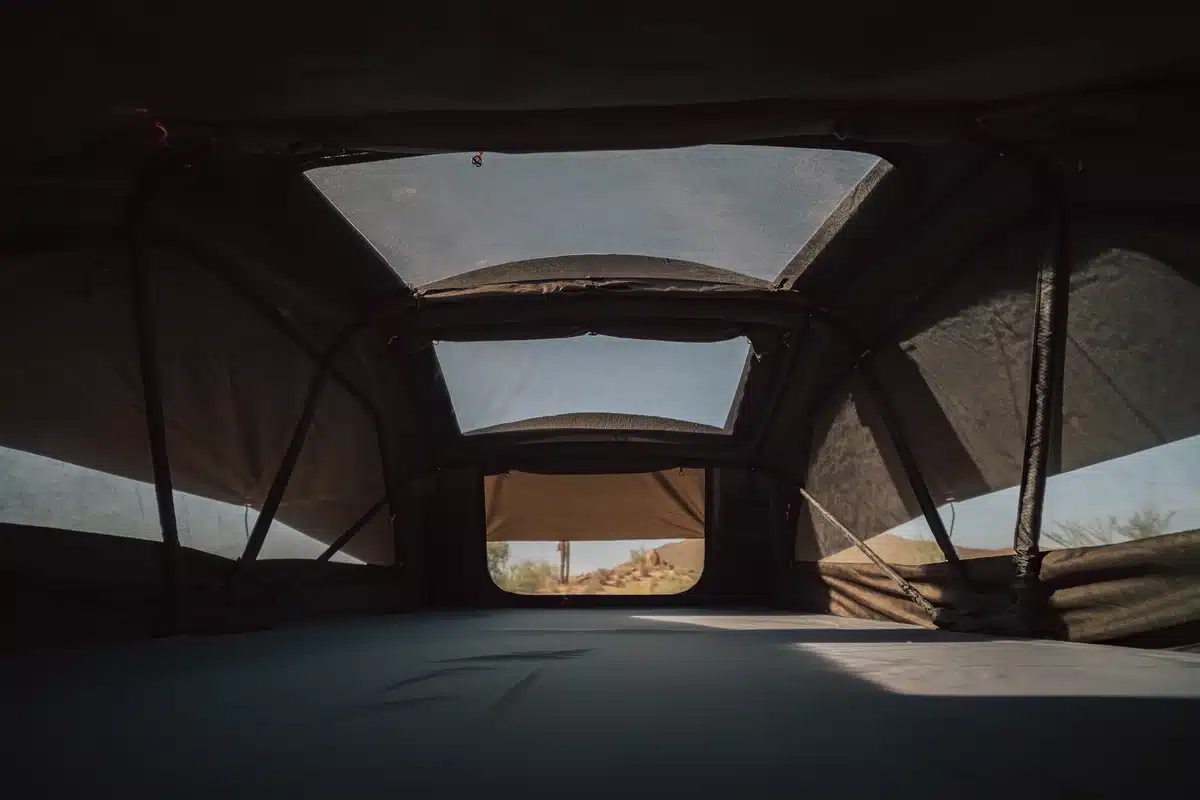
The sleeping platform is the strongest argument for this tent. At 56 by 96 inches, the Vagabond 2.0 gives you eight feet of length, against the 80 inches most rooftop tents offer. Interior height is 52 inches. ROAM rates it for two to three people, so plan on two adults plus a child rather than three adults. Our guide to rooftop tent sizing covers how to check the math against your own crew.
ROAM rates the mattress at R-10.2 across its two foam layers. Treat the figure with some caution. ROAM cites no test standard, no third party has measured it, and 2.5 inches of foam landing above R-10 would sit several times ahead of comparable foam, which generally tests in the low single digits. Even discounted, dual-layer memory foam over an insulated aluminum base is the right construction for cold ground. Backcountry lists the tent as 3-season, and ROAM publishes no season rating at all.
Storage is thorough for the price. You get four internal organizational panels and two boot bags. A gear hammock under the tent base holds towels and wet kit. The LED strip offers white and red modes and runs off a USB battery pack, which ROAM does not include. Stow the strip in its bag and it becomes a lantern. ROAM also specifies rubberized zipper pulls, a small detail worth having at 2 a.m.
The Annex, and Whether to Bundle It
The Vagabond 2.0 Annex creates a ground-level room under the tent, tall enough to stand in for most adults. ROAM lists it at 78 inches tall by 79 wide by 90 long and 28 pounds, though it separately describes the room as 6.5 feet in length, so confirm the footprint with your dealer. The fabric is the same 420D coated nylon as the rainfly. Inside you get two mesh windows and a zippered door with a screen. A rear access door reaches your vehicle, and a hanging organizer comes included.
On price, the annex lists at $499 standalone against a $450 upcharge when bundled at purchase. Bundling saves $49, roughly 2 percent of the total, which is no reason on its own to buy an annex you do not need. Buy it if you camp in one spot for multiple nights or travel with kids. Skip it if you move camp daily, since the annex adds real setup time to an already five-minute tent.
What Owners Report
Here is the honest picture. Roughly ten months after launch, the Vagabond 2.0 has almost no public track record. ROAM’s own review widget shows a single five-star review, while the page header on the same site reads “REVIEWS (0).” Backcountry shows zero for both the standard and the XL. Spirit of 1876 carries no review widget on the listing. We found no independent written review anywhere, and no owner threads on the overlanding forums we searched in August 2026.
The single published owner review, dated June 2026 and marked verified, offers one useful fact: the tent “fits perfect on my short bed Tacoma.” The rest is enthusiasm. Useful on fitment. Thin on everything else.
The video content is all first-party. ROAM’s own channel publishes the unboxing, the install walkthrough, and the annex setup. Those are worth watching for the mechanics of the fold, but they are marketing, not review.
What V1 Owners Said, and Whether It Carries Over
The original Vagabond accumulated years of owner feedback. Most of it transfers. A V1 owner posting in 2020, on his first rooftop tent, praised the build: “The materials are nice, mattress feels great, and it keeps warm.” The only complaint he relayed belonged to his uncle, who runs the larger version: “the effort and time it takes to set up and take down.” He waved it off twice, calling it “not bad” and “inherent on all soft shell RTT” rather than a ROAM problem. He also rated the brand’s support: “They have great customer service too so that’s a plus.”
On value, the same owner wrote of V1: “At the price point I really don’t think you can beat it for its value.” He flagged one gap too. In his words, it “lacks the usb ports, etc that I think some of the pricier CVT tents have included.” The 2.0’s USB LED strip answers exactly this. V1’s price is no longer published, though, so whether the value framing survives at $2,399 is an open question.
What the 2.0 Fixed, and What It Did Not
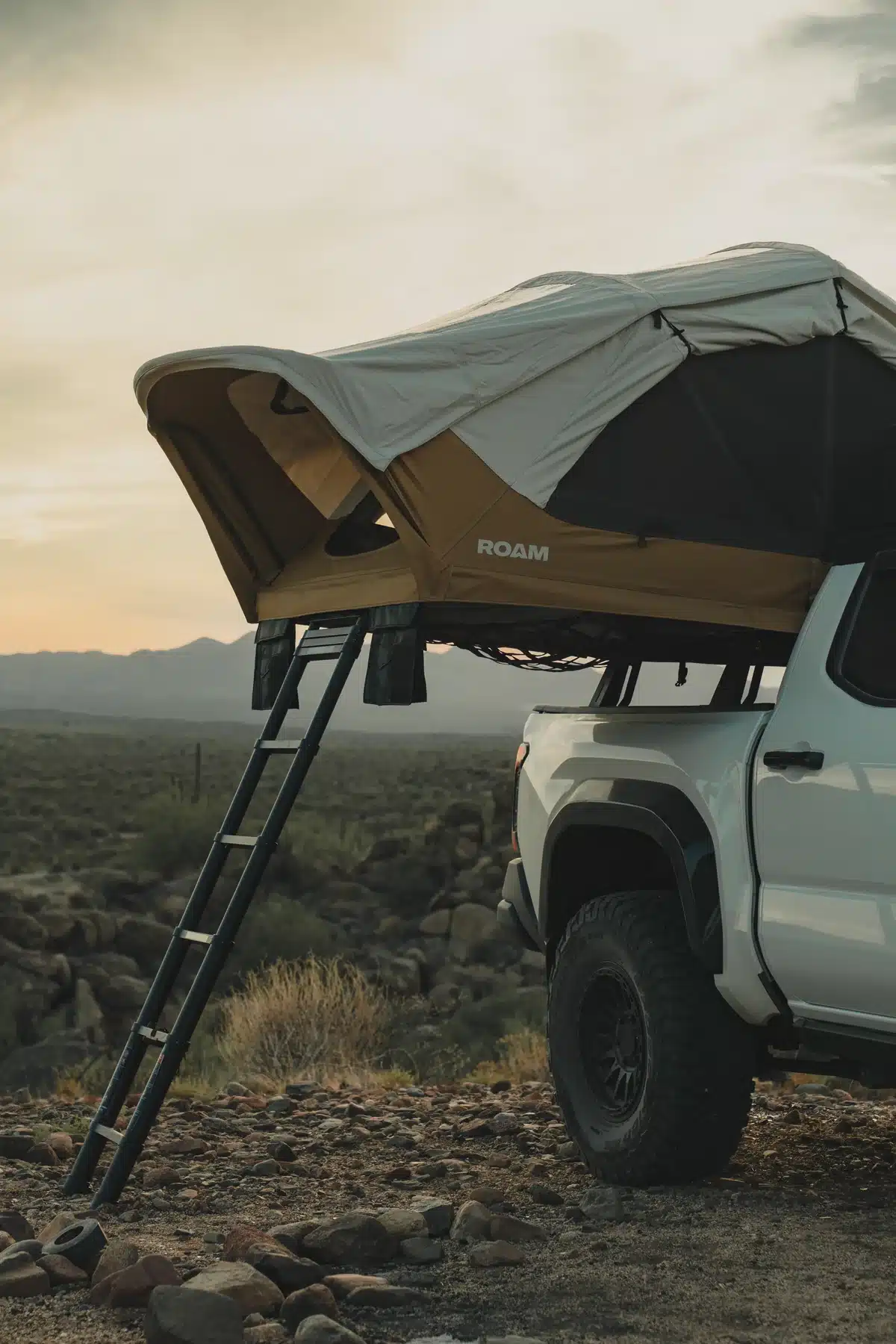
ROAM changed two things V1 buyers flagged. The sliding brackets gave way to a bolt-and-sandwich-plate system, though whether it installs more easily is untested. The absence of interior lighting gave way to the USB LED strip, which is a verifiable fix. Setup effort, the one recurring V1 complaint we found, did not change and remains a softshell reality.
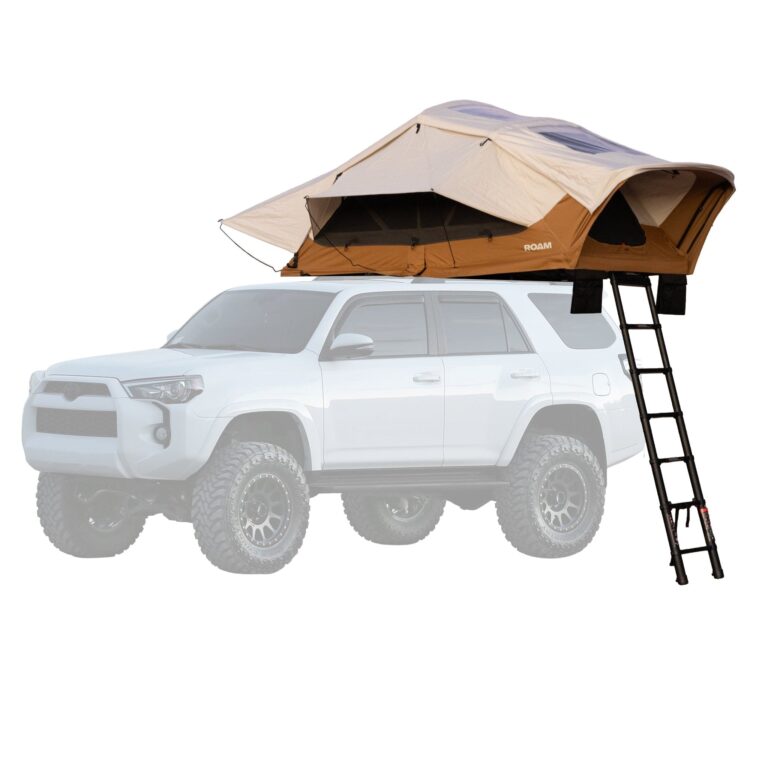
ROAM Vagabond 2.0 Rooftop Tent
A 56-by-96-inch sleeping floor with 52 inches of headroom, folded down to a 9-inch closed profile. The 2.5-inch dual-layer memory foam mattress sits on an insulated aluminum base, and the LED strip, boot bags, and storage panels are included.
- Eight feet of sleeping length, against 80 inches on most rooftop tents
- 9-inch closed height is slim for a softshell
- Dual-layer memory foam over an insulated aluminum base
- LED strip, 2 boot bags, gear hammock, and 4 storage panels included
- Two-year manufacturer and craftsmanship warranty
- 150 lbs, 20 lbs heavier than the V1 it replaced
- Rainfly denier dropped from 600D to 420D
- Five-minute setup, where hardshells advertise under a minute
- One published owner review as of August 2026
Vagabond 2.0 vs. Vagabond XL 2.0
ROAM sells the same tent in a wider size for $350 more. Everything else matches: identical fabrics, ladder, mattress, cover, frame, warranty, colorways, and included kit. Only width, weight, closed height, and capacity differ.
| Spec | Vagabond 2.0 | Vagabond XL 2.0 |
|---|---|---|
| Price (MSRP) | $2,399 | $2,749 |
| Capacity | 2 to 3 | 3 to 4 |
| Weight | 150 lbs | 170 lbs |
| Sleeping width | 56″ | 72″ per ROAM, 76″ per retailers |
| Closed height | 9″ | 12″ |
| Rack dynamic rating needed | 150 lbs | 170 lbs |
The $2,399 figure is confirmed at both Spirit of 1876 and Backcountry, while $2,749 is ROAM’s XL MSRP. Note the width conflict. ROAM’s own page lists the XL at 72 inches, while three independent retailers list 76 inches. Four inches on a family tent is material, so confirm the figure with ROAM before ordering the XL.
Note the closed height as well. The XL returns to 12 inches, which surrenders the low-profile advantage the 2.0 was redesigned around. So the XL buys you width and a fourth sleeper. It costs you the aerodynamic gain plus 20 pounds of rack load.
Which Size to Order
Our rule of thumb is simple. Pick the standard 2.0 for two adults, or two adults plus one small child. Step up to the XL for three adults or a family of four. Our rooftop tent size guide walks through the measurements if you sit between the two.
Is the ROAM Vagabond 2.0 Worth It?
For buyers who want maximum sleeping footprint per dollar, yes. Eight feet of length, 52 inches of interior height, and a well-insulated mattress at $2,399 is strong value. Lighting and storage come included. At this price, softshells typically offer more floor area than hardshells, and the 2.0 sits at the roomy end of what we track in our best rooftop tents roundup.
The low-profile redesign is the other real win. A 9-inch closed height is unusually slim for a softshell, and three inches of packed height is real garage clearance. It should cut wind noise as well, though nobody has measured the 2.0 against the V1 on the highway.
The Reservations
Three reservations belong on the record. First, the “lighter” claim runs opposite to the published weight, and a 150-pound dynamic requirement exceeds what many factory crossbars carry. Check your rack’s dynamic rating in your owner’s manual before you order. Second, the rainfly denier went down while the marketing went up. Third, the public track record is one review, ten months in.
So here is the practical read. Buy the ROAM Vagabond 2.0 if you want a big, warm, well-equipped softshell and your rack carries 150 pounds dynamic. Look at a hardshell such as the 23Zero Kabari SuperFly if fast setup matters more than floor space. If weight is your binding constraint, an ultralight like the Featherlyte Aircrest serves you better.
One more branch is worth naming. Nobody has independently evaluated this tent, and one owner review ten months after launch is thin cover for $2,399. If you have a season to spare, waiting for field data costs you nothing. If you buy now, buy from a dealer whose freight-damage and return policy you have read, and confirm the warranty’s weather-damage exclusion in writing first.
Frequently Asked Questions
How much does the ROAM Vagabond 2.0 weigh?
The Vagabond 2.0 weighs 150 pounds. Notably, the original Vagabond weighed 130 pounds, so the 2.0 is 20 pounds heavier despite marketing describing it as lighter. Your rack needs a dynamic rating of at least 150 pounds.
How many people does the ROAM Vagabond 2.0 sleep?
ROAM rates it for two to three people, and Backcountry lists it as a 3-person tent. Its 56 by 96-inch floor is long enough for taller campers. Plan on two adults, or two adults plus a small child. For three adults or a family of four, step up to the XL 2.0 instead.
What changed between the Vagabond and the Vagabond 2.0?
Closed height dropped from 12 inches to 9, and the mattress became 2.5-inch dual-layer memory foam. ROAM also added an LED strip and four storage panels. Meanwhile weight rose from 130 to 150 pounds, the rainfly dropped from 600D to 420D, and V1’s anti-condensation mat disappeared.
Is the ROAM Vagabond 2.0 a four-season tent?
ROAM publishes no season rating, and Backcountry lists it as 3-season. Its ROAM-rated R-10.2 mattress and insulated aluminum base address cold from below. However, the 420D fly is lighter than V1’s 600D fly, and ROAM publishes no hydrostatic head rating, so no spec supports a four-season label.
How long does the ROAM Vagabond 2.0 take to set up?
ROAM states five minutes for setup and teardown. No independent timing has been published. For comparison, hardshells in this price range advertise well under a minute. Speed is the tradeoff you accept for the larger footprint.
Should I buy the annex with the Vagabond 2.0?
Bundling saves $49, since the $450 upcharge undercuts the $499 standalone price. At roughly 2 percent, buy the annex for its own sake. It suits multi-night basecamps or trips with kids. Skip it if you break camp daily, because it adds meaningful setup time.
Related Reading
Advertising disclosure. Spirit of 1876 is a 4wdTalk advertising partner and an authorized dealer of this tent. The two product modules above are paid placements. Spirit of 1876 did not pay for, review, or approve this article before publication. This review draws on ROAM’s published specifications, its user manual, retailer listings, and owner reports, most of which describe the discontinued original Vagabond. 4wdTalk has not slept in this tent or deployed it in the field.