


Quick Facts:
- Question: How long will wildfire smoke last, and do you go anyway
- Typical duration: Days to weeks under a strong temperature inversion, per EPA
- Metric to watch: Air Quality Index driven by PM2.5
- Threshold shift: EPA lowered the Good ceiling from 12.0 to 9.0 µg/m³ in February 2024
- Primary tool: AirNow Fire and Smoke Map, run by EPA and the US Forest Service
- Offline method: EPA visual range guide, daylight only, humidity below 65%
- Biggest vehicle lever: Windows up, recirculate on, HEPA cabin filter
- Best for: Overlanders, dispersed campers, and truck campers planning fire-season trips
12 min read
In This Guide
- How Long Will Wildfire Smoke Last: The Short Answer
- The AQI Scale at a Glance
- What Sets the Clock on a Smoke Event
- Reading the AQI Before You Commit
- The Wildfire Smoke Forecast Tools Worth Opening, in Order
- How to Judge Smoke With No Signal
- Your Truck Cabin Is the Biggest Lever You Own
- Masks and Air Cleaners: What Each One Does
- Sleeping in Smoke and Choosing a Campsite
- How Long Will Wildfire Smoke Last on a Multi-Day Trip
- Go, Relocate, or Cancel
- Final Verdict
- Frequently Asked Questions
How Long Will Wildfire Smoke Last: The Short Answer
How long will wildfire smoke last over your campsite? Anywhere from a few hours to several weeks, and the weather pattern decides which. A plume drifting through an active pattern often clears within a day or two. Under a strong temperature inversion, however, EPA’s 2026 interagency guide for public health officials says smoke accumulates for days or weeks, with little chance for clean air to circulate. Smoke from the 2018 Camp Fire held poor air over the San Francisco Bay area for weeks, and EPA cites it as the worked example.
So the question worth asking is not how big the fire is. It is whether a front arrives before your trip ends. Meanwhile, a satellite map alone drives plenty of cancelled good trips and plenty of bad ones taken. A brown plume drawn across your destination does not by itself mean unhealthy air at ground level. Satellites struggle to separate surface smoke from a layer sitting thousands of feet overhead. Meanwhile, a clear-looking valley under a morning inversion might read Unhealthy on a monitor two miles away.
What follows is the decision framework: the numbers worth acting on, the tools worth opening, what your truck cabin does and does not do, and how to draw a bail-out route. For the seasonal picture behind why these events cluster, see the 2026 fire season outlook.
The AQI Scale at a Glance
EPA revised the PM2.5 breakpoints on February 7, 2024, so any older reference table is wrong. Specifically, the Good ceiling dropped from 12.0 to 9.0 micrograms per cubic meter. The upper categories tightened as well. As a result, the same smoke now reads as a higher AQI number than it did before 2024. EPA also assigns each category a color, and it shades the Very Unhealthy band purple.
| AQI Range | Category | PM2.5 (µg/m³) | What EPA Says About Exertion |
|---|---|---|---|
| 0–50 | Good | 0.0–9.0 | No cautionary statements |
| 51–100 | Moderate | 9.1–35.4 | Unusually sensitive people shorten activity |
| 101–150 | Unhealthy for Sensitive Groups | 35.5–55.4 | “OK to be active outdoors but take more breaks” |
| 151–200 | Unhealthy | 55.5–125.4 | Everyone keeps activity shorter and less intense |
| 201–300 | Very Unhealthy | 125.5–225.4 | Sensitive groups avoid all outdoor activity |
| 301+ | Hazardous | 225.5+ | Everyone avoids all outdoor activity |
| Top Pick | Best Value | Best Range | |
|---|---|---|---|
| Product | TOP PICK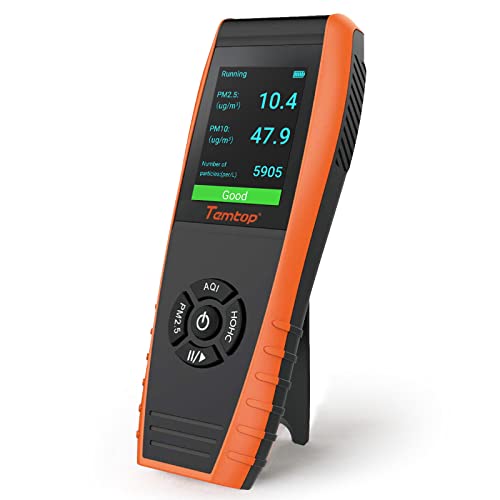 Temtop LKC-1000S+ Temtop LKC-1000S+ |  Temtop M10 Temtop M10 | 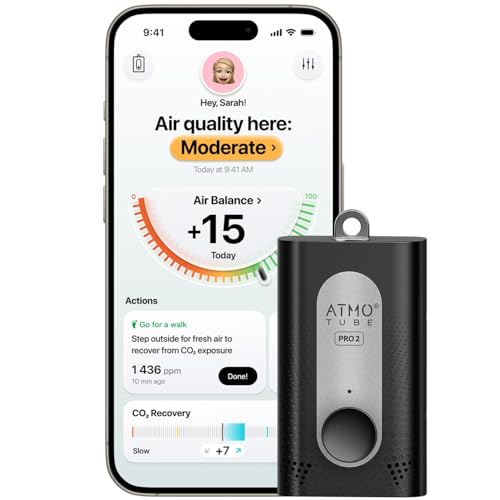 Atmotube PRO 2 Atmotube PRO 2 |
| Rating | ★★★★☆ 4.6 | ★★★★☆ 4.2 | ★★★★☆ 4.1 |
| Particle Range | PM2.5 to PM10 | PM2.5 to PM10 | PM1 to PM10 |
| Other Sensors | VOCs and formaldehyde | VOCs | CO2 |
| Price | $249.00 as of Sep 26, 6:21 pm | ||
| Check Price → | Check Price → | Check Price → |
What Sets the Clock on a Smoke Event
Notably, three things govern duration, and none of them is the fire’s containment percentage. First, the synoptic weather pattern. Second, the inversion. Third, fire growth, since emissions track how fast the fire is running rather than how much line crews have built around it. No published relationship ties containment percentage to smoke duration. Treat “40% contained” as a firefighting metric, not a forecast.
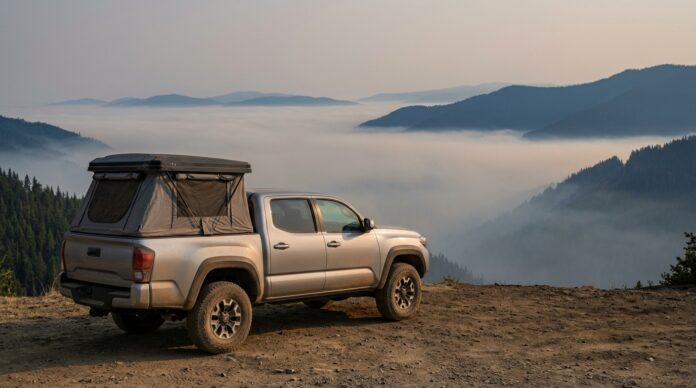
Inversions, meanwhile, do the real damage. In the evening, especially in mountain valleys, air near the ground turns cooler than the air above it. This lid prevents upward movement. Combined with a wind drop, it pools smoke in the valley overnight. Consequently, a drainage campsite near a fire is the worst place to sleep. A site above the inversion layer often sits in clean air.
How a Frontal Passage Changes Everything
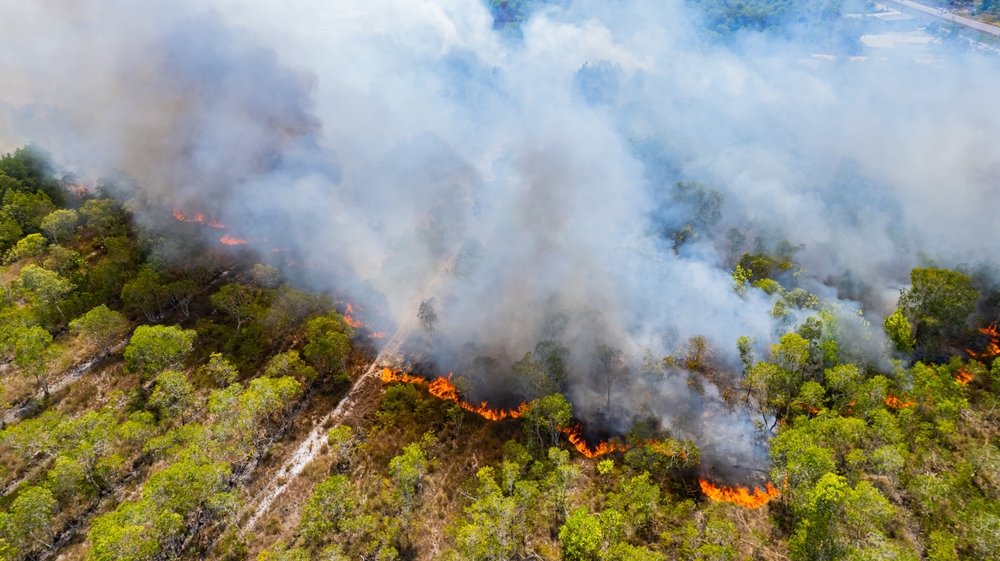
A true frontal passage is therefore the event worth waiting for. First, it shifts wind direction, which changes the source region. It also breaks the inversion by restoring vertical mixing. EPA notes a frontal passage typically disrupts the daily smoke cycle. In contrast, a wind shift inside the same air mass often relocates smoke rather than removing it. EPA puts it plainly. A wind normally clearing a valley might instead blow more smoke in.
Strong wind is not automatically good news either. Specifically, EPA warns high winds sometimes limit dispersion by preventing column development. Consequently, ground-level concentrations climb.
Reading the AQI Before You Commit
Two facts about the AQI change how you use it. First, timing. The number on the AirNow map is a NowCast. It averages the past 12 hours, weighting recent data more heavily during rapid change. As a result, it lags. In a fast-moving smoke event it understates what you are breathing right now.
Next, the exertion asymmetry. At 101 to 150, Unhealthy for Sensitive Groups, EPA explicitly states it is OK to be active outdoors but take more breaks. Therefore, hiking is not banned at Orange. In the Very Unhealthy band, 201 to 300, sensitive groups avoid all outdoor activity. At 301 and above everyone does. Overlanding involves winching, airing down, and setting camp. Therefore, treat your day as exertion rather than as sitting in a chair.
Sensitive groups include people with heart or lung disease, older adults, children including teenagers, and pregnant women. CDC adds diabetes and chronic kidney disease to the list. Notably, children breathe more air relative to body size than adults, and their lungs are still developing. A family trip and a solo trip therefore deserve different thresholds.
The Wildfire Smoke Forecast Tools Worth Opening, in Order
First, open the AirNow Fire and Smoke Map. EPA and the US Forest Service built it jointly, and EPA names it the primary resource during smoke events. It blends regulatory monitors, temporary smoke-event monitors, and quality-corrected low-cost sensors. In addition, fire locations and satellite plume polygons layer on top. Skip the satellite plume layer as a go/no-go input, since it shows smoke aloft as readily as smoke you would breathe.
For a specific named fire, the better wildfire smoke forecast is the Air Resource Advisor Smoke Outlook. These are human-produced, per-community one-pagers posted by incident management teams. Each describes how smoke varies through a 24-hour period, typically covering 24 to 48 hours. Because they come as printable PDFs, you screenshot one before losing signal, the way you would a paper map. For a broader area, NOAA runs HRRR-Smoke, which reaches 48 hours on its 00, 06, 12 and 18 UTC cycles and 18 hours otherwise. The University of British Columbia also runs FireSmoke.ca, which forecasts ground-level PM2.5 across North America.
How to Handle PurpleAir Readings
PurpleAir sensors produce the most widespread PM2.5 measurements in the country. However, EPA cautions the raw map will not match AirNow unless you set two things: choose the US EPA conversion under the map’s data layer, then set the averaging period to one hour or longer. Short averages are not representative of health-relevant exposure. Notably, independent evaluation found the EPA correction performs well in smoke, with slopes near 1.0 for the 2021 equation and 0.88 for the current Fire and Smoke Map version. Dust is the failure mode. Corrected readings run low by a factor of five to six there, so desert travelers should note the gap.
How to Judge Smoke With No Signal
Every tool above needs an internet connection, however. EPA publishes one method with no such need. For a backcountry audience it is the most useful page in the guide. Specifically, the visual range method asks how far away you still make out a dark object, such as a forested ridge against the sky.
Safety note: The visual range method works only in daylight, away from sunrise and sunset, and only when relative humidity sits below 65%. It fails entirely when clean air sits at the surface under a dense layer aloft, because your sightline to a distant ridge climbs into the smoke. Treat it as a field estimate, never as a monitor reading.
Beyond 10 miles of visibility, watch for changing conditions and scale activity to personal sensitivity. Between 5 and 10 miles, healthy adults shorten and soften activity. Sensitive people, meanwhile, move indoors. Finally, under roughly 5 miles, everyone minimizes outdoor activity. Pick landmarks at known distances before the smoke arrives. You need those reference points to make the estimate work.
Your Truck Cabin Is the Biggest Lever You Own
EPA’s 2026 edition added a section on vehicles, and the guidance is specific: keep windows closed and run the climate system in recirculate. Measured studies back it up. Recirculation drives the indoor-to-outdoor PM2.5 ratio down to roughly 0.10 to 0.13, close to a 90% reduction. Similarly, one study measured about 90% fewer ultrafine particles.
In contrast, on fresh air the picture flips fast. Cabin particle counts track outside changes within 30 to 60 seconds. Therefore, your truck offers no buffer at all with the vent open.
How Your Cabin Filter Performs, and What to Do Before a Trip
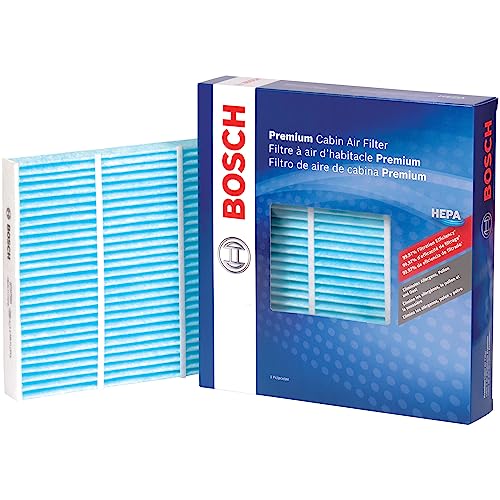
Standard cabin filters underperform badly at the sizes involved, however. Wildfire smoke particles run roughly 0.1 to 0.5 microns. One laboratory evaluation measured a stock filter at 22.9% and 17.4% efficiency at 350 nanometers. Ratings below MERV 13 are not even tested in the 0.3 to 1.0 micron range. Treat MERV 13 as the practical floor. Notably, true HEPA cabin filters exist for pickups, with Bosch rating its line at 99.97% at 0.3 microns under ISO 29463-3.
Two honest caveats apply. Higher-efficiency filter media adds airflow resistance, and EPA warns electrostatically charged filters lose effectiveness quickly during smoke events. Therefore replace the cabin filter after a heavy or extended smoke event. Before a fire-season trip, do four things: fit a fresh high-efficiency filter, confirm your recirculate button latches rather than timing out, close the sunroof drain vents, and carry the old filter as a spare in case the new one loads up. Also note the activated carbon trap. Carbon addresses odors and gases, so a carbon-only filter makes smoke smell better without removing much particulate.
| Filter Grade | Efficiency at Smoke Particle Sizes | Airflow Penalty | Replace After a Smoke Event |
|---|---|---|---|
| Stock OEM particulate | 22.9% and 17.4% measured at 350 nm | None | Yes |
| Carbon only | Targets odors and gases, not particles | Low | Yes |
| MERV 1 to 10 | Not tested at 0.3 to 1.0 microns | Low | Yes |
| MERV 13 to 16 | 50% to 95% at 0.3 to 1.0 microns | Moderate | Yes, sooner if electrostatic |
| HEPA cabin filter | 99.97% at 0.3 microns under ISO 29463-3 | Highest | Yes, every 12,000 miles otherwise |
Masks and Air Cleaners: What Each One Does
First, EPA ranks staying in cleaner air ahead of masks. When you must be outside, a tight-fitting NIOSH-approved N95 or P100 respirator is the recommendation. Without individual fit testing, though, there is likely little difference between N95 and P100. Leakage around the seal, rather than filtration efficiency, sets your protection level.
Fit is the binding constraint, and it matters especially for this audience. EPA states a good seal is not possible with a beard or other facial hair where the respirator seals. Similarly, cloth coverings, bandanas, damp or dry, and handkerchiefs should not be relied on. Surgical masks and one-strap dust masks provide less protection than a respirator, although EPA allows they offer some when nothing better exists.
Children, meanwhile, are the hard case. NIOSH does not approve respirators for use by children, and for ages 2 to 7, a well-fitting N95 is unlikely to exist. For small kids the only reliable lever is genuinely cleaner air, which means leaving.
Running an Air Purifier for Wildfire Smoke Off 12V
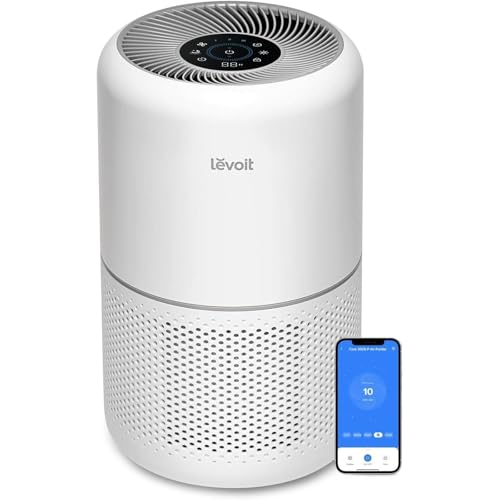
In a camper or hard-sided shelter, an air purifier for wildfire smoke earns its space. EPA points to mechanical HEPA-type units and says electronic air cleaners are not recommended for smoke removal, since those have the potential to produce ozone. EPA’s own researchers tested the do-it-yourself box-fan cube and found the four-filter version outperforms a single-panel build. Next, size the unit to the space using EPA’s two-thirds rule, which sets the clean air delivery rate at roughly two-thirds of the room’s square footage. Then run the power math. A small HEPA unit drawing 45 watts on 12 volts pulls close to 3.8 amps, or about 90 amp-hours across 24 hours, which is most of a 100 amp-hour battery. Those figures are arithmetic from a typical draw rather than an agency number, so measure your own unit before relying on it overnight.
Sleeping in Smoke and Choosing a Campsite
No public health agency has published guidance on tent camping in wildfire smoke. Specifically, the 136-page federal guide contains no mention of camping, campgrounds, or tents. Reasoning from EPA’s own framework, you reach one conclusion. A tent has no filtration and no sealed envelope, so none of the three documented smoke-exclusion mechanisms applies. For scale, houses with windows closed showed a median 32% lower indoor PM2.5 than outdoors, against 23% for houses with windows open. By comparison, a nylon tent achieves close to nothing.
Sleeping sealed in the truck cab is not the fix either, although the instinct is understandable. EPA states the point plainly. Vehicles serve as transportation to cleaner air, never as a shelter from smoke. Moreover, measured cabin CO2 climbed above 4,000 ppm at roughly 3.2 to 3.5 air changes per hour. In short, eight hours sealed in a cab trades particles for carbon dioxide.
Campsite selection is therefore the lever you control. Since inversions pool smoke in valleys at night, camping above the drainage often puts you in cleaner air while the valley floor fills. Sealing a tent or camper against smoke also removes the ventilation keeping you cool. Since these events cluster with heat waves, the tradeoff is real. Our hot weather camping tips cover the cooling side of the problem.
Gear mentioned in this guide


How Long Will Wildfire Smoke Last on a Multi-Day Trip
As a rule, day four feels worse than day one. Reassess daily rather than trusting the forecast you read at home, because a 24 to 48 hour outlook is the longest reliable horizon available. Set a fixed morning check: visual range at first light, then the AQI once you regain signal. EPA’s visual range table also carries a footnote stating individuals become more sensitive to smoke after extended periods of exposure. However, be careful with stronger claims. EPA describes the evidence base for longer-duration exposure as relatively small and the findings as initial.
Common wildfire smoke symptoms make a good group decision rule. CDC lists coughing, trouble breathing, wheezing, asthma attacks, stinging eyes, scratchy throat, runny nose, irritated sinuses, headaches, tiredness, chest pain, and fast heartbeat. When two people report wildfire smoke symptoms on the same morning, treat the pattern as data rather than as a test of toughness. EPA’s operative advice stays simple: whenever smoke concentrations are elevated, reduce exposure.
Go, Relocate, or Cancel
Notably, relocating beats canceling more often than people expect. A peer-reviewed study of over 1,000 campgrounds found roughly 400,000 camper-days affected by smoke annually. Occupancy dropped only slightly, and cancellations rose modestly. In other words, most people went anyway. Smoke concentration varies widely within a couple of miles. Therefore moving one drainage over, or climbing out of the valley onto a ridge or bench, often beats driving home. Our guide to finding legal dispersed camping helps when the alternate site needs to be free and unreserved.
Cancel only when three conditions stack: the forecast holds the same air mass with no frontal passage, the AQI sits at Very Unhealthy or above, and someone in your group falls in a sensitive category. Go when the pattern is breaking, the site sits above the inversion, and everyone is a healthy adult willing to scale back exertion. Otherwise relocate, and build the alternate before you leave. Our guide on how to plan an overland route covers the mileage and fuel math behind a second option.
A bail-out route also needs offline maps, because smoke events and dead zones overlap constantly. Preload your area in one of the offline off-road GPS apps. Also carry a way to receive advisories, since a satellite communicator vs GMRS radio decides whether evacuation notices reach you. Check current fire restrictions by state at the same time. The smoke plume and the closure order usually arrive together.
Final Verdict
For most healthy adults, a smoke forecast is a planning input rather than a stop sign. EPA’s own thresholds allow outdoor activity with more breaks well into the Orange band. The practical skill is reading the pattern instead of the plume. Learn what an inversion does overnight, then what a frontal passage does to it. From there, the go-or-stay call gets much easier.
Groups with children, older adults, or anyone with heart or lung disease should set a lower threshold and act earlier. Moreover, masks do not solve this for small kids, and no tent filters air. For those groups the honest options are relocating to cleaner air or staying home. A sealed truck cab is a break space rather than a shelter.
On the equipment side, the cabin matters most. Running recirculate with a high-efficiency cabin filter cuts what you breathe on the drive by close to 90%, and no other change to the truck measures as well. Inside a hard-sided camper, a HEPA air cleaner sized by EPA’s two-thirds rule comes next. Relocating to genuinely cleaner air still beats both.
Build the decision around three checks before every fire-season trip. Pull the AirNow Fire and Smoke Map for current conditions, find an Air Resource Advisor Smoke Outlook if a named fire sits upwind, and write down an alternate site in a different drainage. Finally, learn the visual range method as your backup once the signal drops. Anyone wanting seasonal context should start with the fire season outlook rather than a single day’s map.
Frequently Asked Questions
How long does wildfire smoke usually stay in one area?
It ranges from a few hours to several weeks. EPA states strong temperature inversions allow smoke to accumulate for days or weeks with little opportunity for clean air to circulate. Smoke from the 2018 Camp Fire caused weeks of poor air quality in the San Francisco Bay area. Duration tracks the weather pattern and fire growth, not containment percentage.
Does rain clear wildfire smoke?
Less than most people assume. Wildfire smoke particles measure roughly 0.1 to 0.5 microns. Those sizes sit in the Greenfield Gap, a range resistant to washout by raindrops. Even heavy rain might have only a limited effect on fine particle concentrations. A frontal passage helps far more, since it shifts the wind and breaks the inversion.
How do I check a wildfire smoke forecast before a trip?
Use the AirNow Fire and Smoke Map for current conditions, then look for an Air Resource Advisor Smoke Outlook covering the specific fire at outlooks.airfire.org. Those forecast 24 to 48 hours by community. NOAA’s HRRR-Smoke model reaches 48 hours on its main cycles. Download or screenshot any outlook before you lose cell service.
Do masks help with wildfire smoke while camping?
A tight-fitting NIOSH-approved N95 or P100 helps adults who achieve a good face seal. However, facial hair breaks the seal. Cloth coverings, bandanas, and surgical masks are not respirators and should not be relied on. NIOSH does not approve respirators for children, so masking is not a solution for young kids.
What are the most common wildfire smoke symptoms?
CDC lists coughing, trouble breathing, wheezing, asthma attacks, stinging eyes, scratchy throat, runny nose, irritated sinuses, headaches, tiredness, chest pain, and fast heartbeat. Treat them as a signal to reduce exertion or relocate to cleaner air.
Is it safe to sleep in my truck with recirculate running?
Not for a full night. Recirculation cuts particles sharply. However, measured cabin CO2 exceeded 4,000 ppm at roughly 3.2 to 3.5 air changes per hour. EPA says vehicles serve as transportation to cleaner air rather than as smoke shelters. Instead use the cab for breaks, then sleep somewhere ventilated and above the inversion.