


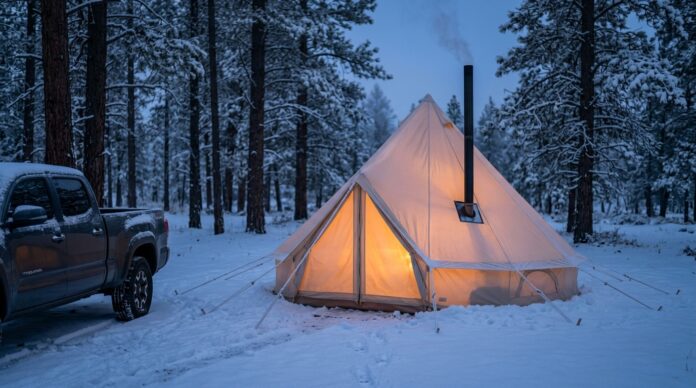
Quick Facts:
- Topic: How cold is too cold to camp, and the 19 mistakes wrecking freezing nights.
- Real limit: Your gear and your judgment, not the thermometer.
- First thing to fail: Ground insulation, long before your sleeping bag.
- Pad R-value needed: 4.0 or higher below 32°F, 5.5+ on snow.
- Deadliest mistake: Unvented combustion heat with no working CO alarm.
- Hypothermia risk starts: Above 40°F when you are wet.
- Best for: Overlanders, truck campers, and canvas hot tent campers.
- Skill level: Beginner through experienced winter camper.
12 min read
In This Guide
- How Cold Is Too Cold to Camp? Start With Three Thresholds
- What Fails at Each Temperature
- Mistakes 1-5: The Sleep System
- Mistakes 6-9: Heaters and Carbon Monoxide
- Mistakes 10-13: Moisture Erases Your Insulation
- Mistakes 14-16: Choosing a Shelter for Real Cold
- Mistakes 17-19: Fuel, Power, and the Drive Out
- Canvas vs. Nylon Below Freezing
- Deciding How Cold Is Too Cold to Camp
- Frequently Asked Questions
How Cold Is Too Cold to Camp? Start With Three Thresholds
How cold is too cold to camp has no single answer, because the thermometer never fails first. Your ground insulation does, then your moisture management, then your fuel and your battery. Experienced winter campers stop asking about the forecast low and start asking which part of the kit quits at the forecast number. Below freezing, gear stops behaving the way it does in July, and the failures arrive in a predictable order.
Some of the 19 mistakes below are counterintuitive. Heating your tent makes moisture worse, for example. The number printed on your sleeping bag describes a warm sleeper at the edge of comfort, never a promise of a good night. Others are quietly lethal, such as running a combustion heater overnight with no working alarm. Most items here come from published field testing on 4wdTalk, from manufacturer documentation, or from federal safety data. A few reflect hard-won consensus among people who camp cold every winter.
Three temperature bands organize the whole problem. Above 32°F, wet is the enemy and hypothermia arrives through rain and sweat. Between 32°F and 0°F, insulation math and condensation control decide whether you sleep. Below 0°F, fuel, batteries, and water storage become daily logistics instead of afterthoughts. Each band breaks a different piece of equipment first.
The audience matters here too. A backpacker carries one solution; an overlander carries a vehicle, a battery bank, and often a canvas shelter with a stove. Consequently, the failure modes differ. This article is written for the rig-based camper, so it covers diesel gelling and lithium charge cutoffs alongside pads and bags.
What Fails at Each Temperature
Before the mistakes, anchor yourself to the numbers. The table below pairs each threshold with the component failing there first. Figures come from REI, the CDC, the National Weather Service, and battery manufacturers. Notably, three of the five rows have nothing to do with your jacket. Most first winter trips happen near freezing, and camping in 30 degree weather forgives more errors than 10°F does.
| Temperature | What Fails First | The Fix |
|---|---|---|
| Above 40°F | You, once wet from rain or sweat | Start cold, shed layers early, stay dry |
| 32°F | Butane canisters, lithium charging, water bottles | Switch to propane, warm the battery, store bottles inverted |
| 20°F | Summer sleeping pads, three-season tents | Pad R-value of 4.0 or higher, four-season shelter |
| 14°F | No. 2 diesel begins clouding | Blend No. 1 diesel before the trip |
| 0°F | Battery capacity drops to roughly half | Size the bank double, insulate it, keep it charged |
Wind changes the human column but never the equipment column. The National Weather Service is explicit on this point. Wind cools an object faster toward ambient temperature. However, it will not push the object below ambient. Your water bottle freezes at the air temperature regardless of gusts.
Mistakes 1-5: The Sleep System
1. Blaming the Bag When the Pad Is the Problem
REI states it plainly. Sleeping bag temperature ratings assume a pad underneath with an R-value of 4. REI pairs an R-2 pad with nights near freezing, so a summer pad quietly caps your whole system there whatever the bag tag claims. Conduction into frozen ground pulls heat far faster than still air does. Therefore the pad, not the bag, sets your real floor. Fix the ground first and most cold-night complaints disappear.
2. Reading the Number on the Bag as a Comfort Promise
Under ISO 23537, every bag produces two figures. The comfort rating describes a cold sleeper staying comfortable, while the lower limit marks a warm sleeper at the edge of comfort. Brands print the lower limit on men’s bags and the comfort rating on women’s bags, so identical insulation carries different numbers. Worse, the marketing name gets rounded: REI notes a bag sold as a “15” might test at 18°F. For a real margin, pick a sleeping bag temperature rating well below your forecast low.
3. Buying an Expensive Winter Pad Instead of Stacking Two
R-values add. NEMO and REI both confirm stacking works, so a $35 closed-cell foam pad at roughly R-2 under an R-3.5 air pad delivers about R-5.5. Moreover, the foam layer blocks ground moisture, protects the inflatable from punctures, and serves as a backup if the air pad tears. For a sleeping pad R value in the extreme-cold tier, stacking is the cheapest route by a wide margin.
| Pad Combination | Total R-Value | Comfortable Down To |
|---|---|---|
| Summer air pad alone | About R-2 | Near 50°F |
| Three-season air pad alone | About R-3.5 | Near 32°F |
| Foam pad under a three-season air pad | About R-5.5 | Near 0°F |
| Foam pad under a dedicated winter pad | R-7 and above | Below 0°F, snow |
REI pairs each band with a matching bag rating, so read the two together. Notably, the third row costs roughly $35 more than the second and buys a full 30°F of margin.
Build a Cold-Rated Sleep System


Therm-a-Rest NeoAir XTherm NXT Ultralight Camping and Backpacking S…

Klymit Insulated Static V Luxe Inflatable Sleeping Pad | Comfortable

4. Trusting Old R-Value Claims
Comparable pad numbers only arrived with ASTM F3340, published in 2019. Before then, manufacturers tested however they liked, and some substituted vague temperature ranges. A pre-2019 pad or an unbranded import listing a sleeping pad R value is quoting a number nobody independently verified. In practice, treat any pad without an ASTM reference as unrated.
5. Inflating Your Pad by Mouth on a Freezing Night
Every breath into the pad deposits warm, wet air inside an insulator. REI warns the trapped moisture degrades performance and grows mold. Use a pump sack instead. Additionally, air pads lose pressure as the night cools, so top yours off immediately before you climb in, not at dinner. A pad soft at 2 a.m. puts your hip on the ground.
Mistakes 6-9: Heaters and Carbon Monoxide
6. Running a Propane Heater While You Sleep
The Mr. Heater Portable Buddy manual states it in capitals: never operate the heater while sleeping. The same manual specifies a minimum vent area of 9 square inches, roughly a 3-by-3-inch opening. It also warns the unit might shut off above 7,000 feet. Most campers have never opened the manual. Consequently they run an open-flame appliance overnight inside a sealed shelter, which is the single most dangerous habit in winter camping.
Safety note: Any combustion heater inside a shelter requires a working carbon monoxide alarm at head height and a permanent fresh-air opening. Sealed-combustion diesel heaters vent exhaust outside the shelter, making them the safer category, though they still demand an alarm and exhaust-line inspection.
7. Camping Without a CO Alarm, or With a Dead One
Consumer Product Safety Commission data covers 2012 through 2022. Investigators counted 872 non-fire carbon monoxide deaths from engine-driven tools. An alarm was known to be present in only 33 of those cases, about 4 percent. Of those 33, seventeen alarms were inoperable and thirteen sounded but were misunderstood or switched off. Meanwhile 45 percent of these deaths occurred between November and February. Alarm placement deserves its own read, and our diesel heater carbon monoxide safety guide handles it.
8. Assuming CO Symptoms Feel Different From Being Cold and Tired
The CDC describes carbon monoxide symptoms as flu-like: headache, dizziness, weakness, nausea, and confusion. Critically, sleeping people die before symptoms register. In a freezing tent, early CO exposure feels identical to being cold and tired, which is why campers rationalize it. Over 400 Americans die annually from unintentional non-fire CO poisoning. Idling a vehicle for warmth carries the same risk, and the CDC specifically warns about exhaust drawn back in through an open tailgate.
9. Treating the Stove as Your Sleep System
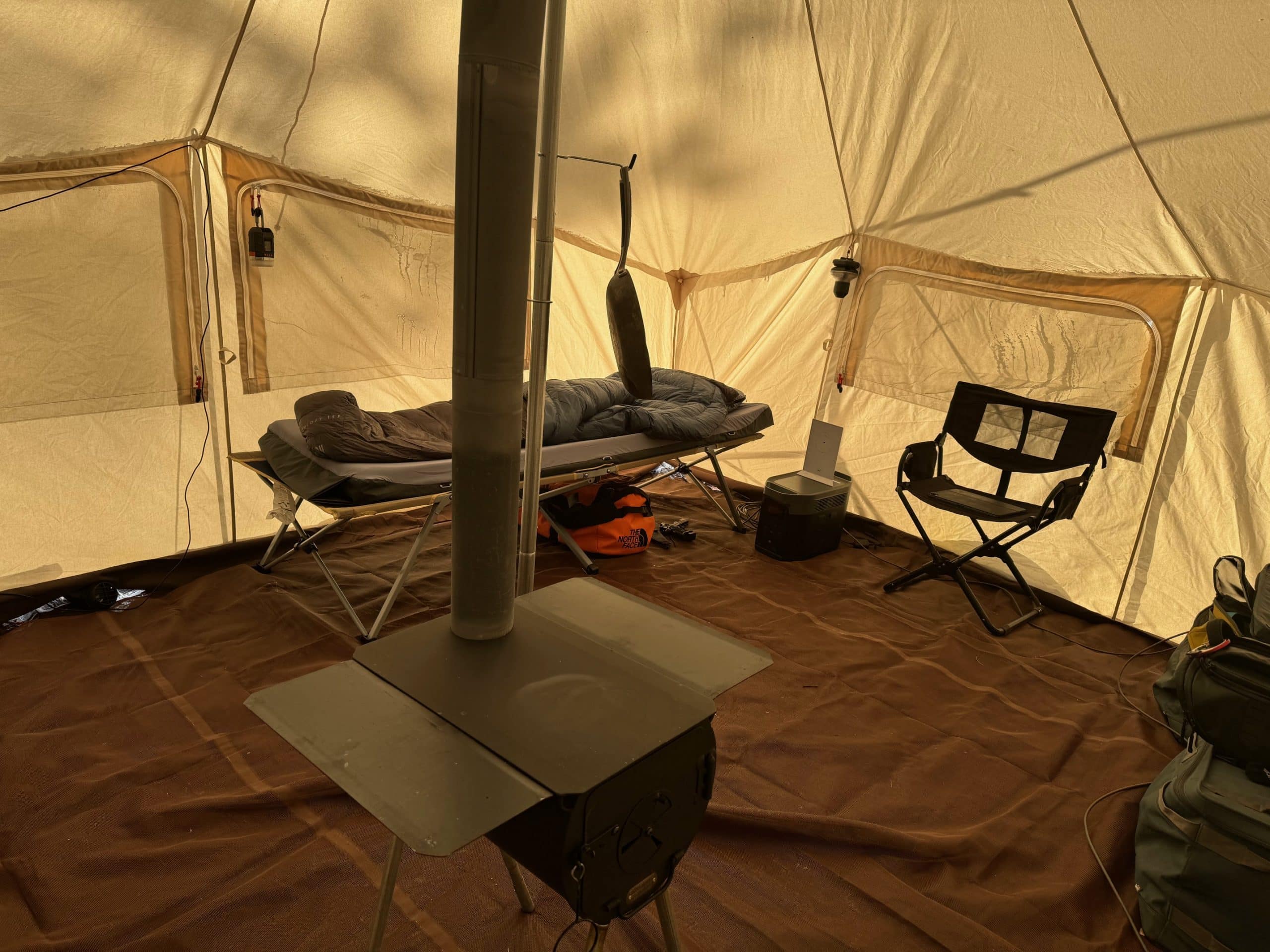
Among people who hot tent regularly, the consensus is blunt: the stove is a comfort appliance. It dies around 3 a.m., and neither the stove nor the tent holds heat once the flames go out. Your bag and pad must independently handle the overnight low. Treat a tent wood stove as an evening luxury and a morning convenience, never as insurance.
Mistakes 10-13: Moisture Erases Your Insulation
10. Sealing Every Vent to Trap Heat
Closing the tent up feels warmer for twenty minutes, then coats the interior in frost. Peer-reviewed respiratory data shows you exhale about 20 milliliters of water per hour in cold dry air, versus 7 in warm humid air. Over eight hours the total reaches roughly 5.4 fluid ounces per person, nearly three times the warm-weather load. Two people release close to 11 ounces of vapor overnight, so tent condensation is guaranteed without airflow.
11. Believing Heat Solves Condensation
Warming the interior makes tent condensation worse, not better. Warmer air holds more vapor, and a bigger temperature gap between inside and fabric drives more of it onto the walls. In deep cold the moisture freezes out of the air before reaching the ceiling, then falls as frost when you bump the wall. Ventilation solves the problem; heat aggravates it.
12. Ignoring Condensation Inside a Vehicle or Shell
Sleeping in a truck bed or camper shell concentrates the same moisture against cold metal and glass. It freezes there, then thaws and drips once you start driving. Cracking two windows on opposite sides costs a few degrees and prevents a soaked mattress. For rig-based campers this is the most commonly ignored form of tent condensation, since the vehicle feels sealed and therefore safe.
13. Letting Your Bag Get Damp and Staying There
Down loses loft when damp, and loft is the insulation. Sleeping with your head inside the bag pushes exhaled moisture directly into the fill, which is why experienced campers breathe out into open air. Over a multi-night trip the loss compounds, so each night runs colder than the last. Air the bag out during any sunny break, and never bring wet clothing inside it.
Mistakes 14-16: Choosing a Shelter for Real Cold
14. The Tent That Matters: Treating a Three-Season Tent as a Winter Tent
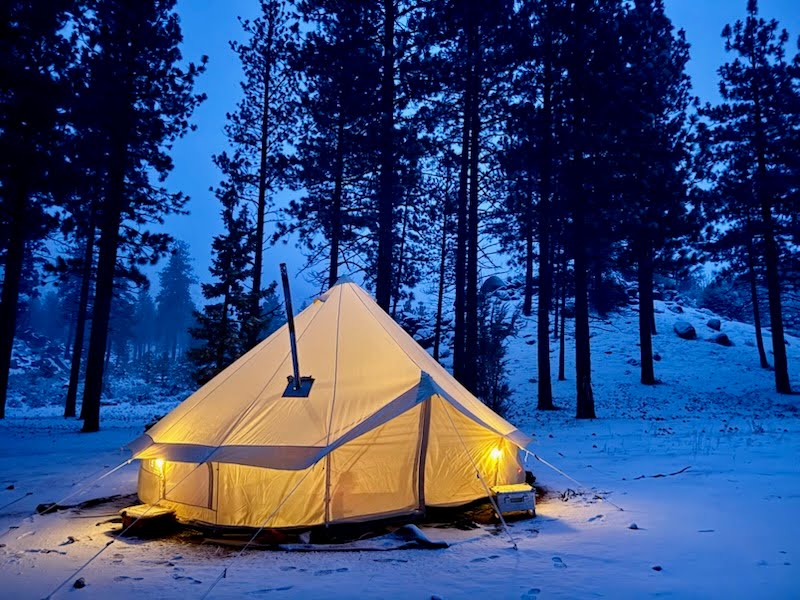
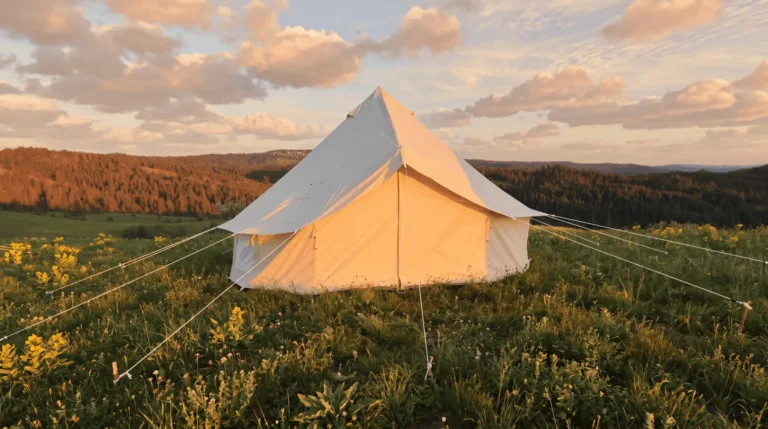
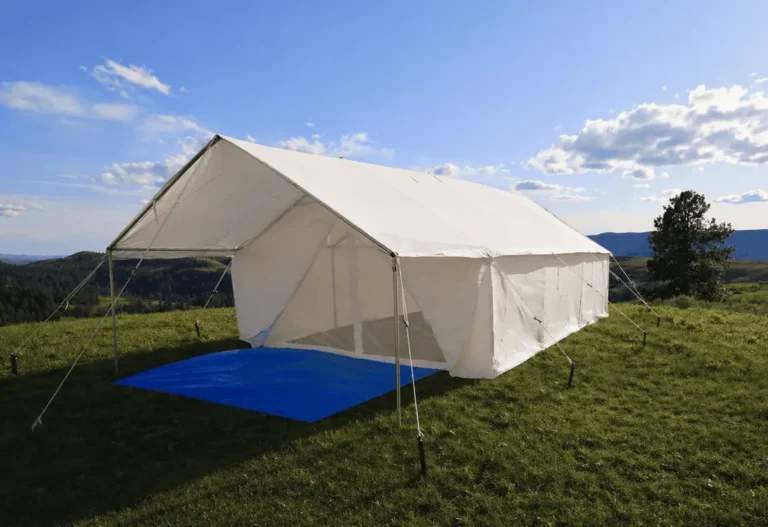
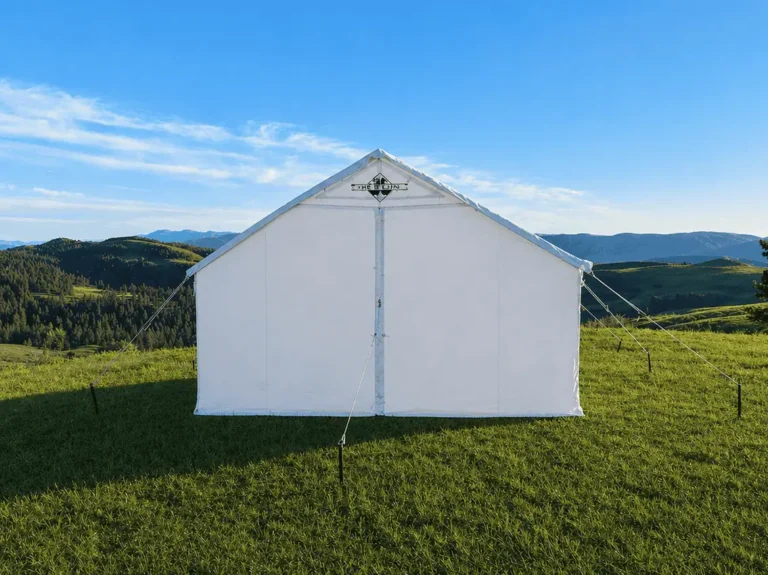
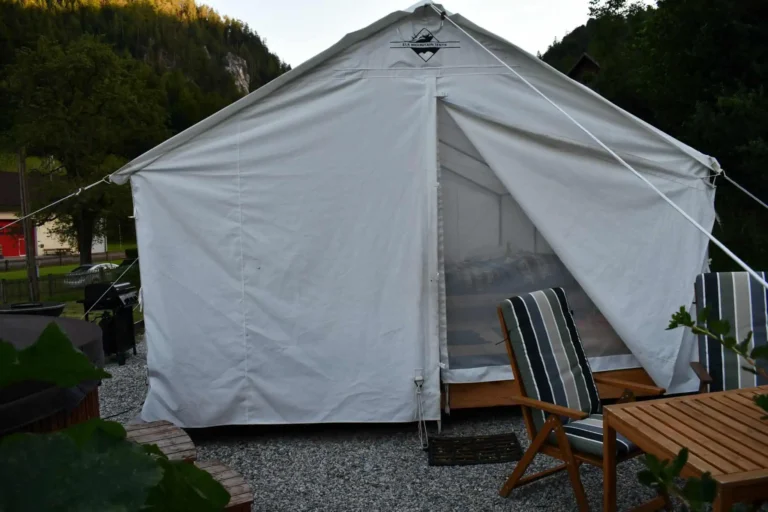
Mesh-heavy three-season tents shed heat and offer no way to run a stove. A four-season canvas shelter changes the equation. Canvas breathes, tolerates stove heat, and accepts a stove jack. Elk Mountain bell tents are a favorite here for cold-weather basecamps. In 4wdTalk’s Yukon bell tent review, the tent held its shape through a night of falling snow, sub-freezing temperatures, and gusts past 40 mph. Specifically, the sloped roof deflected wind while reinforced guy-out points spread the load.
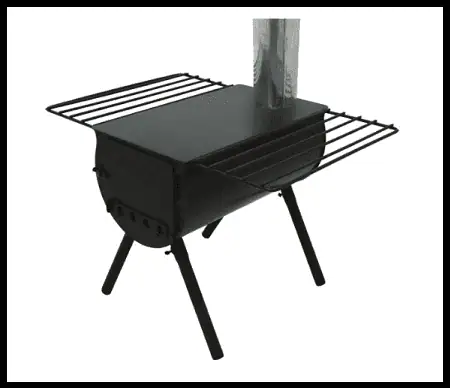
The Elk Mountain wall tent review recorded a measured result worth quoting. Outside read 42°F with no wind. Inside held 62°F by morning in the 13-by-16-foot model, on a small portable gas heater alone. One caution appears directly on the brand’s own pages. These tents are not designed for snow loads. Brush the roof off rather than sleep under a load. The tent’s uncut fiberglass stove jack accepts 4-, 5-, or 6-inch pipe. Bell tents start near $875, so a genuine four-season setup stays within reach.
Elk Mountain Bell and Wall Tents
15. Skipping the Rainfly Air Gap
A full-coverage fly is insulation, not only waterproofing. The trapped air gap between fly and canopy slows heat loss and moves the condensation point off your inner wall onto the fly. Pitching without it in winter, or using a partial fly, throws away free warmth. The effect is largest with a taut, full-coverage fly pitched clear of the inner wall.
16. Trusting the “4-Season” Label on the Tag
Marketing owns the label, and no standard backs it. No industry specification defines it, unlike ISO 23537 for bags or ASTM F3340 for pads. Consequently it appears on tents with no stove compatibility, poor snow shedding, and mesh panels unsuited to 20°F. Instead, judge the shelter on specifics: fabric weight, pole strength, vent design, stove jack presence, and how the walls shed accumulation. Shape matters too, since vertical sidewalls deliver meaningfully more usable floor space than sloped walls.
Mistakes 17-19: Fuel, Power, and the Drive Out
17. Bringing Butane, or Blaming Propane Unfairly
Butane stops producing usable vapor pressure at 31.2°F. Therefore a big-box canister stove dies on the first frozen morning. Propane boils at roughly -44°F, so ambient temperature is rarely the culprit. Instead, a 1-pound bottle self-refrigerates as it vaporizes, because the liquid pulls heat from the cylinder walls. Run a 5- or 20-pound tank on a hose in the cold, because surface area drives vaporization.
18. Expecting Solar to Refill a Freezing Battery
Your panels work fine at 20°F. The battery refuses the charge. Battle Born states LiFePO4 should not charge below approximately 25°F without internal heating, while discharge continues down near -4°F. Battery University explains the mechanism: lithium plating during a sub-freezing charge causes permanent damage. Separately, every chemistry loses capacity in cold, dropping from 100 percent at 80°F to roughly 50 percent at 0°F. Heated battery models solve this, at a price premium.
Cold-Weather Power and Cooking Gear

Anker 521 Portable Power Station Upgraded with LiFePO4 Battery


DozyAnt 4 Feet Propane Adapter Hose 1 lb to 20 lb Converter Replace…


19. Forgetting the Drive Home Is Part of the Trip
No. 2 diesel clouds at 14°F, and the cold filter plugging point sits within a few degrees of it. Cenex recommends blending toward No. 1 below 35°F, so handle fuel before departure, not at a frozen trailhead. Tire pressure falls about 2 percent per 10°F, meaning a warm-shop fill reads several psi low by morning. Check both before you leave.
Canvas vs. Nylon Below Freezing
The honest case for canvas is not raw insulation value. Canvas earns its place because it tolerates a stove and manages moisture differently. Cotton canvas takes up light condensation instead of beading and dripping it onto your bag, and a stove jack lets you run dry heat inside. Dry and heated beats insulated and damp on a multi-night trip, which is the practical argument.
Nylon wins on weight, packed size, and price. A four-season nylon dome pitches in minutes and rides in a duffel, while a canvas wall tent needs a frame and real vehicle space. Cotton canvas also soaks up water and dries slowly, so packing it damp invites mildew. Plan a full dry-out day after any wet trip.
Choose by trip length and mobility. Nylon is the sane pick for a mobile trip with a new camp each night. For a stationary basecamp of several nights in real cold, canvas with a stove is the better shelter. Consequently, bell tents and wall tents keep appearing in serious winter kits.
Deciding How Cold Is Too Cold to Camp for Your Kit
So, how cold is too cold to camp? A prepared rig-based camper runs an R-5.5 pad, a correctly rated bag, ventilation discipline, and a warmed battery bank. With all four in place, 0°F is a manageable night. Without those four, 30°F is already too cold, and the failure will feel like bad luck rather than bad math.
Your limit is set by whichever component fails first. For most campers the answer is ground insulation. Fixing a pad buys the largest single improvement per dollar of any shelter or sleep upgrade here. Start there, then correct the sleeping bag temperature rating you have been trusting, then solve airflow.
The trade-off worth naming is comfort against complexity. A canvas hot tent with a stove delivers a genuinely warm evening, though it demands vehicle space, setup time, fuel management, and a CO alarm. Anyone unwilling to manage those should stay in a well-vented nylon shelter with a stronger sleep system, which is simpler and, in several respects, safer.
On value, the honest ranking is unglamorous. Four items carry you through camping below freezing more reliably than any expensive shelter. Those are a stacked pad system, a bag rated below your forecast low, a working CO alarm, and disciplined venting. Gear beyond those four items buys comfort rather than safety margin.
Fix the four items above and the forecast stops deciding your trip for you. If you want the positive-framed companion to this list, read our cold weather camping safety tips.
Frequently Asked Questions
How cold is too cold to camp?
There is no universal cutoff, because equipment sets the limit. With a pad rated R-5.5 or higher, a bag rated below the forecast low, and real ventilation, 0°F is manageable for a prepared camper. Without adequate ground insulation, 30°F is already too cold. Answering how cold is too cold to camp means auditing your pad, your bag, your airflow, and your power before reading the forecast.
Can you camp in 30 degree weather?
Yes, and camping in 30 degree weather is a reasonable first winter outing. You need a pad with an R-value of 4 or higher, a bag rated near 20°F or lower, and a plan for moisture. Most failures at this temperature trace to a summer pad or a sealed tent rather than an inadequate bag.
How cold is too cold for hammock camping?
Hammocks lose heat faster than ground sleeping because air moves under you on all sides, so a top quilt alone is insufficient. Published thresholds vary widely, though most hammock campers add an underquilt somewhere between 40°F and 60°F, then a winter-weight underquilt below freezing. Hammock campers routinely underestimate this, since the same bag performing well on the ground compresses uselessly beneath them.
What is the 200 rule for camping?
The 200 rule, from Leave No Trace, means camping, washing, and burying waste at least 200 feet from any water source, trail, or campsite. Roughly 70 to 80 adult paces cover the distance. In winter the rule gets harder to follow, because frozen ground resists digging a cathole, so carry a waste bag as a backup plan.
Do I need a carbon monoxide alarm for camping below freezing?
Yes, whenever any combustion source runs inside your shelter, including propane heaters, wood stoves, diesel heaters, and an idling vehicle. CPSC data shows alarms were present in only 4 percent of fatal cases involving engine-driven tools. Mount the alarm at head height, test it before the trip, and carry spare batteries, since cold shortens battery life.
How do I keep water from freezing overnight?
Store bottles upside down, because water freezes from the top and ice floats, keeping the threads clear. Bury a large bottle partly in snow, which insulates surprisingly well. Additionally, keep one liter inside your sleeping bag for the morning, and stage your stove kit somewhere dry the night before.