



Quick Facts:
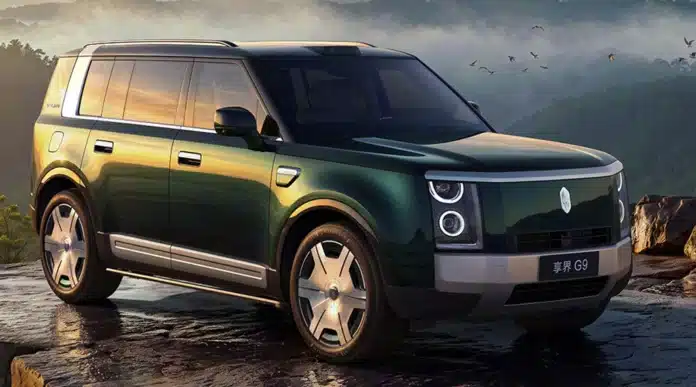
- Vehicle: Stelato G9, a Huawei SUV built with BAIC under the Harmony Intelligent Mobility Alliance
- Powertrains: 586 hp dual-motor AWD, range-extender EV or full battery EV
- Range: 849 mi combined CLTC (EREV), 452 mi CLTC (BEV)
- Ground clearance: 7.95 in standard, 11.1 in raised on air springs
- Towing: 4,409 lb
- Camping hardware: optional body-integrated electric roof tent, side awning, tailgate kitchen
- Price: 439,800 to 559,800 yuan, about $65,150 to $82,900
- On sale: China only, Q3 2026, with no export plans announced
- Best for: reading where overland vehicle design heads next
9 min read
In This Article
- Stelato G9 Overview: What Huawei and BAIC Built
- Those 849 Miles Need a Translation
- Key Specs at a Glance
- The Factory Rooftop Tent Is the Real Story
- The Camp Power Question Nobody Answered
- Where the Stelato G9 Stops Being an Off-Roader
- How It Stacks Up Against Defender and Rivian
- Why It Will Never Reach a US Driveway
- Final Verdict on the Stelato G9
- Frequently Asked Questions
Stelato G9 Overview: What Huawei and BAIC Built
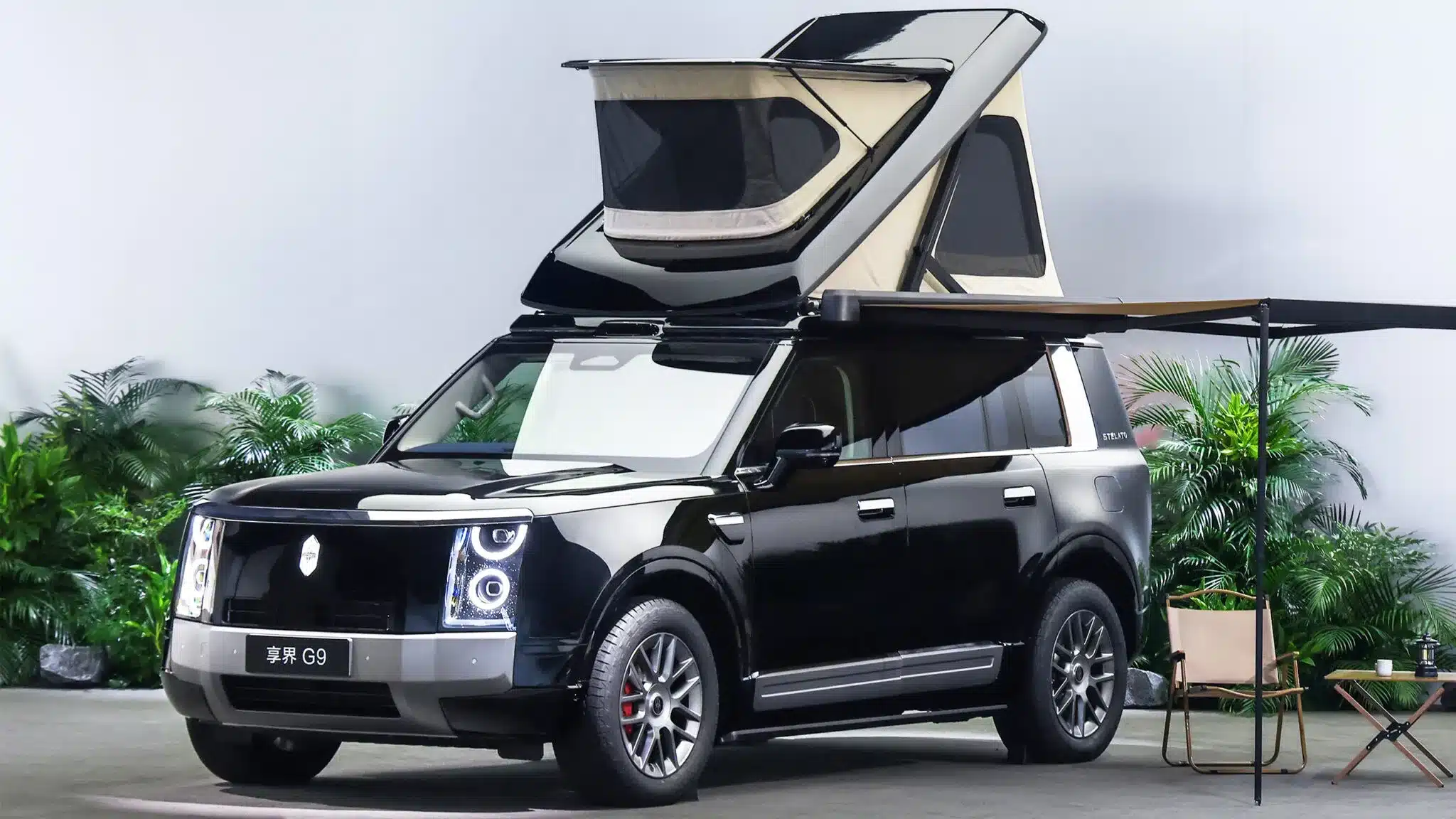
Stelato opened pre-sales on the G9 on August 5, 2026. Two hours later the order book showed 5,100 names. The headline number is 849 miles of combined range. The stranger number is zero, as in the count of US automakers selling a luxury SUV with a tent built into the bodywork. This one comes from the factory, along with a side awning and a tailgate kitchen with a cooktop, a wash area, and a shower head fed from an onboard water jug.
You will never own it. A federal rule on Chinese vehicle software sees to it, backed by a 100 percent tariff. Even so, this Huawei SUV deserves a close read. The useful question for a US overlander is what a $65,000 factory camping package says about where the segment heads next.
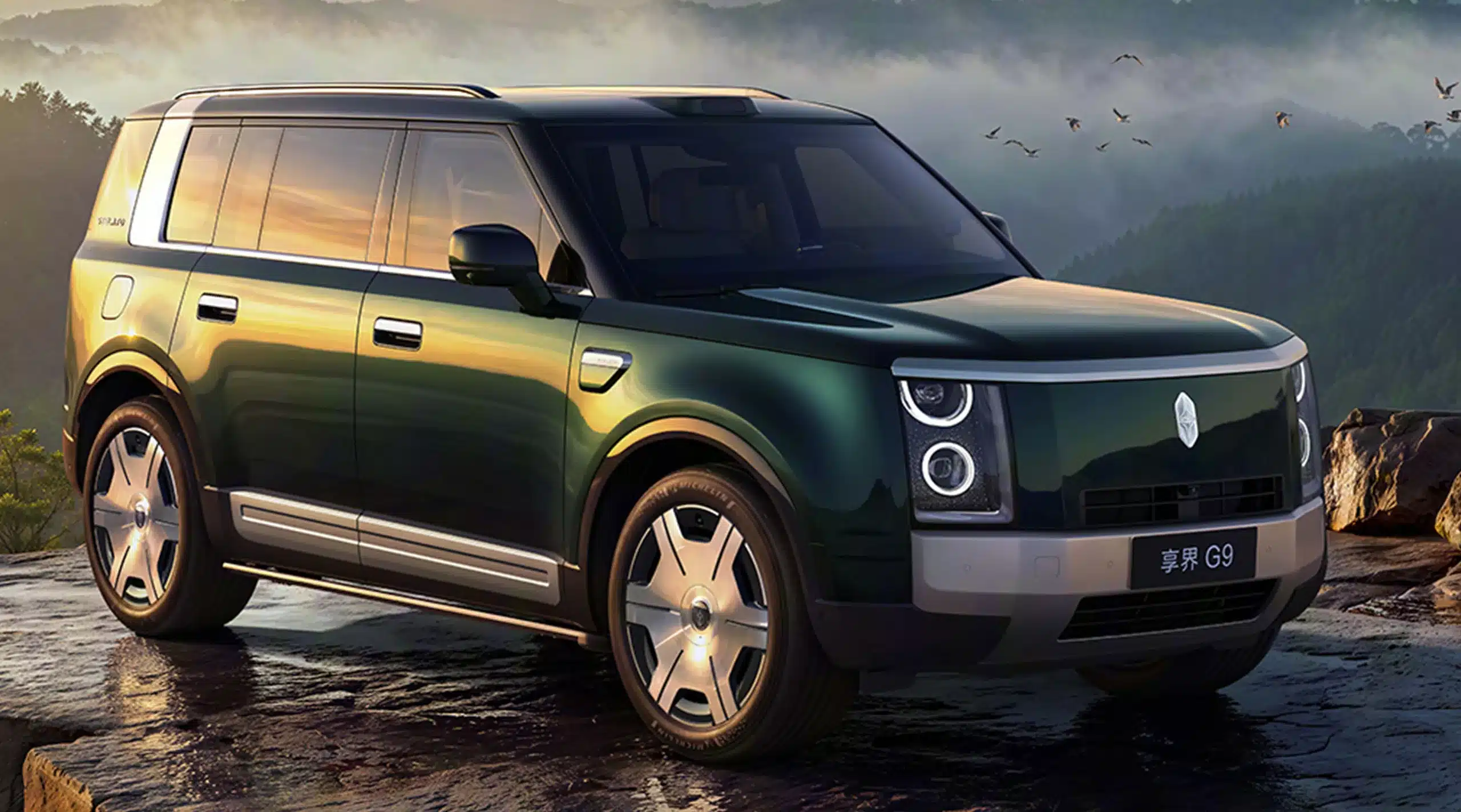
First, the corporate part. Stelato is a Chinese brand run by BAIC Group and Huawei under the Harmony Intelligent Mobility Alliance, or HIMA. The G9 is the brand’s first SUV, after an S9 sedan and an S9T wagon. Three trims span 439,800 to 559,800 yuan, or near $65,150 to $82,900 at the Federal Reserve’s July 31, 2026 rate.
Two powertrains share one horsepower figure. Both send 586 hp through front and rear motors on an 800-volt system. However, their range claims split sharply: 849 miles combined for the EREV, 452 miles for the battery version.
Those 849 Miles Need a Translation
Every range figure on this vehicle comes from CLTC, China’s own test cycle, which runs far looser than the EPA numbers on a US window sticker. Both CLTC and WLTC results have been published for the same 75.4 kWh pack. Specifically, electric-only range reads 252 miles under CLTC and 194 miles under WLTC. One vehicle therefore shows a 30 percent spread between two cycles, before EPA testing enters the picture.
Published conversion guidance puts CLTC roughly 35 percent above EPA. Work backward from the same ratio and the 849-mile figure lands near 600 to 630 miles. Likewise, the 452-mile battery version lands near 320 to 335 miles. For context, a Rivian R1S carries a 410-mile EPA rating on its Max pack.
None of this makes the powertrain uninteresting. Because backcountry charging stays thin, a 1.5-liter generator with no mechanical link to the wheels solves a real problem. You get silent motor torque on the trail, then a gas tank for the drive home. For anyone already planning an EV overland trip around charger gaps, an EREV SUV removes the hardest variable.
Key Specs at a Glance
Here is the full sheet, with one warning attached. Every range row carries a CLTC label, so read those two lines through the translation above.
| Specification | Details |
|---|---|
| Body style | 5-door unibody SUV, no separate frame |
| Length / width / height | 204.9 / 80.7 / 74.6 in (211.7 in with rear storage box) |
| Wheelbase | 124.4 in |
| Curb weight | 6,435 to 6,579 lb |
| Drivetrain | Dual-motor AWD, 586 hp combined, 800-volt |
| EREV setup | 1.5-liter turbo engine as generator, 75.4 kWh LFP pack (56 kWh option) |
| EREV range (CLTC) | 849 mi combined, 252 mi electric-only |
| BEV range (CLTC) | 452 mi, 120 kWh ternary pack |
| Ground clearance | 7.95 in standard, 11.1 in raised on air springs |
| Approach / departure | 23 degrees / 26 degrees (breakover not published) |
| Wading depth | 35.4 in |
| Towing | 4,409 lb |
| Tires | 275/55R20 all-terrain available, or 285/45R22 |
| Price | 439,800 to 559,800 yuan, about $65,150 to $82,900 |
Read the top half as a luxury SUV and the bottom half as a soft-roader. Those two halves do not describe the same vehicle.
The Factory Rooftop Tent Is the Real Story
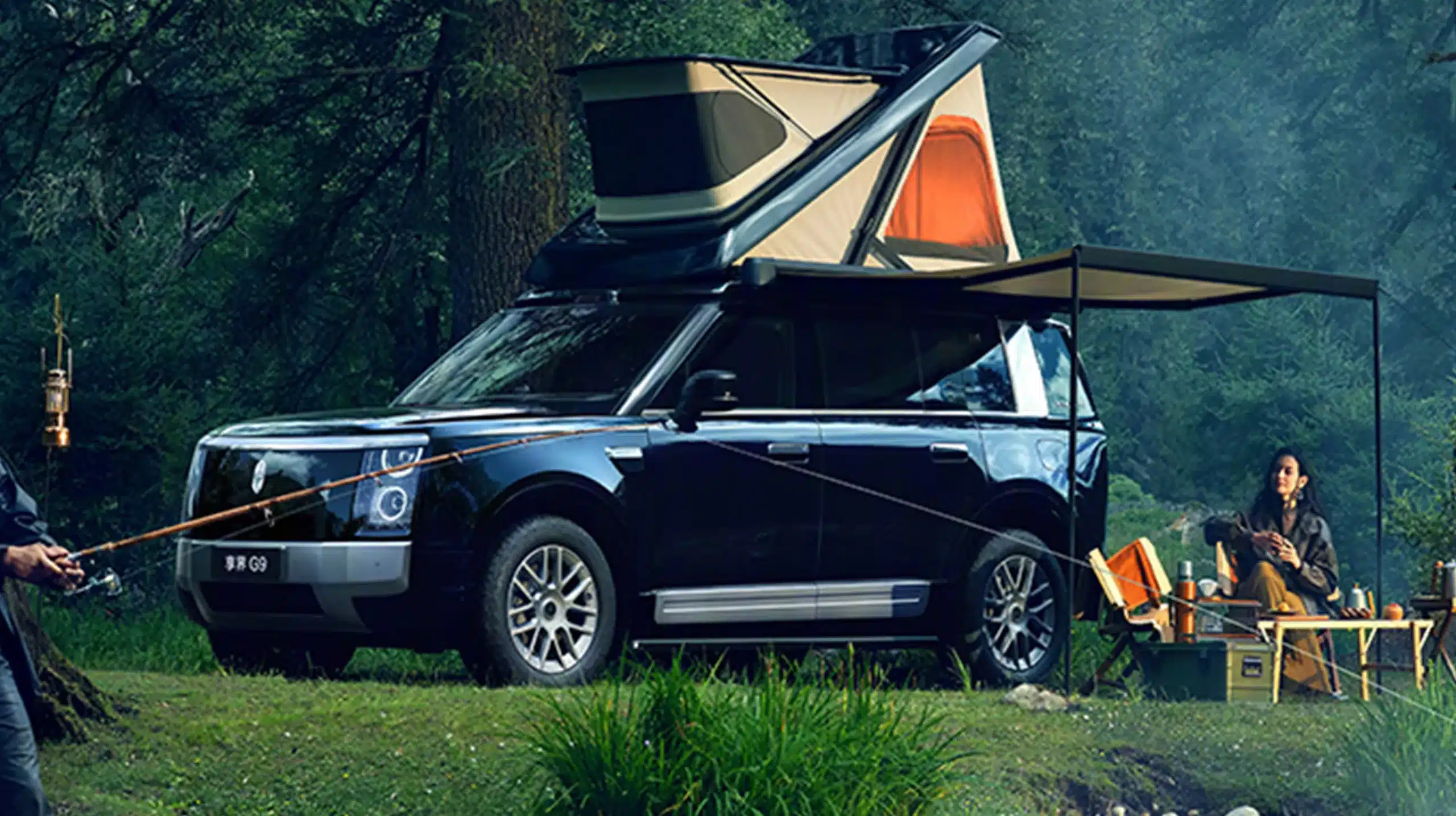
Chinese outlets call the tent version a first for the domestic market: a rooftop tent engineered into the body rather than bolted to crossbars. The roof panel lifts from one side and opens into a two-layer shelter, reached through the panoramic sunroof instead of a ladder. Meanwhile, a side awning deploys alongside it at one tap.
Factory integration solves problems aftermarket tents never fully solve. There is no rack to buy, no dynamic load math on crossbars, and no seasonal teardown. Also, the automaker owns the warranty for the whole assembly. Compare the same logic against the picks in our roundup of the best rooftop tents of 2026.
Two numbers stay missing, though. Stelato has published neither a roof load rating nor a tent weight. Because curb weight already reads 6,435 to 6,579 lb against a gross rating of 7,780 to 7,893 lb, payload sits near 1,300 lb before passengers. Anyone who has read our guide to payload capacity and GVWR limits knows how fast six adults and water erase the margin.
Price context helps here. A quality 270-degree overlanding awning runs about $500 to $1,100 alone, while hardshell tents add well over $2,000. So a factory rooftop tent plus awning plus tailgate kitchen, bundled into a $65,000 vehicle, undercuts the build-it-yourself path on paper. Whether it survives five seasons of highway speed is a separate question nobody has answered.
The Camp Power Question Nobody Answered
A cooktop and a powered roof both draw current, so the G9 clearly runs appliances off its traction pack. Stelato has published no output figure, no outlet count, and no word on whether the generator restarts on its own to refill the battery overnight. For an overlander, those three numbers matter as much as range does.
Consider the architecture instead. A 75.4 kWh pack with a gasoline generator behind it is a house battery with a refill button, parked at camp. Until Stelato publishes the discharge specs, though, treat the camp-power case as promising rather than proven.
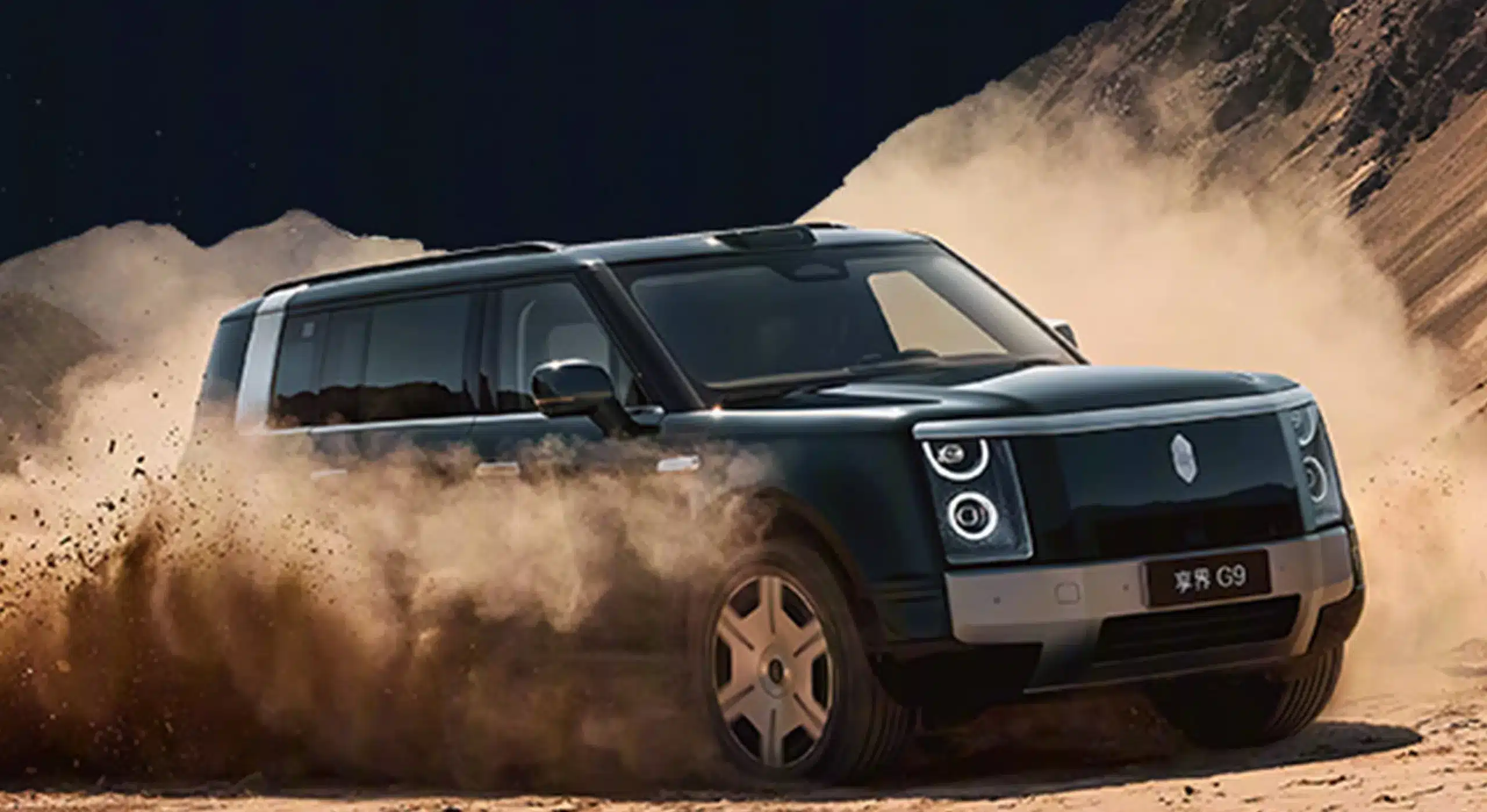
Where the Stelato G9 Stops Being an Off-Roader
The boxy shape writes a check the chassis does not cash. Underneath, the G9 uses a unibody structure with no separate ladder frame. Huawei product director Peng Lei described it as a luxury rugged SUV rather than a pure off-roader.
In particular, the geometry supports his description. Approach measures 23 degrees and departure 26 degrees, which trail purpose-built 4x4s by a wide margin. Ground clearance starts at 7.95 inches, though air springs lift it to 11.1 inches. Breakover angle appears in no published spec sheet, and on a 124.4-inch wheelbase riding this low, it is the number a buyer most needs.
Give it the credit it earns, though. Raised on air, the G9 stands taller than most stock unibody SUVs sold here. Moreover, the graded dirt where most US overland miles happen never asks for more.
Hardware tells the rest. There is no low-range transfer case, because a dual-motor EV carries none at all. Huawei fits an adaptive differential-lock drive unit with an automatic dog-clutch locker, yet drivers get no selectable lockers. So 6,500 lb of unibody luxury SUV on 22-inch wheels belongs on forest roads, not in Rubicon granite. Cross-shop the current field in our roundup of the best overland vehicles of 2026 first.
Towing seals it. A 4,409-lb rating undercuts a Land Rover Defender at 8,201 lb and a Rivian R1S at 7,700 lb. For a 204.9-inch flagship, the number reads low.
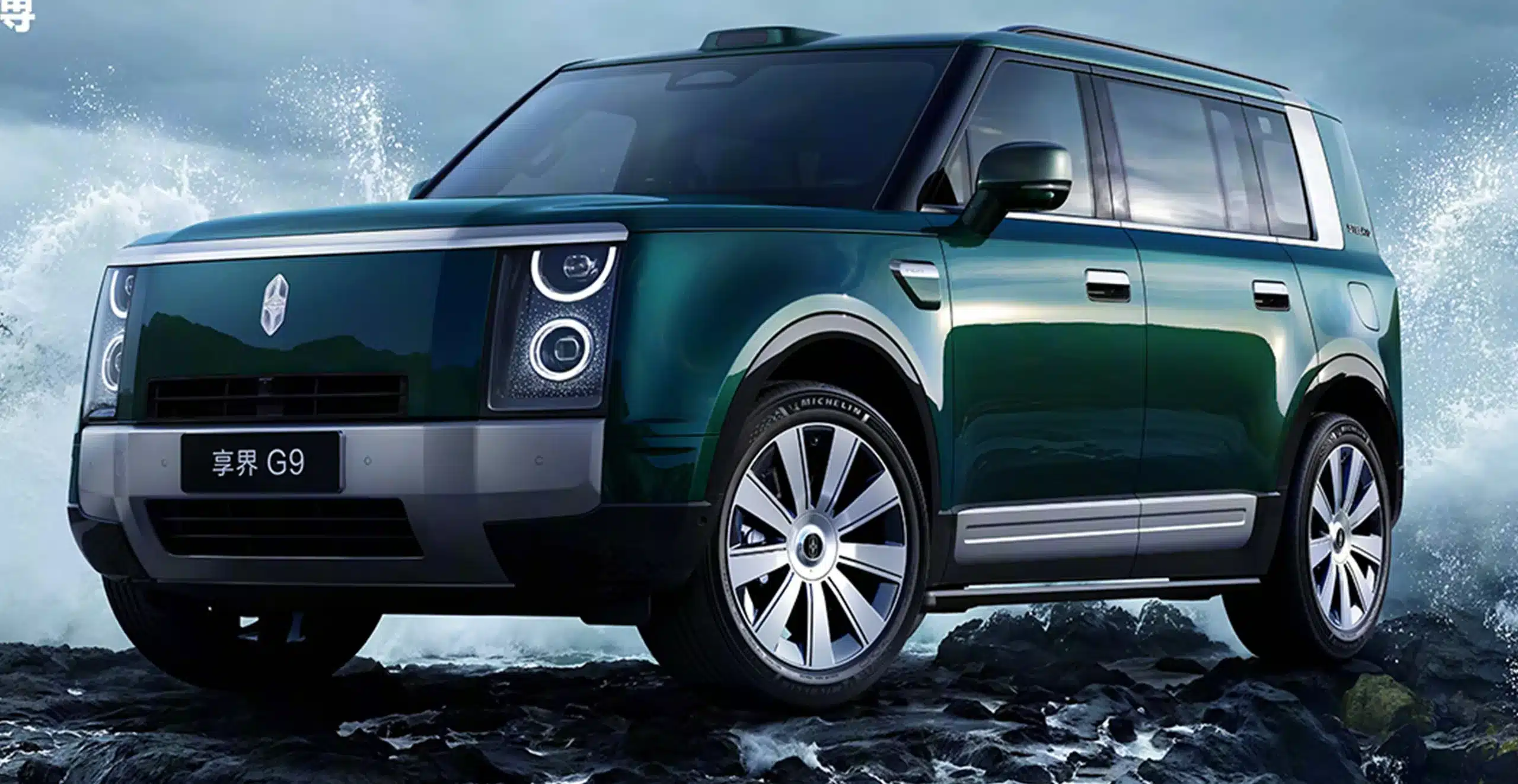
How It Stacks Up Against Defender and Rivian
On paper the G9 splits the Defender lineup. Its 204.9-inch body sits between a Defender 110 at 197.6 inches and a Defender 130 at 211.7 inches. Fit the optional rear storage box, however, and it stretches to 211.7 inches, matching the 130 outright. Wheelbase tells a different story: 124.4 inches exceeds both Defenders, which share 119.0 inches. Longer wheelbase plus lower clearance equals worse breakover, so the 2026 Land Rover Defender lineup keeps the trail advantage.
Against electric rivals the picture flips. A Rivian R1S posts up to 410 miles EPA and tows 7,700 lb, but it starts at $83,990. The G9 undercuts it by roughly $19,000 while adding camping hardware no US brand sells. Similarly, the Ram 1500 REV, formerly called the Ramcharger, targets 690 miles and 14,000 lb of towing, though it ships as a truck. Scout Motors claims over 500 miles from its range extender, yet production waits until 2027 at the earliest.
The pattern matters more than any single spec. Stelato is selling an EREV SUV in Q3 2026, while Ram and Scout are still promising theirs.
Why It Will Never Reach a US Driveway
Two separate walls block this vehicle, and the smaller one is tariffs. Section 301 duties have applied a 100 percent rate to Chinese-built EVs since September 27, 2024, a rate which survived the Supreme Court’s February 2026 ruling against IEEPA tariffs. Even at zero tariff, though, the G9 would stay out.
The hard block comes from the Commerce Department’s connected-vehicle rule, effective March 17, 2025. It bars importing or selling vehicles whose connectivity hardware or automated-driving software traces to China. Software and manufacturer sales prohibitions start with model year 2027, while hardware prohibitions follow in 2030. The G9 runs Huawei ADS 5, a HarmonyOS cockpit, and an 896-line Huawei lidar unit. Huawei’s stack is precisely what the rule names.
Stelato has announced no export plans in any case. Sales run through Huawei’s China retail network, and every rival named at launch competes inside China. For now, the Huawei SUV stays a domestic product.
Final Verdict on the Stelato G9
Read the Stelato G9 as a signal, not a shopping list. Its strongest idea is the powertrain. First, 252 miles of CLTC electric range, closer to 185 by the EPA math above, covers a full day of trail running. A gas generator then sits behind it for the drive home. Silent running plus a fuel tank suits backcountry travel.
The trade-offs are equally clear. A unibody shell, 23-degree approach, and 7.95 inches of standing clearance start the list. Then add no low range and a 4,409-lb tow rating. So buyers who want rock crawling or heavy trailer duty should shop body-on-frame instead.
On value the numbers land well, with an asterisk. For roughly $65,150 you get 586 hp and standard lidar-based driver assistance, on a chassis with air springs and rear-wheel steering, though Stelato has not published trim-by-trim equipment lists. Also, CLTC ranges inflate the headline by roughly a third.
So the practical choice for a US buyer lies elsewhere. For an electrified overland platform you take delivery of, watch the Ram 1500 REV and the range-extended Scout Terra. Above all, when you shop your next rig, ask the two questions this vehicle raises: what the published roof load rating is, and how many watts it sends to camp.
Frequently Asked Questions
How much does the Stelato G9 cost?
Pre-sale prices in China run from 439,800 to 559,800 yuan across three trims. At the Federal Reserve’s July 31, 2026 rate of 6.75 yuan per dollar, the span works out near $65,150 to $82,900, before any import duty.
Will the Stelato G9 come to the United States?
No. Stelato has announced no export plans, and two US barriers stand in the way regardless. First, Section 301 duties apply a 100 percent tariff to Chinese-built EVs. Second, the Commerce Department’s connected-vehicle rule bars vehicles with Chinese connectivity hardware or automated-driving software. Software and sales prohibitions start with model year 2027.
What is an EREV, and why does it matter for overlanding?
An extended-range electric vehicle drives its wheels with electric motors only. The gas engine works purely as a generator, with no mechanical link to the driveline. For overlanding, the layout removes charger anxiety on remote stretches. It also parks a large battery at camp with fuel on board to refill it.
Does the Stelato G9 have a factory rooftop tent?
Yes, as an option rather than standard equipment. The tent version integrates into the body, so the roof panel lifts from one side and opens into a two-layer shelter. However, Stelato has not published a roof load rating or a tent weight.
How much weight does the G9 tow?
Stelato rates the G9 at 2,000 kg, or 4,409 lb, with the optional electric tow hook fitted. For comparison, a Land Rover Defender 110 handles 8,201 lb. Likewise, a Rivian R1S handles 7,700 lb. Towing is the weakest number on the spec sheet.