


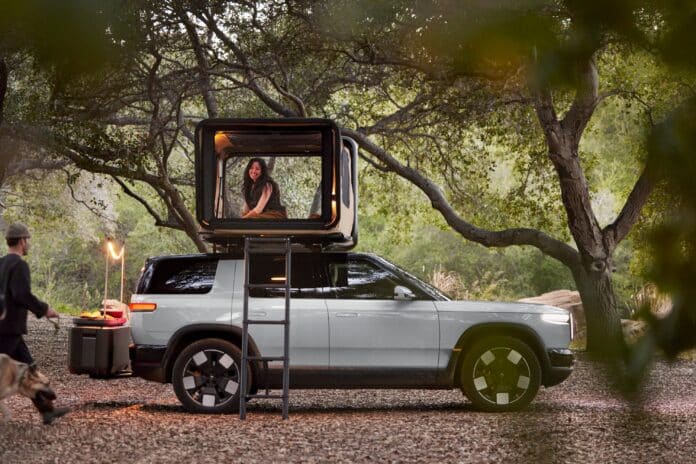

Quick Facts:
- Vehicle: 2027 Rivian R2, a midsize all-electric SUV
- Why it matters for overlanders: Rivian R2 off-road tech aims at an affordable adventure platform
- EPA range: Up to 335 miles on the Performance trim
- Towing: Around 3,500 pounds with the tow package
- Price: R2 Performance from $57,990, with lower trims heading toward $45,000 by 2027
- Rooftop tent: Rivian Treehouse, battery-powered, around $5,000, arriving 2027
- Power export: Vehicle-to-grid plus the Field Outlet through the NACS charge port
- Battery: New 4695 cells, roughly 768 per pack, six times the energy of R1 cells
- Best for: Overlanders who want an electric rig without an R1S price tag
8 min read
In This Article
- Rivian R2 Off-Road: Why Overlanders Should Pay Attention
- Rivian R2 Innovations at a Glance
- A Battery-Powered Rooftop Tent in the Platform
- Vehicle-to-Grid Turns the R2 Into Base Camp Power
- A New Battery for More Range and Lower Cost
- Smarter Cabin Tech for Long Days on the Trail
- Hands-Free Driving for the Highway Slog
- Rivian R2 vs. R1S for an Overland Build
- Rivian R2 Off-Road: The Verdict for Overlanders
- Frequently Asked Questions
Rivian R2 Off-Road: Why Overlanders Should Pay Attention
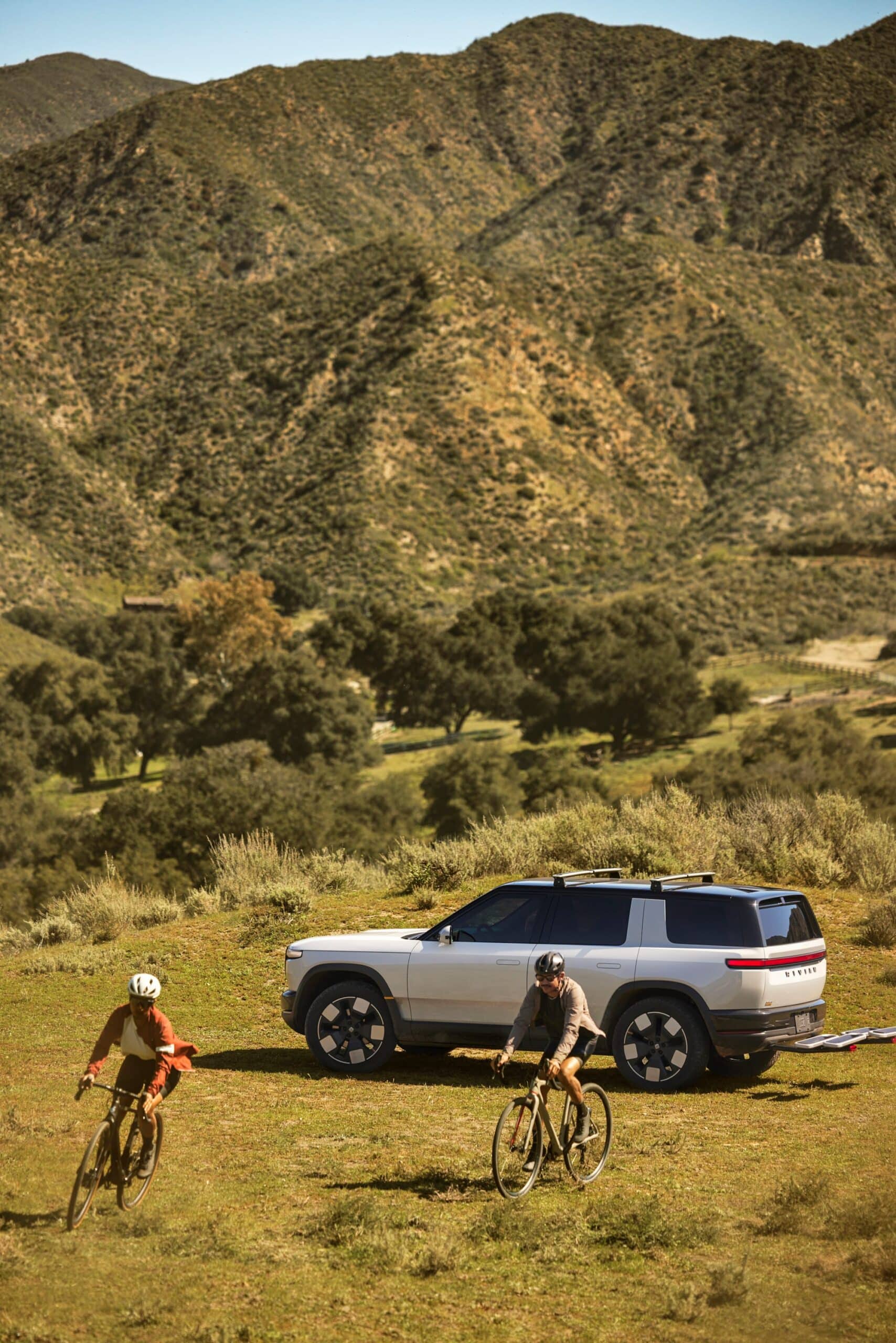
For years, electric overlanding meant spending big money on a premium rig. Rivian built its name on the R1T pickup and R1S SUV, and both carry steep price tags. The R2 changes the math. This midsize SUV brings real Rivian R2 off-road capability to a far lower price, and the shift puts an electric overlander within reach for more of us.
Motor Trend drove an early R2 during the truck’s Utah media launch and counted 10 standout innovations, many of them exclusive to the R2. Several of those features read like a wish list for off-grid travel. A factory rooftop tent, grid-feeding power export, and a new battery all point toward a vehicle built for time spent far from pavement.
For overlanders weighing electric options, the question is whether the R2 backs up its tech with usable capability. Early first drives are in, and the numbers look strong. Rivian has leaned into adventure since day one, and the R2 carries its adventure DNA forward. Below, we translate each Rivian R2 off-road innovation into what it means once you leave the trailhead, then weigh the R2 against the R1S as an overland build.
Rivian R2 Innovations at a Glance
Before the deep dive, here are the Rivian R2 off-road details overlanders will care about most. Rivian has now confirmed pricing, EPA range, and the headline tech, though a few trail figures like ground clearance stay light on detail. The numbers below come from Rivian and early first-drive reviews.
| Feature | Detail |
|---|---|
| EPA range | Up to 335 miles on the Performance trim |
| Towing | Around 3,500 pounds with the tow package |
| Starting price | R2 Performance $57,990; lower trims toward $45,000 by 2027 |
| Treehouse rooftop tent | Hardshell pop-up, lighting, fan, projector, screen; around $5,000; 2027 |
| Power export | Vehicle-to-grid plus Field Outlet via NACS port |
| Battery cells | New 4695 format, roughly 768 cells per pack |
| In-cabin AI compute | 200 sparse TOPS, works offline |
| Driver assistance | Rivian Autonomy+, 10 cameras, five radar sensors |
| Storage | Dual gloveboxes plus a slide-out dash drawer |
| Wiring saved vs. R1 | 2.3 fewer miles of wiring than the gen-two R1 |
A Battery-Powered Rooftop Tent in the Platform
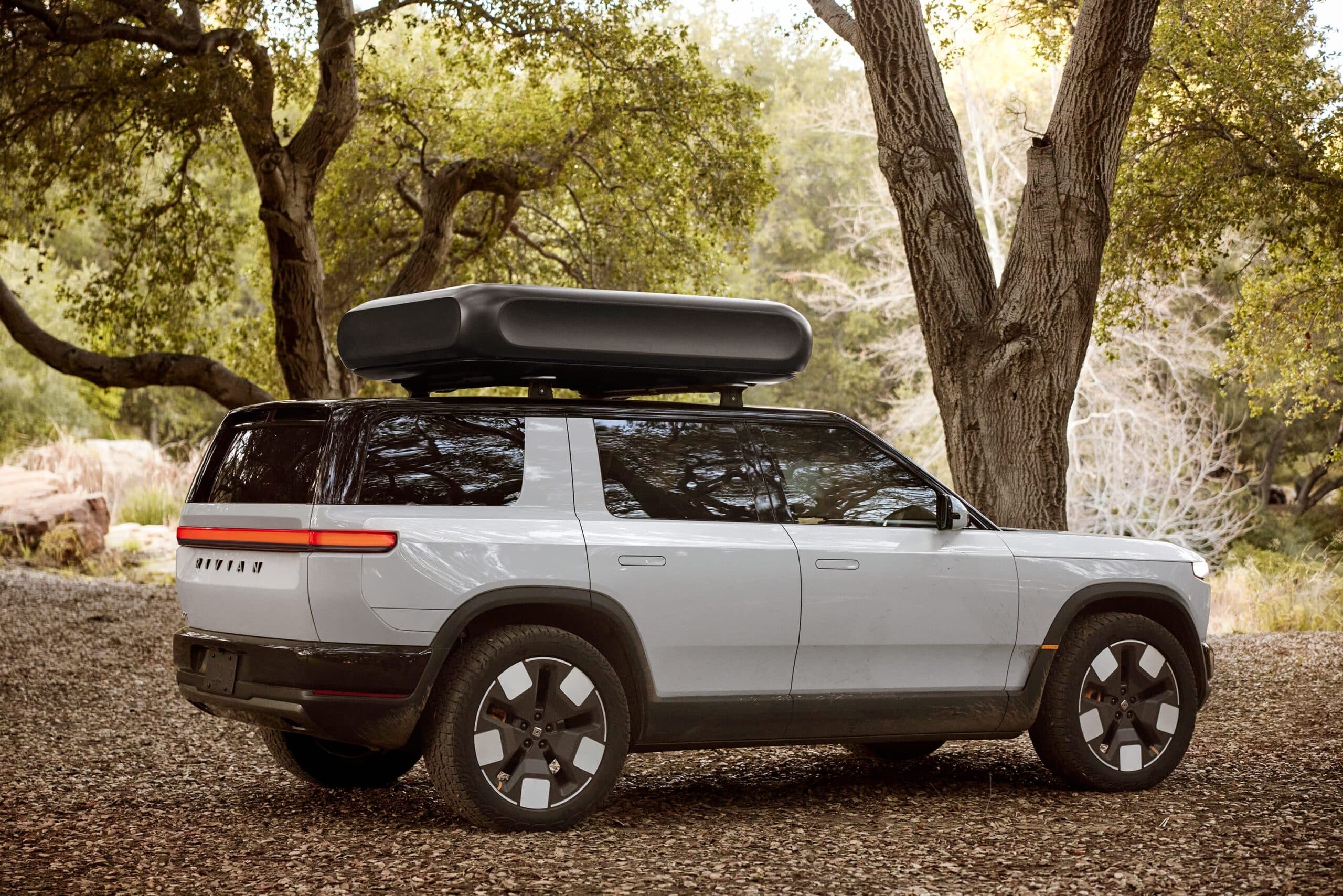
The Rivian Treehouse rooftop tent reads like the headline act for overlanders. We have all bolted an aftermarket hardshell onto a roof rack, then burned a second weekend wiring up lights and a fan. Rivian skips the hassle by building the Treehouse for the R2 from the start. The pop-up hardshell integrates lighting, a ventilation fan, a built-in movie projector, and a viewing screen.
The clever part sits in the power source. Every accessory runs off the R2’s traction battery, so you skip the separate power bank a typical rooftop tent build needs. For a sense of where this fits, our roundup of the best rooftop tents of 2025 shows how much aftermarket buyers spend chasing the same features Rivian bakes in.
At around $5,000, the Treehouse is real money on top of the vehicle, and availability lands in 2027. Still, the price sits in line with premium aftermarket hardshells, and the factory integration removes guesswork on mounting and wiring. Because the tent draws from the main battery, you run the lights, fan, and projector all night without a generator or a separate power bank. For weekend overlanders, this lowers the barrier to a clean, quiet camp.
Vehicle-to-Grid Turns the R2 Into Base Camp Power
The R2 is the first Rivian with vehicle-to-grid capability, and the feature reshapes how an electric rig earns its keep. Vehicle-to-grid, or V2G, sends power from the battery back to the electrical grid and a local utility, with owners potentially paid for the energy. At home, this turns the R2 into a rolling backup battery during an outage.
Off-grid, the story gets better thanks to the Rivian Field Outlet. This accessory plugs into the R2’s NACS charge port and taps the traction battery to run tools and electronics. At camp, you power a fridge, lights, and a coffee maker straight from the SUV. On a worksite or at a tailgate, the same outlet runs saws and speakers.
Overlanders already lean on big lithium banks for off-grid trips, as our guide to portable power stations for overlanders explains. The R2 folds this capability into the vehicle itself. Because the traction battery dwarfs any portable unit, multi-day power stops feeling like a worry. As a result, the R2 doubles as transport and base camp generator at once.
A New Battery for More Range and Lower Cost
The R2’s new battery is the piece overlanders should study hardest. Rivian engineered a fresh pack around larger 4695-format cylindrical cells. Rivian says these cells hold more than six times the energy of the smaller 2170 cells in the R1.
The packaging math is striking. The R2 pack uses roughly 768 cells, while R1 Max and Large packs use up to 7,776. Fewer, bigger cells cut manufacturing cost, which feeds straight into the R2’s lower price. For overlanders, lower cost plus a modern pack means more adventure capability per dollar.
Rivian also simplified service. The DC-DC converter, bidirectional charger, and power electronics now share a single housing on top of the pack instead of scattering across the vehicle. Easier access helps owners and shops alike. On range, the EPA rates the Performance trim at up to 335 miles, with lower trims a little less. For multi-day trips, pair this range with smart charging and a portable backup, as our guides to the best portable batteries of 2025 and electric off-road vehicles and the future of overlanding explain.
Smarter Cabin Tech for Long Days on the Trail
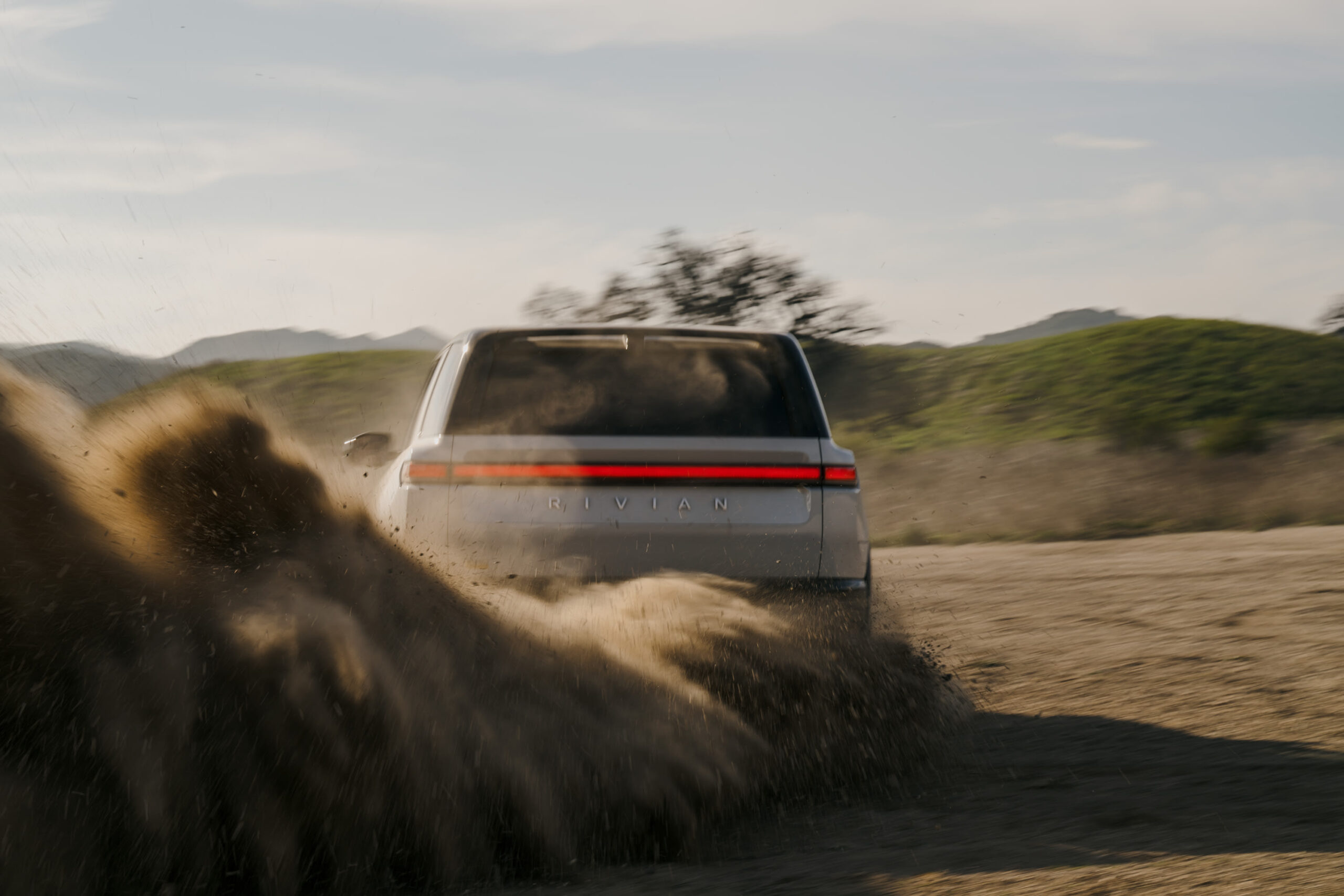
Trail days run long, so cabin ergonomics shape the experience as much as torque does. The R2 answers with several thoughtful upgrades. First, Rivian added Haptic Halo Wheels, large steering-wheel controls replacing the small thumb wheels on the R1. They scroll, toggle, and press to manage climate, media, seats, and mirrors, and their size makes them easier to use with gloves on.
Storage improved too. The R1 skipped a traditional glovebox, yet the R2 adds two, plus a slide-out dash drawer big enough for a full tissue box. Small wins like these matter when gear piles up on a week-long trip. Meanwhile, a redesigned sound system drops the front-door speakers in favor of dash, A-pillar, and headliner drivers, with force-canceling subwoofers hidden in the trunk to cut cabin vibration.
Offline AI Where Signal Drops Out
Connectivity vanishes deep in the backcountry, which is where the R2’s edge computing pays off. Rivian packed 200 sparse TOPS of in-cabin AI compute reserved for cabin features. Because the heavy lifting happens on the vehicle instead of the cloud, the Rivian Assistant keeps working offline. You control nearly every feature by voice, and the system handles several commands at once. A new architecture also ditches 2.3 miles of wiring versus the gen-two R1, which trims weight and failure points.
Hands-Free Driving for the Highway Slog
Overland trips often start with hundreds of highway miles before the dirt begins. The R2 eases the grind with Rivian Autonomy+, the company’s hands-free driving system. Rivian built the hardware into every trim, and buyers get a 60-day free trial, with Lifetime Autonomy+ bundled into a limited Launch Package.
The system leans on 10 cameras and five radar sensors. Over time, Rivian plans point-to-point hands-free driving across 3.5 million miles of mapped roads in the U.S. and Canada. For the driver who tows a trailer or runs solo, the system reduces fatigue before the real work starts. A future lidar sensor, slated for 2028 models arriving in 2027, will push toward eyes-off highway driving.
None of this replaces skill on the trail, and smart overlanders will treat it as a highway tool rather than a backcountry crutch. Still, arriving at the trailhead fresher counts for plenty. Because the assistance hardware ships standard, even base R2 buyers benefit on the long transit legs.
Rivian R2 vs. R1S for an Overland Build
The R1S remains Rivian’s flagship SUV, so overlanders will naturally weigh it against the smaller R2. Price is the biggest gap. The R2 Performance opens at $57,990, with cheaper trims to come, while the R1S starts tens of thousands higher. For a first electric overland build, the saved money frees up budget for tires, recovery gear, and storage.
Size is the other key difference. The R1S offers more interior room and a larger battery option, so it suits big families and the longest remote routes. The R2 counters with newer tech, the Treehouse tent, and V2G power the R1 lineup did not launch with. Solo travelers and couples also gain from the R2’s smaller footprint on tight trails.
Value tips the scale toward the R2 for most overlanders. You trade some space and maximum range for lower cost and fresher features. Buyers chasing the most cargo room or towing headroom should still eye the R1S or even an EV-friendly camping trailer pairing. Everyone else gets more rig for the money with the R2.
Rivian R2 Off-Road: The Verdict for Overlanders
The R2 looks strong where it counts for overlanders, and its feature set fits how they travel. The Treehouse tent, V2G power, and a cheaper modern battery form a package aimed squarely at adventure buyers. For anyone priced out of the R1S, the R2 opens the door to electric overlanding.
The honest caveats center on real-world overland use. Rivian has not detailed final ground clearance, and long-term testing under a loaded roof and big tires is still early. Charging access in remote regions also lags gas, so route planning stays essential. Buyers who run the most remote routes should weigh this gap before committing.
On value, the R2 resets what an electric adventure rig should cost. Rivian folded premium overland features into a midsize, lower-priced SUV, and the combination is rare. The factory tent and onboard power alone save thousands in aftermarket spend.
For most overlanders, the R2 earns a spot at the top of the electric short list. Pair it with the R1S only if you need maximum space or the most range. Otherwise, the R2 looks like the affordable electric overlander the scene has wanted, and the rollout is already underway. We will keep updating this piece as Rivian ships the rest of the R2 lineup.
Frequently Asked Questions
Is the Rivian R2 good for off-road and overlanding?
The Rivian R2 off-road feature set targets overlanders directly, with a factory rooftop tent, vehicle-to-grid power, and available dual-motor AWD. Rivian has detailed range, pricing, and the tech, while trail figures like ground clearance stay light. On paper, the R2 looks like a strong, affordable adventure platform.
What is the Rivian R2’s range for overland trips?
The EPA rates the R2 Performance at up to 335 miles, with lower trims a little less. Real-world range drops with off-road tires, roof loads, and a deployed rooftop tent. Plan multi-day trips around chargers and a portable battery backup.
Does the Rivian R2 fit a rooftop tent?
Yes. Rivian designed the Treehouse rooftop tent specifically for the R2. The hardshell pop-up adds lighting, a fan, and a projector, all powered by the vehicle battery. Rivian expects it to retail around $5,000 with availability in 2027.
What is the Rivian R2 towing capacity?
Rivian rates the R2 at around 3,500 pounds with the tow package, enough for small trailers, teardrops, and dirt-bike haulers. Towing cuts electric range sharply, so factor in extra charging stops. Match the load to your route and charger spacing.
When is the Rivian R2 coming out?
The R2 Performance reached buyers in 2026, with lower-priced trims and the Treehouse tent rolling out through 2027. Production timing has shifted before, so confirm the latest schedule with Rivian. Reservation holders see the earliest deliveries.
How does the Rivian R2 compare to the R1S for overlanding?
The R2 costs far less and brings newer tech like the Treehouse tent and V2G power. The R1S offers more space and a larger battery for the longest remote routes. Most overlanders get better value from the R2, while big families lean toward the R1S.