


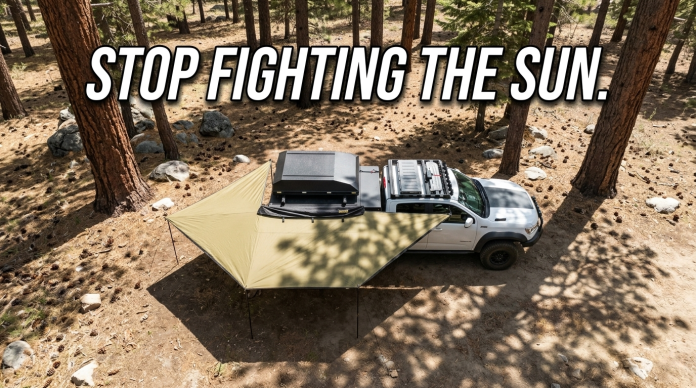

Quick Verdict: The 23Zero Peregrine PRO 270 (approximately $1,095) is the best 270 degree awning for overlanding, delivering 127 sq ft of freestanding shade with a sub-60-second deploy time. For overlanders on a tighter budget, the OVS Nomadic 270 LTE (approximately $350) provides solid 270-degree coverage at one-third the price. If your rig has a shorter wheelbase, the Rhino-Rack Batwing Compact (approximately $592) wraps 68.9 sq ft of shelter without extending past your bumpers.
Last updated: April 2026 | 12 min read
In This Review
- Why Overlanders Are Switching to 270 Degree Awnings
- How We Evaluated These Awnings
- Best Overall: 23Zero Peregrine PRO 270
- Best Value: OVS Nomadic 270 LTE
- Best for Compact Vehicles: Rhino-Rack Batwing Compact
- Alternative Pick: ARB Retractable Awning
- Most Portable: MoonShade Portable Awning
- Side-by-Side Comparison
- 270 Degree vs. 180 Degree Awnings
- Buying Guide: How to Choose a 270 Degree Awning
- Pros and Cons of 270 Degree Awnings
- Final Verdict
- Frequently Asked Questions
Why Overlanders Are Switching to 270 Degree Awnings
Picture this: you set up camp after a long day on washboard roads, and by 2 PM the sun has swung past your side awning, leaving you squinting into direct light. A vehicle mounted awning with 270-degree coverage solves the problem by wrapping around three sides of your rig, creating a shaded living space between 63 and 130 sq ft with a single deployment. Instead of standing in a narrow strip of shade along one side of your truck, you get coverage from the rear quarter panel, across the tailgate, and down the opposite side. For overlanders who cook, eat, and relax at camp, the difference is significant.
Traditional side-mount awnings provide shade along one wall of your rig. However, the sun moves throughout the day, and a single-side awning forces you to reposition your vehicle or accept direct sun exposure by mid-afternoon. A 270 degree awning for overlanding solves this problem by wrapping shade around your camp, keeping at least one section in shadow regardless of sun angle.
The popularity of these awnings has grown steadily since 2020, driven by the overlanding boom and improved freestanding designs. Early 270 awnings required multiple poles and two people to set up. Modern versions from brands like 23Zero and OVS deploy in under 60 seconds with no loose poles. If your bed rack setup supports the mounting weight, a 270 adds immediate camp comfort on every trip.
How We Evaluated These Awnings
We assessed each awning across five core criteria: coverage area, setup speed, build quality, wind resistance, and value per square foot. Since firsthand testing of every model is not always possible, we cross-referenced manufacturer specifications with real-world feedback from Amazon reviews, Reddit threads in r/overlanding, and forum discussions on Overland Bound and Expedition Portal.
We also weighted portability and packed dimensions, because a vehicle mounted awning with wraparound coverage adds significant bulk to your roof rack. Overlanders running smaller rigs need compact options. Likewise, we examined mounting compatibility, since not every awning fits every rack system without adapters. Each product section below includes verified specifications pulled directly from manufacturer pages and Amazon listings.
Best Overall: 23Zero Peregrine PRO 270 (Approximately $1,095)
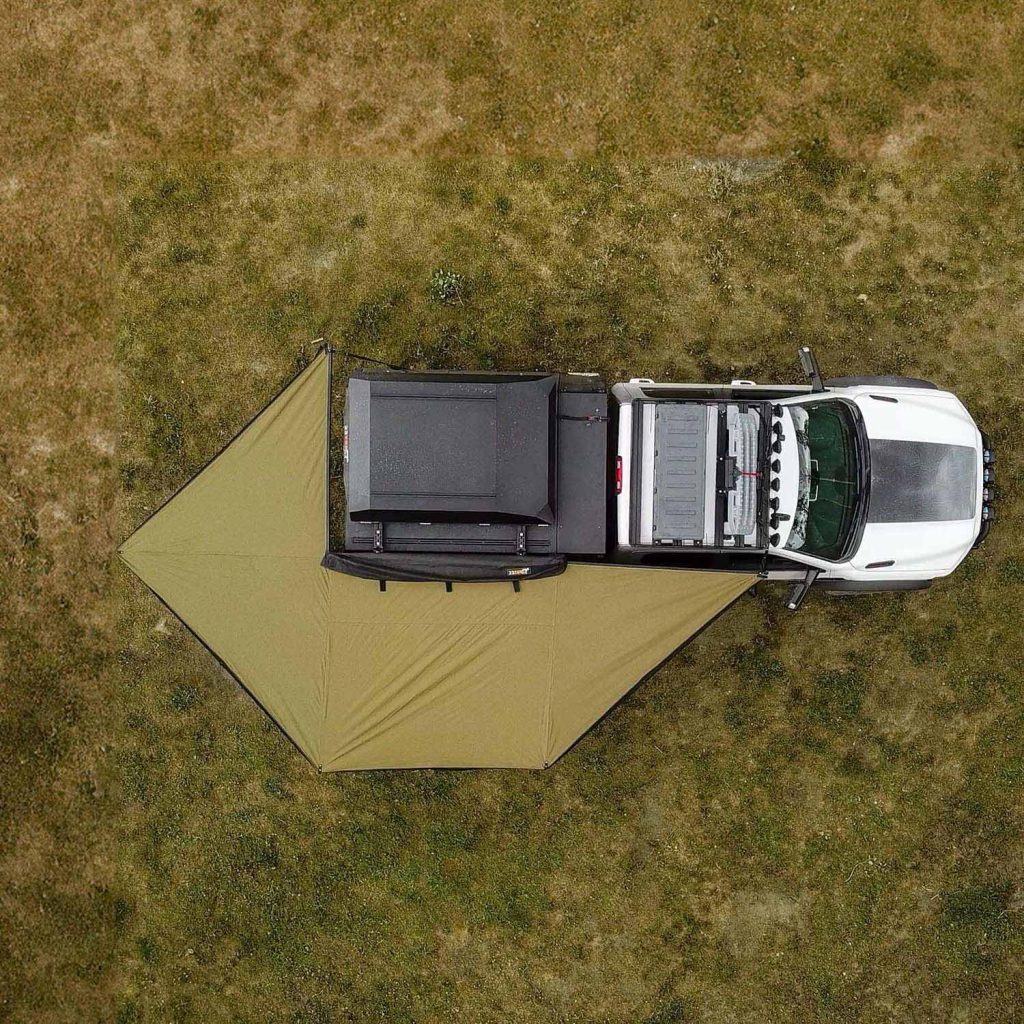
The 23Zero Peregrine PRO 270 sets the standard for freestanding wraparound awnings. With 127 sq ft of coverage and a five-arm aluminum box-truss frame, this awning deploys in under 60 seconds and stands rigid without guy ropes in moderate wind. Integrated LED strip lighting runs along the interior frame, so you do not need a separate camp lighting setup under your awning.
Coverage and Build Quality
The ECO13B fabric provides UPF50+ sun protection and a 3,000mm waterproof rating. At 51 lbs packed, the Peregrine PRO sits at the heavier end of the overlanding awning market. However, the trade-off is a frame stiff enough to handle gusty conditions without collapsing. The five-arm design distributes tension more evenly than three-arm competitors, which reduces fabric flutter and pooling during rain.
Amazon reviewers consistently praise the build quality and the speed of solo deployment. One verified purchaser on Amazon noted the awning stayed rigid through 25+ mph gusts during a Utah desert trip. Multiple Reddit users in r/overlanding confirm the hardware quality exceeds competitors in the $500-700 range.
Where It Falls Short
The price is the main barrier. At approximately $1,095, the Peregrine PRO costs three times more than the OVS Nomadic 270 LTE. Additionally, the 51-lb packed weight means you need a roof rack or bed rack rated for the load. Owners also report the packed dimensions are bulky, taking up significant rack space alongside a rooftop tent.
Best Overall
23Zero Peregrine PRO 270
127 sq ft of freestanding shade with integrated LED lighting. Deploys solo in under 60 seconds.
Best Value: OVS Nomadic 270 LTE (Approximately $350)
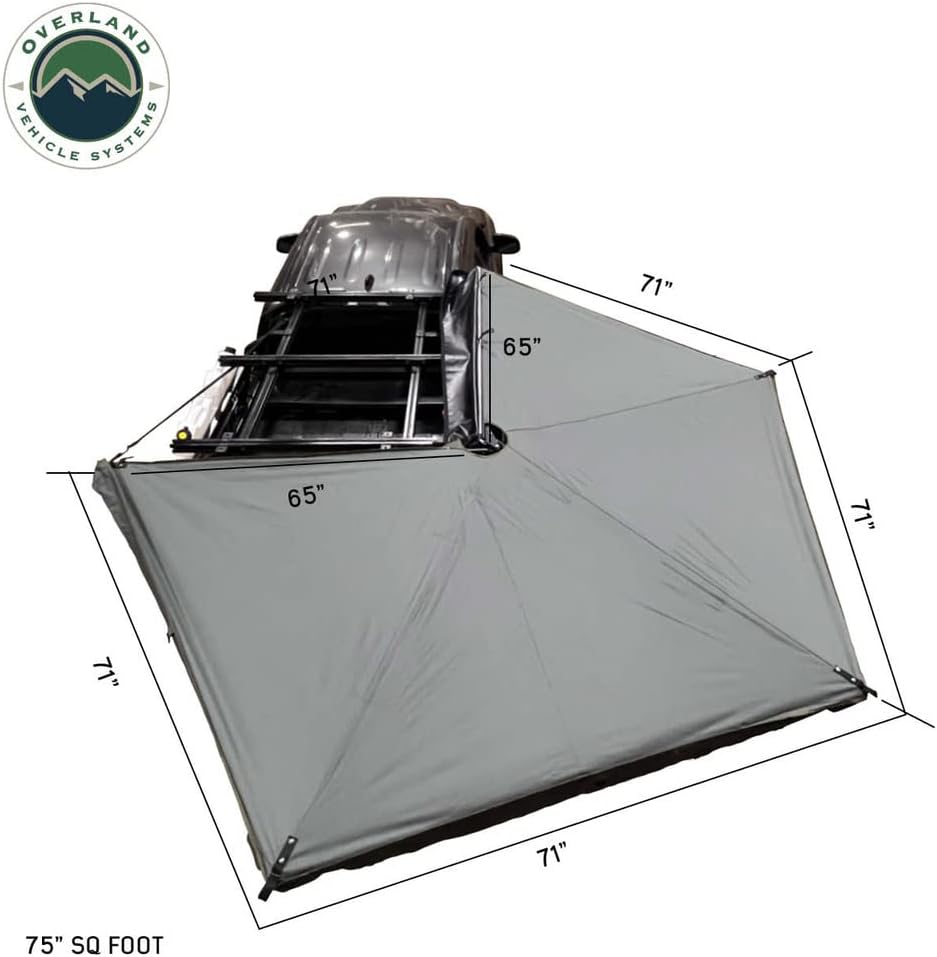
Not every overlander needs (or wants to spend) $1,000+ on a wraparound awning. The Overland Vehicle Systems Nomadic 270 LTE delivers true 270-degree coverage at a price point most overlanders find reasonable. At approximately $350, this awning costs less than many premium side-mount awnings while providing 75 sq ft of wraparound shade. Amazon shoppers give it 4.5 stars across 172 reviews, making it one of the highest-rated budget overlanding awnings available.
Twist-and-Lock Deployment
The Nomadic 270 LTE uses a proprietary Twist and Lock mechanism instead of traditional poles. You swing each arm out and lock it into position. Setup takes roughly 90 seconds for a solo operator, which is faster than most pole-based awnings in this price range. The 280G poly-cotton ripstop fabric resists mildew better than pure polyester options, and heat-sealed seams keep rain from seeping through stitching.
Weighing 31 lbs, the OVS comes in 20 lbs lighter than the Peregrine PRO. For overlanders running mid-size SUVs or trucks with weight-sensitive rack setups, this difference matters. Forum users on Overland Bound frequently recommend the Nomadic 270 LTE as a solid first wraparound awning for newcomers.
Limitations at This Price
The 75 sq ft coverage area is noticeably smaller than the Peregrine PRO’s 127 sq ft. In practice, the shade wraps your vehicle but extends only 4-5 feet outward, which limits the usable living space underneath. Wind resistance is also weaker; several Amazon reviewers mention the arms flex in winds above 15 mph. During calm-weather camping, the OVS performs well. For exposed desert or coastal sites, consider the Peregrine PRO or add aftermarket guy ropes.
Best Value
OVS Nomadic 270 LTE
75 sq ft of 270-degree coverage at a budget-friendly price. 4.5 stars from 172 Amazon reviews.
Best for Compact Vehicles: Rhino-Rack Batwing Compact (Approximately $592)
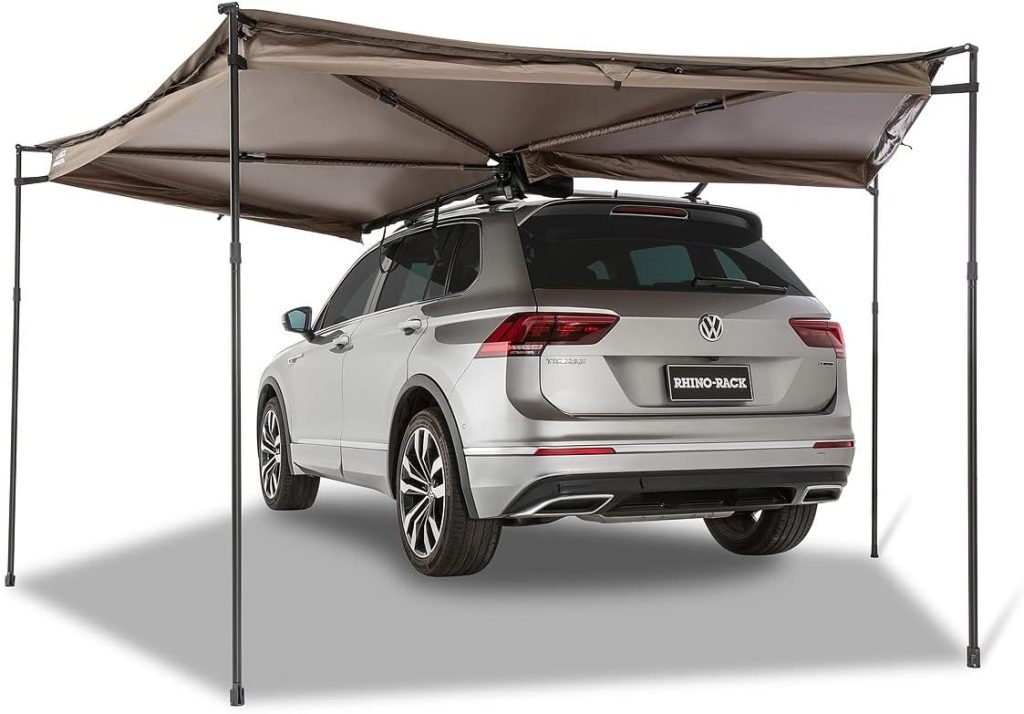
Full-size 270 awnings work well on long-wheelbase trucks, but they overhang smaller rigs. The Rhino-Rack Batwing Compact is designed specifically for shorter-wheelbase vehicles like Jeep Wranglers, Toyota 4Runners, and compact SUVs. Its pentagon-shaped design extends 68.9 sq ft of coverage without stretching past your front or rear bumpers. For overlanders running smaller rigs, this compact footprint solves the common problem of oversized awnings hanging off the edges.
Pentagon Footprint Design
Unlike rectangular wraparound awnings, the Batwing Compact uses a true pentagon shape. Consequently, the awning extends as far outboard as it does along the vehicle, creating a balanced canopy instead of a lopsided one. The polypropylene fabric is lighter than canvas options, though it sacrifices some UV protection compared to poly-cotton blends. Amazon shoppers rate it 3.5 stars across 68 reviews.
Rhino-Rack designed the mounting brackets to work directly with their own crossbar systems. For other rack brands, you will need universal mounting brackets, which adds $50-80 to the total cost. Before purchasing, measure your roof rack or bed rack crossbar spacing to confirm compatibility.
Quality Trade-Offs
The 3.5-star Amazon rating reflects mixed user experiences. Positive reviews highlight the compact packed size and the ease of solo setup. Negative reviews point to the polypropylene fabric feeling thinner than expected and the mounting hardware requiring frequent tightening after bumpy trails. At $592, the Batwing Compact sits in a competitive mid-range price bracket where the OVS Nomadic 270 LTE offers similar coverage for $242 less. The Rhino-Rack’s advantage is its purpose-built compact design for short-wheelbase rigs.
Best for Compact Vehicles
Rhino-Rack Batwing Compact
68.9 sq ft pentagon footprint built for short-wheelbase rigs. 3.5 stars from 68 Amazon reviews.
Alternative Pick: ARB Retractable Awning (Approximately $300)
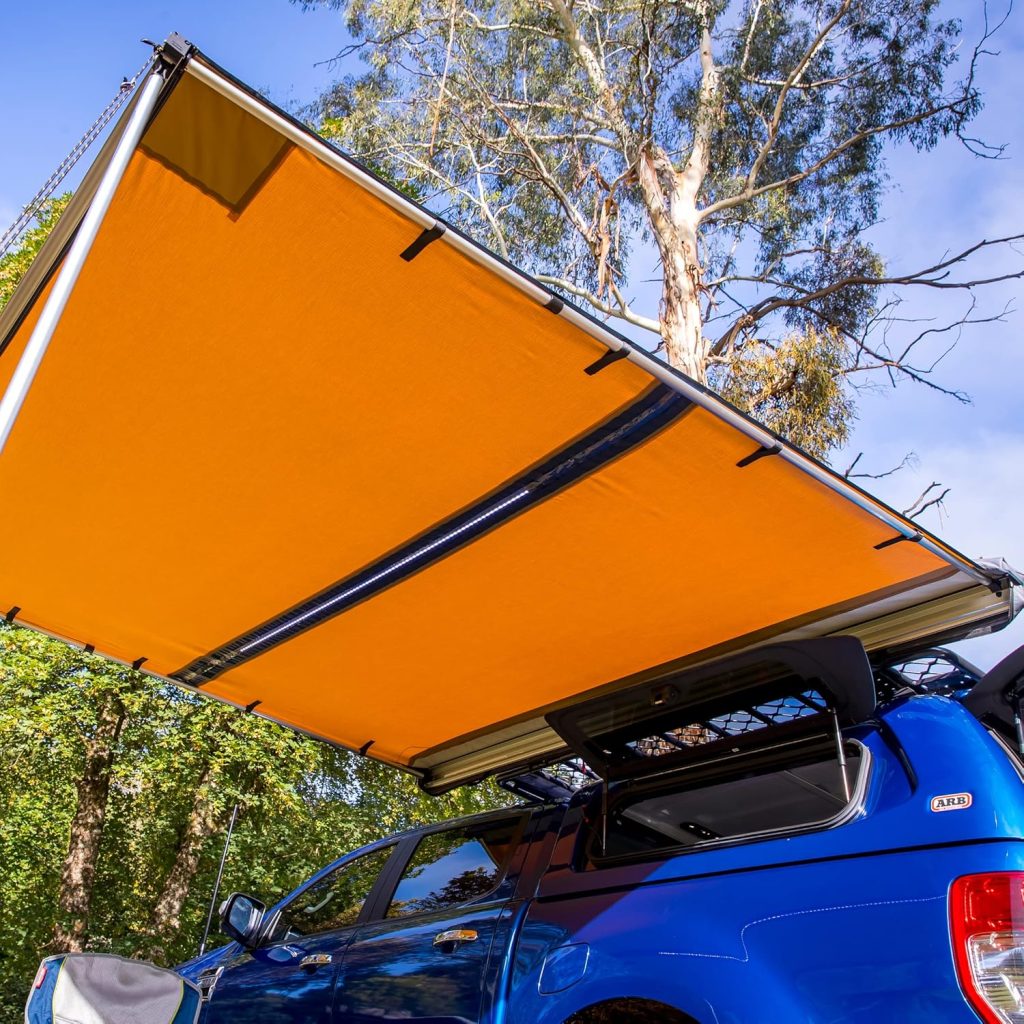
The next two picks are not true 270-degree awnings, but they deserve a spot in this roundup because overlanders frequently compare them against wraparound models. The ARB 814410 is an 8.2 ft retractable side-mount awning with 67.7 sq ft of coverage. We include it here because many overlanders shopping for 270 coverage also consider ARB’s retractable design for its faster deployment and lower profile. With 4.4 stars across 434 Amazon reviews, the ARB carries the highest user rating and largest review count in this roundup.
Retractable Speed and Convenience
ARB’s retractable mechanism works like a roller blind. Pull it out, lock the legs, and you have shade in under 30 seconds. Conversely, packing up takes the same 30 seconds. For overlanders who stop frequently during the day for lunch breaks or quick rests, the ARB’s speed beats every vehicle mounted awning on setup time. The poly/cotton ripstop fabric includes integrated LED strip lighting, which adds functional value for evening camps.
Its compact retracted profile sits tight against your roof rack, leaving more space for off-road lighting and other gear. Amazon reviewers frequently praise the minimal wind noise while driving, since the awning stays flush and aerodynamic when stowed.
Single-Side Limitation
The 8.2 ft square coverage gives you shade on one side only. As a result, you lose the wraparound protection a 270-degree model provides. If you camp in one spot for multiple days, the sun’s movement will leave you exposed by afternoon. On quick stops and day trips, the ARB excels. At extended base camps, a wraparound overlanding awning delivers a better overall experience.
Best Quick-Deploy
ARB 814410 Retractable Awning
67.7 sq ft retractable shade with LED lighting. 4.4 stars from 434 Amazon reviews. Deploys in 30 seconds.
Most Portable: MoonShade Portable Awning (Approximately $560)
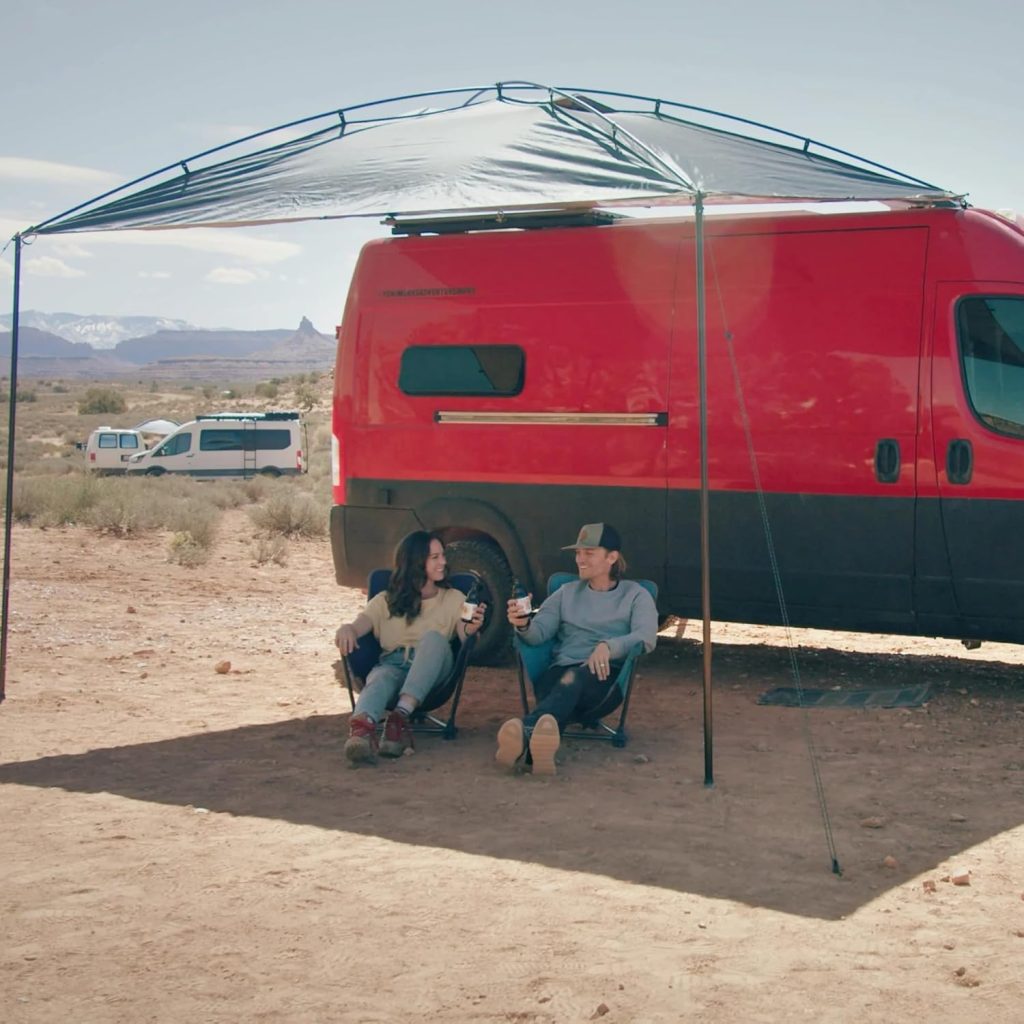
The MoonShade takes a fundamentally different approach to vehicle shade. Rather than mounting permanently to your roof rack, the MoonShade uses suction cups and adjustable poles to attach to any vehicle surface. At roughly 8 lbs, it weighs one-sixth of the lightest wraparound awning in this roundup. For overlanders who switch between multiple vehicles or want a zero-commitment shade solution, the MoonShade fills a unique role.
Suction-Cup Versatility
The industrial suction cups grip glass, painted metal, and smooth plastic surfaces. You position the awning wherever shade is needed, including orientations a fixed-mount awning cannot reach. Setup takes 2-3 minutes, and the entire system packs into a bag the size of a folding camp chair. For day trips, beach outings, and tailgating, the MoonShade works well alongside your existing rig setup.
Not a Replacement for a 270
The MoonShade covers roughly 63 sq ft in a flat panel configuration. It does not wrap around your vehicle, and it offers limited wind resistance compared to frame-supported awnings. In sustained winds above 10 mph, the suction cups lose grip on dusty surfaces. This awning works best as a supplementary shade tool or an entry-level option before committing to a permanent vehicle mounted awning with full 270 coverage.
Most Portable
MoonShade Portable Awning
Roughly 8 lbs and fits any vehicle with suction-cup mounting. No permanent installation needed.
Side-by-Side Comparison
| Model | Price | Coverage | Weight | Type | Rating | Best For |
|---|---|---|---|---|---|---|
| ⭐ 23Zero Peregrine PRO 270 | ~$1,095 | 127 sq ft | 51 lbs | 270 Freestanding | N/A | Maximum coverage, wind resistance |
| OVS Nomadic 270 LTE | ~$350 | 75 sq ft | 31 lbs | 270 Twist-Lock | 4.5⭐ (172) | Budget-friendly 270 coverage |
| Rhino-Rack Batwing Compact | ~$592 | 68.9 sq ft | N/A | 270 Batwing | 3.5⭐ (68) | Short-wheelbase vehicles |
| ARB 814410 Retractable | ~$300 | 67.7 sq ft | N/A | Retractable Side | 4.4⭐ (434) | Quick stops, frequent deployment |
| MoonShade Portable | ~$525 | ~63 sq ft | ~8 lbs | Portable Suction | N/A | Multi-vehicle use, portability |
270 Degree vs. 180 Degree Awnings
When a 180 Degree Awning Makes Sense
A 180 degree awning extends straight out from one side of your vehicle, creating a rectangular shade canopy. These awnings are lighter, cheaper, and simpler to mount than 270 degree options. For overlanders who always camp with one side of the vehicle against a wall, tree line, or canyon, a 180 provides adequate shade at a lower cost. Prices for quality 180 awnings typically range from $150-$400.
Where 270 Degree Awnings Win
The wraparound coverage of a 270 creates a defined outdoor room attached to your vehicle. You gain weather protection from multiple directions, a larger shaded footprint per dollar of coverage, and a natural wind barrier on two sides. For multi-day base camps, the 270 layout integrates well with a wall tent or bell tent for a complete camp setup. Overlanders who frequently cook and eat at camp benefit most from the extra square footage.
Buying Guide: How to Choose a 270 Degree Awning
Coverage Area and Vehicle Fit
Measure your vehicle from the rear quarter panel to the front fender on the driver’s side. The awning length should match this measurement closely. An oversized awning hangs past your bumpers and creates awkward overhangs while driving. For full-size trucks and SUVs with wheelbases over 120 inches, look for awnings rated at 100+ sq ft of coverage. Mid-size rigs with wheelbases between 100-120 inches perform best with 60-80 sq ft options.
Mounting and Rack Compatibility
Most wraparound awning systems attach to roof rack crossbars using C-channel brackets or T-slot bolts. Before purchasing, confirm your rack supports the added weight. A 50-lb awning plus mounting hardware totals roughly 55-60 lbs of dynamic load on your rack. Also check the crossbar spacing requirements, since some awnings need a minimum of 32 inches between bars. Your campsite selection habits should also influence your choice: exposed, windy sites demand sturdier mounting.
Fabric and Weather Resistance
Poly-cotton ripstop fabric (like the OVS Nomadic 270 LTE uses) breathes better and resists mildew growth. Pure polyester and nylon options (like the ARB) are lighter but trap more heat underneath. For four-season overlanders, prioritize a waterproof rating above 2,000mm and UPF50+ sun protection. Overlanders who practice leave no trace camping should also consider fabric durability, since a longer-lasting awning produces less waste over time.
Freestanding vs. Pole-Supported
Freestanding 270 awning models use hinged arms built into the frame. You swing the arms out and they lock into position without ground poles. Pole-supported versions require you to carry and assemble separate support poles for each arm. Freestanding designs cost more (typically $200-400 extra) but save 3-5 minutes on every setup and teardown cycle. Over a 10-day trip, freestanding models save roughly an hour of total camp setup time.
Pros and Cons of 270 Degree Awnings for Overlanding
Pros
- Coverage from 65-127 sq ft wraps shade around three sides of your vehicle, eliminating the need to reposition for sun angle
- Modern freestanding designs deploy in under 60 seconds without loose poles or guy ropes
- Wraparound layout creates a natural wind barrier on two sides, keeping camp comfortable in moderate breezes
- Integrated LED lighting (available on 23Zero and ARB models) removes the need for separate camp lights
- Compatible with wall attachments and room enclosures for full weather protection
- One 270 awning replaces the need for a separate shade canopy and side awning
Cons
- Weight ranges from 31-51 lbs, adding significant load to your roof rack or bed rack
- Packed dimensions are bulky, reducing available rack space for other gear alongside rooftop tents
- Premium models (23Zero Peregrine PRO) cost over $1,000, which exceeds many overlanders’ accessory budgets
- Budget models (under $400) show reduced wind resistance and arm flex in gusts above 15 mph
- Mounting brackets are often brand-specific, requiring $50-80 adapter kits for non-matching rack systems
Final Verdict
The best 270 degree awning for most overlanders is the 23Zero Peregrine PRO 270. Its 127 sq ft of freestanding coverage, sub-60-second deployment, and rigid five-arm frame make it the top performer in every category except price. If your budget supports the approximately $1,095 investment, the Peregrine PRO provides years of reliable camp shade without compromises on build quality or wind resistance.
For overlanders who want 270-degree coverage without the premium price tag, the OVS Nomadic 270 LTE (approximately $350) is the clear value pick. Its 4.5-star Amazon rating across 172 reviews reflects genuine user satisfaction. The 75 sq ft footprint is smaller than the Peregrine PRO, yet still wraps enough shade for cooking, eating, and relaxing at camp.
Short-wheelbase owners should look at the Rhino-Rack Batwing Compact (approximately $592) for its purpose-built compact footprint. Meanwhile, the ARB Retractable Awning (approximately $300) serves overlanders who prioritize rapid deployment over wraparound coverage. The MoonShade (approximately $100-200) works as a portable entry-level option before committing to a full vehicle-mounted awning.
Before buying, measure your vehicle’s wheelbase, confirm your rack’s weight rating, and decide whether freestanding convenience justifies the price premium over pole-supported alternatives. Your ideal 270 degree awning depends on how you camp, where you go, and how long you stay.
Frequently Asked Questions
How long does it take to set up a 270 degree awning?
Freestanding 270 awnings like the 23Zero Peregrine PRO deploy in under 60 seconds. You swing the arms out from the packed position and lock them into place without ground poles. Pole-supported models take 5-8 minutes, since you assemble and insert support poles for each arm section. Budget freestanding options like the OVS Nomadic 270 LTE take roughly 90 seconds for solo setup.
Are 270 degree awnings worth the extra cost over a side awning?
For overlanders who set up base camp for multiple days, a wraparound model delivers significantly more usable shade per dollar. A quality side awning costs $200-400 and covers 40-70 sq ft along one wall. An overlanding awning with 270-degree coverage costs $350-1,100 and wraps 75-127 sq ft on three sides. The wraparound coverage also tracks the sun through the day, so you stay shaded without repositioning your vehicle.
Will a 270 degree awning fit a Jeep Wrangler or short-wheelbase SUV?
Yes, but you need a compact model. The Rhino-Rack Batwing Compact is designed specifically for shorter-wheelbase vehicles with its pentagon footprint. Standard full-size 270 models will overhang the front and rear bumpers of a Wrangler, creating clearance problems on trails and increasing wind drag while driving.
Do 270 degree awnings hold up in wind?
Premium freestanding models like the 23Zero Peregrine PRO handle sustained winds of 20-25 mph thanks to their five-arm box-truss frames. Budget models with lighter arms and thinner fabric show arm flex above 15 mph. For windy sites, add aftermarket guy ropes and sand pegs to increase stability. Retract the awning completely in winds above 30 mph to prevent frame damage.
How much weight does a 270 awning add to your roof rack?
Packed weight ranges from 31 lbs (OVS Nomadic 270 LTE) to 51 lbs (23Zero Peregrine PRO). Add 4-8 lbs for mounting brackets and hardware. Your roof rack’s dynamic weight rating (the weight limit while driving) must support the awning plus all other mounted gear. Most factory roof racks are rated for 100-165 lbs dynamic load, so a 270 awning consumes roughly 25-40% of your available capacity.