


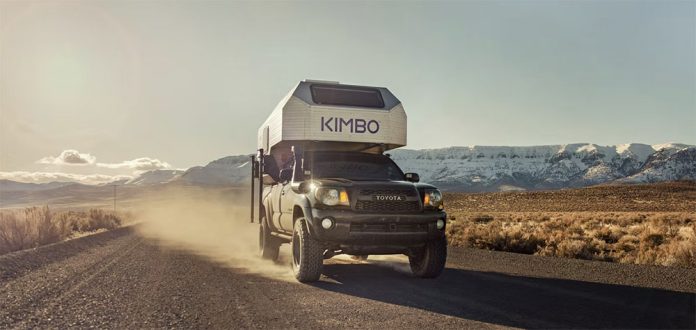

I’ve camped and overlanded most of my life, moving from a tent to a bumper pull trailer to a fifth wheel, and trying plenty of other setups along the way. I’m not a full-timer, but between decades on the road and running this site, I’ve logged enough multi-week stretches to know exactly where a weekend-grade setup starts to strain once the trip stretches past ten days.
A multi-week trip asks different things from a rig than a long weekend does, and most of the failures I’ve seen happen in the same three places: water, power, and storage. This article walks through how to set up a truck camper for an extended trip, using the Kimbo 6 as a working example of a rig built with these demands in mind. The goal is a setup holding up whether the trip runs two weeks or two months, not a checklist built around a single weekend.
Quick Facts:
- Topic: Setting up a truck camper for multi-week, extended trips
- Featured rig: Kimbo 6 hard-side truck camper
- Kimbo 6 dry weight: 830 lbs base, up to 1,200 lbs configured
- Kimbo 6 water: 2.9-gallon undercounter fresh water tank, standard
- Kimbo 6 power: 120W solar, upgradeable to 2,074Wh lithium storage
- Kimbo 6 price: From $27,990
9 min read
In This Guide
- Why Multi-Week Trips Demand a Different Setup
- Water and Power: The Two Systems Behind a Successful Long Stay
- Storage and Organization for Weeks, Not Days
- Choosing a Basecamp Location for an Extended Stay
- What to Look for in a Rig Built for the Long Haul
- Pros and Cons of Multi-Week Truck Camper Trips
- Final Verdict
- Frequently Asked Questions
Why Multi-Week Trips Demand a Different Setup
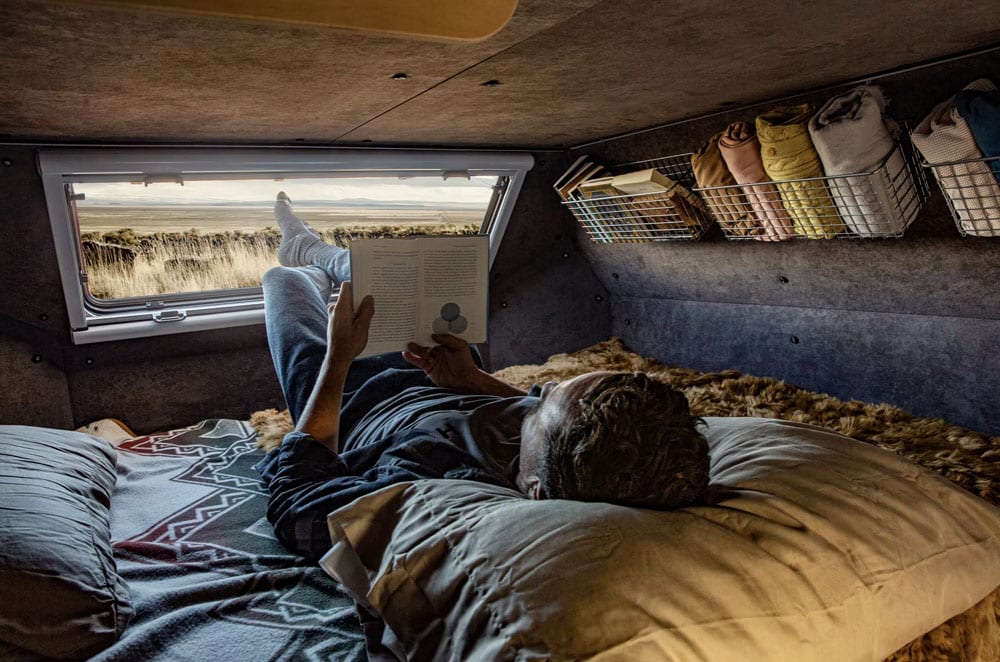
First, a weekend trip forgives almost everything. A small water tank, a light battery, a loosely packed bin of gear, none of it matters much over two nights. Stretch the same trip to two or six weeks, and every one of those shortcuts turns into a daily chore or a trip-ending problem. Water runs out mid-week instead of on the drive home. A battery coasting through a weekend on stored charge alone now needs real solar input and a plan for cloudy days.
The shift is less about buying more gear and more about buying the right systems for sustained, not occasional, use. Multi-week travelers plan resupply stops, ration water more deliberately, and organize storage so gear stays accessible rather than buried under three weeks of accumulated clutter. Our own basecamp setup guide for extended stays covers the campsite side of this shift in more depth; this article focuses on the rig itself.
Built for the Long Haul
See the Kimbo 6 Truck Camper
A lightweight hard-side camper with a modular upgrade path for water, power, and storage on extended trips.
Water and Power: The Two Systems Behind a Successful Long Stay
Water is usually the first limit a multi-week trip hits. A standard undercounter tank, often 2 to 5 gallons in a compact truck camper, covers drinking and light cooking for several days, not several weeks. The fix isn’t always a bigger built-in tank; portable jugs, a collapsible bladder, or a roof-mounted auxiliary container often stretch range further without adding permanent weight when a trip doesn’t need it. For example, the Kimbo 6 ships with a 2.9-gallon undercounter tank, and most extended travelers pair it with external containers for anything past a week between fill-ups.
Power follows a similar pattern. A weekend trip barely dents a stock battery, but a multi-week stay running lights, a fridge, and device charging every day needs real solar input and a battery sized for several cloudy days in a row, not one alone. Our boondocking guide for truck campers breaks down solar and battery sizing in detail; the short version: a 100 to 200W panel paired with 1,000Wh or more of usable battery storage handles most multi-week off-grid stretches without a generator. The Kimbo 6’s standard 120W solar setup covers light use, with an upgrade path to roughly 2,074Wh of lithium storage for travelers running a fridge and other daily-use electronics.
Storage and Organization for Weeks, Not Days
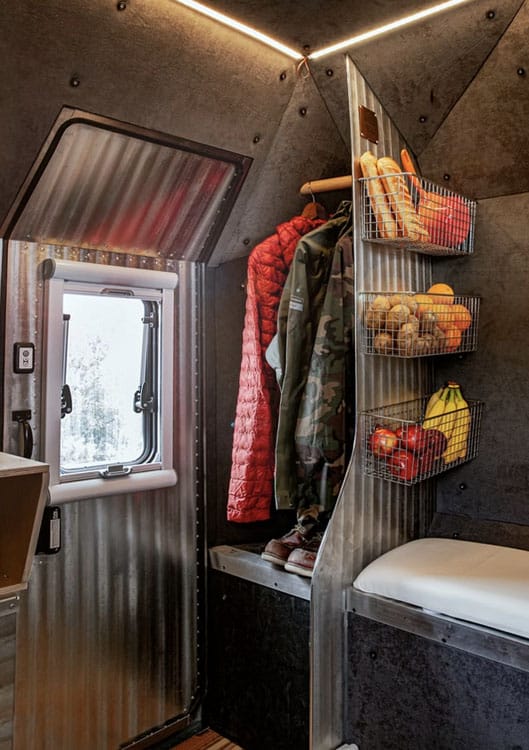
A weekend’s worth of gear fits almost anywhere. Three or six weeks of clothing, food, tools, and recovery gear does not, and disorganized storage turns a small camper into a daily frustration rather than a comfortable base. The fix is assigning every category of gear a fixed spot before the trip starts, not sorting it out on day four at a trailhead.
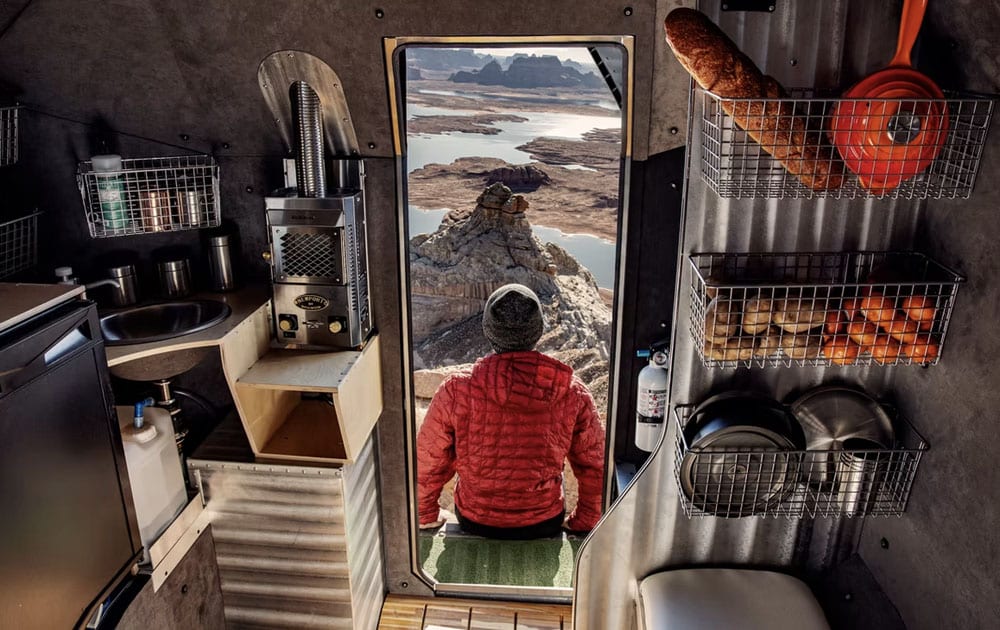
Wire-basket shelving, labeled bins, and under-platform compartments work better for multi-week trips than loose totes, since fixed spots make a full inventory obvious at a glance and prevent gear from migrating into wherever there’s open space. The Kimbo 6’s storage cabinetry, closet space, wire-basket shelving, and under-platform compartments, follows this same discipline, sized for careful stowage rather than bulk volume. Kimbo’s own writeup on the Kimbo 6’s approach to simple living covers the same principle: every item needs an assigned home, or clutter creeps back in fast, a discipline mattering more with each additional week on the road.
Choosing a Basecamp Location for an Extended Stay
Multi-week trips usually split into a mix of driving days and extended stays at a single basecamp, and the basecamp choice matters more than most first-timers expect. Look for level ground, shade or sun depending on the season, cell signal if remote work is part of the trip, and a realistic distance to the next water and fuel resupply. Public land with a 14-day stay limit, common on BLM and Forest Service land, also shapes how a multi-week trip gets structured, since most travelers move camp every two weeks regardless of how well a site works.
Proximity to a small town matters more on a multi-week trip than a weekend one. A basecamp an hour from propane, water, and groceries is workable for two nights; over three or six weeks, the same hour adds up to real time and fuel spent on resupply runs.
Ready for the Long Haul
Check Kimbo 6 Pricing
A frameless aluminum shell and a modular water, power, and storage setup, built for trips longer than a weekend.
What to Look for in a Rig Built for the Long Haul
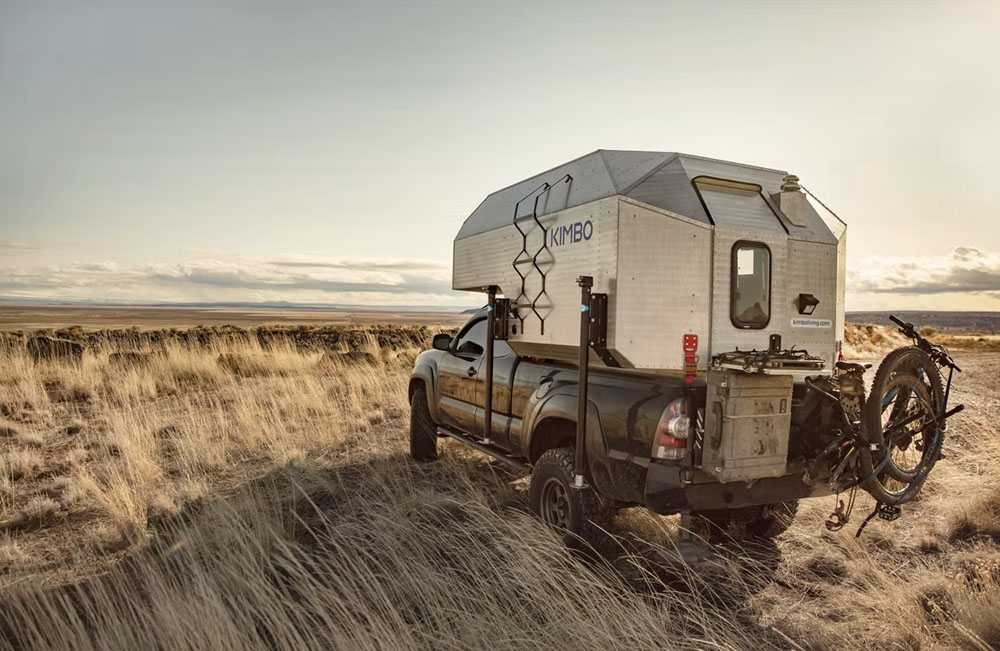
Not every truck camper handles multi-week use equally well, and the gap tends to show up in construction rather than floor plan. A welded frame wrapped in composite panels flexes and works loose over enough washboard miles; a frameless, single-material shell holds up better since there’s no internal skeleton to rust, delaminate, or rattle apart. The Kimbo 6 uses a hand-riveted 0.1-inch 5052 aluminum monocoque shell for this reason, aimed at durability over a full season rather than a handful of trips.
Similarly, payload matters more on a multi-week trip, since extra water, food, and gear add real weight beyond a rig’s base configuration. Our payload guide for Kimbo truck campers walks through matching a camper’s loaded weight to a truck’s rated payload, worth checking before a multi-week trip adds an extra 100 to 200 pounds of supplies on top of a camper’s base weight.
Pros and Cons of Multi-Week Truck Camper Trips
Pros
- Fewer driving days relative to time spent camping, less fatigue overall
- Deeper access to remote basecamps once systems are dialed in
- A properly sized power and water setup removes daily resupply stress
- Fixed storage systems make packing for the next trip faster too
- A durable, repairable rig like the Kimbo 6 reduces the risk of a mid-trip breakdown
Cons
- Upfront cost of solar, battery, and water upgrades adds up before the trip starts
- 14-day public land stay limits force periodic moves regardless of site quality
- Resupply planning takes real time away from the trip itself
- A compact camper’s small water tank still needs external containers for full range
- Extra supplies add payload, pushing a loaded rig closer to truck limits
Final Verdict
Setting up a truck camper for a multi-week trip comes down to three systems: water, power, and storage, each sized for sustained rather than occasional use. Get those three right, and a two-week trip and a two-month trip run on the same basic setup, with resupply frequency as the main variable rather than a redesign of the whole system.
Rig construction matters more on longer trips too, since a frameless, repairable shell like the Kimbo 6’s holds up to a season of washboard roads better than a welded, composite-wall alternative. At $27,990 to start, the Kimbo 6 illustrates what a multi-week-ready midsize truck camper looks like, with a modular upgrade path for solar, battery, and water rather than a fixed configuration.
Anyone planning a first multi-week trip should test the water and power setup on a shorter run first, a week or two, before committing to a longer stretch. Small gaps in a system show up fast under daily use, and it’s easier to fix a battery sizing mistake at home than three weeks into a remote basecamp.
See the Rig Built for This
Check Today’s Price on the Kimbo 6
A durable aluminum shell with a modular water, power, and storage upgrade path, built for trips longer than a weekend.
Frequently Asked Questions
How much water does a truck camper need for a multi-week trip?
A standard 2 to 5-gallon undercounter tank covers several days at most, so most multi-week travelers add external jugs or a roof-mounted container for extended range. Planning around one gallon per person per day for drinking and light cooking is a reasonable starting point.
What size solar and battery setup handles a multi-week trip off-grid?
A 100 to 200W solar panel paired with 1,000Wh or more of usable battery storage covers most multi-week stretches without a generator, assuming a few cloudy days factored into the plan. Running a 12V fridge daily pushes the number toward the higher end.
How long is a person allowed to stay in one spot on public land?
Most BLM and Forest Service land enforces a 14-day stay limit at a given site, after which campers need to move a set distance before returning. Multi-week trips typically plan around this limit by rotating between two or three basecamps.
Is the Kimbo 6 a good rig for multi-week trips?
Yes, as one option among several worth cross-shopping. Its frameless aluminum shell, modular power upgrade path, and organized storage cabinetry are built around the same water, power, and storage demands multi-week trips create.
What’s the biggest mistake people make setting up for a multi-week trip?
Testing a new water or power system for the first time on the trip itself, rather than on a shorter shakedown run beforehand. Small sizing mistakes are easy to fix at home and hard to fix three weeks into a remote basecamp.
Just so you know, some of the cool stuff we mention comes with affiliate links, meaning we earn a commission if you buy (no extra charge to you!). Plus, we occasionally feature sponsored content, but rest assured, we only shout out products we genuinely stand behind.