


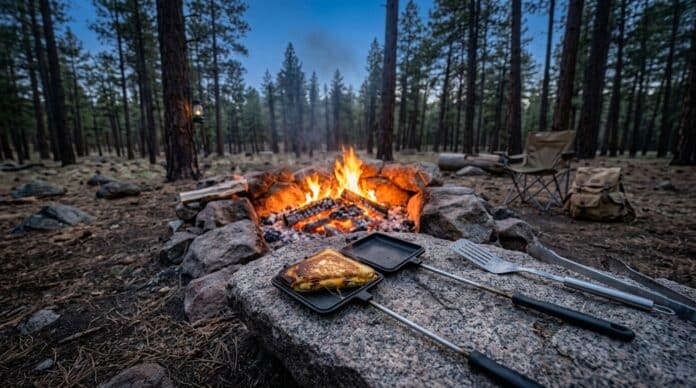
Quick Verdict: Pie iron breakfast sandwiches press egg, precooked bacon, and cheese between two buttered slices of bread. Preheat the cast iron empty for 2 minutes in medium coals, load it, then cook 3 to 5 minutes per side. The egg needs 160F and the meat needs a 165F reheat. Breakfast lands hot in about 10 minutes, and cleanup takes one paper towel.
Save this recipe for your next trip.
Last updated: September 2026 | Prep 15 min | Cook 10 min | Serves 4
Written by Alex Schult
Editor in Chief of 4wdTalk.com. 15+ years of off-road and overlanding experience with 1,000+ hours on the trail. Amazon affiliate links support 4wdTalk.com at no extra cost to you.
In This Recipe
Why This Recipe Works for Overlanders
Pie iron breakfast sandwiches solve the first problem of a camp morning. You get hot protein and bread with no skillet, no spatula, and no greasy pan to scrub. The iron seals all four edges, so the egg sets inside the bread instead of running across a pan. One iron handles one sandwich at a time. A second iron doubles the pace for a crew of four.
Cast iron holds heat, so the sandwich cooks off stored energy rather than direct flame. After a 2-minute empty preheat in medium coals, both cooking faces sit near 400F. The stored heat toasts the buttered bread while the egg climbs toward 160F inside. Because the latch closes tight, steam stays in the pocket and the cheese melts fully before the crust darkens.
Packing works out simple too. Bread, eggs, cheese, and precooked bacon ride in the cooler with no special handling. None of it needs a cutting board at the fire ring. Scramble the eggs at home into a sealed bottle, and each build then takes under 2 minutes. Total time from coal bed to first bite runs about 10 minutes.
Equipment You Need
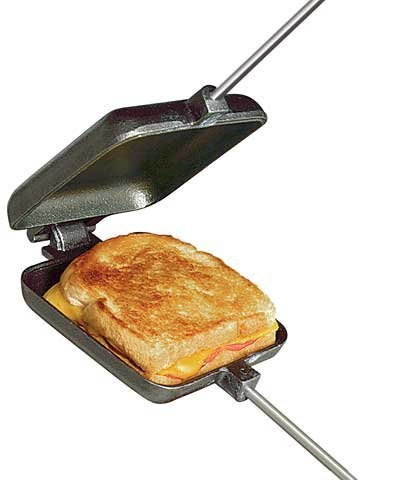
Pie iron breakfast sandwiches need one specialty tool plus three support items. A cast iron pie iron with a square head matches standard sandwich bread edge to edge. A round head trims the corners off every slice. Long handles hold your hands 16 to 20 inches back from the coals. Aluminum irons heat faster, though they warp under repeated coal contact, so cast iron lasts longer in a drawer system.
Season the iron before the trip. Wash a new iron in hot water, then dry it fully over a burner. Wipe a thin coat of neutral oil across both faces. Bake it upside down at 350F for 1 hour and let it cool in the oven. A seasoned surface releases toast cleanly, while a bare surface grips the crust and tears the sandwich open.
Gear Checklist
- Cast iron pie iron, square head, handles 20 inches or longer
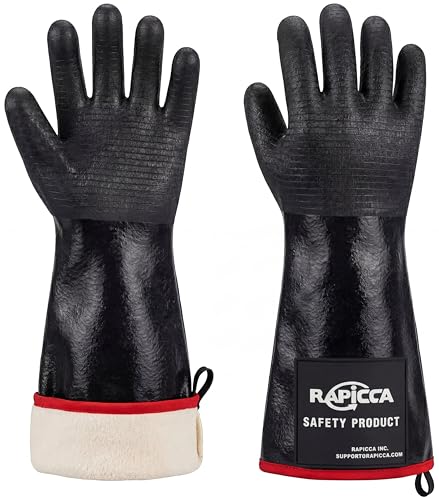
- Heat-resistant gloves rated to at least 500F
- Long locking tongs, 16 inches, for raking coals
- Chimney starter for a 15 to 20 minute coal bed
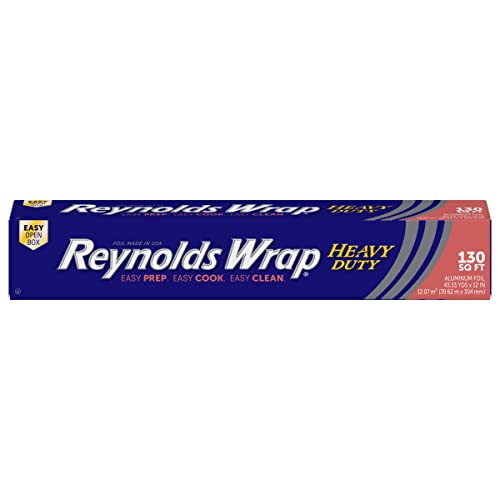
- Heavy-duty foil for a work surface and for leftovers
- Folding grill grate if you prefer the iron off the coals
- Instant-read thermometer for the 160F egg check
- Small jar of softened butter and a butter knife
Gear for This Recipe
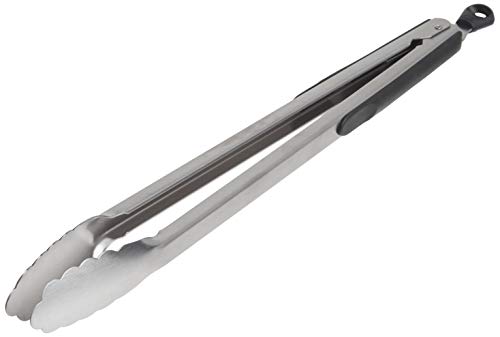
OXO Good Grips 16-Inch Locking Stainless Steel Tongs | Extra-Long R…
Ingredients
Serves 4 | Prep 15 min | Cook 10 min | Medium coals
- 8 slices sturdy white, wheat, or sourdough sandwich bread
- 4 tablespoons butter, softened
- 4 large eggs
- 8 slices precooked bacon, or 4 precooked sausage patties
- 4 slices sharp cheddar or American cheese
- 1/4 teaspoon salt
- 1/4 teaspoon black pepper
- 2 tablespoons diced yellow onion (optional)
- 2 tablespoons diced green bell pepper (optional)
- Hot sauce, to taste (optional)
Step-by-Step Instructions
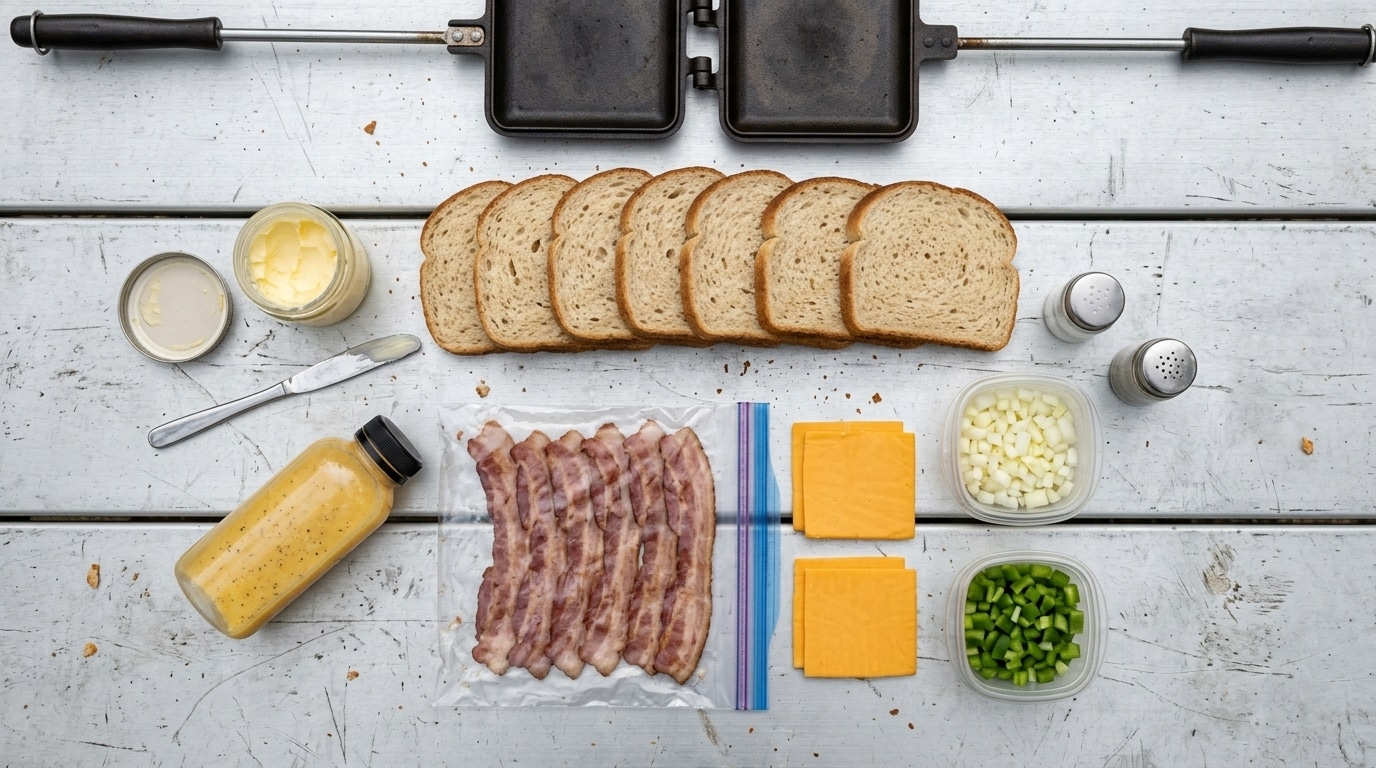
Home Prep
- Season the pie iron. Wipe both faces with neutral oil, then bake upside down at 350F for 1 hour.
- Crack 4 eggs into a leakproof bottle. Add the salt and pepper, then shake 20 seconds until the yolks break up. Chill below 40F.
- Cook the bacon or sausage at home, blot the grease, then pack it flat in a zip bag. Store-bought precooked bacon works the same way.
- Slice the cheese into 4 portions. Dice the onion and bell pepper, then bag each one separately.
- Pack the bread in a rigid container so the slices arrive flat. Soften 4 tablespoons of butter into a small screw-top jar.
At Camp
- Build the fire 45 to 60 minutes ahead so hardwood burns down to coals. A chimney of briquettes takes 15 to 20 minutes instead.
- Rake the coals into an even bed on one side of the ring. Leave the other side cooler, since a two-zone fire gives you a place to park a finished iron.
- Set the closed empty iron into the medium coals for 2 minutes. Preheating first stops the butter from soaking into cold metal.
- Butter one face of each bread slice. Lay the first slice butter side down in the iron, then add cheese, meat, and 3 tablespoons of scrambled egg.
- Top with the second slice, butter side up. Close and latch the iron, then press firmly so the edges seal.
- Rest the iron on the medium coals for 3 minutes. Lift it, open the latch a crack, and read the crust color before you commit to more time.
- Flip and cook 3 to 5 minutes more. Confirm the egg reads 160F and the meat reheats to 165F, then rest the sandwich 1 minute.
Fire and Heat Management
Medium coals do the work here. Pie iron breakfast sandwiches scorch on the outside long before the egg sets if the bed runs above 450F. Read the coals by color and ash cover first, then place the iron.
| Heat Source | Appearance | Approx Temp | Common Use |
|---|---|---|---|
| Open flame | Active yellow-orange flames | 600F+ and uneven | Boiling water, searing skewers, marshmallows |
| Hot coals | Bright orange, minimal ash | 500F-600F | Grate searing steak, cast iron skillet |
| Medium coals | Orange with gray ash | 350F-450F | Pie iron breakfast sandwiches, kebabs, most mains |
| Low coals or embers | Mostly gray ash, soft glow | 250F-350F | Biscuit sandwiches, dump cake, slow bakes |
Wind shifts the math fast. Gusts over 10 mph burn fuel quicker and create hot spots across the bed, so build a rock or pit windbreak upwind. Ambient temperatures under 40F add 3 to 5 minutes per sandwich and burn more fuel.
Height controls heat as well as coal color. Raise the iron onto a folding grate 2 to 3 inches above the bed to drop the cooking temperature. Spreading the coals thinner has the same effect. If the crust darkens before minute 3, move to the cooler zone and add time.
Field Tips
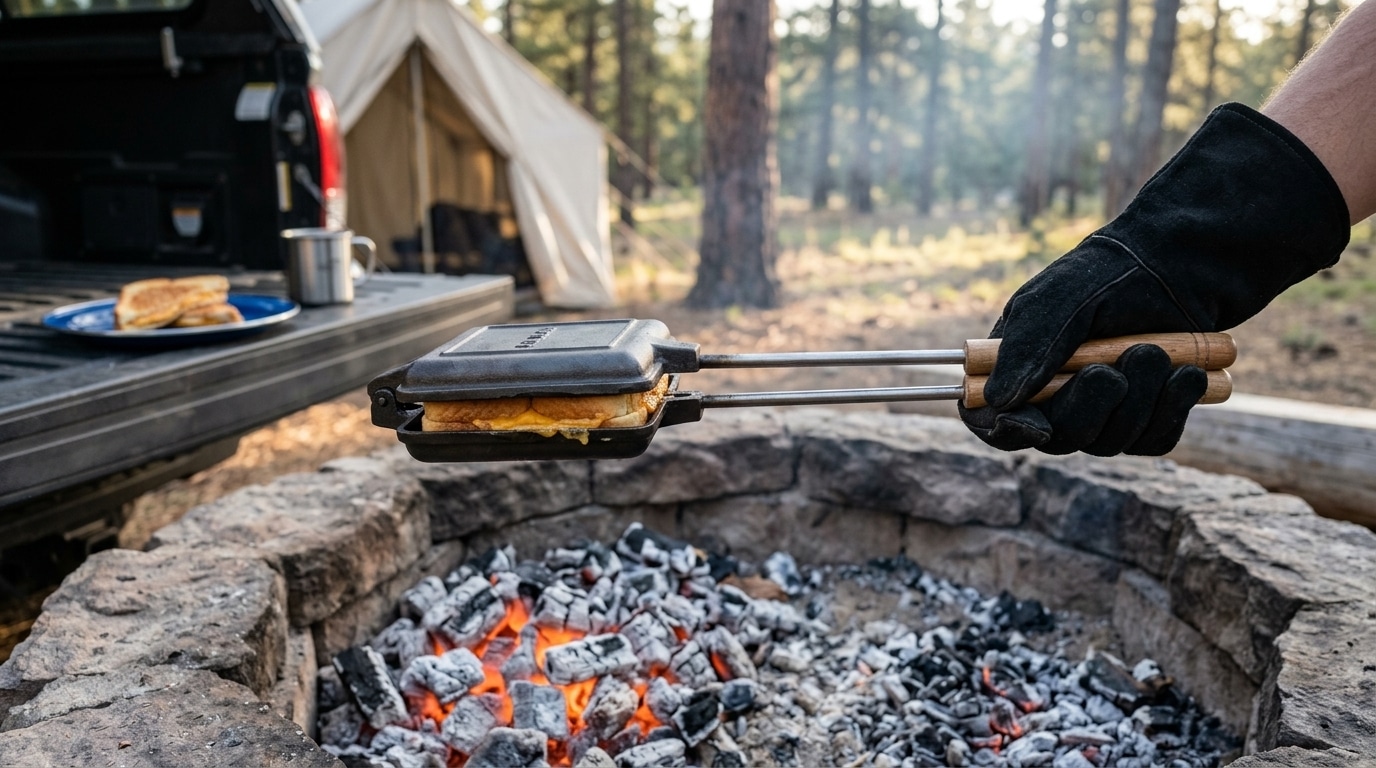
Butter the outside faces, never the inside. Butter on the bread face touching the iron creates a fry layer, which browns evenly and releases cleanly. Butter inside the sandwich soaks into the crumb, so the outside stays dry and the crust sticks to the metal.
Scrambled egg beats a whole cracked egg for most crews. A cracked yolk pools deep in one corner and needs 2 extra minutes to reach temperature. A scrambled pour spreads flat and sets evenly across the pocket. Crack whole eggs only when you want a runny yolk and accept the longer cook.
Check temperature rather than color. Bread browns in 3 minutes at 400F while the egg lags behind, so an instant-read probe through the crust settles the question. Eggs need 160F and reheated leftovers need 165F, per the USDA safe minimum internal temperature chart. Precooked bacon and sausage still need a full 165F reheat.
Run two irons for a four-person breakfast. One iron produces a sandwich every 8 minutes once the coals settle, so a group waits 30 minutes on a single tool. Two irons cut the wait in half. A third person on butter duty keeps both of them loaded.
Fire and Cleanup Gear


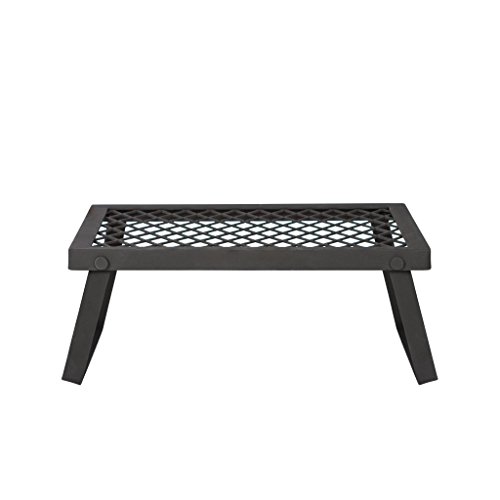
Amazon Basics Heavy-Duty Portable Camping Grill Grate for Outdoor O…
Variations and Substitutions
Pie iron breakfast sandwiches take swaps well once the timing feels familiar. Change one element per sandwich so the cook time stays predictable, since a wetter filling pushes the egg past 5 minutes per side.
- Sausage and pepper jack: Swap the bacon for a precooked breakfast patty and use pepper jack. Add 30 seconds per side for the thicker patty.
- Bagel build: Slice a bagel thin, then press it in the iron. The denser crumb needs a full 5 minutes per side over medium coals.
- Ham and swiss: Use deli ham and swiss with a smear of grainy mustard. Ham reheats fast, so pull the iron at 3 minutes per side.
- Southwest version: Add 2 tablespoons of diced green chile and a pinch of cumin to the scrambled egg bottle before the trip.
- Biscuit sandwich: Split a day-old buttermilk biscuit and press it lightly. Biscuits brown faster, so drop to low coals or embers.
- Vegetarian build: Skip the meat, then add sauteed mushrooms, spinach, and feta. Squeeze the moisture out of the greens first.
- French toast press: Dip both bread slices in the egg mix, skip the meat, and fill with cream cheese and jam.
- Gluten-free swap: Gluten-free bread crumbles under pressure. Butter the outside faces heavily and latch the iron gently.
Storage and Leftovers
Cooked pie iron breakfast sandwiches hold 2 hours at ambient temperature and 2 days in a cooler below 40F. Wrap each one in heavy-duty foil once it cools, then stack them flat against the cooler wall. Egg and cheese go soft after a day, so eat those first and save plain bacon builds for day two.
Reheat leftovers in the same iron over low coals for 4 to 6 minutes, flipping once. The sandwich needs 165F throughout before it reaches the plate. Scrape the iron with a wooden spatula while the metal stays warm, wipe it with a paper towel, then oil both faces before it goes back in the drawer.
Frequently Asked Questions
What temperature should the egg reach in pie iron breakfast sandwiches?
The egg needs 160F at the center before the sandwich comes off the coals. Slide an instant-read probe through the crust into the filling. Precooked bacon or sausage inside the pocket needs a 165F reheat at the same time.
Why does the bread burn while the egg stays raw?
Two causes explain it. Coals above 450F scorch the crust in under 3 minutes, and an iron pressed deep into the bed takes hard contact heat on one face. Rake the coals thinner, rest the iron on top rather than buried, then add 2 minutes of cook time.
Do you need to preheat a pie iron before cooking?
Yes. Set the closed empty iron in medium coals for 2 minutes first. A cold iron pulls the butter into the bread before any browning starts, which leaves a pale, soggy crust and a sandwich stuck to both faces.
What bread works best in a pie iron?
Sturdy sandwich bread at least 1/2 inch thick holds the filling without tearing. Sourdough, white, and wheat all press well. Thin diet bread and airy artisan loaves collapse under the latch, then leak egg into the coals.
Should you scramble the eggs at home or crack them at camp?
Scramble at home into a leakproof bottle for even cooking and faster setup. A whole cracked egg pools in one corner and needs 2 extra minutes. Bottled egg also keeps raw shell mess out of the fire ring.
How do you keep the sandwich from sticking to the iron?
Season the iron before the trip, preheat it empty for 2 minutes, then butter the outside faces of both bread slices. Those three steps together give a clean release almost every time.
Are square or round pie irons better for breakfast sandwiches?
Square irons match standard sandwich bread edge to edge with no waste. Round irons cut the corners off each slice and hold slightly less filling. For an egg build, the square head wins on volume and shape.
How do you clean a pie iron at camp?
Scrape the warm faces with a wooden spatula while the residue lifts easily. Wipe with a dry paper towel and skip the soap, then rub a few drops of oil across both faces. Store it dry so rust never starts.
You Might Also Like
- Campfire Cooking Recipes
- Camp Cooking for Overlanders
- Pie Iron Pizza Pockets (recipe coming soon)
- Campfire Cast Iron Breakfast Skillet (recipe coming soon)
- Cowboy Coffee (recipe coming soon)