


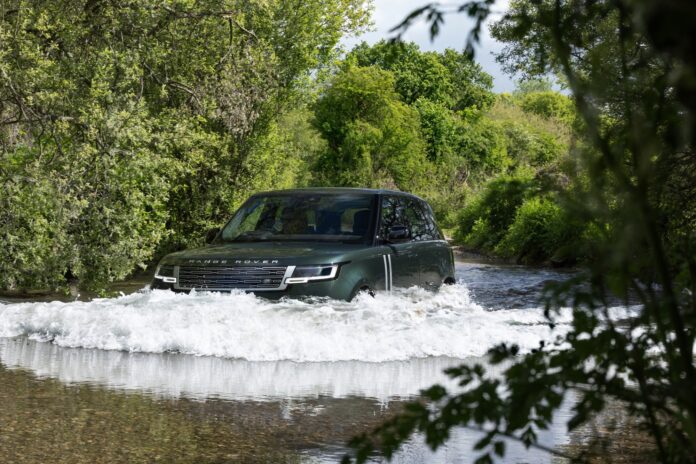
Quick Facts:
- Vehicle: 2027 Range Rover Electric, the first all-electric full-size Range Rover.
- Power: Up to 542 hp and 627 lb-ft from two 260 kW motors.
- Battery and range: 118.5 kWh and 333 miles (EPA estimate).
- Price: $138,000 MSRP; $140,450 starting price per Edmunds, Autoweek and Electrek.
- Watch-outs: All-season tires on the test cars, head toss on rough roads, and a tow rating below the plug-in hybrid’s.
6 min read
In This Article
Overview
The 2027 Range Rover Electric is the first all-electric full-size Range Rover. Notably, three US first drives landed on October 21 and 22. Edmunds, Autoweek and InsideEVs all drove it in Scotland, and each Range Rover first drive included off-road sections. The short version: InsideEVs found wading simple, while Autoweek and Edmunds flagged the stock tires and the ride.
Edmunds also calls it the Range Rover EV, but the official name is Range Rover Electric. Land Rover opened US orders on September 2, 2026, with an MSRP of $138,000. However, Edmunds, Autoweek and Electrek quote $140,450 as the starting price. The Land Rover release does not break out the difference.
This report sorts the findings by off-road need: wading, traction, tires, towing, range and charging. 4wdTalk has not driven it, so each finding below names the reviewer who made it.
Because the Range Rover Electric has built-in NACS compatibility, a home charger with a native NACS plug connects without an adapter, according to the listings. The Emporia and EVIQO are hardwired 48 amp units. Instead, the Lectron plugs into a NEMA 14-50 outlet at 40 amps.
Level 2 home chargers with a native NACS plug


Range Rover Electric Key Specs at a Glance
Most figures below come from the Land Rover US press release and rangerover.com. Autoweek supplies the curb weight.
| Specification | Details |
|---|---|
| Motors | Two 260 kW permanent-magnet motors |
| Battery | 118.5 kWh, 800-volt architecture |
| EPA range | Up to 333 miles |
| DC fast charging | 10% to 80% in about 22 minutes on a 350 kW charger |
| Wading depth | 35.4 inches |
| Maximum towing | 5,511 pounds |
| Curb weight | 6,050 pounds |
How the Range Rover Electric Handles Off-Road
First, the traction system works differently from the combustion models. According to Edmunds, there is no low-range transfer case and no locking differentials. Instead, software controls the two motors, which react about 100 times faster than the mechanical system in other Range Rovers.
InsideEVs reports a simple wading routine: one turn of the dial to Wade mode, with no shift to neutral and no diff lock. Specifically, about three feet of water swamped the front off-road camera, InsideEVs says. For comparison, Land Rover rates the wading depth at 35.4 inches.
Next, both Autoweek and Edmunds put the maximum off-road ride height at about 12 inches. According to Autoweek, the battery lessens the breakover angle slightly, while approach and departure angles stay the same.
Edmunds let the descent control slow the SUV with the motors alone instead of the brakes. Likewise, InsideEVs praised single-pedal mode on a slick hillside.
Towing, Range and Charging
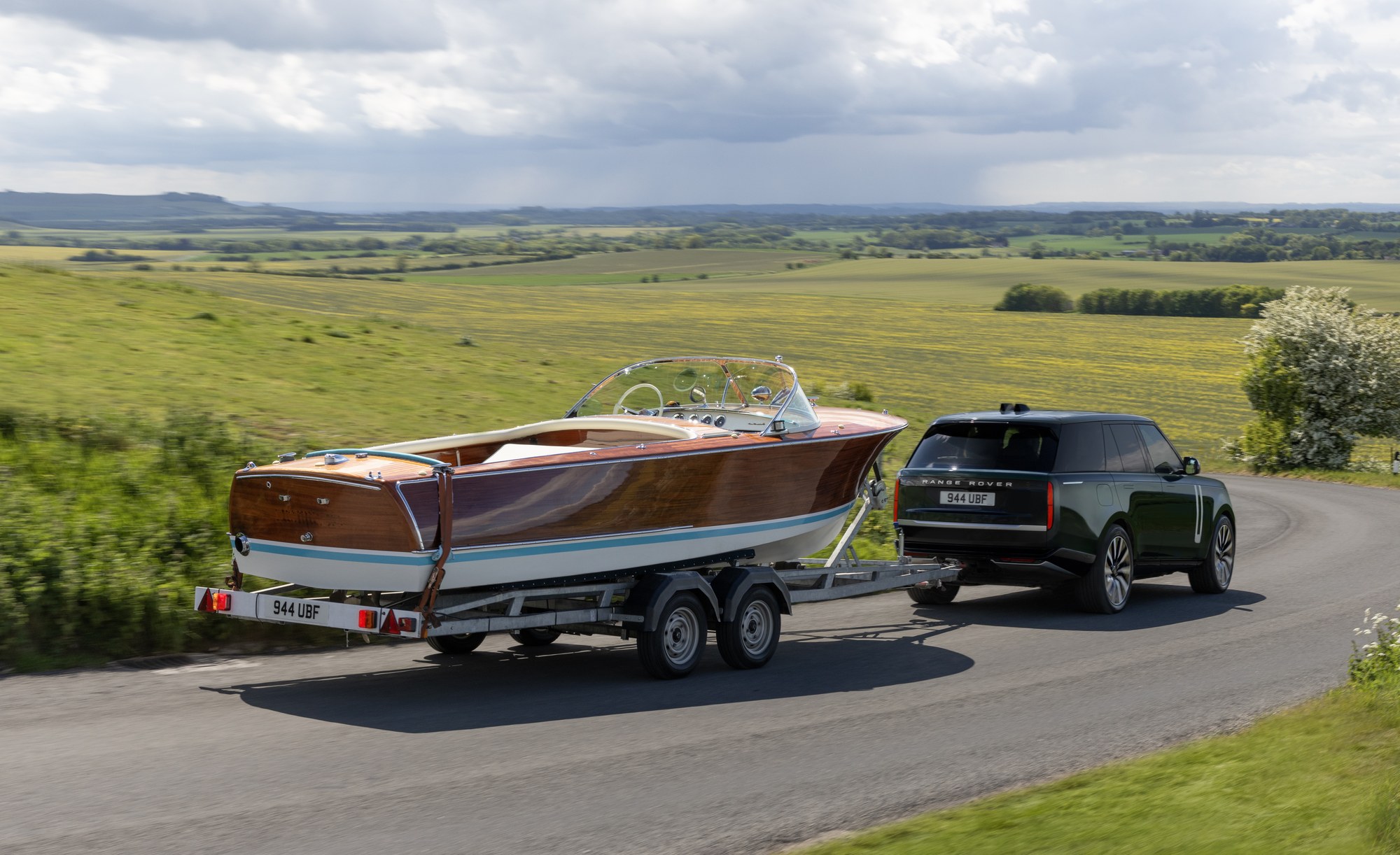
The electric model gives ground on towing. Land Rover lists a 5,511-pound maximum tow rating. By comparison, the plug-in hybrid Range Rover lists 6,614 pounds on the same Land Rover page. The difference is 1,103 pounds. Land Rover also notes the towing package is not available on select models. Consequently, check your trailer’s loaded weight before you order. For a combustion yardstick, see our Land Rover Defender buyer’s guide.
Charging is the harder question off the grid, and these figures come from Land Rover, not the reviewers. Land Rover says 350 kW rapid charging adds up to 125 miles in 10 minutes. Built-in NACS also gives access to the Tesla Supercharger network in North America. However, Land Rover warns of a substantial range loss from off-roading, towing and long-range use.
The first drives give only rough clues about real-world range. Edmunds finished a full day of mixed driving with about 35% of the battery left. Elsewhere, InsideEVs covered around 450 miles in a 36-hour window. For charging buildouts, see our report on Rivian’s off-road charging network.
Tires, Ride and Weight: Where Reviewers Pushed Back
Reviewers pushed back on tires first. Autoweek drove on 22-inch wheels with Michelin all-season tires. Specifically, it described them as slippery in mud and said the car slid sideways off ruts. Similarly, Edmunds noted its car wore standard all-season tires and said proper all-terrains would reduce wheelspin.
Next, ride quality drew complaints too. Autoweek and Edmunds both describe head toss, a side-to-side motion of the cabin, on rough roads. InsideEVs found Comfort mode too soft on broken one-lane roads, while Dynamic mode firmed up the rebound.
Finally, the reviewers disagree on weight. Autoweek cites a manufacturer curb weight of 6,050 pounds. It puts the penalty under 100 pounds above the heaviest combustion Range Rover. InsideEVs says about 300 pounds above the heaviest gas model. Edmunds says 500 to 800 pounds above a gas Range Rover.
Range Rover Electric vs. Rivian R1S
The obvious rival is the Rivian R1S. Autoweek lists it at 665 hp, 410 miles and 0 to 60 mph in 3.4 seconds. Its starting price is near $84,000. Rivian sells the 665 hp output as a Power Upgrade. The 410-mile range is a Long Range option. Both cost extra. In contrast, the Range Rover Electric makes 542 hp, travels 333 miles and starts at $138,000. Overall, the Rivian is faster, goes farther and starts at a far lower price on paper. Those figures cover road specs, not trail ability.
Edmunds frames the choice differently. It says the Rivian R1S and the Hummer EV both go off-road, but neither offers Range Rover luxury. In the end, the decision comes down to cabin and brand versus numbers. For the software side, see our look at Rivian off-road software.
What This Means for You
If cabin and brand win for you, price is the first check. InsideEVs notes there is no price penalty for choosing the electric model over a gas Range Rover. Water crossings and slick hillsides look well handled, but reviewers flagged mud traction and rough-road ride.
If you tow close to 6,000 pounds, the plug-in hybrid lists 6,614 pounds. Confirm its towing package with a retailer first. Also, if you plan to leave pavement often, budget for all-terrain tires, since Autoweek and Edmunds drove on all-seasons. Plan charging stops for any trip with towing or long off-road legs. Then confirm the trim price. Autoweek’s First Edition test car stickered at $179,150. However, Electrek lists the long-wheelbase First Edition at a $183,850 starting price. Our sources do not explain the gap, so ask a retailer for the exact figure.
If you budget for all-terrain tires, a 12V compressor lets you air back up before the highway after airing down on the trail. The VIAIR 400P lists a 35 inch maximum tire size, and the 300P lists 33 inches. Kohree’s dual-cylinder unit does not state a size limit, so compare your tire’s overall diameter before you buy.
12V compressors for airing down and back up


Kohree 12V Dual Cylinder Air Compressor with Digital Display Panel …
Final Thoughts
The electric Range Rover looks like a capable, expensive way to leave the pavement. The software drew praise in two Range Rover first drive reports: Edmunds liked the descent control, and InsideEVs found wading simple. However, Autoweek and Edmunds flagged the stock all-season tires and felt head toss on rough roads.
If you tow heavy loads or camp far from fast chargers, think carefully before you order. The tow rating sits below the plug-in hybrid’s. In addition, the price climbs fast once you move to First Edition trims.
Still, if Range Rover luxury matters most, Edmunds says neither the Rivian R1S nor the Hummer EV offers it. Even so, the Rivian lists more power and range with optional upgrades, and it starts far cheaper. If the Sport model appeals more, read our Range Rover Sport Electric reveal. Then test-drive the Range Rover and the Rivian before you sign.
FAQ
Does Range Rover make an electric vehicle?
Yes. The 2027 Range Rover Electric, also called the Range Rover EV, is the first all-electric Range Rover.
What is the Range Rover Electric range?
Land Rover lists up to 333 miles as an EPA estimate. Autoweek and Edmunds round it to about 330 miles.
Does the Range Rover Electric tow?
Yes, up to 5,511 pounds, according to Land Rover. Land Rover notes the towing package is not available on select models, so confirm the details with a retailer. The plug-in hybrid Range Rover lists 6,614 pounds.
How much does a fully electric Range Rover cost?
Land Rover lists an MSRP of $138,000. Edmunds, Autoweek and Electrek quote $140,450 as the starting price. Autoweek’s First Edition test car stickered at $179,150.
Does the electric Range Rover use Tesla Superchargers?
Land Rover says North American models include built-in NACS compatibility, which gives access to the Tesla Supercharger network. On a 350 kW rapid charger, the SUV adds up to 125 miles in 10 minutes.