


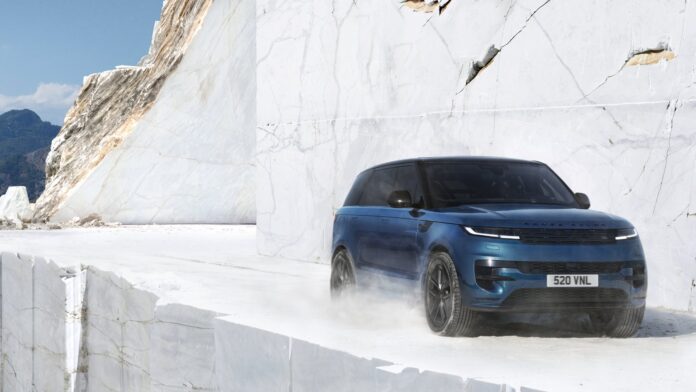
Quick Facts:
- Vehicle: Range Rover Sport Electric, the first all-electric Range Rover Sport.
- Power: Up to 542 hp and 627 lb-ft, with 0-60 mph in as little as 4.3 seconds.
- Battery: 118.5 kWh, with up to 378 miles WLTP and 333 miles real-world.
- Charging: 10-80% in about 22 minutes, with 350 kW charging per Electrek.
- Off-road: 35.4 inches of wading depth and 45-degree inclines.
- UK price: From about $146,000 per Electrek; no US price yet.
- US timing: Electrek expects 2027 sales as a 2028 model.
5 min read
In This Article
Overview
The Range Rover Sport Electric is the first fully electric Range Rover Sport. Range Rover opened UK orders on September 30, 2026. Two 260 kW motors and a 118.5 kWh battery power it. Range Rover also lists off-road figures, including 35.4 inches of wading depth. The open question for US off-roaders is what the release leaves out.
US buyers face three gaps. Range Rover has not announced a US price, an on-sale date or an EPA range. Electrek, which calls the model the Range Rover Sport EV, expects US sales in 2027 as a 2028 model. Any US price, date or range here is an estimate and is labeled as one.
Our report on the previous-generation Range Rover launch noted a fully electric model was planned. Since then, it has arrived in Sport form, joining a growing field of electric off-road vehicles.
Weight matters for trail use. EVs and Beyond lists the New Zealand model from 2,770 kg, about 6,107 pounds. If you air down for gravel, a 12V compressor earns its place in the cargo area. The VIAIR 88P, the VIAIR 300P and the Kohree 12V Dual Cylinder Air Compressor are three listings to compare. Finally, check each listing’s maximum tire size against your own tires.
12V air compressors to compare

VIAIR 88P 00088 12V Portable Air Compressor Kit for Car and Truck T…


Range Rover Sport Electric Specs at a Glance
These figures come from the September 30 press release, while the weight above comes from EVs and Beyond.
| Specification | Details |
|---|---|
| Motors | Two 260 kW electric motors |
| Output and torque | Up to 542 hp (550 PS) and 627 lb-ft (850 Nm) |
| 0-60 mph | As little as 4.3 seconds in Dynamic Launch Mode |
| Battery | 118.5 kWh lithium-ion, 800-volt |
| Range | Up to 378 miles WLTP; up to 333 miles real-world |
| DC fast charging | 10-80% in about 22 minutes |
| Battery warranty | 8 years or 100,000 miles, by market |
Power, Battery and Charging
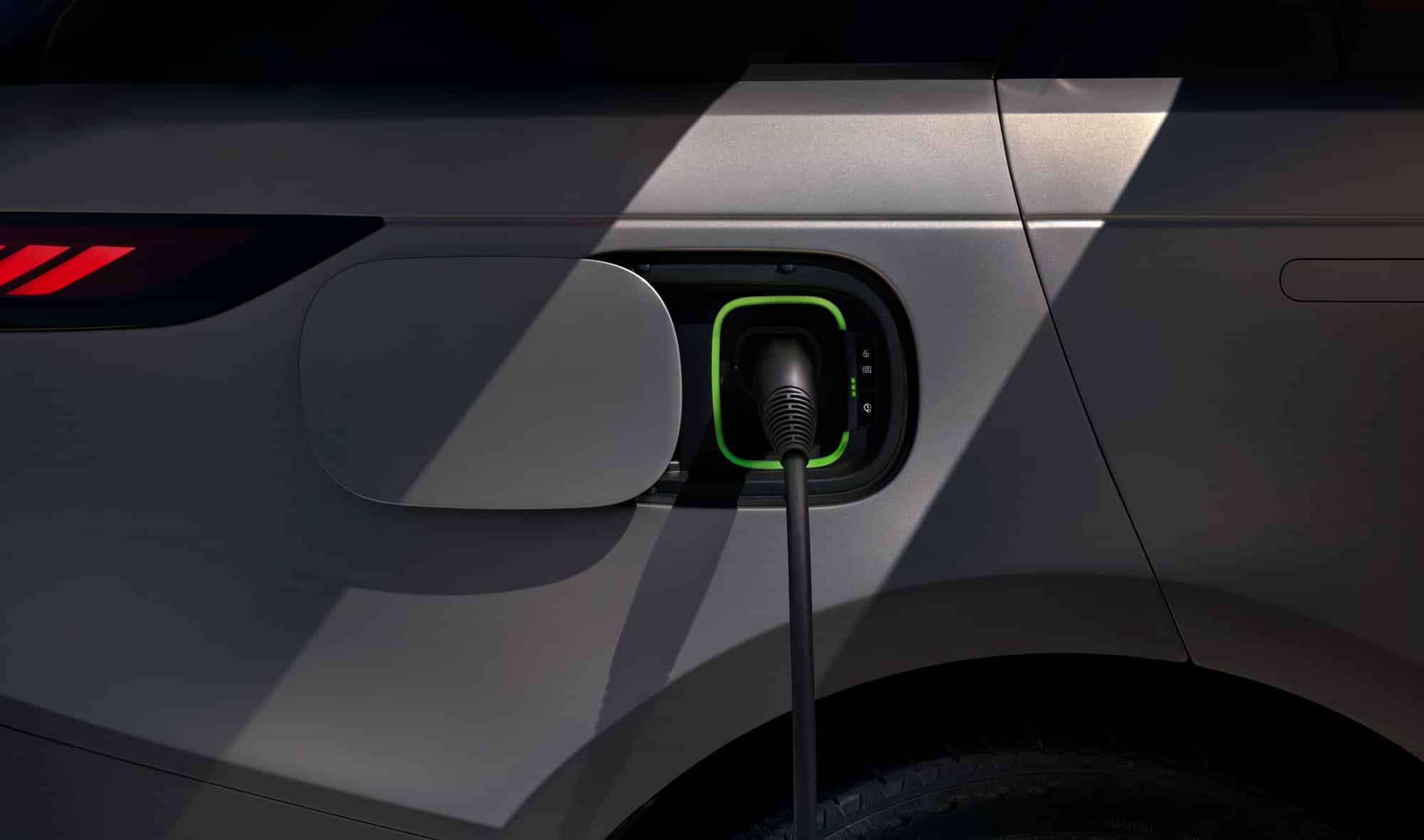
Range Rover says torque ramps up 50 percent faster than in the Range Rover Electric. Also, 627 lb-ft is the most torque of any Range Rover Sport. Dynamic Launch Mode is the setting behind the 0-60 mph time of as little as 4.3 seconds.
Range Rover quotes up to 378 miles on the European WLTP test and 333 miles in real-world driving. However, no EPA rating exists yet. Car and Driver expects the Sport to roughly match the larger model’s EPA-rated 333 miles.
Electrek and EVs and Beyond report 350 kW charging on the 800-volt system, though the release states no peak rate. At the maximum rate, the SUV adds up to 136 miles in as little as 10 minutes. A 10-80 percent charge takes about 22 minutes. For remote trips, however, the charger map matters more. Our look at Rivian’s off-road charging network shows how one brand builds fast charging for off-road routes.
Range Rover Sport Electric Off-Road Capability
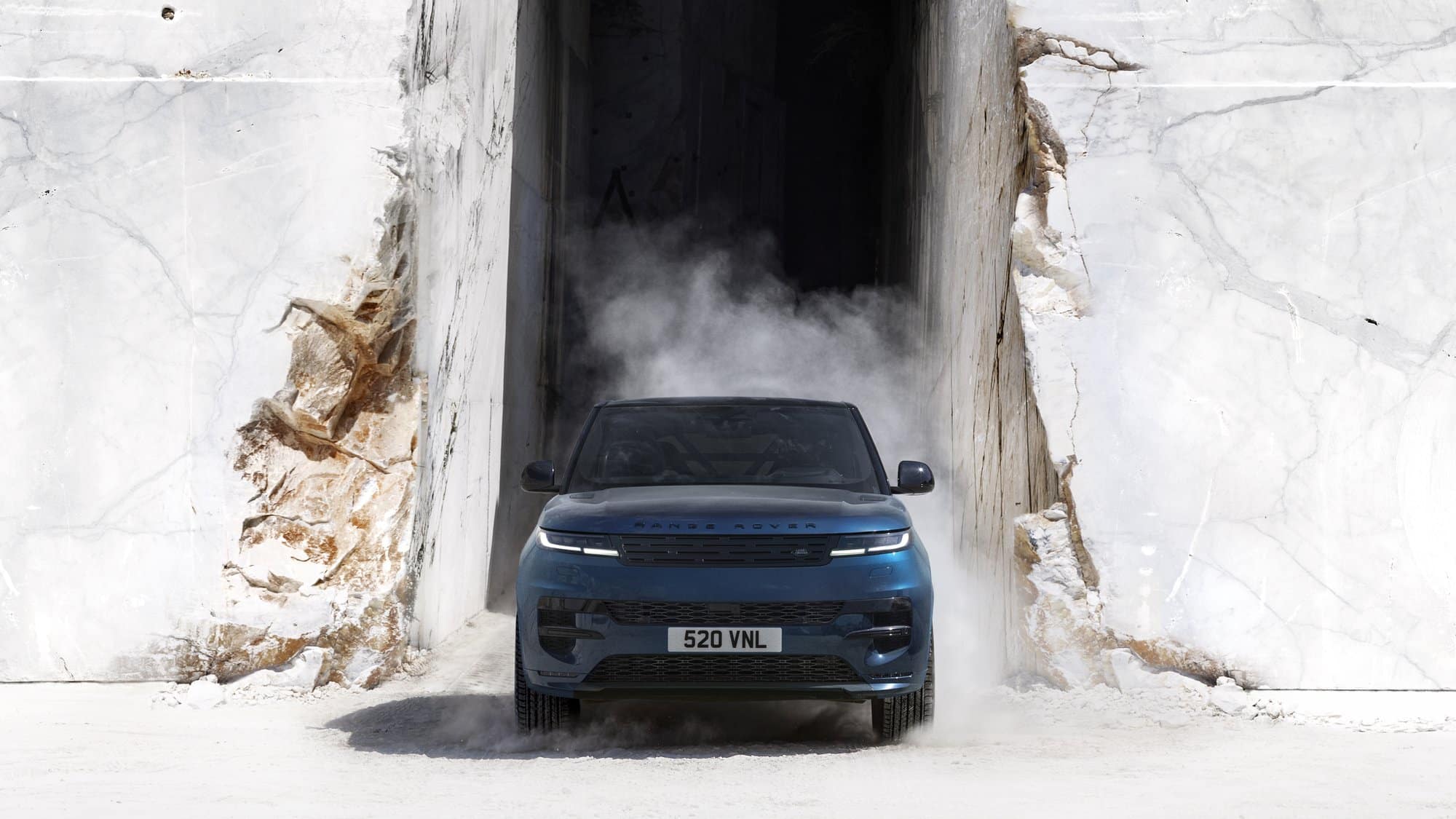
Range Rover rates the Sport Electric for 35.4 inches of wading depth and 45-degree inclines. Specifically, a professional driver ran it through Italy’s Carrara marble quarries under controlled conditions. Surfaces ranged from polished marble to deep marble dust.
The run used Dynamic Air Suspension, virtual all-wheel drive and all-wheel steering. Electronic Active Roll Control is standard on 542 hp (550 PS) models. For comparison, our Land Rover Defender buyer’s guide lists 35 inches of wading depth.
What the Release Leaves Out
The release lists no approach, departure or breakover angles, no ground clearance and no towing rating. Meanwhile, EVs and Beyond reports 10.4 inches of ground clearance and a 2,500 kg (about 5,512 pounds) braked towing capacity for New Zealand. Those are not US ratings.
Price and US Timing
UK orders start at about $146,000 for the Dynamic SE, according to Electrek, and deliveries begin in 2027.
However, Range Rover has not announced US pricing. Instead, Electrek estimates $120,000 to $130,000, since the larger model starts at $140,450 in the US. Similarly, Car and Driver’s model page lists estimates from $117,000 to $170,000 across trims. A US on-sale date is also missing, and Electrek expects US sales in 2027 as a 2028 model. To me, the US price decides whether this SUV matters to American off-roaders.
Range Rover Sport Electric vs. Range Rover Electric
Notably, both models share a dual-motor powertrain and a battery of about 119 kWh, according to Car and Driver. The Sport’s torque response is faster than the Range Rover Electric’s, according to Range Rover. Its body is 61 percent stiffer than the plug-in hybrid Sport’s.
Also, Electrek’s Range Rover Sport EV story expects a price below the Range Rover Electric’s. The plug-in hybrid Sport offers up to 51 miles of EPA electric range, according to rangerover.com. It also keeps a gas engine for long trips. In contrast, the all-electric Sport depends on chargers for every mile.
What This Means for You
If you want a luxury SUV for graded dirt roads, campgrounds and wet crossings, the published numbers suit this use. However, if you need a rock crawler, a tow vehicle or a rig for remote country, the gaps matter. The release gives no towing rating, no angles and no clearance figure. Since it keeps a gas engine, the plug-in hybrid Sport suits remote country better.
Soft sand, mud and snow are where a heavy SUV is hardest to recover. Traction boards are a basic recovery item, and three listings state a 10-ton capacity. They are the Rhino USA Off-Road Traction Boards, the X-BULL Recovery Traction Tracks and the FIERYRED Large Off Road Traction Boards. Because those figures are the makers’ load claims, compare length and tread before you buy.
Traction boards with a stated 10-ton capacity


X-BULL New Recovery Traction Tracks Tire Ladder for Sand Snow Mud 4…


Consider the company behind the badge too. Our report on JLR job cuts and reliability covers ownership, parts and resale concerns for current Land Rover owners. With no US price announced, holding off on a deposit is the sensible move.
Final Thoughts
The Range Rover Sport Electric reads like a serious attempt to keep Range Rover’s trail skills in an electric body. Wading depth, 45-degree climbs and up to 378 miles WLTP, or 333 miles real-world, look strong on paper. For me, the confirmed off-road hardware is the encouraging part. It earns this SUV a place on your watch list.
However, a spec sheet is not a trail test, and the Carrara run is a manufacturer demonstration. Until Range Rover publishes a US price, an EPA range and US clearance and angle figures, hold your deposit. Next, watch for the EPA rating and the US price. Those two numbers decide whether it fits your budget and your trips.
FAQ
How much does the Range Rover Sport Electric cost?
Range Rover has not announced US pricing. Electrek reports UK orders start at about $146,000 and estimates a US price of $120,000 to $130,000.
When does the Range Rover Sport Electric come to the US?
Range Rover has not given a US date, although Electrek expects US sales in 2027 as a 2028 model. UK deliveries begin in 2027.
How far does the electric Sport go on a charge?
Range Rover quotes up to 378 miles on the European WLTP test and 333 miles in real-world driving. The EPA has not published a rating.
Is the electric Sport good off-road?
Range Rover lists 35.4 inches of wading depth and 45-degree inclines, which look strong on paper. However, its release gives no approach, departure or breakover angles. The Carrara run was also a manufacturer demonstration.
Related Reading