


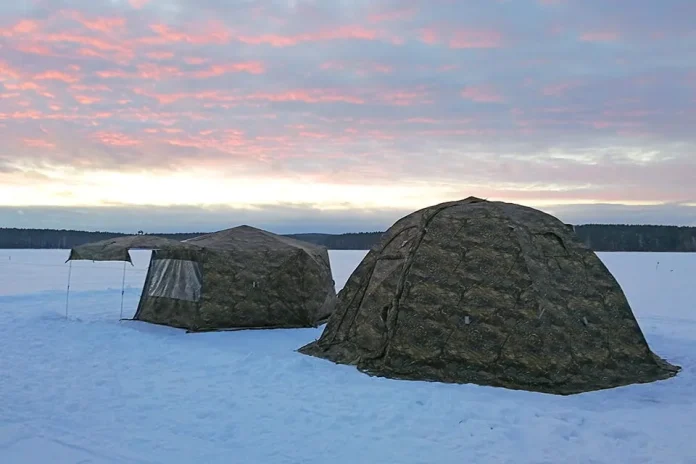

Wind tests a tent harder than most weather, because the force on its walls rises with the square of the wind speed. Double the speed, and the load quadruples. For this reason, camping in high wind rewards the camper who chooses the site and sets the anchors before the first gust arrives, not the one who scrambles afterward.
4WDTalk has covered overlanding shelters and cold-weather camping, including earlier guides to the Bereg UP-5 and UP-7. For this article, we highlight Bereg Canada’s UP-7 tent using standard anchoring practice and basic wind-load physics. Bereg lists no wind-speed rating for the UP-7, so we don’t invent one. Instead, you’ll get a method for reading a site, placing your anchors, and deciding when to pack up.
Quick Facts:
- Topic: Camping in high wind with the Bereg UP-7
- Tent: Bereg UP-7 dome-umbrella hot tent
- Weight: 35.6 kg (about 78.5 lb)
- Interior: 5 by 5 by 2.3 m
- Frame: Built-in 10 mm aviation aluminum
- Setup time: About 1 minute, per Bereg
- Price: CAD $3,829.04 at Bereg Canada
- Verdict: Strong shape and frame-mounted anchor points, but no published wind rating, so site choice and tension decide the night.
8 min read
In This Guide
- Camping in High Wind: What the UP-7 Faces
- Bereg UP-7 Specs That Matter in Wind
- Campsite Selection for Camping in High Wind
- Guy-Line Strategy for the UP-7 Dome Tent
- Pitching Steps for Camping in High Wind
- Wood Stove Safety When Camping in Windy Weather
- Bereg UP-7 vs. UP-5 in Windy Camps
- Final Verdict: Is the UP-7 Ready for Windy Camps?
- FAQ: Camping in High Wind With a Dome Tent
Camping in High Wind: What the UP-7 Faces

Camping in high wind comes down to three decisions, including where you pitch, how you anchor, and when you leave. The Bereg UP-7 helps with anchoring more than most tents, since its tie-down points connect to the frame. However, no tent holds itself down, and a 5 by 5 m footprint gives gusts a large wall to push on.
Wind loads grow fast. Because force rises with the square of speed, a 40 km/h gust pushes four times harder than a 20 km/h breeze. Therefore, a camp holding firm at dusk might fail after midnight when a front arrives. Before you commit to a site, check the forecast for gust speeds, not only averages.
This guide covers the full routine for the UP-7, a double-wall hot tent with an umbrella-style aluminum frame. First, you’ll see how its specs affect wind behavior. Next come campsite selection, guy-line placement, and a pitching order. Finally, we cover stove safety, since a wood stove adds risk in gusty weather.
Everything here is general guidance, because Bereg publishes no wind limit for the UP-7. Still, when gusts exceed your comfort, move or leave. A tent is replaceable, but you aren’t.
Bereg UP-7 Specs That Matter in Wind
Because specs change, confirm these figures on Bereg Canada’s UP-7 product page before you buy.
| Specification | Details |
|---|---|
| Interior (L x W x H) | 5 x 5 x 2.3 m |
| Weight | 35.6 kg |
| Packed size | 145 x 40 x 40 cm |
| Frame | 10 mm aviation aluminum alloy B95T1 (AA7075) |
| Outer fly | Oxford 300, PU 4000 mm |
| Inner fly | Oxford 210, PU 2000 mm |
| Entrances | 2 zippered, plus a hinged frame door |
| Capacity | 5 to 7 with stove and beds, up to 14 in sleeping bags |
| Cold rating | -50°C |
| Price | CAD $3,829.04 |
Three numbers matter most in wind. First, the 10 mm aviation aluminum frame gives the tent its structure. Second, the 2.3 m peak height sets how much wall faces the gusts. Third, the 35.6 kg weight helps the packed tent stay put while you work, although weight alone never replaces anchors.
Bereg describes the dome-umbrella shape as streamlined, with stability in wind gusts and minimal precipitation buildup. Moreover, sloped walls generally shed wind better than the flat walls of a cabin-style tent. Bereg publishes no tunnel data, however, so treat those claims as design intent rather than a tested limit.
Buy Direct From Bereg Canada
Bereg UP-7 Hot Tent
A 5 by 5 m double-wall tent with a built-in aluminum frame and two entrances.
Campsite Selection for Camping in High Wind

Good campsite selection starts before you park. Specifically, walk the area, note the wind direction, and decide where gusts will hit before you unload a single bag.
Terrain Rules for Camping on Open Ground
Start with the landscape. Ridges, saddles, and open flats give wind a clear run at your tent, while hollows and the lee side of a rise break the flow. However, the lowest point is not always safest, because cold air and runoff collect there. Instead, look for gentle shelter right behind a rise.
Canyons and gaps between hills act as funnels. Because wind speeds up when it squeezes through a narrow space, skip drainages pointing straight at your camp. Meanwhile, check for dry washes, because a storm upstream sends water down a dry-looking channel.
Windbreaks Help, but Trees Add Risk
A line of dense brush or a wall of boulders breaks gusts well. Trees help too, but first look up. Dead branches and shallow-rooted trees fall in storms, and a falling limb ruins a tent faster than any gust. Therefore, camp beside a windbreak rather than under one.
Safety note: Never pitch under dead limbs or leaning trees. If you hear cracking overhead, leave the tent for open, level ground, and stay away until the gusts ease.
Check the Ground Before You Stake
Soil decides how well stakes hold. Firm, damp soil grips well, while dry sand, loose gravel, and frozen ground hold poorly. First, test the spot by pushing a stake in by hand; if it slides in without resistance, plan on longer stakes or buried anchors. Also pick a flat spot, since a tilted floor lets wind lift the high edge.
Guy-Line Strategy for the UP-7 Dome Tent

The UP-7 ships with a complete set of guy lines and tent stakes, plus reflective tie-down points on the frame. Bereg also adds pockets to store the lines. Because the tie-down points connect to the frame, pulling on them loads the aluminum structure instead of the fabric.
Use Every Tie-Down Point
In calm weather, you might skip a few guy lines. In high wind, use them all. First, run each line straight out from its tie-down point, away from the tent’s center, so the pull follows the frame. Then add extra anchors on the windward side, since the windward wall takes the most load.
Set the Angle and the Tension
Aim for roughly 45 degrees between each line and the ground. A steeper line pulls the stake upward and restrains the tent poorly from the side, while an extremely shallow line sits low and trips anyone walking past. Next, pull each line snug, then recheck it after the first strong gust, because stakes settle and knots slip. Finally, stake the protective skirt through its peg loops, which Bereg designed to block wind and moisture.
Choose Stakes for the Soil
Standard stakes hold well in firm soil, although they pull out of sand, snow, and loose gravel. In those conditions, bury a deadman anchor instead. Tie the line to a stuff sack filled with sand, a stick, or a spare stake, then bury it 20 to 30 cm deep and stomp the soil flat. In rock, loop the line around a boulder, or pile heavy stones on top of each stake.
Pitching Steps for Camping in High Wind
According to Bereg, the UP-7’s built-in frame opens in about one minute, which helps when weather turns. Still, speed only pays off when you work in the right order, as with any hot tent. New to hot tents? Start with our hot tent camping beginner’s guide first.
- Check the wind direction, then place the tent so the doors face away from it.
- Lay the packed tent on the spot and weigh the corners with your packs before you open the frame.
- Extend the frame with your back to the wind, and ask a helper to hold the far side if gusts are strong.
- Stake the skirt and floor corners first, then work around the tent.
- Attach all guy lines, starting on the windward side, and tension them evenly.
- Close the windward windows and leave the lower vent window on the leeward side partly open for airflow.
After pitching, walk the perimeter. Tug each line, check each stake, and look for flapping fabric. Since flapping keeps you awake and works the seams, tighten any panel snapping in the gusts.
Wood Stove Safety When Camping in Windy Weather
Specifically, Bereg designed the UP-7 for wood stoves, with a removable heat-resistant wall and a stove jack with a pocket for a metal insert. Notably, the company recommends Vector, Large Atom, Large Fireplace, and Satellite stoves, and it sells the stoves separately.
Wind changes how a stove behaves. Gusts push air down the chimney and blow smoke back into the tent, and they also fan the fire into a hotter burn. Because of this, keep the fire small and stay awake while it burns.
Safety note: Wind raises spark and carbon monoxide risk. Keep a carbon monoxide alarm inside, keep the stove pipe clear of the fabric, and let the fire die before you sleep when gusts build. If the pipe starts to rock, put the fire out and take the pipe down.
Our cold-weather guide to the Bereg UP-7 covers winter use in more depth, and it also pairs well with this section.
Built for Groups
Room for 5 to 7 With a Stove
Check current pricing and stock for the UP-7 at Bereg Canada.
Bereg UP-7 vs. UP-5 in Windy Camps
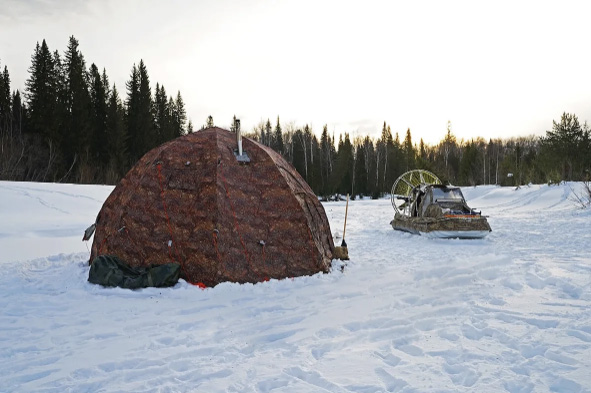
The UP-5 weighs 29 kg and measures 4.4 by 4.4 by 2.2 m, compared to the UP-7’s 35.6 kg and 5 by 5 by 2.3 m. In wind, a smaller, lower tent presents less wall to the gusts. However, Bereg lists no wind rating for either model, so the difference comes from physics rather than published data.
Specifically, the UP-7 earns its place when you camp with five to seven people and need the room. For example, a group of two or three gains little from the extra size, and the larger tent takes on more wind load. Our UP-5 vs. UP-7 comparison covers the decision in more depth, including weight and setup.
Final Verdict: Is the UP-7 Ready for Windy Camps?
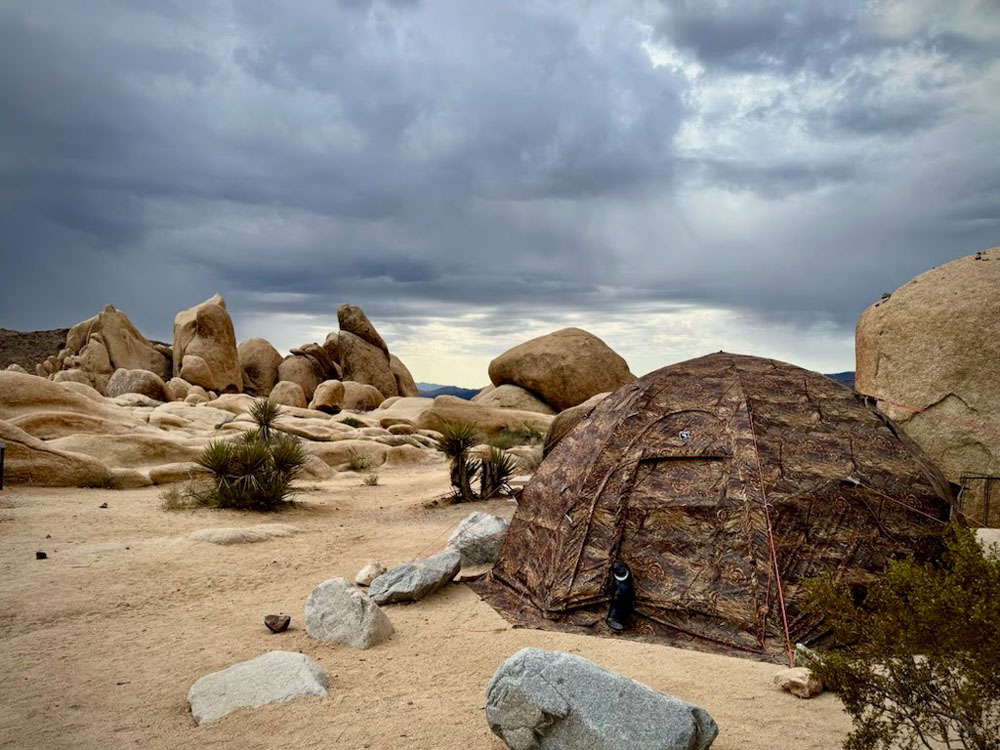
The Bereg UP-7 suits groups who want a roomy hot tent, especially ones who value a strong frame and anchor points for guy lines. Specifically, its dome-umbrella shape, 10 mm aluminum frame, and frame-mounted tie-down points give you real tools for camping in high wind. Especially when you pitch with care, those tools carry you through gusty nights.
However, the UP-7 has limits. Moreover, Bereg publishes no wind rating, the 35.6 kg pack needs a vehicle, and the CAD $3,829.04 price sits above casual weekend budgets. Instead, if you camp mostly in calm weather or in groups of two to three, a smaller tent costs less and takes less wind load.
Specifically, the UP-7 makes sense on value when you need a heated shelter for five or more people in cold, exposed places. Its skirt, two entrances, and stove-ready design justify the price for this use, while casual campers pay for features they rarely use.
Our recommendation: buy the UP-7 for group base camps, practice the anchoring routine at home first, and treat packing up as a valid option when gusts build. For smaller groups, look at the Bereg UP-5 instead. Check Bereg Canada’s UP-7 page for current stock and pricing before you order.
Ready to Buy?
Take the UP-7 Into the Wind
Confirm stock, colors, and accessories like the winter floor before you order.
FAQ: Camping in High Wind With a Dome Tent
How much wind does the Bereg UP-7 handle?
Bereg doesn’t publish a wind-speed rating for the UP-7. The page lists a 10 mm aluminum frame, a streamlined dome-umbrella shape, and a -50°C cold rating, but no gust limit. Therefore, pitch it as you would any tent in wind: pick a sheltered spot, use every anchor, and pack up if the frame starts to flex hard.
Should you stay in the tent during a windstorm?
Stay only if the tent holds steady and no branches hang overhead. If the frame bends, stakes pull loose, or the fabric snaps hard, move to your vehicle. Your vehicle is the safer shelter, and a tent is replaceable.
Which way should the UP-7 doors face?
Face the doors away from the wind so gusts don’t blow into an open entrance. The UP-7 has two zippered entrances, so use the leeward one for traffic and keep the other closed.
Do you need extra stakes for the UP-7?
Bereg includes a set of tent stakes, a full set of lines, and a spare parts kit. For soft ground such as sand or snow, add longer stakes or buried anchors. Also carry spare stakes, since one bent stake costs you an anchor point.
Is it safe to run a wood stove while camping in high wind?
Bereg designed the UP-7 for wood stoves but publishes no wind limit for stove use. Because gusts cause downdrafts and fan the fire, keep it small and stay awake while it burns. Also keep a carbon monoxide alarm inside, and let the fire die when gusts build.
Our articles might have affiliate links and the occasional sponsored content, but don’t sweat it – if you buy something, we get a little kickback at no extra cost to you, and we only hype products we truly believe in!