


I’ve camped and overlanded most of my life, and I’ve slept in nearly every shelter a truck owner might consider. Over the years, I’ve used ground tents, rooftop tents, truck bed campers, and trailers. Each one taught me something different about weight, setup time, and cost. As a result, I know how easy it is to buy a shelter built for someone else’s travel style.
This guide walks through each option with real numbers, so you pick the right truck shelter system before spending a dollar. Specifically, you’ll see how payload, bed size, and trip frequency drive the decision. Along the way, I’ll link to my own reviews of the Freedom Camper and the lightweight camping trend, since both shaped how I think about shelter today.
Quick Facts:
- Topic: Choosing a truck shelter system
- Options covered: Ground tent, rooftop tent, truck bed camper, trailer
- Starting cost: Under $400 for a tent; $3,499.99 for a Freedom Camper
- Lightest hard-sided option: Freedom Camper, starting at 175 lbs
- Key deciding factor: Payload first, then trip frequency
- Skill level: Beginner to intermediate
- Best for: Truck owners comparing shelters before a purchase
7 min read
In This Guide
Why Your Truck Shelter System Matters

Your truck shelter system decides how fast you leave, how much weight you carry, and how well you sleep. Most buyers start with price, but price is only one factor. Payload, bed length, and trip style matter as much. Consequently, the wrong shelter sits in a garage while the right one gets used every month.
Frequency matters more than features. A shelter you set up in five minutes gets used on a Wednesday night. In contrast, a shelter taking an hour waits for vacation season. Because of this, I weigh setup time as heavily as comfort when I recommend a shelter to friends.
Comfort matters too. Sleeping flat, staying dry, and keeping gear organized all affect whether you want to camp again next weekend. Likewise, temperature control and weather protection vary widely between a thin tent and a hard-sided shelter, so think about the coldest night you expect to face. As a result, your climate belongs in the decision alongside weight and cost.
Weight also drives safety. Every pound you add to the truck comes out of your payload, and payload is a fixed number. Therefore, the smartest shopping order starts with your truck’s limits, moves to your trip style, and ends with price.
Four Types of Truck Camping Shelter

Every option falls into one of four groups. Each group trades weight, cost, and convenience differently. Below, I break down what I’ve learned from using all four.
Ground Tent: Lowest Cost, Zero Payload Impact
A two-person backpacking tent weighs 3 to 6 lbs and costs $150 to $400. It adds nothing to your payload, and it fits any truck. However, you need flat ground, and packing a wet tent in the morning slows your day. For first-time buyers, a ground tent is the lowest-risk starting point.
Rooftop Tent: Fast Setup, Heavy Roof Load
A hardshell rooftop tent opens in 30 to 60 seconds. However, a mid-range model plus mounting hardware adds 160 to 250 lbs to your roof. You also need a rack rated for the load, and the tent raises your center of gravity. Moreover, it rides along on every errand, which adds wind noise on the highway.
Truck Bed Camper: Low Weight Placement
Slide-in campers sit in the bed, keeping weight low and centered. Traditional hardside models weigh 900 to 2,000 lbs, which overloads many half-ton trucks. The Freedom Camper takes a different route, weighing 175 lbs in the 48×79 size and 195 lbs in the 58×89 size. It slides in without drilling, costs $3,499.99, and carries a 3-year limited warranty. My Freedom Camper review covers installation and trail performance in detail.
Teardrop and Travel Trailers: Most Space, Most Commitment
Trailers add storage, kitchens, and standing room. However, they also add tongue weight, which typically runs 10 to 15 percent of the trailer’s loaded weight. Trailers change how you park, turn, and run trails too. For a full price and weight breakdown, read my truck camper vs teardrop trailer comparison.
Match Your Shelter to Your Payload
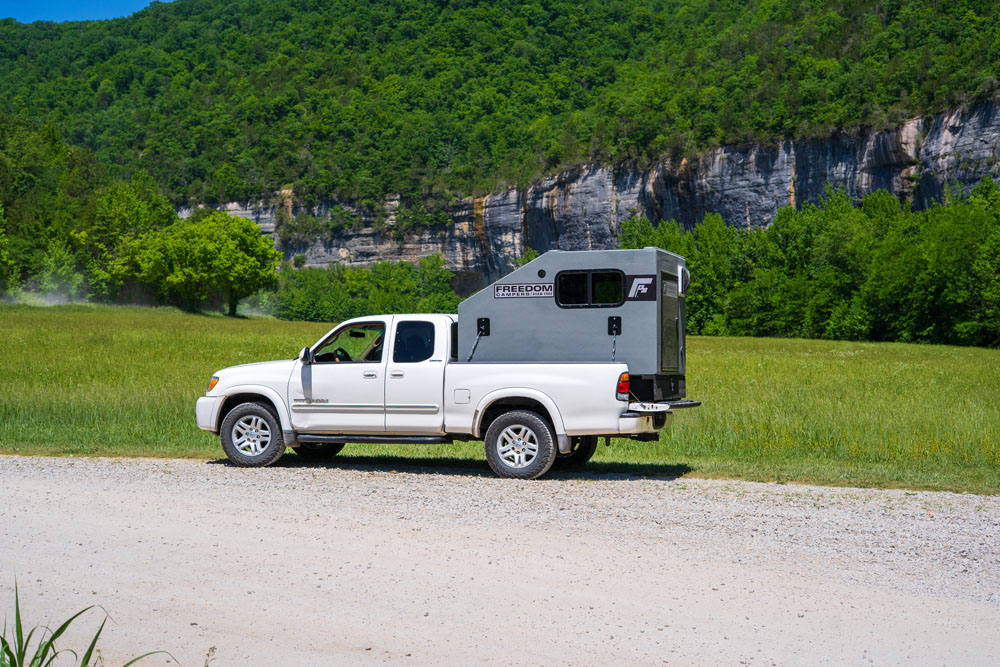
Payload is the number most buyers skip. Most half-ton trucks carry 1,500 to 2,000 lbs, and passengers, water, fuel, and gear use much of it. Check the placard on your driver’s door jamb for your exact figure. Additionally, NHTSA tire and loading guidance explains why exceeding rated limits is a safety issue, not a suggestion.
| Shelter | Typical Weight | Setup Time |
|---|---|---|
| Ground tent | 3-6 lbs | About 10 minutes |
| Rooftop tent | 160-250 lbs with hardware | 30-60 seconds |
| Freedom Camper | 175-195 lbs | Under 30 minutes to install |
| Traditional hardside camper | 900-2,000 lbs | Varies by model |
| Trailer | 10-15% of trailer weight on the hitch | Varies by model |
Here’s the math on a half-ton with 1,600 lbs of payload. A Freedom Camper leaves roughly 1,400 lbs for people, gear, water, and fuel. By comparison, a 900 lb hardside camper leaves about 700 lbs before you load anything else. Clearly, shelter weight shapes everything you bring.
Buy Direct From Freedom Campers
A 175 lb Slide-In Shelter for Your Truck Bed
The Freedom Camper starts at $3,499.99, slides in without drilling, and ships from Lamar, Missouri, with a 3-year limited warranty.
Rooftop Tent vs Truck Bed Camper

These two options land close on weight, yet they feel different in daily use. A rooftop tent weighs 160 to 250 lbs installed, while the Freedom Camper weighs 175 to 195 lbs. The difference is placement. Roof weight raises your center of gravity, whereas bed weight stays low and centered.
Daily driving also differs. A rooftop tent stays on the truck through every commute unless you remove the rack. A slide-in camper, however, comes out of the bed when you need the truck for work, hauling, or a family trip. Since it uses no permanent mounts, the truck returns to normal in minutes.
Weather exposure differs as well. Hardshell rooftop tents handle wind well, yet soft-shell models flap and trap condensation. A slide-in camper offers solid walls and insulation, which helps in cold shoulder seasons. For instance, four-season campers lean toward the bed option.
Bed space is the trade-off. A slide-in camper uses your bed, so gear storage moves elsewhere. A rooftop tent keeps the bed open for firewood, bikes, and coolers. If you haul cargo often, this point might decide the whole choice. Before buying either one, read my guide on what to look for when buying a truck bed camper.
Choosing Your Truck Shelter System in Four Steps

Use this order to narrow your options. Each step removes shelters from the list, so you finish with one or two clear choices.
Step One: Find Your Payload Number
Start with the door jamb placard. Subtract passengers, water at 8.34 lbs per gallon, fuel, and gear. The remaining number is your shelter budget in pounds. Any shelter above it is off the list.
Step Two: Match Frequency to Setup Time
Next, count how many nights you camp each year. Occasional campers do fine with a ground tent. Frequent campers benefit from fast setup, since friction ends more trips than weather does. If you stay at one spot for several days, a basecamp setup lets the truck run trails unloaded. My overlanding basecamp setup guide covers the approach.
Step Three: Check Your Bed and Rack
Then measure your usable bed length between the wheel wells. The Freedom Camper offers a 48×79 size for short beds and a 58×89 size for larger ones. For a rooftop tent, confirm your rack’s dynamic load rating before you buy. Many factory racks carry far less weight while driving than the tent needs. Also, check the tent’s own weight rating for the people sleeping inside, since static and dynamic ratings differ. Therefore, read both numbers in the rack manual before you order.
Step Four: Set Your Budget Last
Finally, compare costs among the shelters still on your list. A ground tent costs under $400, while a Freedom Camper costs $3,499.99. Remember to count the rack, mounting hardware, and any bed protection. In addition, weigh how many trips you’ll take, because cost per night drops fast with frequent use.
Ready to Buy?
Freedom Camper: No Drilling, No Permanent Mounts
Two platform sizes cover short and standard beds. Built in Missouri and backed by a 3-year limited warranty.
Pros and Cons of a Lightweight Setup
Pros
- A lightweight truck camper at 175 lbs leaves about 1,400 lbs of payload on a 1,600 lb truck
- Ground tents cost under $400
- Slide-in installation takes under 30 minutes
- No drilling or permanent mounts
- Truck returns to daily use in minutes
- Lower weight placement than a rooftop tent
Cons
- Slide-in campers use bed space
- Ground tents need flat, dry sites
- Rooftop tents add 160 to 250 lbs up high
- Less interior space than a full trailer
Final Verdict

The right truck shelter system matches your payload first and your travel style second. Ground tents suit occasional campers who want minimal cost. Rooftop tents suit people who move camp often and keep the bed free for cargo.
Trailers suit families who want kitchens and standing room, provided the truck handles the tongue weight. However, they demand the most commitment in storage, towing, and parking. If your trips mix pavement and trails, think carefully before adding a trailer.
For most half-ton owners who camp often, a lightweight truck camper offers the best balance. The Freedom Camper weighs 175 to 195 lbs, costs $3,499.99, and installs without drilling. Therefore, it keeps payload open while giving you four-season protection and fast setup. Its main trade-off is bed space.
If budget is tight, start with a quality ground tent and upgrade after you’ve built the habit. Alternatively, consider a rooftop tent if your rack and roof rating support the load. Whatever you choose, camp more often, because use matters more than gear.
Today’s Best Deal
Camp More With a Shelter Built for Your Bed
175 lbs. No permanent mounts. A 3-year limited warranty. Ships to the lower 48 from Lamar, Missouri.
Frequently Asked Questions
Rooftop tent vs truck bed camper: which is better for a half-ton?
Both weigh about the same, yet bed weight sits lower than roof weight. In the rooftop tent vs truck bed camper debate, a slide-in wins on stability and a rooftop tent wins on bed space. Choose based on how you haul cargo.
How much weight does a truck shelter system add?
A ground tent adds 3 to 6 lbs. A rooftop tent adds 160 to 250 lbs, and a Freedom Camper adds 175 to 195 lbs. Traditional hardside campers add 900 to 2,000 lbs.
Does a Freedom Camper fit a short-bed truck?
Yes, the 48×79 size suits short beds. Measure your usable bed length between the wheel wells before ordering. Wheel well intrusion reduces the flat floor space.
What’s the cheapest truck camping shelter to start with?
A two-person ground tent costs $150 to $400 and adds almost no weight. It’s the cheapest truck camping shelter, and it works with any truck. Upgrade later once you know how often you camp.
Where do I find my truck’s payload rating?
Look at the placard on the driver’s door jamb. It lists the maximum combined weight of passengers and cargo. Subtract your gear and water before adding any shelter.
Friendly disclaimer: Our articles may contain affiliate links that support us without costing you more, and sometimes we spice things up with sponsored content—but only for products we truly stand behind!