


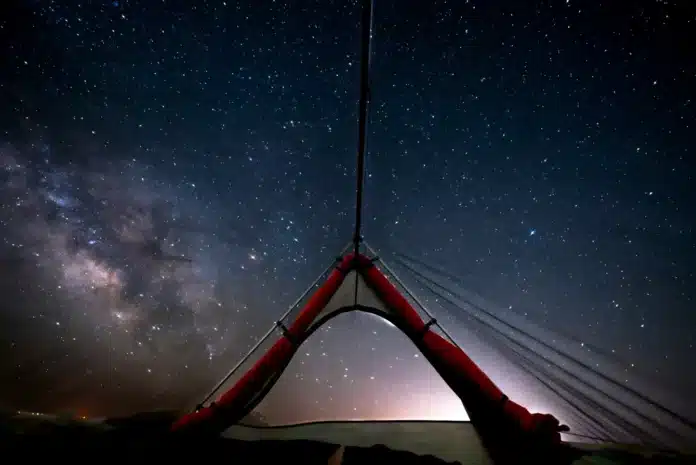

A dark sky campsite takes more than a remote pin on a map. I’ve camped for over 30 years and overlanded for more than 15 of them across the U.S., including driving plenty of BLM and national forest roads along the way. Even so, a long drive doesn’t guarantee a dark sky, because one town glow still washes out a horizon. Therefore, this guide pairs my field experience with the Bureau of Land Management’s published rules and the Bortle scale, so you know where to look and what you’re allowed to do there.
You’ll get specific numbers from sources you check yourself. The Bortle scale, created by amateur astronomer John E. Bortle and launched in 2001, grades sky darkness from Class 1 to Class 9, and BLM sets the camp distances and stay limits you’ll see below. In addition, Sky View Tents sponsors this guide, so the shelter section labels every company claim as the company’s own and lists the trade-offs next to the strengths.
Quick Facts:
- Topic: How to find a dark sky campsite on public land
- Target sky: Bortle Class 3 or darker
- BLM stay limit: Generally 14 days in any 28-day period
- Camp distance: Within 150 feet of designated routes, 200 feet from water
- Best moon: The week around a new moon
- Cost: Free in most dispersed camping areas
- Skill level: Beginner
- Best for: Overlanders and car campers who want Milky Way views
9 min read
In This Guide
- Dark Sky Campsite Checklist at a Glance
- What Makes a Dark Sky Campsite: The Bortle Scale
- Use Maps Before You Drive to a Dark Sky Campsite
- BLM Dispersed Camping Rules for Stargazers
- National Forest Camping: Check the Motor Vehicle Use Map
- Scout Your Dark Sky Campsite in Daylight
- Plan Your Dark Sky Campsite Around the Moon and Weather
- Dark Sky Campsite Shelters: Sky View vs. Standard Tents
- Final Verdict
- FAQ
Dark Sky Campsite Checklist at a Glance
| Specification | Details |
|---|---|
| Sky darkness | Bortle Class 3 or darker for Milky Way detail |
| BLM stay limit | Generally 14 days in any 28-day period |
| Distance from routes | Within 150 feet of designated routes |
| Distance from water | At least 200 feet |
| Distance from developed sites | At least 1 mile from campgrounds, trailheads, and picnic areas |
Built for Dark Skies
Sleep Under the Milky Way and Stay Dry
Sky View tents pair open stargazing mesh with an internal rainfly you close from inside your sleeping bag.
What Makes a Dark Sky Campsite: The Bortle Scale
This scale gives you a shared language for sky darkness. It runs from Class 1, an excellent dark-sky site, to Class 9, an inner-city sky. According to Sky at Night magazine, amateur astronomer John E. Bortle created it and it launched in 2001.
Class 1 skies are dark enough for the Milky Way to cast a shadow on the ground. Class 3 is a rural sky where light domes show on the horizon, yet the Milky Way still holds plenty of detail overhead. At Class 4, light domes fill the horizon in most directions, although the sky stays dark overhead and the Milky Way’s Great Rift stays visible when the band sits well above the horizon.
For camping, Class 3 is a practical target. Class 1 and 2 sites sit far from major settlements, so they take longer to reach, while a Class 3 or Class 4 campsite still beats a scenic overlook beside a town.
Use Maps Before You Drive to a Dark Sky Campsite

Start at your desk, not in the truck. A light pollution map shows glow from towns and highways, and many of them overlay Bortle classes, so you see the darkness you’re chasing before you burn any fuel.
Next, check each candidate on a land ownership layer. Public land isn’t one solid block, because private inholdings and state parcels sit inside BLM and forest boundaries. As a result, a spot with a dark, open look on the map might sit on private land.
Also look for open ground away from valley towns, where higher sites often sit above the haze. Then add a weather tool, such as Clear Dark Sky charts, which forecast cloud cover and sky transparency.
Finally, save three candidate sites, so a gate, a washout, or another camper doesn’t leave you scrambling in the dark.
BLM Dispersed Camping Rules for Stargazers
BLM dispersed camping rules are simple once you read them, and they shape where you park the truck. According to the Bureau of Land Management, most BLM land allows dispersed camping unless a sign marks the area closed to camping or a specific land-use restriction applies.
The stay limit is generally 14 days within any 28-day period, although limits vary by state and field office. After you reach the limit, BLM says to move to a new area, often at least 25 to 30 miles away.
Placement rules matter for dark skies too. Camp within 150 feet of designated routes, stay at least 200 feet from lakes, rivers, and streams, and keep at least 1 mile from campgrounds, trailheads, and picnic areas. The 1-mile rule also keeps you away from developed-site lights.
Most areas don’t require permits or reservations, but some do for large groups or campfires, such as California’s Campfire Permit. Moreover, fire restrictions change through the year, so read the latest western campfire rules before you go. Use existing fire rings or a fire pan, and pack out all trash. Where it’s allowed, bury human waste 6 to 8 inches deep and at least 200 feet from water and trails.
Safety note: Fire restrictions change by season, so confirm local rules with the field office or posted signs. Stay on designated roads and trails unless the area is open to off-road vehicle use, and make sure your fire is fully out before you leave.
National Forest Camping: Check the Motor Vehicle Use Map

National forest camping works differently from BLM land, because each forest sets its own rules. Most forests allow dispersed camping in places, but closures and limits vary by ranger district.
Therefore, start with the forest’s Motor Vehicle Use Map, which shows the roads open to vehicles and, on some forests, the roads open to dispersed camping. Then call or visit the ranger district office to confirm stay limits and fire rules.
Dark sky campers should also scan for developed areas. Forests with large campgrounds, ski areas, or towns inside the boundary often show light domes. In contrast, roads far from those sites tend to run darker.
Tree cover matters more on forest land than on BLM land. A dense canopy blocks the Milky Way, so look for meadows, clearings, and open ridgelines instead.
Scout Your Dark Sky Campsite in Daylight
Arrive with two hours of daylight if possible. You’ll judge the horizon, the ground, and the access road far better in the light than by headlamp.
In summer in the Northern Hemisphere, the brightest part of the Milky Way sits low in the southern sky, so confirm an open southern horizon. Next, turn to face each compass direction and note any hills, trees, or glow.
Avoid the lowest ground, because cold air and dew settle in low spots. For freezing nights, read the guide on how cold is too cold to camp before you commit to a high, open site.
Park so your headlights and rig lights face away from camp. Switch to red light after dark, since white light resets your night vision. For gear planning, the off-road packing list covers what earns space in the truck.
Plan Your Dark Sky Campsite Around the Moon and Weather

The moon matters as much as the Bortle class. A bright moon washes out the Milky Way even at a Class 1 site, so plan trips around the new moon.
Check moonrise and moonset times for your dates. A crescent moon often sets early and leaves the second half of the night open.
Weather decides the rest. Clouds end a night faster than any light dome, so check an hourly forecast the day before and again at camp.
Autumn brings long nights and fewer crowds. If you still need a spot, read the tips on landing a campsite when every site is booked.
Ready for Open Sky?
Pick Your Sky View Tent
Choose the XL for truck camps, or the Duo and Solo for lighter trips.
Dark Sky Campsite Shelters: Sky View vs. Standard Tents
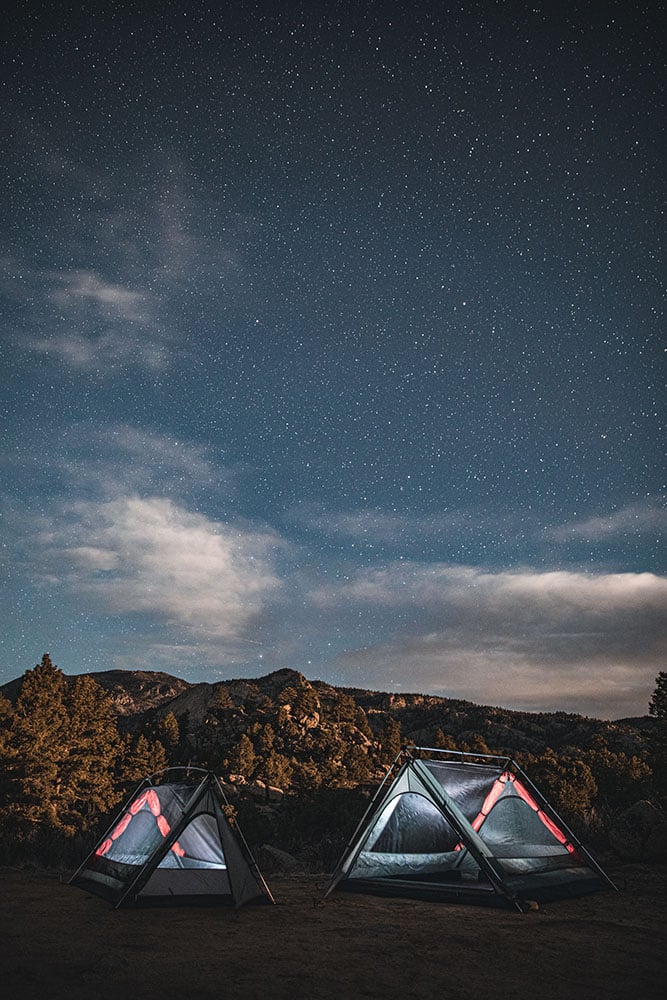
A great dark sky campsite loses value when your tent hides the sky. Standard tents block the view with solid walls or tight mesh, so you either leave the rainfly off and gamble on the weather or sleep behind fabric.
Sky View Tents, based in Buena Vista, Colorado, builds tents for this problem. According to the company, its 18×18 stargazing mesh gives clearer views than traditional mesh, and its patent-pending internal rainfly opens or closes from inside the tent without leaving your sleeping bag.
Three models cover most trips. The Sky View XL costs $499, weighs 14.1 lbs, and has a 90-inch by 90-inch floor with a 55-inch peak, which fits up to three adults or a small family, per the company. At $399, the Duo weighs 5.6 lbs and drops to 3.6 lbs in Tree Mode, which hangs the tent between trees without poles. Priced at $299, the Solo weighs 3.8 lbs and fits one camper up to 6 feet 1 inch tall. Each ships with a footprint, free shipping, and a 6-month warranty.
For overlanders, the XL suits a truck-based camp where weight doesn’t matter, while the Duo and Solo suit hike-in sites a few miles from the rig. If you’re still comparing options, start with the ground tent buying guide.
Pros
- 18×18 stargazing mesh for open views, per the company
- Internal rainfly closes without leaving your bag
- Duo drops to 3.6 lbs in Tree Mode
- Solo weighs 3.8 lbs
- XL floor measures 90 by 90 inches
Cons
- XL weighs 14.1 lbs, too heavy for backpacking
- 6-month warranty is short for a $299 to $499 tent
- One XL reviewer reported a minor leak during four days of thunderstorms, fixed with an adjustment from the company
- Review counts are small: 17 for the XL, 10 for the Duo, 1 for the Solo
- Mesh walls pass more air than solid walls, so cold nights call for a warmer bag
Final Verdict
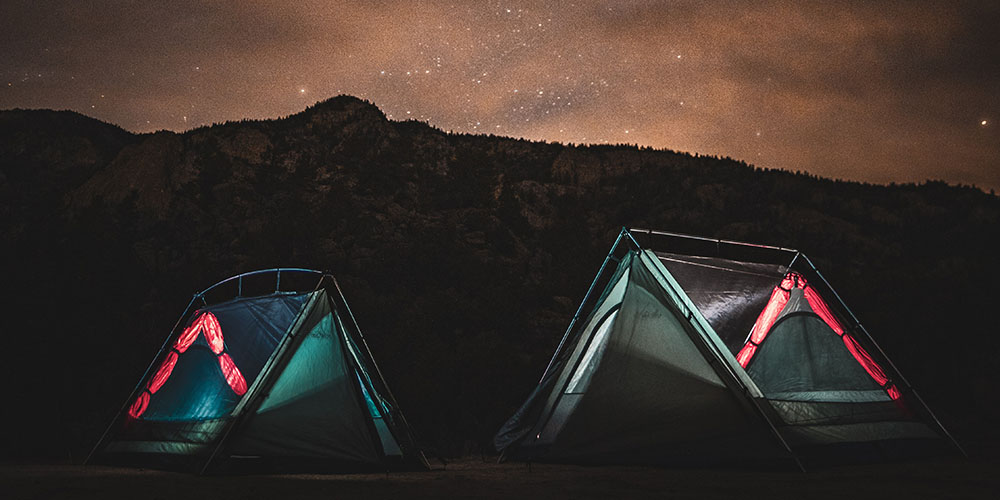
A dark sky campsite starts with the land: Bortle Class 3 or darker, legal dispersed camping, and an open southern horizon. Plan around those three things and you’ll see more stars than most campers ever do. Sky View tents suit campers who want to sleep beneath the sky instead of watching it from a chair.
The trade-offs are real. The XL weighs 14.1 lbs, the warranty runs 6 months, and the review base is still small. Campers who want a four-season shelter or the lightest possible kit should look at traditional ultralight tents, or a hot tent for winter.
Priced at $299 to $499 with a footprint and free shipping, the line costs more than a basic dome tent. Value depends on how often you camp under open sky. If you chase new moons several times a year, the open mesh and internal rainfly earn their price, whereas occasional campers save money with a standard tent.
Start with the map, the rules, and the moon, and then pick the shelter. Choose the XL for truck camps and the Duo or Solo for hike-in sites. If you prefer a traditional setup, a standard ground tent with a removable rainfly still works well on clear nights.
Your Next New Moon
Pitch Under the Stars
Every Sky View tent includes a footprint, free shipping, and a one-year Dyrt PRO camping app subscription.
FAQ
What Bortle class do you need for a good dark sky campsite?
Class 3 or darker gives you strong Milky Way detail overhead. Class 4 still works when the Milky Way sits well above the horizon, because the Great Rift stays visible. The darkest skies, Classes 1 and 2, sit farther from major settlements.
How long can you camp on BLM land?
BLM generally limits dispersed camping to 14 days within any 28-day period. Limits vary by state and field office, so confirm locally. After you reach the limit, move to a new area, often at least 25 to 30 miles away.
How far from roads and water do you need to camp on BLM land?
Camp within 150 feet of designated routes and at least 200 feet from lakes, rivers, and streams. Also stay at least 1 mile from campgrounds, trailheads, and picnic areas.
What is the best moon phase for a dark sky camping trip?
Plan your trip around the new moon. A bright moon washes out the Milky Way, even at a Class 1 site.
Do you need a permit for national forest camping?
Rules vary by forest and ranger district. Most dispersed camping areas don’t require a permit, but some forests ask for permits for fires or large groups. Check the forest’s Motor Vehicle Use Map and call the ranger district before you go.
Just so you know, some of the cool stuff we mention comes with affiliate links, meaning we earn a commission if you buy (no extra charge to you!). Plus, we occasionally feature sponsored content, but rest assured, we only shout out products we genuinely stand behind.