


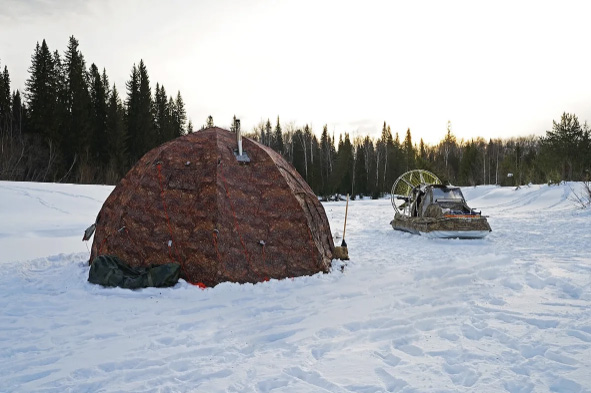
Quick Facts:
- Topic: Wood stove vs diesel heater for hot tent camping, run in the Bereg UP-5 and UP-7.
- Wood stove heat: Radiant. A HuntTalk field test pushed a tent past 120°F with a 160°F peak.
- Diesel heat: Forced air. The same test peaked at 65 to 70°F at pillow level.
- Burn time per load: Bereg rates its steel stoves at 4 to 8 hours, depending on the model.
- Diesel fuel use: 0.10 to 0.24 liters per hour for a 2 kW Autoterm Air 2D.
- Power: A wood stove needs none. A diesel heater runs on 12V.
- Fire bans: Stage 2 orders prohibit wood-burning stoves. Check the local order before you leave.
- Best for: A wood stove by day, a diesel heater at night.
9 min read
In This Guide
- Wood Stove vs Diesel Heater: My Short Answer
- Why I Run a Wood Stove During the Day
- Why a Diesel Tent Heater Takes the Night Shift
- Radiant Heat vs Forced Air Inside a Hot Tent
- Pros and Cons of Each Heater in the Bereg UP-5 and UP-7
- How the Bereg Double Wall Helps Both Heaters
- Carbon Monoxide, Sparks and Exhaust
- Wood Stove vs Diesel Heater: Which Should You Run?
- FAQ
Wood Stove vs Diesel Heater: My Short Answer
Wood stove vs diesel heater is the core heating choice in hot tent camping. My answer is both. I have tested each one extensively in my Bereg tents over the last five to six years. Each heater has real selling points, yet each one falls short at a different hour.
I use my Bereg wood stove during the day to heat the tent and cook on it. Then, around 11 p.m., we stoke it for the last time. At roughly the same moment, I switch on a diesel heater to run through the night. As a result, nobody climbs out of a sleeping bag to feed the fire at 3 a.m.
However, fire bans rule out wood stoves in many places. When restrictions bar the stove, a diesel heater becomes your option. Most orders exempt liquid-fuel devices with a shut-off valve. The test tents here are the Bereg UP-5 and UP-7.
Why I Run a Wood Stove During the Day

A wood stove is fantastic for daytime camp life. First, it throws radiant heat you feel within minutes. Second, the flat top turns into your kitchen for coffee, stew and dishwater. Third, the stove body dries wet gloves and socks faster than anything else in camp.
Bereg recommends four stoves for the UP-5 and UP-7, each on an 80 mm pipe. The Vector and Satellite carry ratings of 6 to 8 hours per load, and the Vector’s 515 mm firebox takes long splits. Glass side panels on the Fireplace let you watch the flame while you cook. Finally, the Atom costs less than the Fireplace in every size. Each card below links the size Bereg lists for these tents.
Bereg Wood Stoves for the UP-5 and UP-7
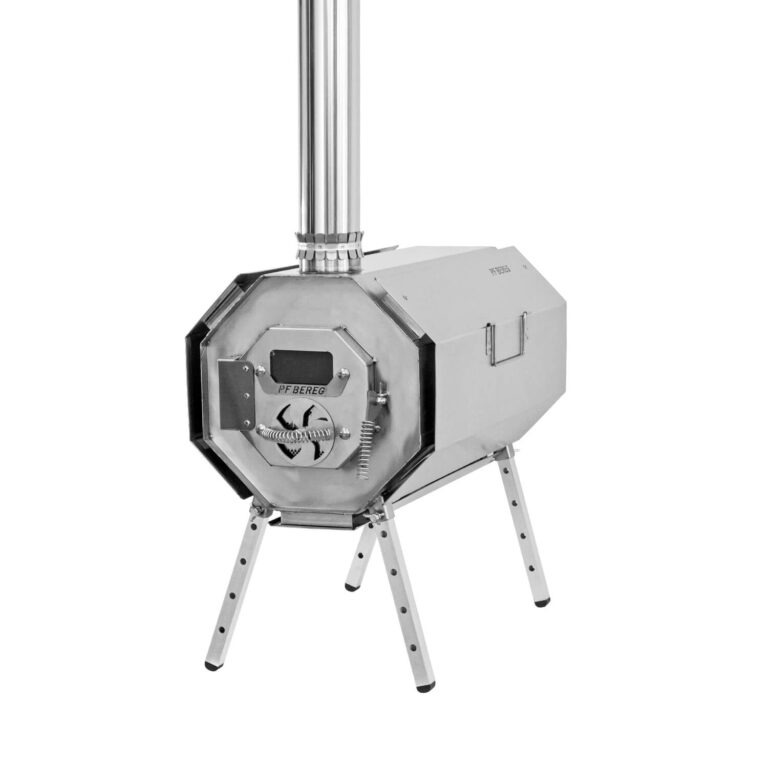
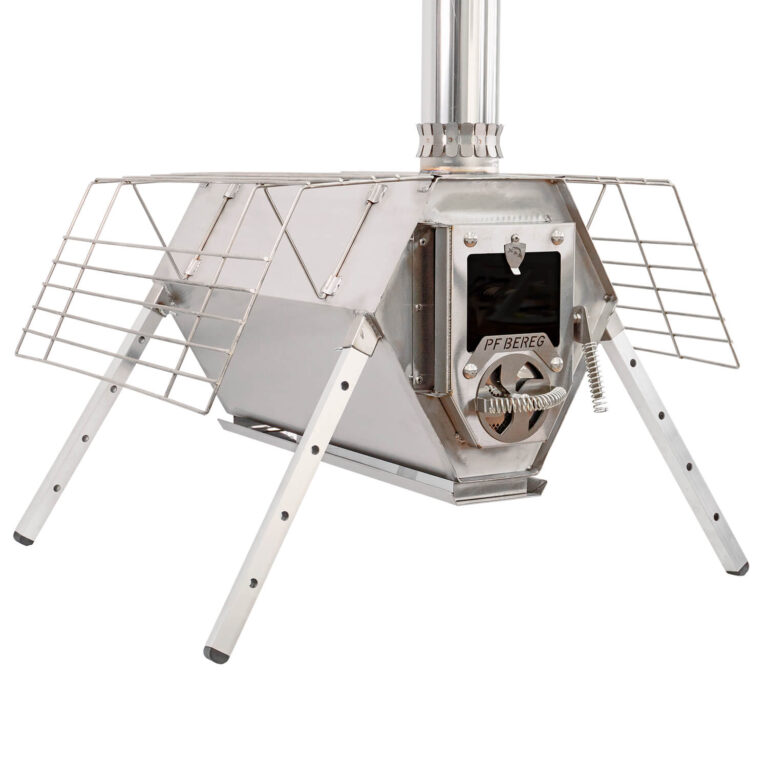
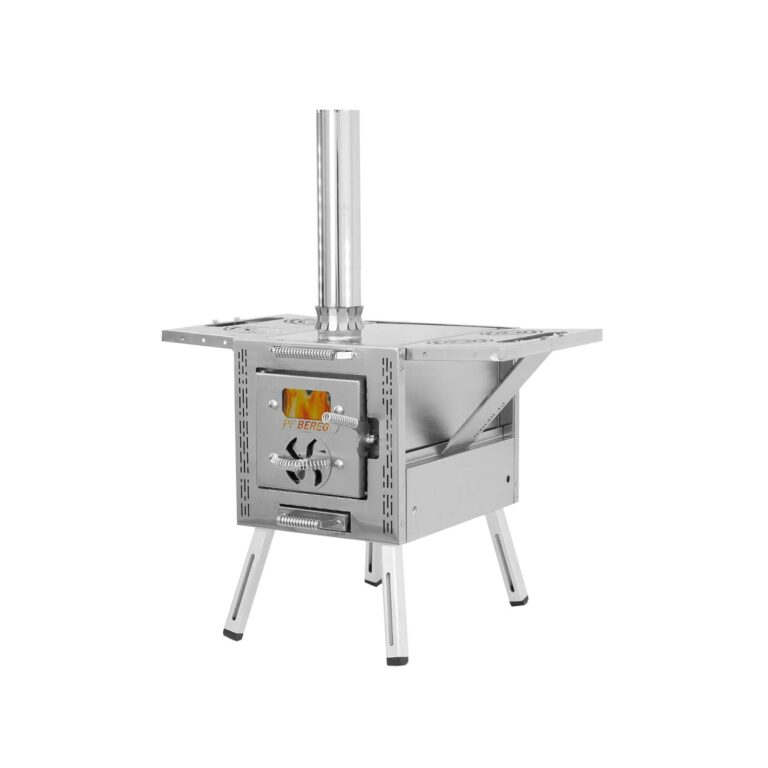
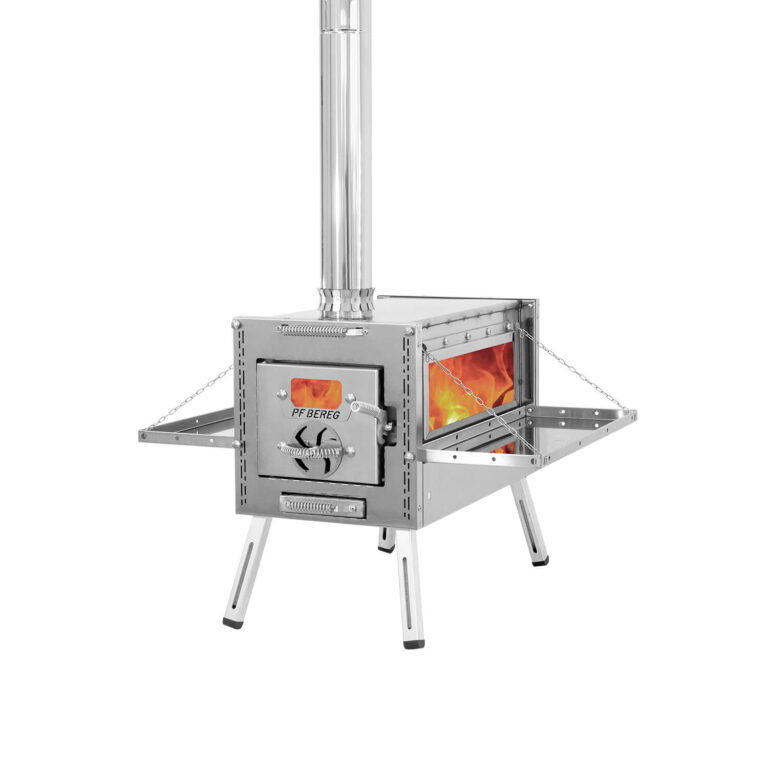
All four use AISI 430 stainless steel, and Bereg rates the Fireplace and Atom at 4 to 8 hours per load. In contrast, owners of thin titanium stoves report 1 to 2 hours. Because steel holds heat, a wood stove for tent use earns its extra weight.
Check Fire Restrictions Before You Pack the Stove
Here is my word of caution. Before every trip, check the rules wherever you plan to camp, well before you reach the trailhead. Many places enforce a strict no-ember policy during fire bans. The policy applies whether the fire sits inside a stove or not.
Official wording backs this up. For example, the San Juan National Forest’s Stage 2 restrictions prohibit “coal and wood burning stoves, and sheepherder’s stoves” outright. Also, the Idaho Department of Lands prohibits wood stoves in wall tents under both Stage 1 and Stage 2. Some Idaho forest orders still exempt spark-arrested stoves at Stage 1, so read the order for your exact area. Our guide to a diesel heater during fire bans covers the workaround.
Why a Diesel Tent Heater Takes the Night Shift
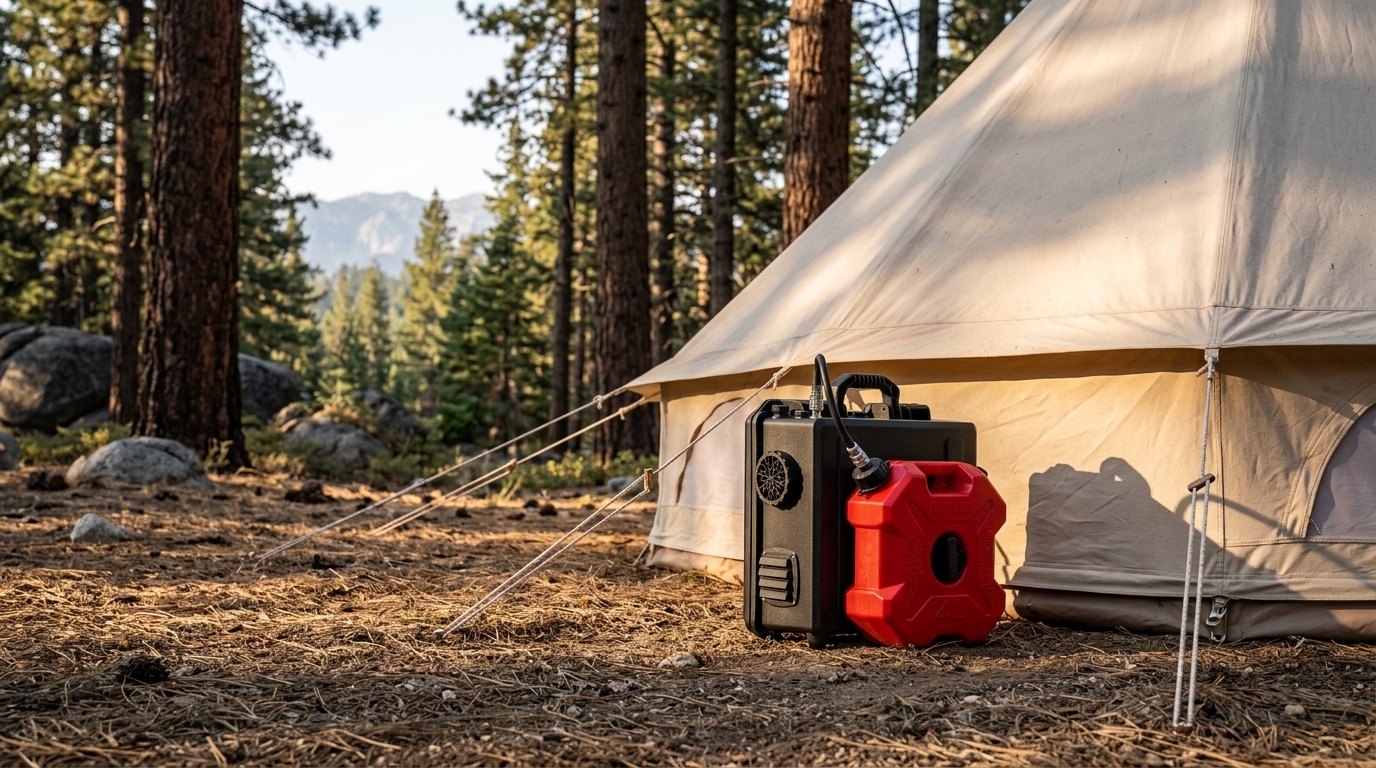
A diesel tent heater wins the overnight hours for one reason: the thermostat. You set a temperature, and the heater holds it while you sleep. In the HuntTalk test, hot air reached the tent in as little as 1 minute and 20 seconds. A wood stove, in contrast, swings from roasting to cold between loads.
Fuel use also stays low. For instance, Autoterm lists its 2 kW Air 2D at 0.10 to 0.24 liters per hour and 10 to 29 watts while running. According to HuntTalk, a single gallon of diesel lasts 8 to 12 hours. Combustion also stays inside the sealed heater, and only warm air enters the tent.
Diesel Heater Trade-Offs
However, a diesel heater brings its own chores. First, it needs a 12V battery or a power station. Our breakdown of diesel heater power consumption shows 7 to 18 amps at startup while the glow plug heats. On many power stations, this draw trips the 10-amp 12V port. Second, altitude matters. Webasto dealer HEATSO lists the stock Air Top 2000 STC’s limit at 5,000 feet, while some dealers sell high-altitude kits rated to 7,220 feet.
Owners also complain about fuel-pump ticking and a break-in smell from new units. Carbon builds up when a heater runs on low for long stretches, so size the heater to the tent. Still, when a fire ban shuts down the wood stove and the local order allows liquid-fuel heaters, the diesel is what you have.
Checking One Heater Against the List: VELIT
These trade-offs also make a checklist for any heater. For example, VELIT rates its portable air heater to 17,000 feet, and its Bluetooth thermostat carries a carbon monoxide sensor. It still runs on 12V, drawing 20 to 46 watts.
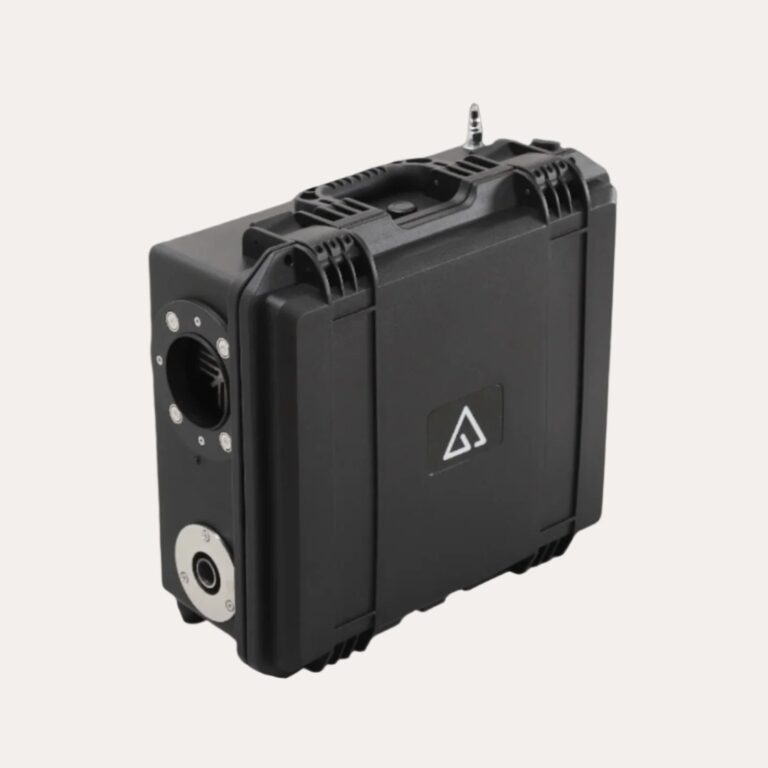
VELIT Portable Air Heater, 14,000 BTU (Diesel or Gasoline)
A 4,000-watt portable heater with diesel and gasoline versions on one listing. Set it outside the tent and run the included 6-foot magnetic duct inside. VELIT rates it to 17,000 feet and -30°F, and the diesel version burns 0.05 to 0.12 gallons per hour.
- Rated to 17,000 feet, well above where many stock units struggle
- Bluetooth thermostat with a built-in carbon monoxide sensor
- 20 to 46 watts running draw on 12V
- Quick-connect fuel dry breaks and a 6-foot magnetic air duct
- Two-year limited warranty
- 20 lb listed weight, heavier than a bare 2 kW heater
- Still needs a 12V battery or power station overnight
Radiant Heat vs Forced Air Inside a Hot Tent
Radiant heat vs forced air comes down to where the warmth lands. A wood stove gives off infrared energy, which warms the people and objects facing it. Because hot air rises off the stove body and pipe, the peak of the tent gets far hotter than the floor.
The HuntTalk field test shows the pattern. With a wood stove, the tent passed 120°F, and the peak hit 160°F. By comparison, the diesel heater peaked at 65 to 70°F at pillow level. The readings come from different heights, yet the stove clearly makes more heat. Use the surplus to dry boots, and crack a door when it gets too hot.
A diesel heater works by forced convection instead. Its fan pushes heated air through a duct and mixes the whole tent. As a result, the temperature feels more even from cot to ceiling, although peak output runs lower.
Both heaters also keep combustion moisture out of the living space, since smoke and exhaust leave through a pipe. Breath and wet gear still add moisture all night, so keep your vents open.
Pros and Cons of Each Heater in the Bereg UP-5 and UP-7
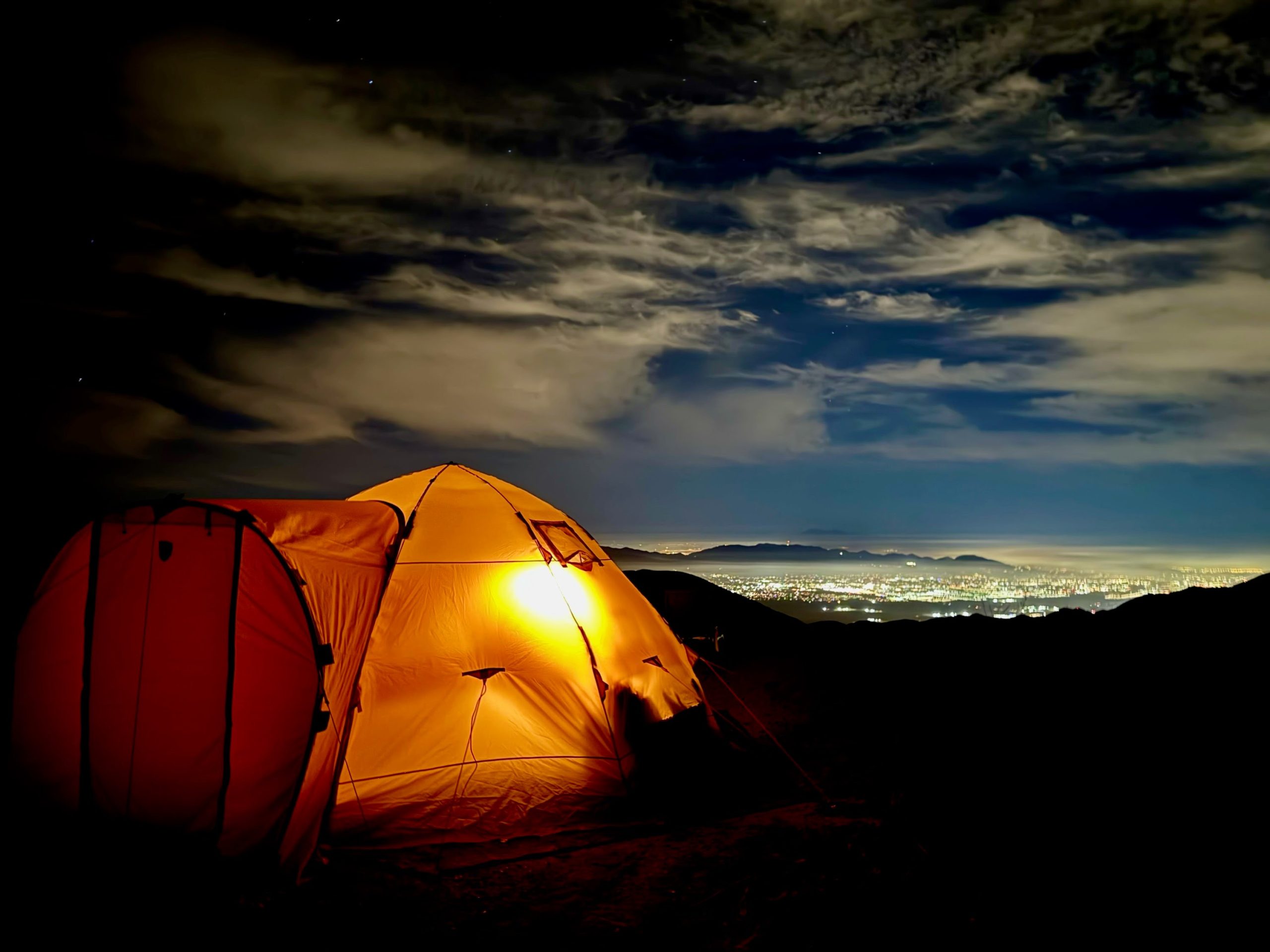
This table pairs my Bereg experience with the points campers repeat most on Reddit, Rokslide and HuntTalk. Both ship with stove jack plates sized 84 by 100 mm for 80 mm pipe.
| Factor | Wood Stove | Diesel Heater |
|---|---|---|
| Pros |
|
|
| Cons |
|
|
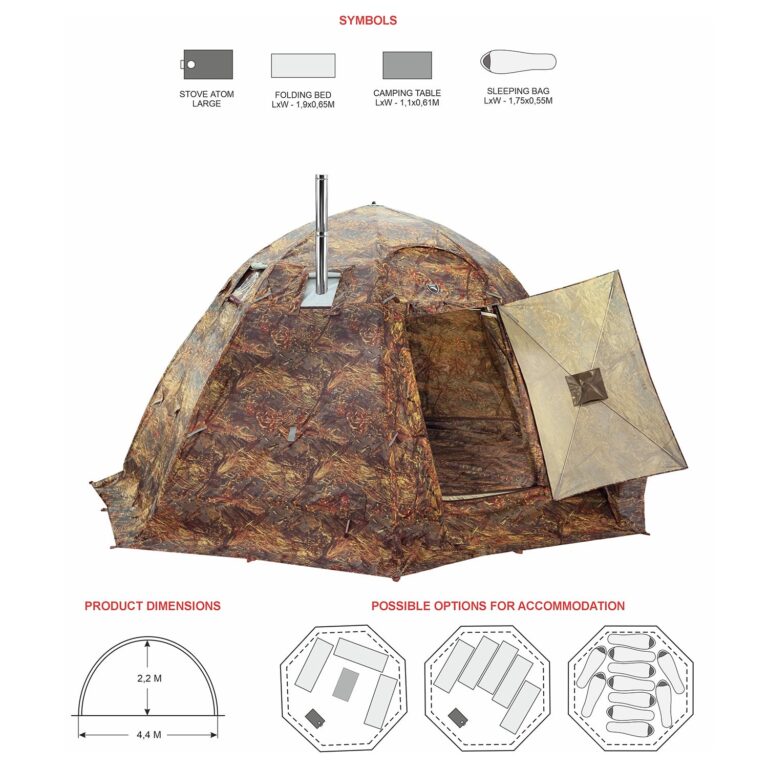
| In the Bereg UP-5 | Large Atom or Fireplace, Vector or Satellite. Sleeps 3 to 5 with a stove. | 4.4 by 4.4 meter footprint, 13.1 square meters usable. Run the duct through a door or vestibule. |
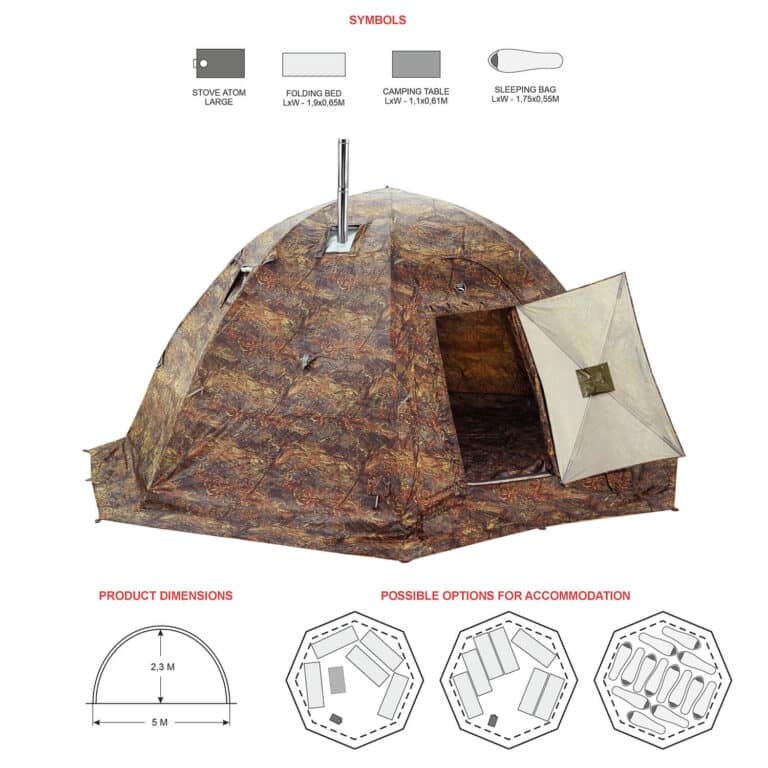
| In the Bereg UP-7 | Same four stoves. Sleeps 5 to 7 with a stove. | 5 by 5 meter footprint and more air to heat, so size up and aim the duct low. |
The stove handles cooking and high heat, while the diesel handles sleep.
How the Bereg Double Wall Helps Both Heaters
I have said it many times over the last five to six years. In my opinion, Bereg tents are the best cold-weather tents made, bar none. Their thermal properties are extraordinary because each tent has an outer wall and an inner wall. The buffer of air between them slows heat loss, whichever heater you run.
This air gap matters at both ends of the night. After the last stoke, it slows the cool-down, so the tent still holds warmth when the diesel takes over. Later, less heat escapes through the walls, so the diesel reaches its set point sooner and cycles down. Bereg Canada puts it this way: “The space between two layers minimizes condensation and effectively keeps heat inside the tent.”
Specifically, the outer fly is Oxford 300 with a PU coating rated to 4,000 mm. The inner fly is Oxford 210 rated to 2,000 mm. Below -25°C (-13°F), Bereg recommends adding its three-layer insulated floor and Arctic Cape. The trade-off is weight, since the UP-7 weighs 35.6 kg (78 lb), so treat it as a vehicle-supported tent. Our Bereg UP-5 vs UP-7 comparison covers the rest of the differences.
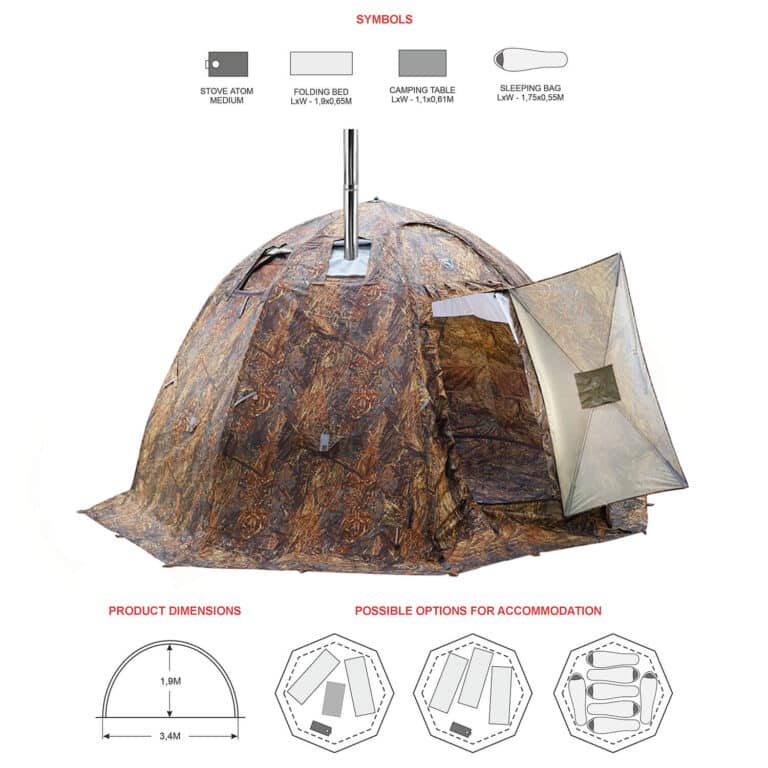
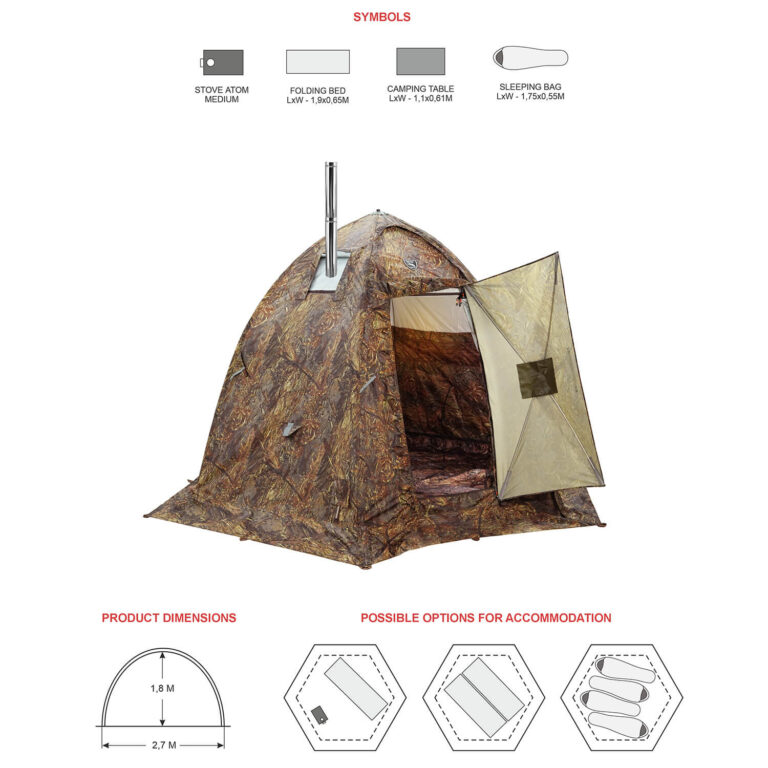
If the two-heater setup fits how you camp, pick the tent by headcount. The UP-5 sleeps 3 to 5 with a stove and cots, while the UP-7 sleeps 5 to 7. Solo campers and couples get the same double wall in the UP-2 and UP-2 Mini. These are the four I would shortlist.
Bereg UP-Series Double-Wall Hot Tents

Carbon Monoxide, Sparks and Exhaust
Safety note: Run a battery-powered carbon monoxide alarm inside the tent with either heater. Point a diesel exhaust away from doors, vents and the vestibule. Keep a fire extinguisher within reach of any wood stove.
With a wood stove, the main danger is fire. Bereg builds a spark arrester into all four of these stoves. Even so, campers on Rokslide and Reddit report spark holes behind spark arresters, so burn dry wood. Also, a stove choked down with a closed damper produces carbon monoxide.
With a diesel heater, the danger is exhaust. Sealed combustion keeps fumes outside only while every joint stays tight. For example, a cracked heat exchanger or a leaking exhaust joint sends carbon monoxide toward the tent. Our diesel heater carbon monoxide safety guide covers each failure point.
Wood Stove vs Diesel Heater: Which Should You Run?
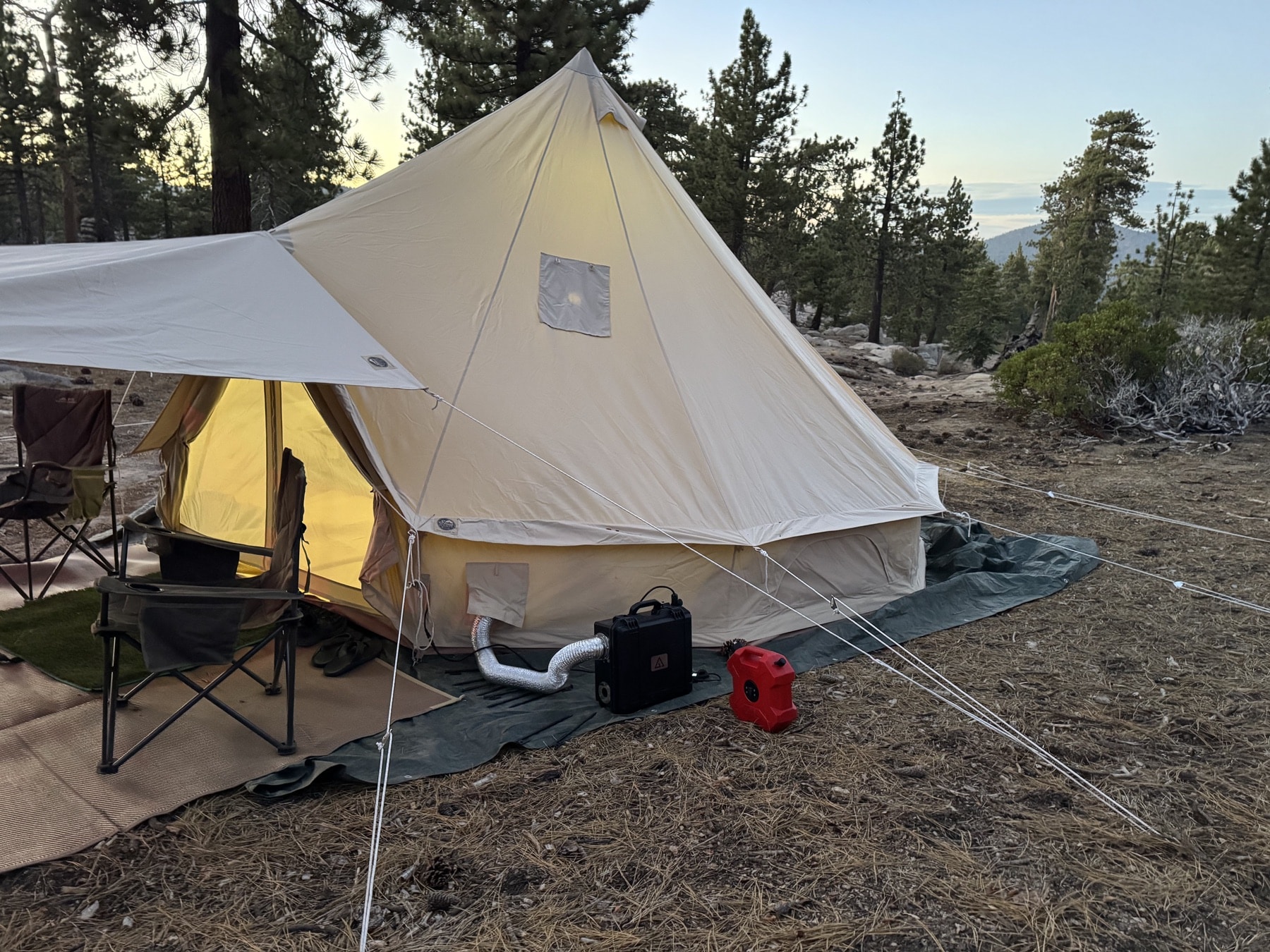
Where fires are legal, a wood stove for tent camping wins the daytime. Its biggest strength is raw radiant output. On top of the heat, the cooktop gives you a kitchen.
The trade-off comes at night. A wood stove needs restoking, and the tent cools once the fire dies. If you want unbroken sleep, run a diesel tent heater overnight. The same goes for a fire ban, as long as the local order allows liquid-fuel heaters. Plan for a 12V battery, a CO alarm and a heater rated for your camp’s altitude. Our roundup of the best diesel heaters we have tested covers specific units.
On value, the stove costs nothing to fuel where gathering deadfall is legal. By contrast, a 2 kW diesel heater burns a fraction of a liter per hour. Each also backs up the other.
My recommendation is the setup I run. I use a Bereg wood stove until about 11 p.m., then a diesel heater until sunrise, inside a double-wall Bereg tent such as the UP-5 or UP-7. If you run only one heater, pick the diesel for overnight comfort and fire-ban flexibility. Alternatively, pick the wood stove if you cook in camp and rarely face restrictions.
FAQ
Is it safe to run a diesel heater in a tent overnight?
Yes, when the heater sits outside the sleeping area and the exhaust vents away from the tent. Also, run a battery-powered CO alarm inside. Sealed combustion keeps fumes out only while every exhaust joint stays tight, so inspect it before each trip.
Is a wood stove legal during a fire ban?
Usually not. Stage 2 orders prohibit wood-burning stoves. Also, Idaho Department of Lands guidance bans them in wall tents under Stage 1. Before you pack the stove, call the ranger district or BLM field office.
Does a diesel heater reduce condensation in a tent?
It helps, because warming air lowers its relative humidity and the exhaust vents outside. However, breath and wet gear still add moisture. For this reason, keep vents open with either heater.
How long does a wood stove burn in a hot tent?
Bereg rates its steel tent stoves at 4 to 8 hours per load, depending on the model. In contrast, owners on Rokslide and Backpacking Light report 1 to 2 hours from thin titanium stoves.
Should you run a wood stove and a diesel heater together?
Run them in sequence rather than at full output side by side. Many hot tent campers, including me, switch on the diesel as the fire burns down. From there, the diesel thermostat holds the temperature while you sleep.