


Last updated: July 2026 | 12 min read
Updated July 20, 2026 — Reviewed and refreshed for the latest testing.
I’ve tested my fair share of diesel heaters since my first introduction to them years and years ago. Spoiler alert: nearly every single one has been a disappointment.
In some cases, the heater simply didn’t work as advertised. In other cases, the heaters were obviously poorly made, which raised concerns about durability (and safety, if I’m honest). Other times, the heaters were complicated to work. Testing these things has not been a terribly fulfilling job!
However…
Despite the endless stream of poor performances from nearly every diesel heater I’ve tested, there are two–yes, just two–that I’m willing to recommend. So, if you’re expecting this guide to have a lengthy list of possibilities, it doesn’t! Instead, I’ll give you a complete breakdown of the only two heaters that have impressed me so far in all my years of testing.
With that, let’s get to it!
Table of Contents
- There Is No Perfect Camp Heater, Including Diesel
- Why Diesel Heaters are Beneficial for Overlanding
- Common Problems With Diesel Heaters
- Best Newcomer Diesel Heater: Sparks Overland 4K Diesel Heater
- Best Time-Tested Diesel Heater: Planar Heaters 4kW Portable Diesel Heater
- Worth Watching: VELIT Portable Air Heater 14000BTU
- A Diesel Alternative Option: Propex PS2000 Portable Suitcase Heater
There Is No Perfect Camp Heater, Including Diesel
I’ve bought and tested portable heaters for years, and I’ve yet to find one without a downside. Every heater trades something away to be good at something else. The useful question is not necessarily which heater is best. It’s which set of tradeoffs you want to live with.
Diesel heaters trade convenience for endurance. They sip fuel, run all night without killing your battery, and pull from the same tank as your engine if you drive a diesel rig. In exchange, you accept a semi-permanent install, a fuel pump ticking under the floor, carbon buildup on a maintenance schedule, stubborn starts in deep cold, and reduced output at altitude on units without compensation.
Propane flips that. Setup takes a minute, no liquid fuel to spill or smell, maintenance near zero, and you burn the same fuel as your camp stove. In exchange you carry a pressurized bottle, you watch vapor draw fall off in serious cold, and the units worth owning cost real money.
Wood stoves out-heat both and ask the most work of you. Unvented buddy-style heaters cost the least and put moisture and combustion byproducts into the space where you sleep, which is why they are not in this guide.
This guide leads with diesel, because for most overlanders running long winter trips the diesel tradeoff is the right one. Three units below earn your money. At the end I’ve included one propane option for readers for whom the diesel tradeoff does not fit, and I spell out exactly who those readers are.
Why Diesel Heaters are Beneficial for Overlanding

Diesel heaters are a must-have if you’re a serious overlander, especially if you’re like me and enjoy camping in the winter. When you’re out on an overlanding trip, comfort is key, and nothing keeps you cozy in freezing temperatures quite like a diesel heater.
One of the primary reasons diesel heaters are so valuable is their efficiency and reliability in difficult conditions. Unlike propane heaters, which can struggle in extreme cold or require frequent fuel refills, diesel heaters are engineered to perform consistently and are much easier to fuel up for long trips.
Diesel heaters are also an excellent choice from a fuel standpoint, particularly if your vehicle is already diesel-powered. That means you don’t have to carry different fuel types, which simplifies fuel management for extended journeys. Additionally, diesel is more readily available in many remote areas compared to other fuels, which adds a layer of convenience when you’re off-grid.

Another big reason why diesel heaters stand out as the top choice is their efficiency and safety. Most models are designed with low power consumption, which means you don’t need to worry about draining your vehicle battery or other power sources to keep the heater running all night. Plus, they’re safe to operate in tight spaces because they vent exhaust outside, keeping your indoor air clean and free from harmful fumes.
Now, as I noted earlier, I’ve tested plenty of these heaters. And on the surface, many of them appear to tick all of the boxes noted above, from fuel efficiency to low power consumption and solid output of warm, dry air. But, as I discovered in my testing, not all diesel heaters deliver on these and other important performance measures.
That brings me to my next point–potential problems you might encounter with a sub-par diesel heater…
Common Problems With Diesel Heaters
Portable diesel heaters are great for camping, but like any equipment, they can come with a few common issues (especially if they’re bargain-basement units, like the one I tested in the video above). Here are some problems you might encounter with diesel heaters and tips for dealing with them:
- Diesel heaters can be stubborn to start in very cold temperatures because diesel fuel thickens as it gets colder, which can clog the fuel lines or filters. To avoid this, consider using a winter-grade diesel or adding a fuel additive designed for cold weather to keep the fuel flowing smoothly.
- Diesel heaters use electricity to ignite and keep the fan running, which can drain your vehicle’s battery if used extensively. Many folks address this by using a dedicated battery pack or portable power station to run the heater separately, preventing it from tapping into the main vehicle battery. I bring along an extra 12-volt car battery to power my heater and that setup works great!
- Portable diesel heaters need proper ventilation to prevent exhaust fumes from entering the sleeping area, which can be hazardous. If there’s any kind of leak in the exhaust line, fumes can enter the space. Always ensure the exhaust pipe is securely connected and directed away from the sleeping area, and routinely check for leaks. Having a carbon monoxide detector on hand is critical, too.
- Over time, carbon buildup can occur in the combustion chamber, particularly if the heater is frequently run on its low setting. Occasionally running the heater on a higher setting can help burn off excess carbon, which keeps the heater clean and efficient.
- Dust or debris in the fuel line can lead to clogging, causing the heater to shut down unexpectedly. Using clean fuel and occasionally checking the fuel filter for clogs can help maintain consistent performance.
- Diesel heaters aren’t always quiet, and the sound from the fan or combustion process can be a drawback if you’re trying to enjoy a peaceful night. Some newer models have sound-dampening features, but for older models, placing the heater outside or using soundproofing materials around it can help minimize the noise.
Now, I’ll be the first to say that these issues can arise even with good diesel heaters. The key, of course, is proper care and maintenance, which ensures proper performance over the long term. Some heaters are more finicky than others, though. As I’ll discuss next, my go-to diesel heater takes all sorts of use and abuse and continues working like a charm despite some failures on my part to perform necessary maintenance.
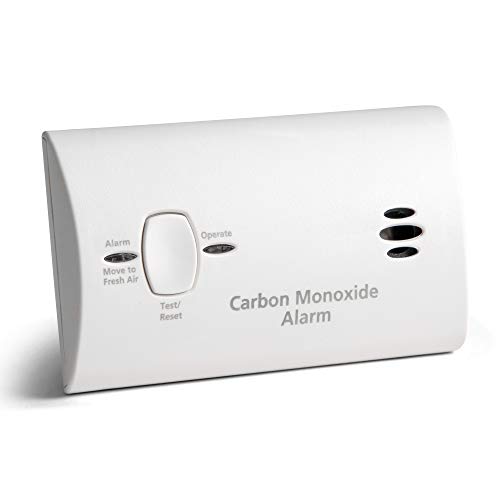
Kidde Carbon Monoxide Detector, Battery Powered CO Alarm with LEDs, Test-Reset Button, Low Battery Indicator, Portable
A battery-powered carbon monoxide alarm is non-negotiable whenever heater exhaust runs anywhere near where you sleep.
- Electrochemical CO sensor runs on two AA batteries
- No wiring, so it moves between home, tent, and truck
- Test-reset button and low-battery indicator
- No digital ppm readout on this model
Best Newcomer Diesel Heater: Sparks Overland 4K Diesel Heater

After so many years of testing diesel heaters, I finally came across another option that’s worth keeping your eye on… This new alternative offers impressive efficiency and reliability, making it a strong contender in the market. As you explore your options, be sure to keep in mind the diesel heater features to consider, such as fuel consumption, heat output, and noise levels. These factors can significantly affect your overall satisfaction and the performance of your heating system. Additionally, it’s essential to compare different models and read user feedback for a well-rounded perspective. For a comprehensive guide, check out the top diesel heaters reviewed 2022, which highlights some of the best options currently available. This can help you make an informed decision that meets your specific heating needs.
Full disclosure: I initially tested the Sparks Overland diesel heater a few years back. At that point, I simply did not like it–it didn’t tick enough boxes for me to recommend it. However, their second try at it is a different story.
This new version–the 4K Diesel Heater–is impressive. Now, I have not had a chance to test this thing long-term, so this is definitely a first impressions situation. From what I can tell, Sparks Overland went back to the drawing board, went to town, and built something that has a lot of upside. In fact, just based on my initial inspection of this heater, I’d say it’s already more impressive than 99 percent of the diesel heaters I’ve tested in recent years. Its sleek design and advanced features make it a standout option among overlanding kit essentials for 2025. As the demand for reliable and efficient heating solutions grows, this heater appears ready to meet the needs of the adventurous traveler. Overall, it seems poised to become a must-have accessory for anyone serious about their overlanding experience.

What initially caught my attention about this heater is that Sparks Overland purpose-built it to be as user-friendly as possible. It’s ready to rock right out of the box–you just need to add fuel and turn the thing on. Then, you can control the heater using the included remote and regulate the temperature as you please without having to get out of bed to do it.
But there’s another layer of usability, here…
This heater has a companion app that, when downloaded to your device, allows you to control the heater from your smartphone. The app isn’t just a glorified remote, either. You can get all sorts of data from the heater’s onboard computer right to your phone, including:
- Engine temperature
- Power consumption
- Box temperature
- Altitude
- Heat adjustment
- Time and timers
Again–I haven’t had the opportunity to take this heater out for a long-term test, so I can’t verify that all these smart features work as they should. But on paper, this looks like one hell of a setup! Check out my first interactions with this heater in the video below:
This unit is housed in a metal case that offers the ultimate in protection and durability. Each component of the case’s build–from the handles to the feet to the latches that secure the lid–is ultra-high-quality. This level of quality continues to the “guts” of the heater as well.
For example, these heaters are 85 percent aluminum or stainless steel (and they still only weigh 33 pounds!). There are no plastic parts. Even the 2.3-gallon fuel tank is metal! It’s paired with an Espar fuel pump, a Wabasto air filter, and automotive fuel lines that ensure reliable performance. Speaking of which, the heater’s integrated computer automatically adjusts the fuel consumption based on the altitude. Not bad, right?

Another impressive feature I immediately appreciated when I got my hands on a prototype unit is the quick-connect duct connection. Unlike most diesel heaters that use hose clamps to ensure a tight fit between the heater’s output valve and the duct, this heater has a friction connection that allows you to simply push the hose on and be done with it.
So, I think you can see why this heater has impressed me thus far. The build quality, smart features, and innovation that’s gone into its design is exciting to see, to say the least. And the fact that Sparks Overland took the lessons they learned from their first heater and used that information to make targeted changes to the second version says a lot about who they are and what they’re trying to accomplish.

I’ll be sure to get out there and do some real-world tests with this heater in the near future–winter is coming, after all! But for now, I couldn’t be more impressed with what Sparks Overland has done thus far. Stay tuned for future updates! Now that the fires here in California are under control, I will put this bad boy to the test and release a full review.
Best Time-Tested Diesel Heater: Planar Heaters 4kW Portable Diesel Heater

I’ve written extensively about my Planar Heaters 4kW portable diesel heater over the years:
- Planar Portable Diesel Heater Review
- Maintaining Your Diesel Heater: Tips for a Warm and Cozy Winter Camping Season
- 5 Reasons Portable Diesel Heaters are Perfect for Off-Grid Adventures
The reason I’ve written these (and many other) articles over the years is because this heater just keeps on performing. In the dozens of trips I’ve taken and the hundreds of hours of use, this portable diesel heater has never let me down. It’s as reliable a tool as any I’ve ever had–and that’s just what you want when you invest in a heater.
Sure, you could buy something less expensive, but as I noted earlier, those less expensive options have proven time and again to be utterly worthless. What’s the point of having a diesel heater if you can’t rely on it to actually work?!

To say that my Planar diesel heater has impressed would be the understatement of the century. Whether I’m at the beach and need to take the chill out of the tent before going to bed, in the mountains for a winter camping trip in frigid temperatures, or somewhere in between, this heater does its thing without much thought or effort on my part.
Now, while I go into detail about the specs and features of this heater in the articles I link to just above, I do want to at least give you a cursory glance at what this Planar unit brings to the table:
- Heat Output: 3,400-13,600 BTUs
- Fuel Types: Diesel or Kerosene
- Power Supply: 12-volt
- Airflow Rate: 70-168 m3/h
- Fuel Consumption: 0.03-0.14 gal/h
- Weight: 33 lbs.
- Dimensions: 25x19x19 in.
Let’s take a look at a few of these specs in more detail…

First off, this heater puts out the heat. With a heat output that can reach 13,600 BTUs, you can get things pretty darn toasty inside your tent, camper, boat, or whatever shelter you need to heat. In fact, this heater has so much power that I can split the heat duct to run to my tent and to a buddy’s tent and heat them both simultaneously. Nice!
The fuel efficiency of this unit is something worth mentioning, too. I’ve found that cheaper diesel heaters aren’t nearly as efficient, which means more time I have to spend topping off the tank. This is especially troublesome at night–who wants to get out of their cozy sleeping bag and head outside to fuel up their heater? Not me! And I don’t have to worry about it with the Planar unit because I can run it all night long on its low setting without running out of fuel.

Though this heater isn’t tiny by any measure, it also isn’t huge. At 25x19x19 in. and 33 pounds, I can move it from my truck to its position near my tent with ease. Of course, the bright yellow, rain-resistant, crush-proof case is a nice feature, too. I can attest to its durability because all these years later–though the case does have some bumps and bruises–it’s still as sturdy and durable as the day the heater arrived at my doorstep.
There are plenty of other features that I appreciate about this unit:
- The wired remote makes it quick and simple to use this heater and dial in the perfect temperature without getting out of bed.
- The silencer helps reduce the running noise of the heater, and actually makes it more of a white noise situation rather than a loud, chugging heater running right outside the tent.
- Planar built this heater to work at high altitudes–something I appreciate given the frequency of camping trips I go on to places like Big Bear, which is around 6,750 feet above sea level (this unit is rated to work at up to 13,700 feet).
I think the most impressive feature of this heater, though, is its rugged durability. Now, full disclosure, though I stated earlier that you need to take the time to do proper maintenance on your diesel heater, I’m not exactly the best at practicing what I preach…
As you can see in the video above, I let this heater sit in storage for months on end with the same diesel in it. I don’t clean it. I don’t fire it up. Yet, every year when it comes time to start camping again, it starts up like a champ and runs flawlessly all season. That’s a testament to the quality of this heater–even without the necessary attention, this heater is as reliable as they come.
Worth Watching: VELIT Portable Air Heater 14000BTU
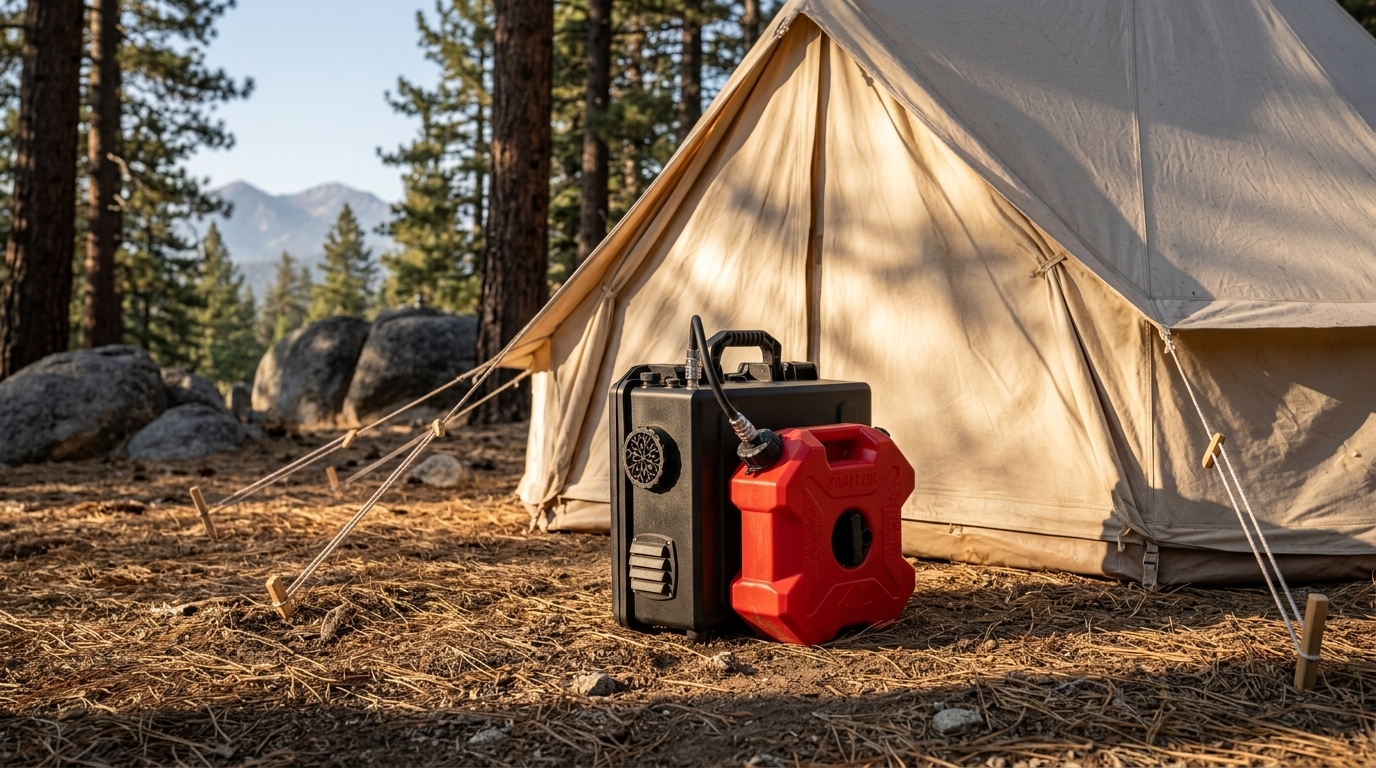
A third heater came up while I kept researching options for this guide. It’s different enough from the Sparks Overland and Planar units above to earn its own mention: the VELIT Portable Air Heater. Velit sells this same 14,000 BTU heater as two versions of one product, diesel and gasoline, off a single listing. That matters if you run a gas rig and don’t want to carry a second fuel type to stay warm at camp.
Here’s a quick rundown of the specs:
- Heat Output: 14,000 BTU/h (4,000W)
- Fuel Types: Diesel or Gasoline (sold as two versions of the same unit)
- Rated Voltage: 12V (11-16V operating range)
- Rated Running Power Draw: 20-46W
- Fuel Consumption: 0.05-0.12 gal/h (diesel), 0.05-0.13 gal/h (gasoline)
- Working Temperature Range: -30°F to 75°F
- Rated Elevation: up to 17,000 ft. (Velit separately says the unit is tested at over 11,000 ft.)
- Weight: 20 lbs.
- Dimensions: 15.8 x 7.5 x 15 in.
- Price: $999 (heater only; add $50 for the BYOC fuel kit or $100 for a detachable one-gallon can)
- Warranty: Two-year limited
That fuel consumption range lines up closely with the Planar unit I’ve run for years. At 20 pounds, it’s still roughly 40 percent lighter than the Sparks Overland and Planar units above, and its footprint is a fraction of either one. Velit ships it with a Bluetooth thermostat, a 10-foot extension wire, and a 6-foot rubber fuel line. It also includes a 6-foot power cable, an XT60-to-cigarette-lighter adapter, a 6-foot magnetic air duct, and velcro tape, so it’s stocked to run without a separate parts order.
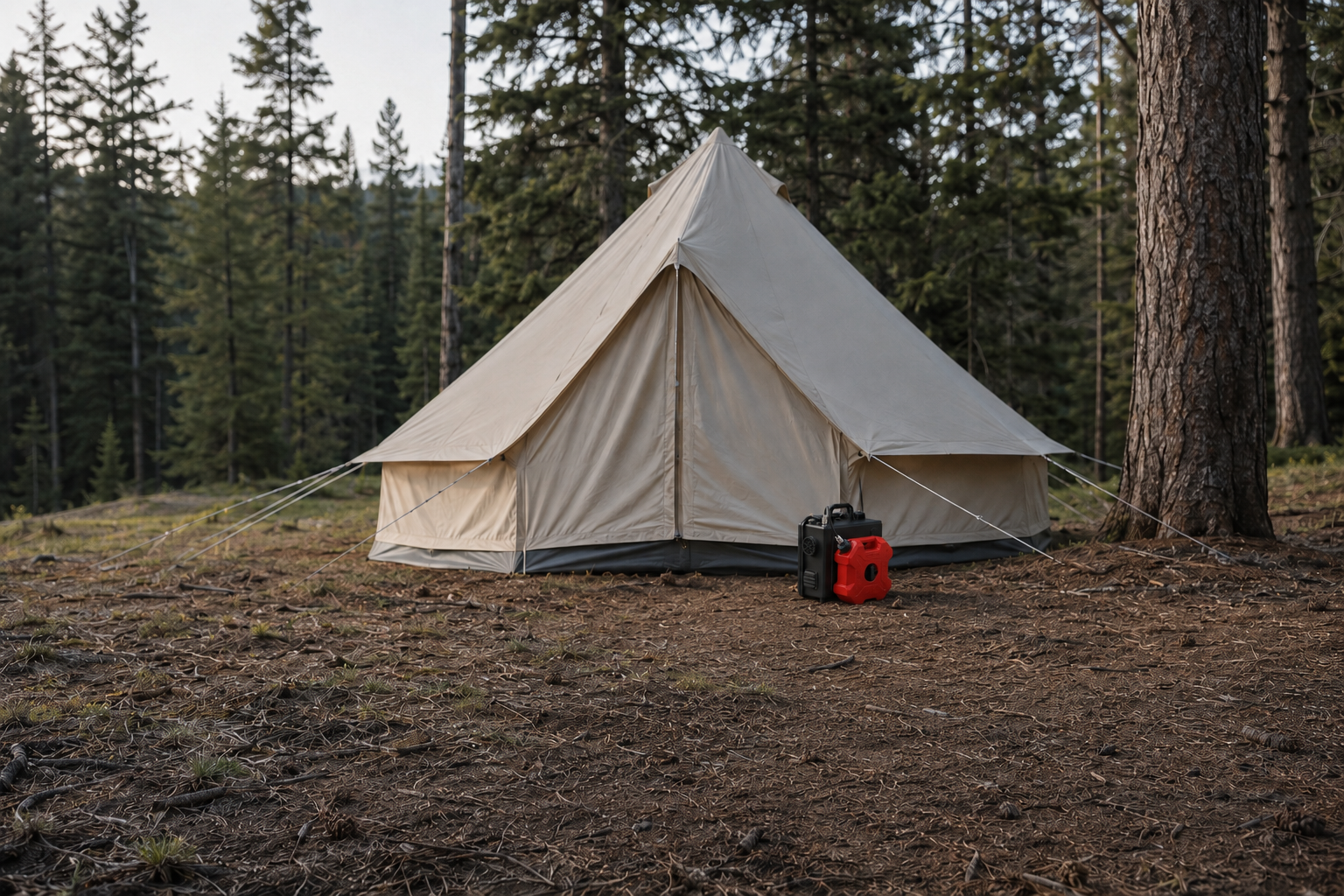
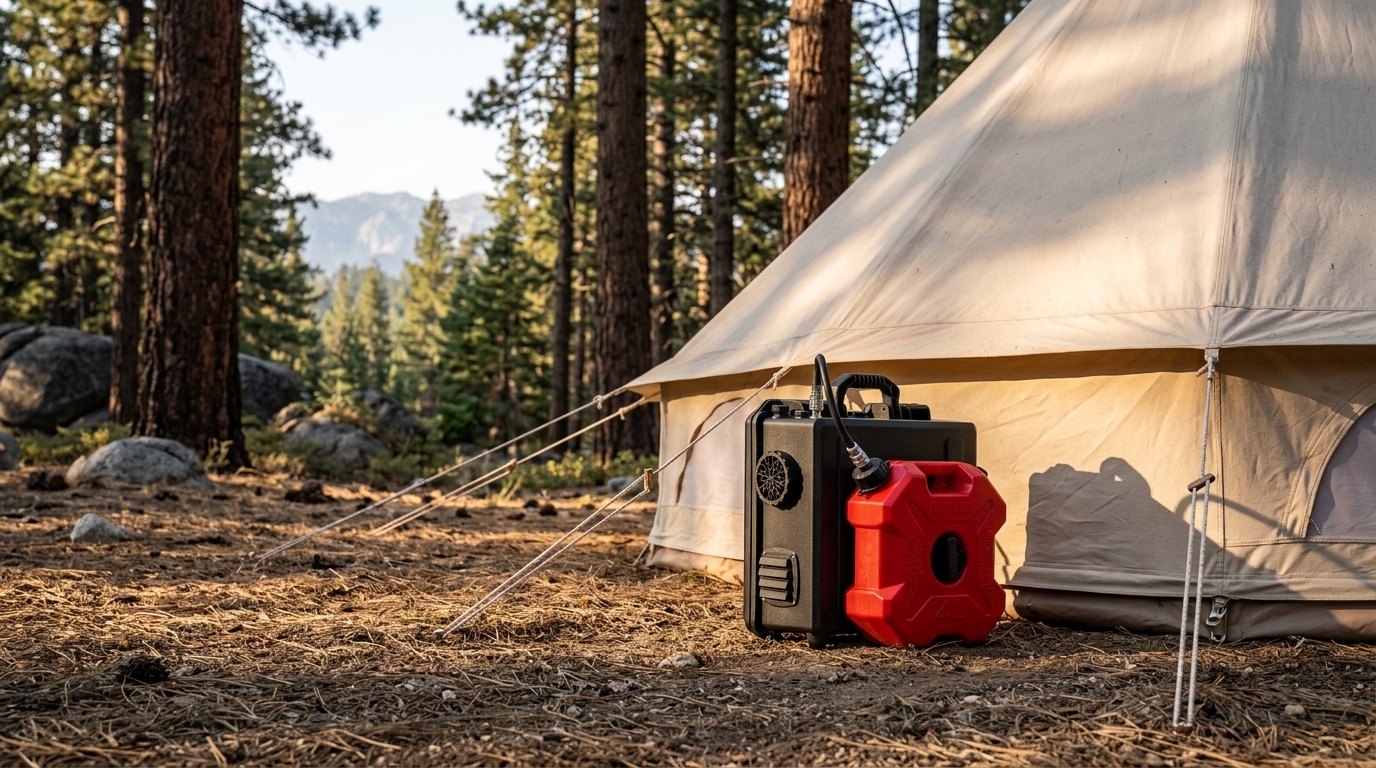
Fuel supply is where Velit did something different from the other two heaters here. Instead of a fixed built-in tank, you pick your fuel source. A BYOC kit fits a Rotopax or similar overland can you already carry. Or a detachable one-gallon can clips on and off the heater for quick fill-ups. Either way, nothing is plumbed permanently into the unit itself, unlike the fixed metal tank on the Sparks Overland heater above.
The thermostat is the standout feature. It pairs with a phone app over Bluetooth and includes a built-in carbon monoxide sensor, something neither of the other two heaters in this guide offers out of the box. Velit’s manual says the sensor trips an alarm at 800 ppm. Past that point, the unit shuts down automatically. You can restart it once you clear the alarm, but the alarm itself won’t re-trigger for the next 30 minutes.
Given how often I harp on ventilation and CO safety with diesel heaters, this is the feature I’m most eager to put through its paces once I get a unit. If it performs as described, it beats the built-in safety margin on either heater above. The unit also caps continuous runtime at 48 hours. Then it power-cycles itself, a sensible guardrail for anyone running one overnight on a multi-day trip.
One number worth flagging before you buy: Velit’s quick start guide calls for a minimum 12V, 126W power source. It also notes some setups need a separate 12V 15A supply. This draw is heavier than the running wattage above suggests, since it accounts for the glow plug during startup. A small battery bank often won’t cover it the way a starter battery or dedicated power station would. Size your power source around the 126W figure, not the 20-46W running number.
Stay tuned for video reviews on both the gas and diesel versions.
Propex PS2000 Portable Suitcase Heater: A Propane Alternative to Diesel
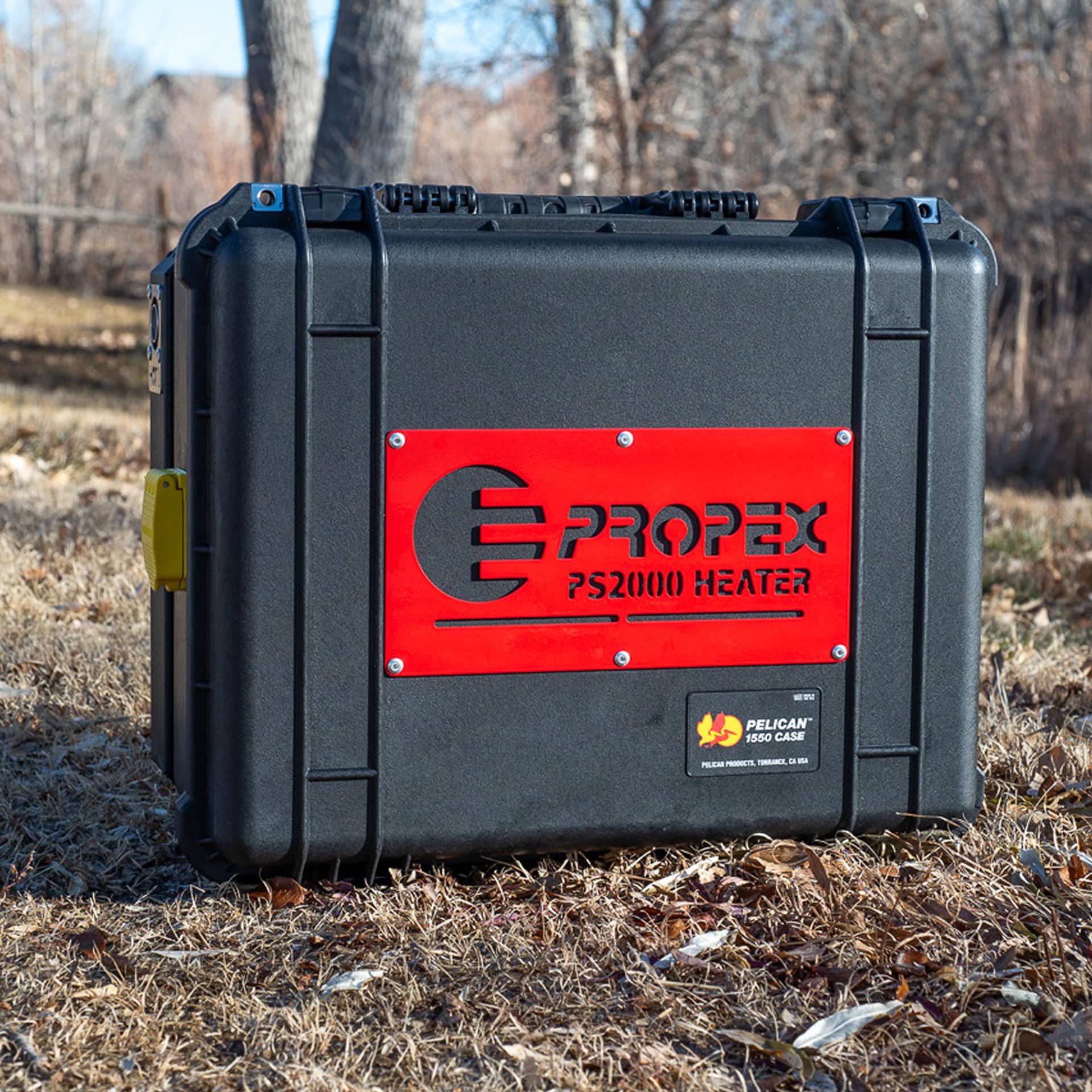
With diesel prices squeezing overlanding budgets, the Propex PS2000 Portable Suitcase Heater offers a compelling propane-powered alternative for anyone who wants reliable heat without the fuel-tank hassle. Housed in a rugged, powder-coated Pelican-brand case, this 40-pound unit puts out 6,500 BTUs of clean, dry heat: enough to warm a rooftop tent, ice-fishing shanty, hunting blind, or jobsite in a hurry.
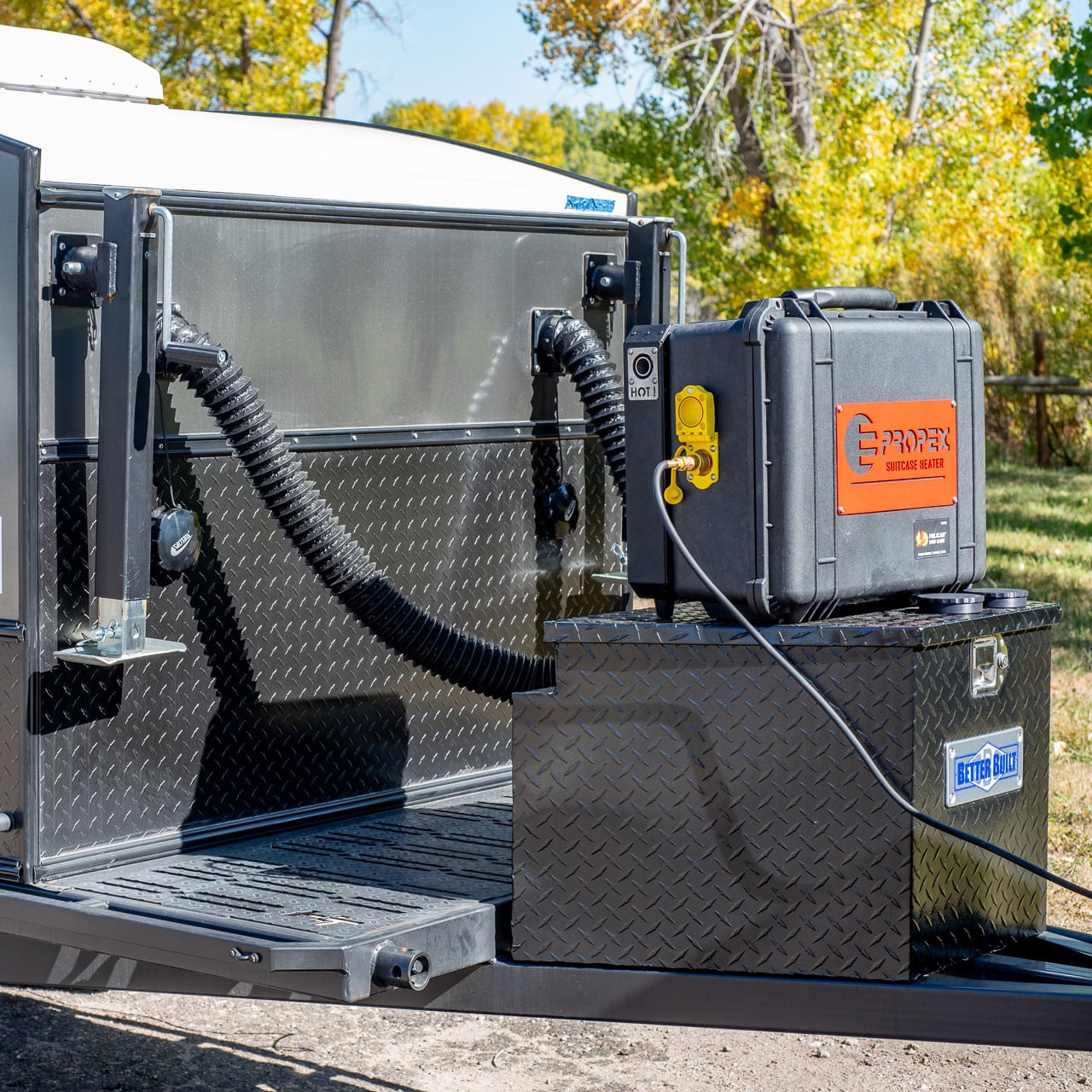
Unlike diesel heaters that require carrying and storing liquid fuel (and dealing with the smell that comes with it), the PS2000 runs on standard propane. Hook up a one-pound canister or a full-size tank, plug into a 12V source, and you’re set. Its combustion flues stay fully separated from the heated space, so you get dry warmth instead of the condensation that plagues many non-ducted portable heaters, and it performs consistently from sea level to over 10,000 feet without adjustment and no altitude-related power loss like some diesel units experience.
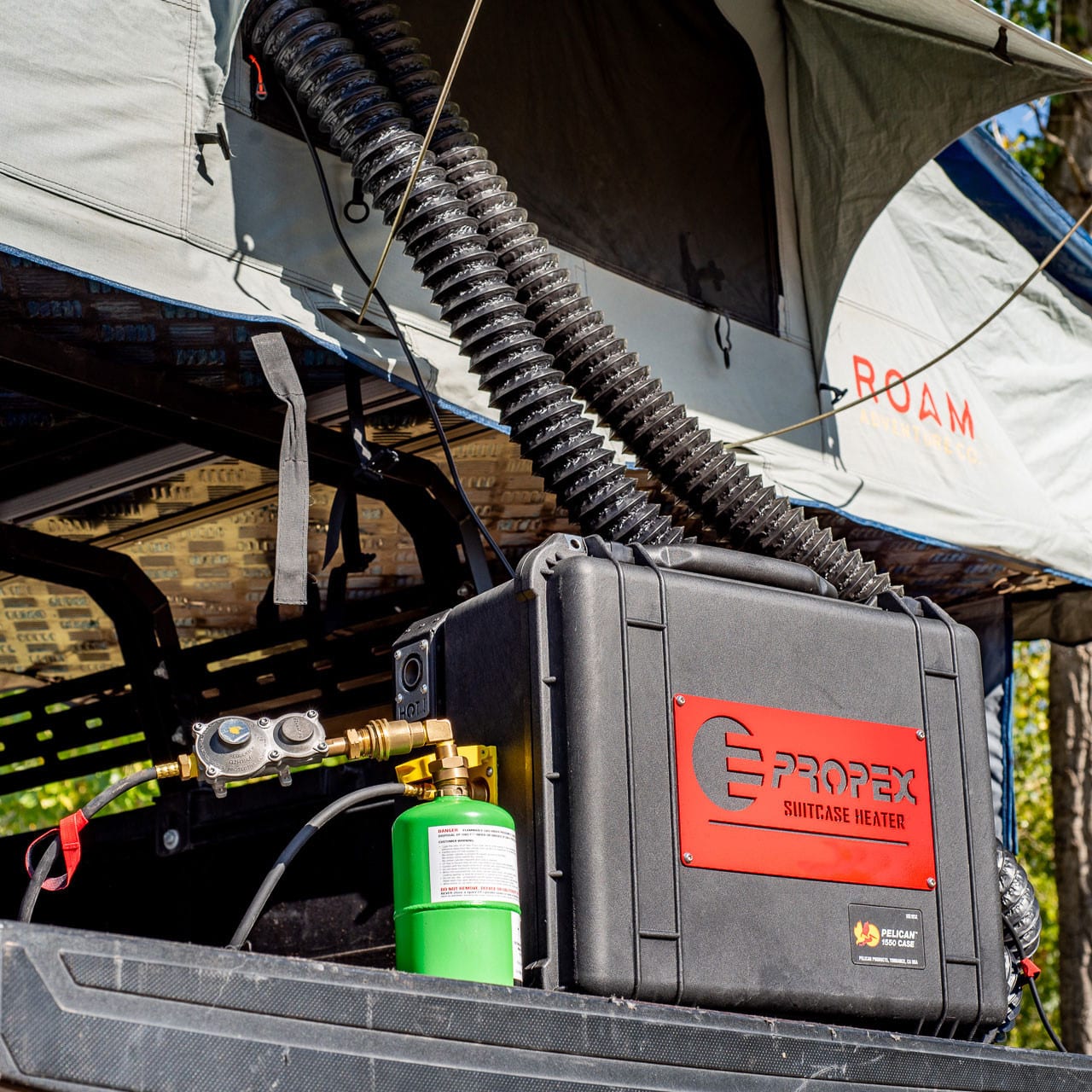
The included digital thermostat keeps temps steady, and quiet operation means it won’t disrupt sleep. Power flexibility is a great feature, too: run it off a 12V adapter, an optional rechargeable battery pack, or a hardwire kit, and mount it with the Molle panel bracket or just set it on the ground. Optional tent flanges (universal, Hiker Trailer, VW Vanagon Westfalia) make ducting into different setups simple as well.
If you’re watching diesel prices climb, the PS2000 trades fuel-storage headaches for propane’s simplicity, availability, and lower per-BTU cost. It’s a smart heat source to have in the rig!
Learn more about the Propex PS2000 Portable Suitcase Heater
Photo by Wirestock Creators via Shutterstock