


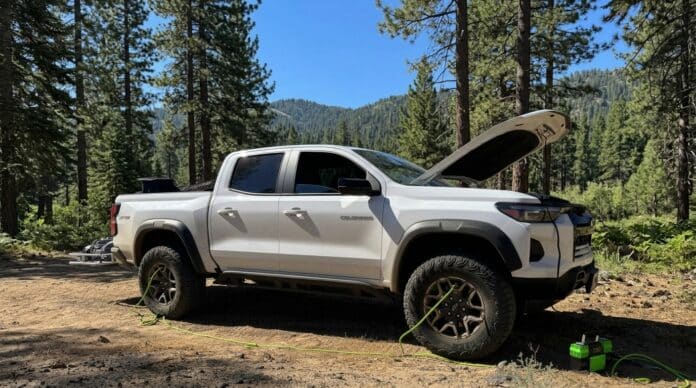

I’ve run a few group trail days over the years, and the ones where things go wrong almost always fail in the same places: poor pre-trip communication, a mismatched gear plan, or a bottleneck at the trailhead exit where six rigs are waiting on one overheated compressor. Running a group trail day well is a coordination problem as much as a wheeling problem. Off-road group trip logistics, from the pre-trip message to the trailhead exit, determine whether the day runs or stalls. The logistics, gear decisions, and trailhead behavior you establish before the first vehicle even leaves the pavement determine whether the day runs smoothly or spends half its time parked.
I founded 4WD Talk after years of wheeling solo and with groups. The TenSix PSI Pro Gen 2 from MORRFlate has been my exclusive air compressor for several years across all of it. It’s central to how I handle the trailhead air system problem for groups, because getting everyone aired up quickly and accurately at the exit is one of the highest-leverage improvements any trail day organizer makes. This guide covers the full group trail day setup process in the order a trip leader needs to think through it, from pre-trip communication to the drive home.
Quick Facts:
- Topic: Group trail day planning, logistics, and trailhead etiquette
- Group Size Covered: 3 to 12 vehicles
- Skill Level: Beginner organizer to experienced trail leader
- Time Required: 1 to 2 hours of planning; 20 to 30 minutes of pre-departure coordination
- Featured Air System: MORRFlate TenSix PSI Pro Gen 2 ($325) + Quad hose kit ($215–$255)
- Air-Up Capacity: 6 to 8 vehicles per duty cycle at 80% duty cycle
- Best For: Anyone organizing or joining a group off-road trip for the first time or improving an existing process
8 min read
In This Article
- Why Group Trail Days Require More Planning Than Solo Trips
- Pre-Trip Communication and Group Vetting
- Convoy Order and Radio Protocol
- Group Recovery Gear Plan
- The Trailhead Air System Problem and How to Solve It
- Trailhead Etiquette and Trail Behavior
- Managing Pace and the Slowest Vehicle
- Organized vs. Loose Group Structure: Which Works Better?
- Pros and Cons of Running a Structured Group Trail Day
- Final Verdict
- Frequently Asked Questions
Why Group Trail Days Require More Planning Than Solo Trips
A solo trail day has one failure point: your vehicle. A group trail day multiplies the count by every rig in attendance, then adds coordination failures on top. The math matters: a group of six vehicles where each has a 10% chance of a mechanical delay produces a near-certain guarantee someone has a problem on any given outing. The goal of group trail day planning isn’t to eliminate the risk, it’s to ensure the group absorbs it without the whole day derailing.
The other dynamic of a group trail day is time compression. A solo driver airing down at the trailhead takes five minutes. Six vehicles doing it in sequence with a single slow compressor takes 40 minutes, which is time the group would spend on the trail instead. Every group coordination step, from vehicle lineup to recovery gear assignment to the air-up exit process, either protects or wastes time. The best group trail day organizers treat time like a resource and pre-solve the problems most groups discover the hard way.
Group size also shapes every other decision. Three vehicles is intimate and fast-moving. Eight vehicles requires designated roles, clear communication protocols, and a leader who actively manages the pace. Twelve vehicles on a tight trail creates serious traffic management problems at technical sections. As a general rule, keep group trail day attendance to six vehicles or fewer unless the route has wide sections, defined passing areas, and a designated sweeper vehicle at the rear.
Pre-Trip Communication and Group Vetting

The best trail day starts with a clear group message sent at least a week before departure. Specifically, this message should cover: the meetup location and time, the route overview and approximate duration, the trail difficulty rating, minimum vehicle clearance and tire size requirements, and whether recovery gear is required for each vehicle or shared across the group.
Vetting matters on technical routes. Asking new-to-the-group participants about their rig’s lift height, tire size, and off-road experience level isn’t gatekeeping, it’s risk management. A stock crossover on a trail rated for lifted 33-inch tires creates recovery situations for everyone, not the driver alone. When vetting feels uncomfortable, frame it as a compatibility question rather than a capability question: “This trail has a few spots with significant side-slope and some boulder sections around mile 4. Does this match what your rig handles well?”
Also confirm communication tools before departure. Every vehicle should have a GMRS radio on the same channel, or at minimum, everyone should have the trip leader’s phone number saved. On trails with no cell coverage, which describes most worthwhile off-road routes, GMRS is the only reliable group communication option. The Midland GMRS-V1 runs about $30 and solves this problem. Establish the GMRS channel in the pre-trip message so no one wastes time at the trailhead figuring it out.
Convoy Order and Radio Protocol
Off-road convoy setup for a group trail day follows a consistent logic: the most experienced driver in the most capable vehicle leads, and the second-most-experienced driver in a capable vehicle sweeps. Everyone else fills the middle based on experience level, with less-experienced drivers positioned closer to the lead where the line is easier to read. New group members generally belong second or third in line, not at the rear where they receive the least guidance.
The lead vehicle sets the pace and picks the line. When the lead driver takes a line through a technical section, every subsequent driver has a reference point. When the lead driver makes a mistake, subsequent drivers have the option to choose differently. Because of this, the lead vehicle also carries the most responsibility: the lead driver should stop before technical sections, confirm each vehicle’s position on the radio, and wait until the sweep confirms everyone cleared before moving on.
Radio protocol keeps convoy communication clean. Short, clear transmissions work best: “Lead to sweep, confirm headcount” gets a response of “Sweep, six in trail.” Avoid long explanations on the radio. If a vehicle has a problem, call a full stop, pull to a safe position, and address it with the group stopped rather than trying to diagnose it over the radio while moving. Establish one transmission format before departure and stick to it, because improvised radio communication during a technical section creates confusion at the worst possible moment.
Group Recovery Gear Plan
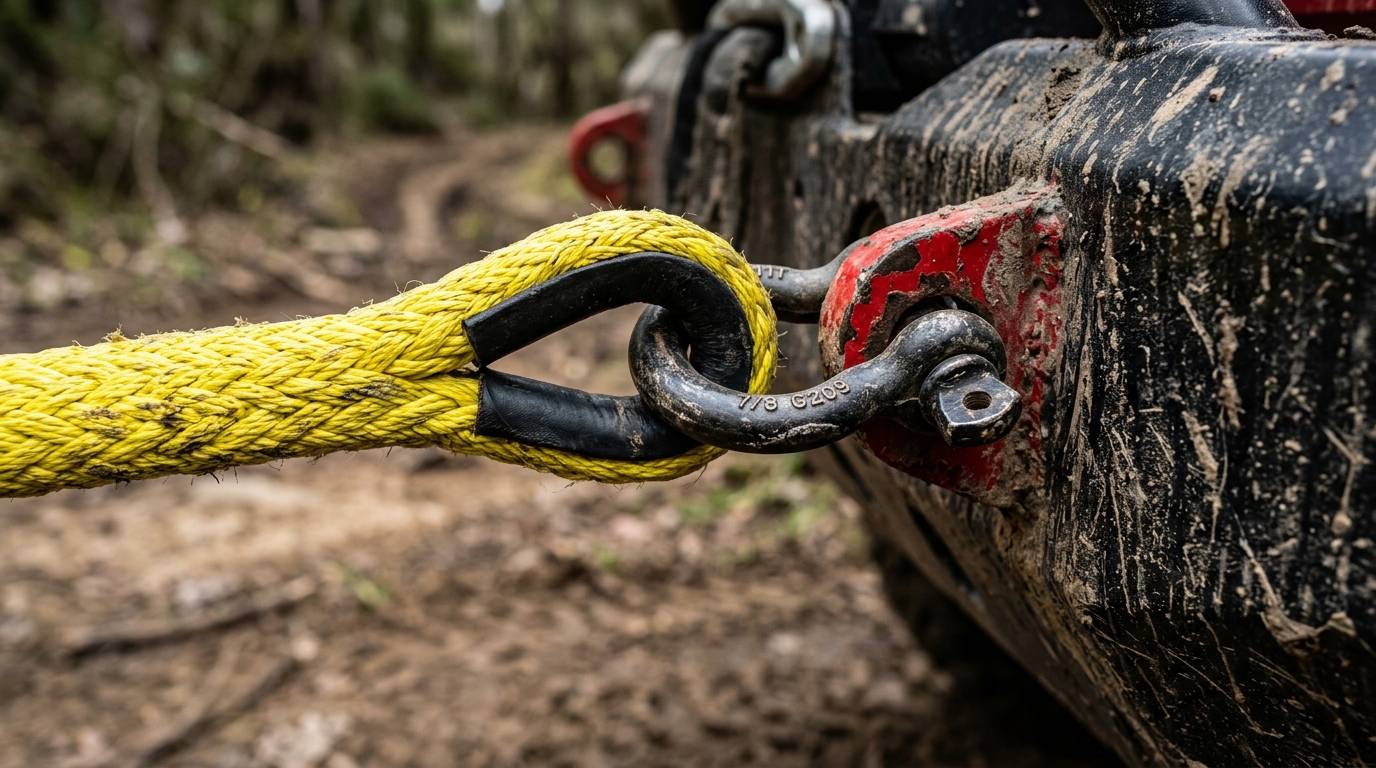
Recovery gear on a group trail day works best as a distributed system rather than one vehicle carrying everything. The lead vehicle and sweep vehicle should each carry a full recovery kit. Other vehicles in the group carry at minimum a kinetic recovery rope and two traction boards. When the group’s gear is spread across multiple rigs, a single vehicle getting stuck or separated doesn’t leave the rest of the group without options.
The minimum group recovery inventory for a six-vehicle trail day covers: two kinetic recovery ropes rated to 20,000 pounds or above, four to six full-size traction boards distributed across vehicles, a high-lift jack with a base plate on the lead and sweep vehicles, a full set of recovery shackles on at least three vehicles, and a shovel per vehicle on desert or sandy routes. Beyond equipment, designate who drives the recovery vehicle before the trail starts. On technical terrain, the most capable rig doing the recovery work is more important than whatever recovery gear it carries.
Brief the group on recovery protocols at the trailhead, not on the trail. When someone gets stuck, the drill is: stop all vehicles behind the stuck rig, assess from the lead and sweep simultaneously, communicate on the radio before anyone starts rigging, and confirm a clear path for the recovery direction before pulling. Bystanders who aren’t actively helping the recovery should stay well behind the recovery zone, because a kinetic rope under load stores significant energy and a failed connection is a safety hazard for anyone nearby.
The Trailhead Air System Problem and How to Solve It

The air-up bottleneck at the end of a group trail day is one of the most consistent time-wasters in off-road group events. Six vehicles, each needing four tires aired from 18 PSI back to 35 PSI with a single-output 2–3 CFM compressor, takes 25 to 40 minutes on a good day. Add overheating cooldown cycles for lower-duty-cycle units and the wait extends further. I’ve been at trailhead exits where the group spent more time airing up than on the most technical section of the trail.
The solution is a high-output compressor with a multi-tire hose kit and enough duty cycle to run through multiple vehicles without forced cooldown. On group trail days with my rig, I bring the TenSix PSI Pro Gen 2 with the Quad hose kit. Each vehicle connects all four tires simultaneously, the PSI Pro controller hits the target pressure and shuts off automatically, and the whole vehicle air-up takes under 8 minutes. With the TenSix’s 80% duty cycle, I handle 6 to 8 vehicles consecutively before the compressor needs rest. On a six-vehicle trail day, the entire group is aired up and on the highway in under an hour from the trailhead exit, including hose connection and disconnection time.
The portability also matters in a group setting. A hard-mounted onboard compressor stays with one vehicle. The TenSix comes with me vehicle-to-vehicle across the group, which means every rig benefits from the same fast, accurate inflation regardless of what compressor it carries on board. For a detailed breakdown of how the TenSix performs across years of real group and solo use, the three-year field review of the TenSix covers the duty cycle, heat management, and multi-vehicle performance in detail. For a general guide on how to set target pressures for the terrain types your group encounters, the article on airing down for different terrain types gives the complete PSI framework.

MORRFlate TenSix Off Road Air Compressor, 12 Volt Heavy Duty Tire Inflator
FAST 10.6 CFM INFLATION: Air up a set of 35″ tires in under 5 minutes when used with the MORRFlate multi-tire inflation and deflation kits.
- 10.6 CFM dual-cylinder output
- Fills four 35-inch tires in about 5 minutes
- Inflates and deflates four tires at once with the kit
- Overkill for a single daily driver staying on pavement
Trailhead Etiquette and Trail Behavior
Trailhead etiquette starts before the vehicles leave the parking area. Keep the group compact and out of the main flow of traffic while airing down. Avoid spreading gear across the full parking lot while other trail users are trying to access the same space. The first impression other trail users and land managers form of your group is at the trailhead, and a group taking up excessive space or blocking access creates friction before anyone turns a wheel on the trail.
On the trail, the group trail day standard is to leave no trace and leave the trail better than found. Specifically, stay on the marked trail surface rather than widening it by routing around obstacles. On popular trails, tire ruts from bypassing a muddy section create permanent damage to the trail corridor. If a section is impassable for a vehicle in the group, the correct response is to assess, attempt with recovery gear staged, or turn around. Bypassing the obstacle and widening the trail is not an acceptable alternative regardless of vehicle capability.
At trail junctions and popular spots, yield to oncoming traffic and hikers before moving the group through. A convoy of six vehicles passing a group of hikers requires patience and coordination: stop all vehicles, let the hikers through, and communicate with the lead and sweep so no one advances until the path is clear. Hikers, mountain bikers, and equestrians share most public-land trail systems, and a group of off-road vehicles ignoring them generates the kind of land management attention none of us want. Good trail behavior from organized groups is part of what keeps trails open.
Managing Pace and the Slowest Vehicle

Pace management is where many group trail days fall apart. The lead vehicle moves at the pace the trail demands for the group’s least-capable rig, not the pace the lead vehicle is comfortable with. When the lead driver pulls away from the group and the convoy stretches across a technical section, vehicles lose sight of each other, radio communication degrades, and the sweep loses sight of what’s happening at the front. Keep the convoy tight.
The slowest vehicle determines the group pace. Before the trail, the trip leader should identify which rig is likely to be slowest through technical sections and plan around it. On sections where the slowest vehicle needs spotting, stop the full convoy and spot correctly rather than letting faster vehicles bunch up behind and pressure the driver. A driver who feels rushed on a technical section makes worse decisions. Patience from the group costs minutes. Impatience costs recoveries.
Also set a check-in protocol for long straightaways or forest roads between technical sections. A simple “Lead, all six vehicles in trail” radio call every 10 to 15 minutes confirms nobody has stopped for a mechanical without the whole group noticing. On one-way trails where turning around is difficult, discovering a vehicle dropped out three miles back is a significant problem. Consistent radio check-ins prevent it entirely. New group members who aren’t comfortable calling in on the radio should text the leader as an alternative on sections with coverage.
Organized vs. Loose Group Structure: Which Works Better?
Loose group structures, where everyone drives at their own pace and communication is informal, work acceptably for groups of two or three experienced drivers on easy trails. For any group larger than three experienced vehicles or any group including new drivers or a technical route, loose structures create problems. Recovery coordination without a designated recovery vehicle wastes time. Pace management without a designated sweep means vehicles get separated. Air-up at the exit without an organized process means everyone waits on whoever has the slowest compressor.
Organized group structures with a designated lead, sweep, communication protocol, and gear plan run faster and safer than loose ones, even though they require more pre-trip work. The tradeoff is asymmetric: 30 minutes of pre-trip planning saves multiple hours of on-trail problem-solving on a difficult day. On an easy trail with experienced drivers, the structure is light overhead with no downside. On a technical trail with mixed experience levels, it’s the difference between a smooth day and a rescue call.
The one area where organized structure creates friction is newcomer intimidation. Some drivers are hesitant to join a group trail day if the pre-trip communication sounds like a military operation. Calibrate the formality of pre-trip communication to the trail difficulty: a mellow canyon run with friends needs a casual text thread. A technical desert route with strangers needs the full protocol. A good trail leader reads the group and adjusts accordingly, while maintaining the core elements (lead, sweep, radio channel, recovery plan) regardless of how formally those are communicated.
Pros and Cons of Running a Structured Group Trail Day
Pros
- A designated lead and sweep with clear radio protocol eliminates the “where is everyone” problem on trails with limited visibility or cell service.
- Distributed recovery gear across multiple vehicles means a single stuck rig doesn’t strand the group without options.
- A high-output group air system like the TenSix PSI Pro Gen 2 with a Quad hose kit reduces the exit air-up from 40+ minutes to under an hour for six vehicles.
- Pre-trip vetting prevents incompatible rigs from showing up at a trail beyond their vehicle’s capability, which protects both the vehicle and the group’s pace.
- Clear trailhead etiquette from the lead vehicle sets the tone for how the group is perceived by other trail users and land managers.
- Structured pace management with the slowest vehicle as the reference point prevents rushed decisions on technical terrain.
Cons
- Pre-trip coordination for a structured group trail day requires 1 to 2 hours of planning, which not every trip leader is willing to invest.
- Group trail days with 6+ vehicles are slower through technical sections than solo or small-group runs, because each driver needs time on each obstacle.
- Formal pre-trip communication deters some potential participants who are uncomfortable with structured processes, especially new off-roaders.
- The trail day pacing is constrained by the least capable vehicle, which means faster or more capable drivers spend more time waiting than they would on a smaller, matched group.
Final Verdict

A well-organized group trail day is better than a solo run in almost every respect: safety margins improve, the experience is more social, and capable rig owners get to contribute their knowledge and gear to the group’s success. A poorly organized one is worse than solo in most respects: slower, more frustrating, and more likely to result in recoveries, arguments, or damaged land. The difference between those outcomes is almost entirely in the trail day organization and planning.
The three things worth getting right before anything else are: pre-trip communication (who’s coming, what they’re bringing, and whether their rig fits the route), a clear lead and sweep assignment with a radio channel, and a group air system plan for the trailhead. The last one is consistently underestimated. Groups lose more time at the exit than they do on the trail itself when the air-up process is disorganized. Bringing one TenSix PSI Pro Gen 2 with a Quad hose kit as the group’s designated air system turns a 40-minute trailhead standoff into a 45-minute organized process where vehicles cycle through and everyone heads home on time.
The etiquette and behavior pieces matter for reasons beyond the day itself. How off-road groups behave on public lands directly influences access decisions made by land managers. Groups running clean, courteous, organized trail days contribute to keeping trails open. Groups leaving ruts, bypassing obstacles, and ignoring other trail users contribute to closures. The most capable wheelers I know take trail behavior as seriously as vehicle capability, and the group wheeling tips they pass on always start with preparation rather than hardware, and they run the most organized groups.
Start with a group of three to four vehicles on a moderate trail, run the full structure even if it feels like overkill, and build from there. The habits you establish on easier trail days carry directly into harder ones, and the group operating well together on easy terrain operates well together when something goes wrong. The goal is repeatable, reliable group behavior. For new group members still building their tire pressure process, the guide on common tire pressure mistakes is a strong starting point before the first trail day.
MORRFlate TenSix Off Road Air Compressor, 12 Volt Heavy Duty Tire Inflator
FAST 10.6 CFM INFLATION: Air up a set of 35″ tires in under 5 minutes when used with the MORRFlate multi-tire inflation and deflation kits.
- 10.6 CFM dual-cylinder output
- Fills four 35-inch tires in about 5 minutes
- Inflates and deflates four tires at once with the kit
- Overkill for a single daily driver staying on pavement
Frequently Asked Questions
How many vehicles is the right size for a group trail day?
Three to six vehicles is the sweet spot for most trail days. Below three, the group loses the safety margin of multiple recovery options. Above six, pace management becomes difficult on technical terrain and the convoy stretches to the point where lead and sweep lose contact. For beginners organizing their first group trail day, four vehicles is an ideal starting point: enough for solid recovery capability, small enough to manage without complex logistics.
What GMRS radio should the group use?
Any GMRS radio works as long as everyone in the group uses the same channel. The Midland GMRS-V1 runs around $30 per unit and covers group-size distances on open terrain. More capable units like the Midland MXT275 at around $100 extend range on longer routes where vehicles spread out. Establish the channel in the pre-trip message so no one wastes time at the trailhead configuring radios. The FCC GMRS license costs $35 and covers your household for 10 years.
How do you handle it when someone’s rig isn’t capable of the trail?
Address it before the trail, not on it. When a vehicle’s capability doesn’t match the route during pre-trip vetting, redirect them to a more appropriate trail rather than bringing them and hoping for the best. On the trail, if a vehicle reaches a section beyond its capability, stop the group, assess recovery options, and either stage a recovery attempt or turn the vehicle around at a safe point. Never pressure a driver to attempt terrain beyond their vehicle’s capability because the rest of the group is waiting.
How does a high-CFM compressor help at a group trail day?
A group trail day off-road air system with high CFM output and a multi-tire hose kit eliminates the single biggest time waster at the trailhead exit. A 2–3 CFM single-output compressor airing up six vehicles one tire at a time runs 25 to 40 minutes and often overheats before finishing. The TenSix PSI Pro Gen 2 at 10.6 CFM with a Quad hose kit inflates four tires simultaneously, hits the target PSI automatically, and handles 6 to 8 vehicles before needing rest. The practical difference on a six-vehicle day is 30 minutes of recovered time.
What’s the role of the sweep vehicle and why does it matter?
The sweep vehicle is the last vehicle in the convoy and is responsible for confirming every vehicle ahead has cleared each technical section before the sweep advances. The sweep also manages breakdowns at the rear, carries a full recovery kit, and is the last point of contact before a vehicle is left behind. Specifically, the sweep driver should be experienced, in a capable vehicle, and in constant radio contact with the lead. On any trail day with new drivers or technical terrain, the sweep role is as important as the lead, because problems are more likely at the back of the group where pressure to keep up is highest.