


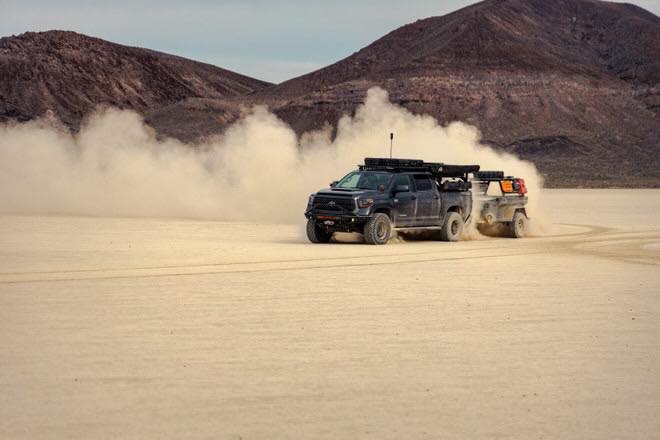

I’ve towed trailers behind my truck for years and years, and my first off-road trailer taught me lessons no brochure mentioned. I bought based on price and looks, not suspension type or real-world tongue weight, and I paid for that mistake on my second trip when a leaf-sprung trailer bounced sideways on a washboard road badly enough to shift my entire load. Every overlander who has owned more than one trailer has a version of this story.
This guide covers the mistakes that cost the most time, money, or frustration for first-time buyers, based on years of towing different trailer types through variable Wyoming terrain and talking with other overlanders at trailheads and expos. Because the market has grown crowded with options at every price point, from bare frame haulers to fully outfitted expedition trailers, the goal here is to help you ask the right questions before you sign anything, not after.
Quick Facts:
- Topic: Lessons learned buying a first off-road trailer
- Skill level: Beginner
- Time to read: 8 minutes
- Biggest mistake to avoid: Buying on tongue weight alone without checking suspension type
- Typical first-trailer budget: $8,000 to $15,000 for a compact off-road trailer
- Best for: Overlanders shopping for their first trailer
8 min read
In This Guide
- Key Facts at a Glance
- Lesson 1: Suspension Type Matters More Than Price
- Lesson 2: Dry Weight Is Not Loaded Weight
- Lesson 3: Buy Storage You Will Actually Use
- Lesson 4: The Hitch Type Changes How the Trailer Handles Articulation
- New Trailer vs. Used Trailer: Which Should a First-Time Buyer Choose?
- Pros and Cons of Buying New vs. Used
- Final Verdict
- Frequently Asked Questions
Key Facts at a Glance
| Buying Factor | Why It Matters | What to Check |
|---|---|---|
| Suspension type | Affects ride quality and cargo security | Axleless vs. leaf spring vs. torsion |
| Dry weight vs. loaded weight | Impacts tow vehicle rating and fuel economy | Published dry weight plus estimated gear load |
| Storage layout | Determines how much aftermarket work you will need | Included tongue box, cargo bay, or open frame |
| Hitch type | Affects articulation on uneven trails | Ball hitch vs. articulating hitch such as Lock-N-Roll |
Lesson 1: Suspension Type Matters More Than Price
My first mistake was comparing trailers by price and cargo capacity while ignoring suspension entirely. A leaf-sprung trailer costs less upfront, but it transmits far more vibration to cargo and tends to bounce on rough, uneven terrain since both wheels move together as a single unit. An axleless suspension, by contrast, lets each wheel articulate independently, which keeps the trailer tracking flat over rocks and ruts instead of rocking side to side.
The 4WDTalk breakdown of off-road trailer suspension types covers this difference in more depth, including how a Timbren-style axleless system compares to torsion and leaf spring setups. First-time buyers should ask specifically about suspension type before comparing prices, since the cheaper trailer on paper often costs more in loose cargo and rattled gear after a season of use.
Lesson 2: Dry Weight Is Not Loaded Weight
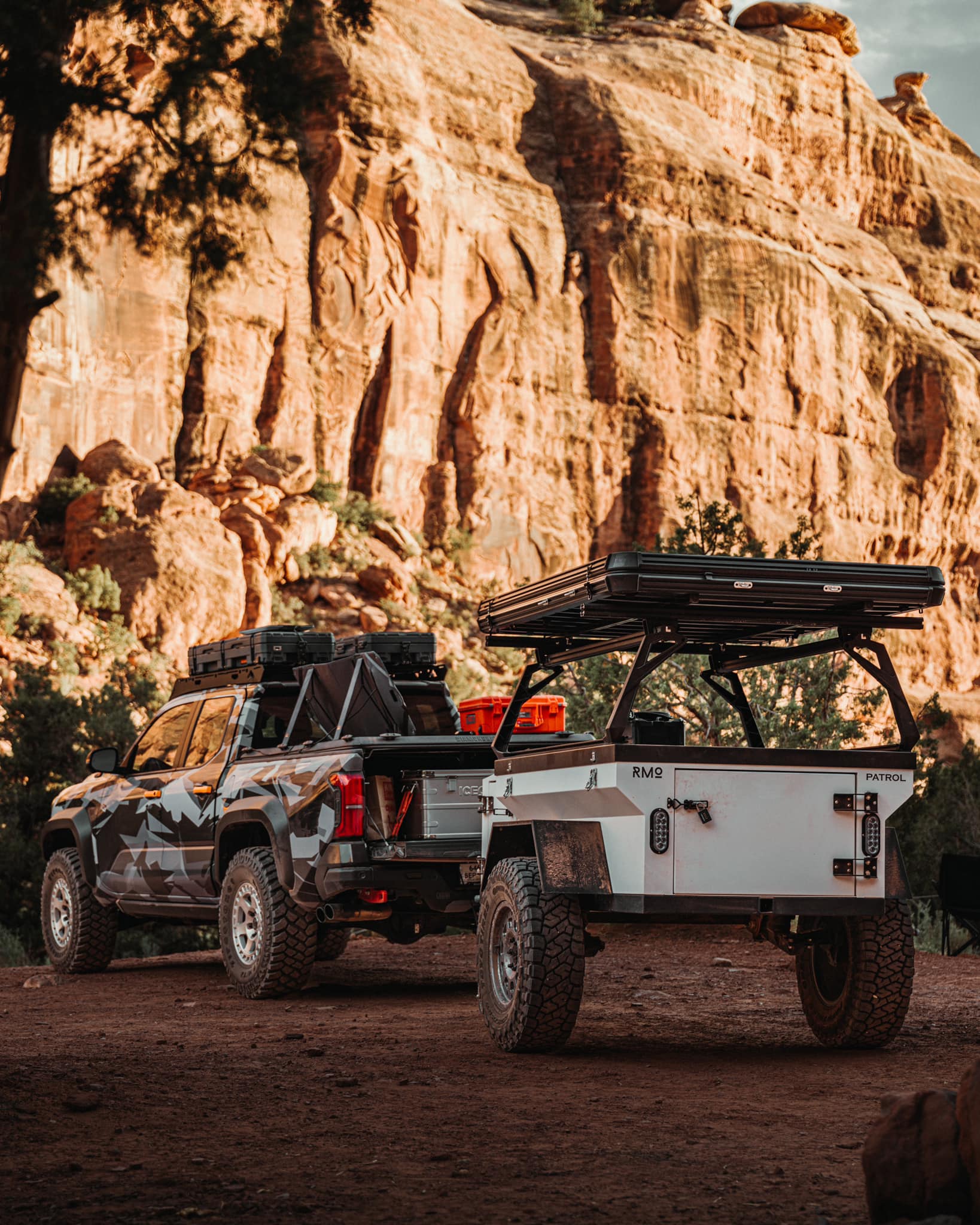
Every listing advertises dry weight, which describes the trailer with no water, gear, or fuel loaded. Consequently, first-time buyers often underestimate their actual towing weight by 300 to 500 lbs once water jugs, a cooler, recovery gear, and camp furniture go in. A compact trailer that lists at 1,200 lbs dry can easily reach 1,600 to 1,700 lbs loaded for a week-long trip.
Before buying, add up your realistic gear list and compare that total against your tow vehicle’s rated capacity, not just the trailer’s dry weight. A 4Runner, Bronco, or Gladiator with a 3,500 lb tow rating still handles most compact trailers comfortably even fully loaded, but the math only works if you check it before the trailer arrives, not after.
Checking Tongue Weight Specifically
Tongue weight, the downward force the trailer places on your hitch, typically runs 10 to 15% of total loaded trailer weight. A heavily loaded tongue box or front cargo basket pushes that percentage higher, which can affect steering feel and squat at the rear of your tow vehicle. First-time buyers rarely check this number until they notice their truck sitting lower than expected on the first loaded trip.
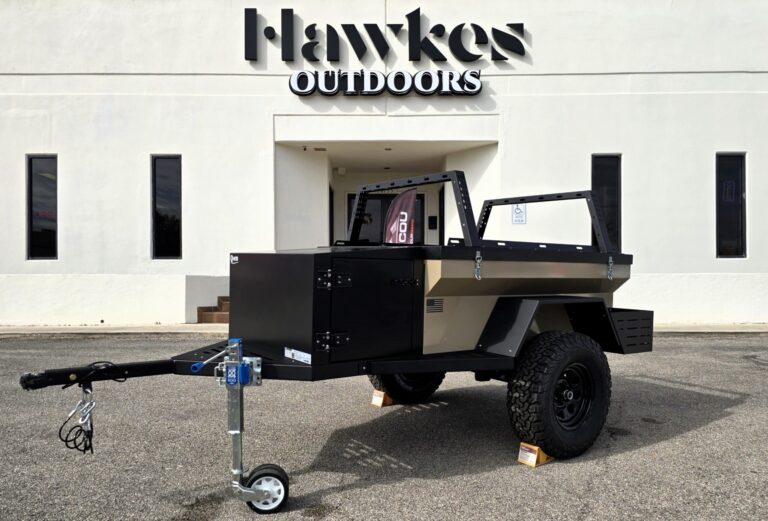
2025 Rustic Mountain Overland Patrol XCT
The XC with a lockable tongue box added forward on the frame, sized for a fridge, electrical, and galley gear, with an access door on the driver and passenger side. That is the piece that keeps cooking gear out of the main bay entirely. 1,250 lbs, tan, listed at $11,489, stock SA1122.
- Tongue box with driver and passenger access doors
- Enclosed main bay with tilting lid and rear tailgate
- Timbren HD 2200 lb axleless suspension
- Custom 16-inch roof rack and front cargo basket
- 1,250 lbs dry
- About $750 more than the Patrol XC
- One unit on the lot at this price
Lesson 3: Buy Storage You Will Actually Use
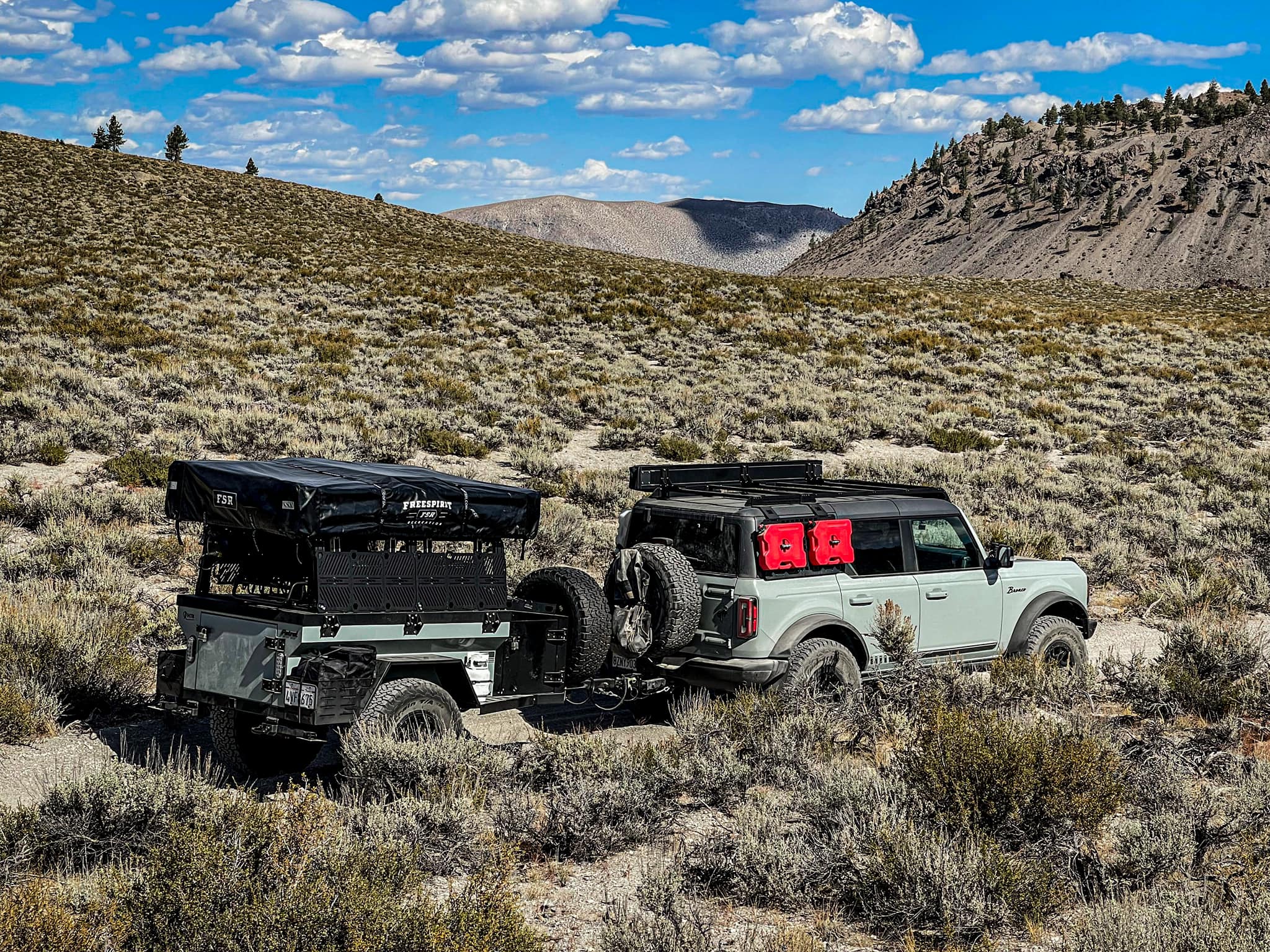
I initially assumed more cargo space automatically meant a better trailer, but an oversized cargo bay with no organization system just becomes a pile of loose gear by the second trip. The trailers that hold up best in daily use pair adequate space with a real storage plan, whether that means a factory tongue box, an integrated L-track tie-down system, or a simple set of labeled bins.
Rustic Mountain Overland’s Patrol XCT includes a factory tongue box specifically designed for a fridge and galley setup, which the article 4 Things That Set the Patrol XC Apart touches on when comparing configuration options across the Patrol lineup. First-time buyers should decide whether they want a finished storage system out of the box or plan to build their own before comparing trailers on price alone, since retrofitting storage after purchase often costs more than choosing the right configuration upfront.
Lesson 4: The Hitch Type Changes How the Trailer Handles Articulation
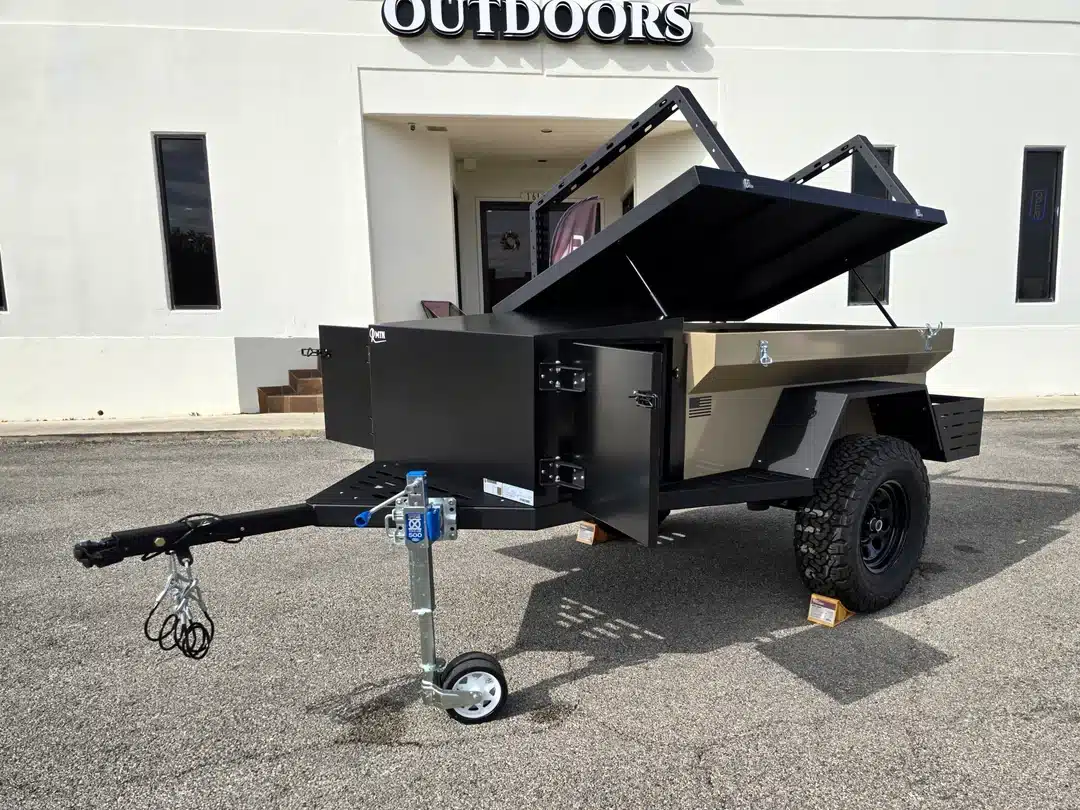
A standard ball hitch works fine on pavement and mild gravel roads, but it limits how much the trailer can articulate relative to the tow vehicle on uneven trails. An articulating hitch, such as a Lock-N-Roll design, allows the trailer to pivot and twist independently of the tow vehicle, which reduces strain on the frame and keeps both vehicle and trailer planted when one wheel drops into a rut.
This detail rarely shows up in glossy marketing photos, yet it makes a real difference the first time you tow through rocky, uneven terrain. The article on weekend overlanding with the Patrol XC covers how this hitch type performs on a typical weekend route, and it is worth asking any dealer directly whether the trailer you are considering uses an articulating hitch or a standard ball setup.
New Trailer vs. Used Trailer: Which Should a First-Time Buyer Choose?
A new trailer comes with a warranty, current suspension technology, and no unknown history, which matters for a first-time buyer who does not yet know what to inspect on a used unit. However, new trailers cost more, and the depreciation curve on overland trailers tends to be gentler than on tow vehicles, so a lightly used trailer from a reputable builder can represent real savings.
The biggest risk with a used trailer is inheriting problems you cannot see without disassembly, such as frame rust, worn suspension bushings, or wiring damage from a previous owner’s DIY electrical work. For a first purchase, buying new from an established builder removes that guesswork, even at a higher upfront cost.
Pros and Cons of Buying New vs. Used
New Trailer Pros
- Full manufacturer warranty on frame and components
- Current suspension and hitch technology
- No hidden history or prior damage
- Choice of color, configuration, and add-on packages
New Trailer Cons
- Higher upfront cost than a comparable used trailer
- Some models require a wait for build and delivery
Used Trailer Pros
- Lower purchase price
- Often available immediately, no build wait
- Previous owner may include upgrades at no extra cost
Used Trailer Cons
- Unknown frame or suspension wear without inspection
- No warranty in most private-party sales
- Harder for a first-time buyer to spot red flags
Final Verdict
The lessons that matter most for a first off-road trailer purchase rarely show up in a spec sheet comparison. Suspension type affects ride quality more than horsepower ever will for a trailer, since it determines whether your cargo survives a washboard road intact. Dry weight numbers understate what you will actually tow once gear, water, and fuel go in, so run the math before you buy rather than after.
Storage decisions deserve the same scrutiny as suspension and weight. A trailer with a finished tongue box or integrated tie-down system saves real money and time compared to retrofitting an open frame later. Similarly, an articulating hitch matters more on rough trails than it appears in a showroom, even though it rarely gets mentioned until you are already stuck comparing two similar-looking trailers.
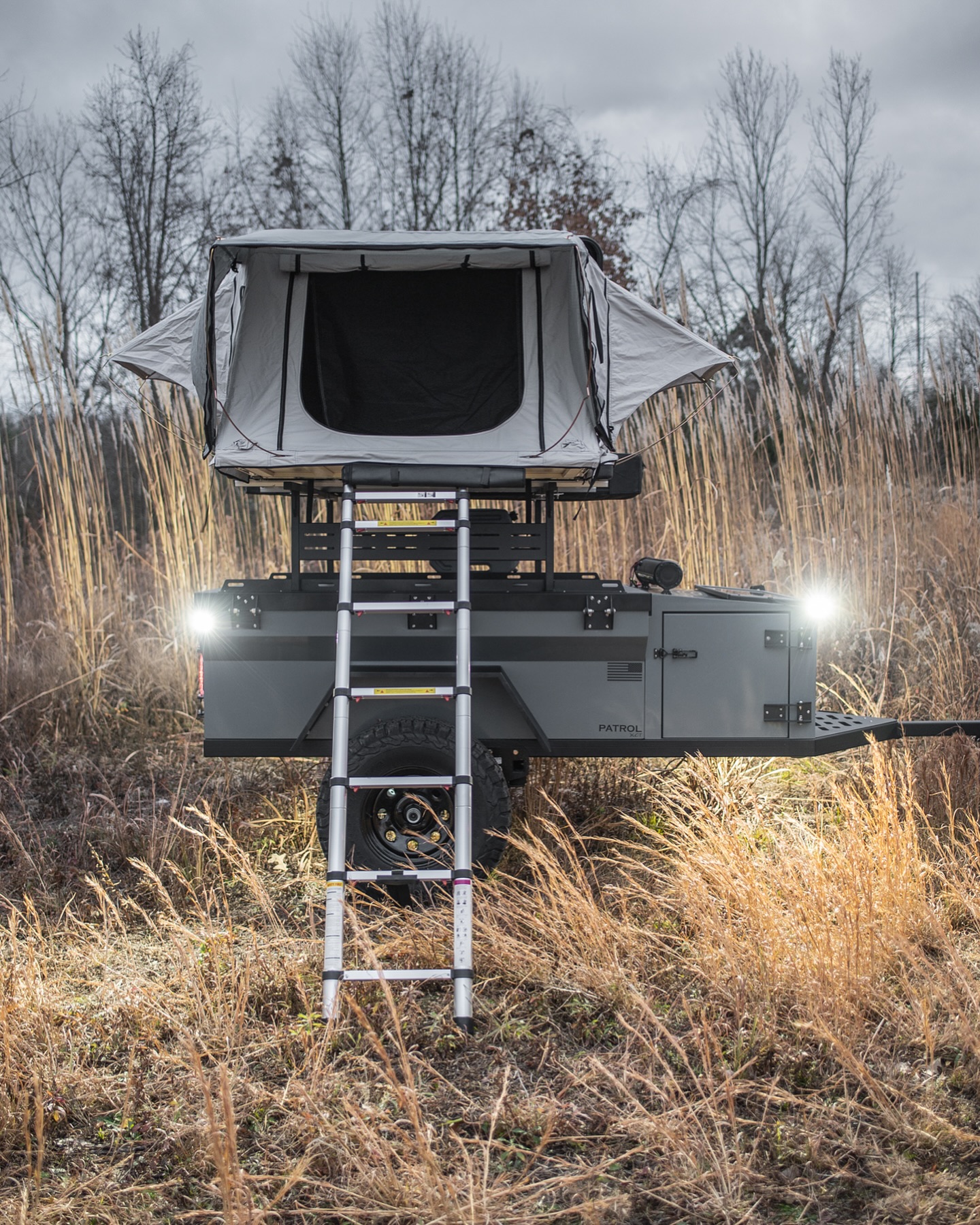
For a first purchase, buying new from an established builder such as Rustic Mountain Overland removes the guesswork around frame condition, suspension wear, and wiring history that comes with a used trailer. The Patrol XC and Patrol XCT both use axleless suspension and an articulating hitch as standard equipment, which means a first-time buyer does not need to specify these features separately or risk missing them on a used unit.
Whichever trailer you choose, ask about suspension type, calculate loaded weight before you sign, and decide on a storage plan before comparing prices. Those three questions solve most of the mistakes that cost first-time buyers money and frustration during their first season on the trail.
Frequently Asked Questions
What should I check before buying my first off-road trailer?
Check the suspension type first, since axleless designs handle rough terrain better than leaf springs. Then calculate your realistic loaded weight, including water and gear, against your tow vehicle’s rating, and confirm the hitch type allows articulation on uneven trails.
Is dry weight the same as what I will actually tow?
No. Dry weight excludes water, gear, fuel, and camp equipment. Most first-time buyers add 300 to 500 lbs once a trailer is fully loaded for a trip, so use that adjusted number when checking your tow vehicle’s rating.
Should a first-time buyer choose a new or used off-road trailer?
A new trailer from an established builder removes the risk of hidden frame damage, suspension wear, or wiring issues that come with buying used. A used trailer saves money upfront but requires more inspection knowledge than most first-time buyers have.
Why does hitch type matter for an off-road trailer?
An articulating hitch, such as a Lock-N-Roll design, lets the trailer pivot independently of the tow vehicle on uneven trails. A standard ball hitch limits this movement, which increases strain on the frame when one wheel drops into a rut.
How much should I budget for my first off-road trailer?
Most compact off-road trailers with axleless suspension and factory storage options run between $8,000 and $15,000 depending on configuration, with tongue boxes and expanded storage typically adding $500 to $1,500 to the base price.
Our articles might have affiliate links and the occasional sponsored content, but don’t sweat it – if you buy something, we get a little kickback at no extra cost to you, and we only hype products we truly believe in!