


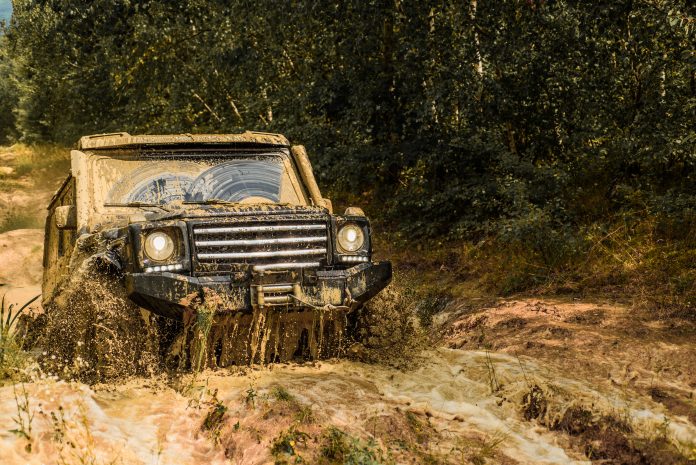

Quick Verdict: Knowing how to air down tires for off-road driving is the single cheapest performance upgrade for your 4×4. Dropping from 35 PSI to 15-20 PSI increases your tire’s contact patch by 30-50%, giving you more grip on sand, rocks, and mud. The process takes 5-10 minutes with a quality deflator tool, and the difference in traction is immediate. Below, you’ll find a terrain-specific pressure chart organized by tire size, a head-to-head deflator tool comparison, and TPMS workarounds for modern vehicles.
Last updated: March 2026 | 12 min read
In This Guide
- Why Airing Down Works
- Tire Pressure Chart by Terrain and Tire Size
- How to Air Down Tires for Off-Road Step by Step
- Best Tire Deflator for Off-Road: 4-Tool Comparison
- Terrain-Specific Tips from Real Trail Experience
- TPMS Warnings and How to Handle Them
- Safety Rules: Debeading, Speed Limits, and Inspection
- Airing Back Up Before the Highway
- Pros and Cons of Airing Down
- Final Verdict
- Frequently Asked Questions
Why Airing Down Works: The Physics Behind Off-Road Tire Pressure
Learning how to air down tires for off-road driving starts with understanding one principle: more rubber on the ground equals more traction. At highway pressure (typically 32-38 PSI), your tire’s contact patch is roughly the size of your hand. However, drop to 18 PSI, and the contact patch grows 30-50% wider. As a result, your tire conforms to rocks instead of bouncing off them, floats on sand instead of digging in, and grips mud instead of spinning.
This isn’t theory. After running a Jeep Gladiator on 37-inch tires and now a 2025 Chevy Colorado ZR2 on 33s, the difference between aired-up and aired-down is noticeable on every terrain. For example, at Glamis sand dunes, the Gladiator went from getting stuck at 35 PSI to cruising at 15 PSI. Similarly, on Big Bear’s rocky back trails, dropping to 20-25 PSI turned a jarring ride into a smooth crawl with better grip.
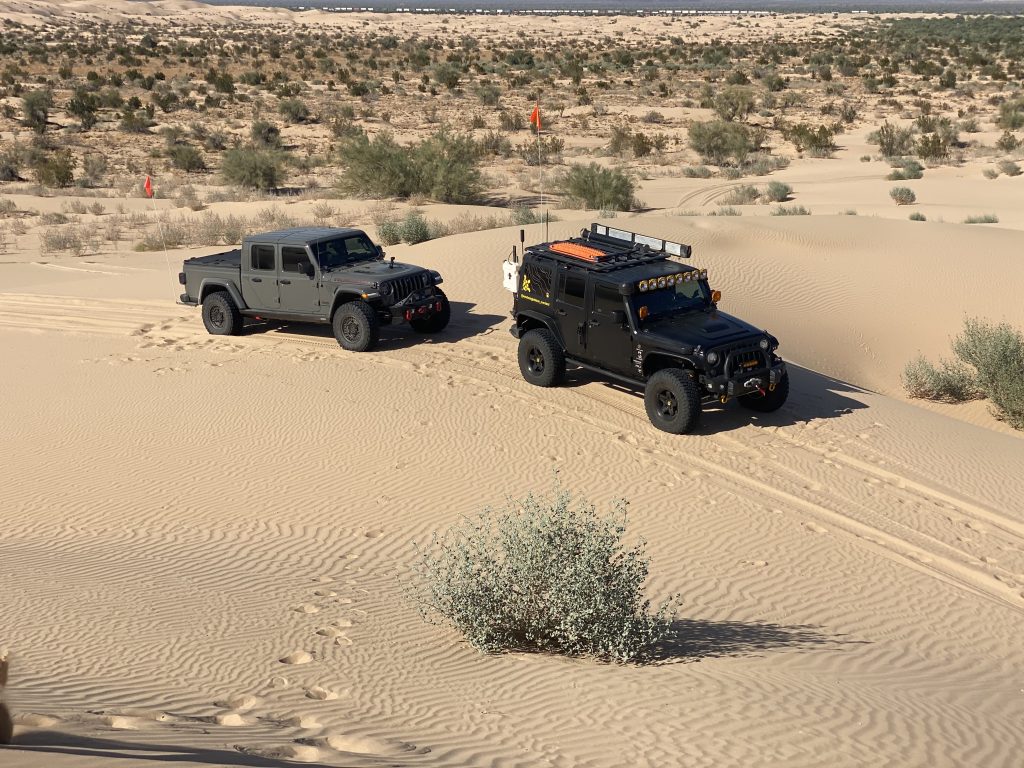
Beyond traction, airing down also protects your vehicle. Specifically, lower pressure lets tires absorb impacts before they reach your suspension, axles, and frame. Consequently, your ride gets smoother, your components last longer, and you reduce the chance of a sidewall puncture because the tire flexes around obstacles instead of fighting them. In particular, the air down tires off-road PSI sweet spot depends on your terrain, tire size, and wheel type.
How Much to Air Down Tires 4×4: Pressure Chart by Terrain and Tire Size
This is the reference table no other guide on how to air down tires for off-road gives you. Instead of vague “lower your pressure” advice, here are specific air down tires off-road PSI ranges organized by tire size and terrain. These numbers come from direct trail experience and community data across thousands of off-road miles.
| Terrain | 31-33″ Tires | 35″ Tires | 37″+ Tires | Notes |
|---|---|---|---|---|
| Gravel/Fire Roads | 25-28 PSI | 22-26 PSI | 20-24 PSI | Minimal drop for comfort; no debeading risk |
| Rocky Trails | 20-24 PSI | 18-22 PSI | 15-20 PSI | Tires conform around rocks for grip and protection |
| Sand (Dunes/Beach) | 15-18 PSI | 12-16 PSI | 10-15 PSI | Maximum flotation needed; watch for debeading below 10 PSI |
| Mud | 18-22 PSI | 16-20 PSI | 14-18 PSI | Lower pressure spreads the tread for more surface grip |
| Rock Crawling | 15-18 PSI | 12-16 PSI | 10-14 PSI | Beadlock wheels recommended below 12 PSI |
| Snow/Ice | 22-26 PSI | 20-24 PSI | 18-22 PSI | Moderate drop; cold temps already reduce pressure |
Starting point if you’re new to how much to air down tires 4×4: First, drop 25% from your highway pressure and test. For instance, on 33-inch tires at 35 PSI, start at 26 PSI. Then drive a few hundred yards, check traction, and drop 2 PSI at a time until the tire shows visible sidewall bulge without excessive squirm. Finally, write down what works for your specific tire and wheel combo, because every setup behaves differently.
How to Air Down Tires for Off-Road: Step by Step
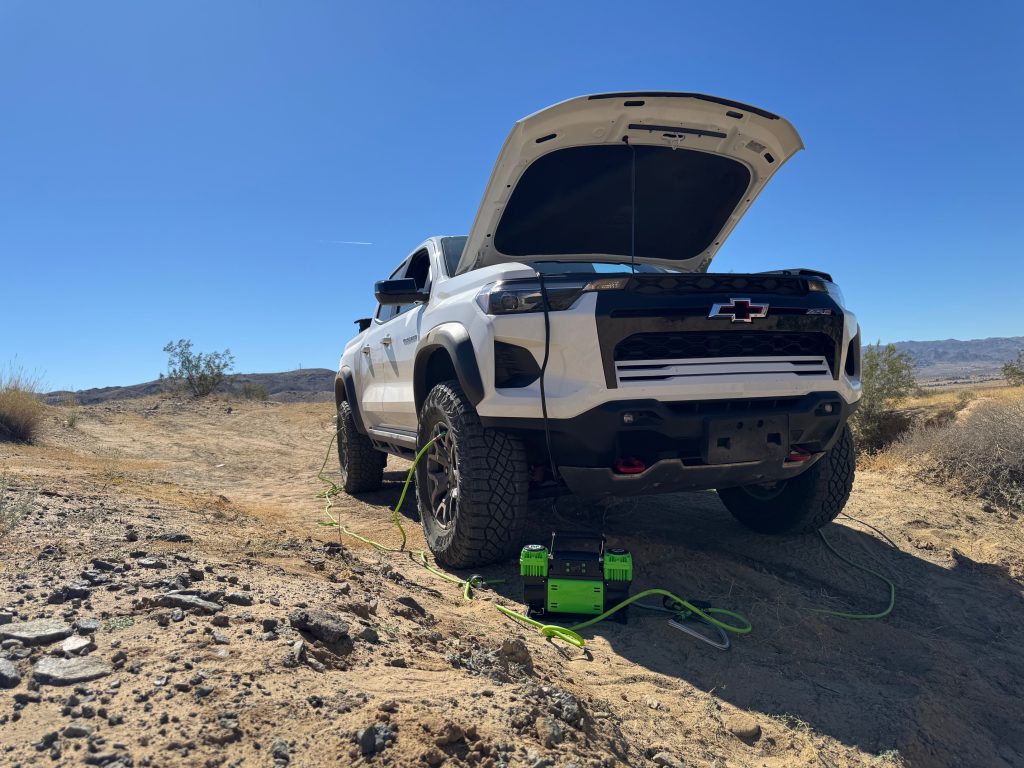
First, park on level ground before you hit the trail. Airing down on a slope gives you inaccurate readings because weight distribution shifts between tires. Here’s the process for how to air down tires for off-road correctly:
1. Check your starting pressure. Use a quality digital gauge (not the stick-type from a gas station). Note the exact PSI in all four tires. If you drove to the trailhead, your tires are warm, and pressures read 3-5 PSI higher than cold. Therefore, account for this difference before setting your target.
2. Remove valve stem caps and start deflating. Next, attach your deflator to the valve stem. With a manual deflator like the ARB E-Z, press the chuck on and open the bleed valve. Alternatively, with preset deflators like Staun units, thread them onto all four valve stems and walk away. The Staun set then automatically stops at your preset PSI (factory set to 18 PSI, adjustable from 6-30 PSI).
Verify, Match, and Stow Your Gear
3. Check pressure frequently. If you’re using a manual deflator, check every 30 seconds. Notably, overshooting your target by even 3-4 PSI matters at low pressures. For example, going from 15 to 11 PSI is a 27% reduction and puts you in debeading territory on non-beadlock wheels.
4. Verify all four tires match. Uneven pressures cause your vehicle to pull to one side and create unpredictable handling. Consequently, all four tires should be within 1 PSI of each other after you finish deflating.
5. Replace valve caps and stow your gear. Finally, valve caps keep dirt out of the valve core. On dusty trails especially, debris in the valve core leads to slow leaks over time.
Best Tire Deflator for Off-Road: 4-Tool Comparison
Choosing the best tire deflator for off-road use depends on how often you air down and how much time you want to spend doing it. Four deflator tools currently dominate the market. Each works differently, so here’s how they compare side by side.
| Feature | ARB E-Z Deflator | Staun (4-pack) | Smittybilt R.A.D. | MORRFlate Digital |
|---|---|---|---|---|
| Price | ~$55 | ~$89-$99 | ~$32-$39 | ~$40 |
| Type | Manual with gauge | Automatic preset | Manual with gauge | Digital with gauge |
| PSI Range | 10-60 PSI | 6-30 PSI (Standard) | 0-60 PSI | 1-150 PSI |
| Tires at Once | 1 | 4 (simultaneous) | 1 | 1 |
| Time (4 tires, 35 to 18 PSI) | ~8-10 min | ~2-3 min | ~8-10 min | ~8-10 min |
| Gauge Type | Analog (bronze bourdon tube) | None (preset) | Analog (2″ dial) | Digital (1% accuracy) |
| Warranty | 3-Year | Manufacturer | 5-Year | Manufacturer |
| Best For | Precise control, durability | Speed, hands-free convenience | Budget-friendly entry point | Digital precision, versatility |
Which Deflator Wins for Off-Road Use?
For weekend warriors who air down a few times per month, the Staun preset deflators save the most time. Simply thread them onto all four valve stems, set your target PSI once, and the deflators stop automatically within ±0.25 PSI. Two minutes later, you’re on the trail. Consequently, the $89-$99 price tag pays for itself in convenience.
For precision-focused users who change pressures based on terrain throughout a single trip, the ARB E-Z Deflator is the best tire deflator for off-road control. Its bronze bourdon tube gauge stays accurate regardless of temperature, humidity, or altitude changes. At $55 with a 3-year warranty, it’s also the reliability pick.
On a budget? The Smittybilt R.A.D. at $32-$39 does the same basic job with a 5-year warranty. While the gauge isn’t as refined, the corrosion-resistant brass construction holds up to trail abuse. For most beginners learning how to air down tires for off-road driving, this is the smart first purchase.
Now all that said, I will say I have stopped using my Staun deflators and left deflating and inflating 100% to my MORRFlate TenSix Pro, it does everything, which means less gear I need to take out with me. Highly recommend!
MORRFlate TenSix: Air Down and Back Up with One Tool
The TenSix deflates and inflates all four tires simultaneously. 10.6 CFM output gets you from 10 to 40 PSI in under 5 minutes. We’ve used ours across 33″, 35″, and 37″ setups for two years.
Terrain-Specific Tips from Real Trail Experience
The pressure chart above gives you the numbers. This section adds the field experience behind them, including tire behavior details and safety thresholds for each terrain type. Use these tips alongside the chart when deciding how much to air down tires 4×4 for your specific conditions.
Sand Dunes and Beach: Tire Pressure for Sand Dunes
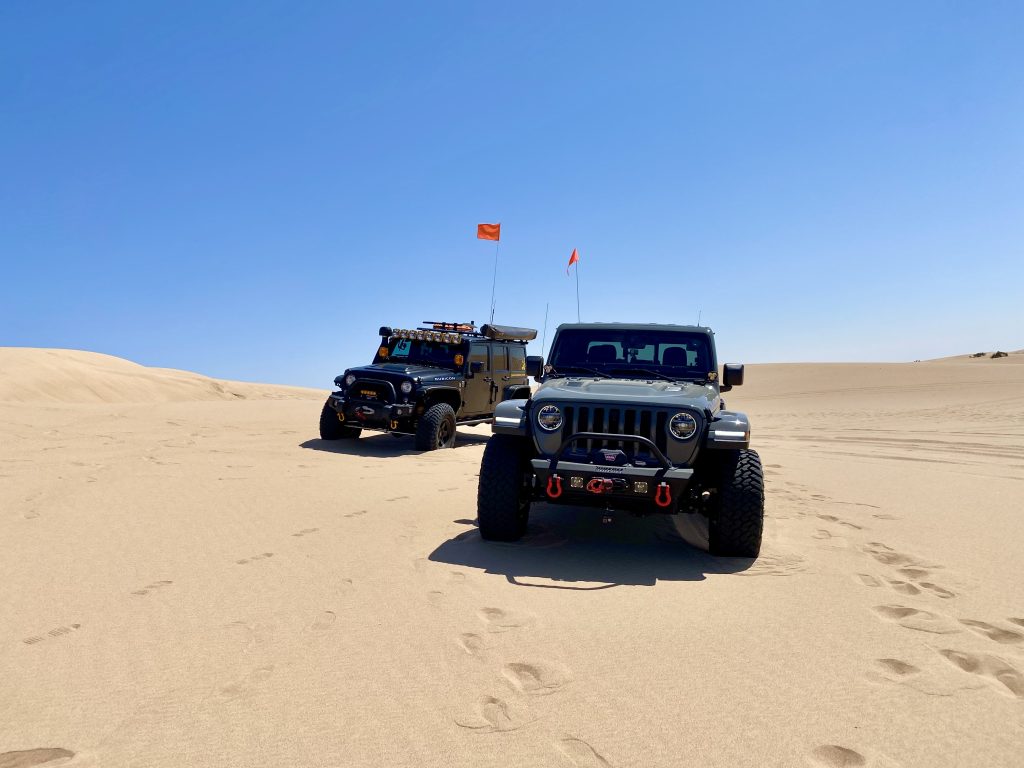
At Glamis Imperial Sand Dunes, 15 PSI on 37-inch tires turned a stuck Jeep Gladiator into a machine floating across dune faces. The reason is straightforward: a wider contact patch distributes weight across more surface area, preventing your tires from digging below the loose sand.
However, below 12 PSI on non-beadlock wheels, the risk of separating the tire bead from the rim increases significantly during turns. Therefore, stop at 12 PSI unless you run beadlocks, which allow pressures as low as 6-8 PSI safely.
Rocky Trails: Air Down Tires Rocky Trails Tips
On Big Bear’s back trails, 20-25 PSI provides the ideal balance between grip and sidewall protection. At these pressures, the tire drapes over rocks rather than deflecting off them. For dedicated rock crawling at slower speeds (under 5 MPH), dropping further to 12-15 PSI on 35-inch or larger tires works well.
Lower pressure means the sidewall bulges outward, exposing it to sharp rock edges. If your mud-terrain tires have reinforced sidewalls, you have more protection compared to standard all-terrain rubber.
Mud: A Counterintuitive Approach
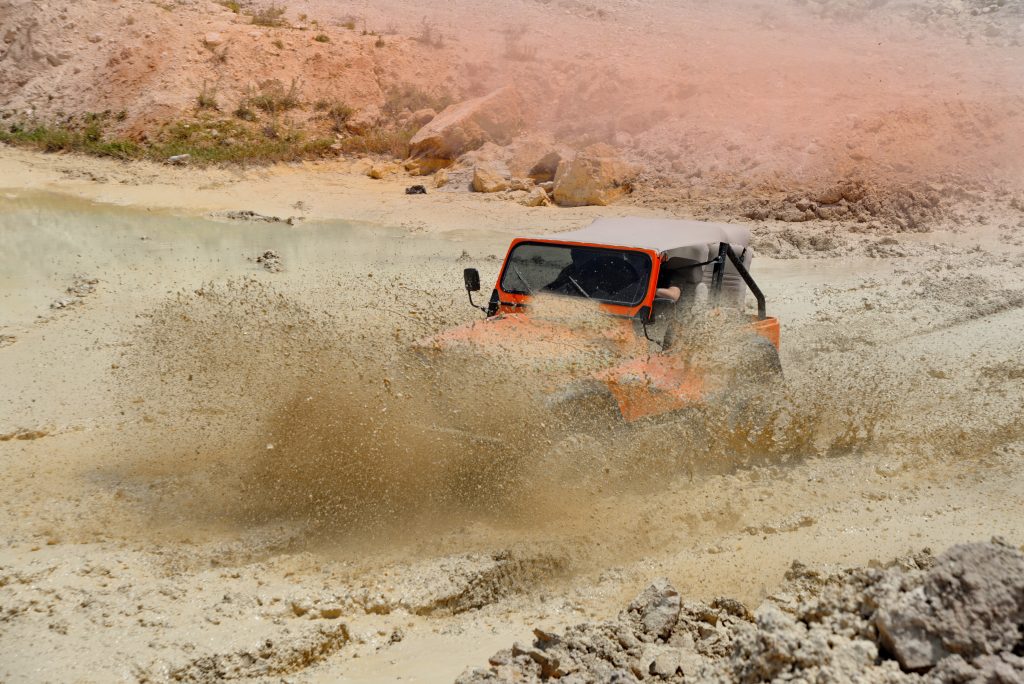
While sand needs maximum flotation, mud sometimes benefits from a narrower, higher-pressure tire cutting through to firmer ground beneath. For shallow mud (under 6 inches), dropping to 18-22 PSI gives you a wider footprint for surface grip. Conversely, for deep mud, some drivers stay at 22-25 PSI to let the tire dig through to a solid layer.
All-terrain tires and mud-terrain tires behave differently here. Specifically, mud-terrains with aggressive void patterns self-clean better at lower pressures, while all-terrains tend to pack up. If your recovery gear kit is packed and ready, experiment to find the ideal tire pressure for sand dunes, mud, and mixed terrain. When you air down tires rocky trails present different challenges than soft surfaces, so keep your tire compound and tread pattern in mind.
TPMS Warnings When You Air Down Tires for Off-Road
Every modern 4×4 has a Tire Pressure Monitoring System, and every one of them will alert you when you air down. Specifically, factory TPMS alerts trigger when pressure drops roughly 25% below the manufacturer’s recommended cold pressure. For instance, if your door placard says 35 PSI, expect the warning light at approximately 26 PSI.
The alert is constant and annoying, yet the system works as designed. It has no way to distinguish between an intentional air-down and a dangerous blowout. Here’s how to handle TPMS on the three most popular platforms:
Jeep Gladiator / Wrangler JL
The most flexible system for off-road use. TPMS programmers like the Tazer JL Mini or JSCAN app with an OBD2 reader let you lower the alert threshold. For example, set the threshold to 12 PSI, and you stop getting warnings at trail pressures. A quicker fix: remove the F10 15-amp fuse from the hood fuse box for 5 minutes to reset the RFH module, then reinstall. The warning clears until pressures trigger it again.
Chevy Colorado ZR2
The most locked-down system, unfortunately. GM treats TPMS as a federal safety feature with no software override through HP Tuners or standard programming. As a result, your options are limited: use the TPMS relearn procedure (deflate and inflate each tire for 10 seconds until the horn chirps), which recalibrates sensors to your new baseline.
Otherwise, accept the warning light for the duration of your trail ride. On the ZR2, the light is the lesser annoyance.
Toyota Tacoma
Newer 4th-gen Tacoma models (2024+) offer the best solution: a settings menu where you input your desired tire pressure. Set it to 20 PSI before hitting the trail, and the system monitors against your new target instead. Reset to your highway pressure when you’re back on pavement. In contrast, older Tacoma models (pre-2024) require a wiring workaround through the glove box connector.
General TPMS Strategy for Off-Road
The simplest approach for any vehicle: acknowledge the warning, ignore it on the trail, and re-learn the sensors after airing back up. TPMS does not affect braking, engine performance, or stability control operation. It provides information only.
When you’re back at highway pressures, the light clears on its own (or after a TPMS relearn cycle). Because this system is passive, it won’t interfere with your ability to air down tires for off-road driving safely.
Safety Rules for How to Air Down Tires for Off-Road Driving
Debeading: When Your Tire Separates from the Rim
Debeading is the biggest risk when airing down, yet it’s entirely preventable. On non-beadlock wheels (which most trucks run), the tire bead stays seated on the rim through air pressure alone. Below 10 PSI, the force holding the bead drops to where a sharp turn or hard lateral force pops the bead off the rim. The result is an instant flat with no warning.
Therefore, stay above 12 PSI on non-beadlock wheels for sand and above 10 PSI for rock crawling at walking speed. If your off-road plans regularly call for single-digit pressures, beadlock wheels are the only safe solution. Beadlocks use a mechanical ring bolted to the rim, physically clamping the tire bead in place. With beadlocks, you run pressures as low as 5-7 PSI without debeading risk.
Speed Limits While Aired Down
A practical rule: never drive faster (in MPH) than your tire pressure (in PSI). At 20 PSI, stay under 20 MPH. Similarly, at 15 PSI, stay under 15 MPH. This guideline prevents tire overheating, which causes structural failure at low pressures.
The general maximum for any aired-down driving is 35 MPH. Even at moderate pressures like 25 PSI, speeds above 35 MPH generate enough heat to damage the sidewall. You should also avoid sudden direction changes at speed while aired down. Because the reduced sidewall stiffness means the tire flexes more during turns, the rollover risk increases at higher speeds.
Pre-Trail and Post-Trail Tire Inspection
Before airing down, walk around your vehicle and check for sidewall cuts, bulges, or embedded objects. Existing damage worsens at lower pressures because the sidewall flexes more. Afterward, inspect again before airing up. Look for new cuts, punctures, and rock damage. Notably, a small sidewall nick at 15 PSI becomes a blowout at 35 PSI when you’re back on the highway.
Airing Back Up Before the Highway
This step is non-negotiable. Driving at highway speeds on aired-down tires destroys tires, damages wheels, and creates a serious safety hazard. Therefore, air back up to your recommended highway pressure (check the door placard) before reaching pavement.
A quality portable air compressor like the MORRFlate TenSix airs up four 35-inch tires from 10 to 40 PSI in under 5 minutes. The TenSix puts out 10.6 CFM at 0 PSI and 6.5 CFM at 30 PSI, running off your vehicle’s 12V system. For a full breakdown of compressor options, see our guide to the best off-road air compressors.
After airing up, verify all four tires match with a digital gauge. Then drive a few miles at moderate speed and check again. Tires warm up during highway driving, and pressure rises 3-5 PSI from cold. If your compressor’s gauge shows the right CFM and PSI readings, you’re set for the drive home.
Never Get Stuck at the Trailhead Without Air
The MORRFlate TenSix handles deflation and inflation for all four tires at once. Runs off your 12V system with no extra battery needed. After two years of Glamis dunes and Big Bear rock trails, it’s still our go-to compressor.
Pros and Cons of Airing Down
Before committing to airing down on every trail, consider both sides. The benefits are significant, yet the trade-offs are worth understanding before your first time.
Pros
- 30-50% larger contact patch at 15-20 PSI vs highway pressure
- Free performance upgrade (costs nothing beyond a deflator tool)
- Smoother ride over rocks, ruts, and washboard
- Reduced stress on suspension, axles, and frame components
- Better traction on sand, mud, rocks, and snow
- Lower risk of sidewall puncture from rock impacts
- Works with any tire type (all-terrain, mud-terrain, highway)
Cons
- Requires a compressor for re-inflation (typically $100-400)
- Debeading risk below 10-12 PSI on non-beadlock wheels
- TPMS warnings on every modern vehicle
- Speed limited to 15-35 MPH depending on pressure
- Adds 10-15 minutes to trailhead prep and post-trail recovery
- Increased tire wear if driven on pavement while aired down
Final Verdict: How to Air Down Tires for Off-Road Successfully
Airing down is the single most effective off-road technique with the lowest barrier to entry. A $32 Smittybilt deflator and 5 minutes at the trailhead give you more traction than a $3,000 locker upgrade. The physics are straightforward: more rubber on the ground equals more grip, more comfort, and less damage to your vehicle.
The key is matching your air down tires off-road PSI to your terrain and tire size. Use the pressure chart above as a starting point, then fine-tune based on your specific setup. After running 33s, 35s, and 37s across Glamis dunes, Big Bear rock trails, and muddy fire roads, the sweet spot is always 15-25 PSI depending on conditions. Start conservative, drop 2 PSI at a time, and take notes on what works.
If you follow the debeading thresholds (12 PSI minimum on non-beadlock wheels) and speed limits (never faster in MPH than your PSI), the risks are manageable and the gains are substantial. The TPMS warnings are annoying but harmless. The biggest safety rule is simple: always air back up before the highway.
Every off-roader needs a deflator tool and a compressor. The deflator gets you trail-ready; the compressor gets you home safely. If you’re building your overlanding gear checklist, add both before you spend on anything else. They’ll make a bigger difference than any other single purchase. For new off-roaders getting started, practice airing down and up in your driveway first. Learn your tools, get comfortable with the process, and you’ll be faster at the trailhead when it counts.
Frequently Asked Questions About How to Air Down Tires for Off-Road
How much should I air down my tires for off-road driving?
First, drop 25% from your highway pressure as a starting point. For most trucks running 33-37 inch tires, this means 18-25 PSI for rocky trails, 12-18 PSI for sand, and 16-22 PSI for mud. Then, adjust 2 PSI at a time based on traction feedback. The pressure chart above provides specific air down tires off-road PSI ranges by tire size and terrain type, including the ideal tire pressure for sand dunes and what to expect when you air down tires rocky trails.
What PSI is too low for off-road tires without beadlocks?
Stay above 10-12 PSI on non-beadlock wheels. Below 10 PSI, the air pressure holding the tire bead to the rim drops to where sharp turns or lateral forces will separate the bead from the wheel. In contrast, beadlock wheels physically clamp the bead, allowing safe operation down to 5-7 PSI.
Do I need beadlock wheels to air down my tires?
No. Most off-road driving happens between 15-25 PSI, well within safe range for standard wheels. Beadlocks are only necessary if you regularly run below 12 PSI for rock crawling or extreme sand driving. For weekend trail riders, standard wheels work fine at appropriate pressures.
Will airing down trigger my TPMS warning light?
Yes. Factory TPMS systems alert when pressure drops roughly 25% below the recommended cold pressure on your door placard. However, the warning is informational only and does not affect vehicle performance. Some vehicles (like the 4th-gen Toyota Tacoma) let you adjust the monitoring threshold through the settings menu. Others (like GM trucks) have limited override options.
How fast is it safe to drive on aired-down tires?
Follow the “PSI equals MPH” rule: at 20 PSI, stay under 20 MPH. Similarly, at 15 PSI, stay under 15 MPH. The absolute maximum for any aired-down pressure is 35 MPH. Higher speeds at low pressure generate heat weakening the tire’s internal structure and increasing rollover risk during turns.
What tools do I need to air down tires for off-road and air back up?
At minimum, you need a tire deflator and a portable air compressor. A deflator (like the ARB E-Z at $55 or Staun preset set at $89) gets air out efficiently. A 12V portable compressor (like the MORRFlate TenSix) gets air back in before you hit the highway. Additionally, a digital tire gauge with 1 PSI accuracy rounds out the kit and is the best tire deflator for off-road precision alongside your primary tool.