



Quick Facts:
- Topic: Free dispersed camping in Utah
- Spots covered: 12 (redrock desert and alpine forest)
- Land managers: BLM and U.S. Forest Service
- Typical cost: $0 (a few areas need a free permit)
- Stay limit: 14 days; 16 in some BLM and forest units
- Vehicle needed: Stock SUV to built 4×4, by spot
- Best season: Spring and fall for the desert; summer for the high country
- Heads up: Most classic free Moab sites are now designated or fee
- Best for: Off-roaders and overlanders chasing redrock solitude
9 min read
In This Guide
- Dispersed Camping Utah: What Free Public Land Means
- Free Dispersed Camping Rules in Utah
- Bears Ears and Canyonlands: Free Dispersed Camping in Southern Utah
- Boondocking in Utah’s Moab Country: What Survived
- San Rafael Swell and Capitol Reef Country
- Escalante and Utah’s High Country
- Which Utah Spot Fits Your Rig and Season?
- Final Verdict
- Frequently Asked Questions
Dispersed Camping Utah: What Free Public Land Means
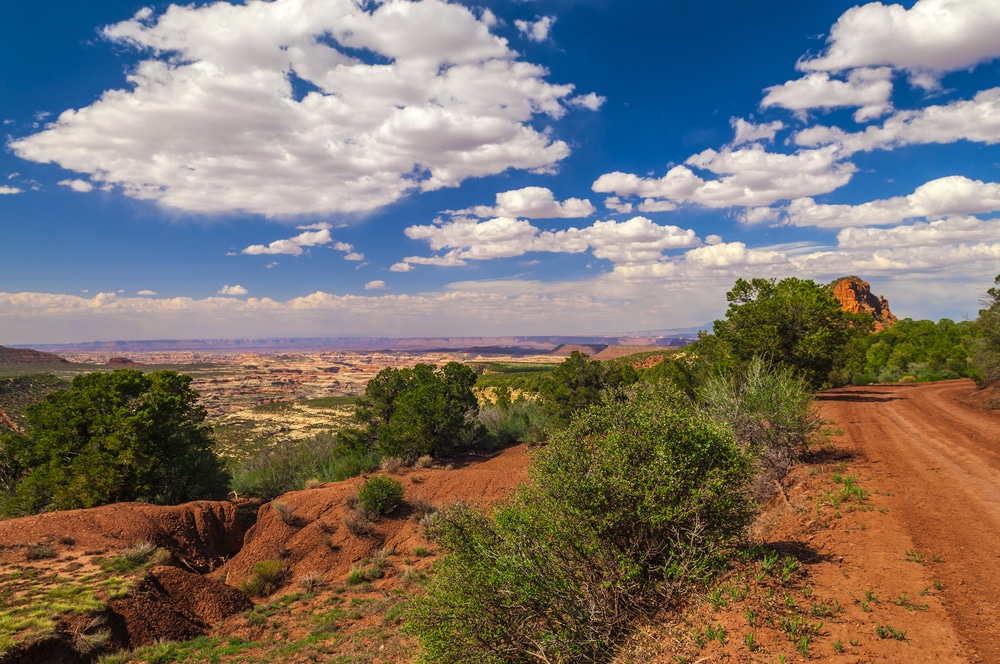
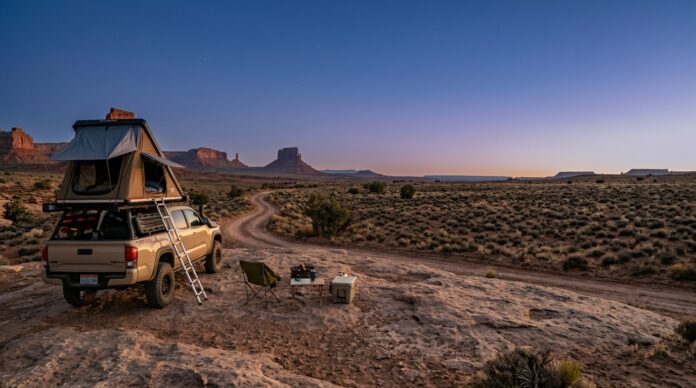
Dispersed camping in Utah hands off-roaders a redrock empire for the price of fuel. Two land managers open the gates: the Bureau of Land Management and the U.S. Forest Service. Together they allow free primitive camping across millions of acres, from slickrock benches to 10,000-foot aspen forests. Pull off a designated route, set up in a used site, and the desert silence is yours. Free camping in Utah rarely beats a redrock pullout under a sky full of stars.
This guide ranks the best dispersed camping in Utah for rigs of every build, from graded desert loops to ledgy 4×4 basins. Each entry flags road condition, the clearance you need, the season, and any permit. Because 4wdTalk readers run real 4x4s, the focus stays on where a stock crossover taps out and where sand, slickrock, and ledges demand low range. New here? Start with our take on dispersed camping done right and our guide on how to find secluded camping spots worth the drive.
Free does not mean open everywhere, especially around Moab. Recent travel plans have converted many famous free corridors to designated sites, fees, or state-park ground. Therefore we cover the rules and the Moab changes first, then walk every spot. Afterward, a decision section matches each location to your rig and the season.
Free Dispersed Camping Rules in Utah
Dispersed camping in Utah runs on a short rulebook, with one regional twist. On most BLM and forest land, free camping in Utah works the same way: use existing sites, stay 14 days, and pack everything out. Boondocking in Utah means the same free public-land camping, whether you run a rooftop tent or a teardrop. However, the Moab Field Office now limits camping near town to developed or designated sites under a 2023 travel plan. Our primer on how to find free camping covers the basics.
| Rule | Details |
|---|---|
| Cost | Free on BLM and most National Forest land |
| Stay limit | 14 days in 28; 16 in some units (Cedar Mesa, Ashley NF) |
| Permits and fees | Free permit on Hole-in-the-Rock Rd; Mirror Lake corridor charges a fee |
| Moab area | Designated or developed sites only within ~20 miles of town |
| Stay on routes | Camp in used sites within 150 feet of existing roads |
| Wet weather | Clay and bentonite turn impassable when wet |
| Water | None in the desert; carry your own |
Two habits keep you legal in Utah. First, stay on existing routes and in used sites, because cross-country driving and fresh fire rings draw closures fast. Second, pack out everything and follow Leave No Trace principles. The Bureau of Land Management posts current travel plans and fire orders, so check the managing office before each trip. Review the latest 2026 fire restrictions for camping and overlanding before heading out during fire season.
Bears Ears and Canyonlands: Free Dispersed Camping in Southern Utah
Southeastern Utah holds the densest free camping in the state, where BLM benches and graded loops sit under cinematic redrock.
Valley of the Gods
Valley of the Gods rings a 17-mile graded dirt loop with free-standing sandstone buttes, a quieter cousin to Monument Valley. The road stays passable for a careful stock crossover when dry, though a few sandy washes reward higher clearance. Camp only in used pullouts within 150 feet of the route, since off-road driving is banned here. Note one rule: no campfires in the valley at all. Spring and fall bring ideal temperatures, while summer turns brutal. The dark skies, however, are worth the heat-dodging.
Cedar Mesa, Comb Wash, and Butler Wash
On Cedar Mesa near Blanding, free dispersed camping lines Comb Wash and Butler Wash roads under Ancestral Puebloan country. The camping itself costs nothing, yet day-hiking into the named canyons needs a Cedar Mesa pass, and backpacking needs a permit. Graded dirt suits most vehicles when dry, while sandy creek crossings trap low cars. Because this is BLM land in Bears Ears, the stay limit runs 16 days, not 14. Target spring and fall, and respect every ruin and rock-art panel you find.
Lockhart Basin
Lockhart Basin is the off-road headline of this list. Off UT-211 toward the Needles, free dispersed sites start where a stock crossover still works, near Indian Creek. Beyond the first mile, however, the basin turns difficult: ledgy switchbacks, steep ruts, sand, and slickrock demanding a high-clearance, locked 4×4. The full route runs point-to-point toward Moab as a multi-day trip for built rigs. Heavy rain makes it impassable, so watch the forecast. Spring and fall keep the heat survivable.
Boondocking in Utah’s Moab Country: What Survived
Moab once offered legendary free camping, but a 2023 travel plan and a new state park closed most of it. Two genuinely free options remain close to town. For the bigger picture on running the area, see our guide to overlanding in Moab.
Yellow Circle Road
Yellow Circle Road holds the closest genuinely free dispersed camping to Moab, about 11 miles south of town. BLM signage marks the camping zone, and the first 0.6 mile stays off-limits. Most pullouts reach a stock crossover, while sandy spots deeper in want higher clearance. The La Sal Mountains frame the backdrop. Because it sits so close to Moab, it fills fast on weekends, so arrive early in spring or fall.
Behind the Rocks
Behind the Rocks spreads along sandy BLM roads about 16 miles south of Moab. First pullouts usually take a stock crossover, yet deeper sites demand a high-clearance 4×4 in soft sand. The payoff is a slickrock and sand playground among redrock fins. Air down before you commit to the soft stuff. As with Yellow Circle, target spring and fall and skip the summer furnace.
San Rafael Swell and Capitol Reef Country
Central Utah trades crowds for moonscape badlands, a perimeter of Capitol Reef, and some of the darkest skies in the Lower 48.
The Wedge Overlook, San Rafael Swell
The Wedge Overlook gazes into the “Little Grand Canyon” of the San Rafael River, with free dispersed pullouts right along the rim. Graded gravel reaches the rim sites for most vehicles when dry, while deeper Swell roads want high-clearance 4×4. No water exists anywhere, so fill up in Price or Castle Dale first. One caution: BLM has proposed a fee campground here, so verify the free status before you go in spring or fall.
Notom-Bullfrog Road
Right outside Capitol Reef’s boundary, Notom-Bullfrog Road offers free BLM dispersed under the Waterpocket Fold. The first pullouts run graded gravel and take most vehicles when dry. Farther south, however, the road degrades, and the route toward the Burr Trail switchbacks wants high clearance. Because these sites sit on BLM land, no park fee applies. Plan for spring or fall, and treat wet clay as a stop sign.
Cathedral Valley
Cathedral Valley rewards built rigs with the Temple of the Sun and Temple of the Moon monoliths in deep solitude. This loop is high-clearance 4×4 only, since it fords the Fremont River and crosses deep sand and clay. After rain, the ford rises fast and the route closes, so call the Capitol Reef visitor center first. Free dispersed sits on the BLM portions of the loop. Late spring and fall avoid the worst monsoon floods.
Factory Butte and Swing Arm City
Factory Butte hides a serious trap near Hanksville. Its Mancos shale and bentonite clay turn to grease within minutes of rain, stranding rigs for days. Never enter when storms threaten. When dry, the surreal badlands open free dispersed camping and wide-open OHV riding. Swing Arm City alone lets machines roam a 2,600-acre freeride zone. Graded roads reach camp, though soft ground wants an aired-down, high-clearance 4×4. Skip the shadeless summer furnace and aim for cool, dark-sky nights in spring or fall.
Escalante and Utah’s High Country
When the desert overheats, Utah’s plateaus and ranges open free forest camping under aspens and alpine lakes.
Hole-in-the-Rock Road
Hole-in-the-Rock Road runs 62 miles of dirt through Grand Staircase country to slot canyons and hoodoos. Camping costs nothing, yet the monument requires a free overnight permit, so grab one in Escalante first. Graded washboard suits high-clearance vehicles when dry, while the final miles narrow to 4×4 and foot travel. Air down for the sandy spur roads to Peekaboo and Spooky. Target spring and fall, and stay out of the washes when storms build.
Boulder Mountain on Highway 12
Boulder Mountain offers a rare summer-friendly escape on Dixie National Forest, off scenic Highway 12. Forest Road 117 runs well-graded gravel, easy for big rigs near the highway, while side roads narrow and roughen. Sitting between 8,000 and 10,000 feet, it stays cool when the desert roasts. Aspens, alpine lakes, and big plateau views headline the camp. Because of the elevation, snow blocks it into late spring, so July through September runs best.
Uinta Mountains Forest Roads
The Uinta Mountains hold alpine free camping on Forest Service roads outside the Mirror Lake fee corridor. Be precise here: stopping along Mirror Lake Highway needs a paid pass, while many side forest roads stay free. Knowing how to read MVUMs and find legal campsites makes the difference on USFS land. Graded gravel reaches most sites, though rougher spurs want high clearance. At 9,000 feet and up, this is a summer-only run, roughly late June through September. Alpine lakes and cool air reward the timing.
From the 4wdTalk Garage
Utah punishes two mistakes: bad tire pressure and bad timing with weather. Sand and slickrock both reward airing down hard, often into the teens, to float over soft stuff and grip the rock. The bigger killer is mud. Mancos shale and bentonite clay near Factory Butte, Cathedral Valley, and Hole-in-the-Rock turn to grease within minutes of rain and strand built rigs for days. So watch the sky, carry recovery boards and more water than you plan to drink, and turn around when the clay starts to ball up on your tires. For the electrical side of a long desert stay, see our notes on boondocking power needs.
Which Utah Spot Fits Your Rig and Season?
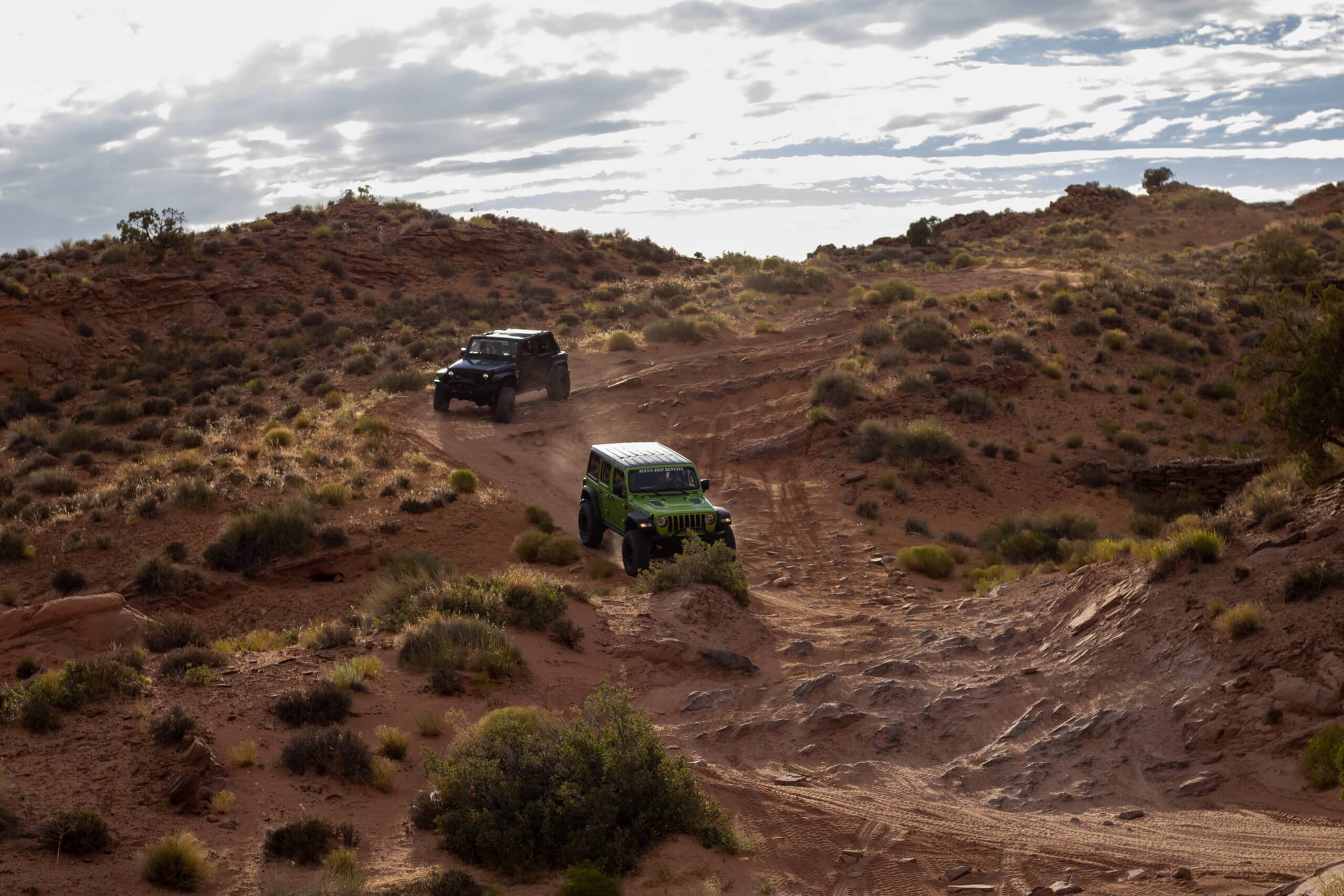
Pick by clearance first. A stock crossover or SUV does well at Valley of the Gods, the Wedge Overlook, Notom-Bullfrog Road, Yellow Circle Road, and Boulder Mountain, where graded roads reach good sites. These rank among the best dispersed camping in Utah for any rig.
Step up to a high-clearance 4×4 for the deep sand at Behind the Rocks and the spur roads off Hole-in-the-Rock. Save Lockhart Basin and Cathedral Valley for a built, locked rig, since ledges and a river ford end the day for anything less.
Pick by season next. Dispersed camping in Utah runs spring and fall in the redrock desert, while Boulder Mountain and the Uintas open only in summer. Avoid the desert in July heat, and avoid every clay road when rain threatens.
Final Verdict
Utah gives off-roaders more free redrock camping than almost anywhere, even after the Moab closures. For a first trip, Valley of the Gods or the Wedge Overlook delivers easy access, huge views, and dark skies.
The desert demands respect, though. Heat, flash floods, and clay roads all turn dangerous fast, so carry water, watch the sky, and never push a wet clay route. Brush up on primitive camping tips before your first desert outing. Check the current travel plan too, since Moab-area rules keep tightening.
Match the spot to your build and you skip the two classic errors: dragging a low car into Lockhart Basin, or wasting a built rig on a paved overlook. The decision section above sorts every site by clearance and season.
Start at a graded desert loop, build your kit and your sand skills, then earn Cathedral Valley and Lockhart Basin. Free dispersed camping in Utah runs from spring slickrock to autumn aspen, open somewhere nearly all year.
More Free Dispersed Camping Guides by State
- Best Free Dispersed Camping in Southern California
- Best Free Dispersed Camping in Colorado
- Best Free Dispersed Camping in Washington
- Best Free Dispersed Camping in Oregon
Frequently Asked Questions
Is dispersed camping free in Utah?
Yes. Dispersed camping in Utah is free on most BLM and National Forest land. A few areas add a free permit, such as Hole-in-the-Rock Road, while the Mirror Lake corridor charges a recreation fee. Always confirm the rule for your specific road before you camp.
What is the stay limit for dispersed camping in Utah?
Most BLM and forest land allows 14 days in a 28-day period, after which you move at least 25 miles. Some units, including Cedar Mesa and Ashley National Forest, use a 16-day limit instead. Rangers enforce these in popular areas, so track your nights.
Is free camping still possible near Moab?
Barely. A 2023 travel plan and the new Utahraptor State Park converted most classic free corridors to designated or fee sites. Yellow Circle Road and Behind the Rocks remain genuinely free south of town. Within about 20 miles of Moab, however, camping is otherwise limited to developed campgrounds.
Where is free camping near Zion?
True open dispersed near Zion is scarce. The St. George and Hurricane area offers free but numbered designated sites, such as Sand Mountain and Hurricane Cliffs, rather than open dispersed. For open redrock dispersed, plan a longer drive east toward Escalante or the San Rafael Swell.
Do you need a 4×4 for dispersed camping in Utah?
It depends on the spot. Graded loops like Valley of the Gods and Notom-Bullfrog Road welcome a stock SUV when dry. The harder routes, including Lockhart Basin and Cathedral Valley, demand a high-clearance 4×4 with low range. Match the rig to the road, and check conditions first.
When is the best time for dispersed camping in Utah?
Spring and fall suit the redrock desert, with mild days and cool nights. Summer belongs to the high country, such as Boulder Mountain and the Uinta Mountains, where snow blocks the roads until late June. Avoid the desert in midsummer heat, and avoid every clay road when rain threatens.