


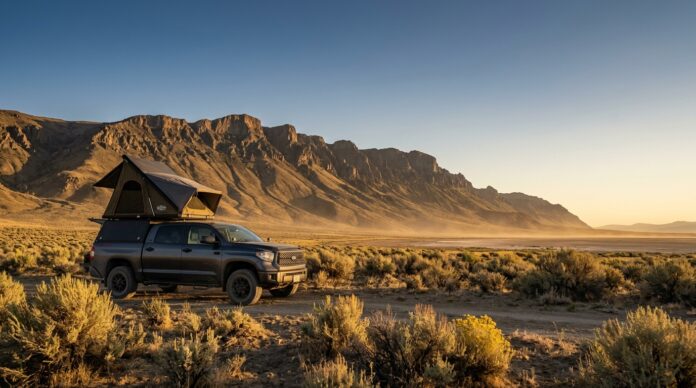

Quick Facts:
- Topic: Free dispersed camping in Oregon
- Spots covered: 13 (Cascades, high desert, coast range, Blue Mountains)
- Land managers: U.S. Forest Service, BLM, and Oregon Department of Forestry
- Typical cost: $0 to camp (Oregon has no Discover Pass)
- Passes: Northwest Forest Pass covers fee trailhead parking, never the camping
- Stay limit: 14 days on national forest and BLM land
- Vehicle needed: Stock SUV to fully built 4×4, by spot
- Best season: July to October for the high country; longer on the dry east side
- Heads up: Cascade Lakes roadside camping is banned, and fire closures shift weekly
- Best for: Off-roaders and overlanders chasing high-desert and forest solitude
11 min read
In This Guide
- Dispersed Camping Oregon: What Free Public Land Means
- Free Dispersed Camping Rules and Passes in Oregon
- Rain, Seasons, and Road Conditions in Oregon
- Best Free Dispersed Camping in Oregon’s Central High Desert
- Southeast Oregon’s High Desert: BLM Boondocking
- West Cascades and the Oregon Coast Range
- Eastern Oregon and the Blue Mountains
- Oregon State and Agency Resources
- Which Oregon Spot Fits Your Rig and Season?
- Final Verdict
- Frequently Asked Questions
Dispersed Camping Oregon: What Free Public Land Means
Dispersed camping in Oregon hands off-roaders a huge spread of free public land, from high-desert playas to old-growth river roads. The U.S. Forest Service, the BLM, and the Oregon Department of Forestry together open millions of acres for the price of fuel. Pull off a forest road, set up in a used site, and a volcano rim or a desert sunset becomes your backyard. Free camping in Oregon rewards anyone willing to leave pavement and plan around weather.
This guide ranks the best dispersed camping in Oregon for rigs of every build, from paved scenic byways to ledgy desert tracks. Each entry flags road condition, the clearance you need, the season, and any pass. Because 4wdTalk readers run real 4x4s, the focus stays on where a stock crossover taps out and where sand, clay, and rock demand low range. New here? Start with our take on dispersed camping the right way, or browse our Oregon overlanding destinations.
Oregon adds two wrinkles worth knowing first. The Cascade crest splits the state into a wet west and a dry east, which decides your season and your road surface. On top of this, 2026 brought real closures, including a roadside camping ban along the Cascade Lakes Highway. Therefore we cover the rules, the conditions, and the resources first, then walk every spot.
Free Dispersed Camping Rules and Passes in Oregon
Dispersed camping in Oregon runs on a short rulebook, and the pass question is simpler than in Washington. Free camping in Oregon stays free to camp on national forest, BLM, and state forest land, as long as you use existing sites and pack everything out. Oregon has no Discover Pass, so the only pass in play is the Northwest Forest Pass, which covers parking at fee trailheads, never the camping. Our primer on how to find free camping covers the groundwork.
| Rule or pass | Details |
|---|---|
| Cost to camp | Free on national forest, BLM, and Oregon state forest dispersed sites |
| Northwest Forest Pass | $5/day or $30/year; only for parking at fee trailheads, not for camping |
| Discover Pass | Not used in Oregon; it is a Washington pass |
| Stay limit | 14 days on national forest and BLM, often within a 28-day window |
| Camp siting | Use existing sites; stay 200 feet from water; on routes shown legal on the map |
| Fire rules | Public-use restrictions are common; campfires are often banned forest-wide in summer |
| Closures | Cascade Lakes corridor and the China Hat area near Bend are closed; verify before you go |
Two habits keep you legal here. First, carry a gas stove with a shutoff valve, because dispersed campfires are often banned during Oregon’s long fire season even when camping stays open. Second, pack out everything and follow Leave No Trace principles, since heavy use already closed the Cascade Lakes roadside sites. The resources table below links the live fire and road pages to check before each trip.
Rain, Seasons, and Road Conditions in Oregon
Oregon splits down the Cascade crest, and this split decides your trip. West of the crest, the Coast Range and the west Cascades stay wet most of the year. Rain greases the forest-road spurs and ruts them, so the dependable dry window narrows to roughly June through September. East of the crest, the high desert around Bend, the Ochocos, and the Blue Mountains dry out fast and hold a longer season, often May into October. On the dry side, snow and fire restrictions gate the calendar, not mud.
Many Cascade and Blue Mountain roads sit behind snow until late June or July, while high-desert BLM land opens far earlier. Always check the live road and fire pages before you commit, because closures shift weekly. For the wet-weather driving the west side demands, air down for grip, carry traction boards, and read the surface before you commit.
The 2026 season already carries hard limits. A Deschutes forest order banned all roadside camping along the Cascade Lakes Highway through 2031. Separately, the China Hat area near Bend is closed to at least spring 2027. Central Oregon entered Stage 1 fire restrictions in mid-May, weeks early, and BLM set statewide fire rules the same month. By contrast, the northeast Oregon national forests stayed the least restricted into early summer. Check each forest’s alerts page and ODOT TripCheck within a day of leaving.
Best Free Dispersed Camping in Oregon’s Central High Desert
Central Oregon around Bend mixes alpine lake roads with open desert and a premier OHV network, all within an hour or two of town.
Three Creek Lake Road
Three Creek Lake Road climbs from Sisters toward an alpine lake under Tam McArthur Rim, with free dispersed pull-offs along the way. Washboard gravel suits a stock SUV down low, while the steeper upper stretches near 6,400 feet reward high clearance. A 2026 forest order limits camping near the lake to existing sites, so pioneer nothing new. Snow keeps the upper road closed until about July. The quiet here beats the crowded Cascade Lakes by a mile.
Ochoco National Forest
East of Prineville, the Ochoco National Forest offers uncrowded ponderosa solitude on free dispersed sites off Forest Roads 22 and 42. Graded gravel handles a stock SUV when dry, yet the clay soils turn greasy and trap low rigs after rain. The stay limit runs 14 days within a 28-day window. Central Oregon forests moved into Stage 1 fire restrictions early in 2026, so plan on a gas stove and check the alerts page before any fire. The season stretches May through October.
Millican Valley OHV Area
Millican Valley is Central Oregon’s premier OHV basecamp, about 25 miles southeast of Bend on free BLM land. Camping at the staging areas costs nothing, and only riding an off-road machine needs an Oregon ATV permit. Pavement leads in, then gravel reaches the flats, while 255 miles of sandy volcanic trails branch off for capable rigs. Sand and washboard are the main traps for a heavy full-size truck. Spring and fall ride best, since summer bakes the open desert.
Pine Mountain
Pine Mountain rises southeast of Bend toward a public observatory and some of the darkest skies in the state. The developed summit campground charges a small fee, yet free dispersed sites sit below it along Forest Road 2017 and its spurs on national forest and BLM land. Graded gravel carries a stock SUV up the main road when dry, while the loose, washboarded spurs want high clearance. At 6,300 feet, snow blocks the road into late spring. Keep your lights red to protect the stargazing.
Southeast Oregon’s High Desert: BLM Boondocking
The southeast corner holds Oregon’s wildest free camping, where BLM playas and gorges stretch for empty miles. This is dry country with the longest season and the most serious remoteness.
Alvord Desert
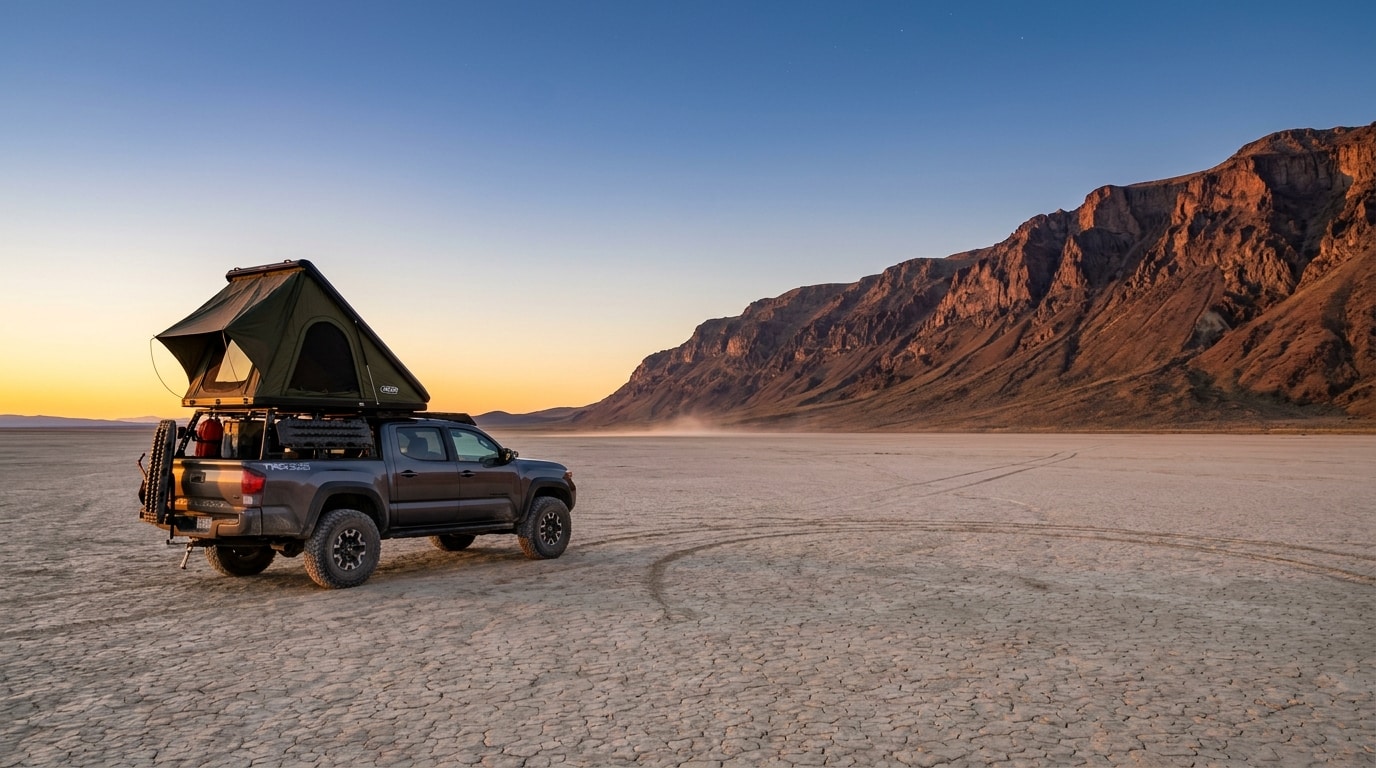
The Alvord Desert is the off-road icon of this list. This hard-packed clay playa runs roughly 6 by 11 miles at the foot of Steens Mountain. Free dispersed camping needs no permit, and the dry playa drives like a runway. One rule outranks all others: never drive onto the playa when it is wet or even looks damp. The clay turns to vehicle-trapping mud fast. Graded gravel reaches it, though sharp rocks reward good tires. June through November stays driest, with no cell service anywhere.
Steens Mountain Loop Road
Steens Mountain carries Oregon’s highest road, a 52-mile loop climbing past glacier-carved gorges to 9,500 feet. Free dispersed camping is allowed in established sites, while the four developed campgrounds charge a fee. The BLM rates the rough loop for high-clearance and 4×4 rigs with good tires. Seasonal gates open in stages, so the full loop usually clears by July. Kiger Gorge and roaming wild horses headline the views. Plan offline, since cell service is essentially none.
Owyhee Canyonlands
The Owyhee Canyonlands form Oregon’s answer to the Grand Canyon, deep in the far southeast near Jordan Valley. Free BLM dispersed camping spreads across the high desert under a 14-day limit. Unpaved roads demand high clearance, and the clay turns impassable when wet, so this is genuine remote 4×4 country. Spring and fall bring the best weather, while summer roasts the canyons. Boise sits closer than any Oregon hub, roughly an hour from the gateway towns.
West Cascades and the Oregon Coast Range
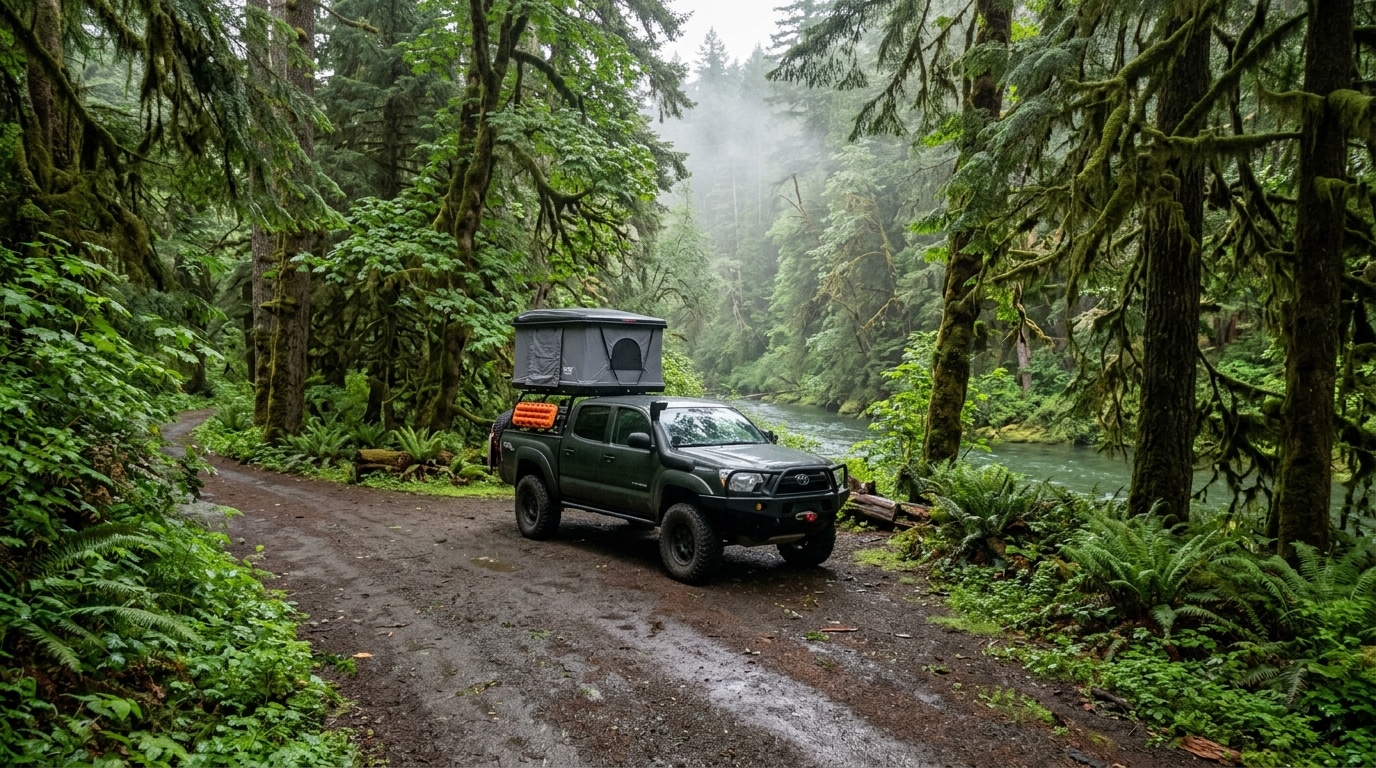
The wet west side trades dust for moss, rivers, and old-growth, with shorter dry windows and softer roads. Closest to the cities, it pays for the rain with deep forest.
Mt. Hood National Forest
Mt. Hood National Forest opens free dispersed camping along its forest roads within an hour or two of Portland. The Clackamas River corridor on Forest Road 46, Lolo Pass, and the historic Barlow Road all hold sites. Graded mains suit a stock SUV, while the spurs and Barlow Road want high clearance, especially when wet. A forest order sets a 14-day limit and 28 days per year. Snow gates the high spurs until about late June, and Mt. Hood views reward the climb.
Willamette National Forest
The Aufderheide Scenic Byway, Forest Road 19, runs 60 paved miles through Willamette old-growth between the McKenzie and Willamette rivers. Free dispersed pull-offs line the byway, friendly to nearly any vehicle, while gravel spurs roughen for high-clearance rigs. The stay limit runs 14 days within a 30-day window. Because the byway is not cleared of snow from November into spring, target late spring through October. Check the forest’s fire-closure page, since some roads carry active 2026 orders.
Siuslaw National Forest and the Coast Range
Honest truth first: true free dispersed camping on the Oregon coast is scarce, since most beachfront camping is fee state-park ground. The free option sits inland in the Coast Range, on the Siuslaw National Forest along Forest Road 14, the Mt. Hebo Road. South Lake’s signed site now charges a small fee, so use the free primitive pull-offs farther along the road instead. Graded gravel reaches the area in the dry months, though Coast Range mud runs heavy the rest of the year. For beach-town trips, see our roundup of Oregon coast camping sites. June through October stays driest.
Tillamook State Forest
The Tillamook State Forest holds the closest genuinely free dispersed camping to Portland, about an hour out on Oregon Department of Forestry land. Dispersed camping runs free year-round with no permit, while signed and developed sites carry fees. Mainline gravel roads suit a stock SUV, yet this is one of the wettest forests in the Lower 48, so the spurs turn to deep mud. Because regulated fire season bans campfires at dispersed sites, pack a stove. Drier weather favors June through September.
Eastern Oregon and the Blue Mountains
East of the high desert, the Blue Mountains and Hells Canyon offer cool forest, gold larch, and the deepest gorge on the continent. Its national forests held the lightest fire restrictions in the state into early summer 2026.
Forest Road 39, Hells Canyon
The Wallowa Mountain Loop, Forest Road 39, threads the Hells Canyon country near Joseph in the Wallowa-Whitman National Forest. Free dispersed sites sit on the dirt spurs off the paved main road, not at the day-use overlook itself. The pavement suits any vehicle, while the spurs stay easy in dry weather. Its seasonal gate opened early in 2026, so check TripCheck for the current status before a shoulder-season run. From a rim pullout you stand a mile above the Snake River in North America’s deepest gorge.
Logan Valley, Malheur National Forest
Logan Valley spreads open meadows below the Strawberry Mountain Wilderness near Prairie City, with free dispersed camping along Forest Road 16. The Forest Service itself advises four-wheel drive here, since the gravel runs rugged and turns muddy after rain. Snow holds the high country until about late June, so July through October runs safest. Wild horses and Wilderness trailheads anchor the valley. Plan offline, because cell service is faint or absent.
Oregon State and Agency Resources
Bookmark these official Oregon pages and check them within a day of leaving, since fire restrictions and road closures change fast. Each link below resolved live as of this writing.
| Resource | Use it for | Link |
|---|---|---|
| ODOT TripCheck | Live road conditions, cameras, and closures | tripcheck.com |
| Oregon Department of Forestry | Public-use fire restrictions and IFPL levels | oregon.gov/odf |
| BLM Oregon and Washington | District maps and dispersed-camping rules | blm.gov/oregon-washington |
| BLM fire restrictions | Current statewide BLM fire-season rules | blm.gov fire restrictions |
| Forest Service Region 6 passes | Northwest Forest Pass and interagency passes | fs.usda.gov/r06/passes |
| Recreation.gov | Reservations, permits, and passes | recreation.gov |
| Oregon State Parks | Coast camping, day-use permits, reservations | stateparks.oregon.gov |
| BLM Know Before You Go | Dispersed-camping basics and stay limits | blm.gov know before you go |
| Oregon Department of Fish and Wildlife | Wildlife-area access and regulations | dfw.state.or.us |
From the 4wdTalk Garage
Oregon punishes two things: wet clay and bad fire timing. On the dry side, the playa and desert clay drive like pavement when bone-dry. Add rain, though, and they turn to vehicle-swallowing mud within minutes. Never trust a damp surface, and always carry recovery boards. West of the crest, the enemy is the same mud in a different forest. Air down for grip there, and turn back rather than carving ruts. The calendar matters too, since campfires are often banned for months even where camping stays open. Two moves cover most of it. Check ODOT TripCheck and the forest alerts page within 48 hours of leaving. Also pack a gas stove, so a fire ban never ends your trip.
Which Oregon Spot Fits Your Rig and Season?
Pick by clearance first. A stock SUV does well at the Aufderheide byway, Forest Road 39, the Millican staging flats, and the Ochoco main roads. Graded surfaces there reach good camps. These rank among the best dispersed camping in Oregon for any rig.
Step up to a high-clearance 4×4 for the Steens loop, the upper Three Creek Lake spurs, and Logan Valley. Rough gravel and mud there raise the bar. Save the Owyhee Canyonlands and a wet-season Alvord crossing for a built, self-sufficient rig, since remoteness and clay end the day for anyone unprepared.
Pick by season next. Dispersed camping in Oregon runs nearly year-round on the southeast desert, while the Cascade and Blue Mountain roads hold snow into July. Avoid the west side in the wet months, and never drive a clay playa or desert track when rain threatens.
Final Verdict
Oregon gives off-roaders a rare range of free camping, from desert playa to rainforest river road, all on public land. For a first trip, the Ochoco National Forest or Forest Road 39 delivers easy access, a long season, and real solitude.
The terrain demands respect, though. Wet clay strands rigs, snow gates the passes, and fire restrictions clamp down for months, so check the road and fire pages before every trip. Watch the closures too, since the Cascade Lakes corridor and the China Hat area near Bend are off-limits in 2026.
Match the spot to your build and your calendar, and you skip the two classic errors. Avoid sinking a low rig in west-side mud, or driving hours to a snow-gated road. The decision section above sorts every site by clearance and season.
Start at a graded desert road, build your kit and your weather sense, then earn the Steens loop and the Owyhee. Free dispersed camping in Oregon runs from spring desert to October larch, open somewhere across the state most of the year.
More Free Dispersed Camping Guides by State
- Best Free Dispersed Camping in Southern California
- Best Free Dispersed Camping in Colorado
- Best Free Dispersed Camping in Utah
- Best Free Dispersed Camping in Washington
Frequently Asked Questions
Is dispersed camping free in Oregon?
Yes. Dispersed camping in Oregon is free on national forest, BLM, and Oregon state forest land. Oregon has no Discover Pass, and the Northwest Forest Pass covers only parking at fee trailheads, never the camping. Always confirm the rule for your specific road before you go.
Do you need a pass for dispersed camping in Oregon?
No pass is needed to camp. The Northwest Forest Pass covers parking at certain fee day-use sites, and it runs $30 a year. Oregon does not use a Discover Pass, which is a Washington program. BLM dispersed sites need no pass either.
Where is free dispersed camping on the Oregon coast?
True free dispersed camping on the Oregon coast is scarce, since most beachfront camping sits in fee state parks. The free option is inland in the Coast Range, such as the Siuslaw National Forest near Mt. Hebo. For beach trips, plan on reserved state-park sites instead.
What is the stay limit for dispersed camping in Oregon?
National forest and BLM land allow 14 days, often within a 28-day window, before you move on. Some forests run their own orders with annual caps, such as Mt. Hood at 28 days per year. Rangers enforce these in busy areas, so track your nights.
Do you need a 4×4 for dispersed camping in Oregon?
It depends on the spot. Paved and graded routes like the Aufderheide byway and Forest Road 39 welcome a stock SUV. The harder spots, including the Steens loop, the Owyhee, and Logan Valley, want a high-clearance 4×4. Match the rig to the road, and check conditions first.
When is the best time for dispersed camping in Oregon?
The southeast high desert opens early and stays good spring through fall, though summer turns hot. Cascade and Blue Mountain roads run July through October once the snow clears. Avoid the wet west side in the rainy months, and watch fire restrictions all summer.