



Quick Facts:
- Topic: Choosing a Jeep lift kit
- Lift sizes covered: 1 inch to 6 inches and up
- Tire fitment range: 33 inch to 40 inch
- Vehicle compatibility: JL, JT Gladiator, JK, TJ, YJ
- Install time: 2 to 12 hours at home, 4 to 10 in a shop
- Kit cost range (2026): $200 to $3,500
- Professional install cost: $400 to $1,750
- Skill level for DIY: Intermediate to advanced
- Best for: Jeep owners weighing capability, look, and budget
9 min read
In This Guide
- How to Choose a Jeep Lift Kit: The Basics
- Lift Kit Sizes and Tire Fitment
- The Three Types of Jeep Lift Kits
- Supporting Mods, Gear Ratios, and Driveline
- Will a Lift Affect Ride Quality?
- Lift Kit Cost Breakdown for 2026
- Top Jeep Lift Kit Brands Right Now
- My 2020 Gladiator Lift Build
- Body Lift vs Suspension Lift: Which Should You Choose?
- Pros and Cons of Lifting Your Jeep
- Final Verdict: How to Choose a Jeep Lift Kit for Your Build
- Frequently Asked Questions
How to Choose a Jeep Lift Kit: The Basics

How to choose a Jeep lift kit is a question I’ve answered five times. Over the years I’ve owned five Jeeps, starting with a 1991 two-door Wrangler and ending with my most recent, a 2020 Gladiator. The Gladiator ran a 2.5-inch lift, and across four years I cycled 35-inch Nitto Trail Grapplers, 37-inch Interco IROKs, and 37-inch Milestar Patagonia M/T-02s through it. Each setup taught me where the trade-offs land in real-world driving, not on paper.
The decision comes down to one principle: match the build to how you drive. At every trailhead, you’ll see Wranglers running everything from 1-inch leveling kits to 6-inch long-arm setups. Both work. Neither suits every owner. The right answer depends on tire goals, off-road frequency, daily-driver demands, and budget.
Lifting a Jeep does three things. First, it creates room for larger tires. Second, it raises ground clearance, which improves approach, breakover, and departure angles. Third, it adds wheel travel and articulation, so tires stay planted on uneven terrain. A body lift handles only the tire-clearance benefit. A suspension lift handles all three.
This jeep lift kit guide walks through every decision: the three lift kit types, the size-to-tire matrix, supporting mods you’ll need, gear ratio impacts, brand recommendations, and honest 2026 cost numbers. By the end of this jeep lift kit guide, you’ll know what setup fits your goals and where to spend or save.
Lift Kit Sizes and Tire Fitment
The lift-to-tire pairing decision shapes everything else. Pick a size, and supporting mods, gear ratios, and total project cost all follow. Below is how the standard sizes break down on JL Wranglers and JT Gladiators in 2026.
| Lift Height | Tire Fitment | Supporting Mods Needed |
|---|---|---|
| Stock to 1 inch | 32 to 33 inch | None |
| 2 to 2.5 inch | 33 to 35 inch | Optional brake lines, alignment |
| 3 to 3.5 inch | 35 to 37 inch with fender trim | Adjustable control arms, brake lines, re-gear suggested |
| 4 to 6 inch | 37 inch, some 38 inch | Driveshaft, re-gear, steering upgrade, long arms |
| 6 inch and up | 38 to 40 inch | Full driveline rebuild, dedicated trail rig |
A 2 to 2.5-inch lift hits the sweet spot for daily drivers heading out on weekend trails. Stock geometry stays close enough to factory specs to skip most upgrades, and 33 or 35-inch tires fit cleanly on the JL and JT platform. Most Gladiator owners running 35s pick a 2.5 inch lift jeep setup in this range, since it preserves ride quality and skips the bigger supporting mods.
Above 3 inches, build complexity climbs sharply. Steering, driveshaft angles, brake lines, and gear ratios all need attention. A 4-inch lift opens the door to 37-inch tires, but few JL or JT owners with stock 4.10 gears tolerate the long-term loss in power and shift quality. Re-gearing to 4.88 or 5.13 then becomes part of the budget.
Today’s Best Deal
Rough Country 2.5″ Suspension Lift for JL and JT
The popular pick for Gladiator and Wrangler owners targeting 35-inch tires. Limited lifetime warranty and at-home install in under 4 hours.
The Three Types of Jeep Lift Kits
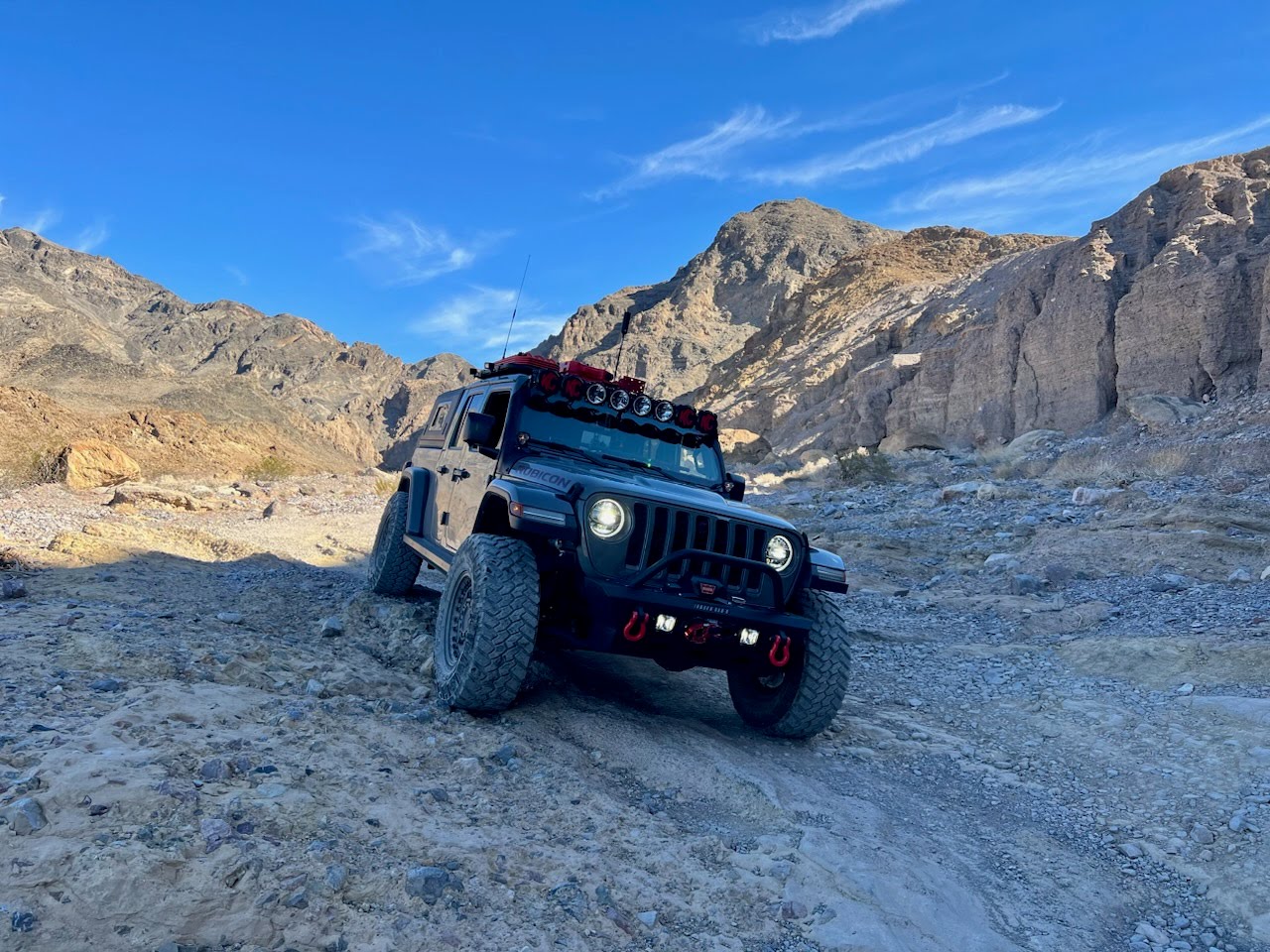
Jeep lift kits fall into three categories. Each does a different job, costs different money, and pairs with different tire goals.
Body lifts raise the body off the frame using polyurethane or rubber spacers. They cost $100 to $400 and add 1 to 3 inches of tire clearance. However, body lifts don’t improve ground clearance because the frame, axles, and suspension stay in place. A body lift suits owners chasing the look or wanting to squeeze slightly larger tires under stock fenders without touching suspension geometry. Above 2 inches, you start needing transfer case drops, brake line extensions, and steering column spacers.
Budget boost kits sit in the middle. These use coil spacers (or shackles on leaf-sprung older Jeeps) to add 0.75 to 2.5 inches of lift. Kits run $150 to $500. Unlike body lifts, a budget boost lifts the entire vehicle by extending suspension height, so you get real ground clearance gains. Most include extended shocks or sway bar end links. Install takes 2 to 3 hours at home with basic hand tools. For a daily driver heading out on weekend trails, this category delivers strong value per dollar.
Suspension lift kits replace the springs, shocks, and often the control arms, track bars, and bushings. Sizes start at 2 inches and reach 6 inches or more. Pricing ranges from $700 for a basic 2.5-inch coil kit to $3,500 for a long-arm system with monotube reservoirs. A jeep suspension lift gives you the biggest articulation, ride-quality, and tire-clearance gains. Above 3 inches, supporting mods become mandatory rather than optional. For Gladiator owners, the jeep gladiator lift kit market favors this category because the truck’s longer wheelbase rewards real coil-spring upgrades over spacer setups.
Short Arm vs Long Arm Lift Kits
Short arm kits reuse the factory control arm brackets and work well to about 3.5 inches. Long arm kits relocate the brackets, restore softer suspension angles, and pair with larger lifts above 4 inches. Long arm builds typically cost $1,800 to $3,500 plus install. For most owners staying under 3.5 inches, a quality short arm setup delivers the right balance of performance, simplicity, and cost.
Supporting Mods, Gear Ratios, and Driveline
Lift kits don’t operate alone. Beyond 2.5 inches of height, supporting hardware decides whether the build feels right or vibrates and wanders on the highway.
Track bars re-center the axles after lift. Adjustable units fit 2-inch lifts and up. Skip the track bar on a 3-inch lift, and your steering wheel sits cocked to one side.
Control arms correct caster angles. Stock arms hold up through 2.5 inches. Above this height, you need adjustable lower arms at minimum, and often uppers too, so tires don’t rub forward in the wells under articulation. Brake line extensions prevent stretching at full droop. Lifts above 2.5 inches almost always need longer braided lines, which run $80 to $150 per set.
Driveshafts handle the increased angles. Stock shafts work fine through 2.5 inches. Above 3 inches, expect to upgrade to an aftermarket double-cardan or 1310/1350 shaft, which costs $400 to $900. Steering components, including drag links and tie rods, see more stress with larger tires. Chromoly upgrades become worthwhile above 35-inch tires.
Re-gearing matters more than any other supporting mod. Stock JL and JT axles ship with 3.45, 3.73, or 4.10 ratios depending on trim. With 35-inch tires on stock 4.10s, you lose power but generally cope. With 37-inch tires, re-gearing to 4.88 or 5.13 restores power and stops the transmission from hunting between gears. Re-gear cost runs $2,200 to $3,000 for both axles installed.
For older YJ and TJ owners running 3-inch lifts or larger, a Slip Yoke Eliminator pairs with a double-cardan rear driveshaft to fix rear driveline angles. SYE kits run $400 to $800 plus the new driveshaft.
Will a Lift Affect Ride Quality?

Yes, though how much depends on lift size and shock quality. Lifts under 2.5 inches paired with quality monotube shocks ride within 5 to 10% of stock comfort. My Gladiator on a 2.5-inch lift drove smoother than the showroom floor model because the aftermarket shocks outperformed the factory units.
Above 3 inches, the higher center of gravity shows up in crosswind handling, parking lot lean, and on-ramp body roll. Larger tires add weight, which softens braking response. None of these effects break the experience, but they’re real, and they compound with each inch of lift.
Lift Kit Cost Breakdown for 2026
Budget shapes the second half of any jeep wrangler lift kit decision. Total project cost depends on lift type, supporting mods, and whether you turn wrenches yourself. Below are 2026 ballpark numbers based on current Quadratec, ExtremeTerrain, and Amazon pricing.
A spacer or body lift kit runs $100 to $400 in parts, plus $200 to $500 for shop install. Most owners handle these themselves in 2 to 3 hours with a floor jack and basic hand tools.
Budget boost and 2.5-inch coil kits land at $400 to $1,100 in parts. Shop install takes 4 to 6 hours at $100 to $175 per hour, so figure $400 to $1,050 in labor. A Teraflex 2.5-inch kit with VSS shocks lands around $950 in parts and represents the value sweet spot in this tier.
Mid-range suspension lifts spanning 2.5 to 3.5 inches with control arms cost $1,200 to $2,500 in parts plus $600 to $1,200 in labor. Add $200 to $400 for an alignment afterward to keep tires from feathering.
Long-arm 4 to 6-inch systems start at $2,500 in parts and climb past $3,500, plus $1,200 to $1,750 in install labor. Re-gearing for 37s tacks on another $2,200 to $3,000. Total project cost easily clears $7,000 on a heavily lifted JL or JT before you’ve mounted a tire.
Top Jeep Lift Kit Brands Right Now

Brand reputation finishes the picture. I haven’t personally installed every kit on this list, so the recommendations below draw from manufacturer specs, owner forum reports, and feedback from Jeep shops I trust rather than first-hand install of each one. My direct experience sits with the 2.5-inch setup on the Gladiator covered in the case study below.
The lift kit market breaks into three tiers. Budget brands deliver value but show spring sag over time. Mid-tier brands hit the sweet spot for daily drivers. Premium brands serve hardcore off-road builds and dedicated jeep suspension lift projects.
| Brand | Tier | Best For | Typical 2.5″ Kit Price |
|---|---|---|---|
| Rough Country | Budget | First-time lifters on a tight budget | $200 to $400 |
| Mopar JPP | Mid (factory) | Warranty-conscious dealer-install buyers | $1,400 to $1,800 |
| Teraflex | Mid | Daily-drivers wanting long-term ride quality | $1,200 to $1,800 |
| Rubicon Express, BDS, EVO Mfg | Mid | Weekend-warrior trail rigs | $1,100 to $1,900 |
| AEV DualSport RT, MetalCloak Game Changer | Premium | Overlanders and long-haul builds | $2,200 to $3,500 |
Brand-by-Brand Breakdown
Rough Country leads the budget tier. Their 2.5-inch lift kit for JL and JT runs around $200 to $400 depending on whether you pair it with their N3 shocks, and it carries a limited lifetime warranty. Forum reports note spring sag after 30,000 miles on some kits, so it’s the price-per-inch champion rather than the long-haul pick.
Mopar Jeep Performance Parts (JPP) is the factory-blessed jeep wrangler lift kit. The 2-inch JPP kit, which delivers about 2.5 inches of lift, includes Bilstein 46mm monotube shocks with remote reservoirs. It preserves more of the factory warranty than aftermarket kits and sells through any Jeep dealer.
Teraflex anchors the mid tier. Their 2.5-inch Sport ST2 kit with Falcon shocks runs $1,200 to $1,800 and outperforms cheaper kits on long-term ride quality. Rubicon Express, BDS Suspension, and EVO Manufacturing all serve this tier with similar value math.
Premium options include AEV DualSport RT, MetalCloak Game Changer, and Teraflex Falcon-equipped Alpine systems. AEV’s JT 2.5-inch DualSport ships frequency-tuned triple-rate coil springs and lifetime warranty coverage. Pay $2,200 to $3,500 for these systems. They suit serious overlanders, dedicated trail rigs, and owners who plan to keep the Jeep ten-plus years.
My 2020 Gladiator Lift Build
My 2020 Gladiator ran a 2.5 inch lift jeep setup, which was the right call for how I used the truck. Daily commute, overland weekends, and the occasional rocky trail. The jeep gladiator lift kit at this height preserved factory ride quality close enough to original, so passengers didn’t notice the difference, while opening up 35-inch tire fitment cleanly.
I started with 35-inch Nitto Trail Grapplers. They worked beautifully for the first 18 months. Quiet on highway, aggressive on dirt, and surprisingly forgiving in rocks. After 4 years testing 33s, 35s, and 37s on the same Gladiator, I keep coming back to 35s as the best balance of clearance, comfort, and daily livability.
Moving Up to 37s and What I’d Change
Next I moved up to 37-inch tires. First the Interco IROK for hardcore trails. Then the Milestar Patagonia M/T-02 for a more daily-friendly mud terrain. The 37s produced fender trimming and a small amount of rub at full lock. Stock 4.10 gears coped, but power and shift quality suffered noticeably on highway grades. If I were starting over today, I’d either drop back to 35s or commit to re-gearing to 4.88s before mounting 37s.
The Patagonia M/T-02 hit fuel economy hardest of any tire I tested, costing roughly 1.5 to 2 MPG versus the Falken Wildpeak AT3W I used as my baseline daily tire. The IROK was a touch better on MPG but louder on highway. Both delivered phenomenal off-road grip. The build sits on Black Rhino Armory wheels, which held up across all three tire sets over 24,000 miles.
Body Lift vs Suspension Lift: Which Should You Choose?
Body lifts and suspension lifts solve different problems. A body lift gives you tire clearance for a fraction of the cost but adds zero capability off-road. A jeep suspension lift costs more but delivers real ground clearance, articulation, and trail performance.
Pick a body lift if your goal is fitting 33 or 34-inch tires under stock fenders and you don’t care about trail capability. Total cost: $200 to $700 installed. You preserve factory ride quality completely and avoid disturbing alignment.
Pick a suspension lift if you plan to off-road, run 35-inch tires or larger, or want genuine clearance for boulders and ruts. The minimum smart entry point is a 2.5-inch coil kit at $700 to $1,500 in parts. This investment pays back in capability, ride comfort over rough terrain, and tire-fitment headroom.
Save on Premium Suspension
Teraflex 2.5″ Sport ST2 Lift Kit for Wrangler JL
Mid-tier favorite among Wrangler owners who want better ride quality than budget kits deliver. Pairs cleanly with 35-inch tires.
Pros and Cons of Lifting Your Jeep
Pros
- Improves approach, breakover, and departure angles by 2 to 6 degrees per inch of lift
- Fits larger tires for stronger trail traction and a taller stance
- Adds wheel travel and articulation on uneven terrain
- Boosts resale value when documented with quality components
- Transforms a daily driver into a legitimate weekend rig
- Mid-range 2.5-inch options preserve near-stock ride comfort
Cons
- 3-inch and taller lifts demand re-gearing, driveshaft, and brake line upgrades
- Fuel economy drops 1 to 3 MPG with larger tires and heavier hardware
- Higher center of gravity affects cornering and crosswind stability
- DIY install above 2.5 inches needs alignment after, plus shop tools
- Total project cost climbs fast past 3 inches, often $4,000 to $8,000
- Voids parts of the factory powertrain warranty unless using Mopar JPP
Final Verdict: How to Choose a Jeep Lift Kit for Your Build
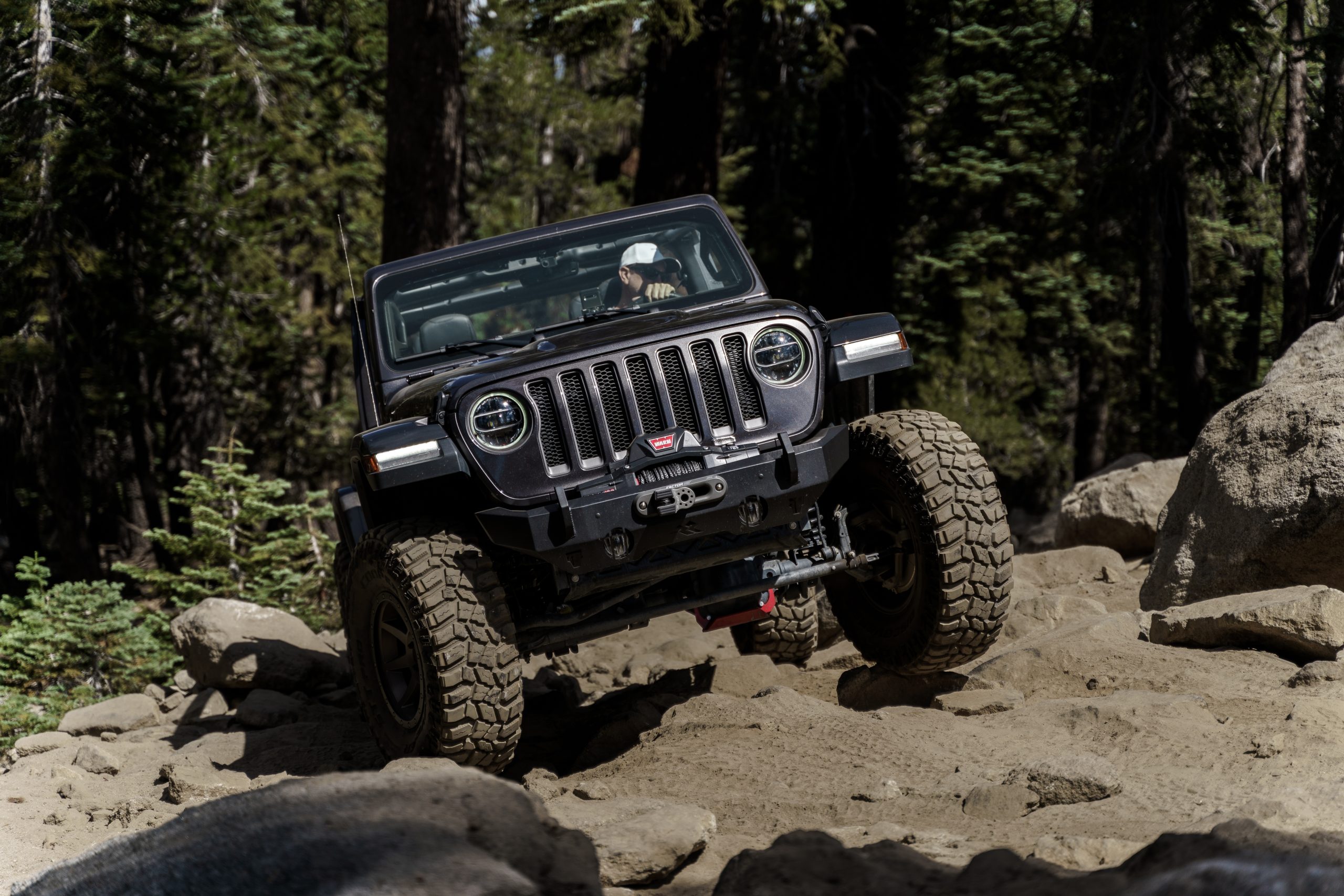
The short answer on how to choose a Jeep lift kit: for most owners, a 2.5-inch suspension lift paired with 35-inch tires delivers the strongest blend of capability, ride quality, and value. This setup runs 33 or 35-inch tires without modification headaches, preserves near-stock geometry, and skips the expensive re-gear and driveshaft upgrades larger lifts demand. After four years on this exact configuration in my 2020 Gladiator, I’d choose it again tomorrow.
The real trade-offs hit at the extremes. Body lifts and small spacers suit budget-conscious owners chasing aesthetics, but they add no trail capability. Lifts above 4 inches deliver hard-core capability but require thousands in supporting mods. If you find yourself drawn to a 4-inch or larger setup, budget the full $5,000 to $8,000 project cost up front so the build feels right end to end.
Value sits squarely in the 2 to 2.5-inch range from a trusted mid-tier brand. Teraflex, Mopar JPP, and AEV all earn their pricing through better shock tuning, longer spring life, and stronger warranties than budget kits. Rough Country wins on raw price-per-inch but expect to address spring sag eventually.
My recommendation: start with the use case, work backward to the lift height, then pick the brand from the comparison table above based on warranty needs and budget. If you’d rather see which tires earn the right to mount on your fresh lift, my best off-road tires for Jeeps roundup covers twelve options sized for lifted Wranglers and Gladiators.
Frequently Asked Questions
Do I need a lift kit for 35-inch tires on a Jeep?
On a JL or JT, you need a 2 to 2.5-inch lift to run 35-inch tires without rubbing. JK Wranglers also fit 35s cleanly with a 2.5-inch lift. Older TJ and YJ models need 3 to 4 inches because of tighter fender wells.
What size lift kit fits 37-inch tires on a Jeep?
A 3.5 to 4-inch suspension lift fits 37s on JL and JT platforms, often with minor fender trimming. Some owners run 37s on a 2.5-inch lift but accept rub at full lock. Plan to re-gear to 4.88 or 5.13 for power restoration.
Is a 2.5-inch lift enough for a Jeep Gladiator?
Yes, for owners running 33 to 35-inch tires and mixing daily driving with weekend off-roading. A 2.5-inch lift preserves factory ride quality, fits cleanly without supporting mods, and avoids the re-gear cost. My 2020 Gladiator on a 2.5-inch lift covered everything from highway commutes to moderate trails without complaint.
How much does it cost to install a Jeep lift kit?
Professional install runs $200 to $500 for a spacer kit, $400 to $1,050 for a 2.5-inch coil kit, and $1,200 to $1,750 for a 4-inch-plus suspension system. Shop labor rates land between $100 and $175 per hour in 2026. DIY saves the labor but requires hand tools, jack stands, and a torque wrench.
Will a lift kit void my Jeep warranty?
A lift kit alone won’t void your whole warranty under the Magnuson-Moss Warranty Act. However, the dealer might deny coverage on driveline or suspension components if the lift is shown to cause the failure. Mopar JPP kits installed at a dealer preserve the most warranty coverage.
Do I need to re-gear my Jeep after lifting it?
Re-gearing depends more on tire size than lift height. Stock 4.10 gears on a JL or JT cope with 33 and 35-inch tires. Move up to 37 inches, and re-gearing to 4.88 or 5.13 restores power and improves shift quality. Re-gear cost runs $2,200 to $3,000 for both axles installed.