


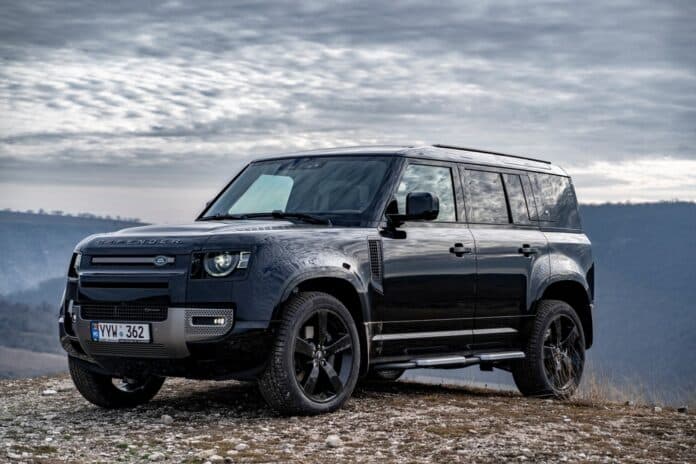
Quick Facts:
- Topic: Land Rover Defender reliability and ownership after JLR’s job cuts
- What happened: JLR opened a voluntary redundancy programme on September 7, 2026
- Scale: About 4,000 jobs, nearly 10 percent of the workforce, over two years
- Who is affected: Mostly the roughly 26,000 salaried and management staff, not hourly plant workers
- Savings target: About 1.7 billion pounds, roughly 2.3 billion dollars
- Break-even goal: Around 300,000 vehicles per year
- Where the Defender is built: Nitra, Slovakia, unaffected by this announcement
- Defender’s position: Part of the 80.8 percent of wholesale volume carrying JLR
- US pricing: $63,500 to $158,300 before destination
- Owner rating: JD Power consumer score of 79 out of 100
- Best for: Current Defender owners and anyone shopping one this year
8 min read
In This Guide
- What JLR Announced and Why It Matters
- The Cuts by the Numbers
- Defender Production Is Not the Target
- Land Rover Defender Reliability Scores Today
- Parts Availability Is the Real Land Rover Defender Reliability Risk
- What Cost Cutting Does to Warranty Work
- Defender vs. the Grenadier
- Final Verdict
- Frequently Asked Questions
What JLR Announced and Why It Matters
Jaguar Land Rover opened a voluntary redundancy programme expected to cut around 4,000 jobs over the next two years, and Land Rover Defender reliability is the question owners raised first. The company cited tariffs, Chinese competition, and geopolitical uncertainty. Reuters reported the figure on September 7, 2026. Notably, nearly 10 percent of the workforce is in scope.
For an overlander, this lands differently than for a typical luxury SUV buyer. A Defender parked at a trailhead in Utah depends on a parts and service chain running from Slovakia through a US dealer network. Consequently a cost-cutting programme at the parent company becomes a supply question, not only a headline.
The framing worth holding onto is the target of the cuts. The cuts primarily address the roughly 26,000-strong salaried and management workforce, according to Reuters. Specifically, hourly factory staff are not the focus. JLR operates 17 sites in England and employs about 43,000 people globally, with the majority in Britain.
Context also matters here. Our full Defender buyer’s guide covers trims, specs, and running costs in depth. This piece looks at one narrower question instead. What does a shrinking parent company do to the ownership experience over the next two years?
| Top Pick | Best for Air Tools | Best for Kinetic Pulls | |
|---|---|---|---|
| Product | TOP PICK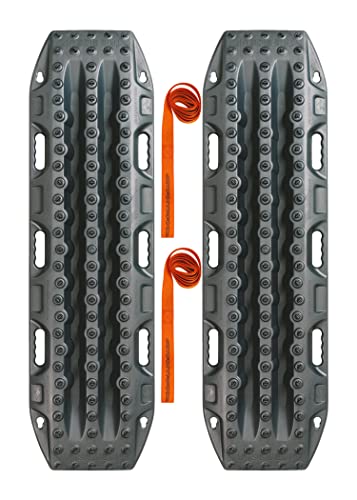 MAXTRAX MKII MAXTRAX MKII |  ARB CKMTA12 ARB CKMTA12 |  Rhino USA Kinetic Rope Rhino USA Kinetic Rope |
| Rating | ★★★★☆ 4.5 9,400 ratings | ★★★★☆ 4.6 500 ratings | ★★★★★ 4.8 1,200 ratings |
| Best For | Sand, mud & snow traction | Topping up tires & air tools | Vehicle-to-vehicle pulls |
| Rated Capacity | 4,400 lb per board | 150 psi max output | 30,580 lb breaking strength |
| Price | $279.99 as of Oct 24, 1:38 am | $609.00 as of Oct 23, 6:09 pm | $149.90 as of Oct 23, 1:52 pm |
| Check Price → | Check Price → | Check Price → |
The Cuts by the Numbers
The scale becomes clearer against JLR’s financial targets and the events leading up to them.
| Item | Figure |
|---|---|
| Jobs in scope | About 4,000 over two years |
| Share of workforce | Nearly 10 percent |
| Global headcount | About 43,000 |
| Savings target | About 1.7 billion pounds over two years |
| Break-even goal | Around 300,000 vehicles per year |
| Planned launches | Five in the next 12 months |
| Five-year investment | 15 to 18 billion pounds |
| US tariff cost since April 2025 | Roughly 410 million pounds |
| 2025 cyberattack cost to UK economy | Estimated 1.9 billion pounds |
Two prior shocks explain the urgency. First, a September 2025 cyberattack halted JLR manufacturing for over a month and cut production by about 27 percent, at an estimated cost of 1.9 billion pounds to the UK economy. Second, US import tariffs from April 2025 cost the company roughly 410 million pounds, and JLR paused US shipments for about a month to assess the damage.
Notably, this is not the first round. In July 2026 JLR said fewer than 300 people would leave under cost savings announced at the time. Four thousand is an order of magnitude larger, which signals the earlier trim did not close the gap.
Defender Production Is Not the Target
The Defender is built at JLR’s plant in Nitra, Slovakia, alongside the Discovery. The plant opened in October 2018 after a 1.4 billion euro investment. Defender assembly left Solihull in the UK during 2018. Therefore a redundancy programme concentrated on UK salaried roles leaves the line building your truck untouched.
Nothing in the announcement changes Defender output. JLR named no plant closures, no model cancellations, and no Nitra reductions alongside the job cuts. Meanwhile the company reaffirmed five new product launches in the next 12 months and 15 to 18 billion pounds of five-year investment.
Similarly, model plans support the same reading. JLR has confirmed lineup changes for the 2027 model year, including the 2027 Defender Vertex trim. A company walking away from a nameplate adds no trims to it.
Production geography is shifting for a different reason, though. JLR has separately explored building a Defender in the United States on a Stellantis platform to reduce tariff exposure, an approach covered in our look at JLR’s US-built Defender plan. The US project responds to trade costs rather than to this week’s headcount news. Both moves trace to the same pressure.
Land Rover Defender Reliability Scores Today
Production security answers one worry. Day-to-day Land Rover Defender reliability is a separate question, and it sits in a stranger place than the brand’s reputation suggests. JD Power’s consumer rating for the Defender is 79 out of 100 overall. The Quality and Reliability subscore is 82 out of 100, which JD Power labels “Great.” Driving Experience and resale value both land at 79.
The weak number sits elsewhere in the same scorecard. Dealership Experience scores 72 out of 100, which JD Power rates as “Average.” For an owner, the gap is the whole story. The vehicle scores better than the service experience around it. Cost cutting at the parent company pressures the lower number, not the higher one.
Brand-level data is murkier. Consumer Reports currently ranks Land Rover 30th overall and 14th among luxury brands, and lists reliability as not available on its brand page for lack of sufficient data. Consequently anyone quoting a hard Land Rover reliability ranking should be read carefully, because the underlying sample is thin.
The practical takeaway for buyers is to separate two things. Mechanical Land Rover Defender reliability, as owners report it, is respectable. Service and support around the vehicle is where complaints concentrate, and a 1.7 billion pound savings programme reaches exactly there.
Parts Availability Is the Real Land Rover Defender Reliability Risk
Parts availability is the ownership risk worth watching, and it predates this announcement. Owners report long waits for collision components in particular, including a widely shared account of a 2025 Defender sitting 176 days waiting for parts. Owner reports are not company statistics, so treat them as illustrative rather than typical.
The pattern still matters more for this audience than for most. A Defender used for overlanding spends time far from a dealer, on surfaces hard enough to break parts a mall crawler never breaks. Similarly, a suspension arm or body panel damaged on a remote trail turns a parts delay into a lost season rather than an inconvenience.
Nothing JLR announced targets the parts supply chain directly. However, the company stated it will cut materials, warranty, and fixed costs as part of the savings programme. Inventory depth is a fixed cost, so parts availability is a reasonable thing to watch over the next two years.
Meanwhile two habits reduce your exposure. First, order wear items and known failure-prone components before a long trip rather than after a breakdown. Second, confirm with your selling dealer which parts sit on the shelf locally and which ship from a regional warehouse. The answer varies widely between dealers.
What Cost Cutting Does to Warranty Work
JLR named warranty costs explicitly among the areas it plans to reduce. Coverage terms on vehicles already sold do not change, because warranty terms are contractual. Instead, it means the company intends to spend less settling claims.
In practice, warranty spend falls through process rather than policy. Approvals tighten, goodwill outside the written terms gets rarer, and diagnostic time gets scrutinized more closely. Consequently owners with modified vehicles should expect more questions when a claim touches a system near an aftermarket part.
Documentation is your defense. Keep service records complete and dated, photograph the vehicle’s condition before long trips, and keep receipts for any accessory installation. For example, paperwork makes it easier to explain a fitted roof rack near a leaking sunroof.
The five planned launches cut the other way, though. A company preparing five product introductions in 12 months needs its dealer network functional. Even so, the savings target is real money, and warranty spend is one of the few line items a manufacturer controls directly.
Defender vs. the Grenadier
The obvious cross-shop is the Ineos Grenadier, built expressly to fill the role the old Defender vacated. Our piece on the Grenadier as a Defender alternative covers the positioning. The Grenadier trades the Defender’s on-road refinement for a simpler, more serviceable platform. Ineos is also expanding downward into smaller models.
However, price separates them clearly. The 2026 Defender runs from $63,500 for a 110 P300 S up to $158,300 for the 626-hp OCTA, before destination. Those figures cover a lot of ground, and the entry point undercuts common assumptions about Defender pricing.
Corporate stability is the honest tiebreaker. JLR is a Tata Motors subsidiary cutting 4,000 jobs while investing 15 to 18 billion pounds over five years. This reads as a company under strain, not one in retreat. A buyer who values dealer density and a deep US service network still favors the Defender. Anyone prioritizing long-term parts simplicity has a real argument for the Grenadier.
Gear for Owners Who Keep Their Own Records



Final Verdict
Nothing in this announcement should stop a Defender purchase on its own. The cuts target UK salaried and management roles, not the Slovakian line building the vehicle, and JLR reaffirmed five launches and a 15 to 18 billion pound investment plan in the same breath. Defender sits inside the 80.8 percent of wholesale volume carrying the company, so the model is the solution rather than the problem.
The trade-off falls on service rather than steel. JD Power already scores Dealership Experience at 72 out of 100 against a Quality and Reliability score of 82, and warranty costs are named among the savings targets. An owner who needs a frictionless service relationship, or who cannot absorb a long parts wait, should weigh the risk honestly before signing.
Value at the entry point is stronger than the brand’s reputation implies. A 110 P300 S at $63,500 puts a genuinely capable platform below several better-regarded rivals. Resale value scores 79 out of 100 at JD Power, which is solid without being exceptional. Buying near the bottom of the range therefore protects more of your money.
Anyone still weighing the Grenadier should drive both back to back, because the gap is in refinement and dealer reach rather than capability. Everyone else should buy the Defender they want, keep meticulous service records, and stock the wear items their build consumes.
Related Reading
Frequently Asked Questions
Is the Land Rover Defender reliable in 2026?
JD Power gives the Defender a Quality and Reliability subscore of 82 out of 100, which it labels “Great,” inside an overall consumer rating of 79. Consumer Reports lists Land Rover reliability as not available for lack of sufficient data. Mechanical reports are respectable; the weaker score is Dealership Experience at 72.
Will JLR’s job cuts affect Land Rover Defender production?
No production changes were announced. The redundancy programme primarily targets roughly 26,000 salaried and management staff, mostly in the UK, while the Defender is built in Slovakia. JLR also reaffirmed five product launches over the next 12 months.
Where is the Land Rover Defender built?
The Defender is built at JLR’s plant in Nitra, Slovakia, alongside the Discovery. Production there began after a 1.4 billion euro investment, with the plant opening in October 2018. Defender production left Solihull in the UK during 2018.
How long do Land Rover Defender parts take to get?
There is no official average. Owners report long waits for collision components specifically, including one account of a 2025 Defender waiting 176 days. Treat these as owner reports rather than company statistics, and ask your dealer which parts they stock locally.
Does JLR’s cost-cutting affect Defender warranty coverage?
Written warranty terms on vehicles already sold are contractual and do not change. JLR did name warranty among the costs it plans to reduce, which usually shows up as tighter claim approvals and less goodwill outside the written terms rather than as a policy change.
Is the Defender one of JLR’s top-selling models?
Defender, Range Rover, and Range Rover Sport together accounted for 80.8 percent of JLR’s total wholesale volumes in the quarter reported in mid-2026, up from 77.2 percent a year earlier. The Defender is one of the models carrying the company rather than a weak seller.